
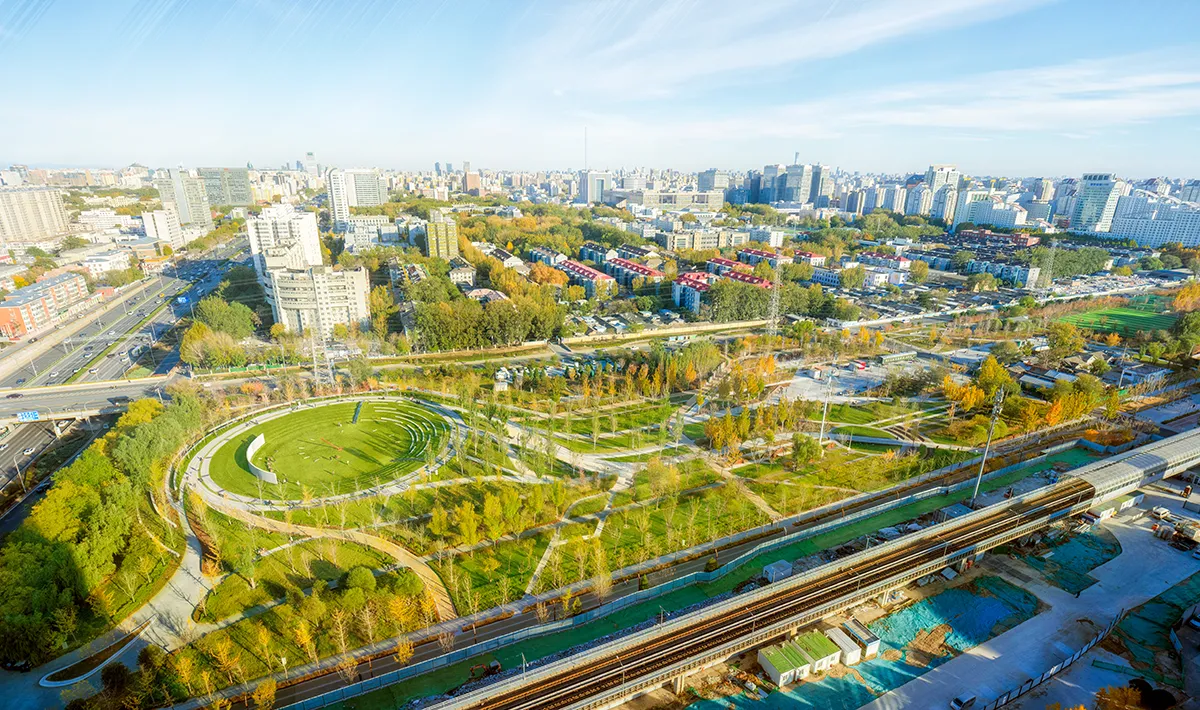
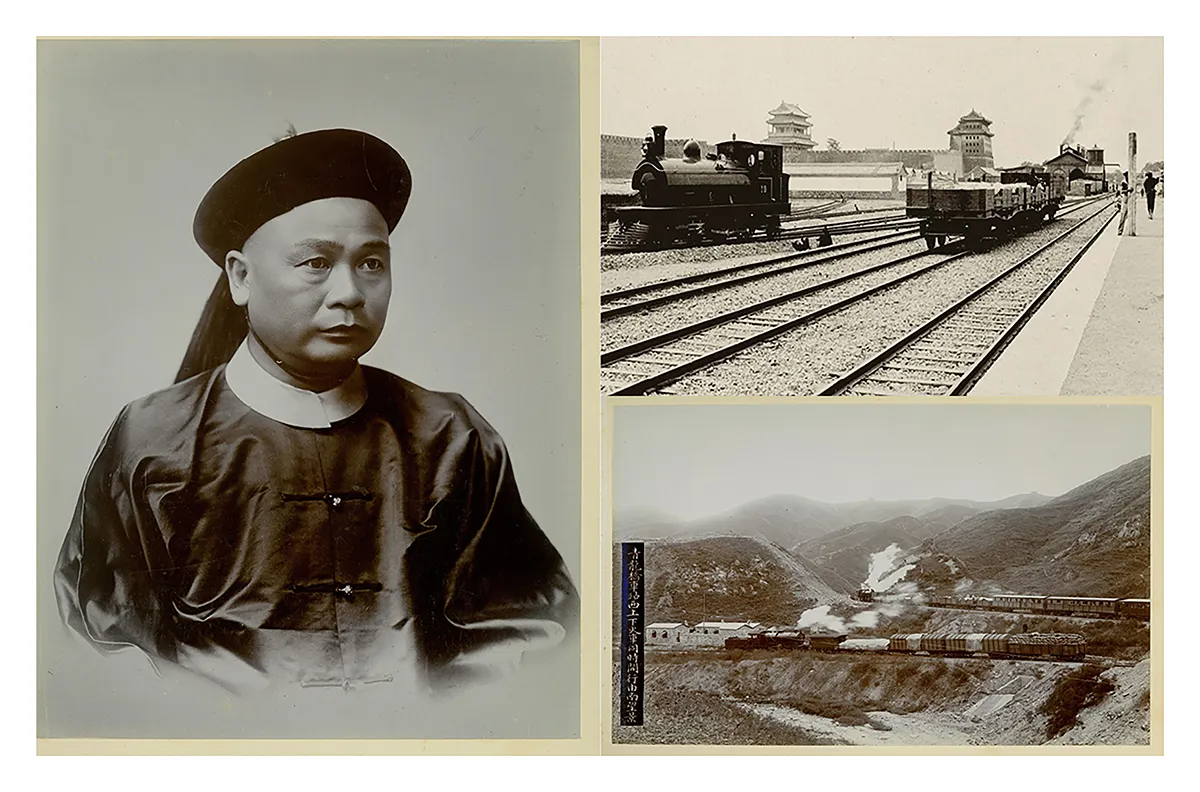
When the Jingzhang Railway first opened in 1909, it was a decisive moment in the modernisation
of China. Up to that time, China had been heavily influenced and frequently exploited by foreign powers such as Britain, France, Russia, and Germany. All infrastructure was engineered and financed by those countries, including the early rail system. So, there was immense pride in this feat of native-born engineering in the heroic person of Zhan Tianyou, as well as the use of locally manufactured steel and other materials.
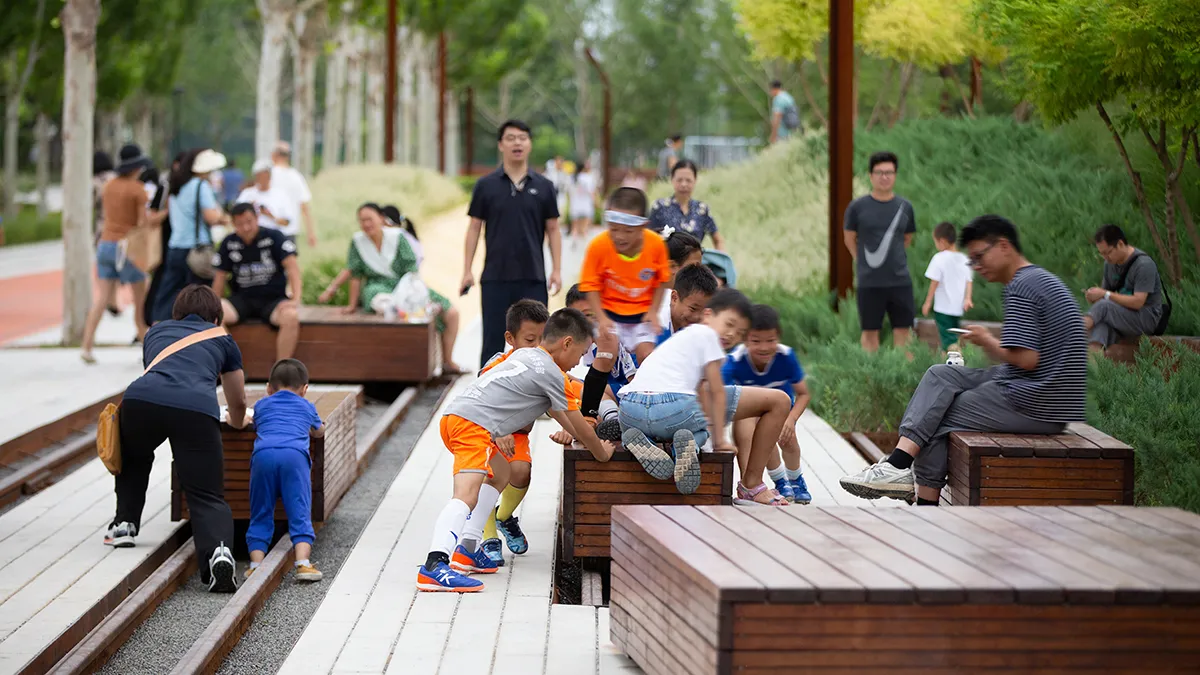
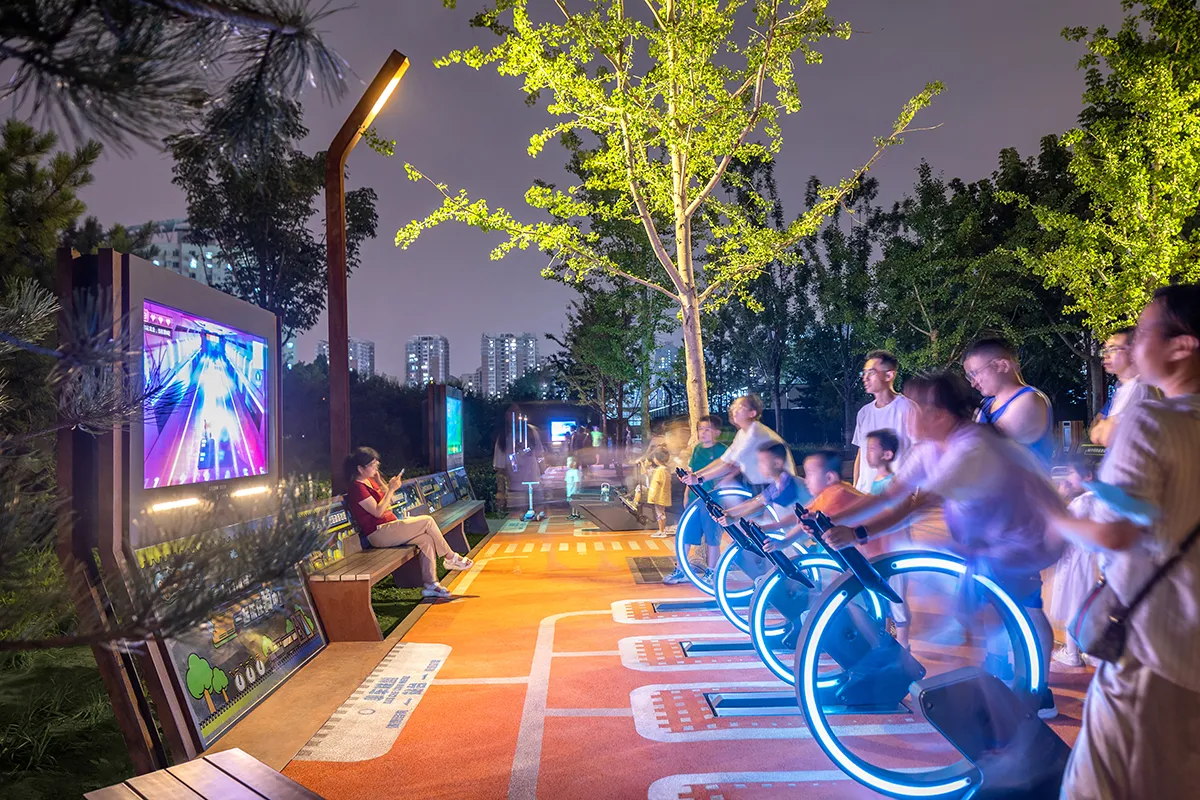
100 years later, the Jingzhang Railway, the line, had gone out of service, and the corridor in the centre of Beijing was closed to the public. Meanwhile, new transportation plans were developed for both below-ground high-speed rail and elevated light rail serving municipal destinations. This left the ground available for new open space and various modes of slow traffic – walking, running, biking, skating, and baby strolling. These are all threaded through the new park and skillfully spliced into the adjacent neighbourhoods and institutions. Areas of the city that had been divided for 100 years now have the chance to be joined together by the park.
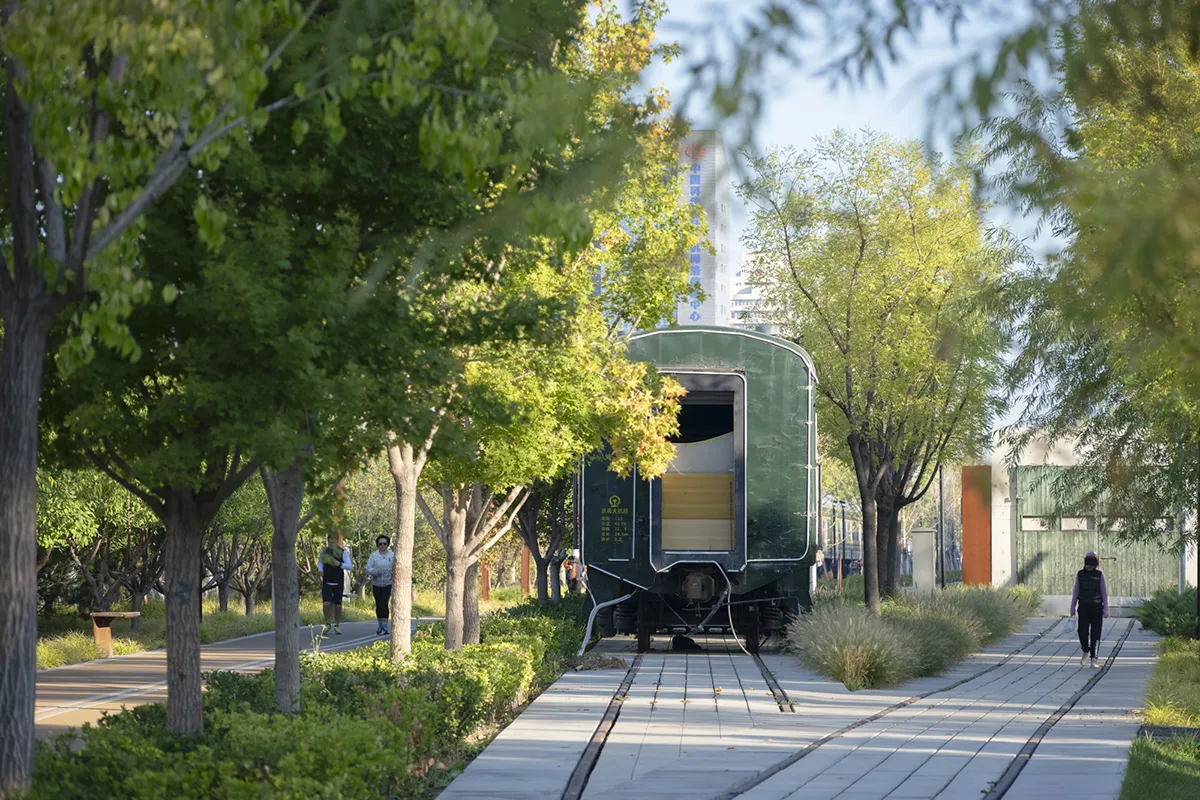
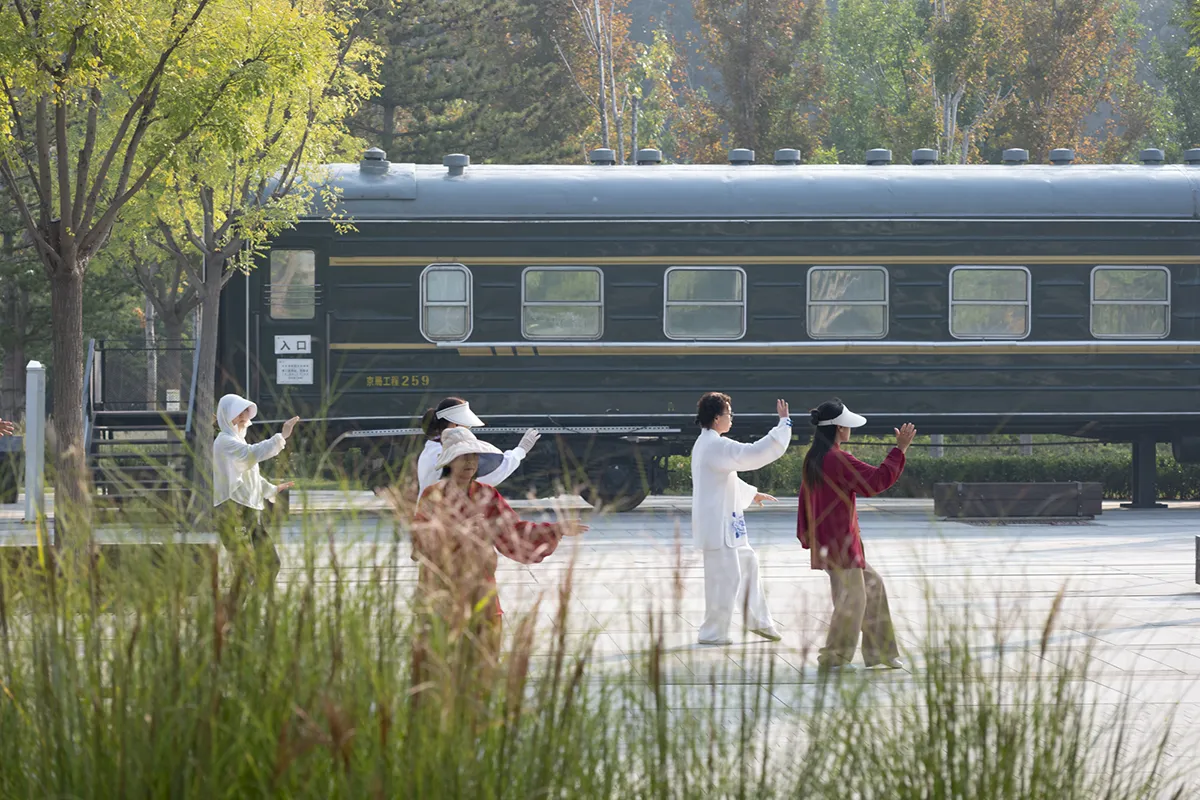
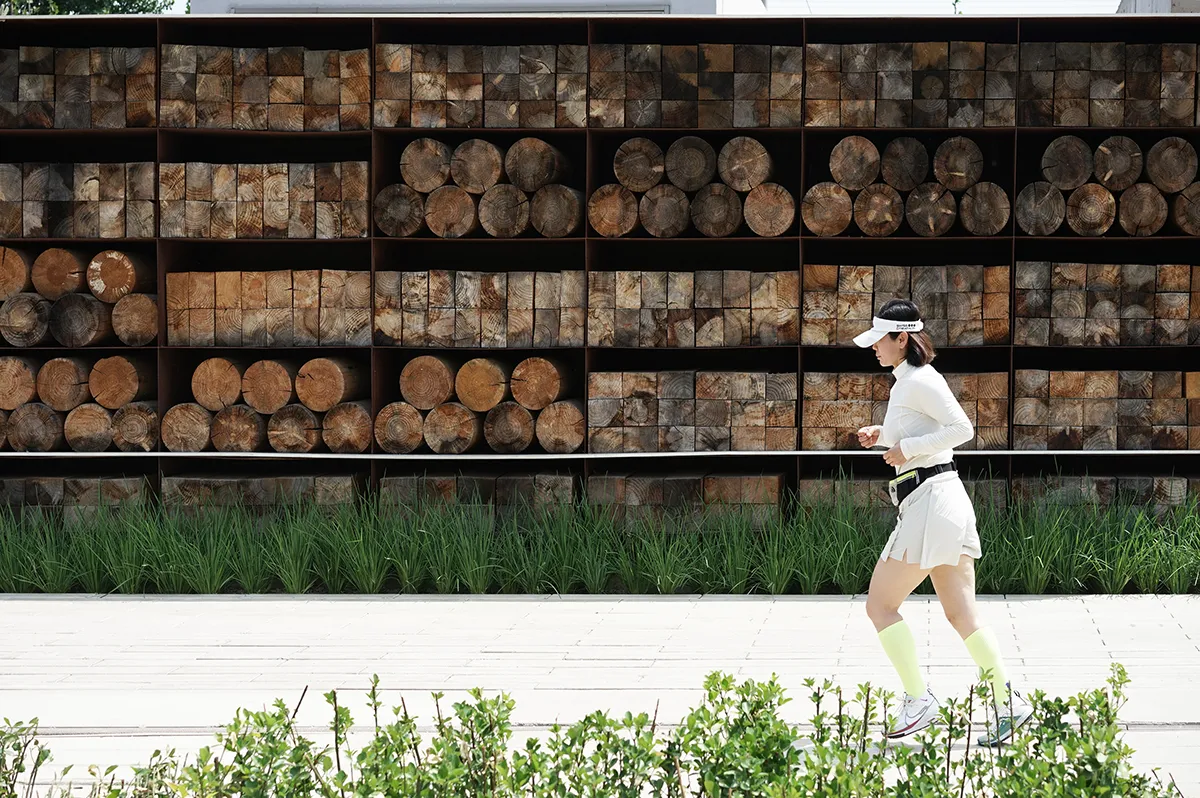
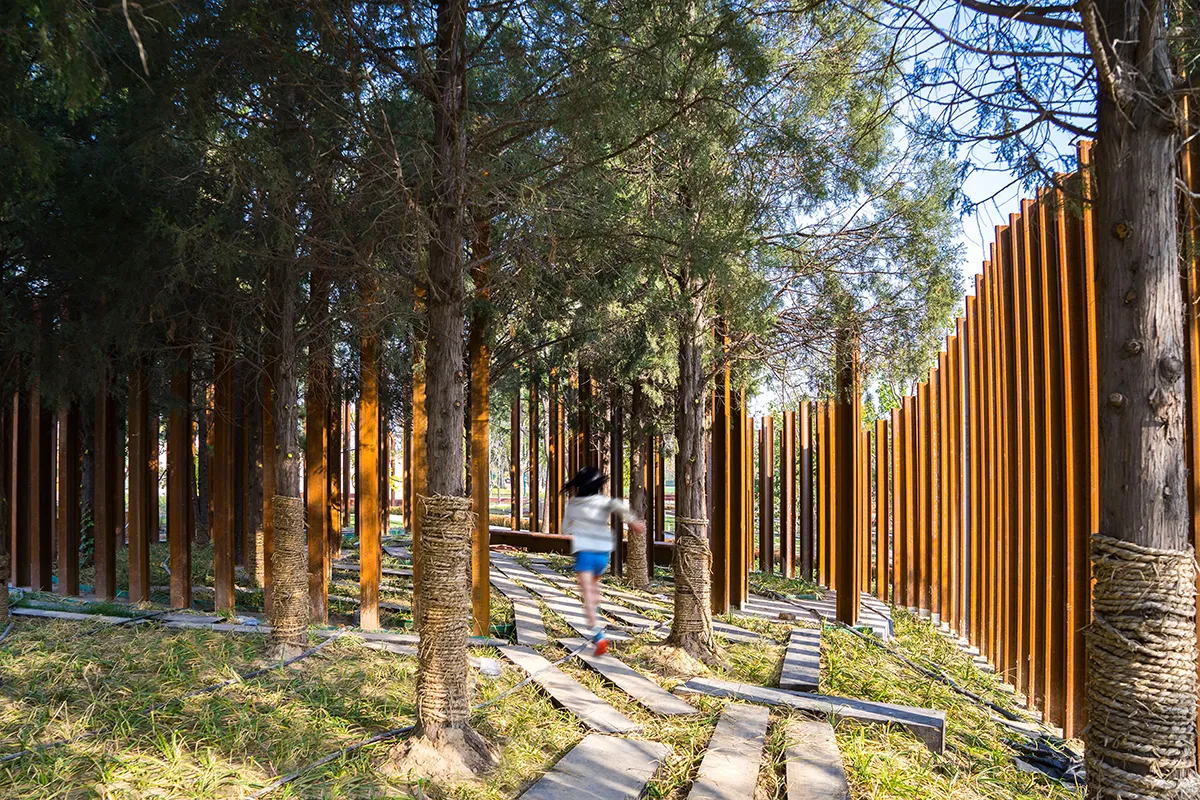
In many ways, the park is constructed from rails and rail artifacts, most of them recovered from storage and old sites, including this one. Jingzhang Railway Heritage Park incorporates repurposed train tracks, steel components and fittings, railway doors, concrete, and timbers. Reclaimed wood and salvaged stonework have also been utilised for retaining walls, while old railway signals, signage, and mechanical components have been integrated into the site’s wayfinding, seating areas, play structures, interactive walls, and display signage, preserving their historical identities and extending their lifecycle.
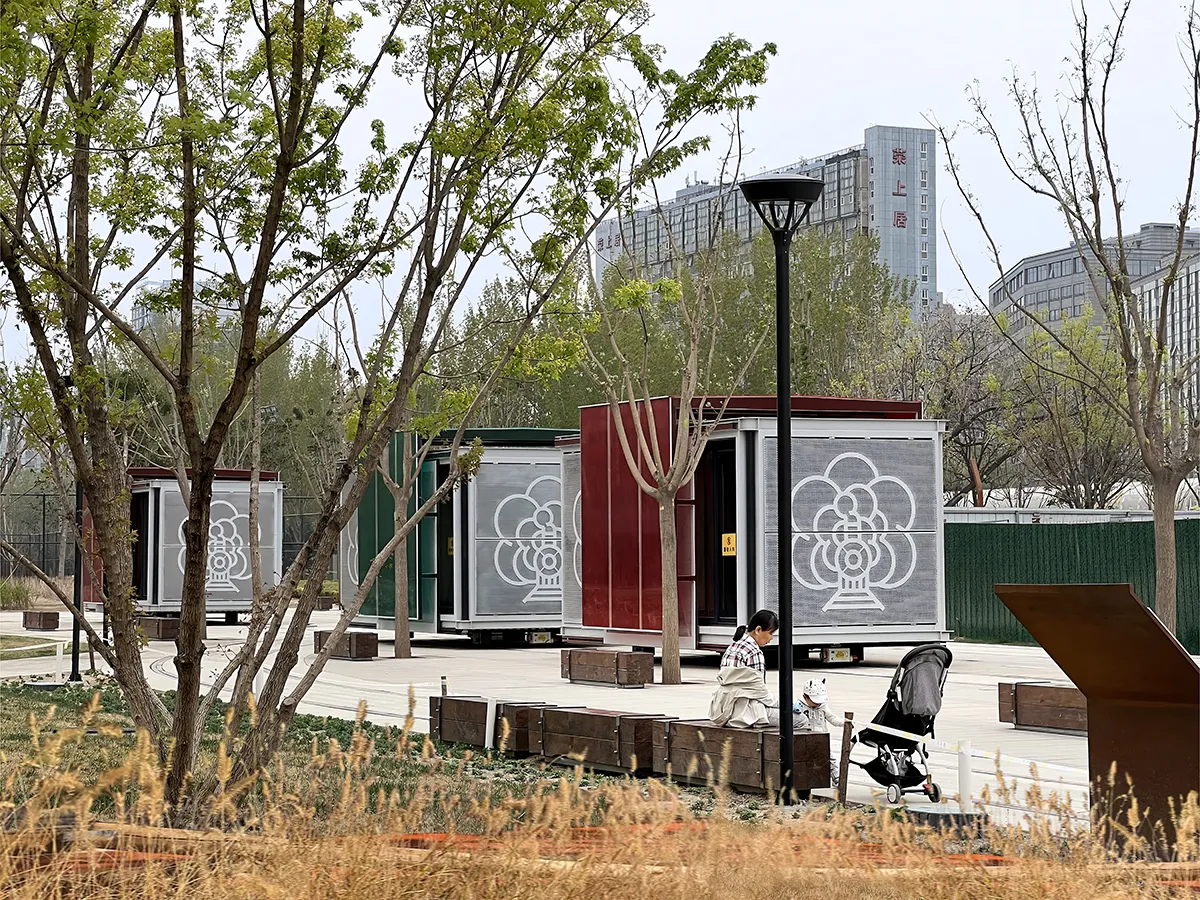
Numerous new rail lines were installed for use by five recovered historic cars, each with narrative themes, as well as five new “moving boxes” for concession and event use. They can be moved around the site on rails for various types of gatherings or distributed throughout for individual use, including birthday parties. There are also “handcarts” which can be moved safely along the lines by kids with enough strength! Finally, there is a narrow-gauge rail line that will run through the park with various stops. The idea is to continue the dynamic of moving along rails, but dedicated to new social uses. Navigating the numerous parallel pathways and rails allows endless routes, thinking and moving like a train.
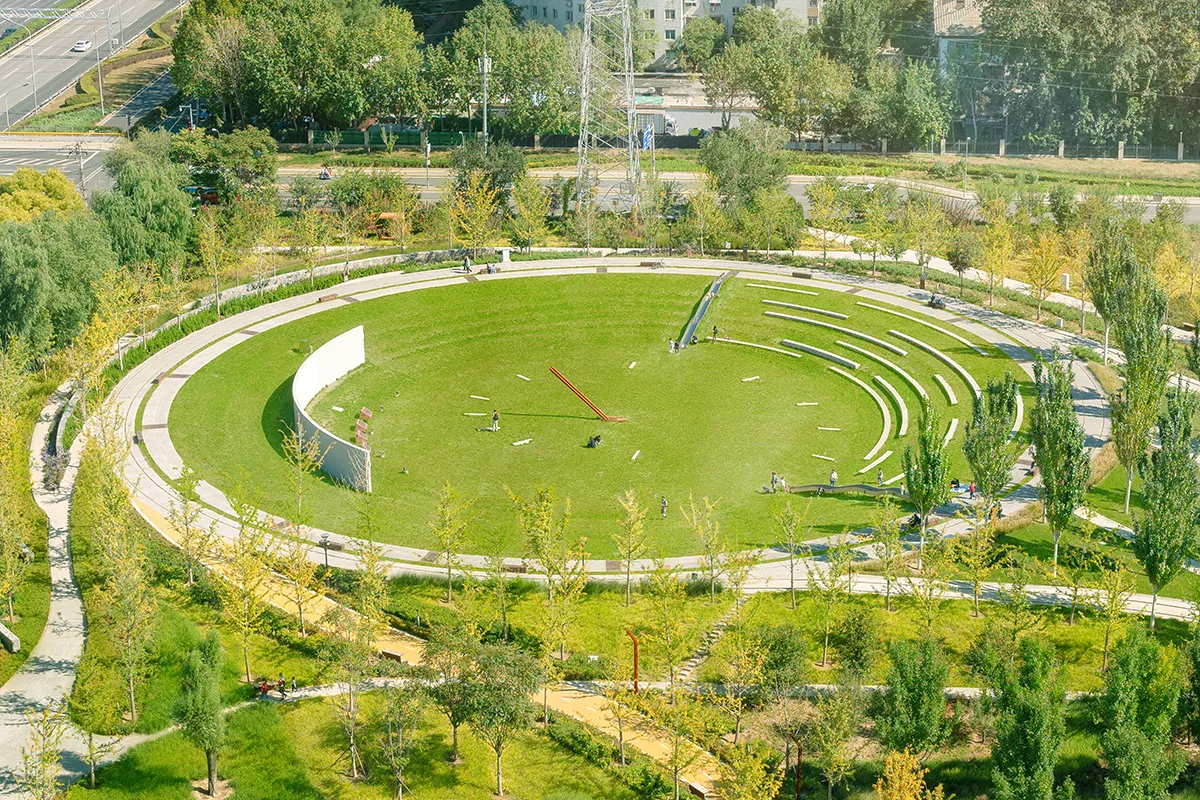
Long lines of deciduous shade trees reinforce these lines and keep people cool in the summer. Linear beds of biofiltration grasses and perennials are inset within “sponge city” stormwater detention zones and create a sense of the wild between tracks and pathways. The west end of the park is occupied by a large circular amphitheatre, formed by grassy berms for seating, slides, and the narrow-gauge train tracks around the rim. A semi-circular, super-wide screen allows for the projection of laterally moving videos and for the frequent concerts held there.
Shortlisted (Finalist) – 2025 WLA Awards in the Built – Large Public Space category
Jingzhang Railway Heritage Park
Location: Beijing, China
Client: Haidian Branch of Beijing Municipal Commission of Planning and Natural Resources & Haidian District Bureau of Forestry and Parks
Landscape Architect: TLS Landscape Architecture
Urban Research & Design Consultant: Prof. Wang Xiangrong’s and team from Beijing Forestry University Urban Research & Design Consultant: Beijing BLDJ Landscape Architecture Institute Co., LTD
Architecture Firm: CAUPD
Architecture Firm: YZ Scape
Al Firm: Dream Deck
Signage Firm: DiduhuiBJ
Consultants and Implementors Contributors:
DYJG; Beijing Haidian District Gardens Bureau
Haidian District Landscaping Center
Beijing Bureau of Natural Resources and Planning
Beijing Haidian District Municipal People’s Government
Beijing Haidian District Gardens Bureau
Wang Wei-Railway Expert
Photography: Holi; K.T. Thompson; Zhangjin Photography; TLS;