
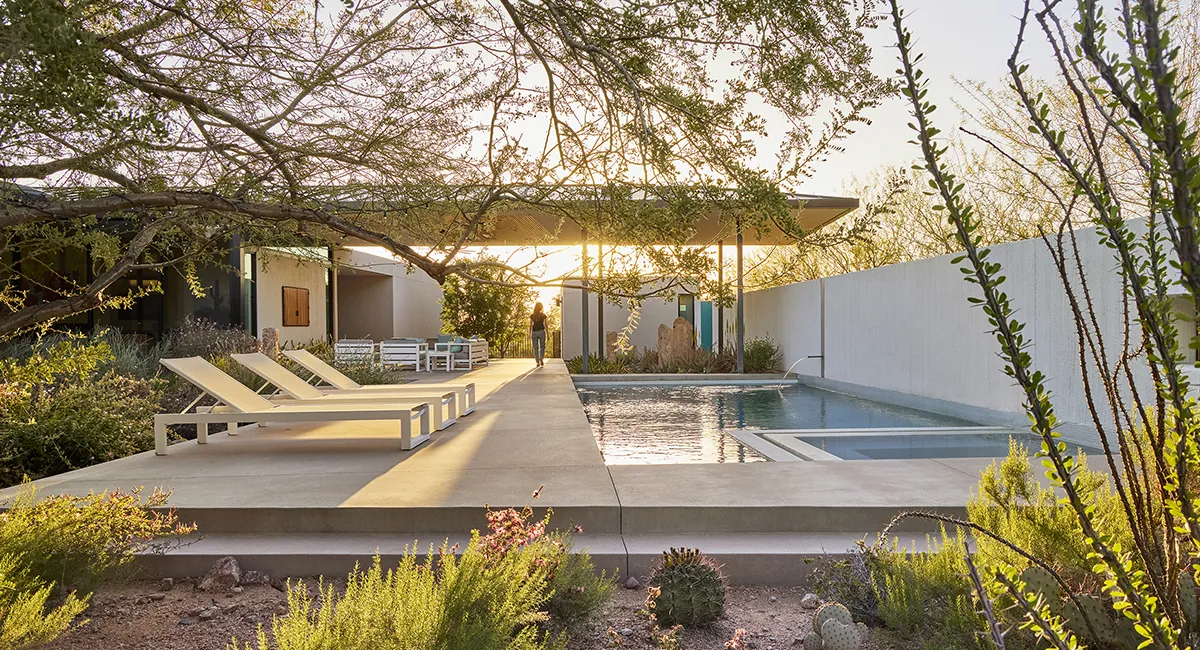
Situated in the Sonoran Desert in Phoenix, Arizona, this substantial residential rebuild on a one-acre sloping site enabled the landscape architect to envision a home harmoniously nestled within indigenous Sonoran Desert gardens. The landscape architect collaboratively led the arrangement of both the interior and exterior programs, shaping the home and site around the desert’s most precious and precarious resource: rain. The meticulous design process also considered the spectacular views of the locally iconic Camelback Mountain, leading to design decisions that placed an outdoor program not often associated with forward-facing into a forecourt position, all framed and informed by desert rain.
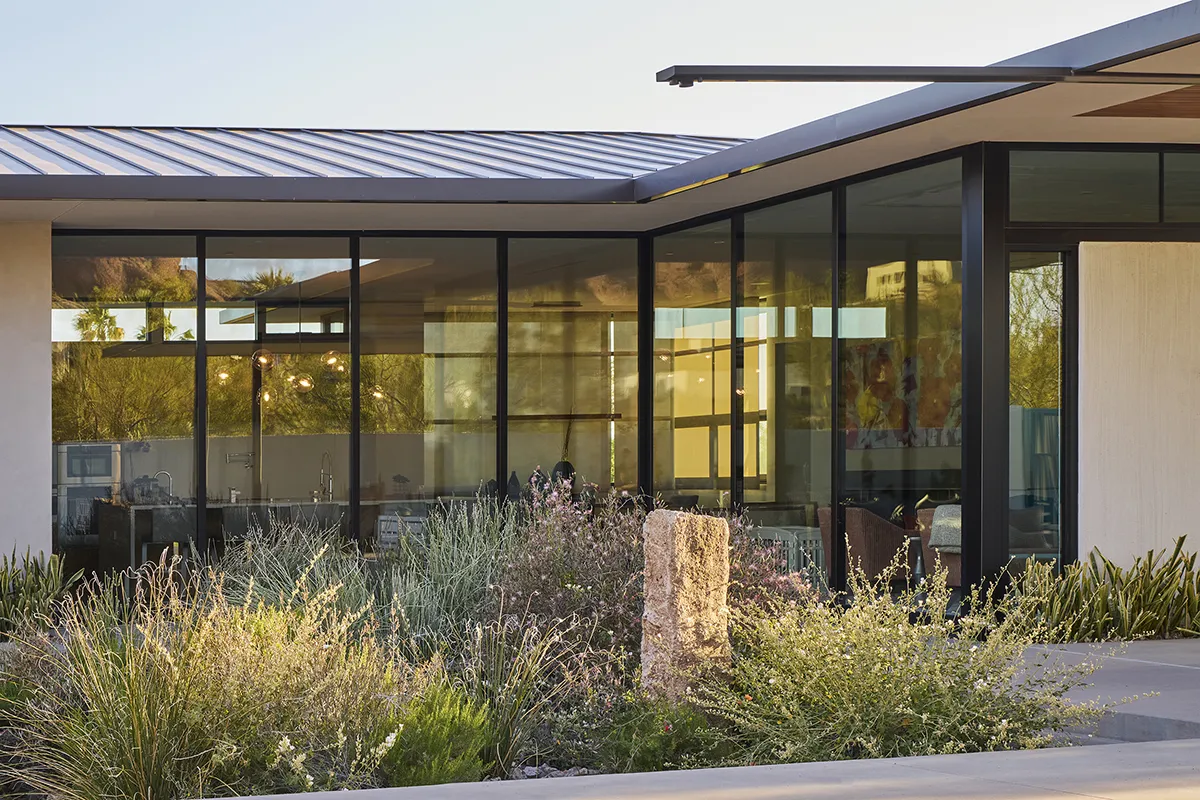
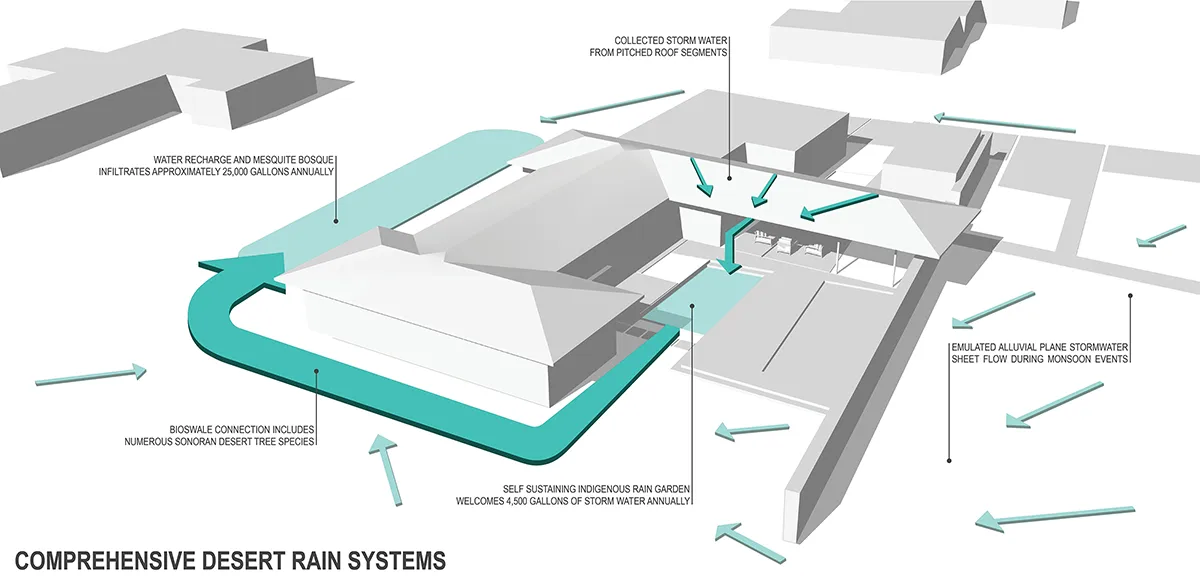
The home is organized around both the rare abundance of rain in the Sonoran Desert, and the often shockingly scarcity of it. This stark dichotomy necessitates a new paradigm in design that is not only water conscious, but also one that proactively crafts a new model for residential garden resiliency in a rapidly changing climate. Phoenix receives on average just seven (7) inches of rain annually. With increasing record summer temperatures and a worsening water crisis across the west, the tenuous balance of survival is palpable, one requiring a shift to fully indigenous plant palettes in harmony with intricately designed rainwater management systems at residential scale.
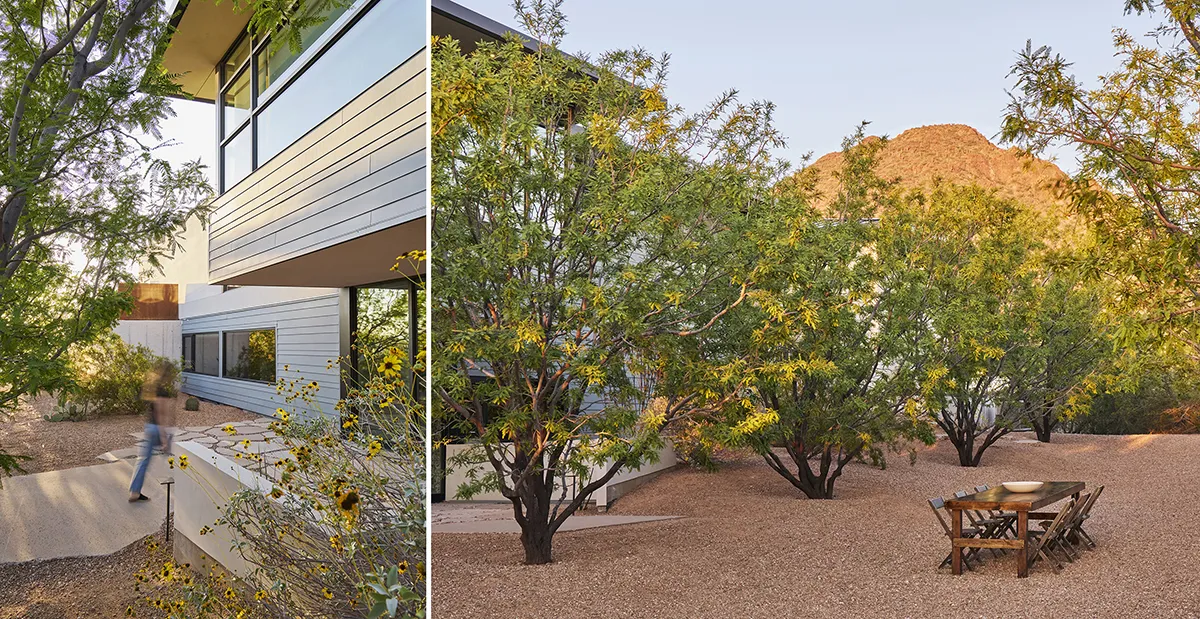
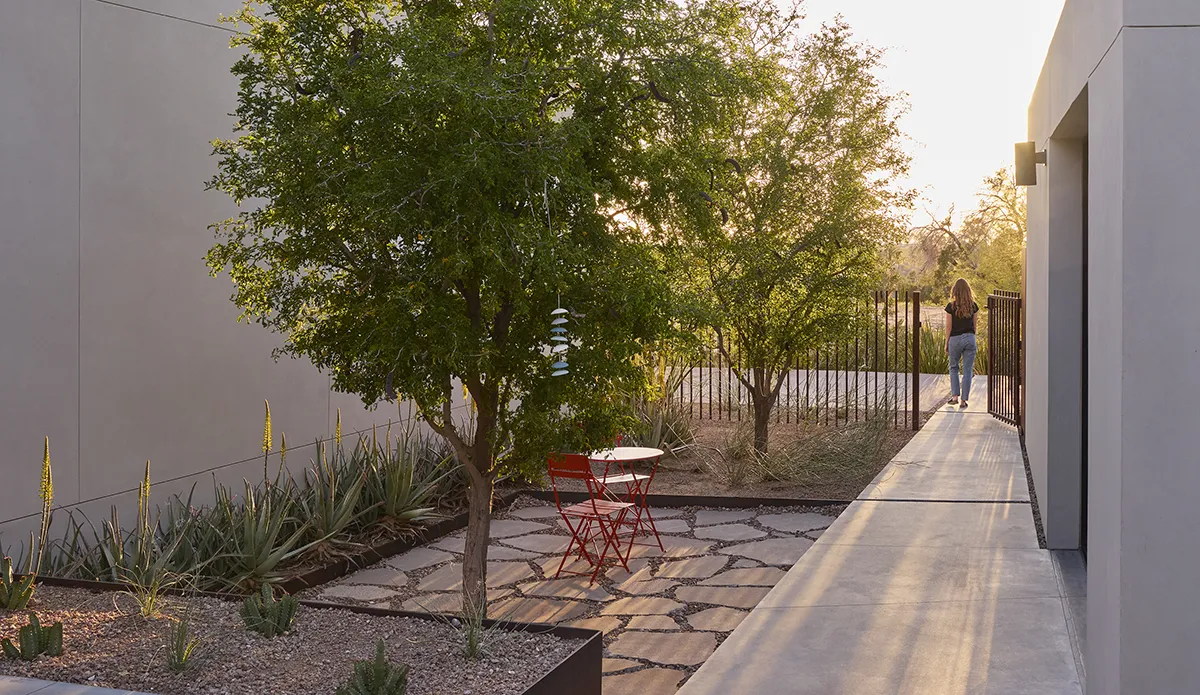
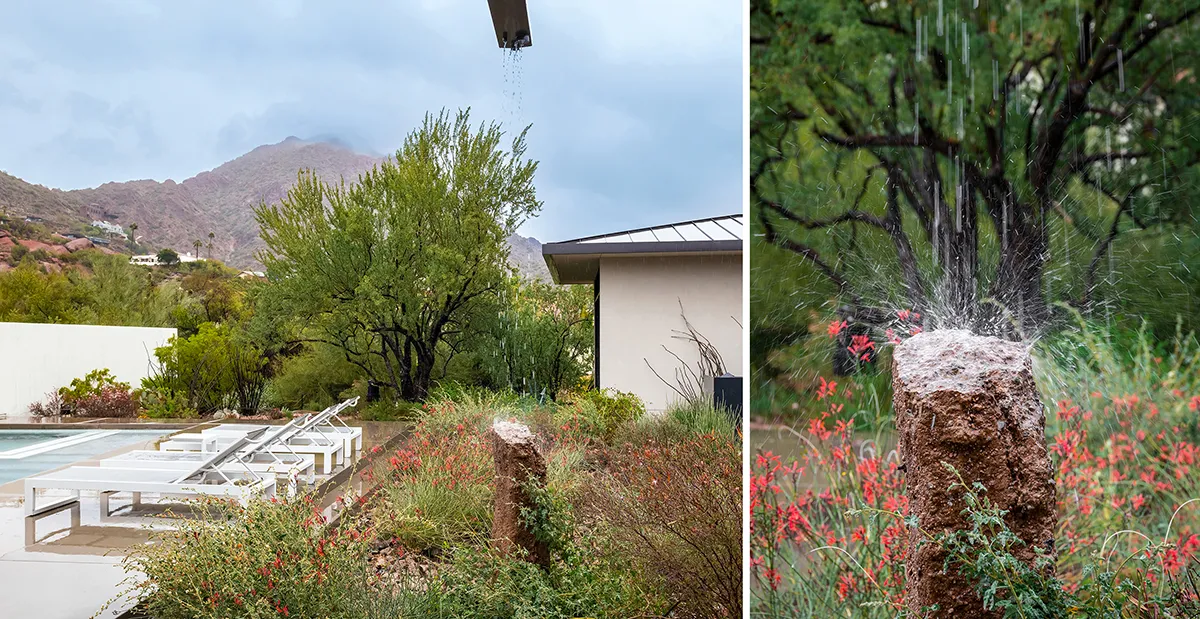
Approximately 28,000 gallons of rainwater fall upon the roof of the home each year. With every ounce kept on the project site through carefully orchestrated bioretention rain gardens, bioswales, and a large mesquite bosque water recharge basin, potable water resources to support the series of desert gardens have been dramatically reduced by 90% compared to a baseline analysis following the initial 18-month establishment period.
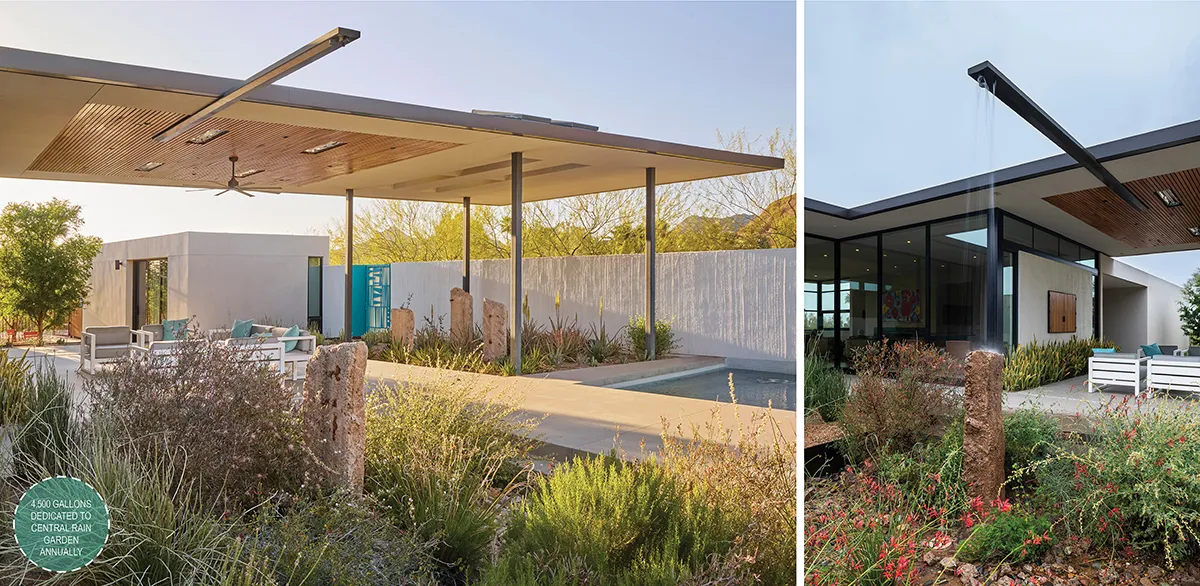
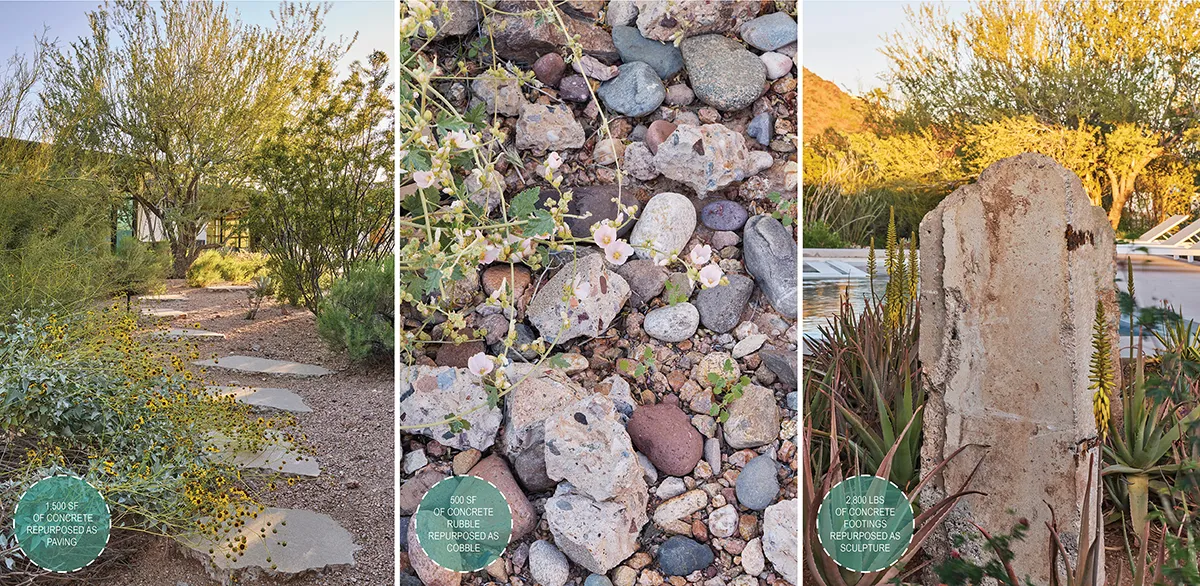
To further instill a model of sustainability in residential gardens, the landscape architect worked with the team prior to the removal of site elements that corresponded with the substantial home re build to identify materials for repurposing. Determining that well over 3,000 square feet of pre-existing concrete paving was salvageable and repurposable was instrumental in the design of numerous applications across the landscape, including paving, retaining walls, and cobble for rain gardens. Further discovery on the site during construction revealed large segments of pre-existing concrete footings, each of which the landscape architect saved for repurposing. One such footing segment became the centerpiece of the central rain garden, located directly beneath the architectural rain scupper. Several thousand pounds of concrete were slated for the landfill but instead found purpose across this landscape.
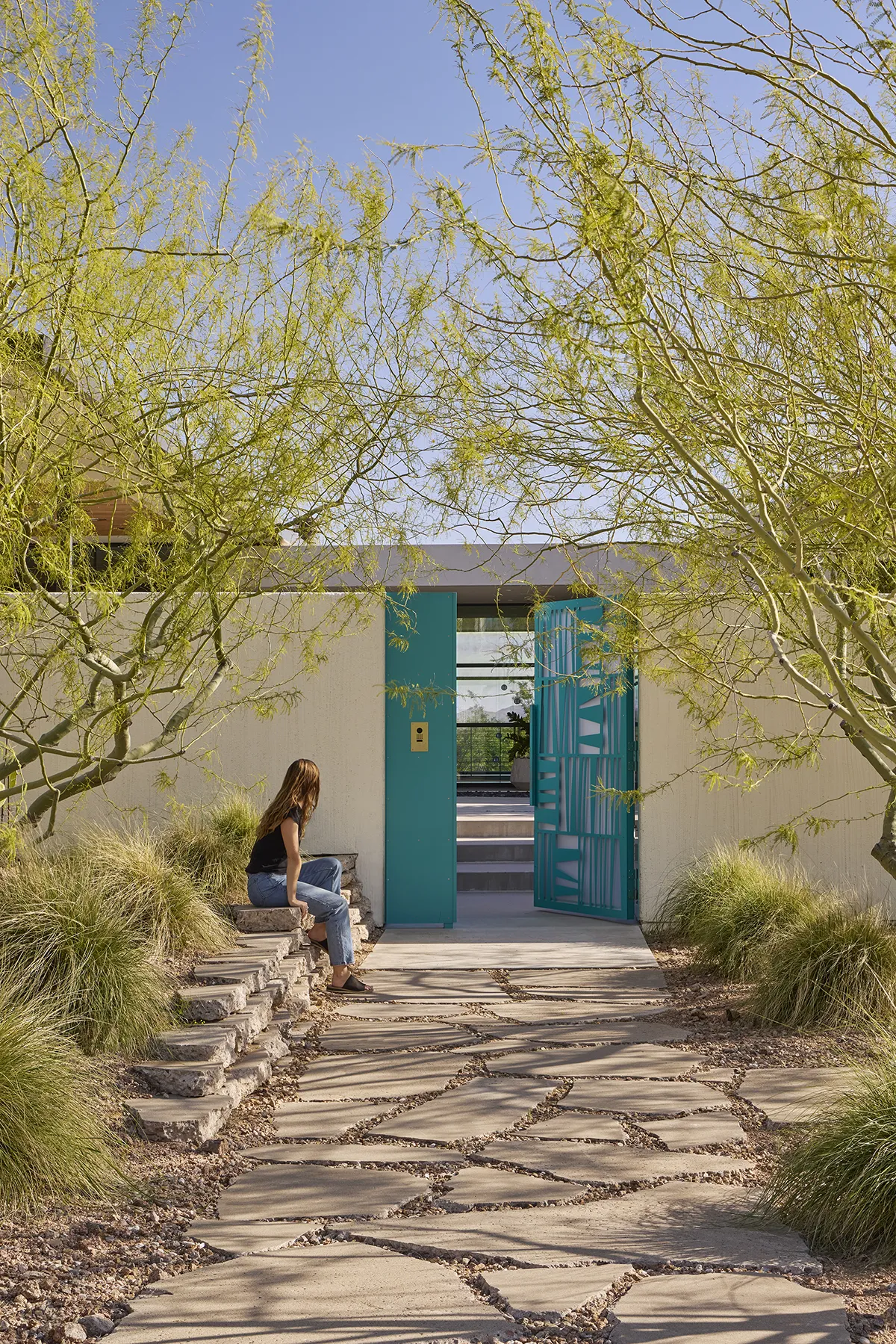
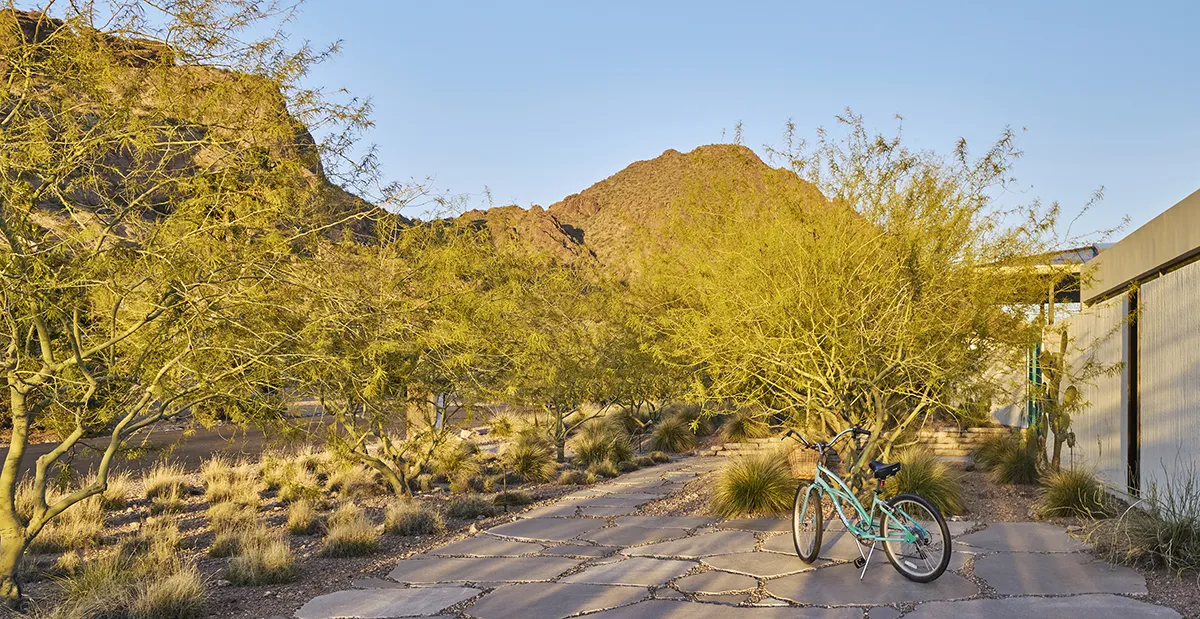
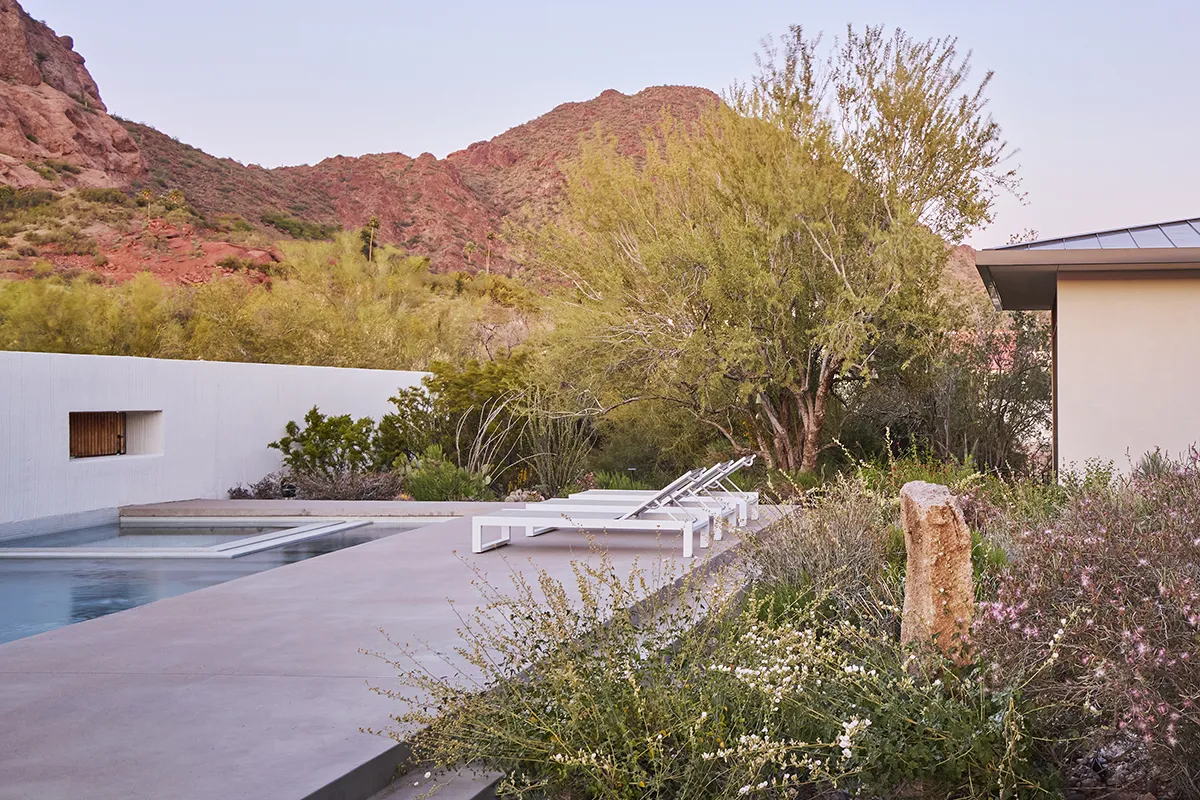
The planting design works with rain as a resource rather than against it. The indigenous palette ensures resiliency, embracing its regional context, while corresponding to the subtle microclimates of architectural shading and carefully arranged concentrations of rain gardens. Trees indigenous to the Sonoran Desert offer crucial shade, including a salvaged specimen Ironwood, tethering the home to the landscape while framing the prominent view of Camelback Mountain.
Plant List
Bauhinia lunaroides / Anacacho Orchid, Cercidium sp. / Palo Verde, Olneya tesota / Ironwood, Prosopis sp. / Mesquite, Pithecellobium flexicaule / Texas Ebony, Ambrosia deltoidea / Triangle Bursage, Calliandra eriophylla / Native Fairy Duster, Dodonea viscosa / Hopbush, Encelia farinosa / Brittlebush, Ericameria laricifolia / Turpentine, Justicia californica / Chuparosa, Larrea tridentata / Creosote, Sphaeralcea ambigua / Globe Mallow, Viguiera deltoidea / Goldeneye, Aloe barbadensis / Yellow Aloe, Agave x ‘Blue Glow’, Agave lophantha Quadricolor / Quadricolor Century Plant, Agave parryi / Parry’s Agave, Agave weberii / Weber’s Agave, Asclepias subulata / Desert Milkweed, Bouteloua gracilis / Blue Grama, Dasylirion wheeleri / Desert Spoon, Euphorbia antisyphilitica / Candelilla, Euphorbia resinifera / Moroccan Mound, Ferocactus wizlenii / Fish Hook Barrel, Fouquieria splendens / Ocotillo, Muhlenbergia rigens / Deer Grass, Nolina microcarpa / Bear Grass, Opuntia basilaris / Beavertail Prickly Pear, Opuntia engelmannii / Engelman’s Prickly Pear, Opuntia gomei / ‘Old Mexico’ Prickly Pear, Pedilanthus macrocarpus / Slipper Plant, Baileya multiradiata / Desert Marigold, Penstemon parryi / Parry’s Penstemon;
House of Rain
Location: Phoenix, Arizona, USA
Design Firm: TRUEFORM
Collaborators: 180 Degrees Design + Build
Text Credit: TRUEFORM
Image Credit: TRUEFORM
Photography: Caitlin Atkinson
Be the first to comment