
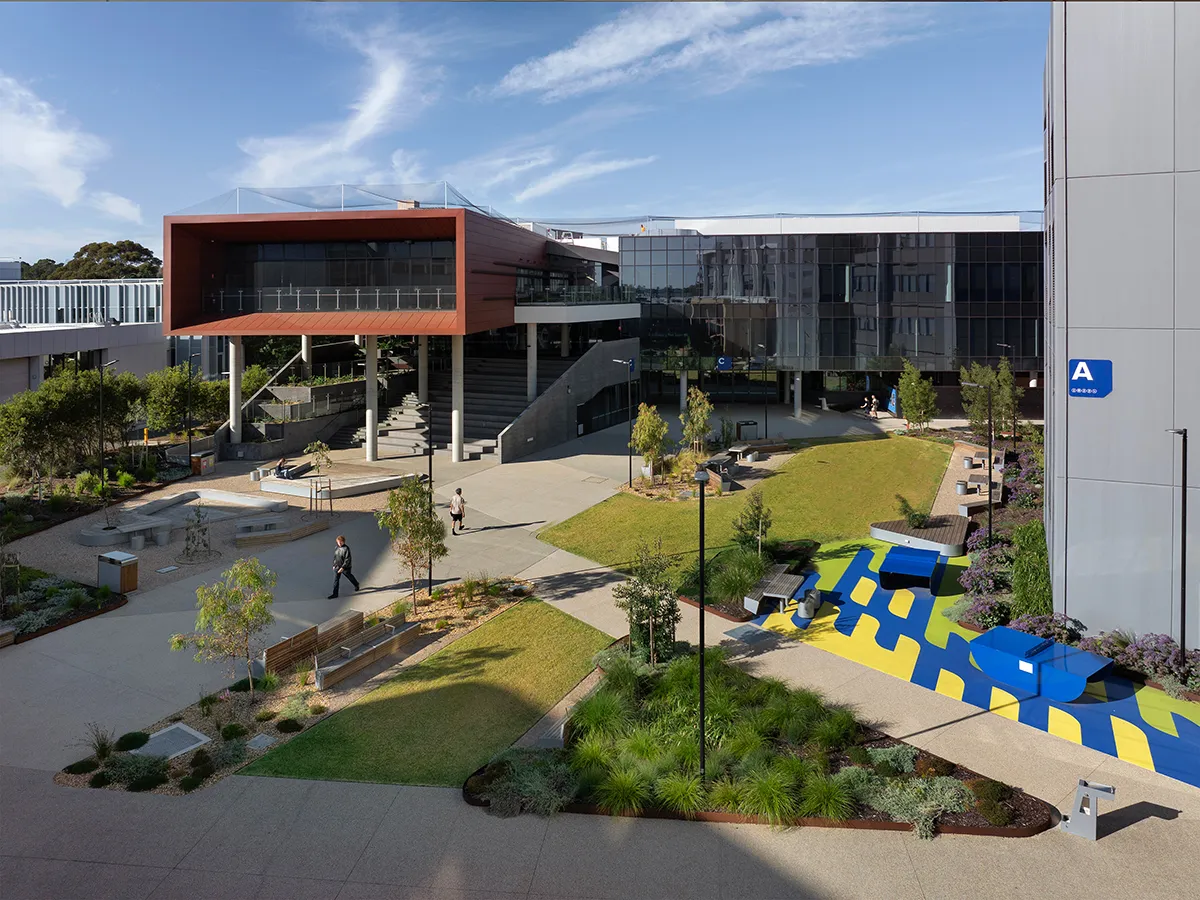
Chisholm Institute, a vocational and higher education provider in Southeast Melbourne recognised that world-class campus experiences should be available to everyone. A collaborative design team, including landscape architects, was engaged to create a holistic tertiary education experience on its Frankston Campus, with the potential to apply this design thinking to future growth.
In recognition of it fast becoming one of the most advanced and innovative training and skills institutes in the region, Stage Two of the Frankston Campus Redevelopment Project for the Chisholm Institute was designed to deliver new state-of-the-art education and teaching facilities, responding to growing local industry needs.
Stage Two of the Redevelopment Project at the Frankston Campus of the Chisholm Institute delivered a $67.6 million multi-level facility that introduces new learning spaces dedicated to student support and enrolment hub, community and social services, VCE/VCE Vocational Major and Foundation College, along with bespoke spaces for art and design.
A challenge for the landscape architects was to create a campus landscape that would encourage a holistic tertiary education experience; an inspirational landscape that motivates learning and class engagement. The new open space has delivered an array of opportunities for students to gather for shared learning, social interactions, the exchange of ideas and moments of contemplation.
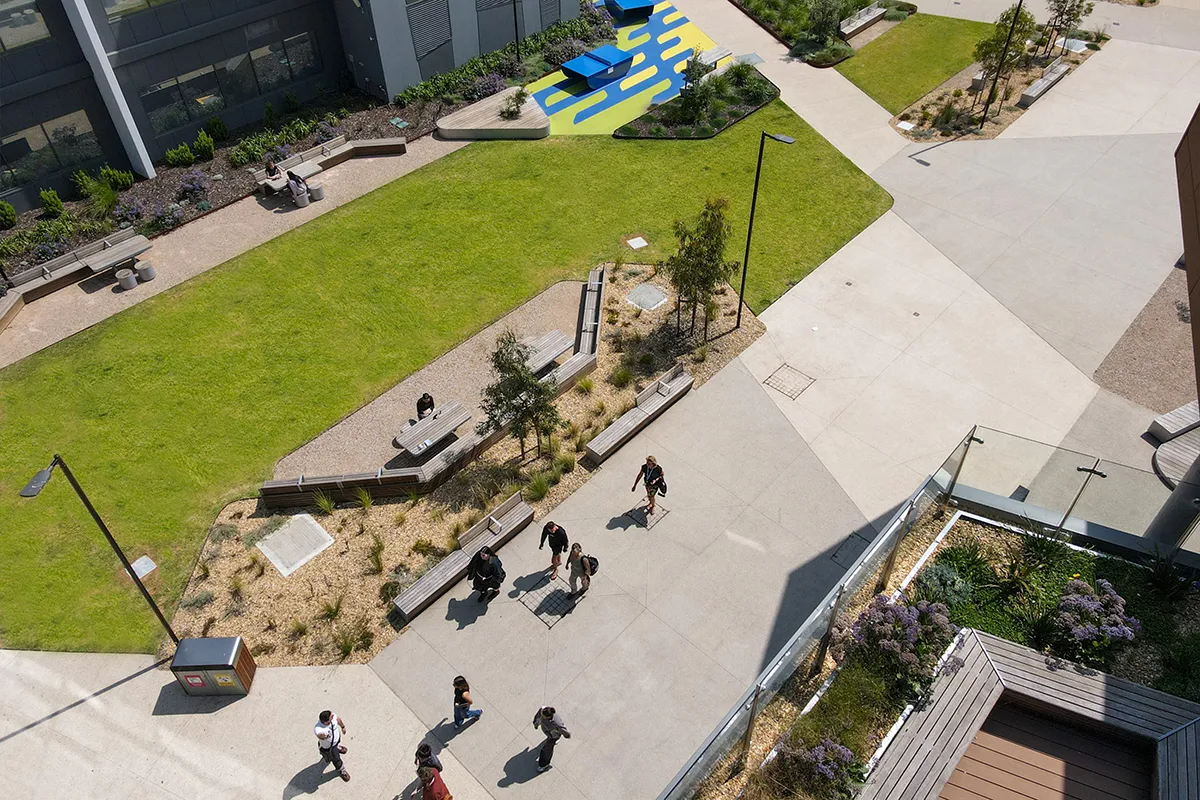
To create a sense of belonging through a place-specific campus identity, an important step of the design approach was research into the Frankston area to understand the First Nations and colonial history of site, as well as site assessments for solar access, connections, winds, and local species to encourage biodiversity.
The result is a coastal inspired campus identity that represents Frankston’s precolonial natural landscape in an abstract yet literal form, as well as highlighting the proximity to the beach through the planting and material palettes.
The most obvious interpretation is visible in the super graphic used in the recreation zone. The green, yellow and blue used represents the bushy coastal vegetation, the coastal sand dunes, and the sea, with all three elements intertwined in a wave pattern symbolising the natural relationship between these elements. The narrative is subtly implied throughout the site design, with the banding of the paving colour, the radiused corners of all surfaces and through the planting selection, reflective of the site’s bioregions and Ecological Vegetation Classes.
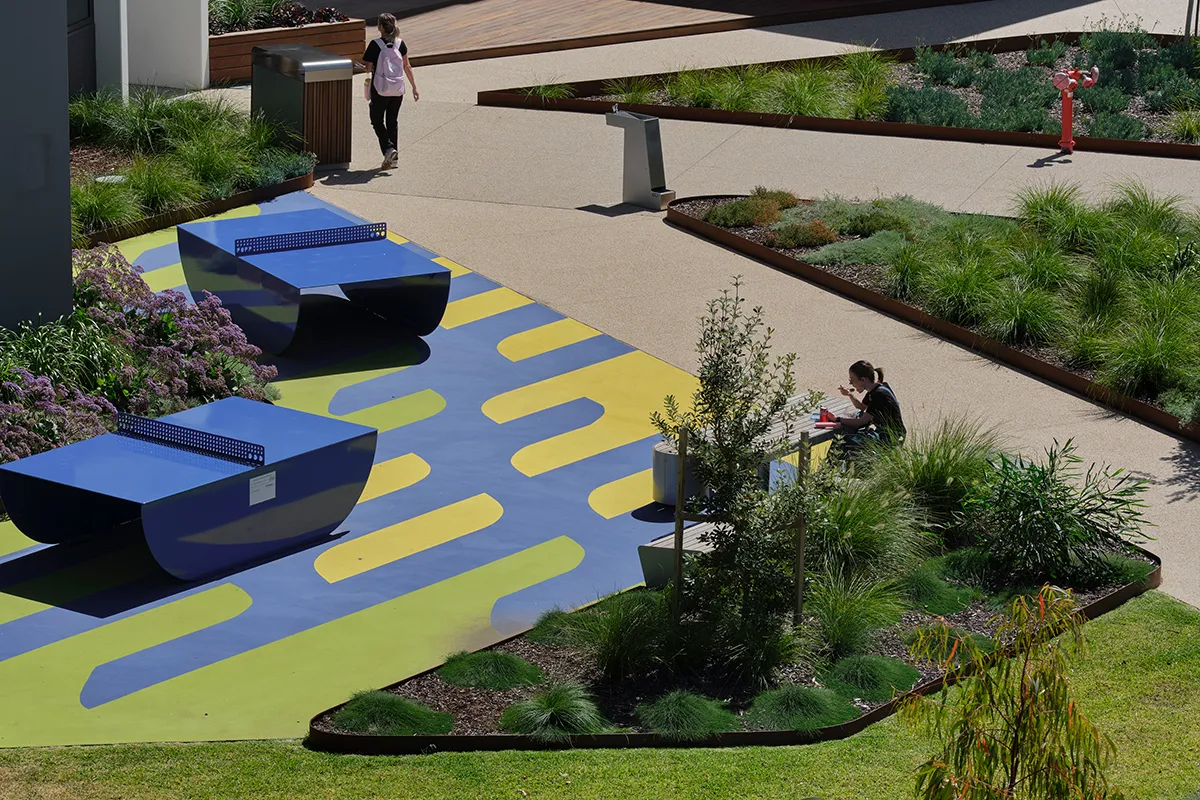
With Stage Two of the Frankston Redevelopment Project delivered in January 2024, students, teachers and campus visitors now have access to an array of spaces, designed with an emphasis on multi-functionality, diversity of amenity and programming, allowing different users in the space at the same time.
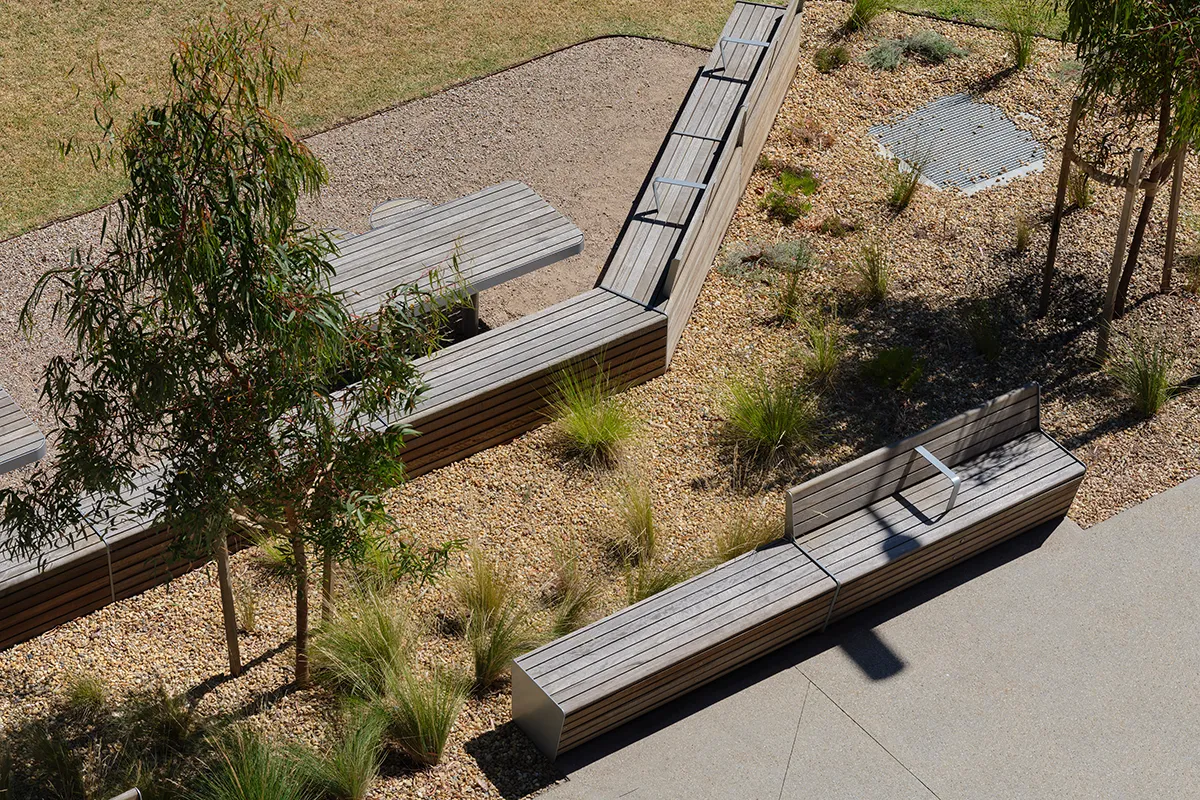
The landscape architectural design seeks to establish a new design language and materiality palette that can be extended throughout the campus, achieving a cohesive overall character. This approach is already evident through recent works to the central lawn to the north, providing a consistent overall space for the campus.
A main pedestrian spine runs through the centre, allowing access to the different learning buildings as well as an open plaza and multiple gathering areas. A central timber deck with a stage is positioned for outdoor learning and performance opportunities, overlooked by protected amphitheatre seating.
A diversity of timber seating options is located throughout, many with integrated planting, allowing for study, sharing a meal or spending a moment in the fresh air while waiting for a class. Transitional spaces between the interior and open space have been designed to create spaces for socialising, with terraced timber lounge seating making a popular meeting space with outlooks over the lawn.
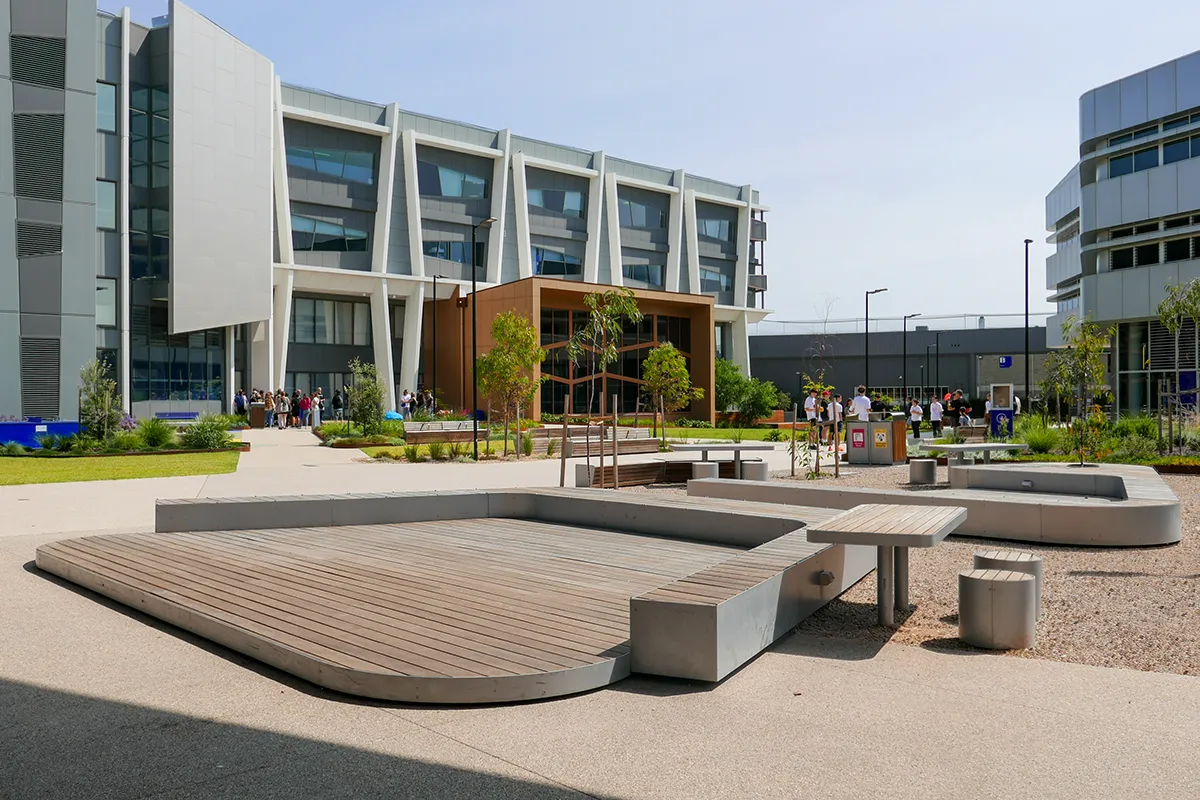
The central open lawn is embraced for informal socialisation, relaxation and student events while the table tennis tables encourage physical sports activity and a flexible sport surface, with the sand dune inspired super graphic offers adaptability.
With the Frankston campus easily accessible by public transport, including train and bus, the new landscape has delivered improved connections to the nearby Peninsula Aquatic and Recreation Centre and Frankston Station.
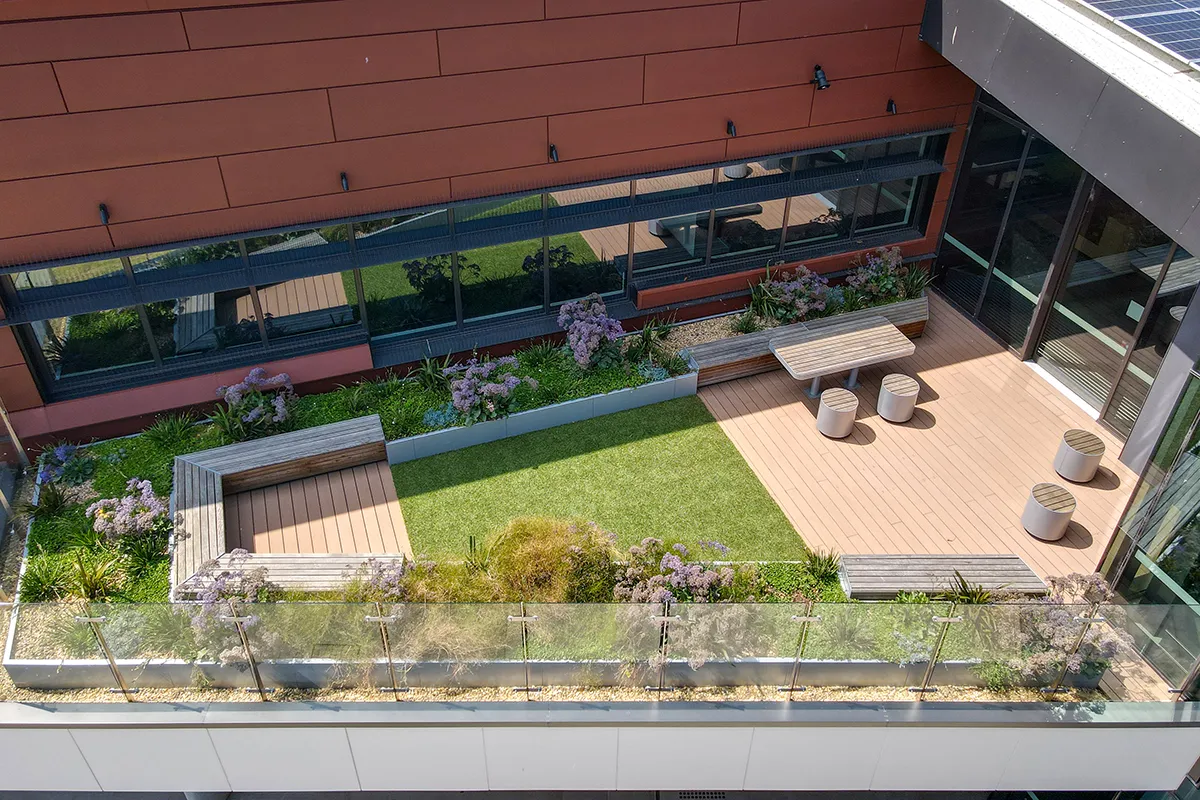
Upper-level break-out terraces provide easy access to fresh air and communal spaces for teachers and students. The spaces provide a number of pockets for student socialisation and can be used to host larger events and gatherings. Glass balustrades allow people to view events in the amphitheatre and enjoy the outlook to the campus with views framed by the planting along the building edge.
Chisholm Institute Stage Two
Location: Frankston, Victoria, Australia
Indigenous Nation: Bunurong
Landscape Architect: Arcadia Landscape Architecture
Key Collaborators: Gray Puksand
Images Credit: Tom Roe