
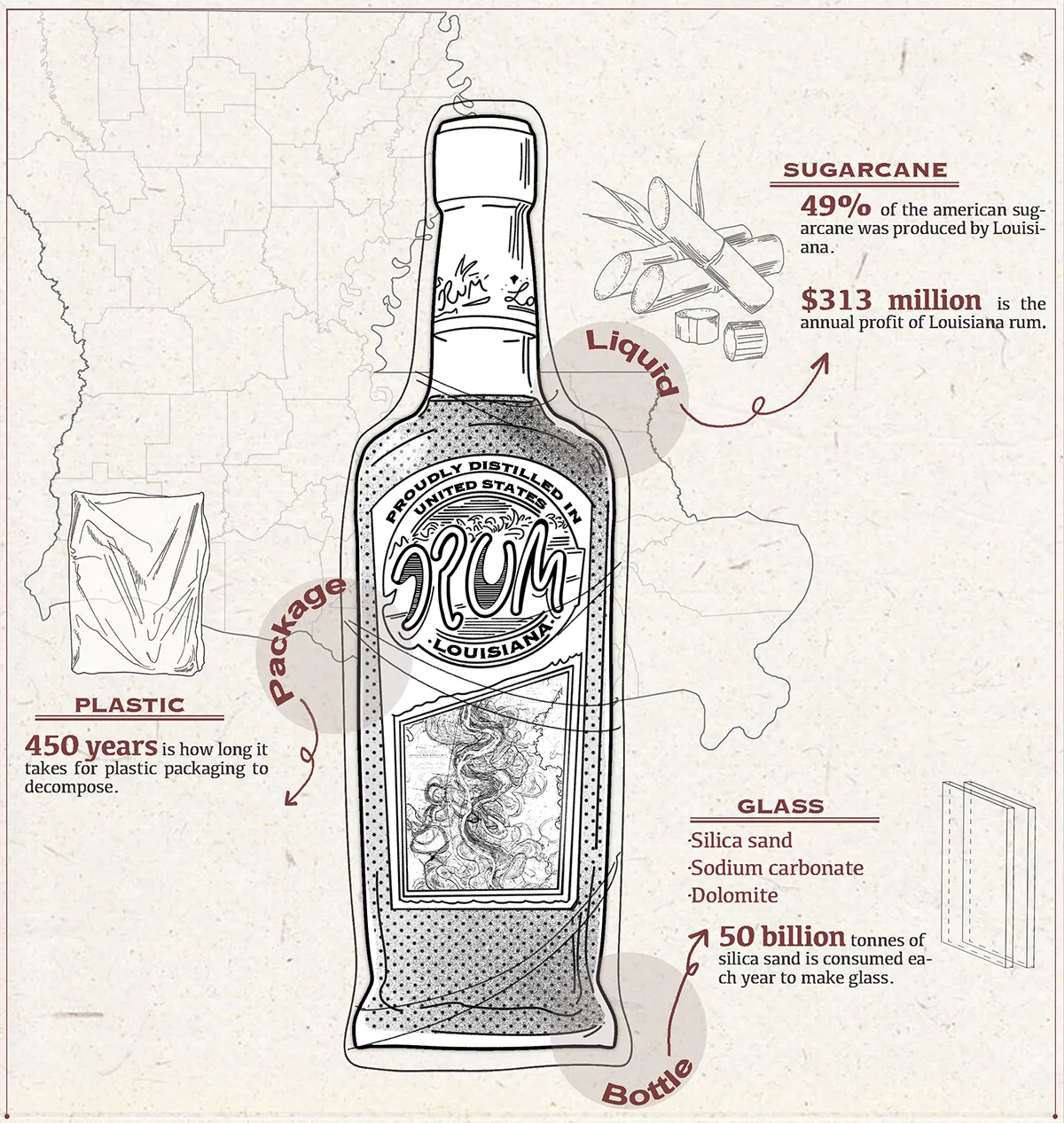
Located in Louisiana, a leading state for sugarcane production, this region has supported sugarcane farming for over three centuries, covering 49% of the nation’s cultivation area and producing 20% of U.S. sugar.
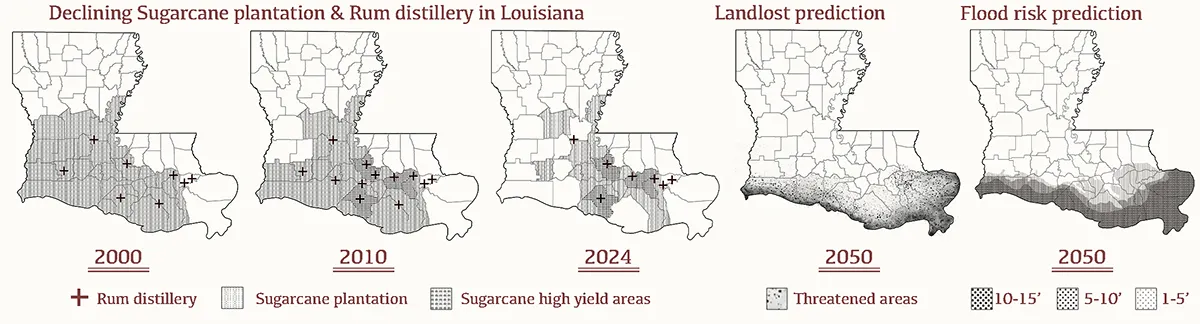
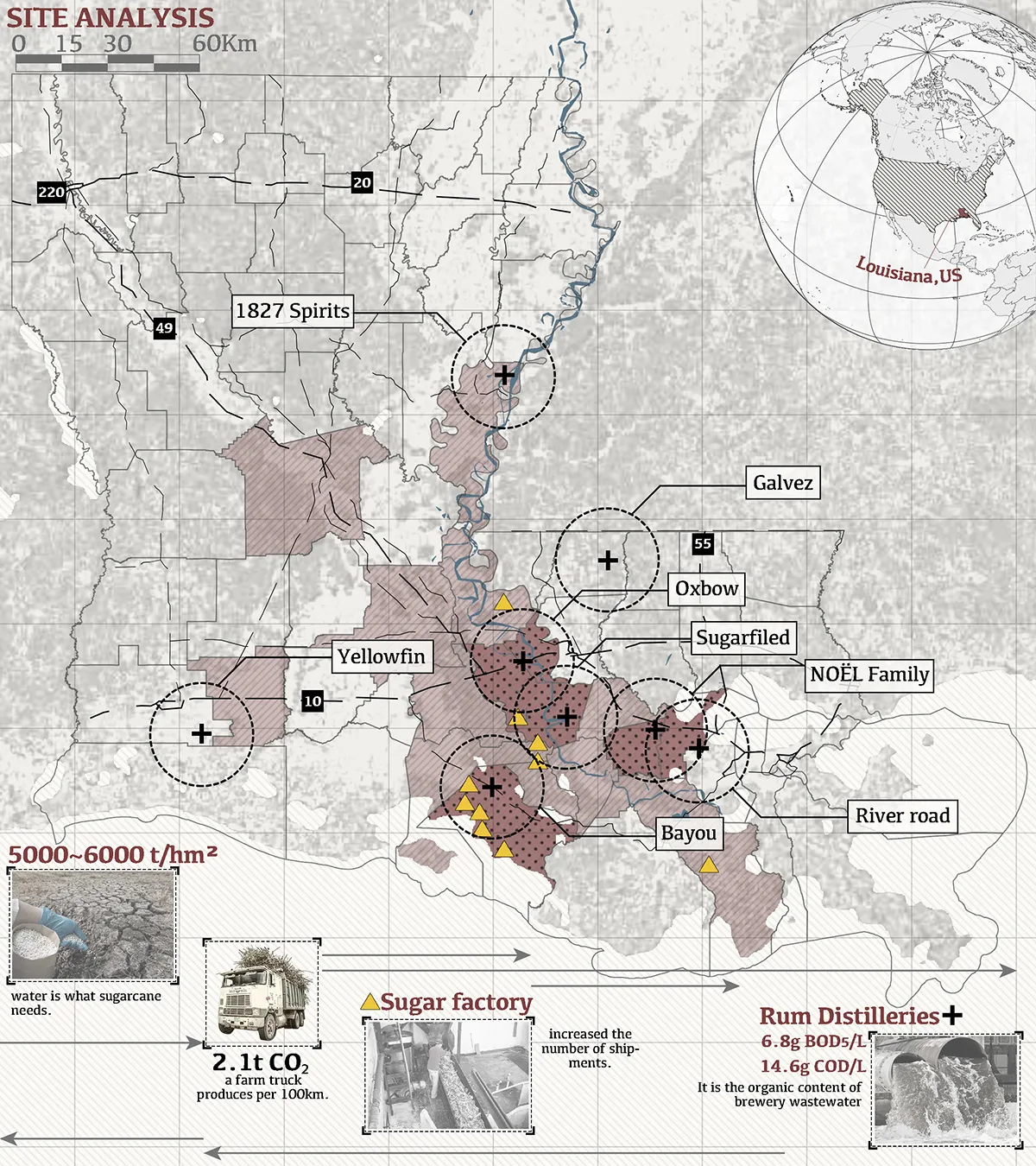
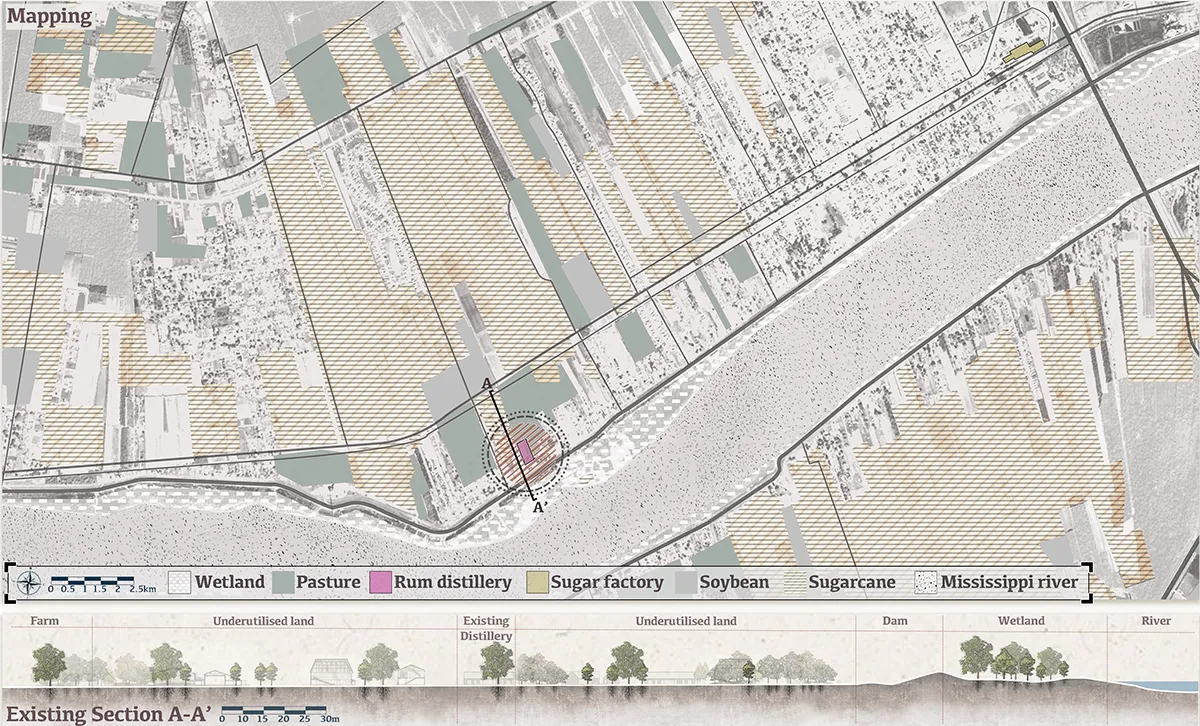
The sugarcane industry and its associated sectors have provided substantial employment for local communities. However, climate change, driven by modern development, along with the economic impacts of the COVID-19 pandemic, have led to the closure of many rum distilleries. This project proposes a 35-year plan to transform the Riverroad Distillery and its surrounding sugarcane plantation into a sustainable, self-sufficient production hub. The project addresses key challenges through improvements in agricultural structure, integration of farming and distillation, renewable energy use, and water management innovations.
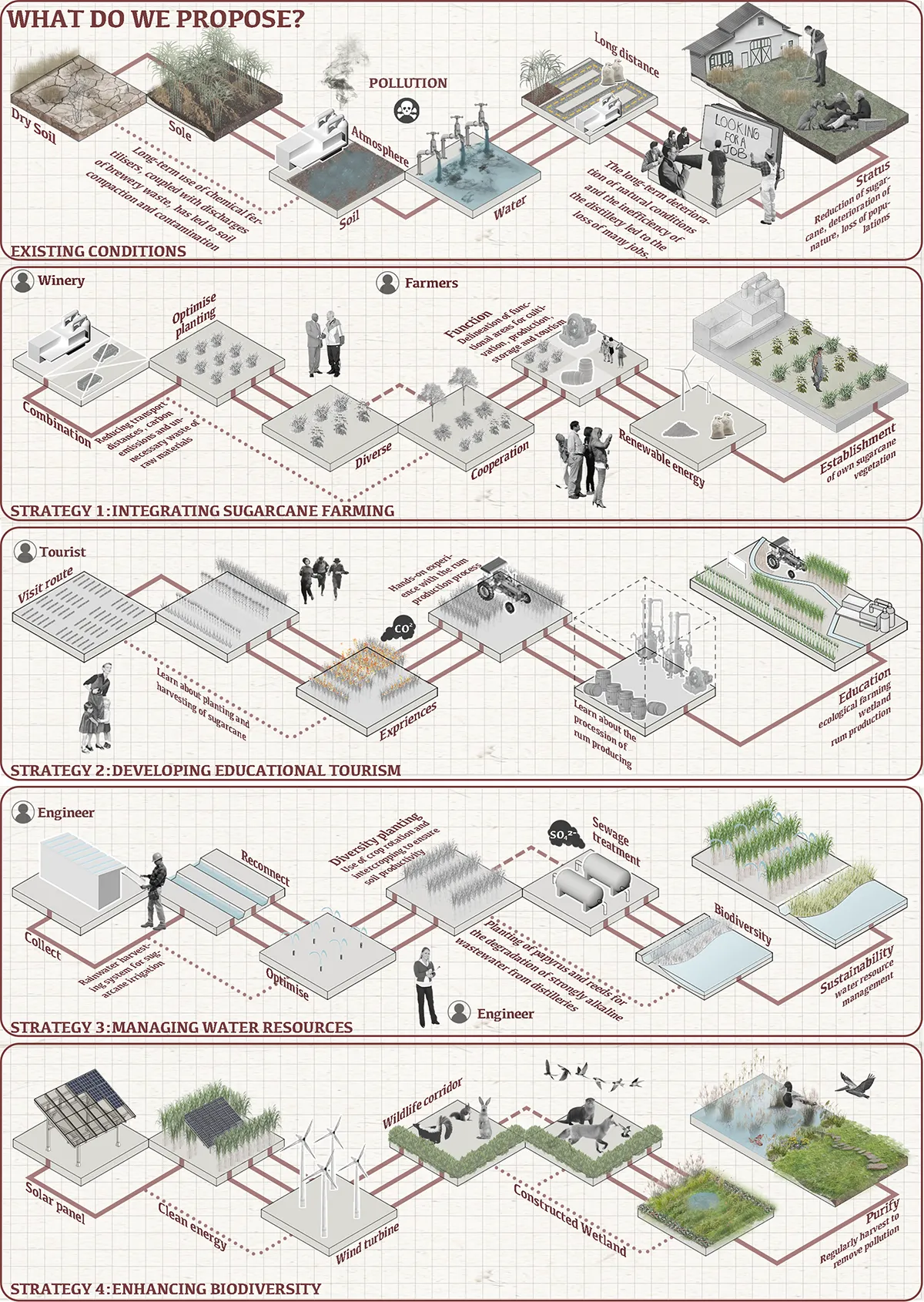
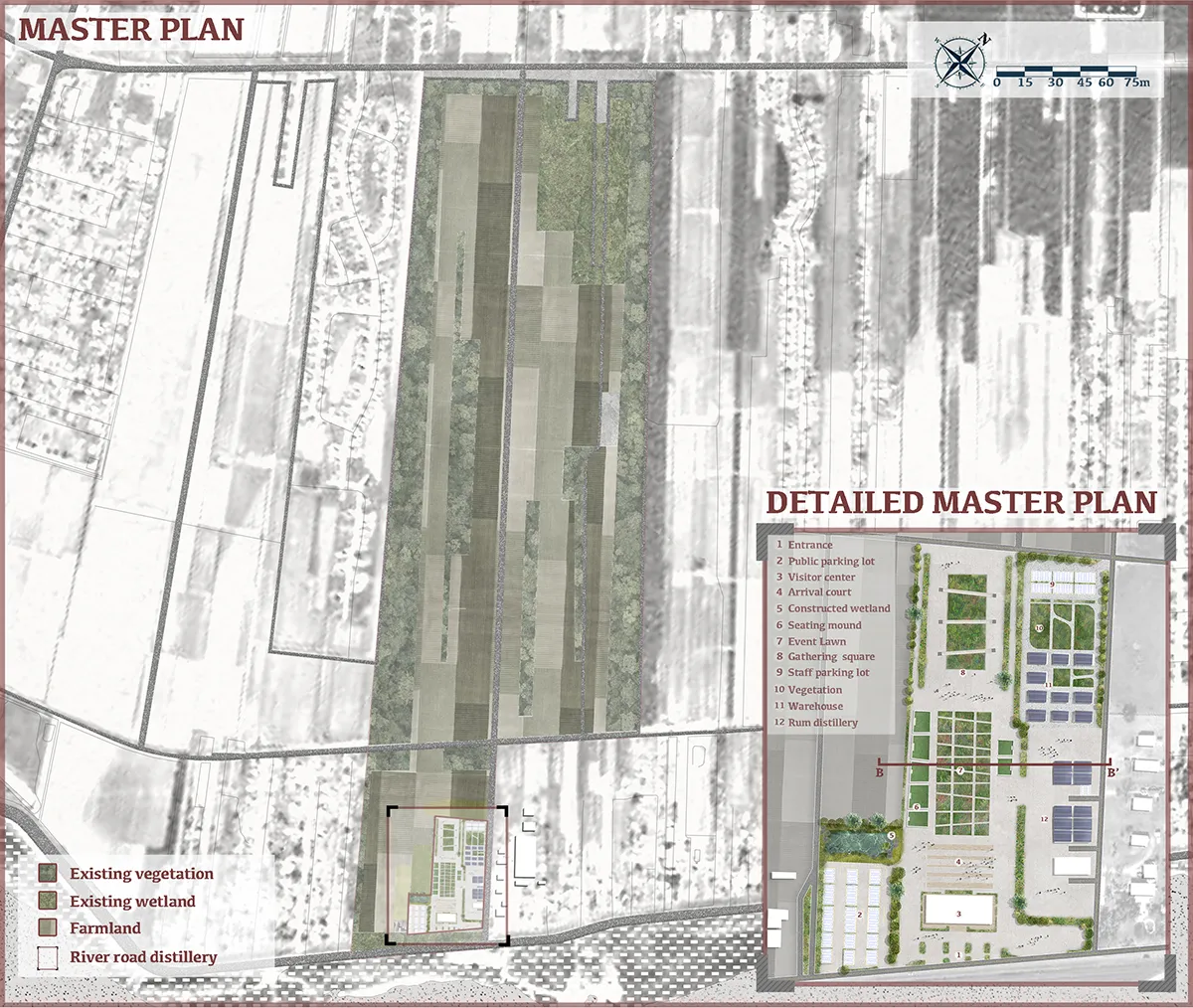
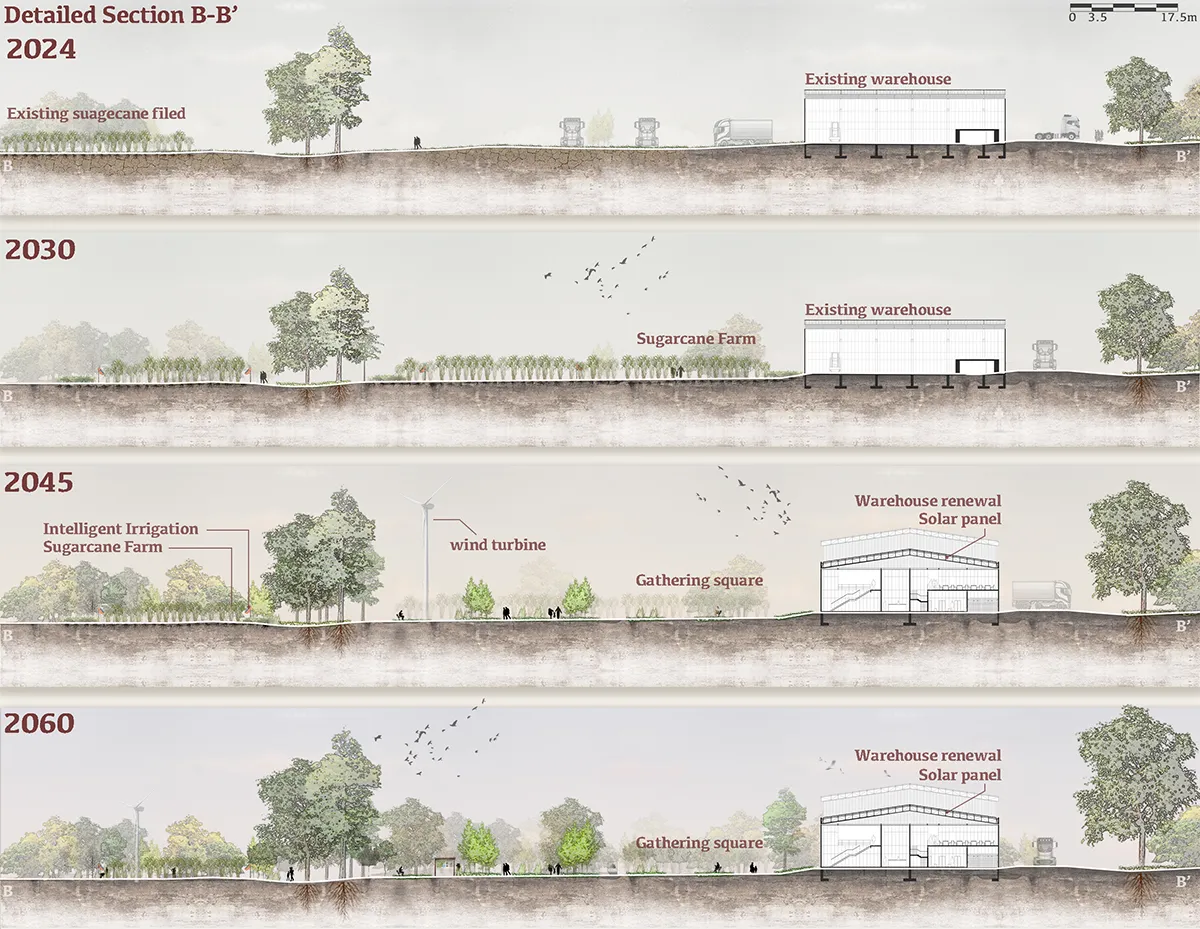
Integrating Sugarcane Farming: The distillery and sugarcane fields will be integrated to reduce transportation distances and costs. Optimizing the layout of the fields will enhance planting efficiency, while crop rotation and diversified farming practices will maintain soil health. Collaborating with local farmers will boost productivity, and distinct functional zones will be created for cultivation, production, storage, and tourism. The project will also incorporate renewable energy, such as wind power and sugarcane waste conversion to fertilizer, ensuring long-term sustainability.
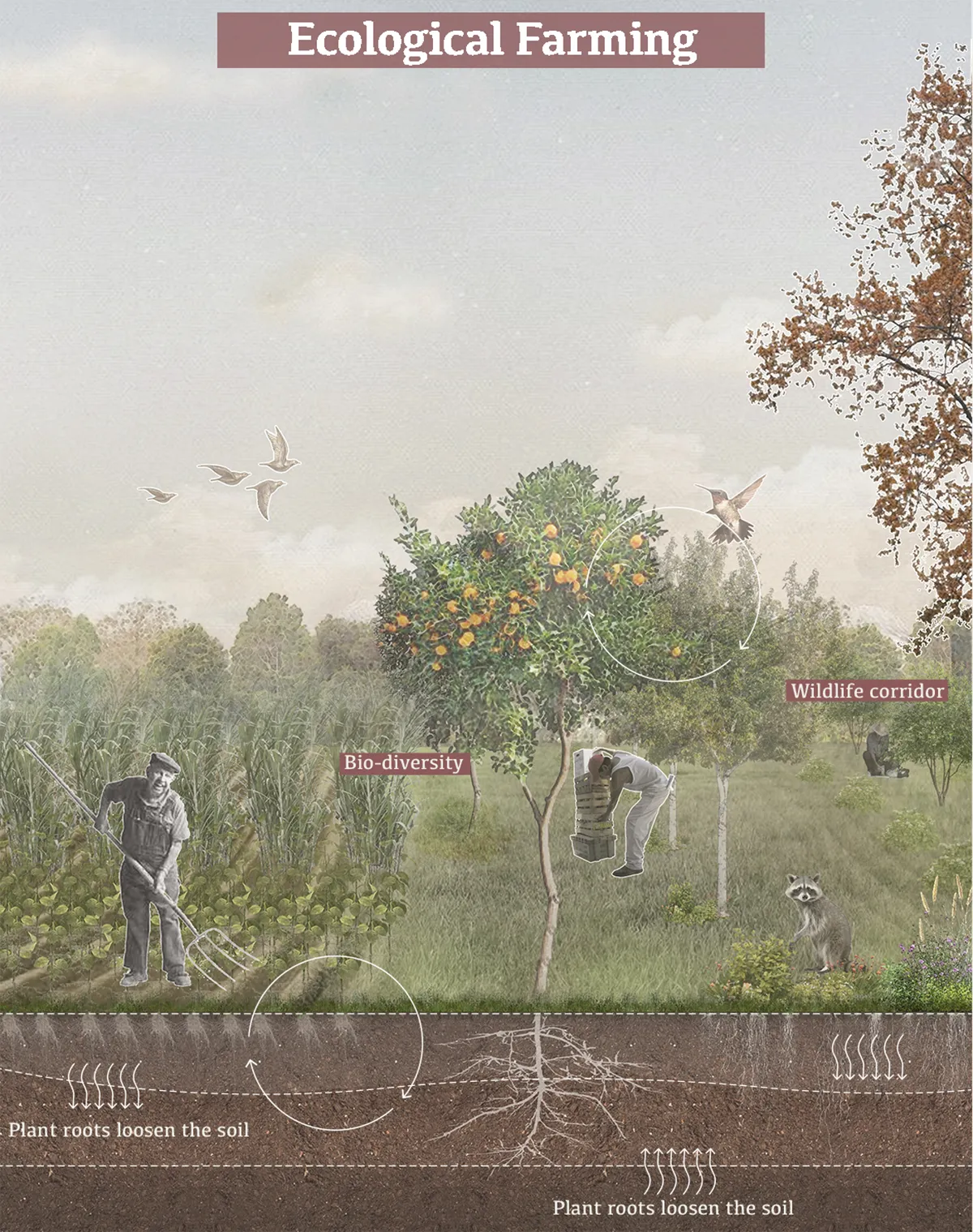
Managing Water Resources: Water sustainability is central to this design. A rainwater harvesting system will be implemented to irrigate the sugarcane fields, reducing reliance on external sources. In addition, a constructed wetland will be developed to treat and recycle wastewater from the production process, forming a closed-loop system that benefits both the plantation and the surrounding landscape.
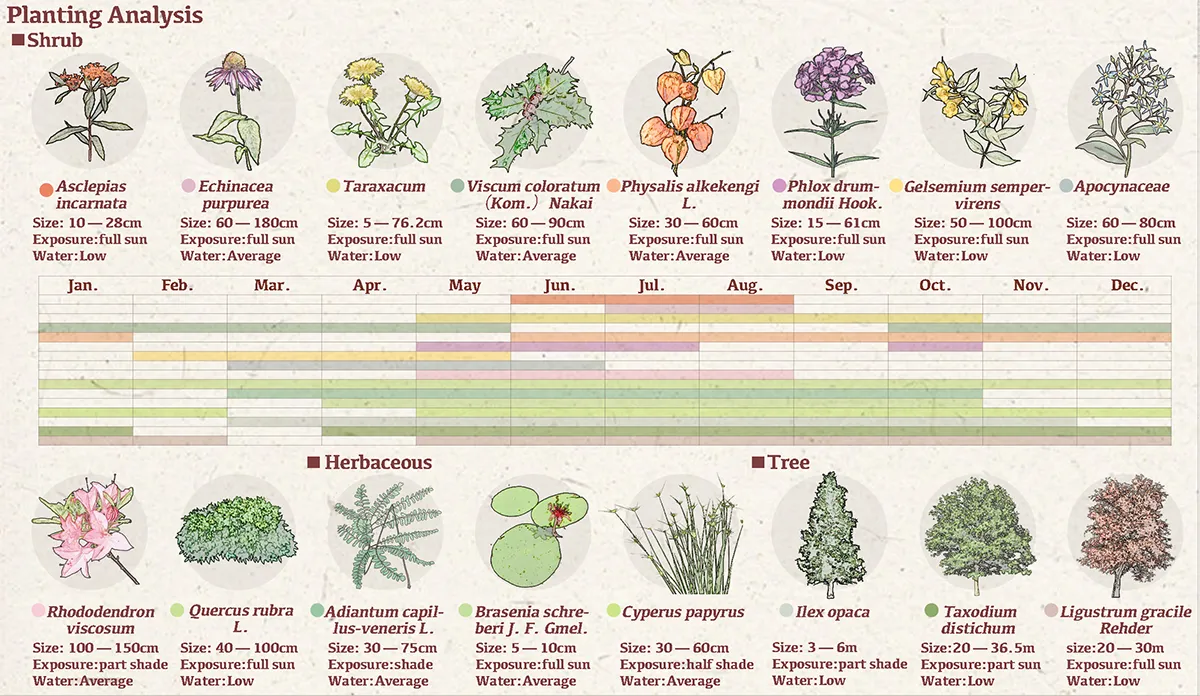
Enhancing Biodiversity: The landscape will prioritize biodiversity through diverse planting, the creation of hedgerows, and the establishment of wildlife corridors to support ecosystems. Solar panels will generate clean energy, further reducing the environmental impact. These landscape strategies not only promote sustainability but also enhance the site’s ecological value and appeal.
Developing Educational Tourism: The project will create an educational tourism experience where visitors can explore the sugarcane-to-rum process. Tour routes will offer interactive learning experiences, such as workshops on farming, distillation, and wetland management, promoting sustainable agricultural practices.
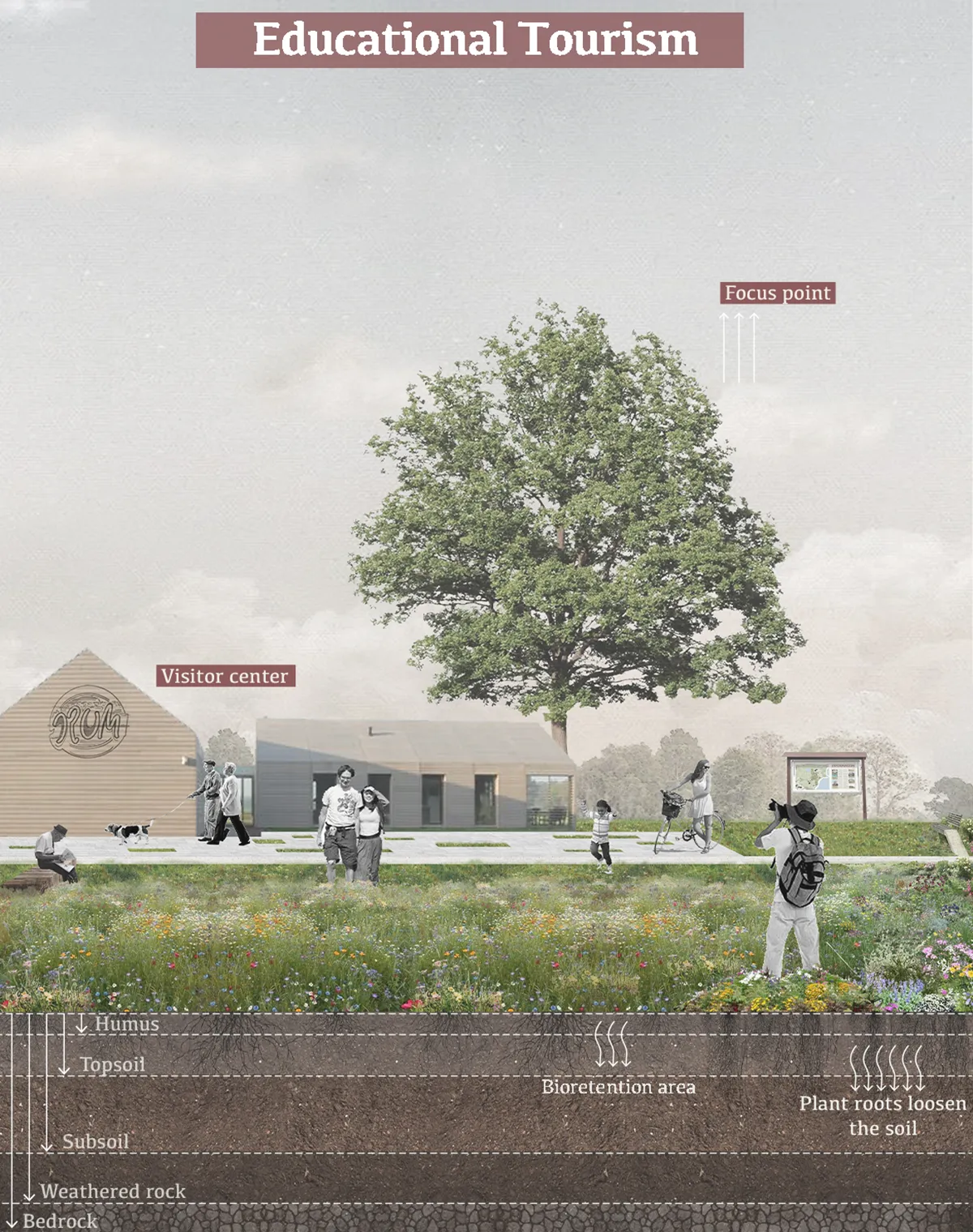
This plan represents a forward-thinking approach to harmonizing agricultural and industrial landscapes, fostering environmental stewardship, and engaging the community through education and tourism.
Run, Sweet Rum: Sustainable Integration of Rum Industry
Student Name: Lujia Deng
University: ChongQing JiaoTong University
Student Name: Yanchi Li
University: Louisiana State University