
Article by Yannick Van der Veken, plant expert at OMGEVING
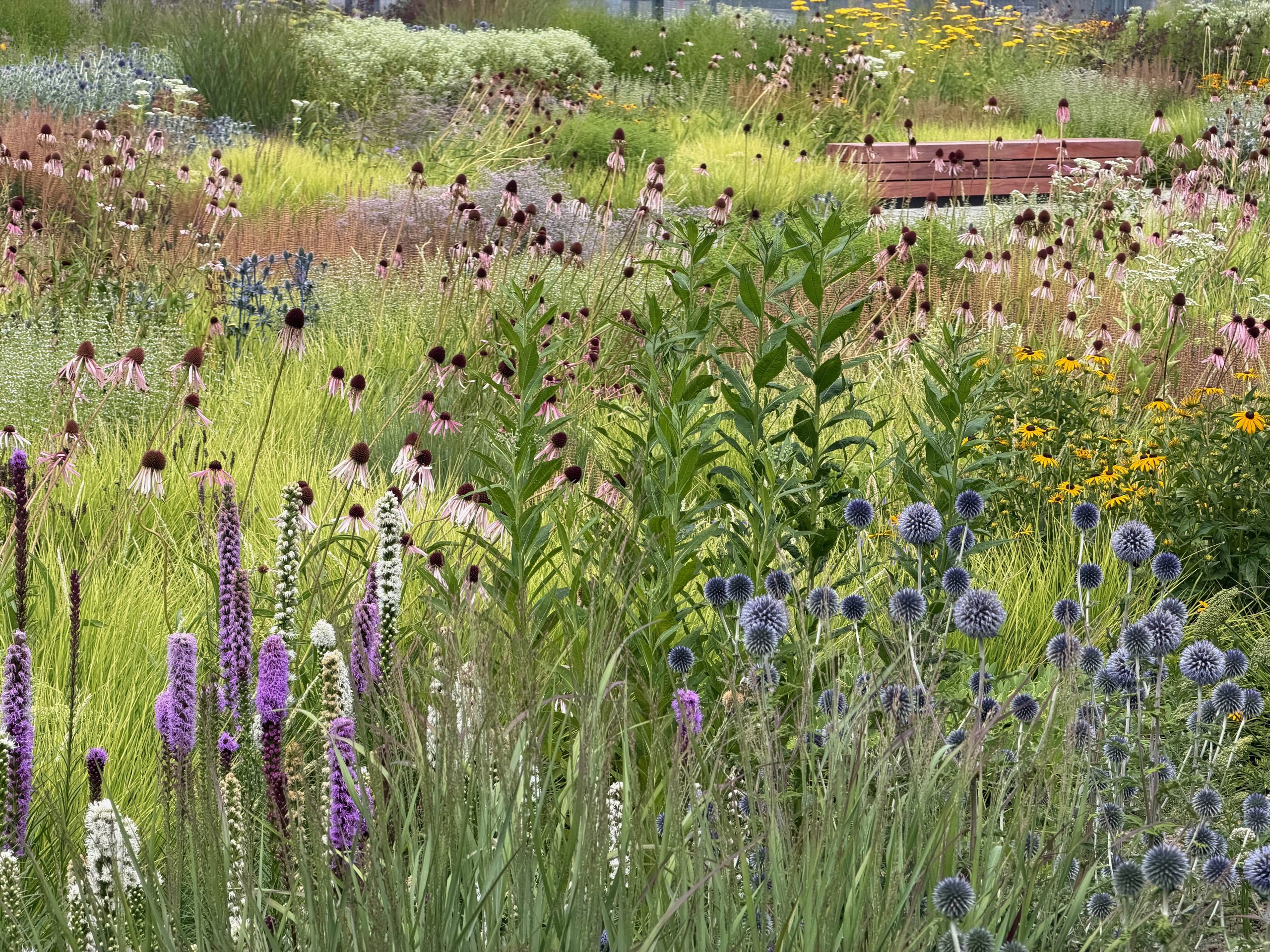
Why Biodiversity Recovery Needs a New Approach
For decades, nature policy has focused primarily on protecting and restoring designated nature reserves. These efforts have undoubtedly been important. Across Europe, several iconic species have recovered thanks to targeted conservation programs and protected landscapes. Yet while attention has focused on rare and threatened species, another, less visible crisis has unfolded beyond the boundaries of nature reserves. Many of the plants and animals that once formed the ecological fabric of everyday life are steadily disappearing from our towns, parks, streets and agricultural landscapes.
This presents a striking paradox. Species such as the otter, beaver and wolf are making a successful comeback, while species that were once considered commonplace, such as the house sparrow and all kinds of insect, are rapidly declining across large parts of Europe. The problem is no longer limited to protected nature reserves. It is increasingly a problem of the everyday landscape, where degraded soils, fragmented habitats, simplified vegetation structures and intensive maintenance have reduced the ecological quality of the places where both people and wildlife live.
In response to this challenge, the concept of Baseline Nature Quality offers a different perspective on biodiversity recovery. Instead of concentrating exclusively on rare species or protected sites, it focuses on restoring the conditions that allow common species to remain common. The underlying idea is deceptively simple: biodiversity cannot thrive without the basic ecological foundations of a landscape. Healthy soil, functioning water systems, connected green structures and appropriate management together create the conditions from which nature can recover. Rather than treating biodiversity as a collection of isolated interventions, Baseline Nature Quality approaches it as a living system.
For landscape architects, this shift is significant. It positions parks, streetscapes, squares, rooftops and public spaces not as decorative elements within the urban environment, but as essential components of a larger ecological network. The challenge is no longer simply to create individual green spaces. It is to transform everyday landscapes into places that can support life.
From Theory to Practice: Ecological Urbanism
Three recent projects by OMGEVING demonstrate how this thinking can be translated into practice. They are located in different cities across Flanders (the Northern region of Belgium), and although they differ greatly in scale and context, each contributes to rebuilding the living landscape.
Den Bell Antwerp: Rebuilding the ecological foundation
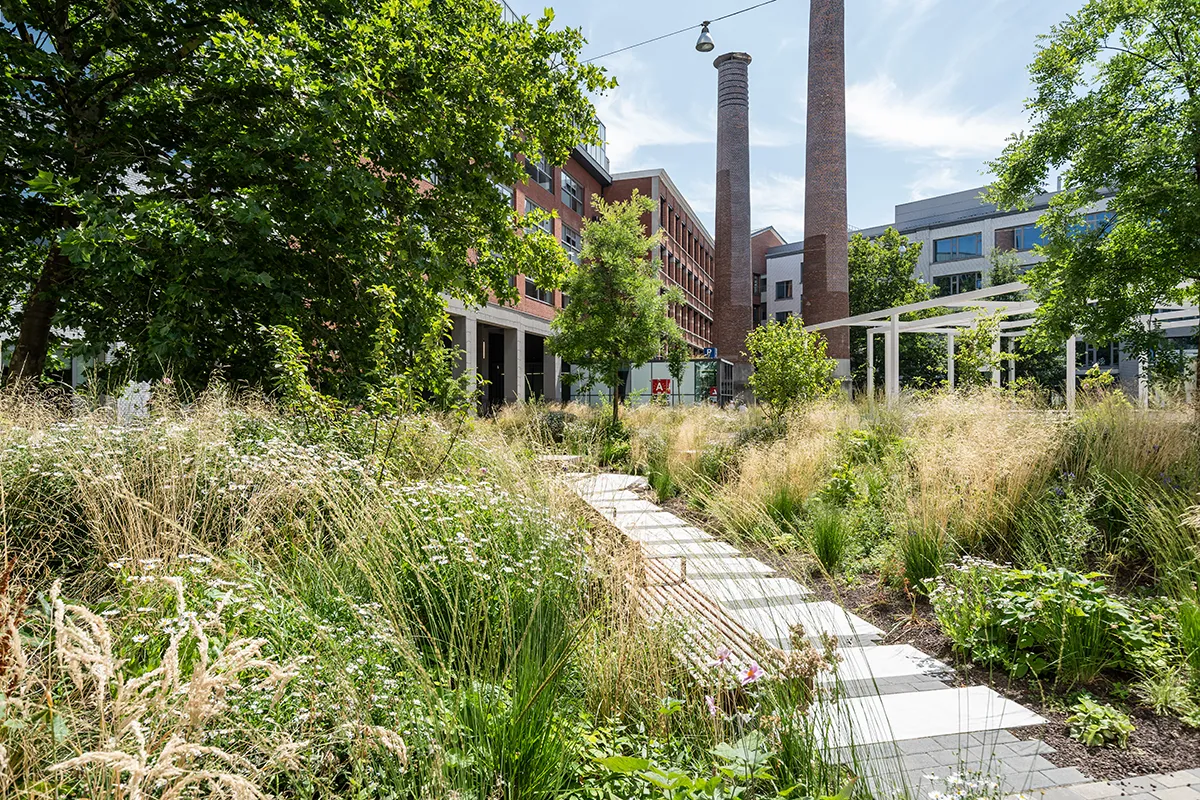
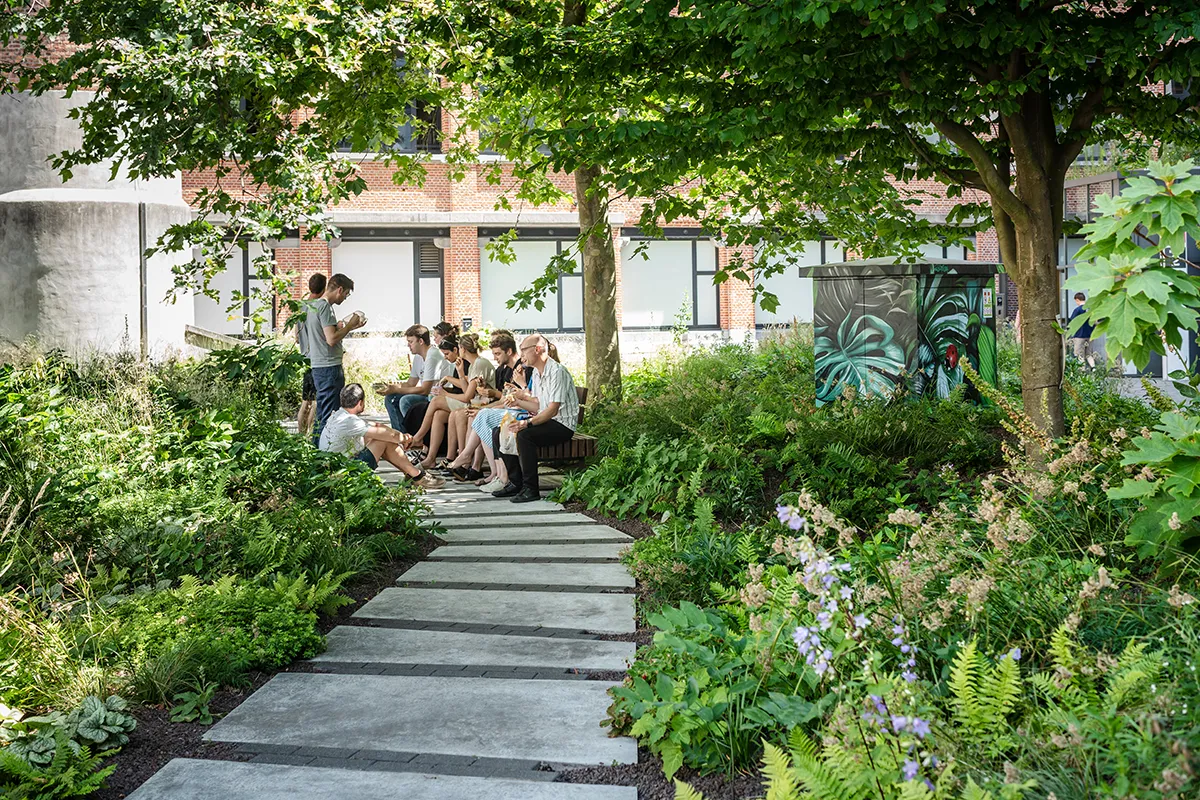
Located in Antwerp, one of Belgium’s largest cities, the redevelopment of Den Bell illustrates one of the most fundamental principles of ecological design: biodiversity starts with abiotic conditions. Located above an underground parking structure, the site presented substantial challenges. Limited rooting depth, urban heat stress, and a heavily paved environment created conditions hostile to both vegetation and wildlife. Rather than approaching the project as a conventional greening exercise, the design focused on rebuilding ecological function within an intensely urban context.
The transformation introduced significantly more vegetation, reduced hard surfaces and created opportunities for a mix of native and non-native trees, shrubs and herbaceous plants to develop a layered vegetation inspired by a woodland edge. The facades are clad in climbing plants, shaded areas now moderate summer temperatures, and the naturalistic planting creates habitat and improves environmental quality for the neighbourhood. Most importantly, the project demonstrates that nature-inclusive design is not primarily about adding species. It is about creating environmental conditions that allow ecological processes to take place. Even in one of the most artificial urban environments imaginable, biodiversity can begin to return when the ecological foundation is restored.
Moermanpark Roeselare: Creating space for nature
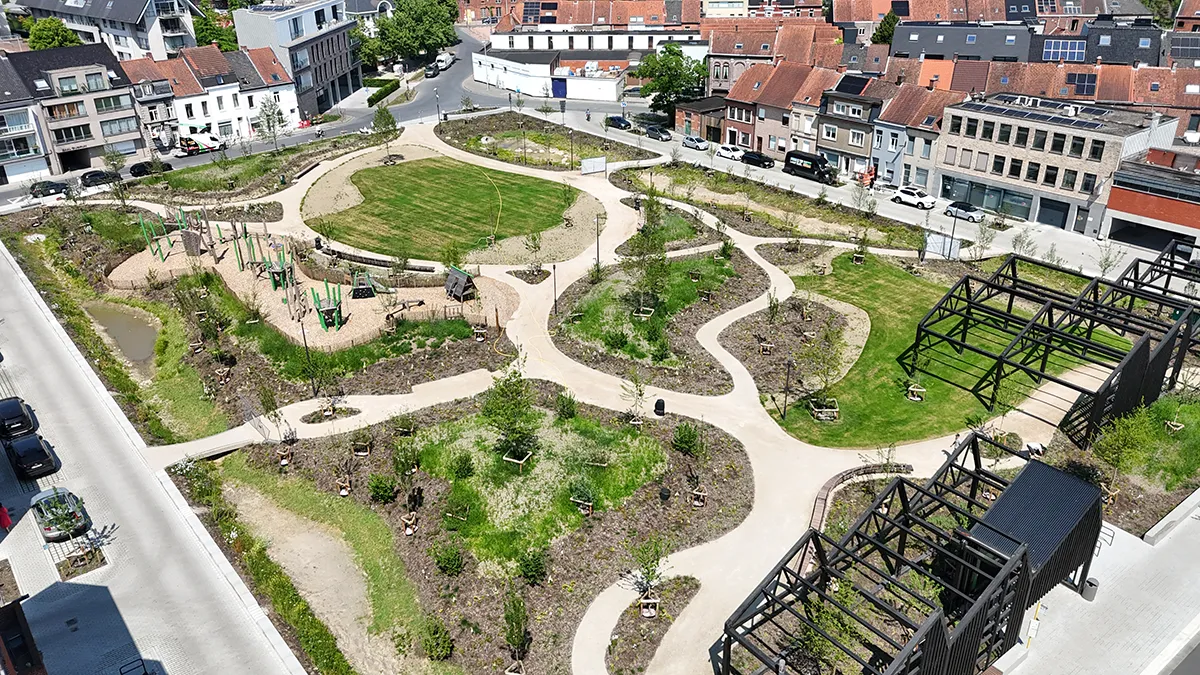
Where Den Bell focuses on ecological conditions at the site scale, Moermanpark demonstrates the importance of spatial structure. The project turns a one-hectare paved parking lot into a climate-adaptive urban park, transforming a monofunctional piece of grey infrastructure into a green-blue landscape that supports both people and nature.
The design reconnects with the underlying landscape dynamics through a combination of water retention, topographic variation and extensive depaving. The park functions as a cooling landscape during heat waves while creating ecological opportunities through diverse vegetation structures and water-sensitive design.
Moermanpark’s multifunctionality makes It particularly relevant to ecological urbanism. Ecological value is not treated as a separate objective that competes with recreation or climate adaptation. Instead, biodiversity emerges from the same interventions that improve urban comfort, water management and social use. The project demonstrates that ecological recovery and human wellbeing are not competing ambitions but can be mutually reinforcing outcomes of a well-designed public landscape.
Vlasakker Kortrijk: Designing with natural processes
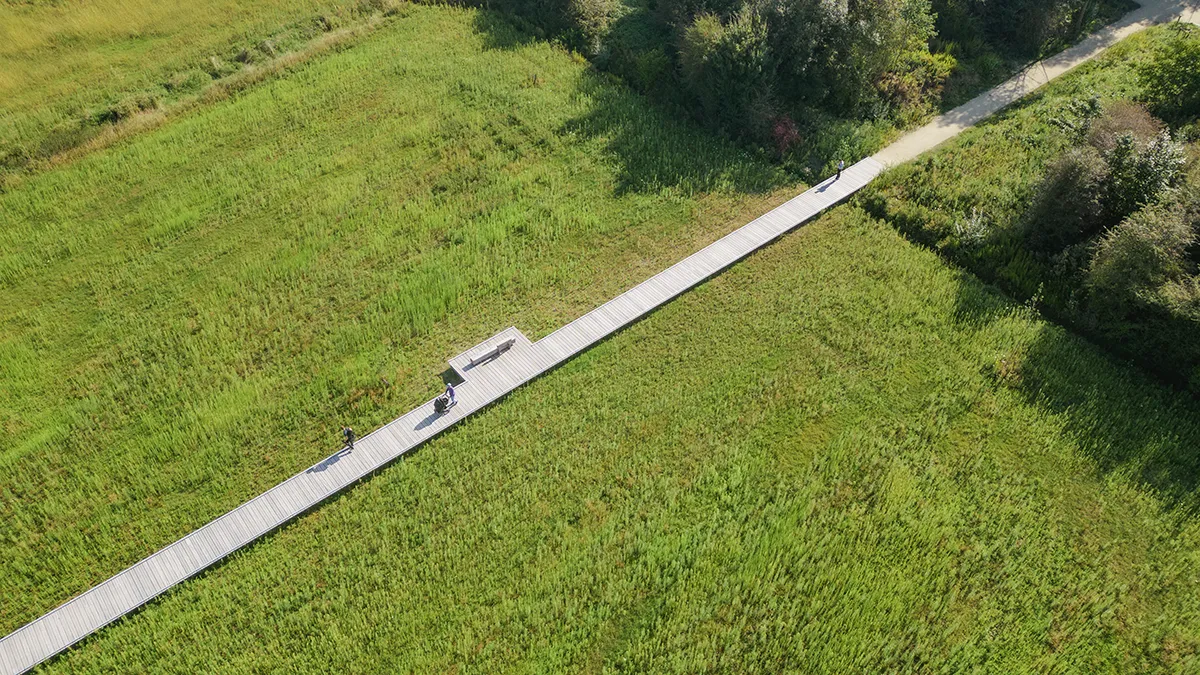
The ecological urban park Vlasakker highlights a third dimension of Baseline Nature Quality: creating space for natural processes to unfold. Spanning seventeen hectares, Vlasakker forms an important ecological link within Kortrijk’s wider open space network. Rather than imposing a completely new landscape, the design builds upon existing ecological qualities. The historically open northern part of the site, characterised by grasslands, has been preserved and strengthened, while the southern woodland zone around the existing water buffer provides a complementary forest habitat. Together, these landscape elements create a continuous green structure that supports biodiversity beyond the park’s boundaries.
The intervention is deliberately restrained. A network of permeable paths, boardwalks and modest seating areas allows visitors to experience the landscape while keeping ecological continuity at the heart of the design. Recreational use and biodiversity are not separated but carefully balanced, ensuring public access reinforces rather than compromises the park’s ecological ambition.
Perhaps most importantly, Vlasakker is designed to evolve over time. Through ecological management, grasslands develop into species-rich meadows, woodland edges diversify, and habitat quality gradually increases over time. The project demonstrates that biodiversity is not always achieved by adding more elements to a site, but often by creating the right conditions and allowing natural processes to guide its future development.
Together, these three projects reveal complementary dimensions of Baseline Nature Quality: restoring ecological conditions, strengthening spatial structure and guiding natural processes.
Applying Baseline Nature Quality in Urban Design
This highlights a broader shift occurring within the discipline. Landscape architecture is increasingly moving away from creating isolated green objects and toward designing living systems. Biodiversity is no longer treated as an additional layer applied after the main design decisions have been made. Instead, it becomes a guiding framework that informs soil, water, vegetation, spatial structure and management from the outset.
This change in perspective is particularly relevant in densely urbanised regions such as Flanders, the northern region of Belgium, where protected nature reserves occupy only a small portion of the landscape. If biodiversity is to recover at a meaningful scale, the spaces between nature reserves must become part of the solution. Streets, parks, courtyards, campuses and public spaces all have a role to play in rebuilding ecological resilience.
The future of biodiversity will not depend solely on creating more protected areas. It will also depend on our ability to restore ecological quality within the landscapes of everyday life. Baseline Nature Quality offers a useful framework for this transition because it shifts the conversation away from isolated species and towards the conditions upon which all biodiversity depends.
For landscape architects, this presents both an opportunity and a responsibility. By shaping the soils, water systems, vegetation structures and management regimes of our cities, we are not merely designing places. We are helping to rebuild the ecological foundations of the landscapes people inhabit every day.
The ambition is not to turn every urban space into a nature reserve. The ambition is something more profound: to make nature an ordinary and resilient part of daily life once again.
Article by Yannick Van der Veken, plant expert at OMGEVING.
Images: credits as captioned
Be the first to comment