
Winner of an Outstanding Award in the 2026 WLA Awards – Concept Analysis & Planning category
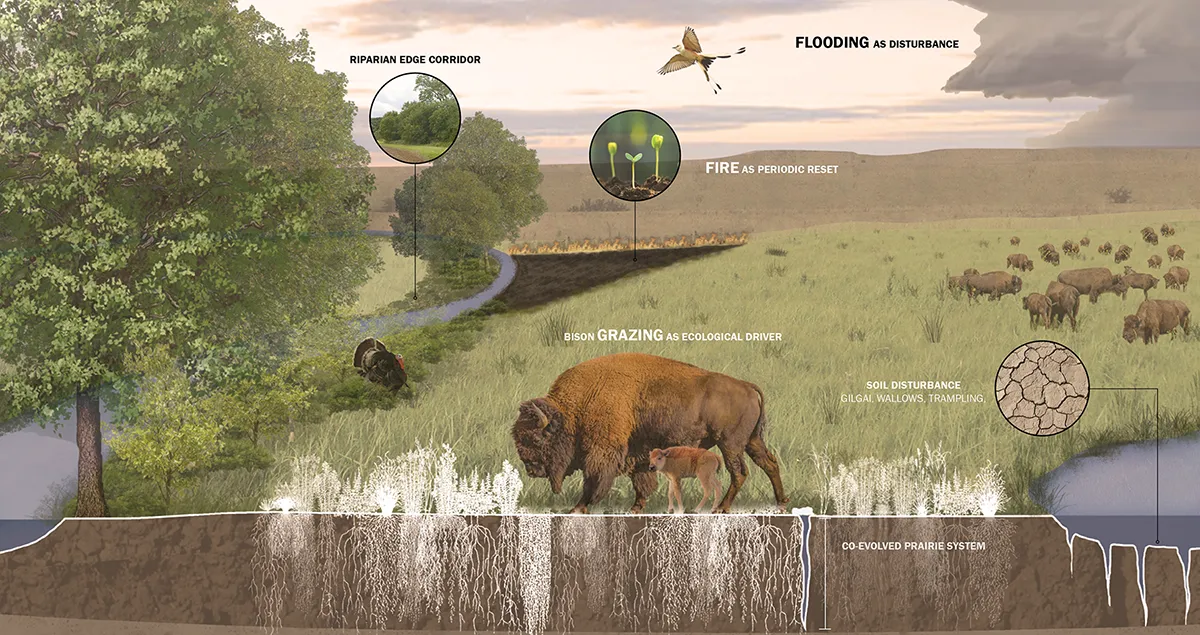
The Trinity River corridor in Dallas, Texas represents the intersection of North Texas’s cultural history and its ecological future. In 1841, John Neely Bryan identified a narrowing of the Trinity’s floodplain to establish a ferry crossing and trade post, marking the birth of modern Dallas. At that time, the surrounding landscape—the Blackland Prairie—was described by early settlers as an “endless sea of grasses” that spanned millions of acres across the state. Today, less than 1% of the original Blackland Prairie remains, making it one of the most critically threatened ecologies in North America.
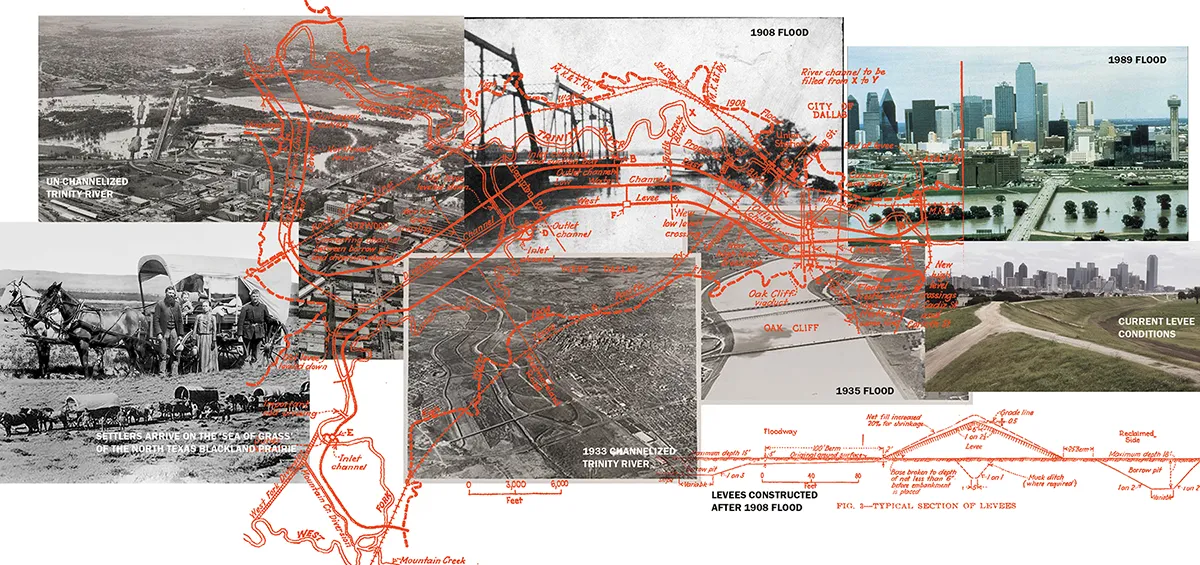
Catastrophic flooding in 1908 drove engineers to spend decades diverting the river from its natural meandering course and contain it within a massive system of levees. This intervention permanently altered the community’s relationship with the Trinity, transforming a dynamic river into a highly managed floodway designed strictly for storm conveyance. To maintain the function, the city currently mows with tractors to prohibit the growth of forest which also suppresses the establishment of diverse prairie species. Previous attempts to renovate this corridor have stalled; a “signature park” was rejected by the U.S. Army Corps of Engineers for obstructing flood flow, while a “rewilding” concept lacked the land
management needed to prevent the landscape from becoming overwhelmed by woody species, thereby increasing flow resistance.
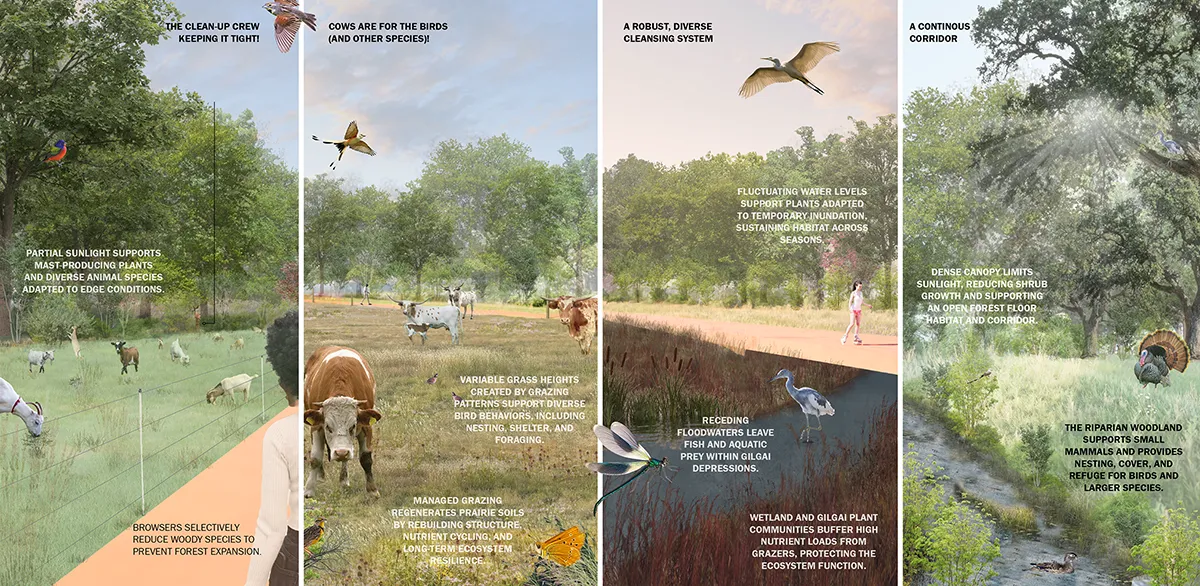
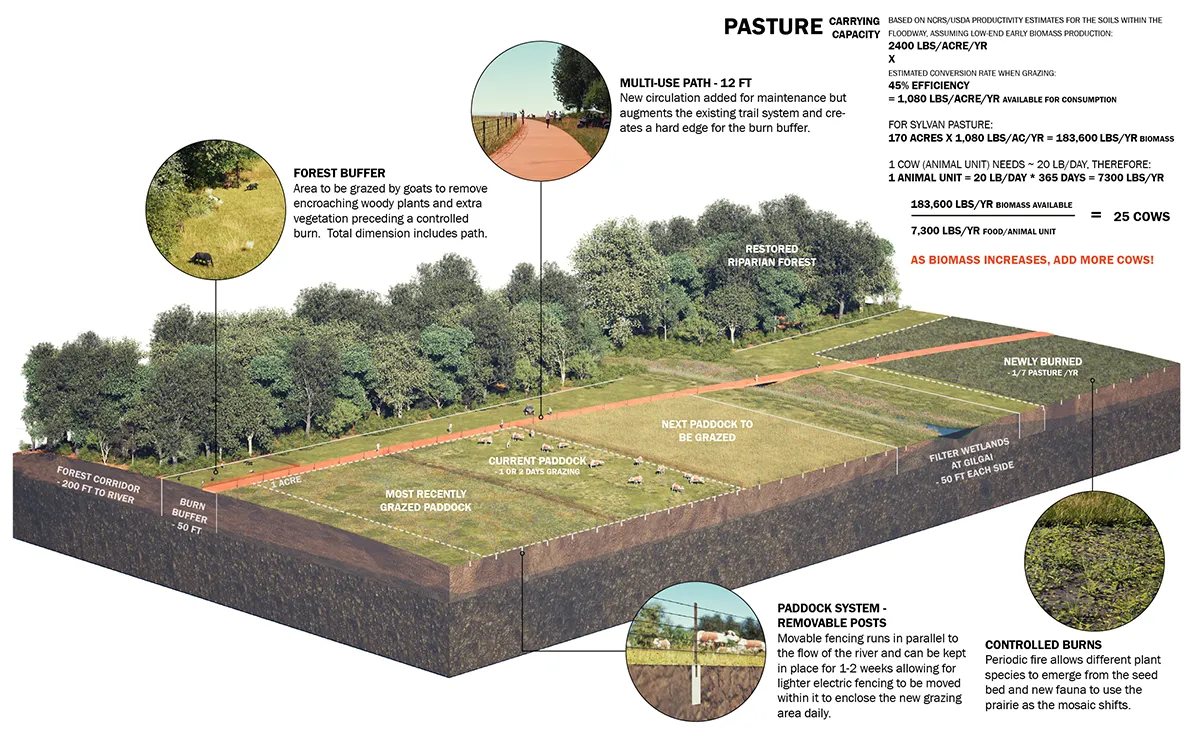
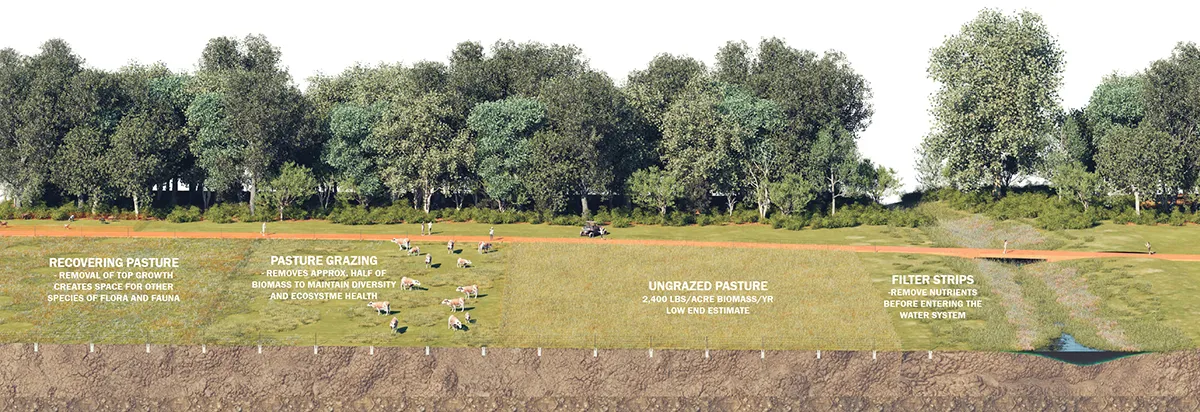
The Great Trinity Prairie offers a third path: a management-based landscape framework that recreates historic ecological disturbance regimes to reconnect the city to its river. This proposal moves beyond the concept of a static “park” with a fixed end state, and proposes an adaptive framework based on contemporary land management practices that simulate the historic forces that shaped the Blackland Prairie: fire, grazing, and periodic flooding. The project leverages North Texas’s ranching heritage by using cattle and goats as “biological engineers” to replace mowing. Using High-Intensity, Low-Frequency (HILF)
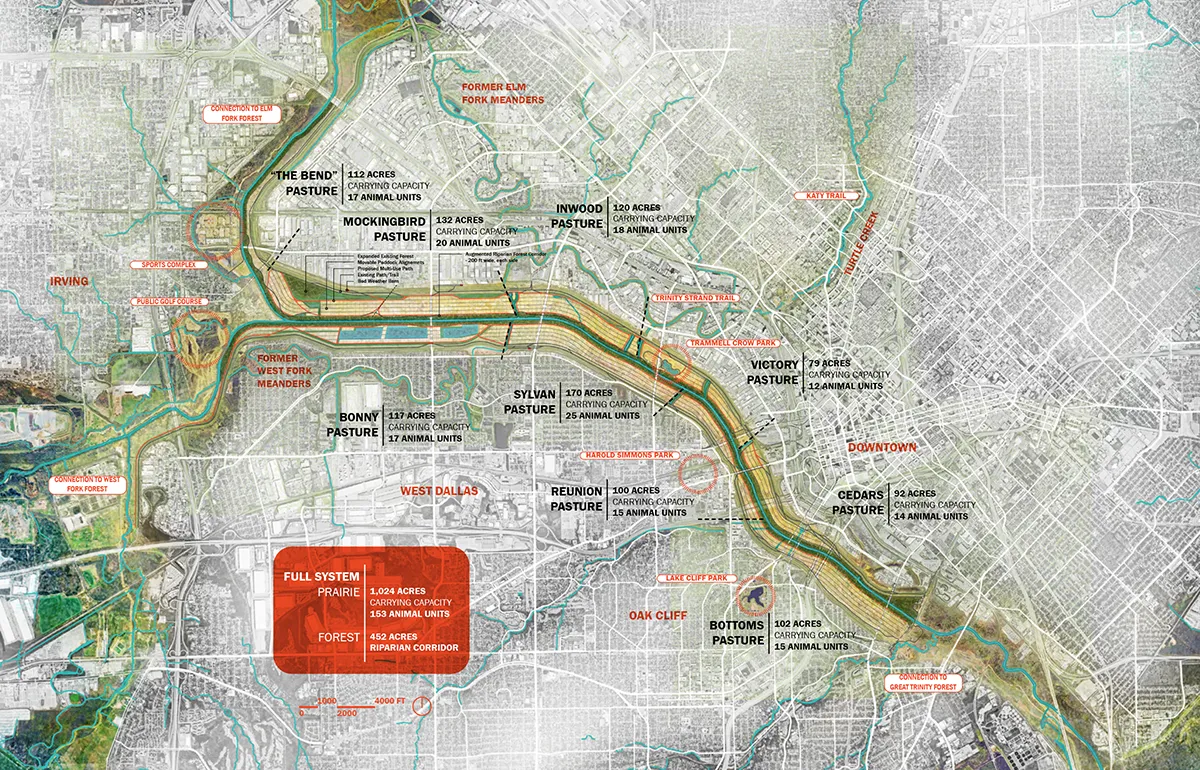
rotational grazing, herds are moved through the 1,020-acre project area in a manner that mimics the ancient, dense movement of bison. This trampling and nutrient cycling stimulates the soil microbiome, increases carbon sequestration, and promotes a diverse assembly of native grasses and forbs.
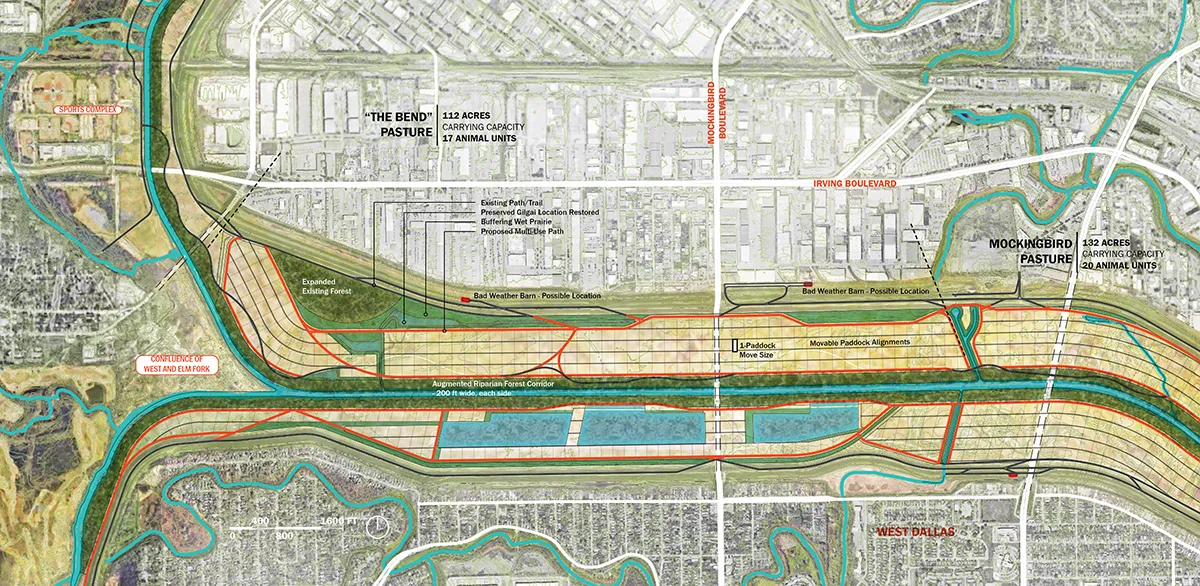
Controlled burns complement grazing to provide a necessary reset of the prairie. These burns stimulate more diverse plant communities and habitats for birds and other fauna. The framework creates buffers to protect forest edges and wetland habitats, like gilgai—micro-depressions in the shrink-swell clays that provide essential ephemeral wetland habitat.
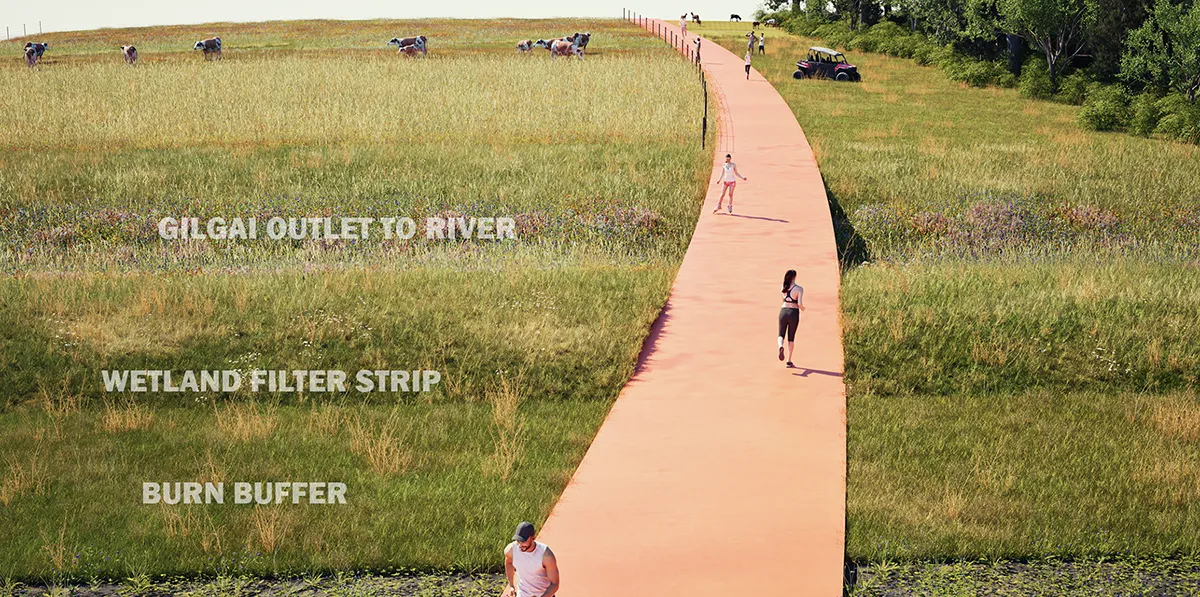
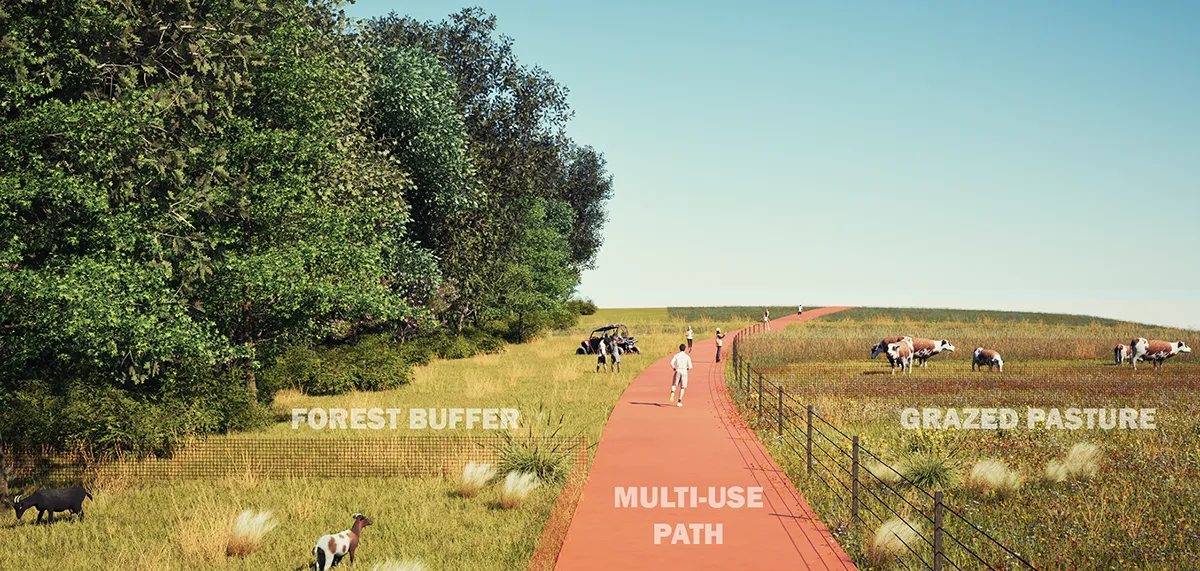
By focusing on management rather than topographic changes, the prairie prioritizes the flood conveyance capacity required by the USACE. A forest corridor proposed along the main channel reinforces bank stability and provides a migration path for fauna, while an augmented trail network increases public permeability and access. In the long term, the Great Trinity Prairie acts as the missing link in a regional network of urban ecosystems, providing underserved neighborhoods in the city’s center with unprecedented access to nature while reminding the public that the culture of North Texas is inextricably linked to the resilience of the prairie.
Technical Information
Full System:
Restored Blackland Prairie = 1,024 Acres
Anticipated Starting Carrying Capacity = 153 Animal Units
Restored Riparian Forest = 452 Acres
The Great Trinity Prairie
Location: Dallas, Texas, USA
Design: Site Agency
Images and Text Credit: Site Agency
Be the first to comment