
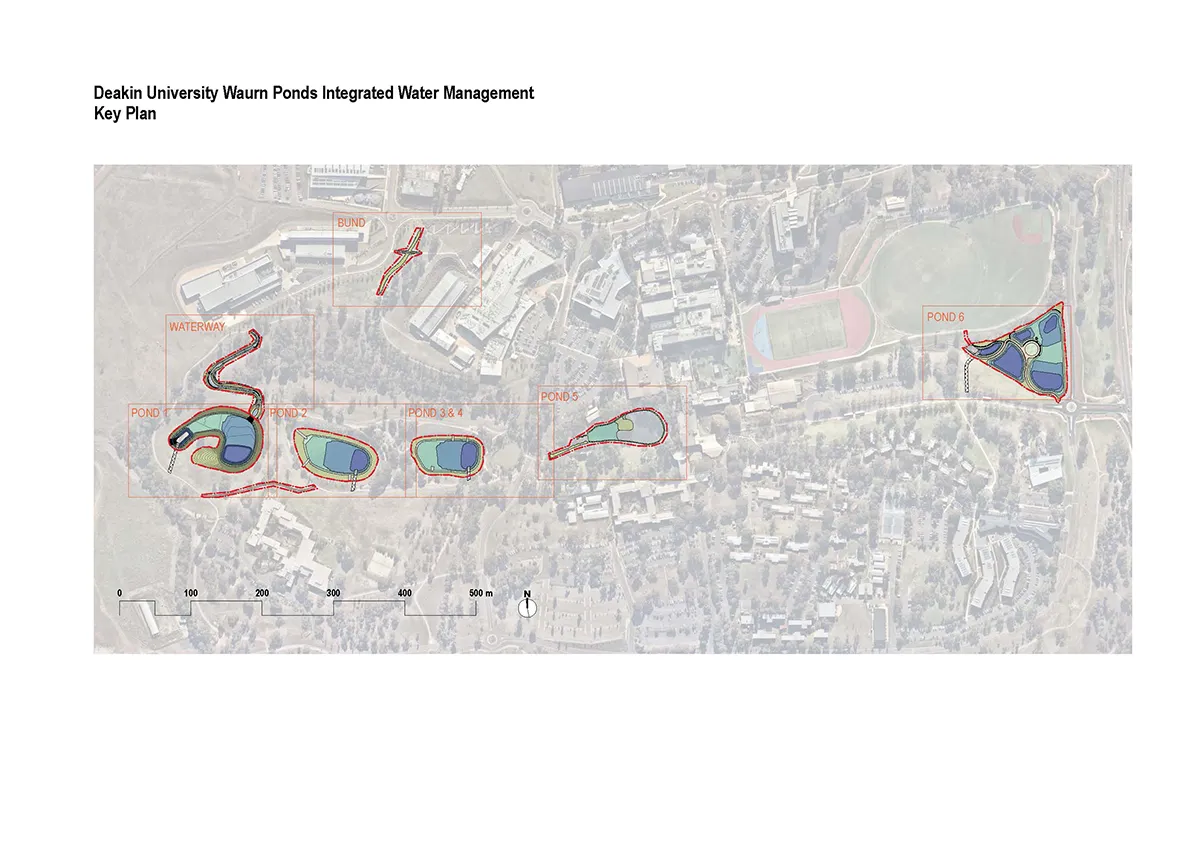
Along the most prominent valley of Deakin University’s Waurn Ponds Campus, on Wadawurrung Country, a chain of ageing farm dams and ornamental ponds offered little to campus life, waterway health or habitat. Separating people from the water, with planting confined to a narrow rim, the steep-edged, deep ponds were dominated by exotic fish and acted as passive storage. Across two stages, completed in 2023 and 2025, the project remakes the entire chain as the University’s connective public landscape, in which flood protection, stormwater treatment, native habitat and the daily life of the campus community are harmoniously resolved.
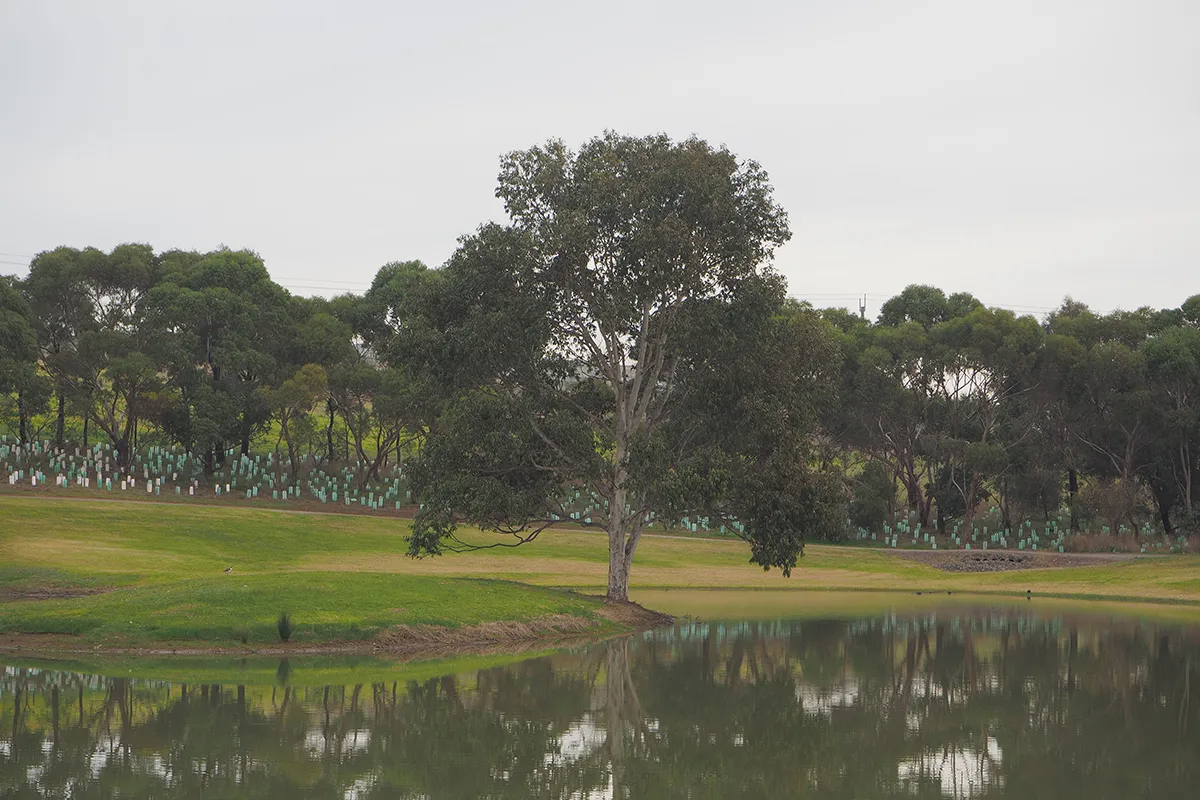
Flood Defence
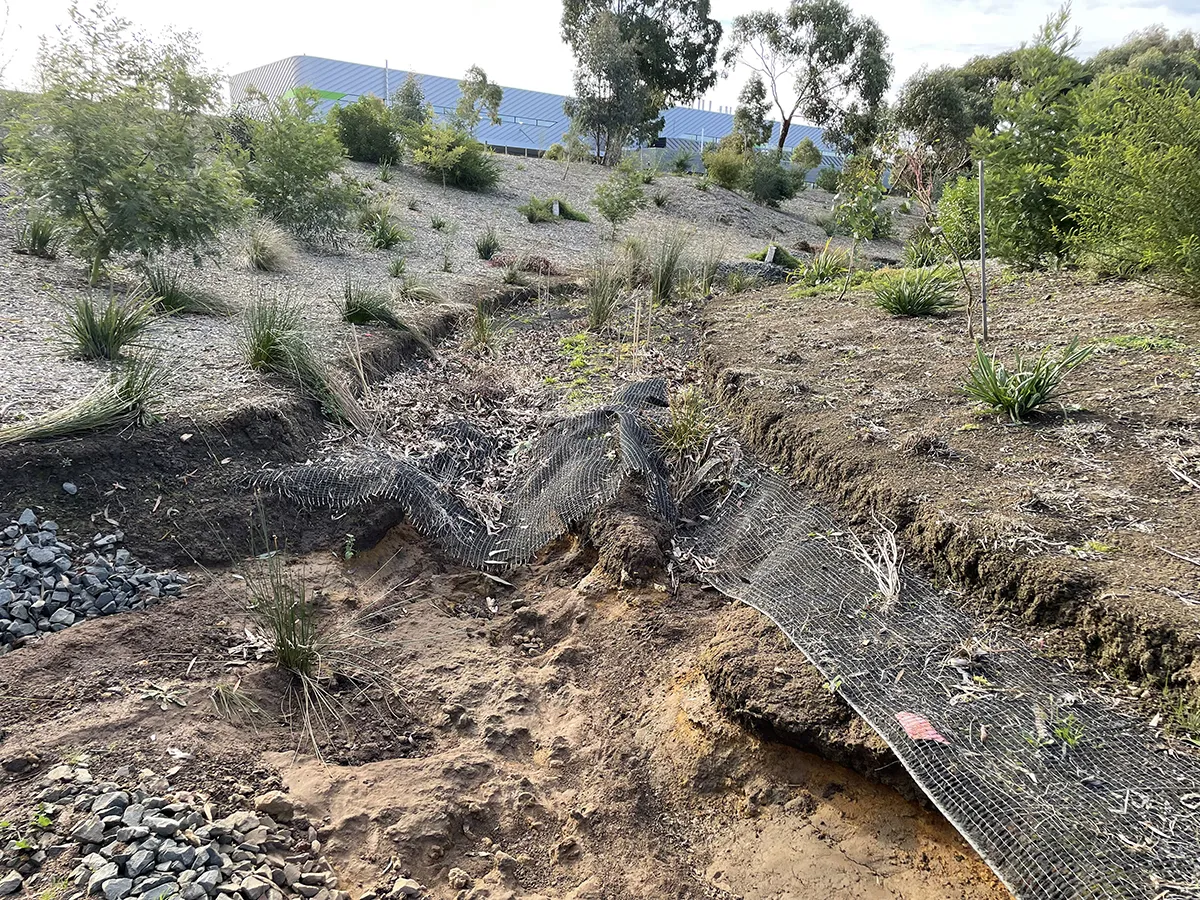
Through integrated engineering and landscape design, the project team collaborated with hydraulic specialists to re-engineer steep banks into expansive, shallow benches. Lowering baseline water levels by up to 800 mm unlocked approximately 12,000 cubic metres of vital flood attenuation capacity above the wetland ecosystem.
Planting Design and water filtration
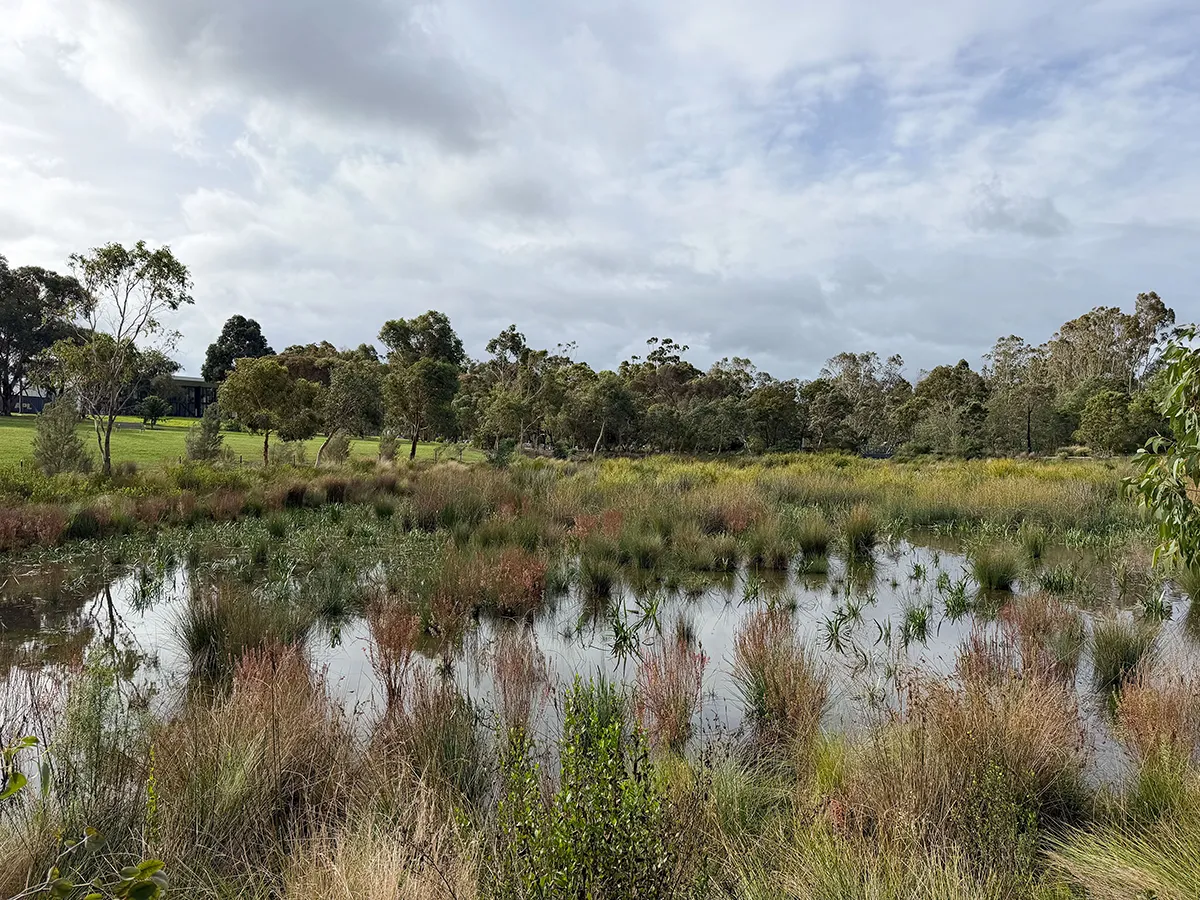
Transforming a 10,000 square metre site, the design replaces deep open water with four tailored hydrological zones. The scheme delivers 69,099 plants established across 40 native species, achieving total biofiltration across terrestrial, ephemeral, marsh, and submerged zones for all water moving through the valley corridor.
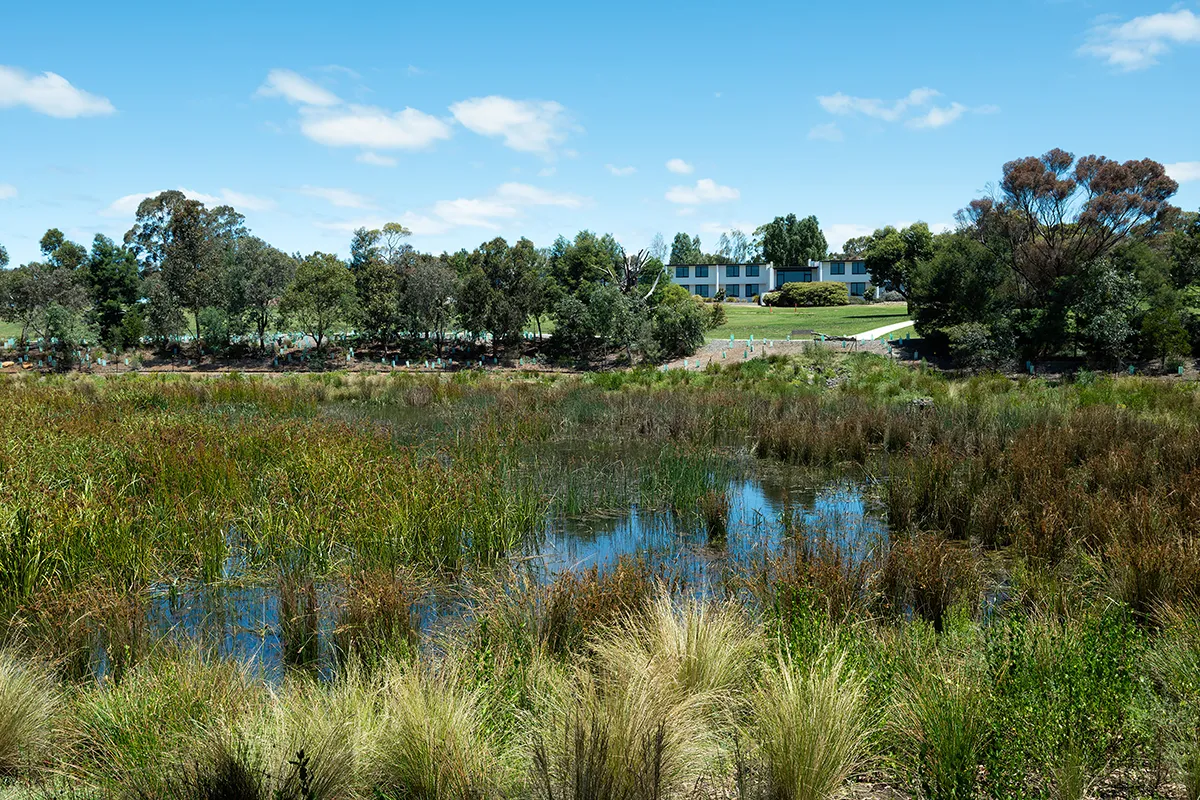
Water Quality
Engineering models indicate that this living infrastructure will intercept almost 10 tonnes of sediment, along with substantial annual nitrogen and phosphorus loads, preventing pollutants from entering Waurn Ponds Creek and the Barwon River.
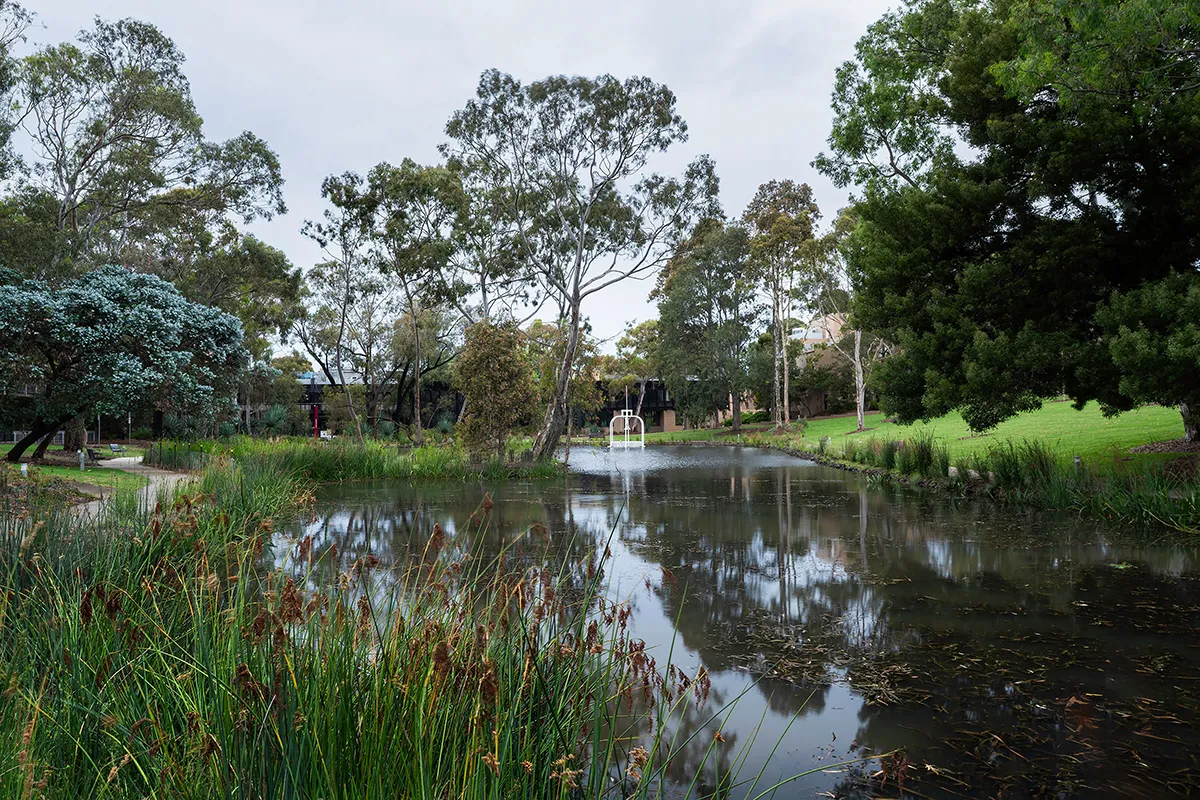
Ecological Restoration
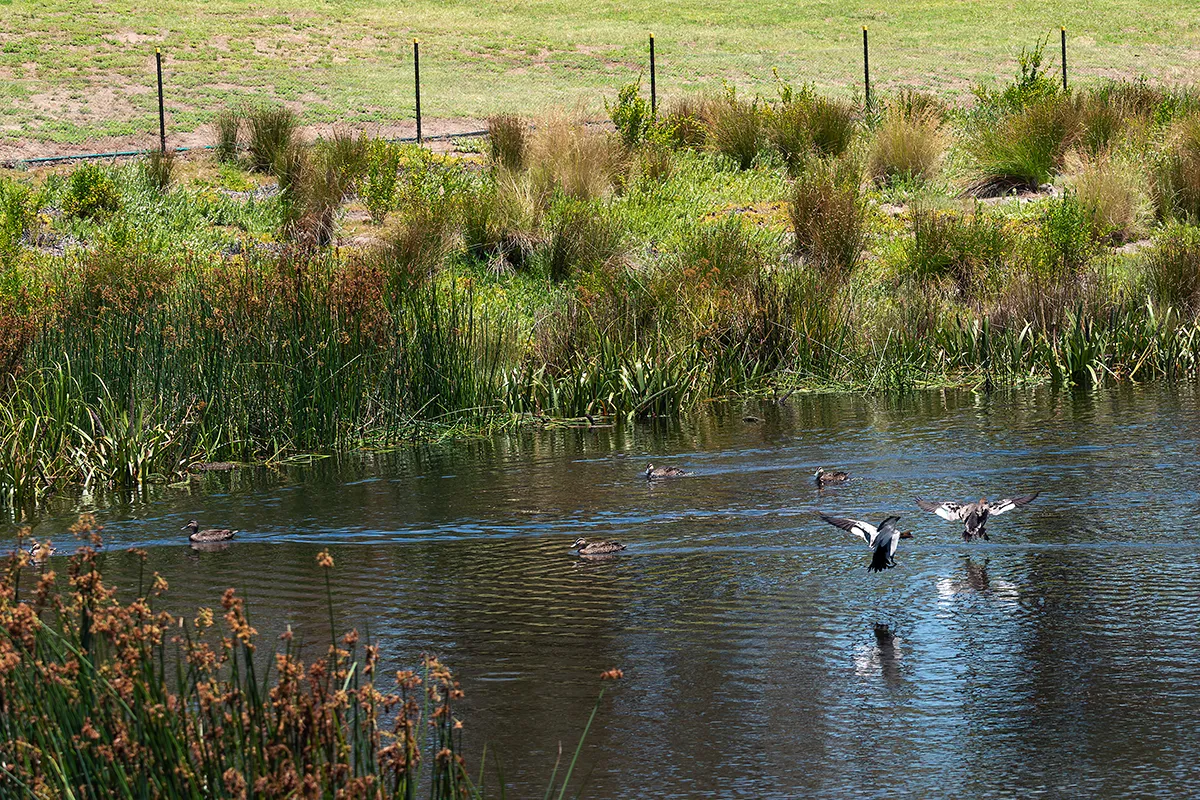
During construction, ponds were systematically dewatered to eradicate invasive carp and goldfish, while native species including long-necked turtles, yabbies, and frogs were safely rescued and re-homed. Demonstrating a circular approach, felled trees were repurposed into riparian habitat logs, while adjustable outlet weirs provide adaptive water management in response to changing climate patterns. Crucially, the newly established shallow marsh margins are already supporting significantly richer avian biodiversity than the deep-water habitats they replaced.
Campus & Spatial Integration
The landscape seamlessly integrates the site’s most biologically active aquatic fringe with key pedestrian pathways, lawns, and social hubs.
Key design interventions include:
Immersive Arrival Experience
A sinuous entry path culminating in a dramatic, rugged rock-edge lookout that embeds visitors directly within a high-performing working wetland.
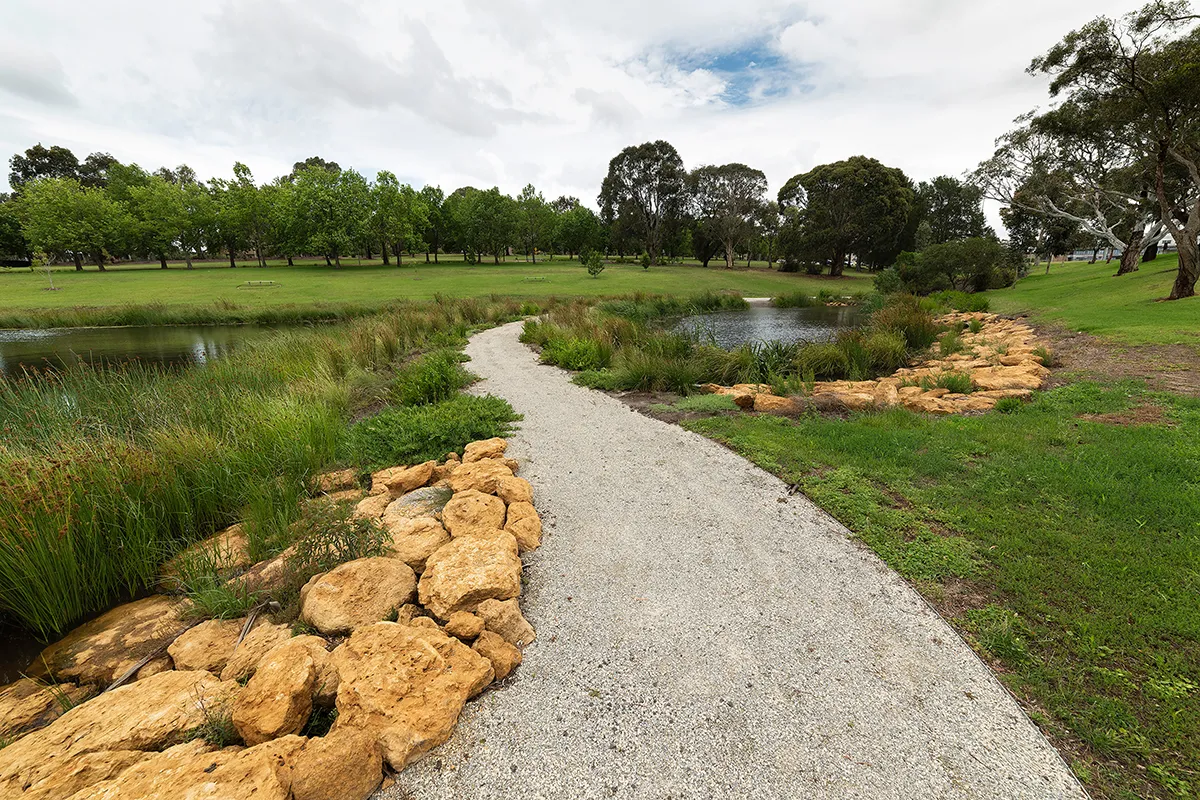
Restorative Student Spaces
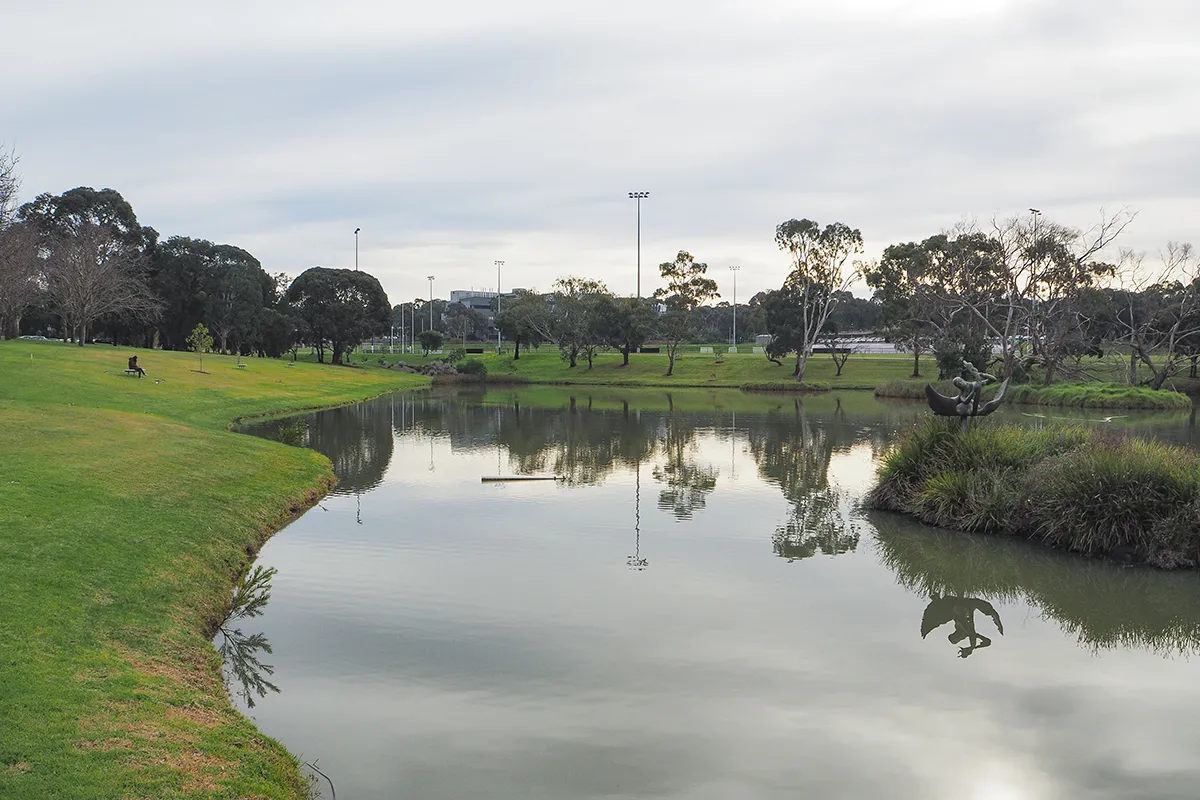
A newly revegetated fringe enclosing the central library pond, paired with terraced grass slopes that offer informal, tranquil zones for outdoor study and relaxation.
Sensory Connectivity
Intersecting mown lawns and restored marsh edges across the wider wetland chain, enriching busy campus hubs with the restorative sights and sounds of flowing water.
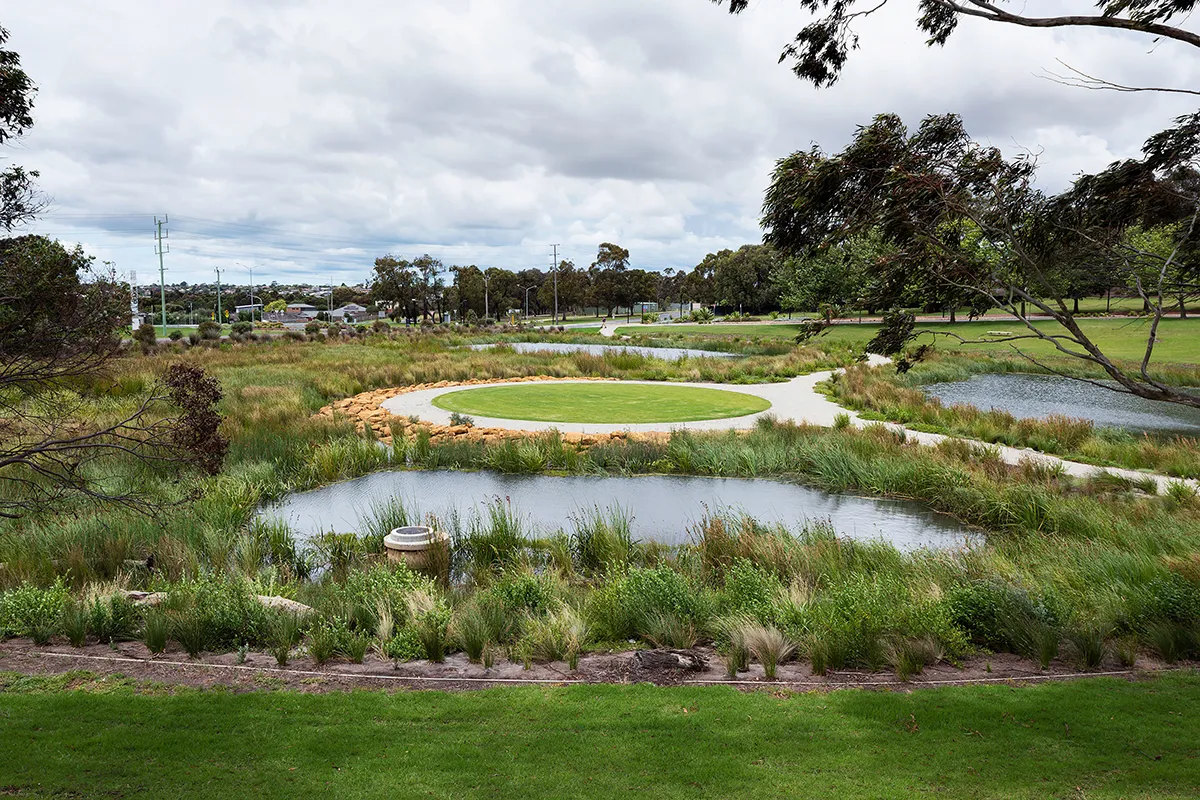
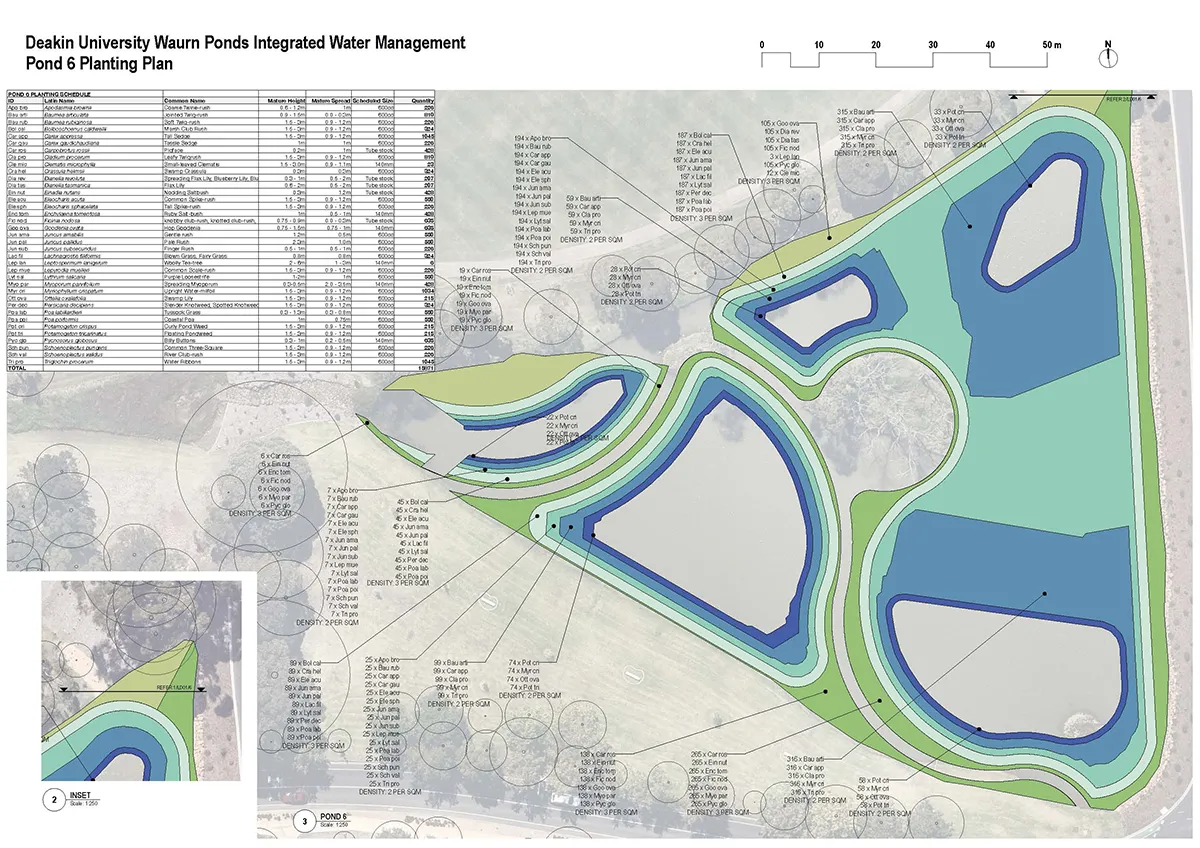
Deakin University Waurn Ponds demonstrates what is possible when design drives the transformation of degraded water bodies into a central campus landscape that functions as a flood defence, a water treatment system, a natural habitat, and a public space.
Technical Information
Circular Economy & Embodied Carbon Reduction
To minimise resource consumption and reduce embodied carbon, the design prioritises circular-economy principles over new construction. By retrofitting existing dam earthworks rather than demolishing them, the scheme converts redundant depth into approximately 12,000m3 of vital flood storage. On-site resource retention underpins this low-impact strategy: felled timber was repurposed into habitat logs along regraded banks, while the library pond’s existing rock edge was retained and revegetated rather than replaced.
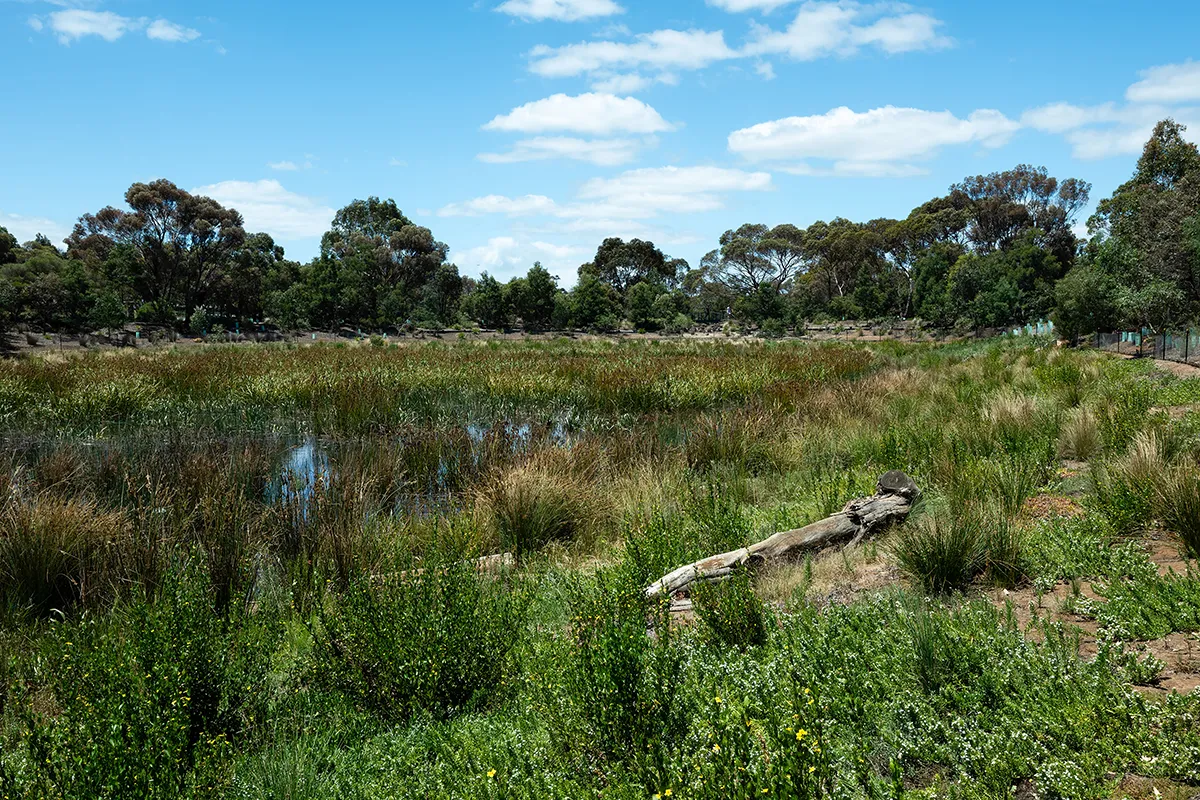
Nature-Based Living Infrastructure
Nature-based living systems form the backbone of the project’s environmental performance. Across 10,000m2 of wetland vegetation, 69,099 plants actively filter campus runoff before it reaches Waurn Ponds Creek, annually capturing nearly 10 tonnes of sediment, along with substantial nitrogen and phosphorus loads. As these living systems mature, they deliver continuous long-term carbon sequestration.
Future-Proofed Climate Adaptation
Embedded with future climate resilience, flora species were selected for their tolerance to prolonged wetting and drying cycles, directly responding to a projected 8% decline in rainfall by 2070. Complementing this ecological flexibility, adjustable outlet weirs enable precise water-level tuning, ensuring the ecosystem remains functional, resilient, and biodiverse as environmental conditions evolve.
Deakin University Waurn Ponds Integrated Water Management
Location: Geelong, Victoria, Australia
Landscape Architect: Urban Initiatives Pty Ltd
Landscape Architecture Team: Tim Hart, Andrew Taylor & Wai Kin Tsui;
Client: Deakin University
Aboriginal or Torres Strait Islander Country: Wadawurrung Traditional Owners Aboriginal Corporation
Project collaborators: E2 Design Lab (Environmental Engineering)
Image Credit: Urban Initiatives Pty Ltd
Photography: Tim Hart, Cameron Hart, Wai Kin Tsui