
Article by Somkiet Chokvijitkul – Principal and co-founder at Landscape Collaboration
The city development in Bangkok is growing at a fast pace. New residential areas, especially high-rise projects, are continually developing throughout the city. As dense as it can be in the city core, the new demand for a living lifestyle has emerged. Landscape is needed to fulfil the lack of open space and nature within the city. The need for a more livable environment in the city is an important issue we all face. However, due to limited space in residential areas and a hot climate, the majority of the population spends their time in shopping malls rather than outdoor landscape areas. The notion that landscape is important for a livable city is understandable, but it does not align with residents’ perceptions of the city. This article shall demonstrate the potential of using landscape design to create a better microclimate and foster landscape appreciation among people. With a better appreciation of the landscape that one can actually dwell in, we believe that the landscape development towards a healthy city could be achieved in the near future.
The government and some private developers have been working to develop the public landscape to enhance the environment. However, most of those developments still focus on either basic design function or design as decoration in the landscape. Due to the hot weather, some of those landscape designs might not be well received or usable for people. This would lead to the stereotype that everyone thinks no one uses the landscape because of the uncomfortable climate. If there is no demand for landscape, there will be no incentive to supply it. In other words, people feel reluctant to use landscapes, so no one wants to build landscape projects. This mindset would come from developers or normal users. So that’s why, in this context, the garden city concept is still quite difficult to implement in Bangkok at the moment, due to the fact that no one really appreciates it just yet. We, as environmental designers, have to provide many more good samples for people to appreciate. The claim that “more green is better” would be true only when the landscape is usable for all, either ecologically or culturally.
So, we try to think hard about this issue. We know that we can not change the facts of nature. But we still believe that a small enhancement could make an impact. It would be easier to start small so that people would easily understand it. So we came up with the idea of “landscape design for better microclimate”. When people start using landscape, the notion of creating a better city with landscape will be much easier. These landscape projects would demonstrate how to create landscape appreciation through microclimate design.
Mega Foodwalk Extension
The main goal of this project is to establish landscape design as a radical design approach. We have to create landscapes that address levels different from those of architecture and existing shopping malls, yet remain accessible to all ages. It should also be a very comfortable space for people to hang out in the outdoor area. Since the landscape is not flat, we have to deal with the slope in 3D. The main walkway, with a 1:12 (8.33%) slope, was established to create a main circulation route so everyone could access the garden from a different level.
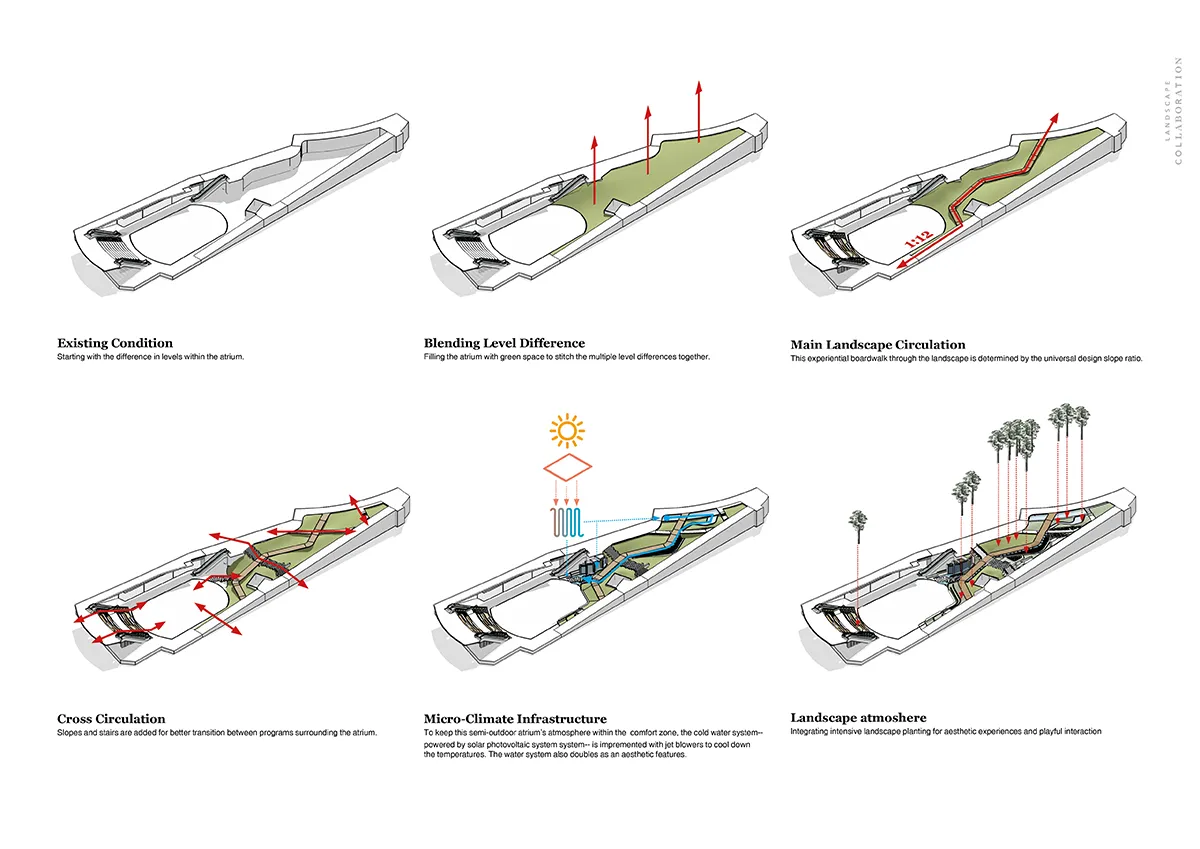
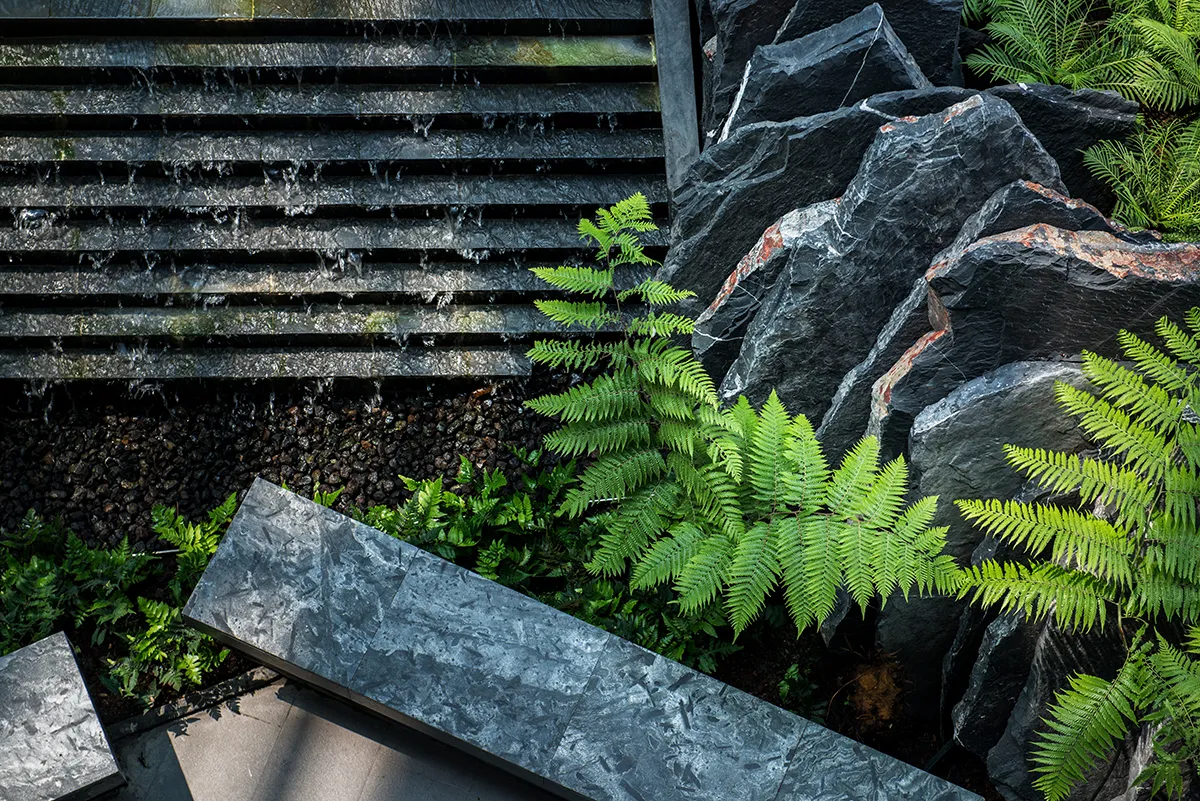
Along with the walkway, water features with different fall textures are integrated. The water feature was not only a feature, but was also a physical barrier to prevent drops from different levels. It also provides moisture for cooling the space.
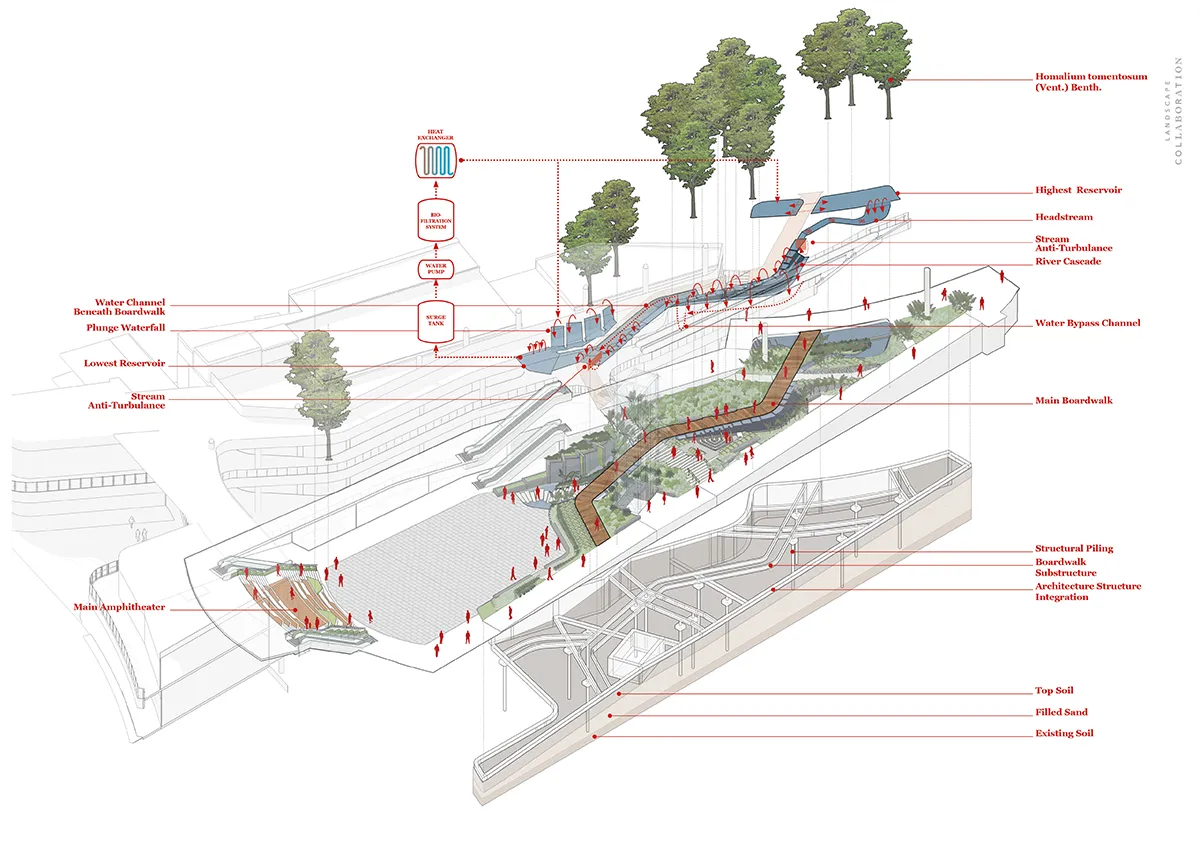
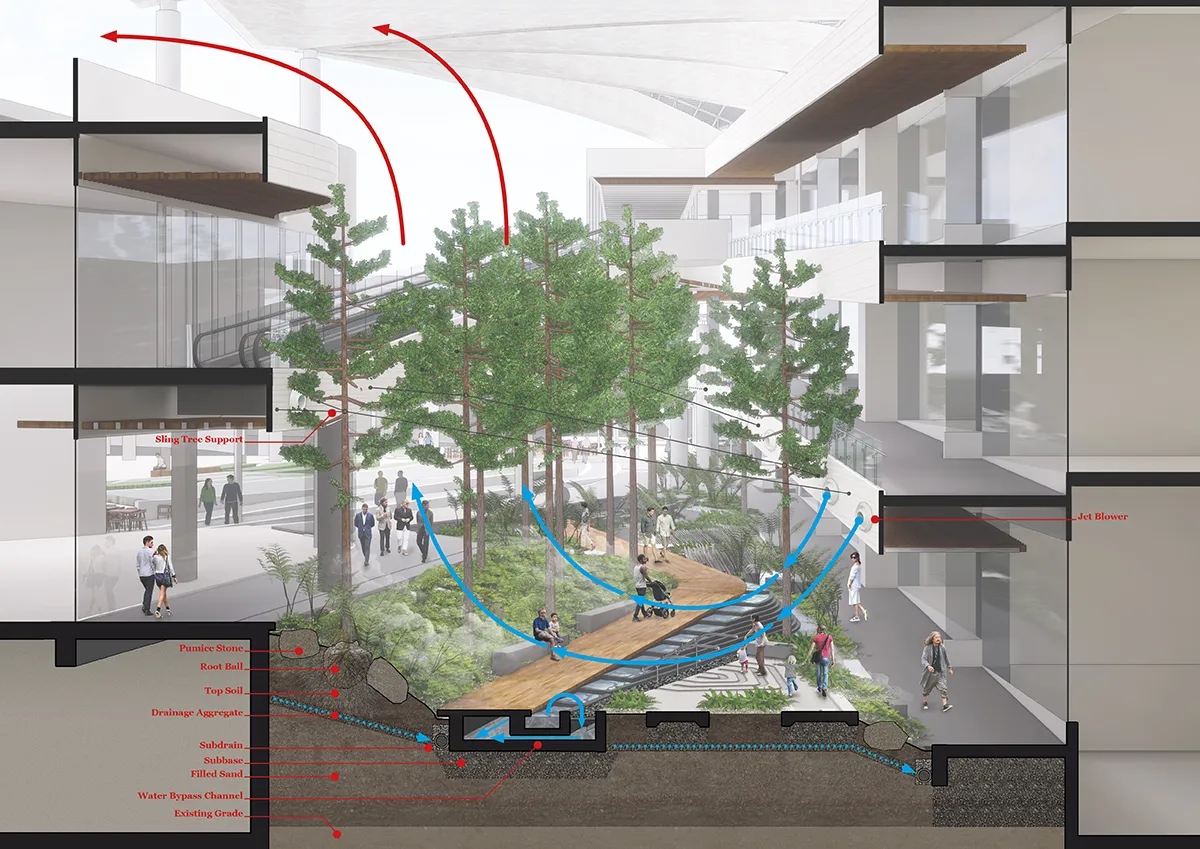
Seating was arranged in the area that could receive the moisture and the airflow. The atrium is located in the North-East and South-West orientations to capture the prevailing winds in Thailand. The arrangement of the landscape inside also creates a valley space that allows airflow to pass through. Also, the cross-ventilation of the roof section helps ventilate the hot air, which in turn brings airflow into the landscape space at ground level.
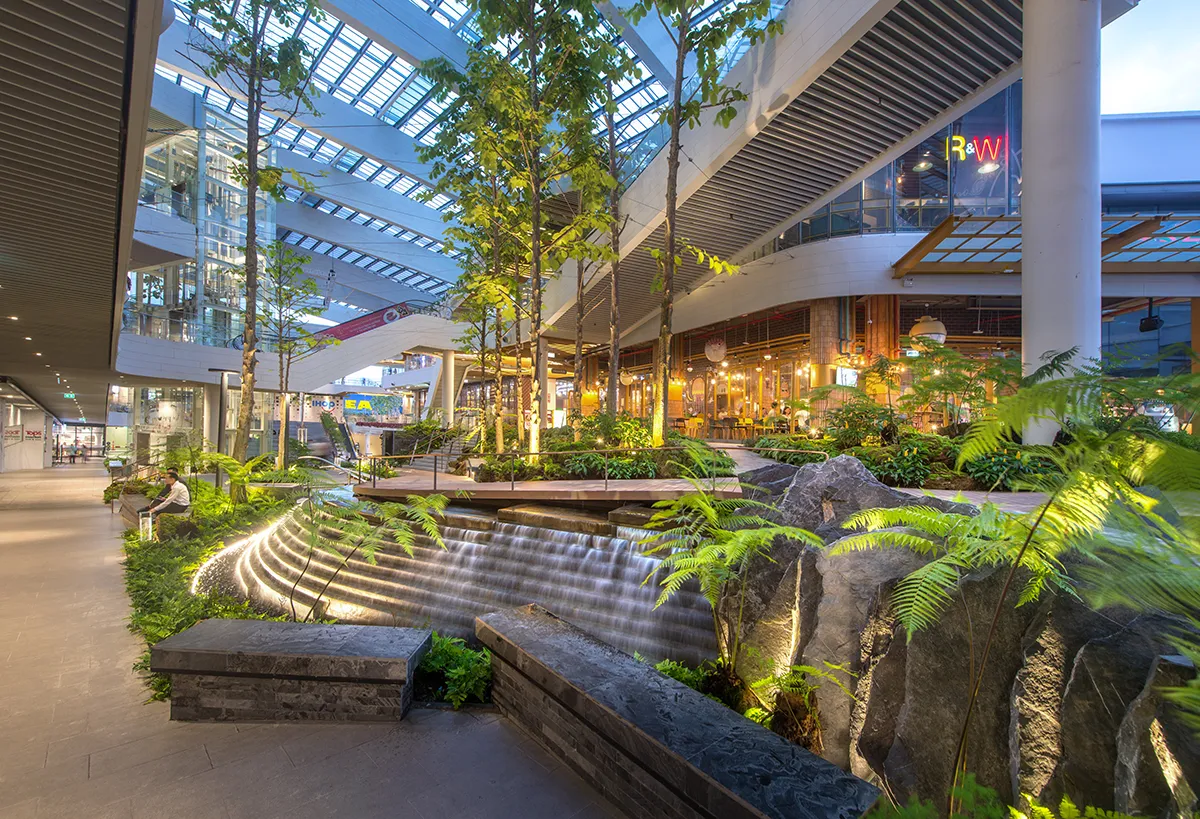
Tall trees are designed to be located in the areas that get the most sunlight. This not only provides better conditions for the trees but also uses them to create shaded areas for people at ground level. The shrub at ground level then preserves moisture. Moisture can have a cooling effect when used correctly. However, too much moisture could have a negative effect as well. We need to consider moisture from water features and planting in our landscape work. If we can balance it, we can create a comfort zone.
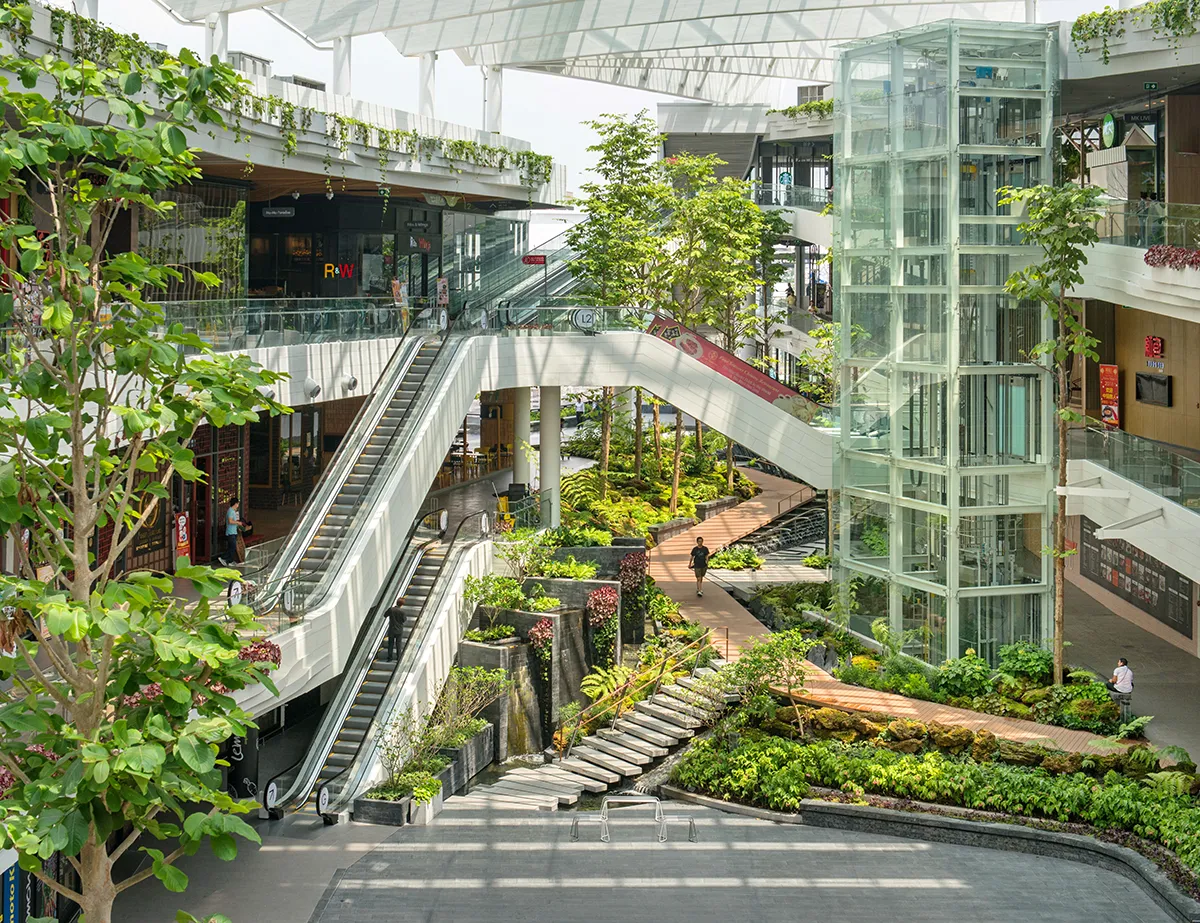
Once a landscape is comfortable to use, people become much more aware of their surroundings and environment than they previously were. This awareness towards landscape would help people to realize the importance of outdoor space within the city.
Mega Foodwalk Stream Valley
The challenge towards the stereotype that more green is always better is demonstrated in the process of making this project. Surrounded by restaurants, the existing courtyard, in the outdoor setting, is full of planting and seating areas. Trees, shrubs, and small water features, together with seating, provide the visual impact of a green landscape for this courtyard. The condition is good, but the problem is no one is really using it. Compared to the Mega Foodwalk extension, which is located next to the project, people realise how comfortable they are when they are using it. Therefore, they prefer not to use the landscape in the project area. The same question of creating a better microclimate for landscape design is implemented here with different design approaches.
From the site constraints, the existing structure is a car parking roof. There are beams running across the slabs. The existing structure could only receive a minimum load on top of it. The existing tree pits need to be retained at their current locations. The level we can play with is only 10-17 centimetres between the existing screed and the structural slab. Programmatically, the context of the shopping experience would be similar to what it was. The restaurants and cafes will remain the same. The main corridor should have remained untouched except for the paving design. These constraints may sound overwhelming, but the design should not be held by them. Despite these intimidating constraints, landscape design must resolve certain circulation issues, improve atmosphere, and, most difficult of all, transform the space in order to generate new interest within these constraints. The design of each zone should be distinct from the others, yet remain harmonised within the Foodwalk concept. So, the ‘Walk’ would play the main role in linking landscape parcels.
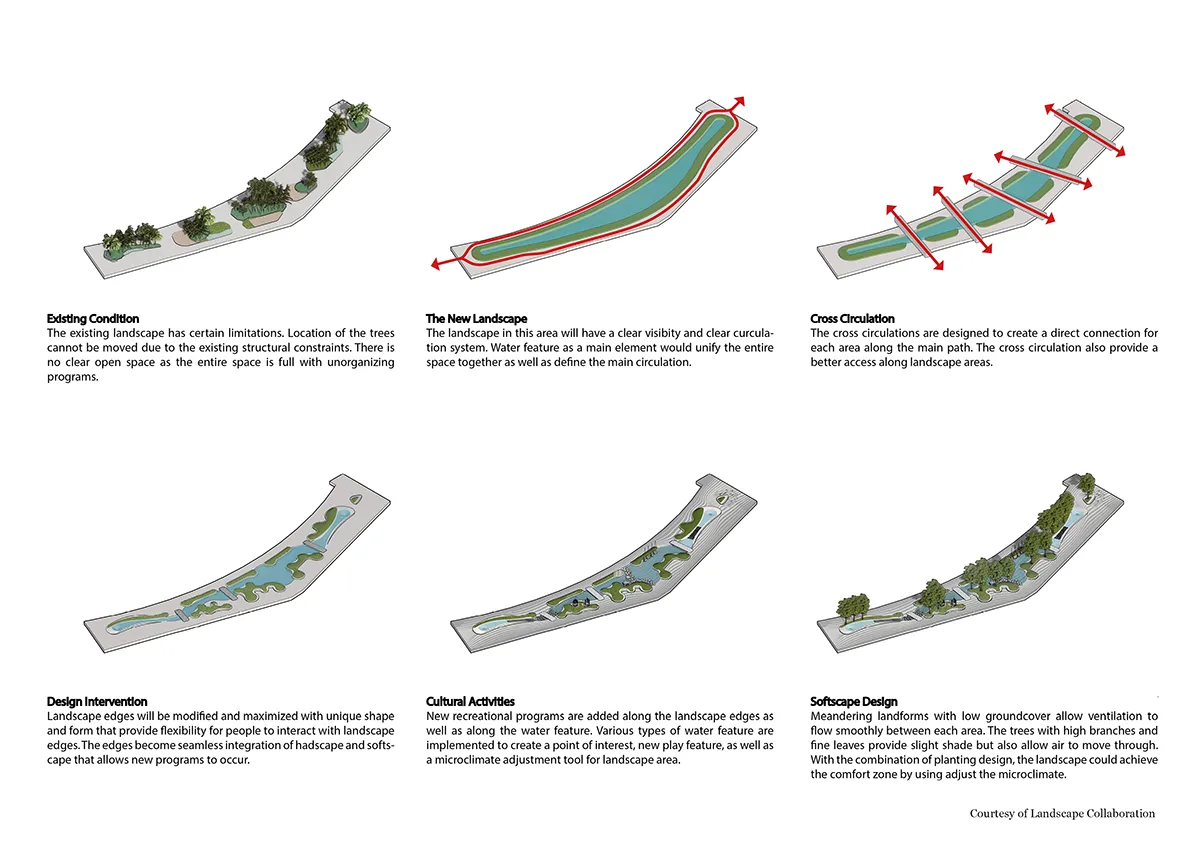
Landscape design employs the same strategy, using meandering topographic-profile planters to accommodate the existing tree pits. These planters become fields of islands that define spaces in between. The real challenge, other than the constraints mentioned above, is how water can flow from one side to the other? The goal is not to create a reflective pond or a small pool. Rather, the goal is to create a continuous stream of water. So that we can keep a thin water profile, in other words, less weight for the existing structure. With a thin water profile, water must move. Otherwise, it would look like a pond. With a 10-17 centimeters thickness allowance and almost 100 meters long water feature, it sounds impossible to achieve what we are aiming for. Even the entire water channel is a slope. It will have only a 1:100 (1%) slope, with no freeboard area. This is not only a design issue that can be solved by one design discipline. We have to work collaboratively with engineers, water specialists, and clients to come out with the best solution.
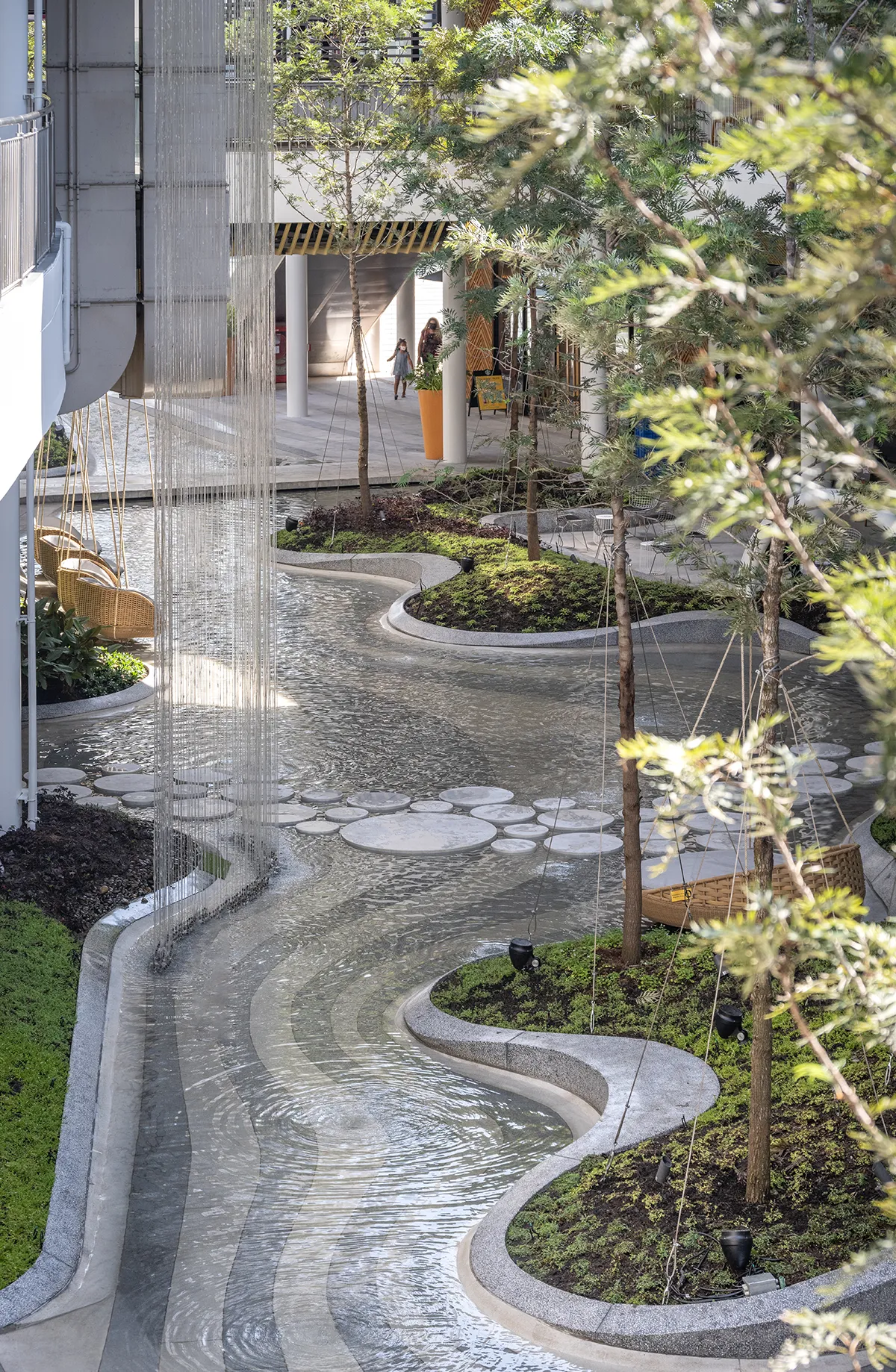
The stream will be divided in 3 parts in order to shorten the flowing distance. Their divisions are where the surge tanks are located. These technical requirements are concealed by pedestrian bridges. Each water inlet on both sides is raised to create a gravity flow that allows water to move more naturally through the stream.
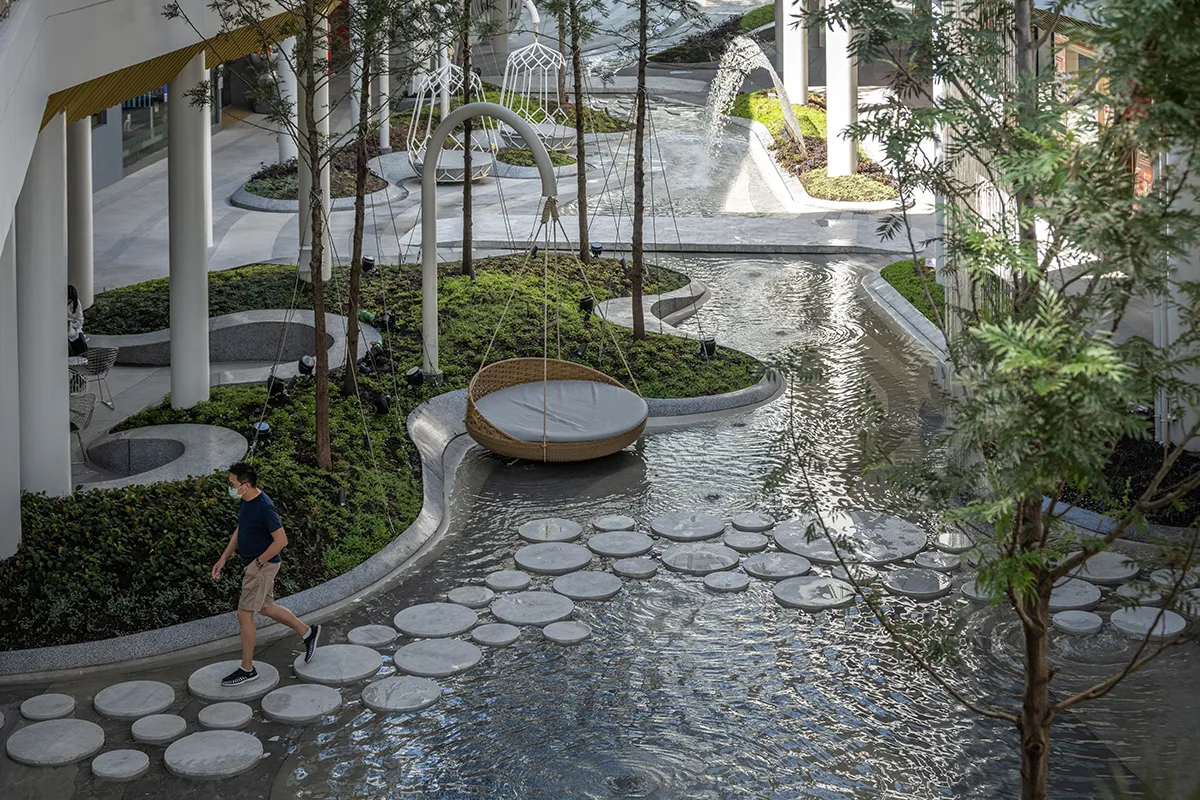
These raised platforms offer many possibilities for creating water textures. It allows active water play activities to happen in these areas. A parabolic Fountain and a field of stepping stones are added to create interest in the area. In contrast to an active water stream, the central water feature is designed with one-directional flow and a much slower rate than the others. This area became a living space with hanging seats where people could sit and relax on the water. The various landscape atmospheres, created with different programs, are seamlessly integrated with the various technical water design solutions.
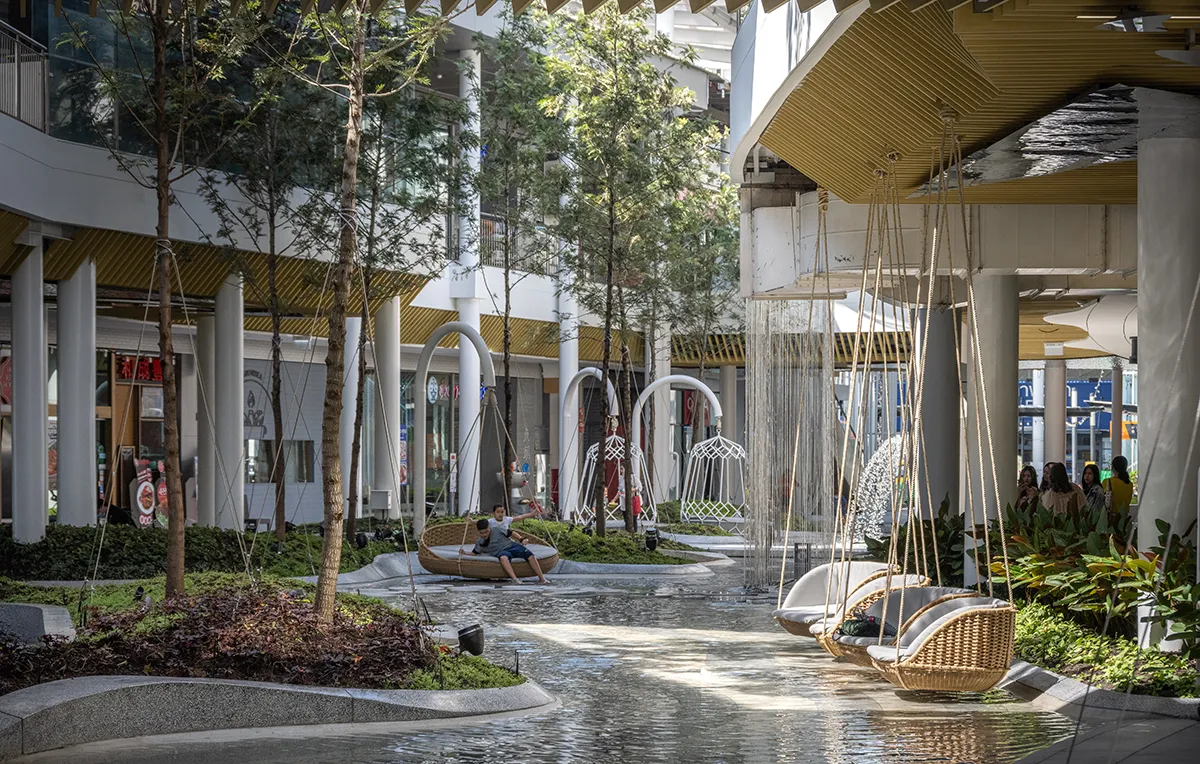
The completion of these projects has been met with a very warm welcome from everyone. The seating, play, and water feature areas are full of people who enjoy the outdoor space like no other in a shopping mall. This challenges the status quo that no one wants to use landscape areas, especially in the shopping mall.
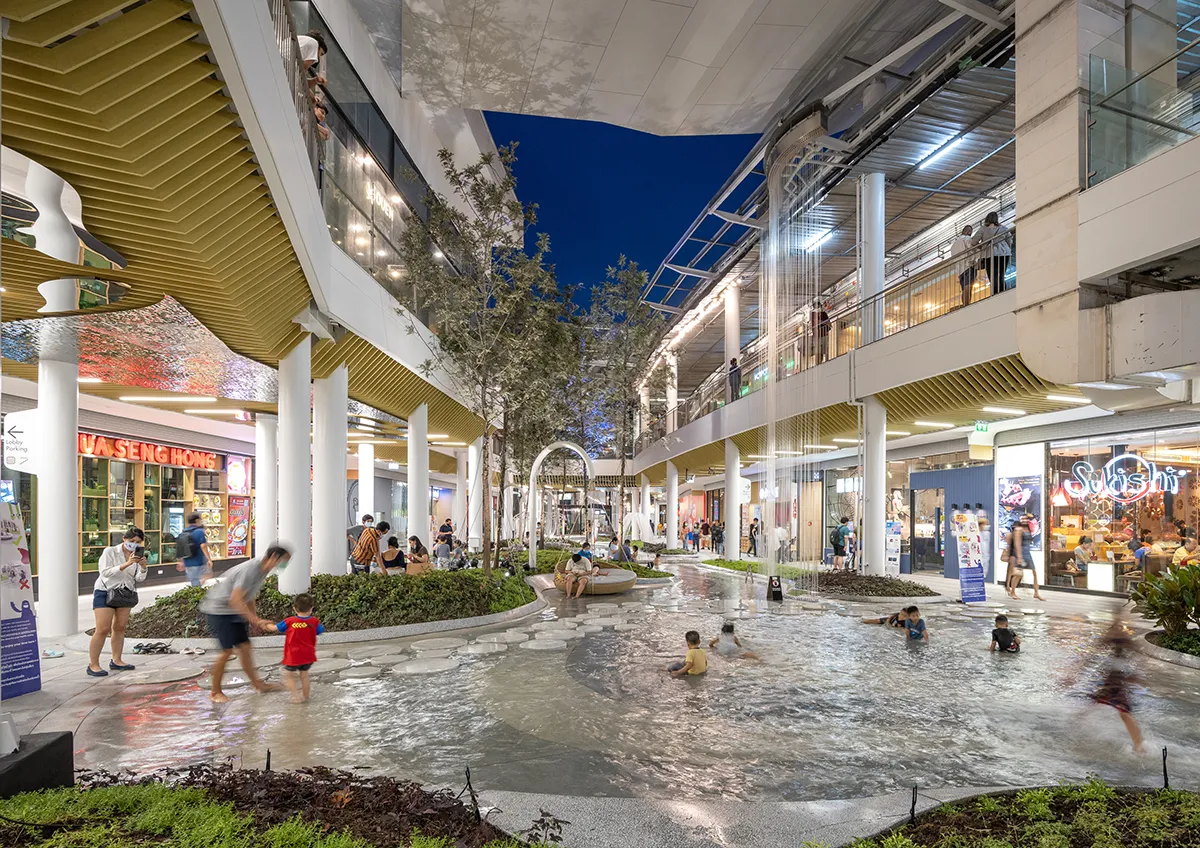
The landscape is like a city. No one fully appreciates it when they only see it. They have to live comfortably within it and have a personal experience to enjoy and appreciate it. It is not about how it looks, but it is about how it feels. The city is about us. We are part of it as the landscape is. These projects are just examples of how we design the landscape for people. We think that by creating landscape appreciation and environmental awareness, people would understand the importance of their environment and seek for a better quality of life within the city.
In order to create a better city, we need to create a better environment.
In order to create a better environment, we need a great contribution.
In order to create a great contribution, we need a common understanding.
In order to create a common understanding, we need to create appreciation.
We believe that landscape design could become a tool that enables appreciation of a better world for all of us.
Article by Somkiet Chokvijitkul – Principal and co-founder at Landscape Collaboration
Images: Landscape Collaboration