The City of Toronto has recently announced that it is planning to undertake Traditional & Prescribed burns in two of its parks – High Park and Lambton Park. The burn is scheduled for early spring 2026 and is contingent on favourable weather.
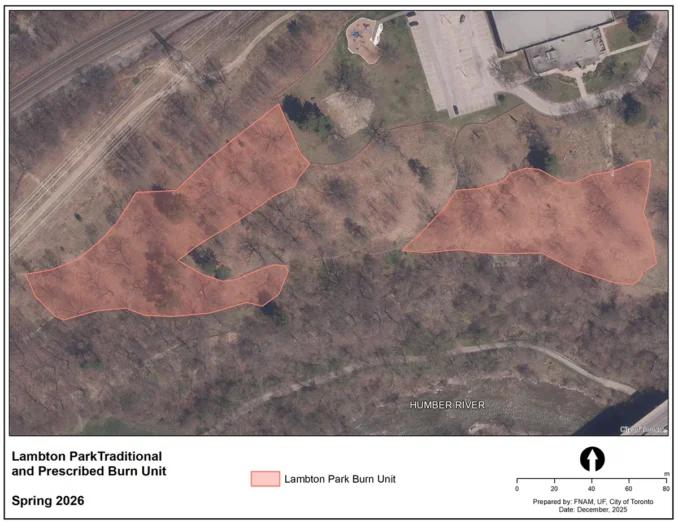
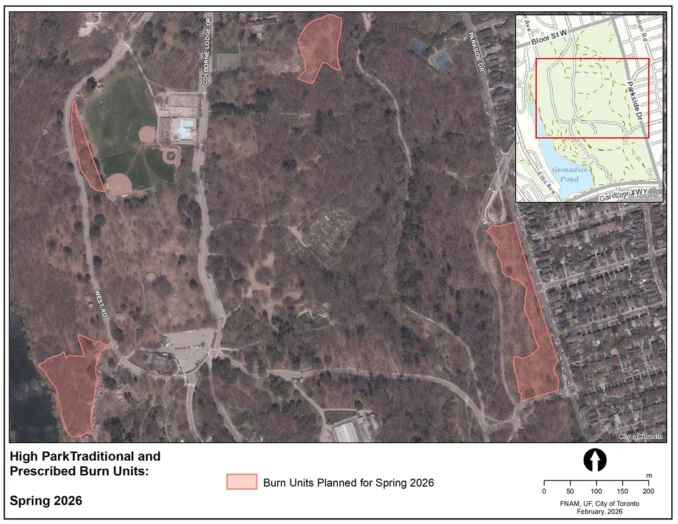
A traditional and prescribed burn is a deliberately set and carefully controlled fire. It burns low to the ground and consumes dried leaves, small twigs and grass stems, but does not harm larger trees. Fire-dependent ecosystems, such as Toronto’s rare Black Oak savannah, contain prairie plants that respond positively to burning and grow more vigorously than they would in the absence of fire. Species that are not adapted to these ecosystems can be reduced through repeated fire use. The use of fire is part of the City’s long-term management plan to restore and protect Toronto’s rare Black Oak woodlands and savannahs.
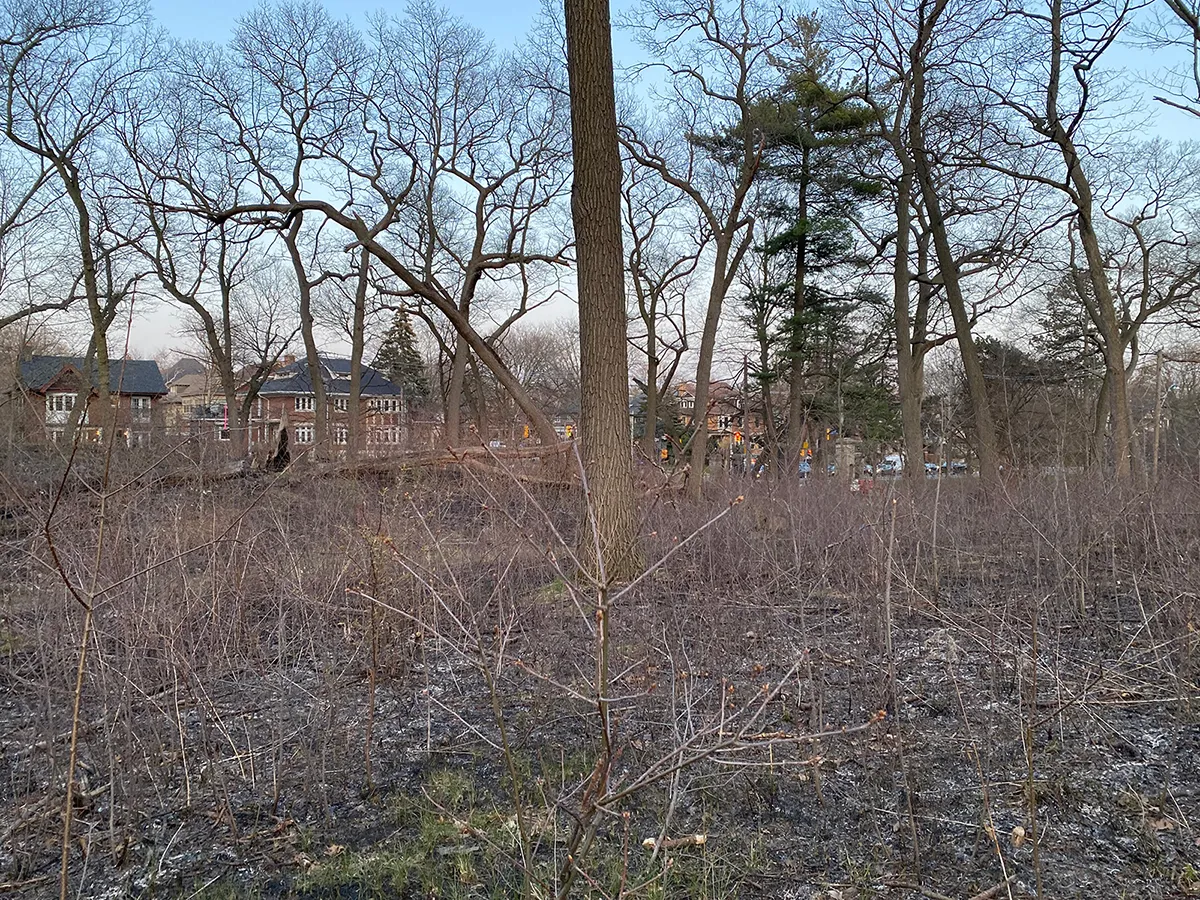
During the traditional and prescribed burns:
- City staff on-site ensure public and wildlife safety and can provide information about the burn.
- Park users should be prepared for restricted access to areas near the burn sites in both High Park and Lambton Park, including temporary road and trail closures.
- Smoke from burns will rise and dissipate in ideal conditions; however, changing weather can cause it to drift and affect residential areas near the parks.
- Close windows or consider leaving the area to avoid potential sensitivity to smoke.
Post-burn, the continued management of the burn sites is important. Invasive species are opportunists and may attempt to establish in a newly burned site before native plants in the seedbank have a chance to grow and fill the space. City staff will monitor the burn sites and plan for invasive species management as required. Monitoring the sites is an important way to determine both short- and long-term success.
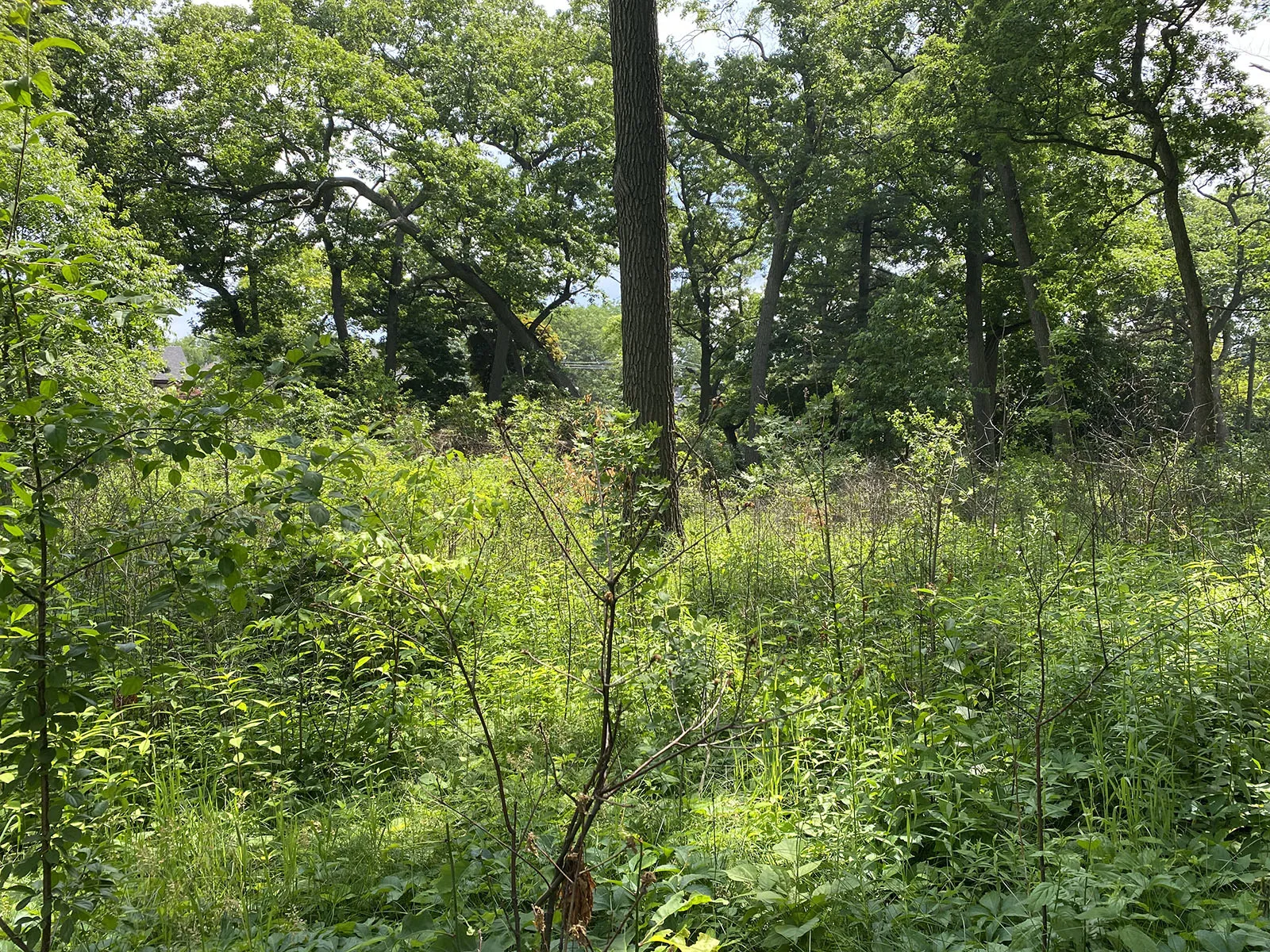
The success of the burn is determined by City staff trained in ecosystem management, the Fire Boss, and leading experts from the Ministry of Natural Resources and Forestry (MNRF) and the Toronto and Region Conservation Authority (TRCA).
Find out more about the planned Traditional & Prescribed burns at https://www.toronto.ca/services-payments/water-environment/trees/forest-management/urban-forest-management/prescribed-burn/