
Winner of an Honourable Mention in the 2026 WLA Awards – Built Large Public Space Landscape Design
Jingyue Central Park in Changchun, China, transforms a fragmented, infrastructure-dominated corridor into a resilient green core. It reconnects nature, communities, and the urban fabric by activating under-bridge spaces, reusing construction waste, and restoring cold-climate ecosystems.
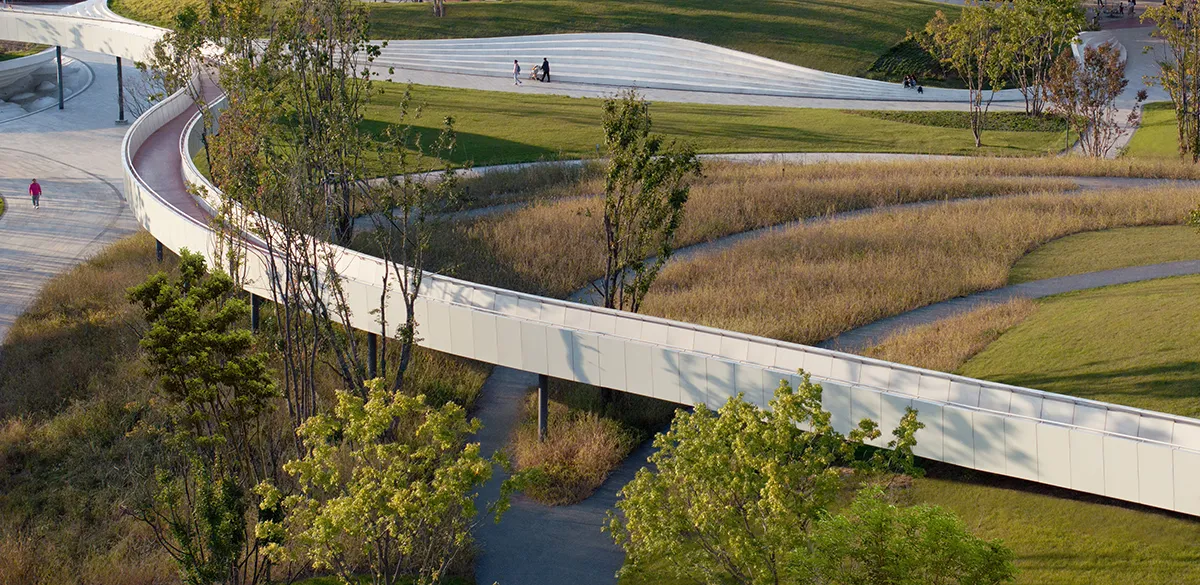
Site Challenges and Objectives
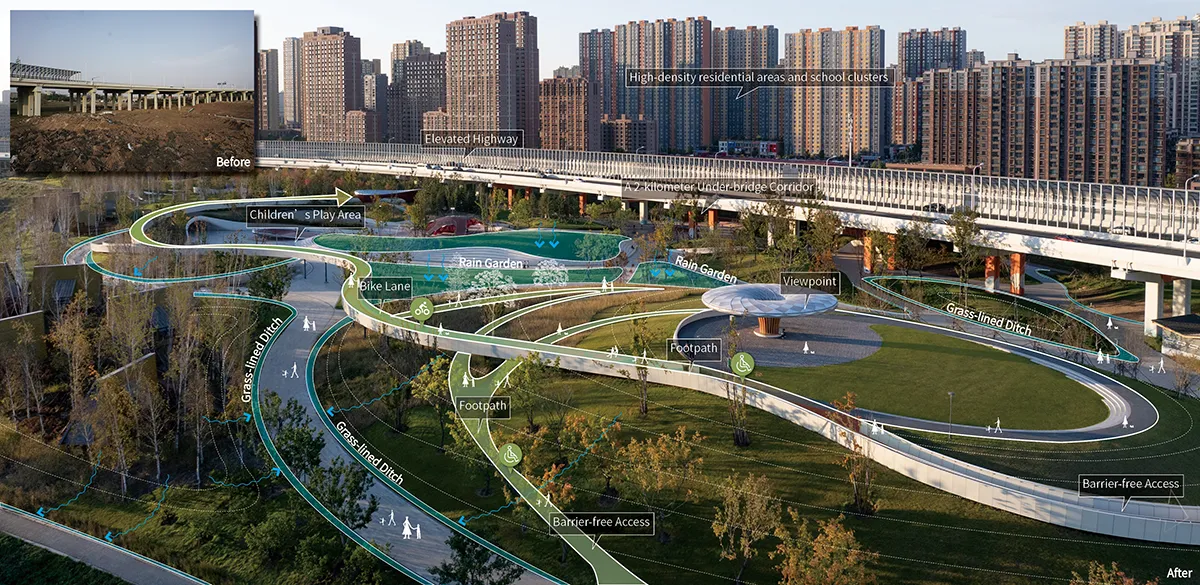
Located in a high-density, cold-climate urban rupture zone, the site was fractured by a 2km elevated highway, a waterway, and 1.5 million m³ of construction spoil. This severed north-south connectivity and caused severe spatial and social fragmentation. The project repositions the landscape to transform this degraded liability into a resilient connector bridging natural habitats, community life, and urban structures.
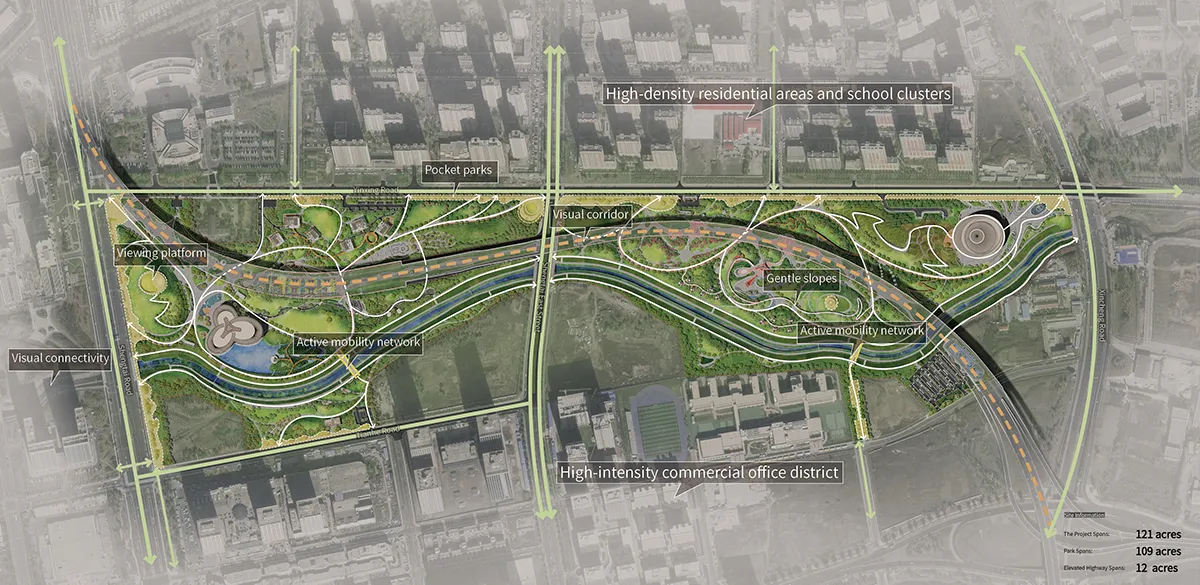
Site Integration: Softening Edges and Rebuilding Connections
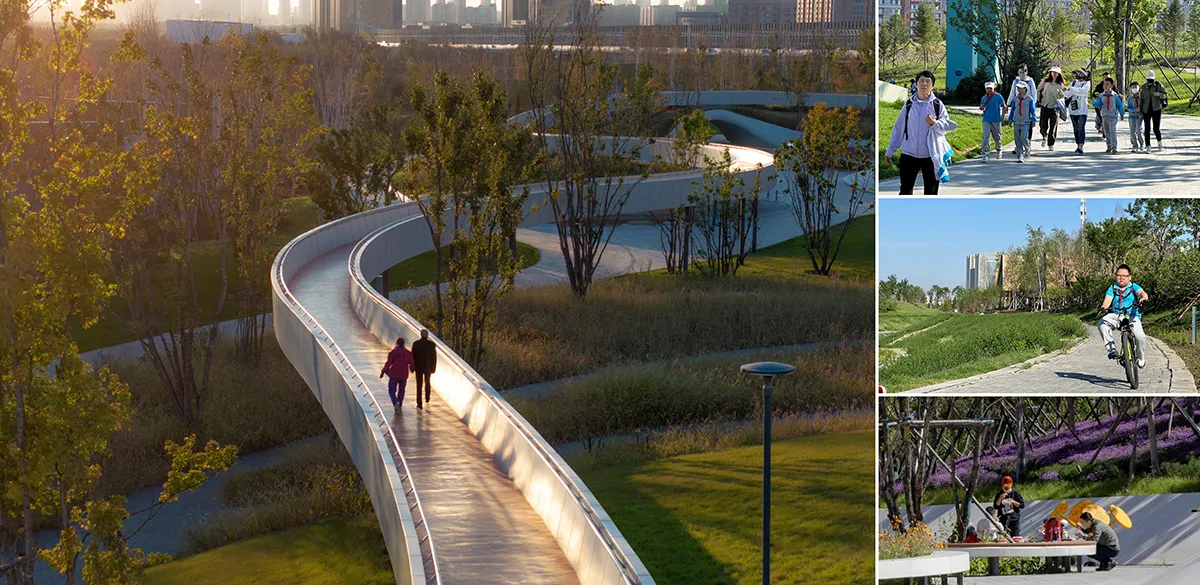
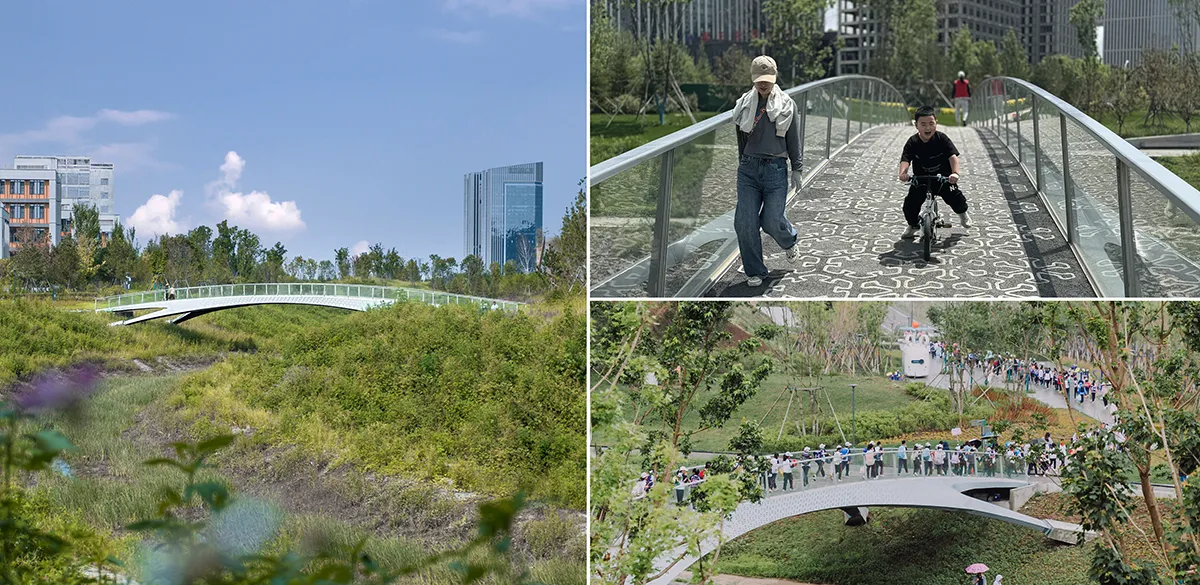
The design softens boundaries between the park and surrounding neighborhoods using pocket parks and green visual corridors. A multi-level slow mobility system bridges the river and infrastructure, restoring north-south pedestrian and bicycle links, while viewing decks enhance visual dialogue with the city.
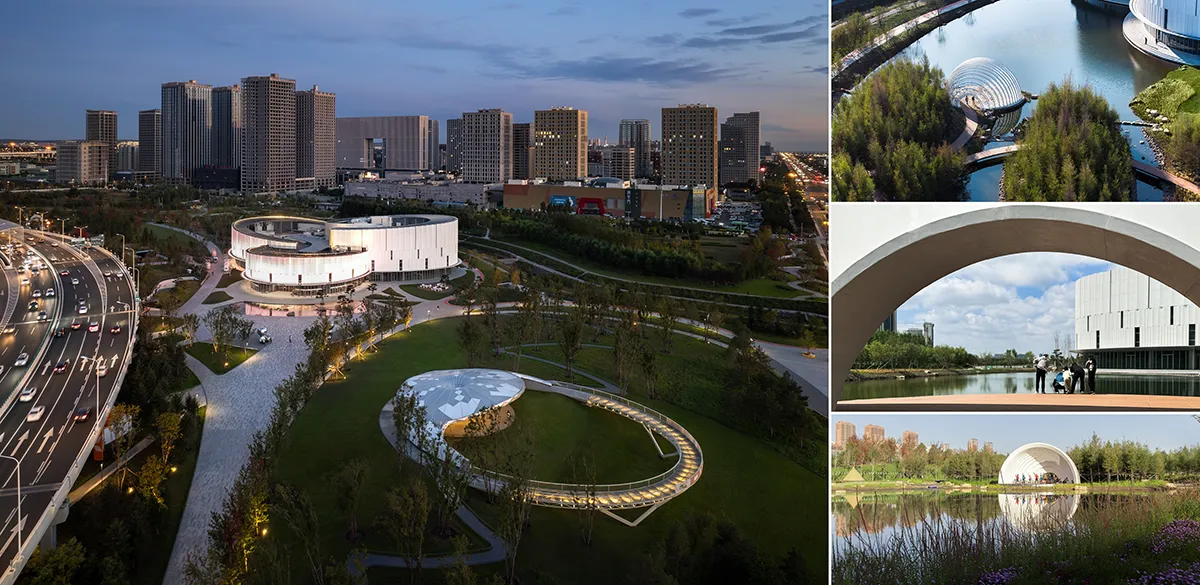
Infrastructure Reuse: Revitalizing Under-Bridge Spaces
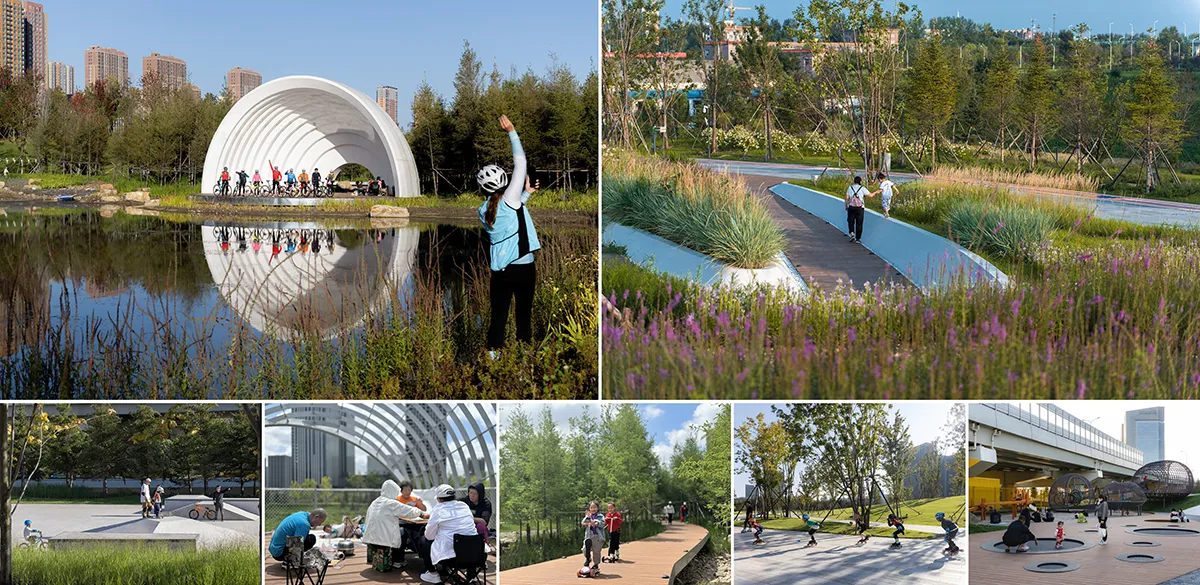
Two kilometers of under-bridge barriers are converted into a 24-hour community corridor. Incorporating natural light, human-scaled design, sports facilities, and play areas greatly enhances safety, inclusivity, and daily use.
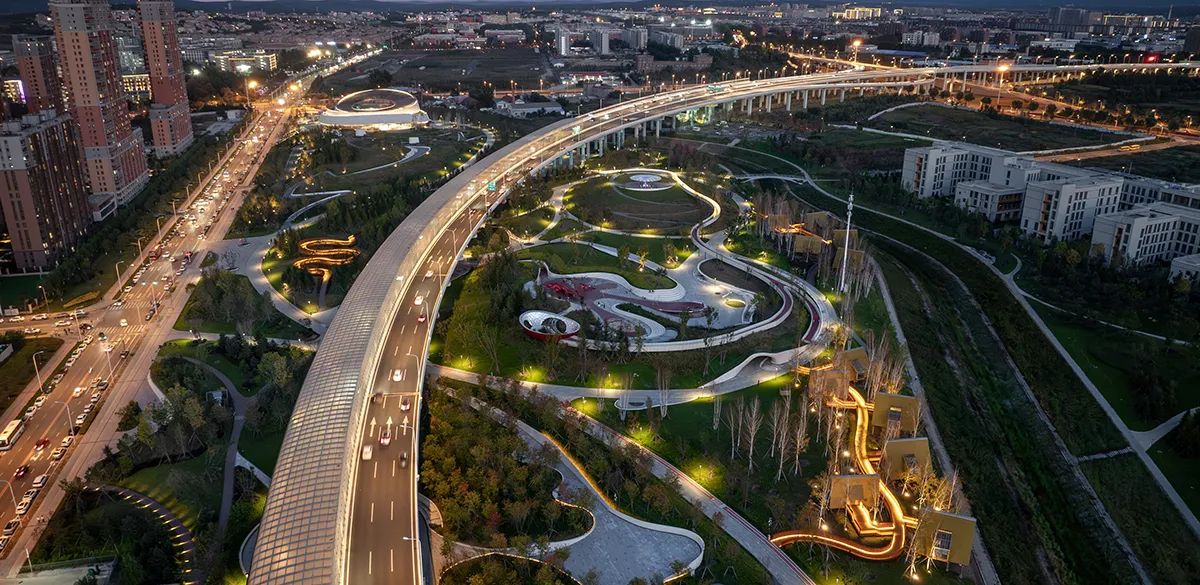
Everyday-Life Oriented Design: Activating Use and Creating Place
The park serves as a flexible public space supporting both organized events and spontaneous daily use. It fosters long-term social resilience through a combination of institutional management and community self-organization.
Resource Cycling Strategy: Reusing Excavated Soil as Resilient Infrastructure
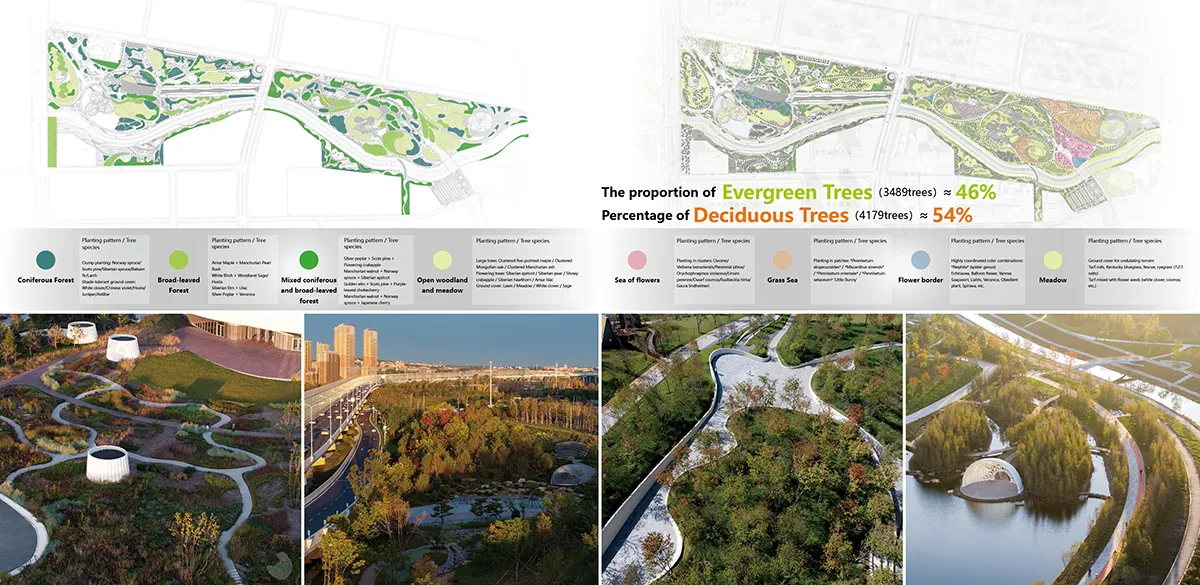
Approximately 1.5 million m³ of construction spoil is repurposed to create ecological landforms. Green mounds, rain gardens, and bioswales form a “sponge landscape” that mitigates flooding and boosts ecological performance.
Cold-Climate Ecological Restoration: Adapting to Climate and Rebuilding Ecosystems
A low-maintenance system using native, cold-hardy species increases green coverage to 73%, boosting urban biodiversity and turning harsh winter conditions into an ecological asset.
Cultural Integration and Intelligent Construction: A New Paradigm for Extreme Climates
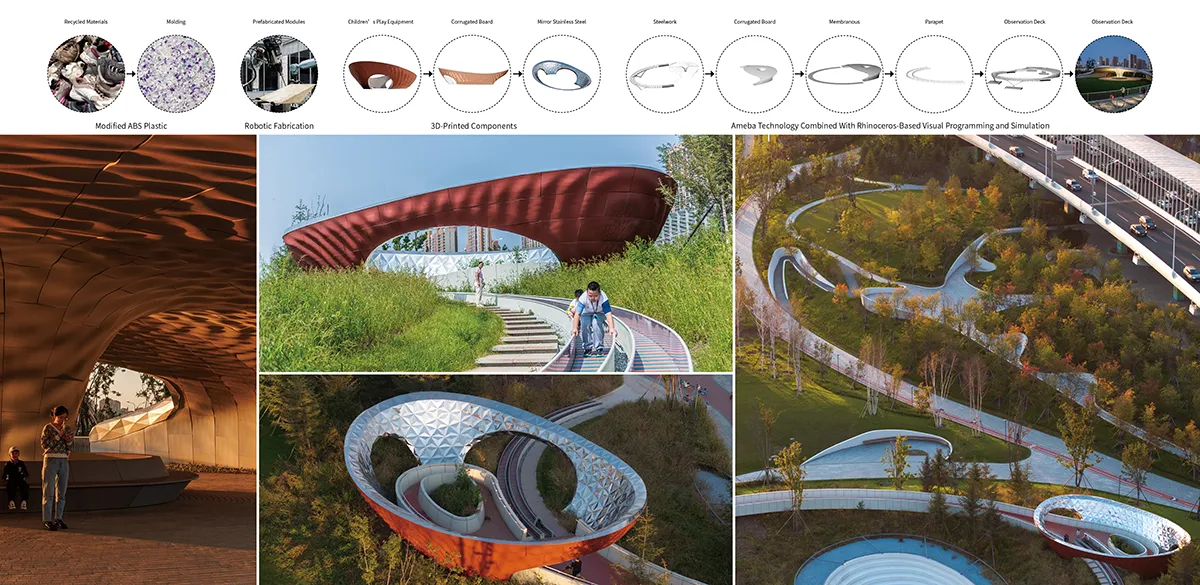
Curvilinear designs soften the imposing scale of surrounding commercial areas, embedding local culture at key nodes. Intelligent construction and digital design ensure the efficient delivery of high-quality urban spaces in an extreme climate.
Outcomes and Impact
Jingyue Central Park transforms a 2 km “urban rupture” into a resilient connector; under-bridge use rises from <5% to 80%; 1.5 million m³ of construction waste reshapes ecological landforms and hydrology, with 73% green coverage and 70% annual runoff control; extreme cold is harnessed into a low-maintenance, biodiverse urban lung; lack of public space is filled with diverse social, cultural, and educational activities. The project restores urban–ecological synergy, pioneering a new paradigm for cold-climate landscape design, demonstrating landscape as a key urban engine connecting people, nature, space, community, and resilience.
Parametric Design for Visual Innovation
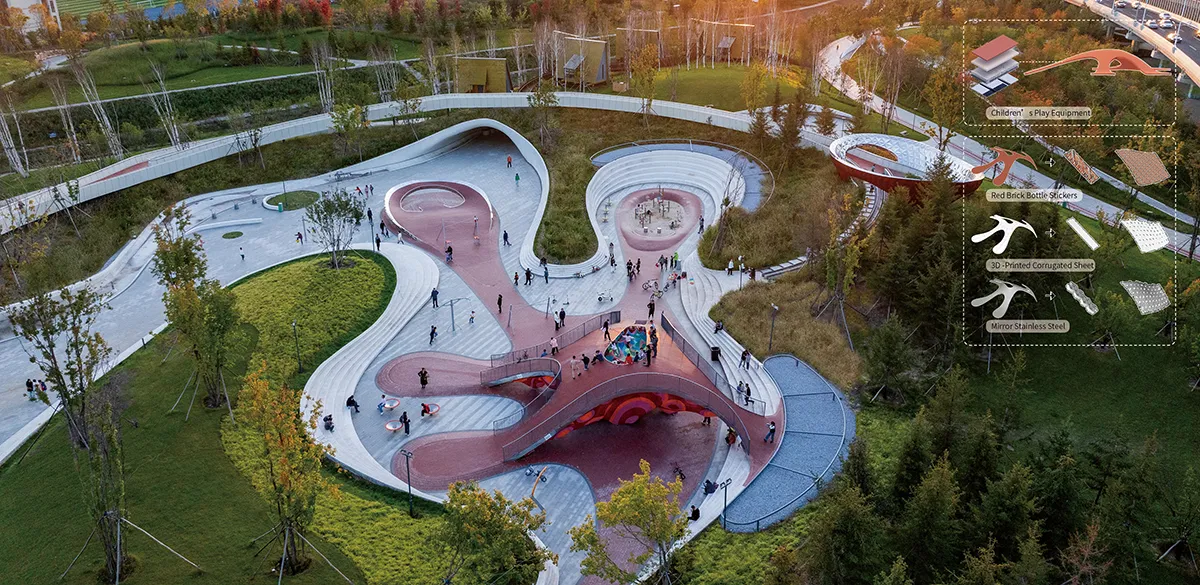
The children’s play equipment, bridges, and east-west observation decks in the park were developed using parametric design. This approach not only optimized structural performance by maximizing lightweight and high-strength characteristics but also created a distinctive aesthetic of rhythmic variations across the façades and large-scale complex structures.
3D-Printed Signature Pavement
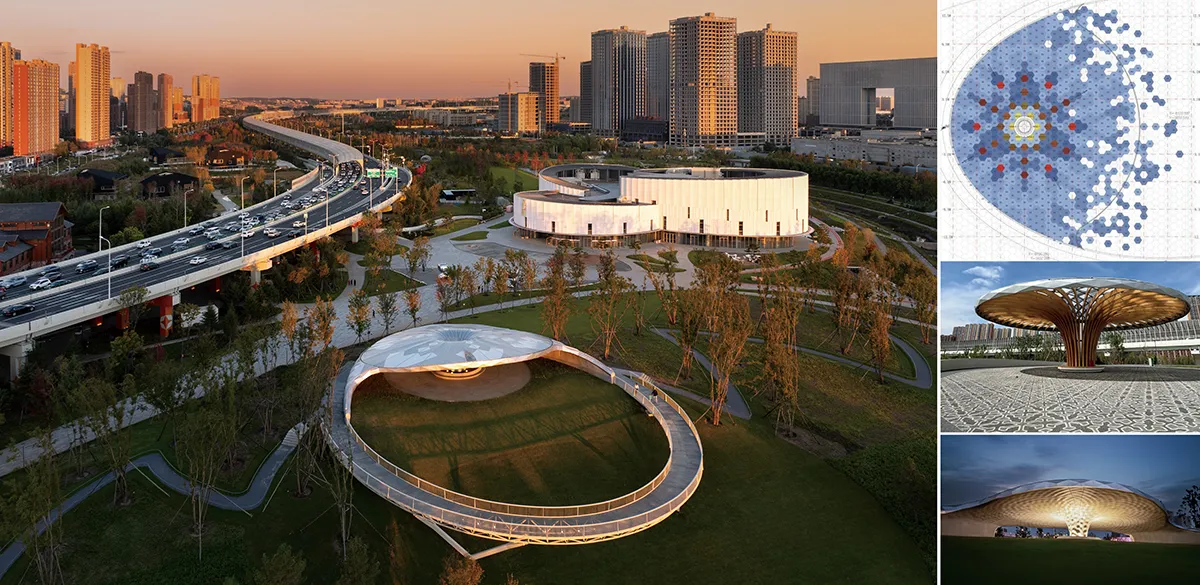
Fractal concrete 3D printing technology precisely fabricated 33 specifications of “snowflake-pattern” paving tiles, incorporating ice-snow cultural elements of high-cold regions to create distinctive landscape features.
Changchun Jingyue Central Park
Location: Changchun, Jilin Province, China
Landscape Architect: Shanghai Shuishi Landscape Design Co.,Ltd.
Client: Changchun Jingyue High-tech Industrial Development Zone Management Committee.
Jilin Jingfa Innovation Investment Group Co., Ltd.
Changchun Jingyue Investment Holdings (Group) Co., Ltd.
Collaborators: Shanghai Shuishi Architectural Design & Planning Corp.,Ltd.
Shanghai Fab-Union Technology Co., Ltd
Shanghai Gardens Group Co., Ltd.
Changchun Weishi Construction Engineering Project Management Co., Ltd.
Changchun Jingyue Design Group
Be the first to comment