
Wadis are dry valleys that carry water only during and after rainfall events, and are characteristic features of arid and semi-arid regions. In Saudi Arabia, they are often treated as residual land, spaces left between urban development, difficult to build on and frequently viewed primarily as flood risks. Yet these landscapes are neither empty nor accidental. They are dynamic geological systems, continuously shaped by moving water, sediment, and gravity. Rather than obstacles to urban development, wadis form the ecological and hydrological framework of arid landscapes while offering significant opportunities for public space.
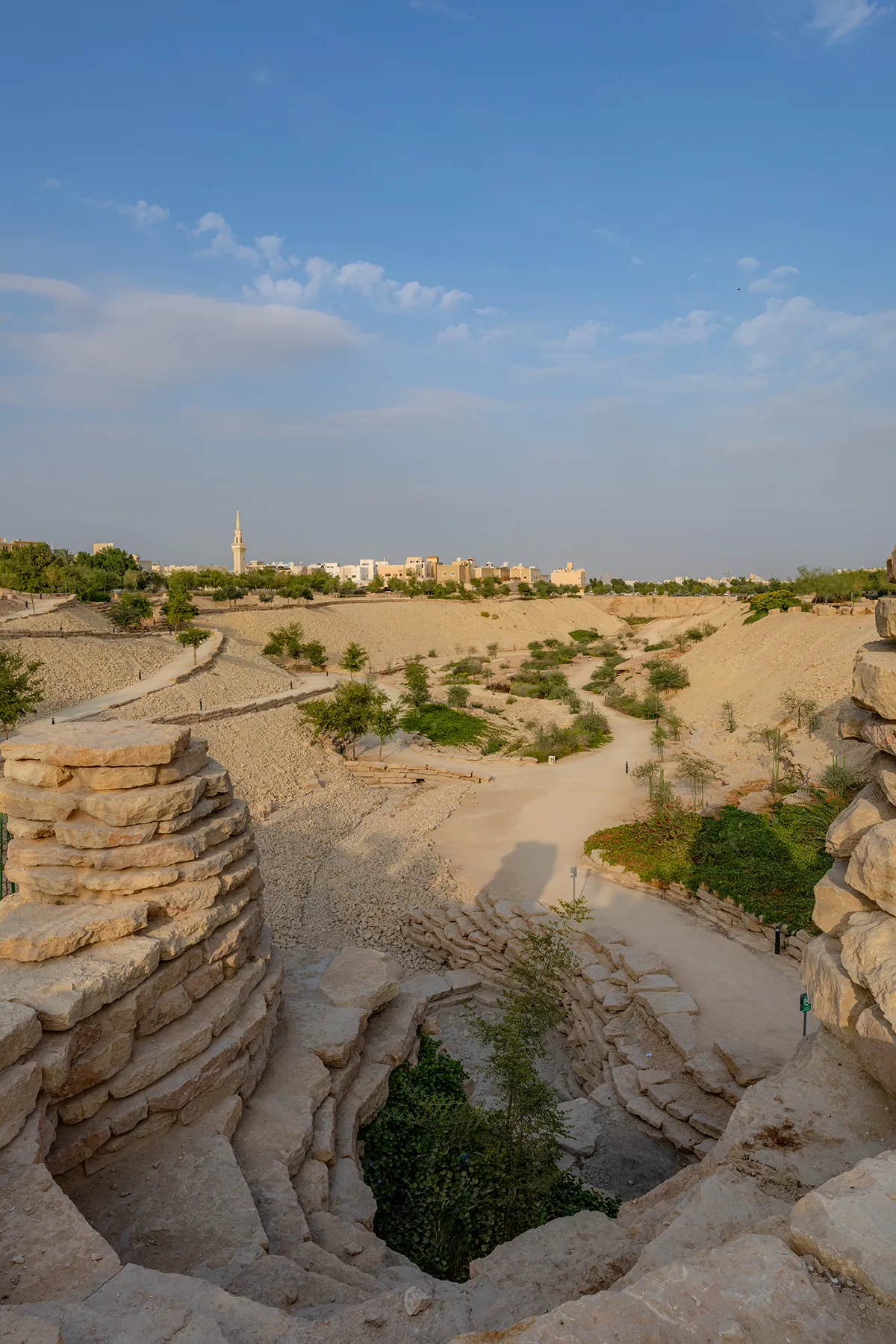
From Wadi Ghudwana, Wadi Hanifah, and Wadi Sulai in Riyadh to Wadi Al Aqeeq in Madinah, wadis across Saudi Arabia differ in scale, landform, and character, but share the same natural processes. Periodic flood events erode rock and soil, transport sediment downstream, and create new landforms through deposition. These ongoing processes shape the landscape over time and define how each wadi functions. Recognising this geological logic is fundamental to designing interventions that work with the landscape rather than against it.
The Forces That Shape Wadis
A wadi’s form is not created by a single flood event but by a continuous sequence of interconnected processes. Rainfall generates runoff, runoff transports sediment, channels deepen, and slopes gradually retreat. Over time, repeated flood events reinforce these processes, carving escarpments, reshaping channels, and creating the distinctive landforms that characterise wadis across Saudi Arabia. These evolving landscapes are not only geological features but also an important part of the region’s natural heritage.
One of the clearest expressions of these processes occurs where a channel bends. As water accelerates along the outer bank, it erodes the slope, creating a cut bank—an exposed and often unstable edge that continues to retreat over time. Along the inner bank, where water slows, sediment is deposited to form a slip-off slope, producing gentler and more stable ground. This continual interaction between erosion and deposition, driven by the mechanics of helical flow, is fundamental to the development of wadi landforms.
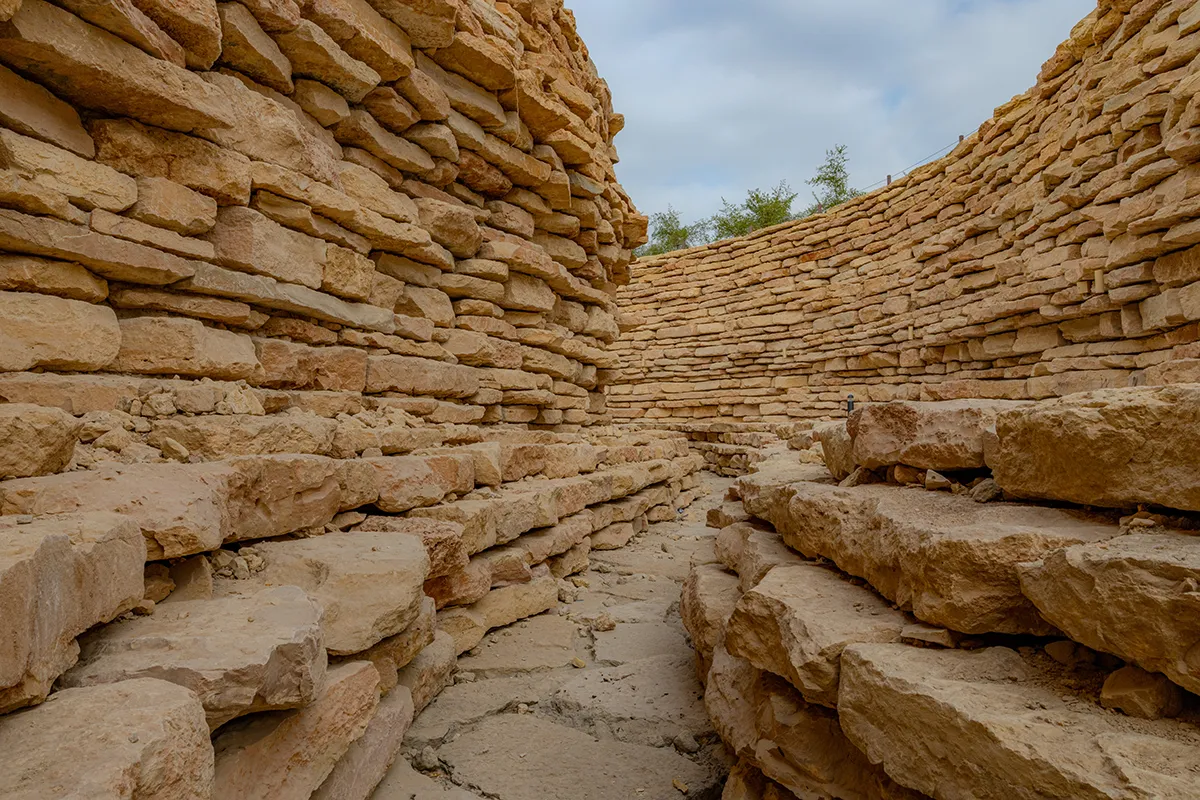
These dynamics remain clearly visible in locations such as Wadi Sulai, where the landscape records the cumulative effects of successive flood events. Rather than representing a static landform, the wadi continues to evolve with each rainfall episode. Understanding these processes enables landscape architects to respond to the landscape as an active system rather than a fixed setting, leading to interventions that are more resilient and better aligned with natural processes.
Erosion, Deposition and Soil Formation
Erosion tells only part of the story. Equally important is deposition, the process that enables wadis to support life.
As water slows, it deposits the sediment it carries. Over time, these deposits form layers of alluvial soil that retain moisture, support vegetation, and create some of the most fertile environments in arid regions. Historically, many of Saudi Arabia’s agricultural areas developed along wadis, where repeated cycles of flooding, sediment transport, and deposition gradually built productive soils.
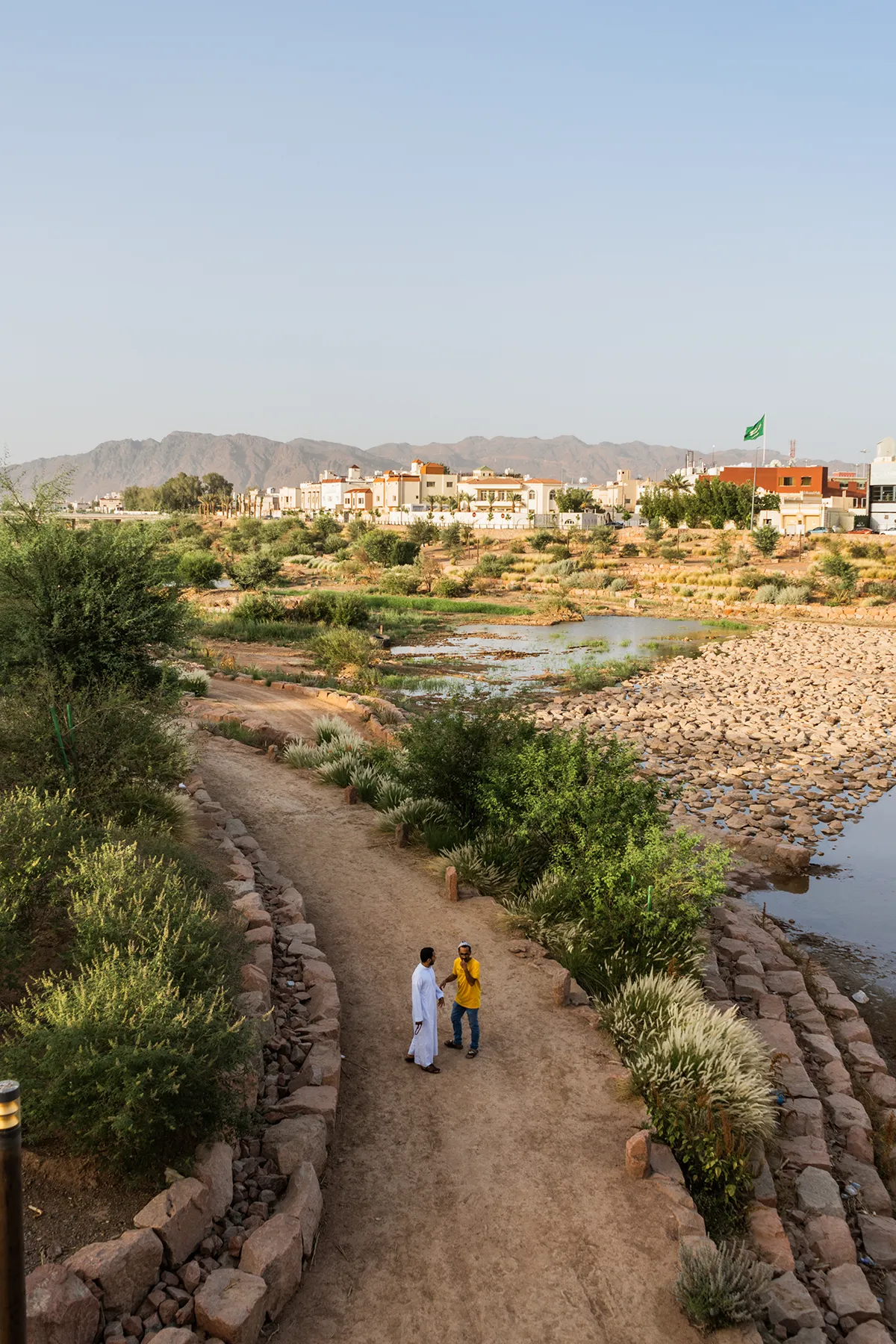
Erosion and deposition are inseparable processes. One removes and reshapes material, while the other builds the landscape through sediment accumulation. Together, they determine not only a wadi’s physical form but also its capacity to support vegetation, wildlife, and human activity.
For landscape architects, recognising this relationship is essential. When erosion is left unmanaged, soil can be lost faster than it is replaced, reducing the land’s ability to support ecological processes. When designers understand and incorporate these natural dynamics, they can help stabilise landforms, promote soil formation, and create the conditions needed for long-term ecological resilience.
When Natural Systems Meet the City
The relationship between wadis and urban development introduces both challenges and opportunities. The same natural processes that shape these landscapes also make them dynamic environments for landscape architecture. At Wadi Ghudwana, for example, erosion threatened nearby homes before the site’s restoration, particularly during heavy rainfall.
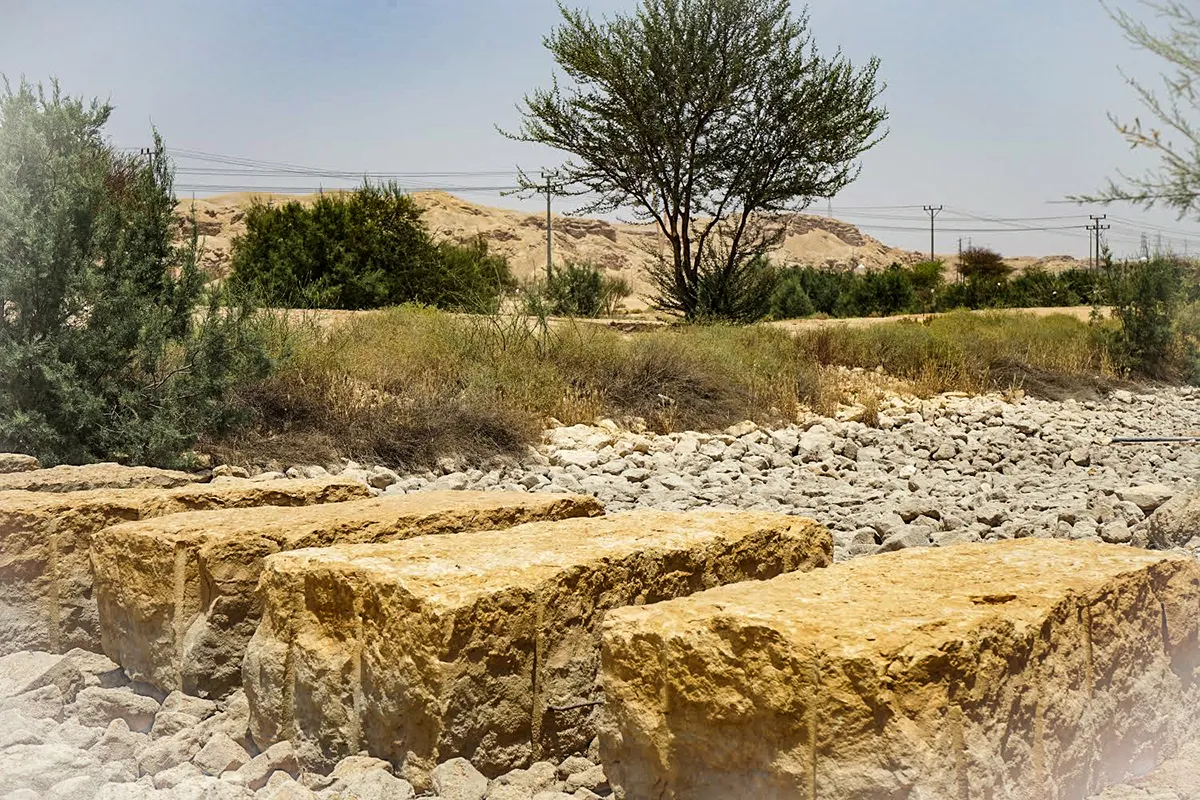
Erosion itself is not the problem. Rather, problems arise when urban development conflicts with the natural behaviour of water. When design works with these processes instead of resisting them, the forces that once created risk can become the basis for a more resilient landscape. Wadis cannot simply be engineered out of existence. They must be understood, accommodated, and carefully integrated into the urban fabric.
Designing with Water in Mind
Designing within wadis is not about preventing natural processes but about guiding them. Landscape architecture mediates between water and the built environment, influencing how water moves, slows, spreads, and infiltrates across the landscape.
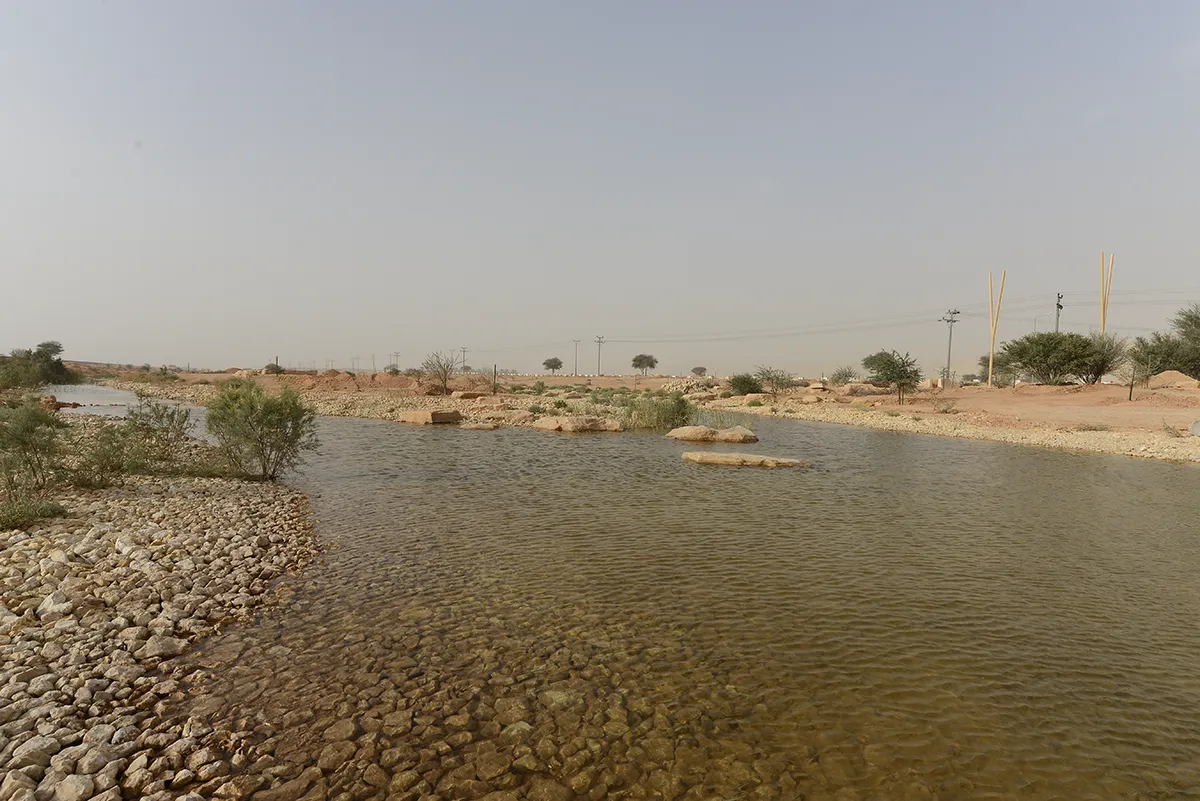
This approach is demonstrated at Wadi Ghudwana. Rather than diverting floodwater away from the site, the design allows water to move through the landscape in a controlled manner, reducing its energy while encouraging infiltration. The result is a landscape that retains the character of a natural wadi while functioning safely within an urban setting.
These principles extend well beyond a single project. In Wadi Hanifah, they operate across a much larger floodplain. In Wadi Sulai, cut banks and slip-off slopes illustrate how flowing water continuously reshapes the landscape. In Wadi Al Aqeeq in Madinah, the interaction of erosion, deposition, and seasonal flow demonstrates that these are not isolated conditions but fundamental characteristics of wadi systems throughout the region.
Wild Systems in the City
The significance of wadi restoration extends beyond ecological repair. It reflects a broader shift in how cities can engage with natural systems.
Wadis are active, evolving landscapes that can be integrated into the urban fabric, contributing to water management, biodiversity, and public life. Their value lies not simply in their appearance but in how they function. They manage water, support vegetation, and provide spaces where ecological processes and urban life can coexist.
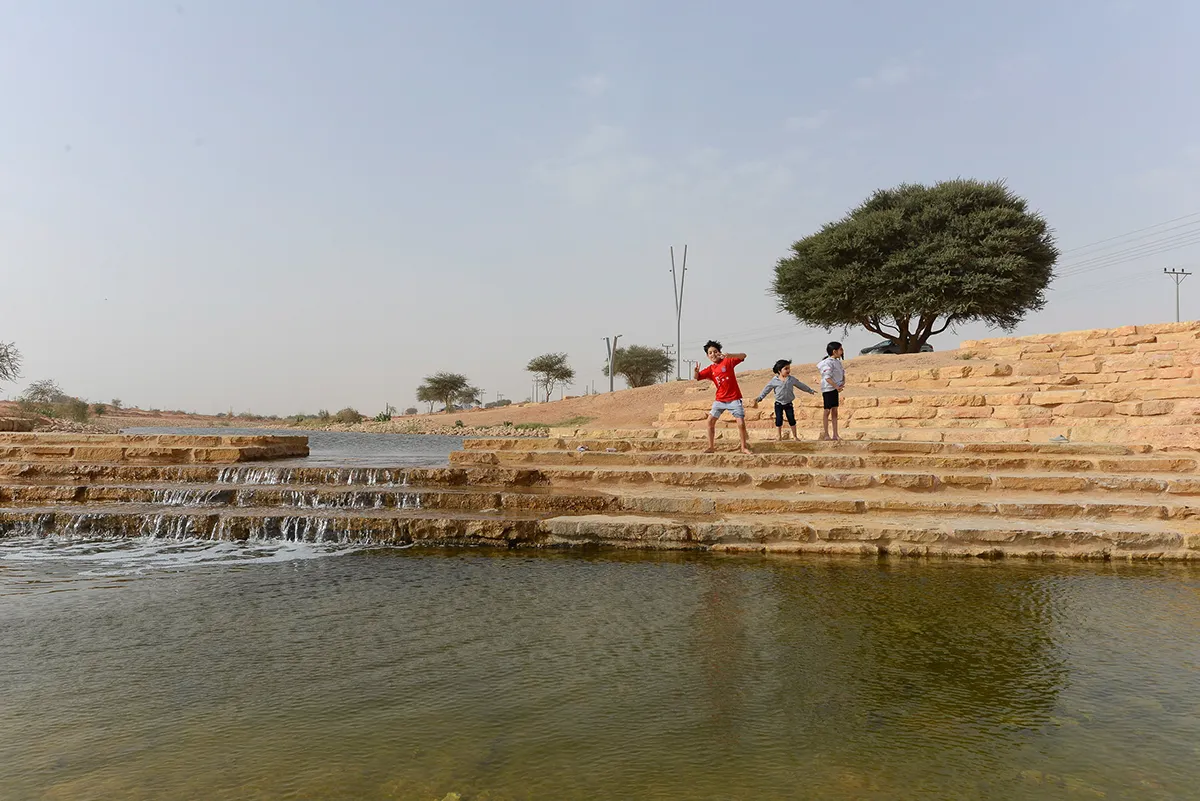
The transformation of Wadi Ghudwana from degraded land into an eight-kilometre green corridor demonstrates this potential. The restored landscape now supports vegetation, attracts wildlife, and provides accessible public space, showing how a functioning wadi can deliver ecological, social, and recreational benefits within the city.
As cities across the region continue to expand, the importance of these systems becomes increasingly evident. Wadis offer a natural approach to managing water, reducing environmental risk, and strengthening ecological performance within urban environments. At the same time, they create opportunities for recreation, environmental education, and everyday interaction with the natural processes that shape the landscape.
The challenge is not whether natural processes should continue, but how to accommodate them while creating places that are safe, accessible, and resilient. Successful wadi design depends on achieving this balance, allowing these landscapes to function as living systems while serving the needs of the surrounding communities.
Design Based on Understanding
Wadis remind us that the most powerful forces shaping a landscape cannot be designed away. We can only understand them and work with them. Water, sediment, and gravity have shaped these systems for thousands of years, and they will continue to do so regardless of what is built around them.
For landscape architects, the challenge is not how to stop these forces, but how to understand them well enough to design in response. Where does erosion pose a risk, and where does it create opportunity? Where should water be slowed, and where should it move freely? Where is soil being lost, and where can it be rebuilt? These are not engineering questions alone. They are also design questions, and they begin with understanding the landscape on its own terms.
Saudi Arabia’s wadis are not obstacles to urban development. They are among the country’s most valuable landscape assets. As active systems, they manage water, reduce flood risk by slowing flows and creating retention areas, build fertile soils, support biodiversity, and provide spaces for public life. Realising this potential depends on designing in harmony with the processes that shape them. Natural forces do not adapt to our designs. Instead, successful design adapts to the landscape’s logic. In wadi landscapes, understanding is not simply the starting point. It is the foundation for every successful intervention.
Carved by Water
Landscape Architect: Bödeker Landscape Architects
Reem Bakir, Landscape Architect & Content Strategist; Ulrich Riederer, Partner & Landscape Architect
Be the first to comment