
In contemporary public landscapes, seating shapes how space is used, how people gather, and how material character is expressed at a human scale. Blox and Floe explore two approaches through Douglas Fir and steel—one grounded in geometry, the other in fluid, sculpted form.

While formally distinct, both share a clear material intent. Timber is not applied as a finish; it drives the design.
At the center is North American Douglas Fir, selected for its strength, dimensional stability, and visual richness. Responsibly harvested and PEFC-certified, it brings warmth to civic environments while meeting the demands of public use. Its pronounced grain and tonal variation add texture without overwhelming surrounding materials.
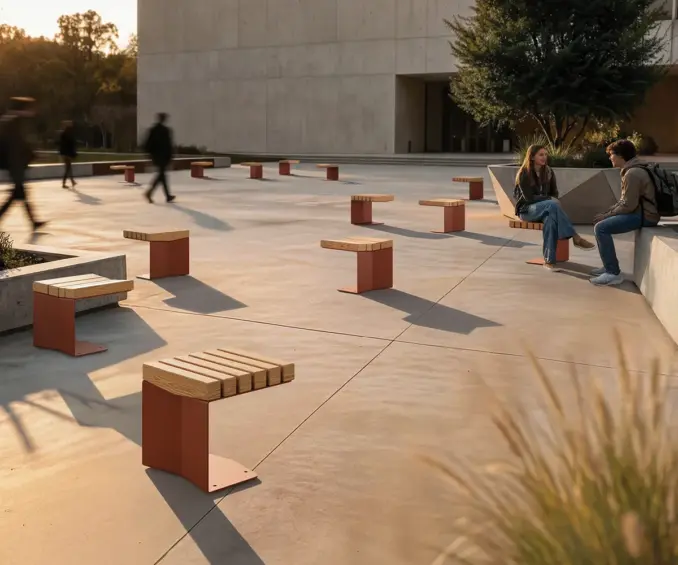
Douglas Fir supports long-term performance. With proper maintenance, it can endure for decades, gradually weathering to a handsome silvery-grey patina. Its ability to age with character reinforces its role as both durable and expressive.
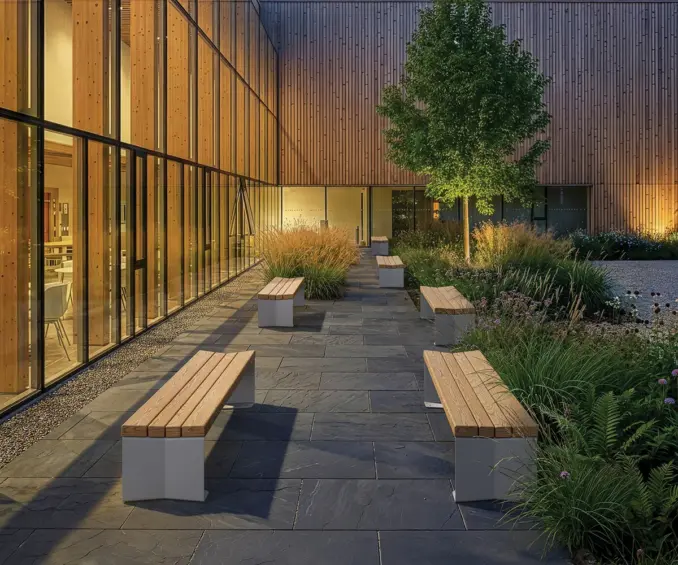
Within Blox, timber is paired with bold, architectural geometry. Inspired by brutalist forms, the collection combines wide Douglas Fir planks with grounded steel frames, creating a deliberate contrast between warmth and structure.
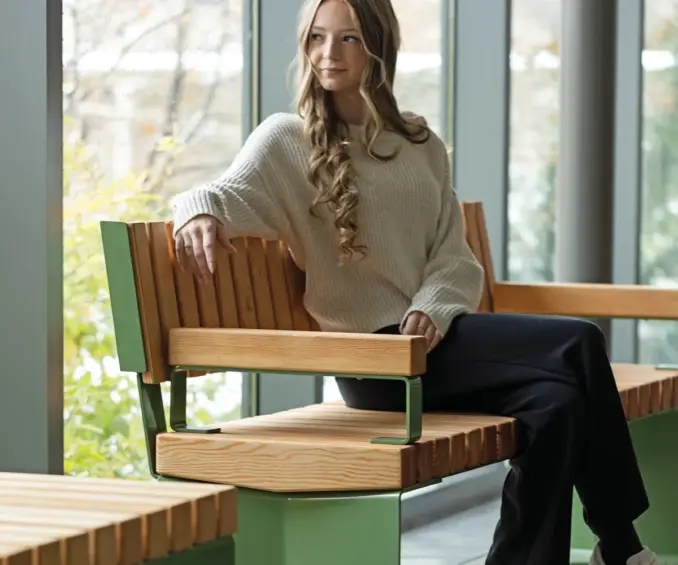
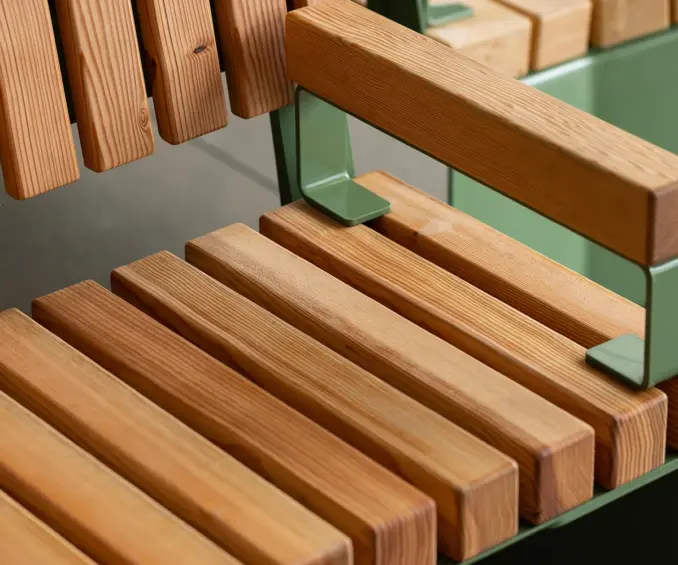
Comfort remains central. A subtle concave seat introduces ergonomic support within a rigorous formal language. Backed and backless benches, stools, and varied slat orientations allow Blox to adapt across settings—from linear arrangements along circulation routes to clustered layouts that support social use. Rather than prescribing a single mode of occupancy, it allows designers to define how seating is distributed within a space.
Floe offers a softer counterpoint. Where Blox is angular, Floe is continuous and sculpted. Large-profile timber planks form a concave seat that transitions into rounded edges, creating a form that feels approachable and comfortable.

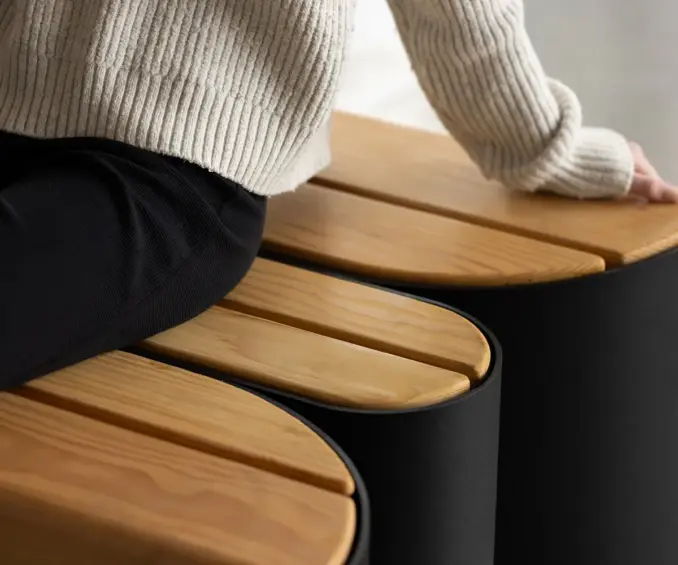
Its geometry is guided by movement rather than structure, allowing the material to read as both surface and form. Configurations include backed and backless benches as well as extended, extra-wide seating formats that support both individual use and shared occupancy. Floe moves between intimate settings and more open environments while maintaining a consistent visual language.
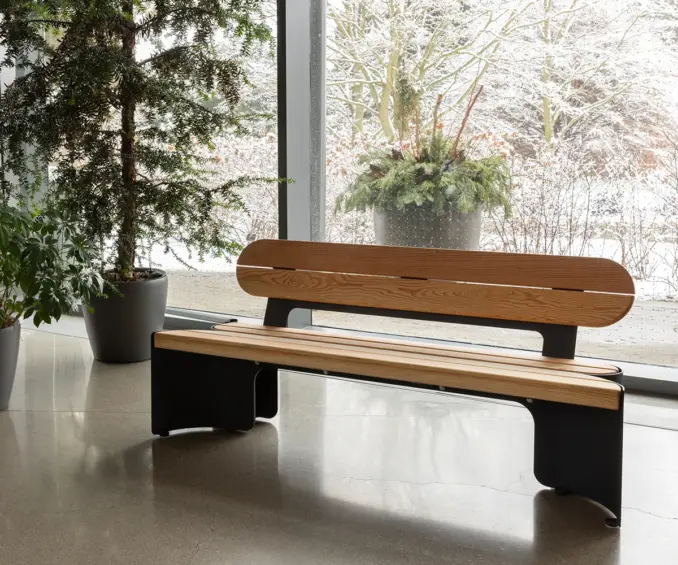
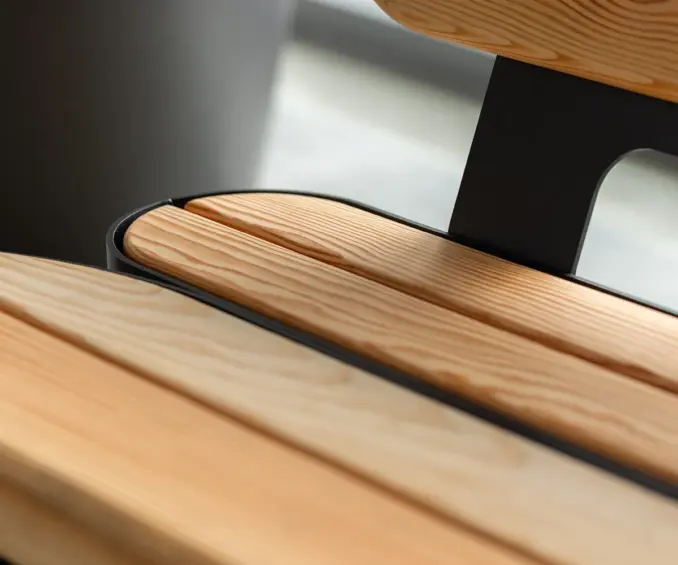
Across both collections, configurability is fundamental. Blox and Floe function as flexible seating systems rather than fixed objects, responding to different spatial conditions, user groups, and patterns of use. Whether arranged in sequence, grouped, or placed within a larger composition, they provide a framework for how people pause, gather, and interact.
Together, the collections present two related approaches to timber in contemporary landscapes—one emphasizing solidity and architectural presence, the other fluidity and softness. Both treat material as integral to form.
This reflects a broader shift in public space design, where materials are selected not only for durability but for their contribution to experience. Timber remains relevant in this context, offering a balance of performance and sensory warmth.
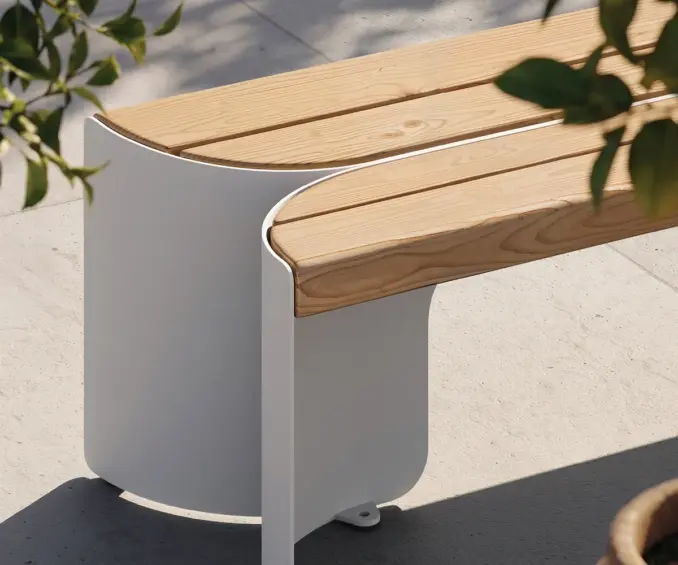
Douglas Fir plays a key role in that balance. Sustainably sourced, structurally capable, and visually expressive, it sits comfortably alongside steel, stone, and concrete while introducing a distinctly human quality. Through Blox and Floe, timber is positioned not as nostalgic, but as contemporary—capable of supporting bold form, comfort, and long-term performance in the public realm
Find out more about Blox and Floe at Maglin’s website
Photo Credits: Brittany Townsend Photography
Maglin is a proud WLA Sponsor