

The Barongarook Gulidjan Burial Place represents a shift from western views for urban park planning, design and regeneration to incorporating an Indigenous view for reinvigorating Gulidjan Meerreng (Country) advancing the needs and assertions of the local Traditional Owners, the Eastern Maar. Ways in which this was achieved by the design team comprising Hansen’s landscape architectural team and the Eastern Maar Aboriginal Corporation (EMAC) the representative body for the local Traditional Owners, include:
- Co-design of the project brief, timeline and objectives to define what constitutes a successful project outcome for Country.
- Embracing a responsibility to Country, by getting to know and understand the site and its history and the Traditional Owners connection to place.
- Embracing a hands-on computers-off approach to concept design development, removing technological impediments to creativity facilitating co-design with Traditional Owners.
- Understanding materials are Country and embody memory and specifying local materials and indigenous species representative of the pre-colonial landscape.
- Moving away from common maintenance practices and allowing for naturally occurring ecological process and indigenous caring for Country regimes.
Together the elemental and experiential components of place were incorporated into a holistic vision for the site guiding the restoration and repatriation of land, people and spirit.
Due to cultural sensitives and budget constraints, design and construction processes were accelerated. Social and economic pressures made it imperative to create a culturally safe environment and maintain transparency to enable open engagement and equitable co-design. The client and Hansen worked in partnership with EMAC to develop the project brief and objectives – informed by genuine collaboration, knowledge-sharing, deep listening, negotiation, and learning.
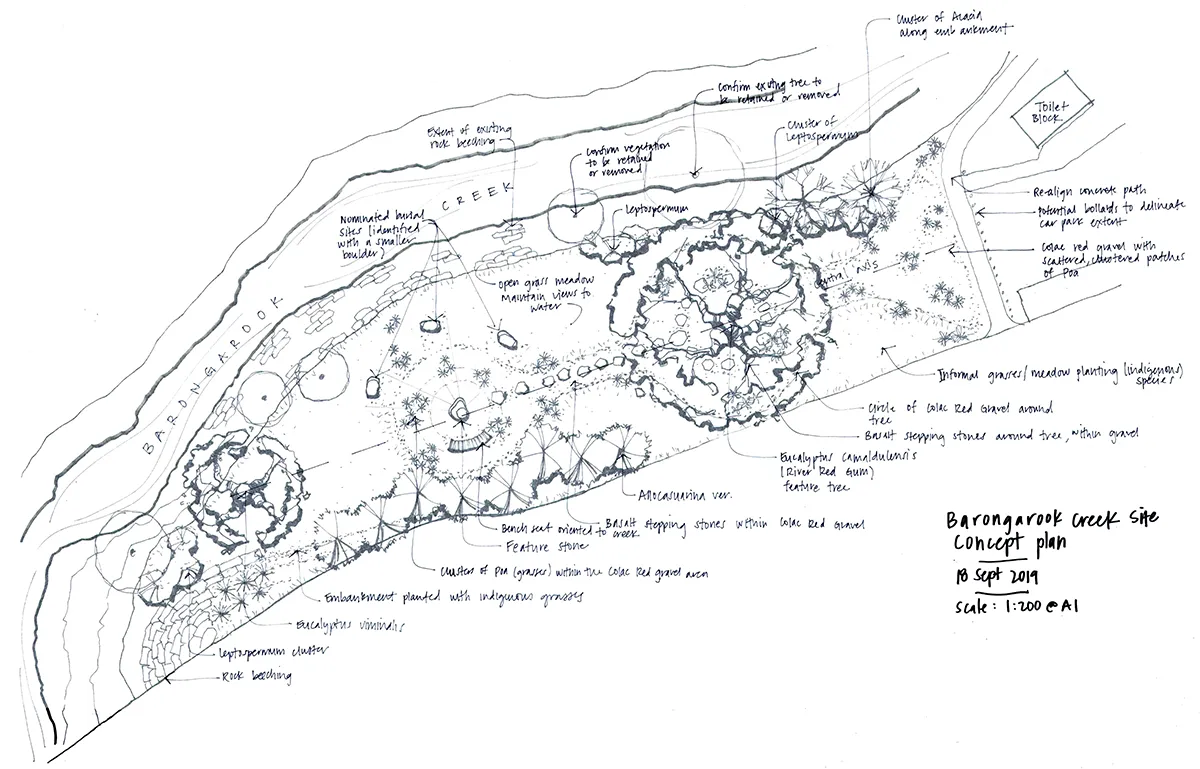
With consent from EMAC, the landscape architecture team translated the knowledge shared and vision for the site to successfully reinvigorate Country. A re-visioned public space was delivered on time and within budget; and importantly addressed the needs and values of the local community by improving the health and wellbeing of Country through rejuvenation of natural ecosystems and enabling rest and reflection for generations past, present and future.
The Traditional Owners’ connection to Country is intrinsic, deeply valued and inherited. It was imparted upon the design team by the Eastern Maar that to be able to design on Country, we must first develop our own connection to Country by building meaningful relationships with Country, community, and culture.
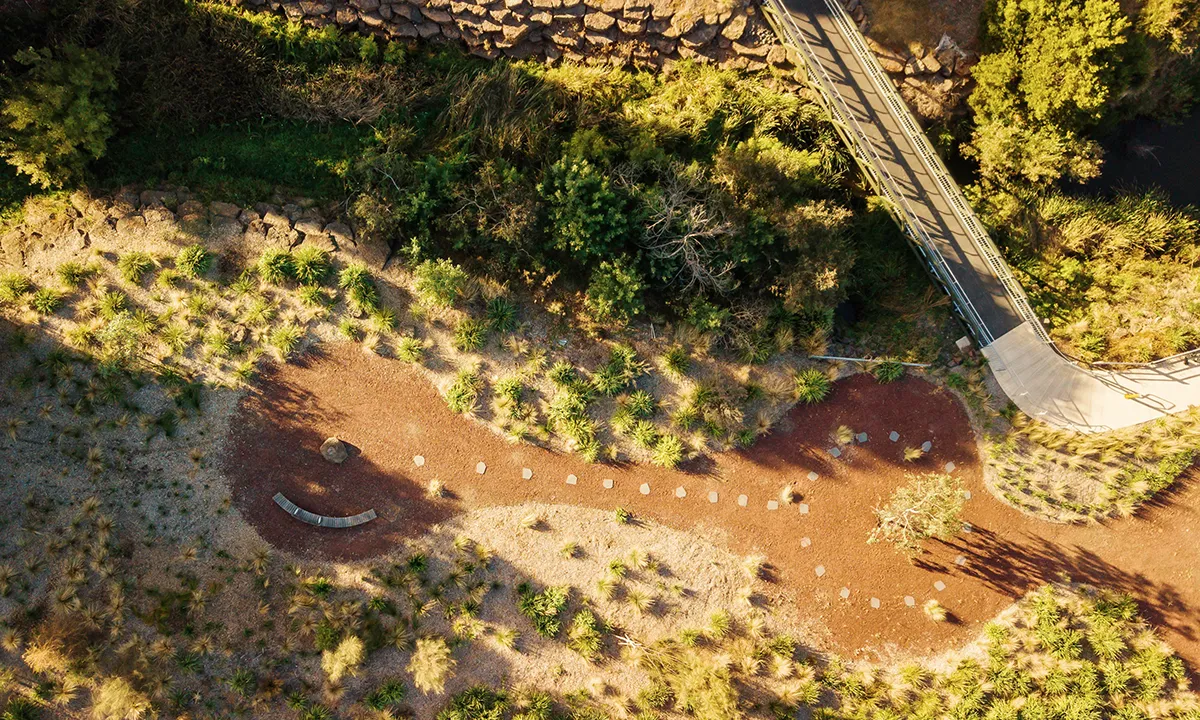
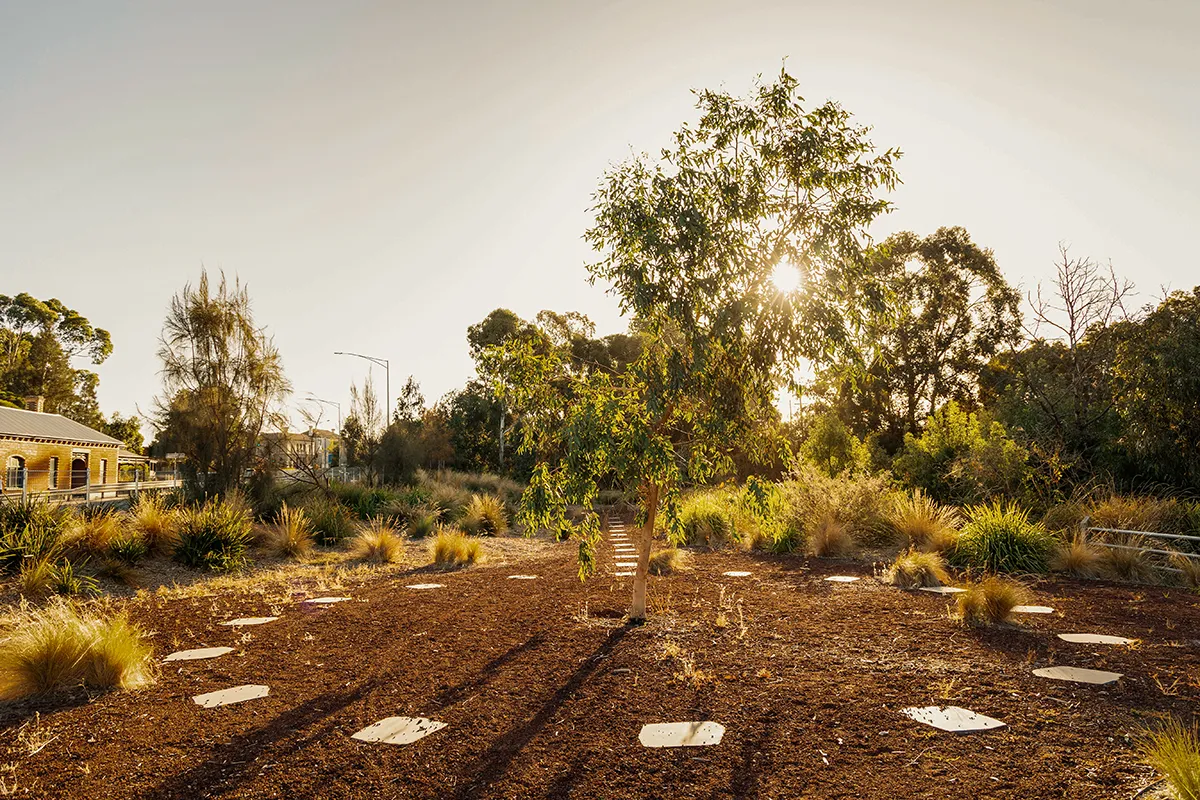
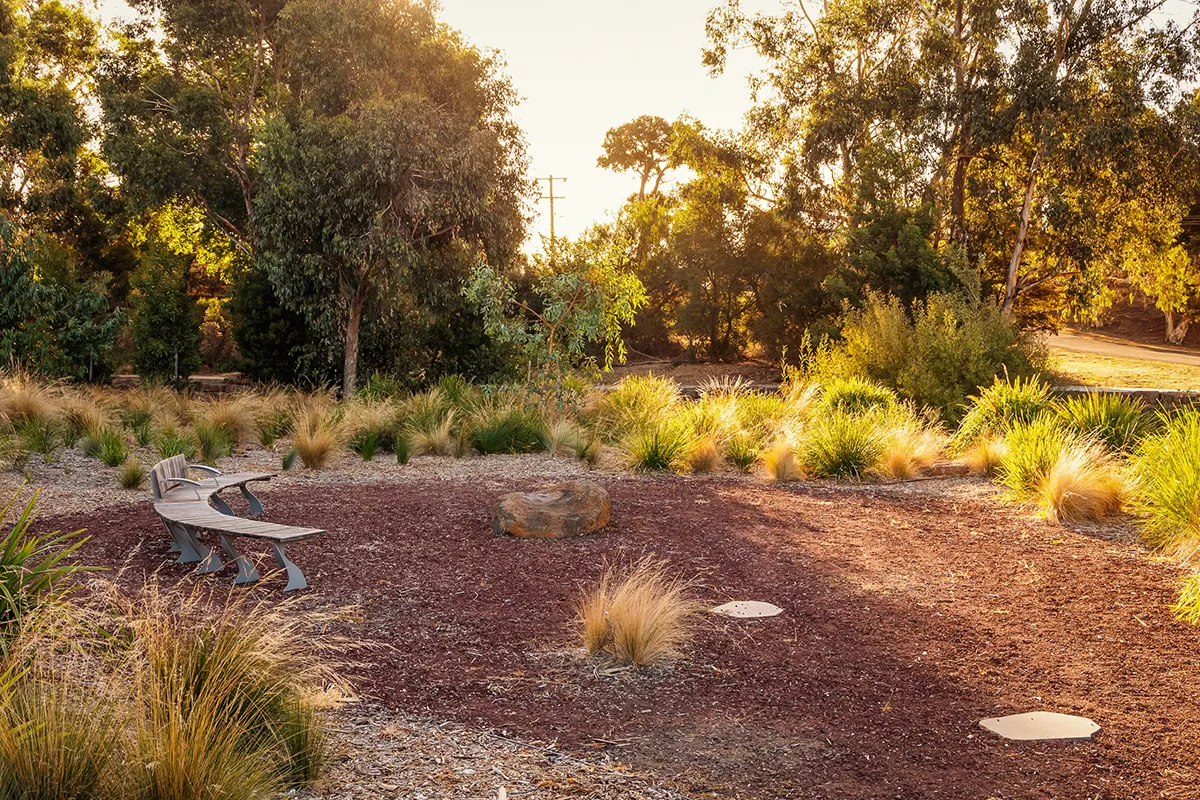
The project team engaged in deep listening with John Clarke of EMAC to learn about the pre-colonial history and culture embedded within Country. The team also engaged in research- and observation-based knowledge building, immersing themselves in the site and its history through literature, in particular Dark Emu by Bruce Pascoe, and spending time on Country. Stories revealed the pre-colonial appearance, uses and values of the landscape.
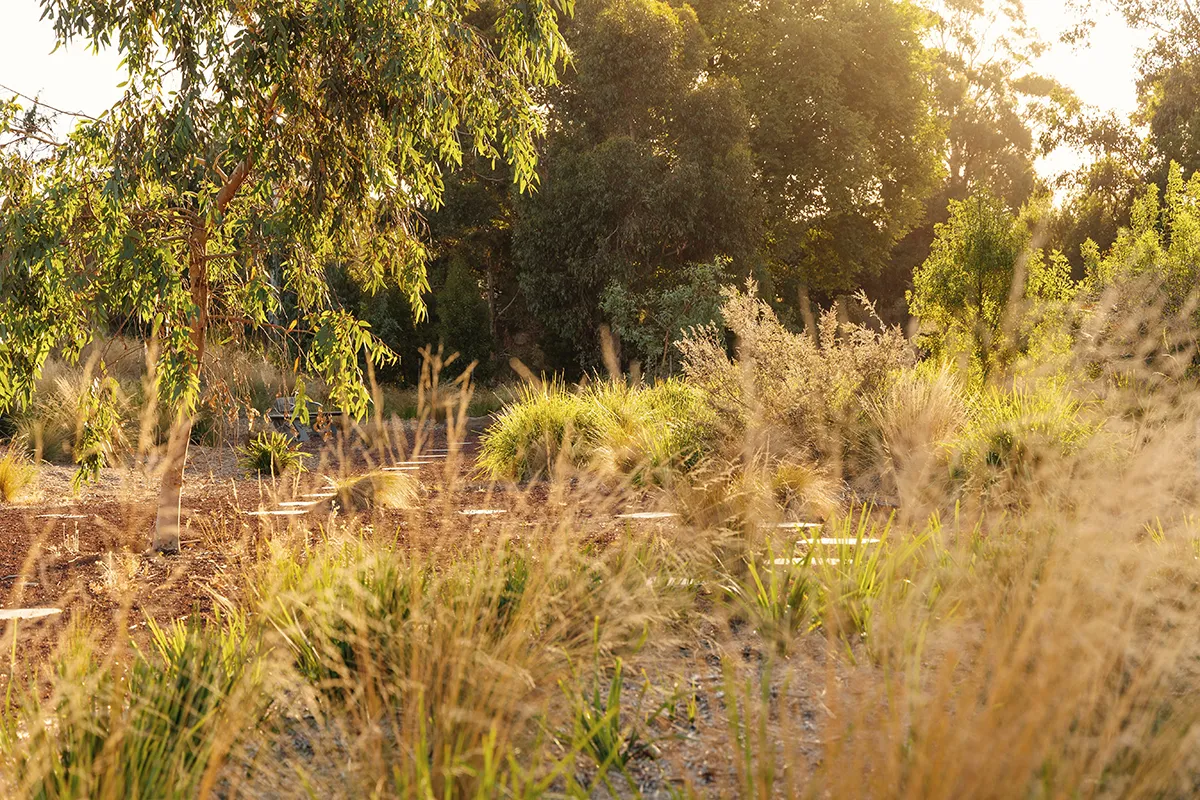
These stories and experiences invoked memories of place and tradition, the design team sought to revive through the strategic use and placement of local materials and indigenous plants. Acknowledgments include the strategic orientation of burial sites toward waterways with a nearby copse of Blackwood for protection. A River Red Gum stands tall as a beacon, and native grasses dot the red dirt landscape. It was understood one could walk silently along a Songline from the mountains to the water, as the earth was so fine and without compaction it was like walking on air. Stone steppers nestled amongst red gravel mimic this journey. Importantly, an appreciation of the spirit of place, learned through the voices of the Indigenous Peoples, was imparted upon the design team and rendered on the landscape.
The palpable emphasis on connection and grounding led the landscape architectural team to defer computer use until the final construction stages. The team co-designed concepts using physical site materials and hand sketching as a respectful acknowledgment to the hands-on, tactile methods in which John and his community imparted their stories.
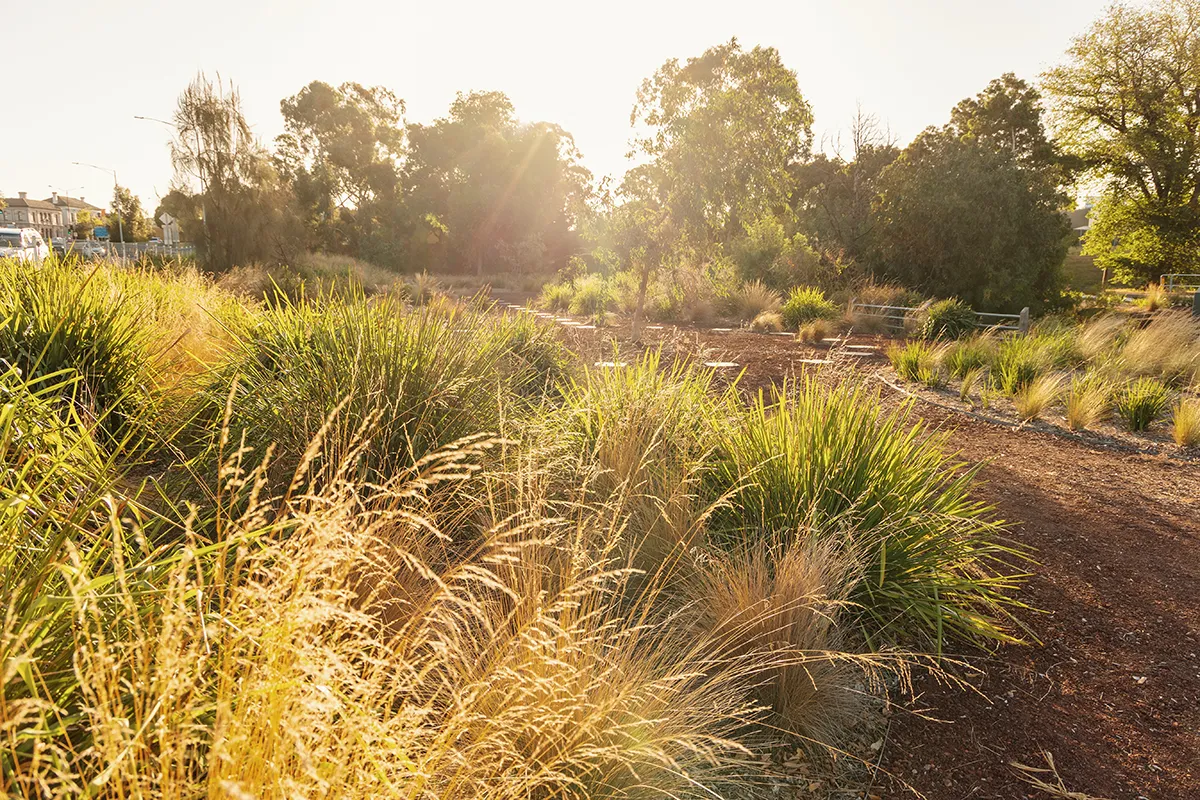
Methods for restoration, conservation, enhancement, and maintenance of the site were informed by discussions between the Eastern Maar, the landscape architect, the client and the Council. Construction works were overseen by the client, EMAC and Council. After the project was completed, John visited the site. Whilst being on Country, John said “It looks and feels perfect for what it is meant to be”.
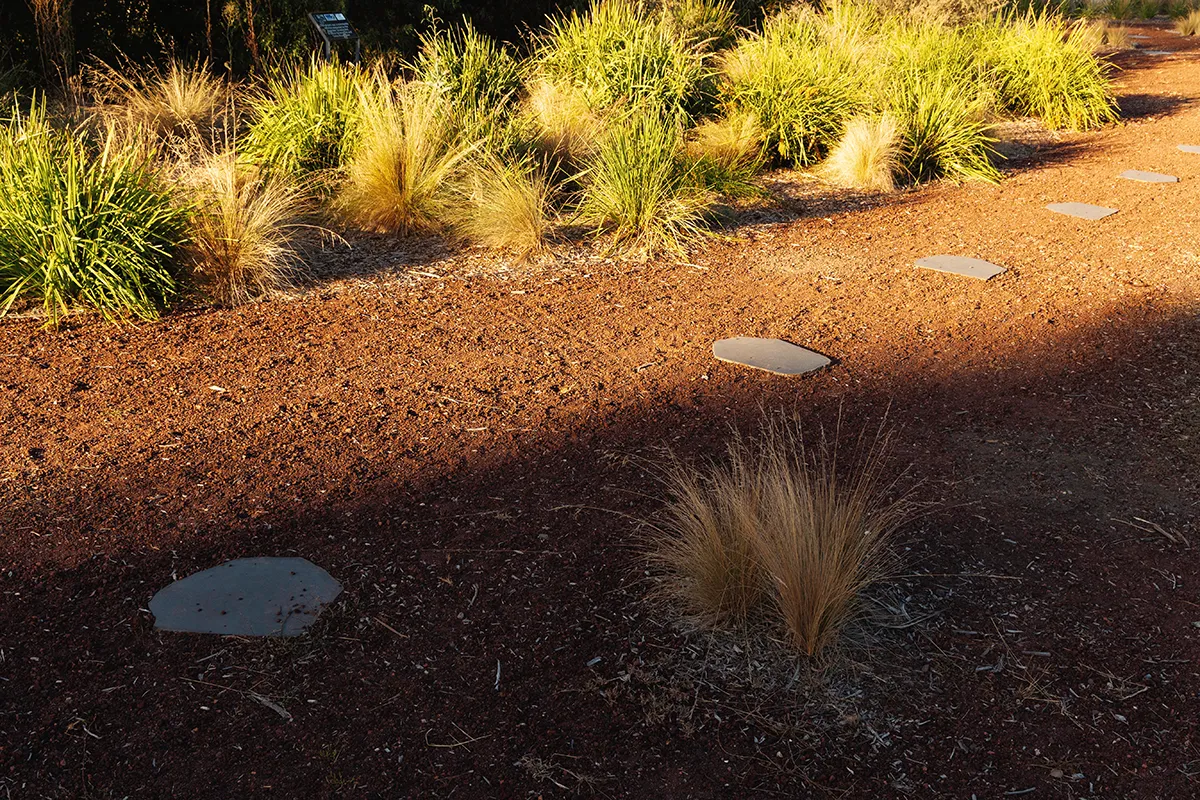

The restoration and repatriation of the Barongarook Gulidjan Burial Place is an exemplar of co-design thinking and leadership, reinvigorating Country. The fusion of Western and Indigenous approaches to the design, construction, and ongoing management of Country sets a precedent for future public realm rejuvenation projects to successfully address ecological and social issues and economic constraints, thereby respecting and restoring a culturally significant place.
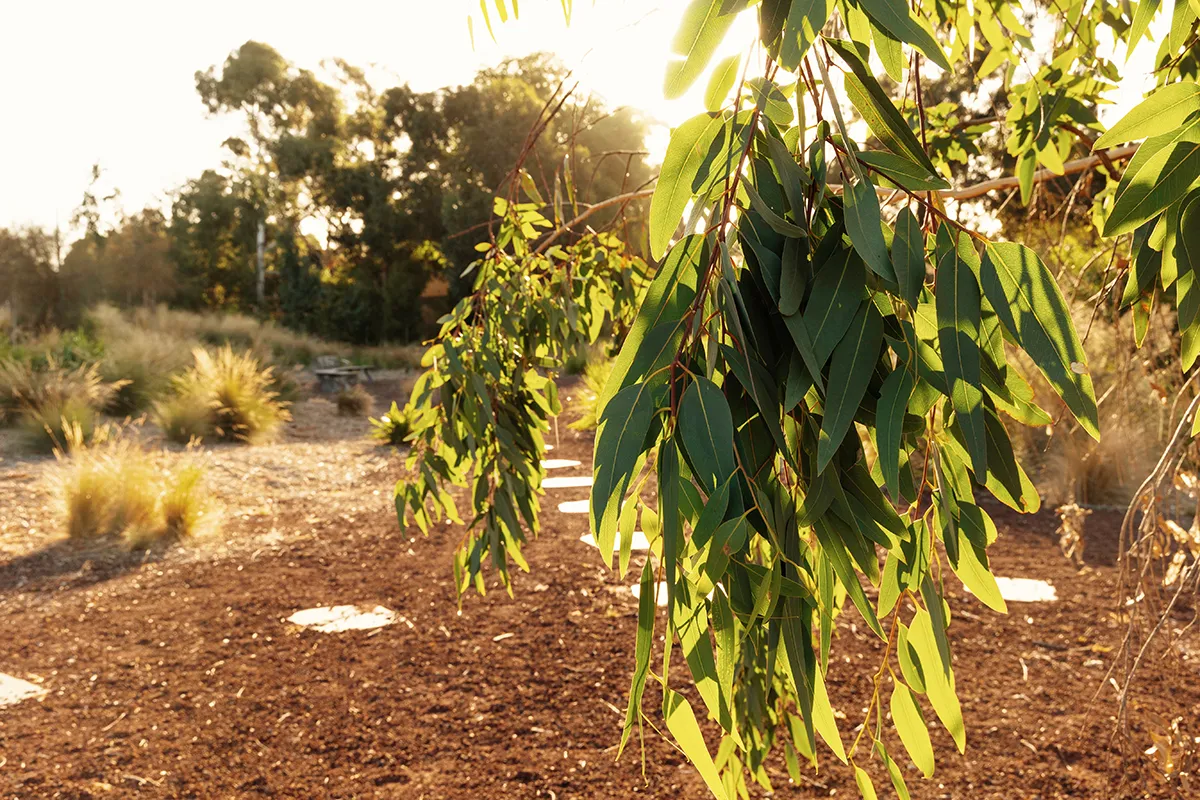
Barongarook Creek Gulidjan Burial Place
Location: Barongarook Creek, Colac, Victoria, Australia | Eastern Maar Country
Designer Hansen Partnership
Client: Major Road Project Victoria (MRPV)
Collaborators: The Eastern Maar Aboriginal Corporation, VEC Civil Engineering Pty Ltd, Colac Otway Shire Council
Image Credits: Webster Cao