
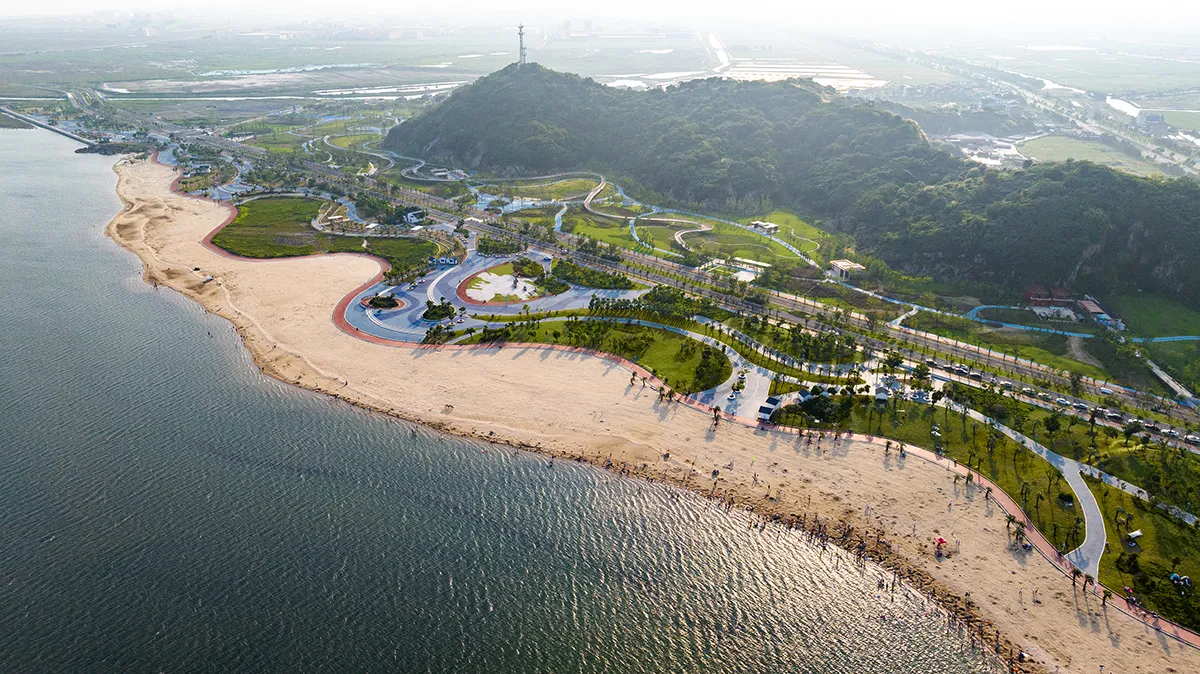
Baisha Bay, serving as the estuary to Taizhou Bay and located at the Mentou Port of Linhai City, Zhejiang Province, is an arc-shaped bay nestled between Beiyangtu and Nanyangtu. Baisha Bay Park is a transformative design that integrates the bay’s inner waters and a 2.5-kilometer-long artificial sandy beach with the area’s natural advantages, including abandoned silt tidal flats, reef-surrounded mountains, Baisha Mountain, Dadao Mountain, and the bedrock shoreline.
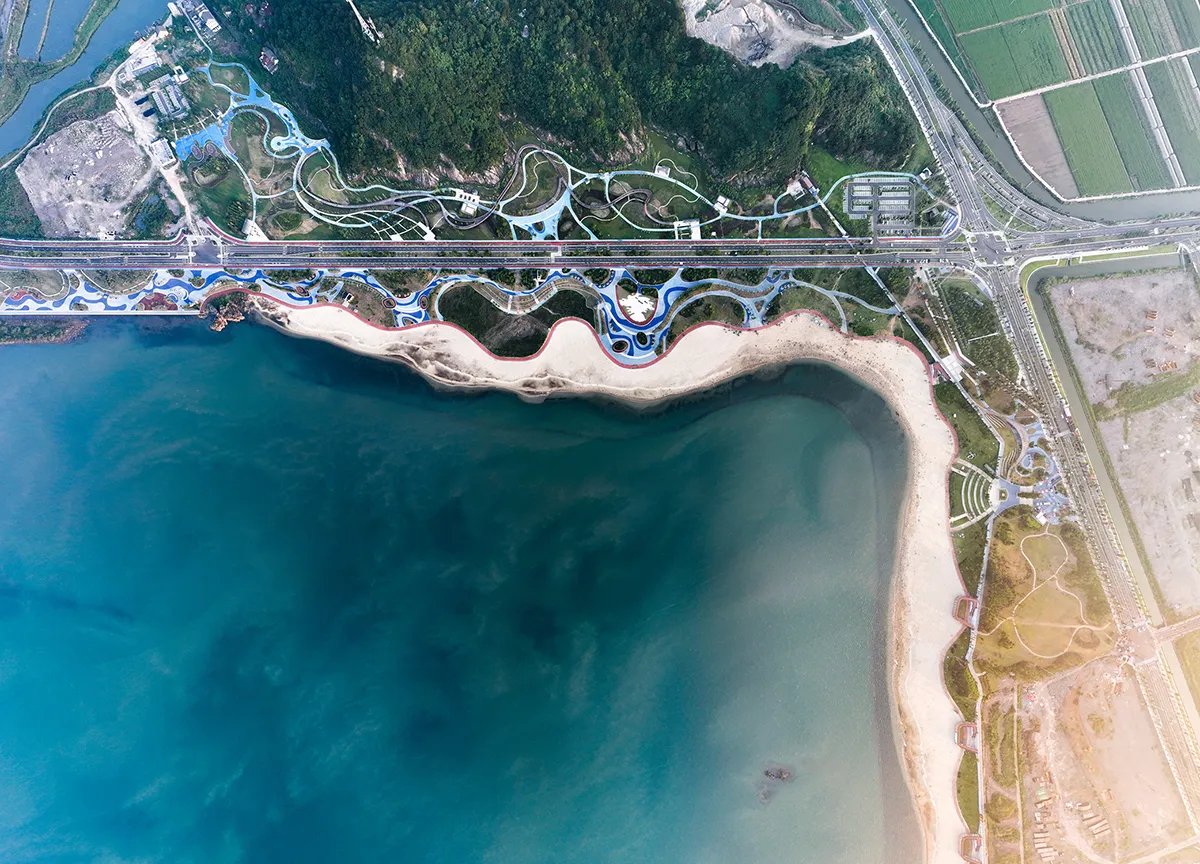
The design revitalizes the coastal natural space by restoring the coastline, soil environment, and vegetation, enhancing the ecological diversity and shoreline functionality of the Baisha Bay area. On the other hand, it leverages the diverse natural landscapes of mountains, sea, and shoreline to create a symbiotic area of life and ecology, defining a distinctive urban space themed around “Mountain-City-Bay-Sea.”
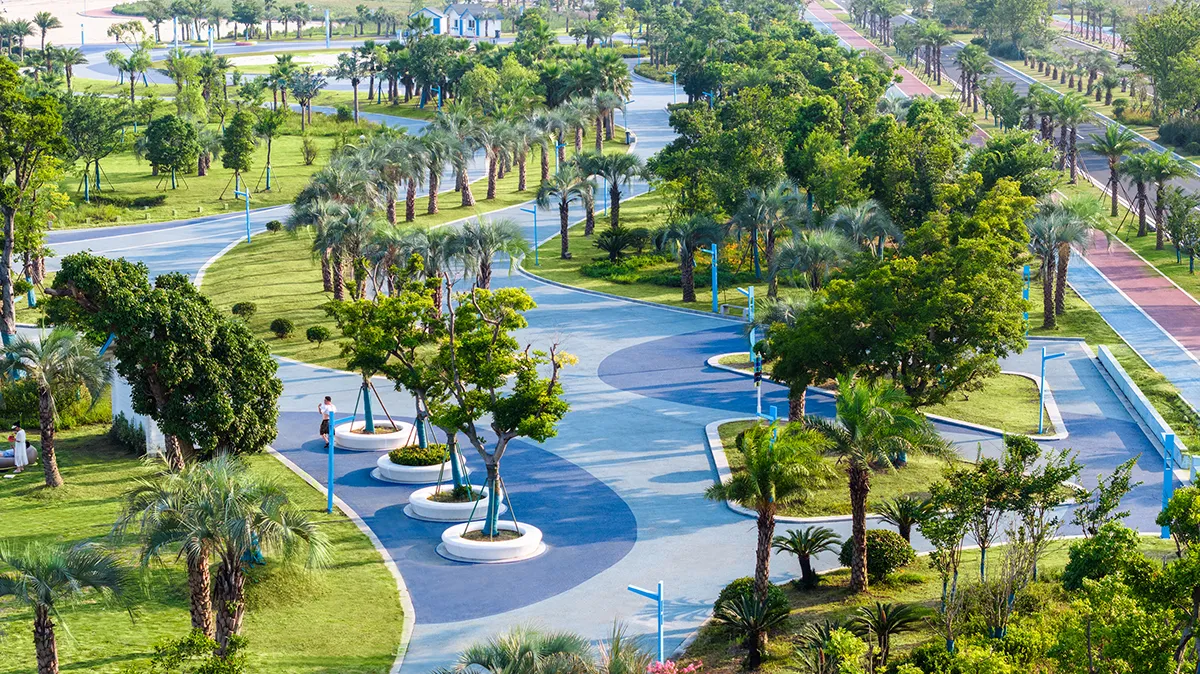
Upon completion, Baisha Bay Park will connect the bay with the sea dike, bay-side vegetation, and the bedrock shoreline, featuring an “Ecological Coast” with different landscape levels that reintroduce urban vitality into the previously sparse and underdeveloped Baisha Bay. The project not only offers a new direction for local ecological restoration and urban living but also stands as a prime example of economic development and tourism industry enhancement in Linhai City.
Project Objectives
The core objective of the Baisha Bay Park redesign is to rejuvenate the ecological characteristics of the Baisha Bay area. The high turbidity of the seawater and the accumulation, rotting, and decomposition of marine debris have compromised the ecological maintenance functions of the mountain’s bedrock shoreline, disrupting the ecological connection and balance between land and water. The presence of saline-alkali soil in the coastal area further inhibits plant growth, resulting in a lack of forest cover to protect against the frequent typhoons in summer, which hampers the ecological restoration and stability of the Baisha Bay area.
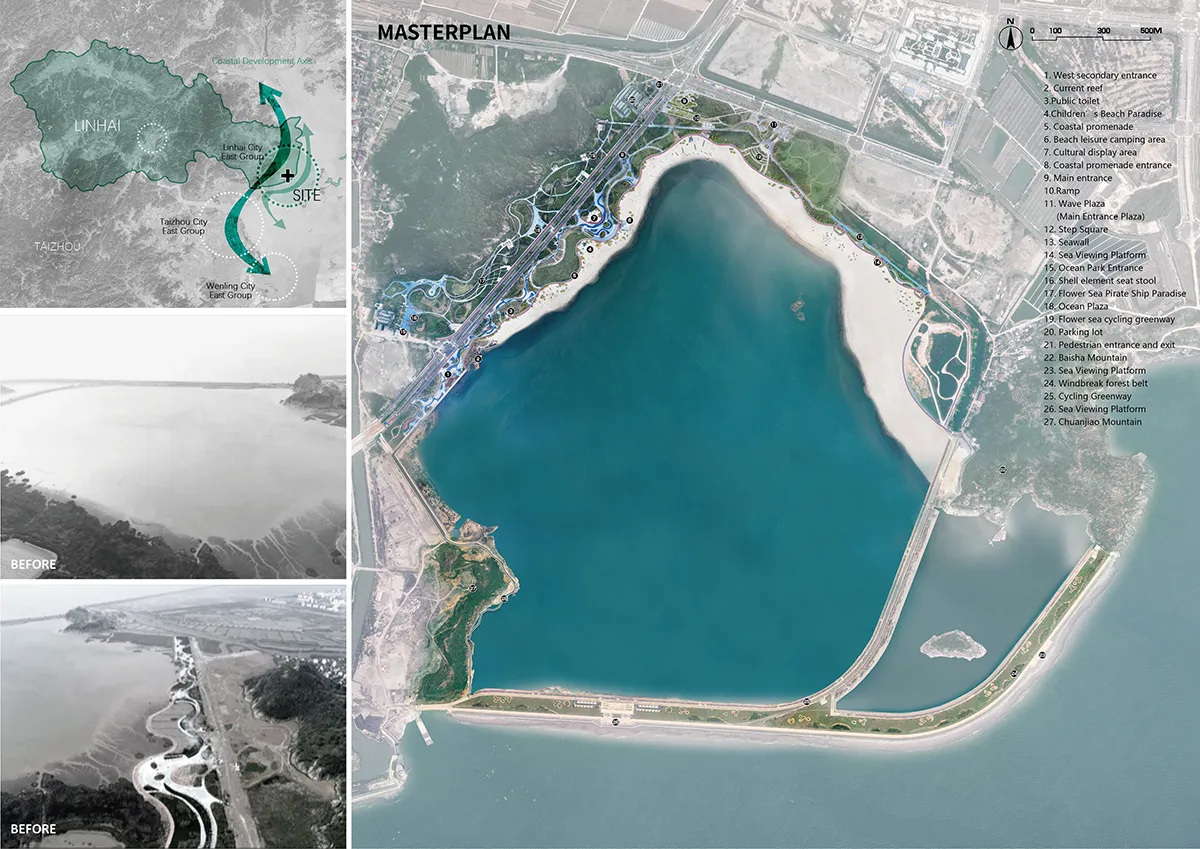
The ultimate goal of the project is to restore the ecological features while introducing spaces for coastal urban tourism and living. The site, enclosed by Baisha Mountain, Dadao Mountain, and Chuanjiao Mountain, has seen its original 300-meter sandy shoreline transform into a muddy beach due to long-term tidal flat cultivation and other activities. The increased stickiness of the tidal flats after rain further impedes pedestrian access. Transforming the abandoned muddy tidal flats and the bedrock mountain areas in front of the sea dike into public interactive spaces suitable for urban tourism and living is another key aspect of the renovation project.
Site Condition & Design Strategy
The design for Baisha Bay serves a dual purpose: it acts as the mouth to the sea and as a critical ecological network linking mountains, the city, and the sea. Grounded in a respect for the site’s original enclosed characteristics, the design focuses on repairing the damaged mountain bodies and coastal line environments. It also aims to enrich urban vitality by incorporating urban living spaces within the site’s existing ecological environment.
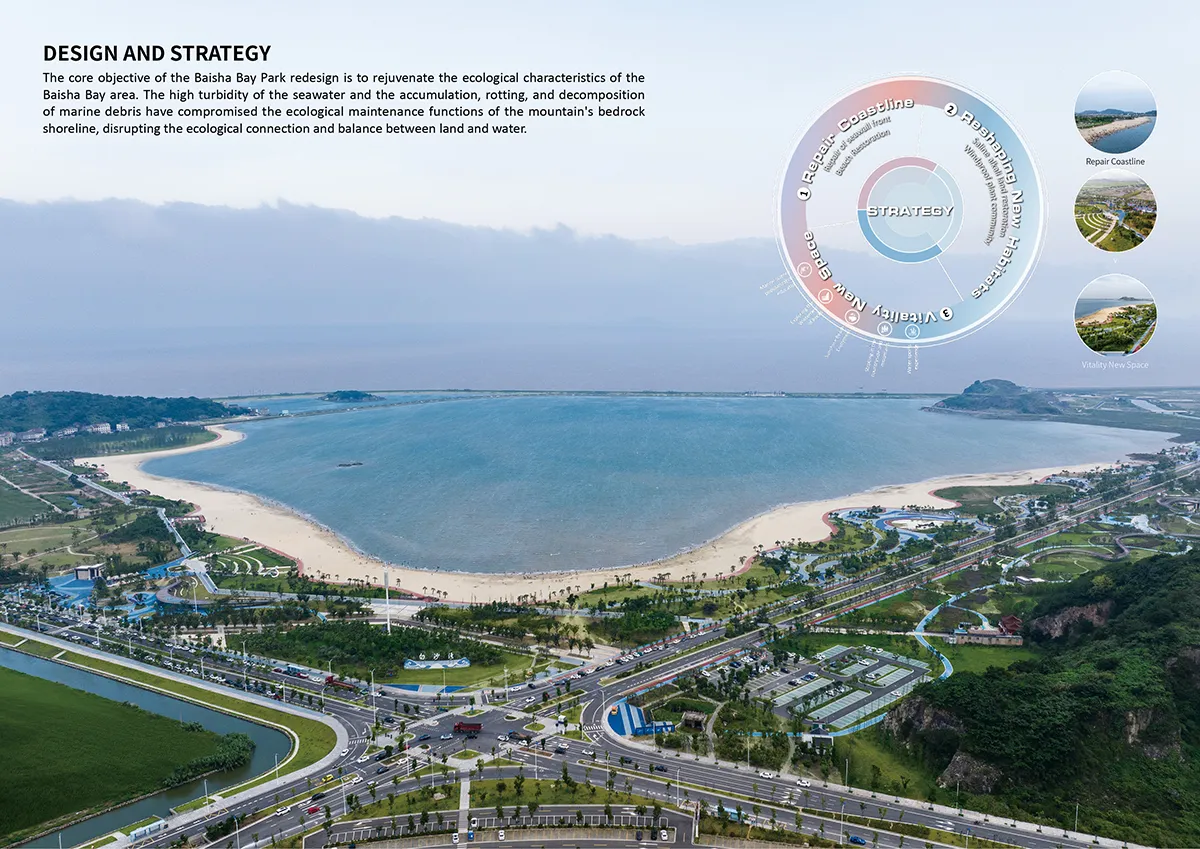
Rooted in the continuation of the natural mountain-sea landscape, the project undertakes the restoration and reinforcement of the bedrock of mountains and islands that were previously quarried for stone. This involves planting wind-resistant and salt-tolerant vegetation such as Casuarina equisetifolia and Taxodium mucronatum to form a green barrier around Baisha Bay, rejuvenating exposed mountain slopes, and providing birds with areas to rest and nest. Efforts in the sea dike area include on-site testing for the growth of saline-alkali tolerant plants, adjusting planting schedules to ensure the stability of soil and water salinity, and optimizing the growth environment for wind-resistant vegetation like Common verbena and Salvia japonica. These measures create microclimates across different habitat spaces, ensuring stability, maintenance, and connectivity across the ecosystem, thus reshaping spatial inclusivity.
Following the ecological reshaping of the Baisha Bay area, the design proposes protective development of natural resources. Through low-impact and immersive spatial modifications, tourism routes have been established, focusing on four activity themes: circumnavigating the mountains and sea, enjoying the white beaches, weaving through mountain forests, and engaging in beach sports. These routes aim to provide locals with opportunities for natural coastal exploration, tourism, living, and education.
Restoring the Coastline
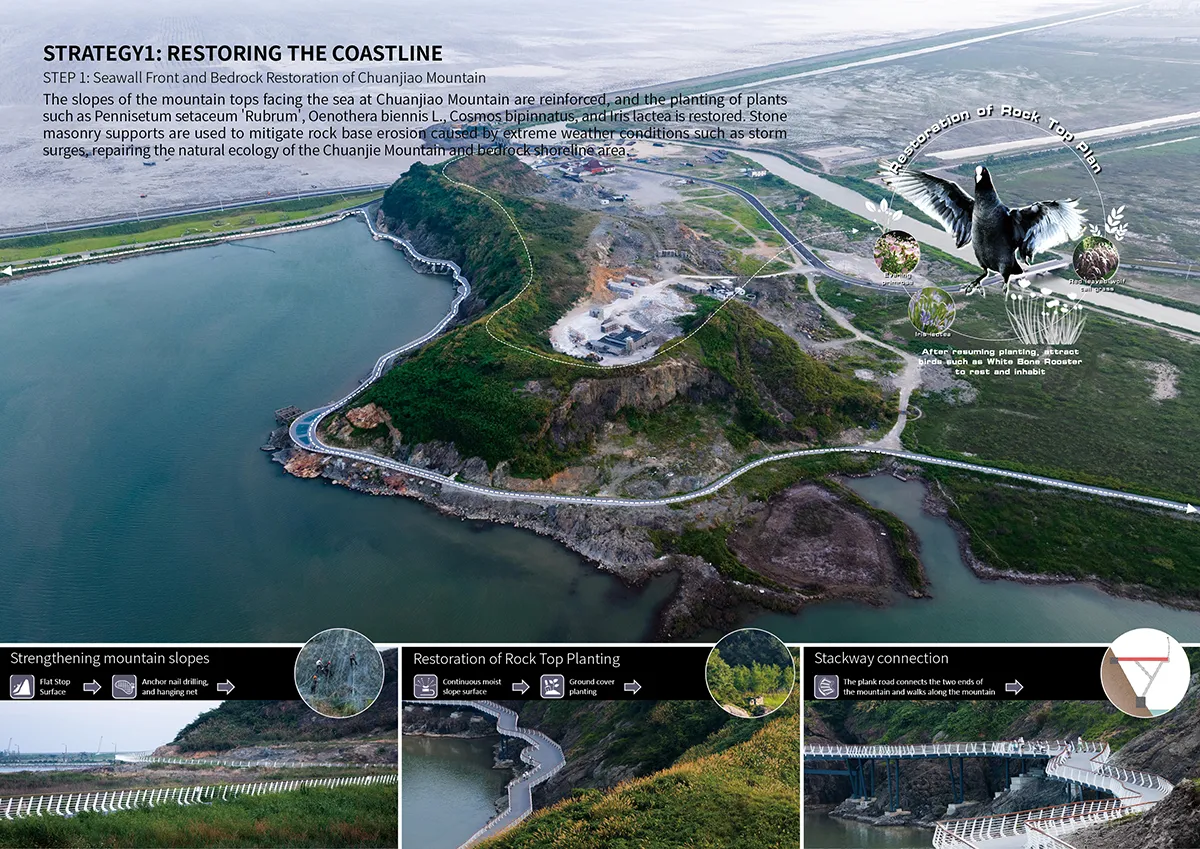
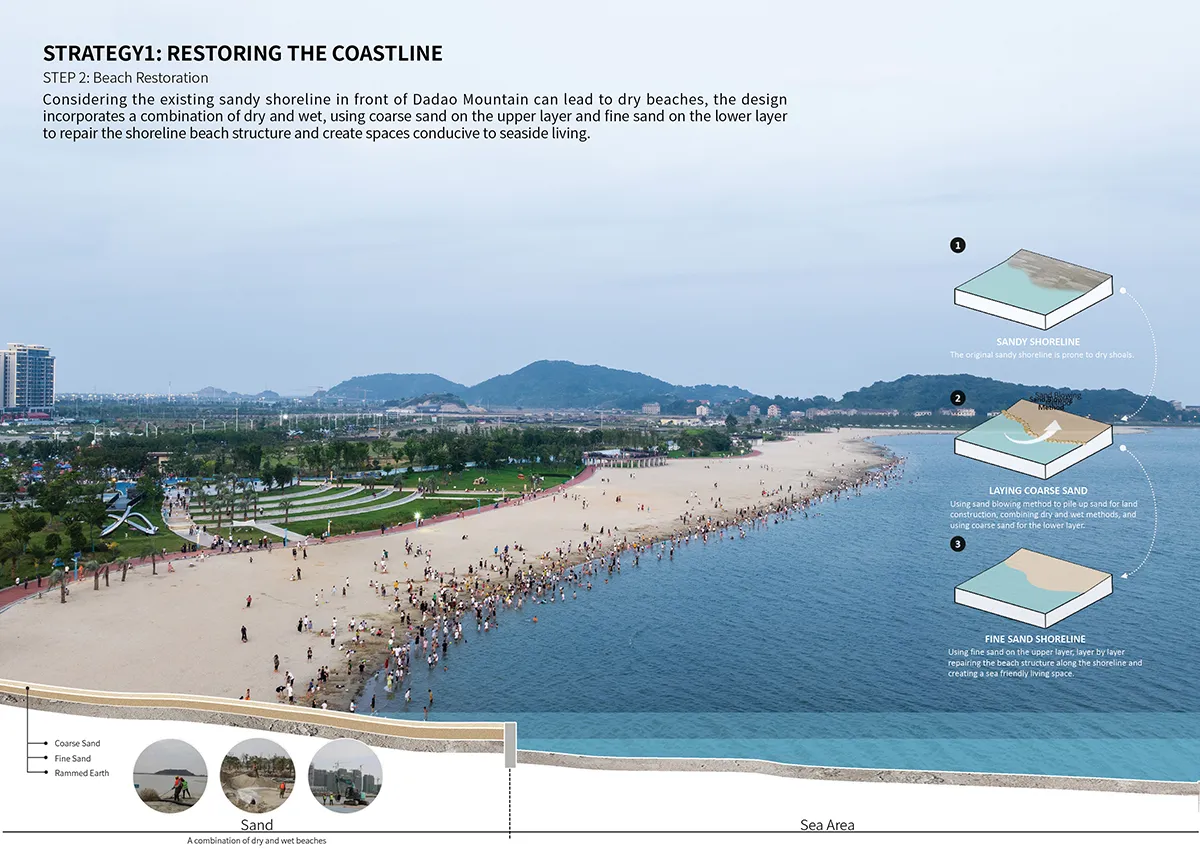
The design retains the mangrove wetlands in the abandoned muddy tidal flats in front of the sea dike, facilitating mangrove rehabilitation while adding lightweight boardwalks to reserve space for mangrove growth. Vegetation such as Casuarina equisetifolia and Suaeda heteroptera Kitog is planted to reshape the coastal environment with bio-affinity, attracting birds like Fulica atra to rest and nest. The slopes of the mountain tops facing the sea at Chuanjiao Mountain are reinforced, and the planting of plants such as Pennisetum setaceum ‘Rubrum’, Oenothera biennis L., Cosmos bipinnatus, and Iris lactea is restored. Stone masonry supports are used to mitigate rock base erosion caused by extreme weather conditions such as storm surges, repairing the natural ecology of the Chuanjie Mountain and bedrock shoreline area. Considering the existing sandy shoreline in front of Dadao Mountain can lead to dry beaches, the design incorporates a combination of dry and wet, using coarse sand on the upper layer and fine sand on the lower layer to repair the shoreline beach structure and create spaces conducive to seaside living.
Reshaping New Habitats
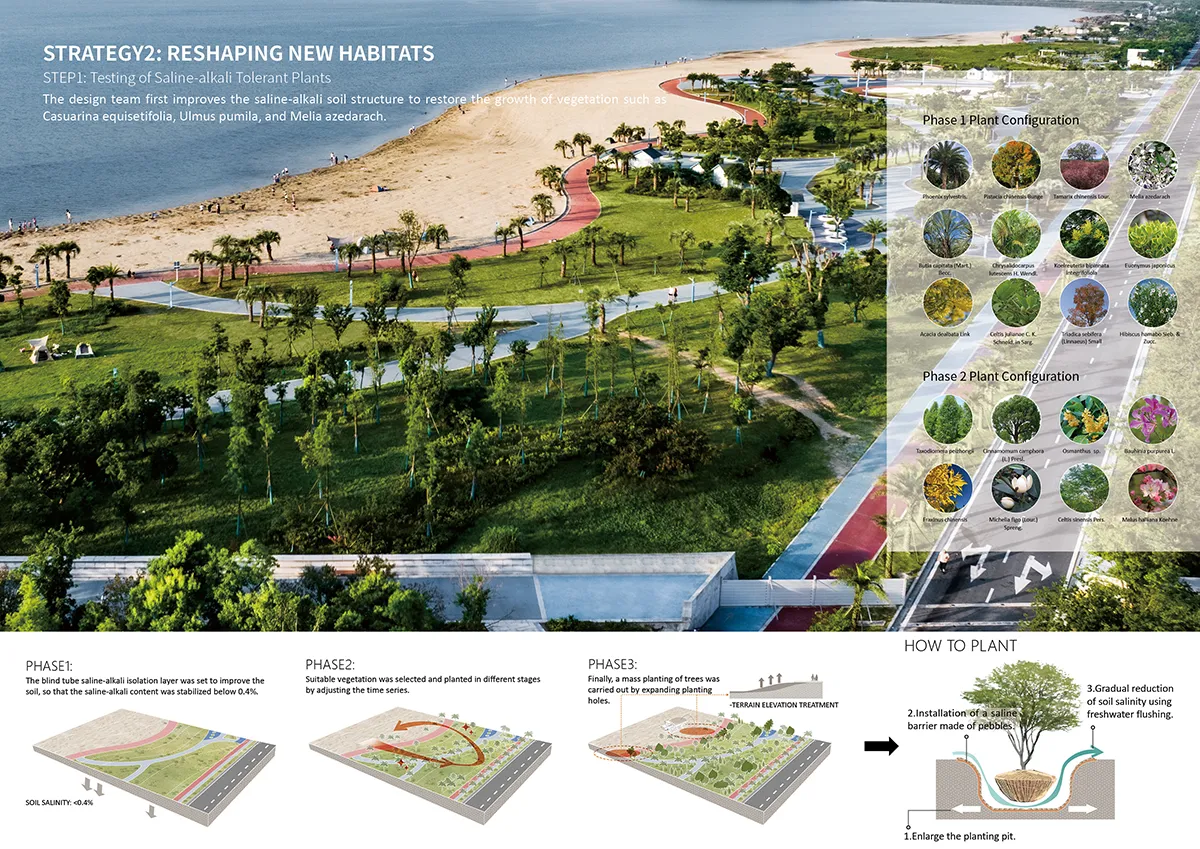
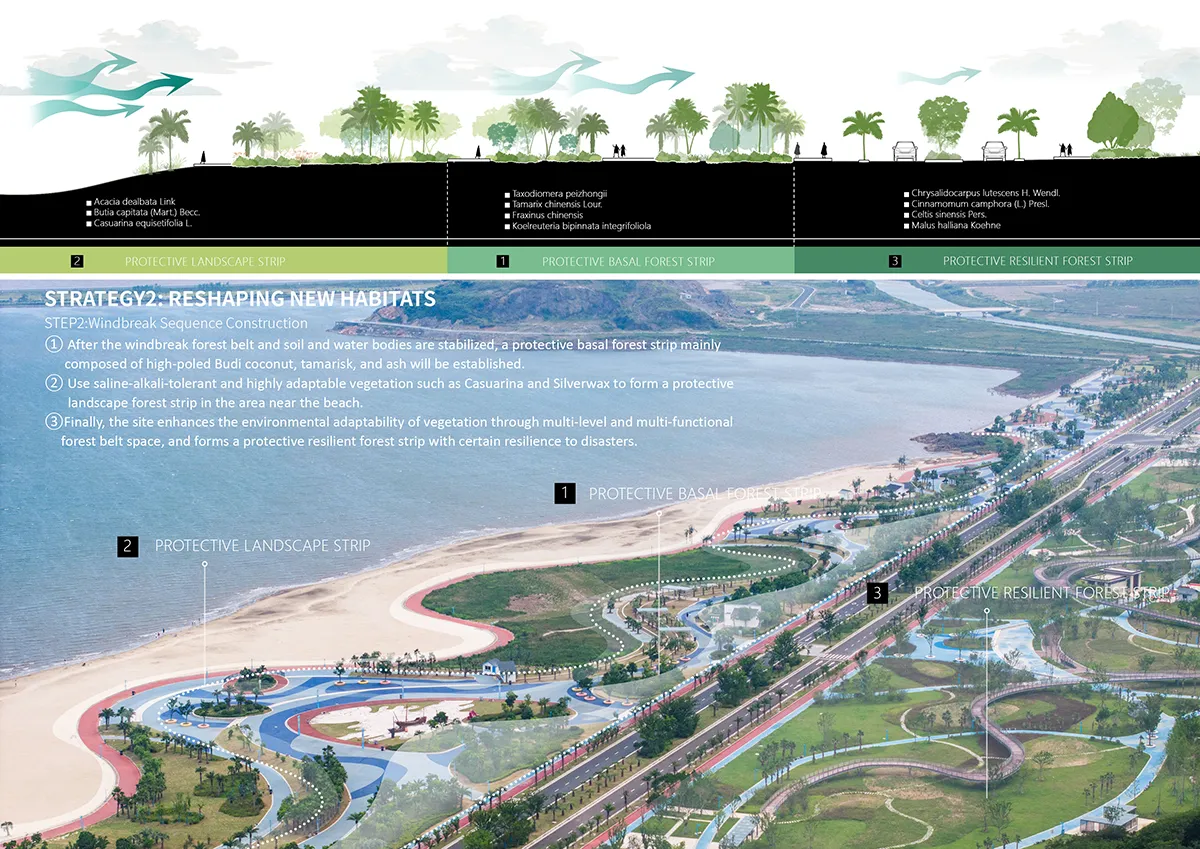
The design team first improves the saline-alkali soil structure to restore the growth of vegetation such as Casuarina equisetifolia, Ulmus pumila, and Melia azedarach. Then, on the high slopes, protective forest belts are formed with salt-tolerant and adaptable species such as Casuarina equisetifolia, Quercus virginiana, Acacia dealbata, and Sabina chinensis (L.) Ant. cv. Kaizuca. After the windbreak forest belts and soil water body stabilize and form different habitat spaces, a protective landscape forest belt mainly composed of Butia capitata (Mart.) Becc., Taxodium mucronatum, Tamarix chinensis, and Fraxinus chinensis is established. Ultimately, by developing layered and multifunctional forested areas, this approach enhances the vegetation’s ability to adapt to its environment. This results in a robust forest belt capable of withstanding certain disasters, bolstering the area’s resilience against ecological threats.
Vibrant Fresh Spaces
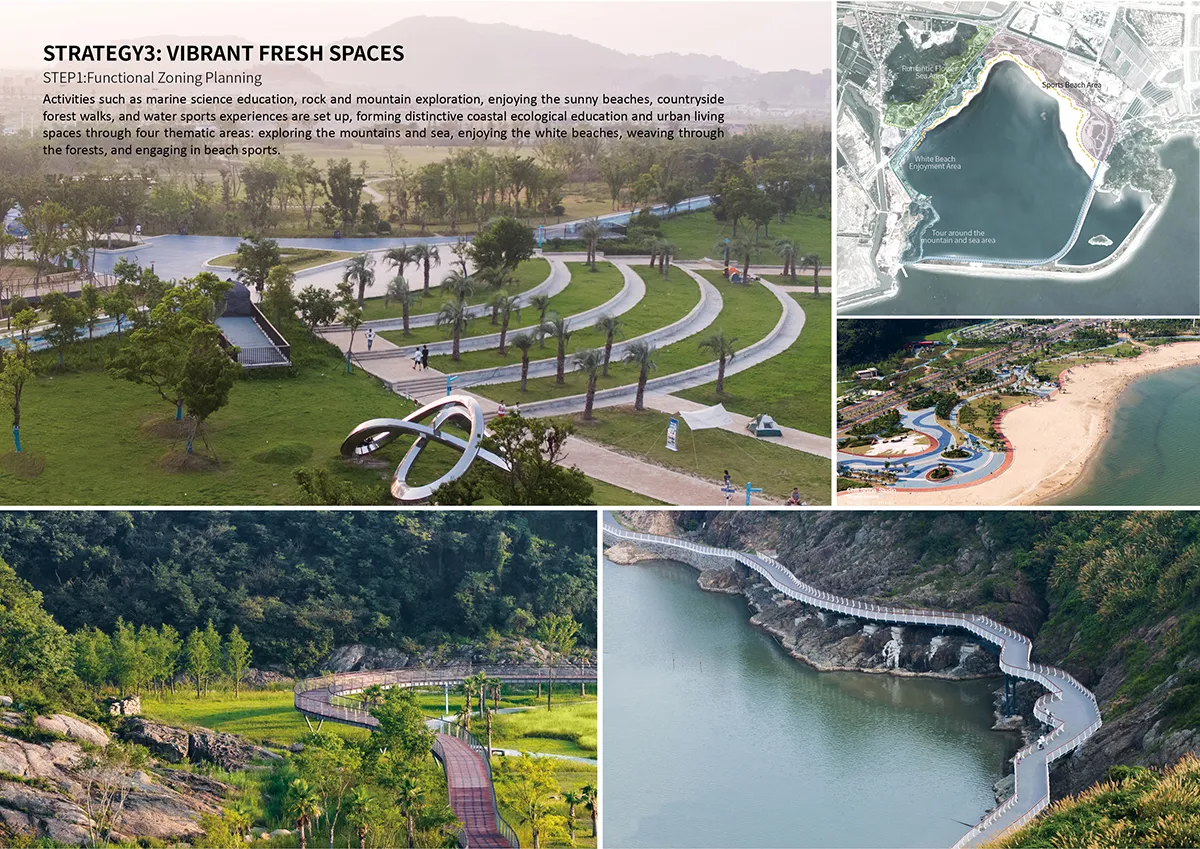
Given the unique location of Baisha Bay’s estuary, the design connects Chuanjiao Mountain, Dadao Mountain, and Baisha Mountain to form a unique greenway loop around Baisha Lake, encompassing the landscape features of sea, rock, sand, forest, and beach. Activities such as marine science education, rock and mountain exploration, enjoying the sunny beaches, countryside forest walks, and water sports experiences are set up, forming distinctive coastal ecological education and urban living spaces through four thematic areas: exploring the mountains and sea, enjoying the white beaches, weaving through the forests, and engaging in beach sports.
Design Impact
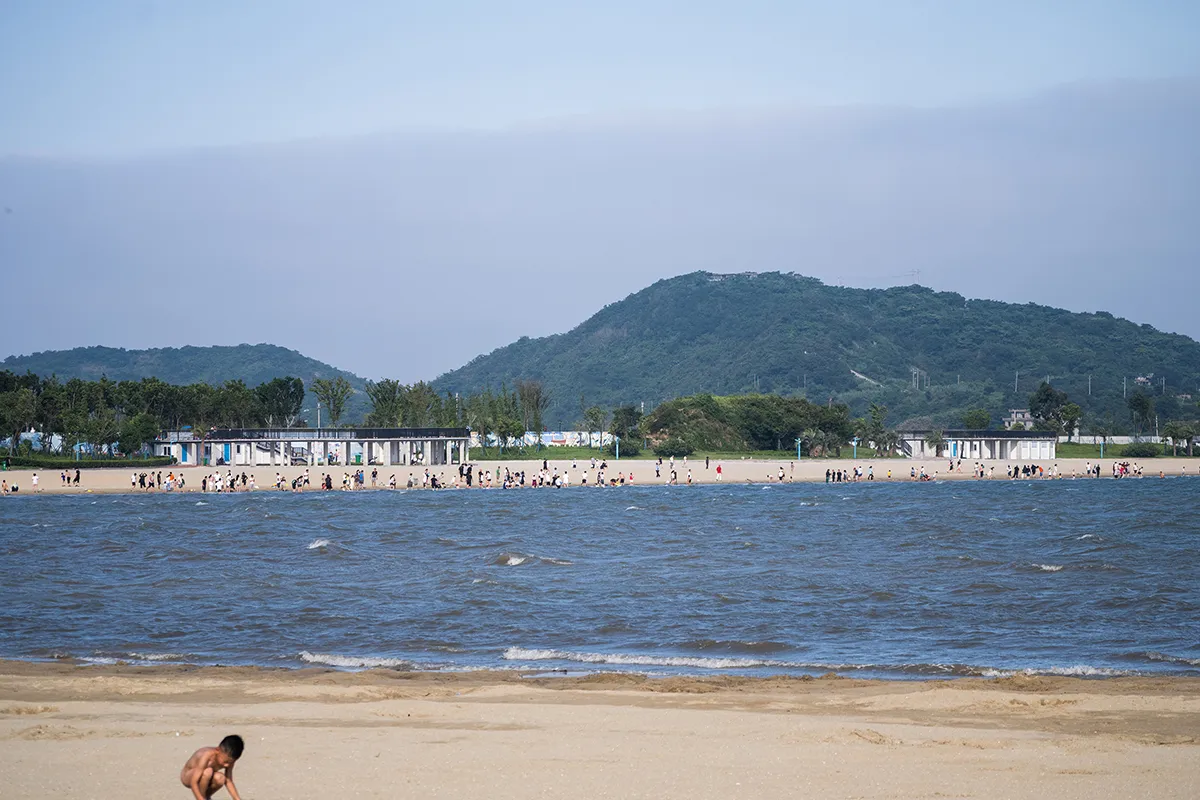
Baisha Bay, which serves as the entrance to Taizhou Bay, features a unique arc-shaped coastline that gives Baisha Bay Park a distinct edge. The 2.74-kilometer stretch of pristine white sand, together with the sea dike, lush vegetation along the bay, and the rugged bedrock coastline, have been rejuvenated and merged to create a unique ecological coastal area in Baisha Bay. This effort has revitalized the previously damaged coastal ecology, dramatically improving the quality and health of the water nearby. Additionally, the project has boosted the area’s wetland ecosystem, making it a thriving habitat that draws in protected wildlife like Fulica atra and the Anas zonorhyncha. This not only broadens the ecological diversity of Baisha Bay but also strengthens its natural stability.
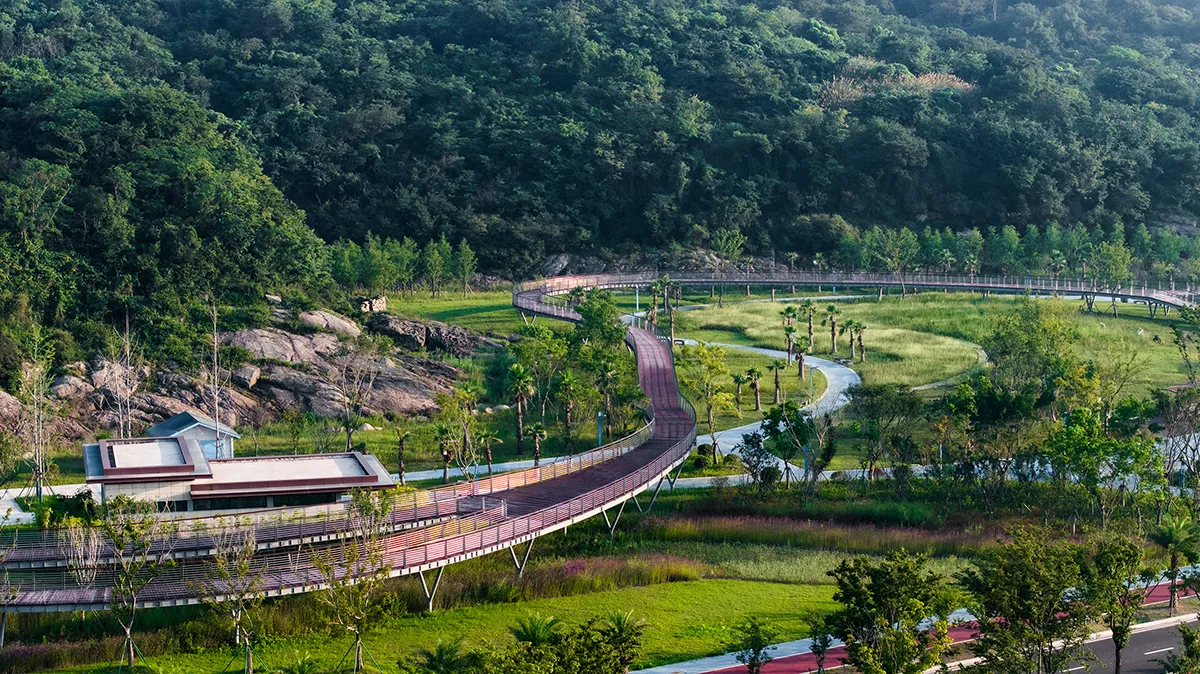
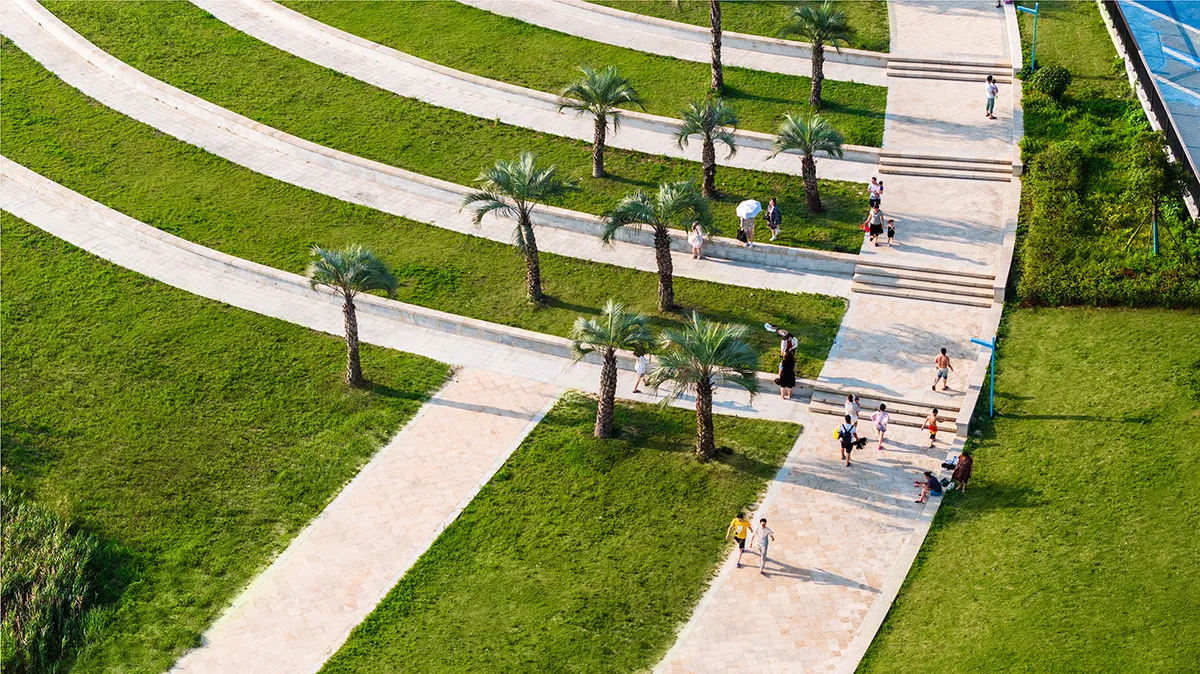
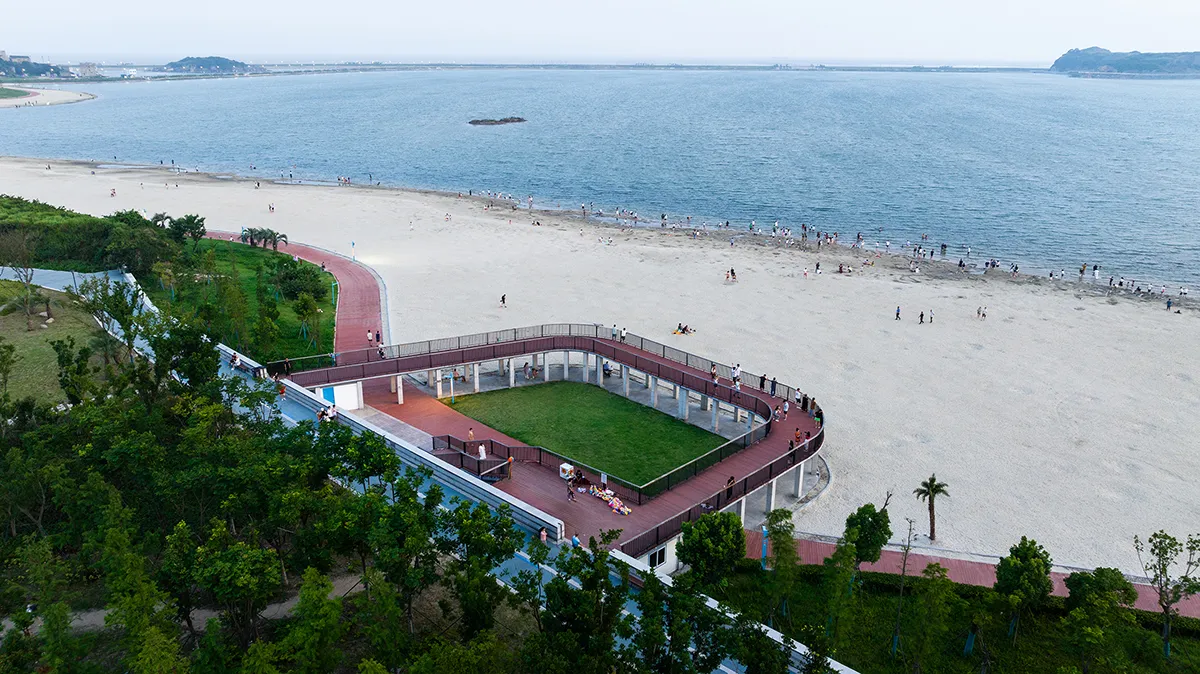
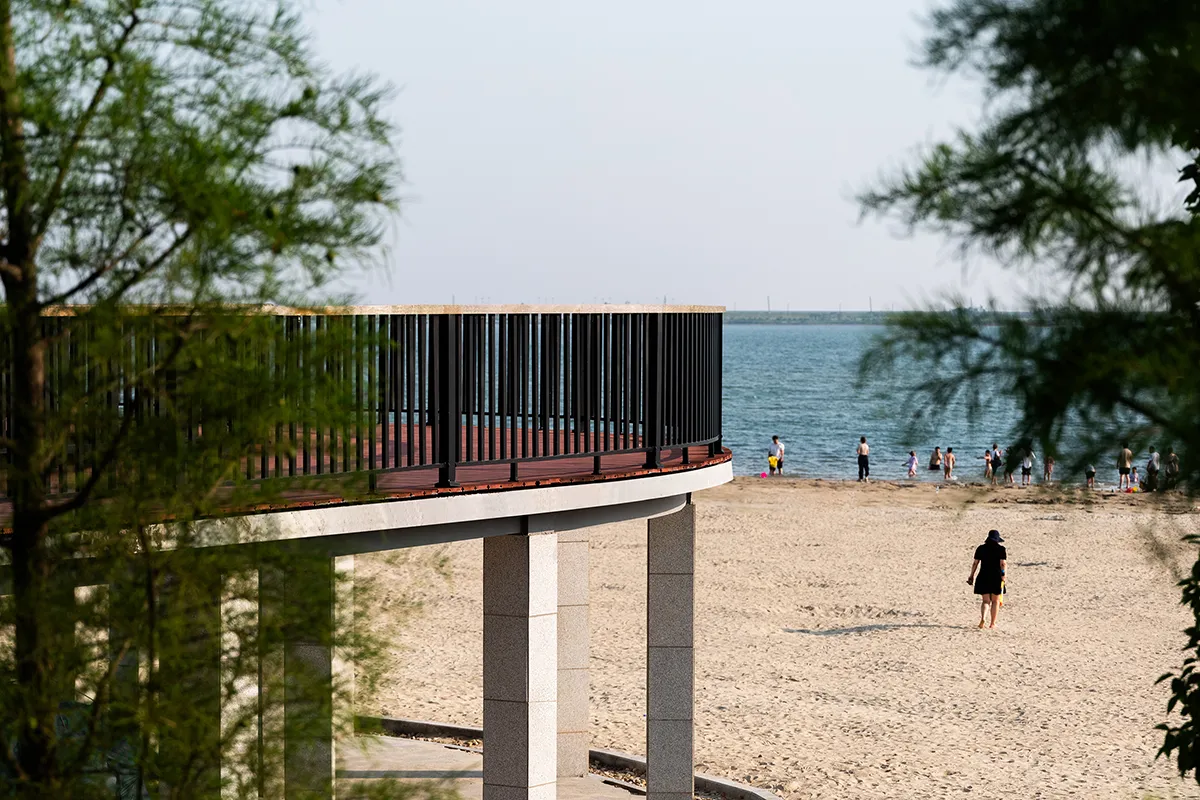
The project connects mountains, cities, bays, and seas, crafting a distinctive urban living area that introduces a fresh lifestyle for the residents. It has also sparked an economic boost, surging local land values by 240% and drawing in over 30,000 daily visitors during holiday seasons. This change has turned what were once neglected muddy flats into a vibrant coastal haven. Furthermore, by blending the natural harbor with residential, tourism, and commercial activities, the project has charted a new course for the development of the Mentou Port area in Linhai City. It serves as a model of how thoughtful development can elevate local economies and industries.
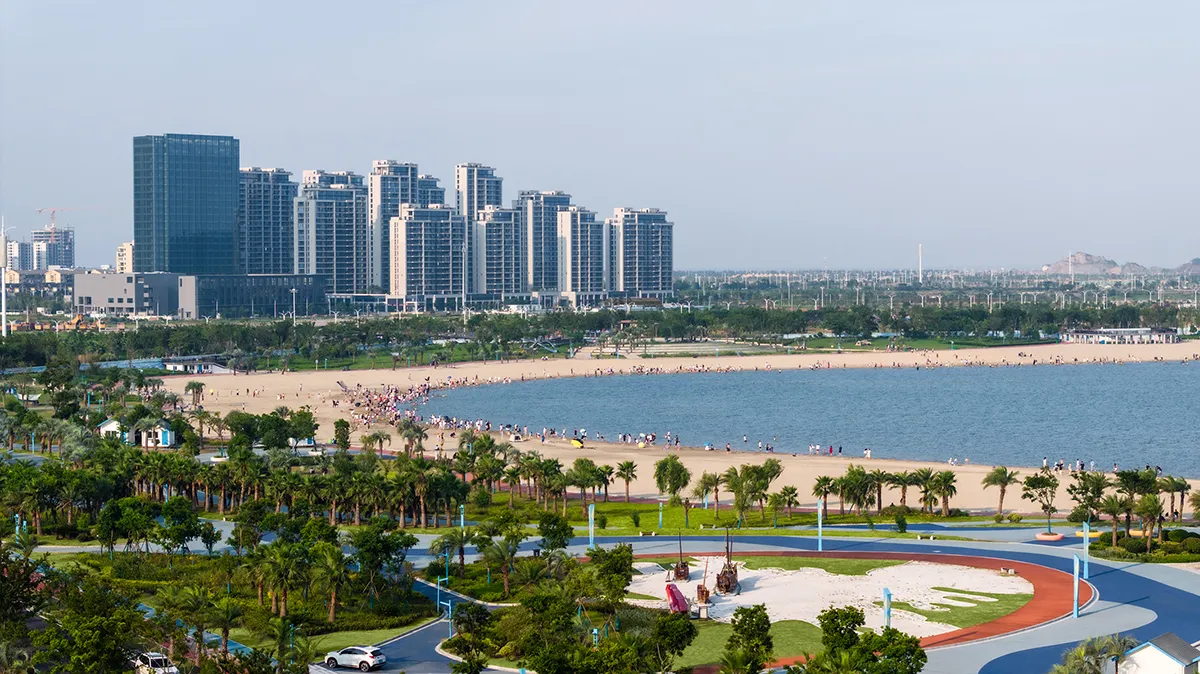
The Blue Bay Project of Baisha Bay in Linhai City
Location: Linhai City, Zhejiang, China
Design Firms:
UAD (The Architectural Design & Research Institute of Zheliang University Co.. Ltd.)
Hoken Design
Leader Designer: Fei Gao
Design Team: Fei Gao, Yu Xia, Weidong Xu, Yue Cao, Ting Yu, Chunxi Wang, Xiaojie Zheng, Yan Zhou, Zhuo Wang, Shuo Li, Long Wang, Dandan Tang, Lei Nie, Jian Chen, Junxia Ni
Client:
Zhejiang Chemical Raw Material Drug Base Linhai Investment Development Co., LTD.,
Linhai Ocean Development Investment Co., LTD
Construction Company:
Zhejiang Chengfeng Construction Engineering Co., Ltd.,
Zhejiang Shentai Construction Co., Ltd.,
Jinhua Kaiyun Construction Co.
Photography: Chill Shine