
WHY TIANQIAO AREA, WHY WE-SPACE?
As an urban heritage site, the outstanding universal value of the Beijing Central Axis lies not only in its alignment with traditional Chinese urban planning and its cultural relics, but also in the continuity of urban life that has lasted for centuries and continues today.
Tianqiao Subdistrict, at the southern end of the Beijing Central Axis and within the World Heritage buffer zone, contains a 40-hectare historical and cultural district shaped by over 600 years of urban development. With more than 100 traditional courtyard residences, it represents a typical Beijing Hutong community. However, the area now faces serious challenges, including aging infrastructure, overcrowded housing, deteriorating public spaces, and a weakened sense of identity and belonging amid rapid urban renewal.
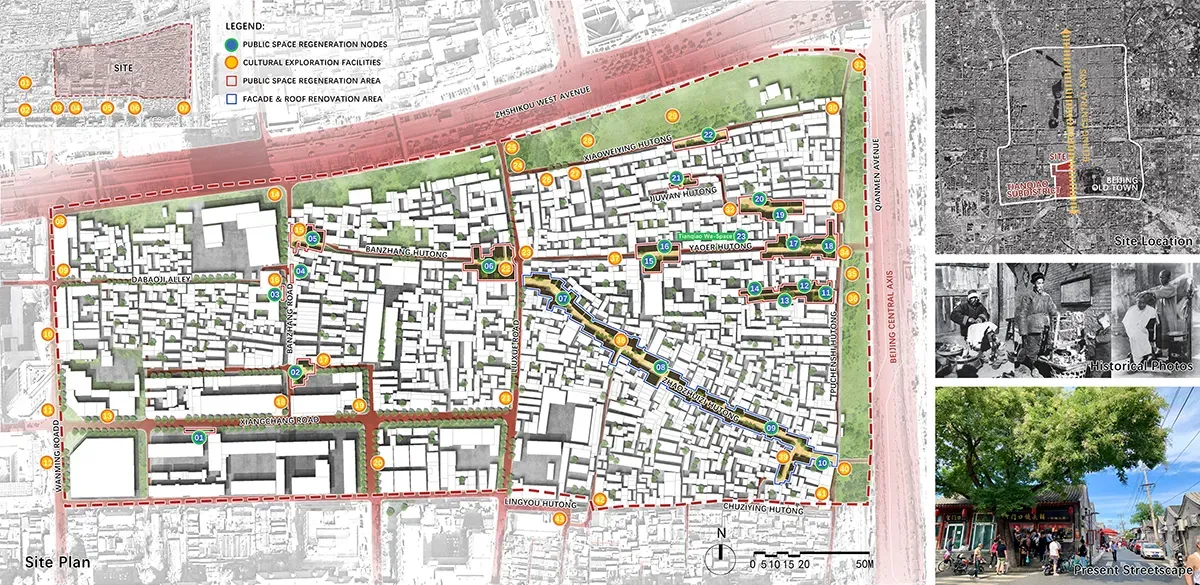
To address these issues, the project team—appointed as the Delegated Planner by the Subdistrict Government under a city-level governance mechanism—adopted an integrated urban design approach that merges architecture, landscape, planning, civic arts, heritage, and economic strategies. Using a targeted “urban acupuncture” strategy, the team introduced small-scale, high-impact interventions that respected existing spatial and social patterns while injecting new vitality, aiming to foster sustainable regeneration and enhance residents’ quality of life.
URBAN ACUPUNCTURE: MICRO PUBLIC SPACE REVITALIZATION
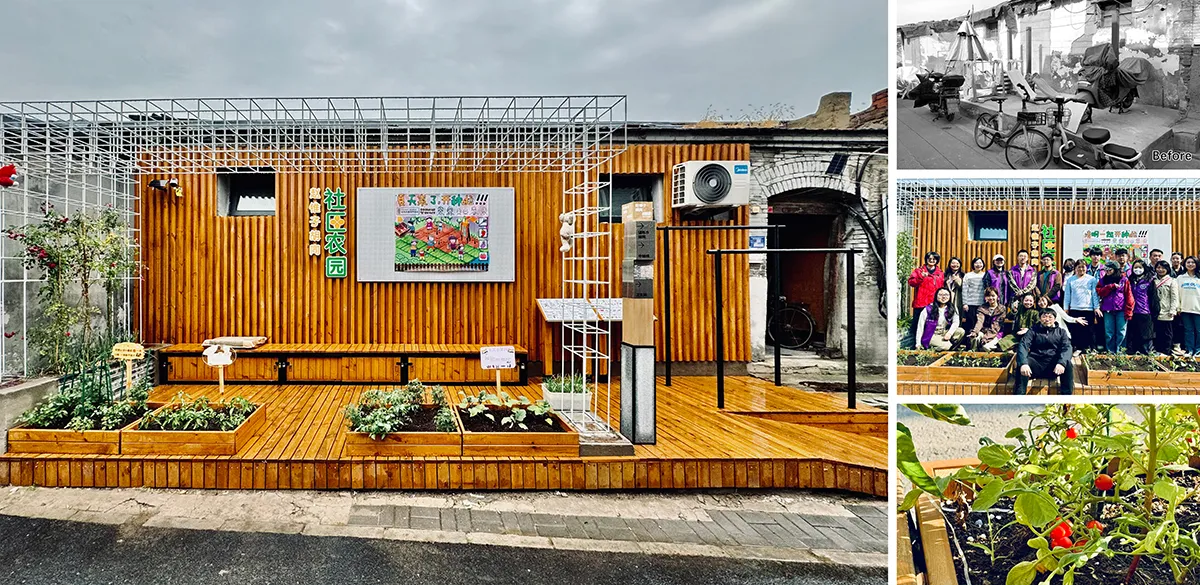
In Tianqiao’s densely populated Hutong area—where private living space averages less than 10 square meters per person—narrow public alleys serve as essential “outdoor living rooms.” To revitalize these shared spaces, the project team established a comprehensive renewal framework: Planning – Funding – Design – Charrettes – Construction – Maintenance. Grounded in extensive fieldwork and interviews with nearly 100 households, the team identified residents’ everyday needs—such as planting, resting, drying laundry, and children’s play—and selected over 20 underutilized, disordered sites for transformation.
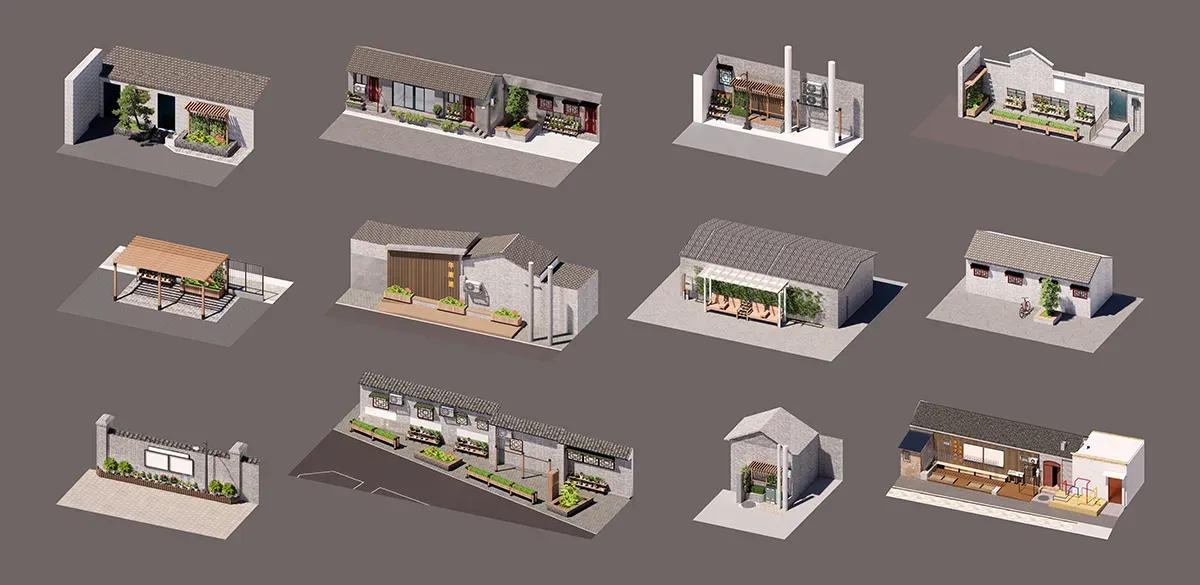
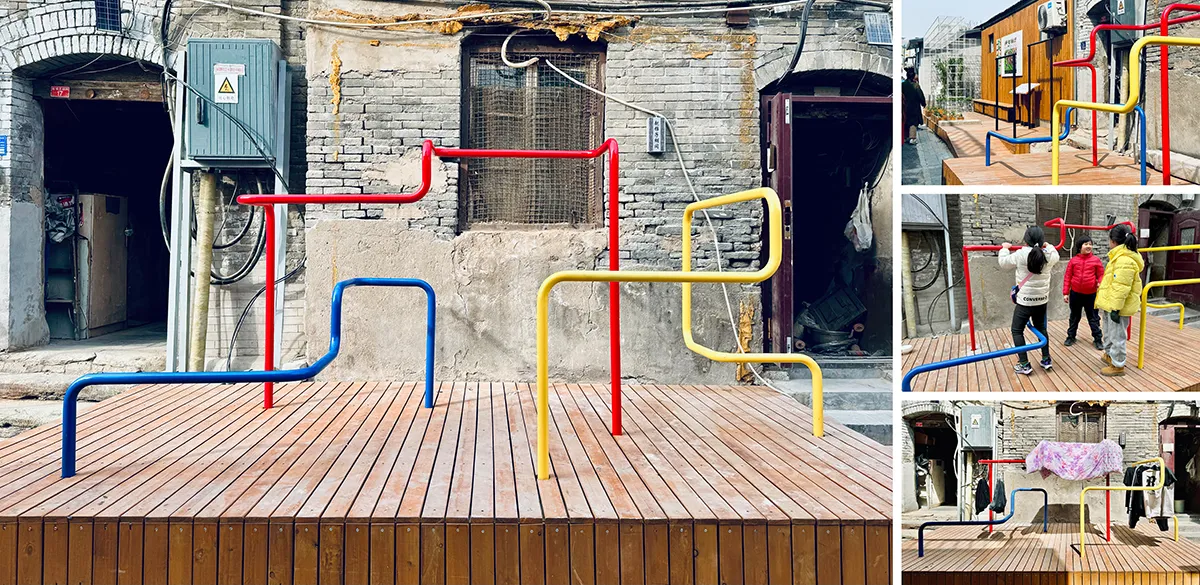
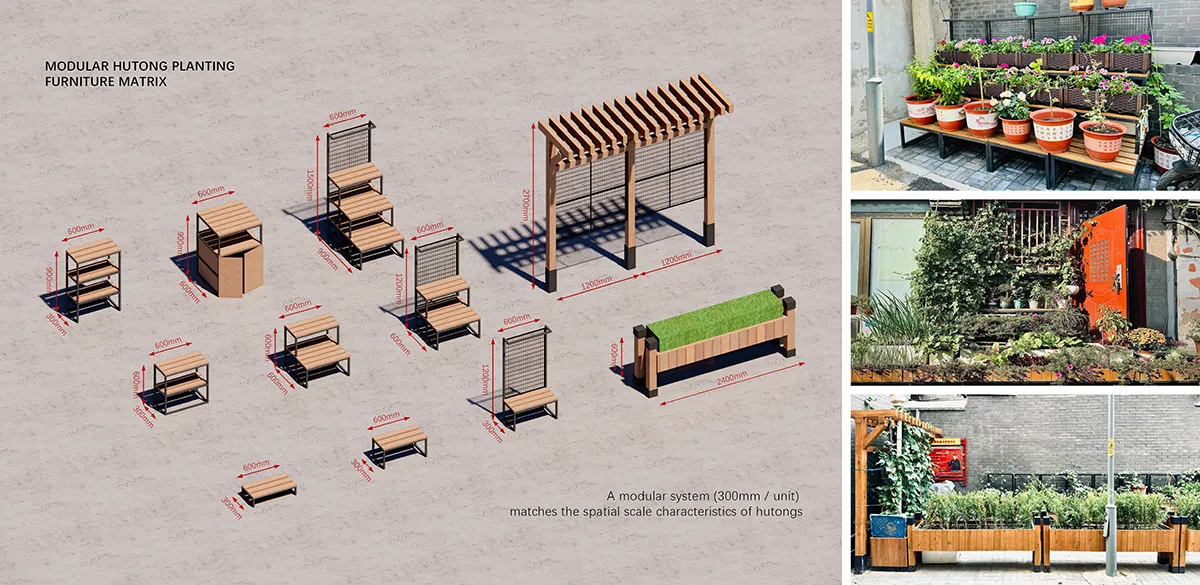
To address the compact and varied spatial conditions of the Hutongs, the team developed a modular planting furniture system, allowing for flexible reconfiguration to adapt to both site-specific and evolving needs. Designs respond to Beijing’s climate: shading structures provide relief in summer, while wooden seating retains warmth in winter. The planting system employs 30% more water-efficient irrigation and uses native edible and ornamental species that require minimal maintenance. Sculptural drying racks blend function with aesthetic value, reinforcing the cultural character of the Hutongs.
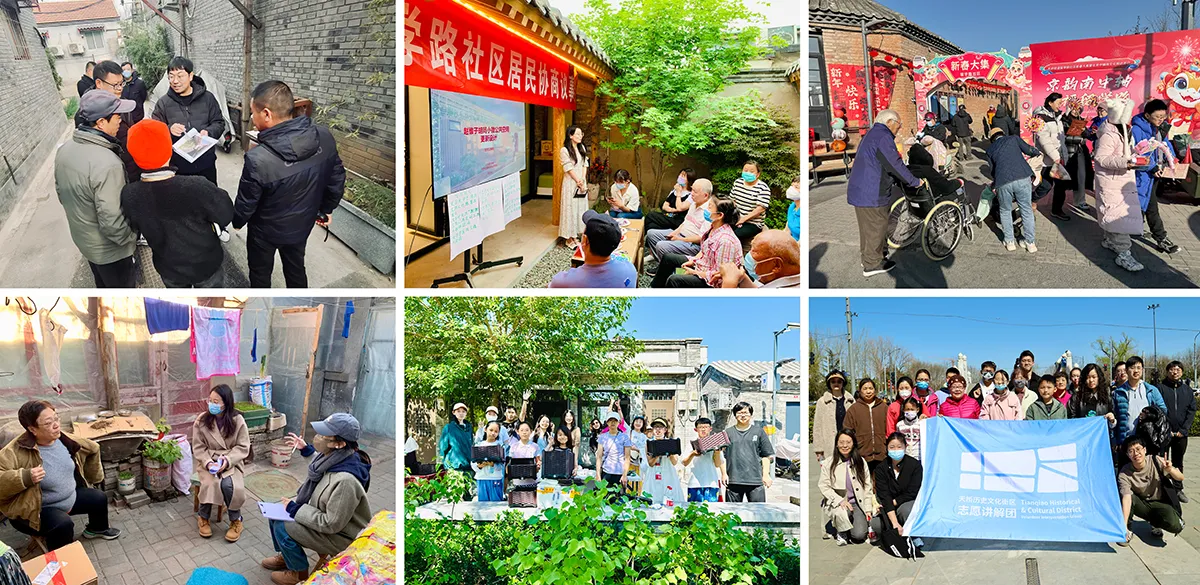
The participatory design process included older residents, young families, local business owners, and artists, ensuring broad, intergenerational engagement. Each phase—from concept to implementation—was co-created with the community. Upon completion, the renewed micro-public spaces were returned to residents, with neighbors assuming stewardship roles. Over ten seasonal planting activities further activated these spaces, fostering collaboration between residents and local university students. These interventions have transformed the alleys into dynamic community hubs—places of gathering, learning, and shared ownership.
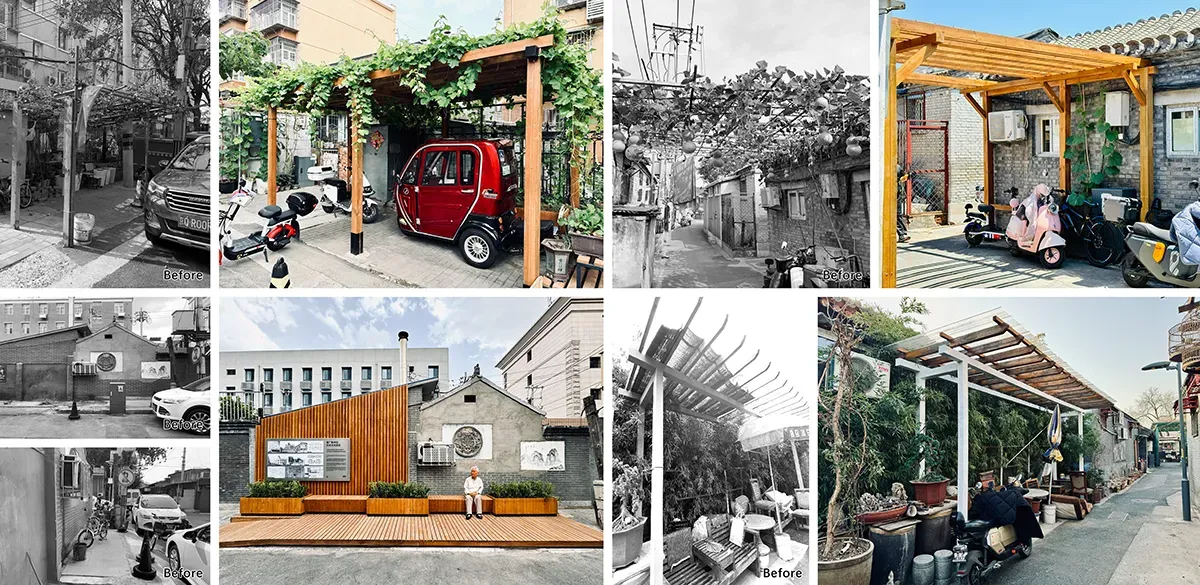
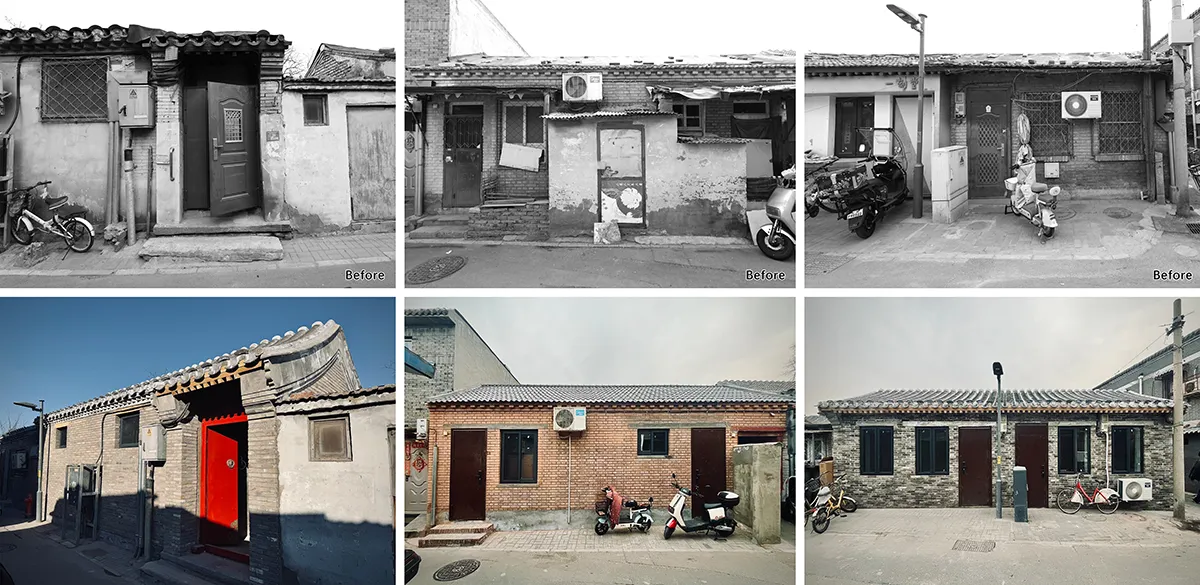
Alongside spatial upgrades, the project implemented façade and roof renovations in Zhaozhuizi Hutong, an area with low environmental quality and strong demand for business revitalization. Through targeted timber reinforcement, traditional brick repair, tile replacement, and added insulation, the upgrades improved safety and thermal comfort (cutting energy use by at least 15%) while preserving historic character. These improvements have elevated everyday living conditions and attracted new commercial opportunities, balancing heritage conservation with economic renewal.
CULTURAL IDENTITY AND COMMUNITY BUILDING THROUGH INTEGRATED INFRASTRUCTURE AND PARTICIPATORY GOVERNANCE
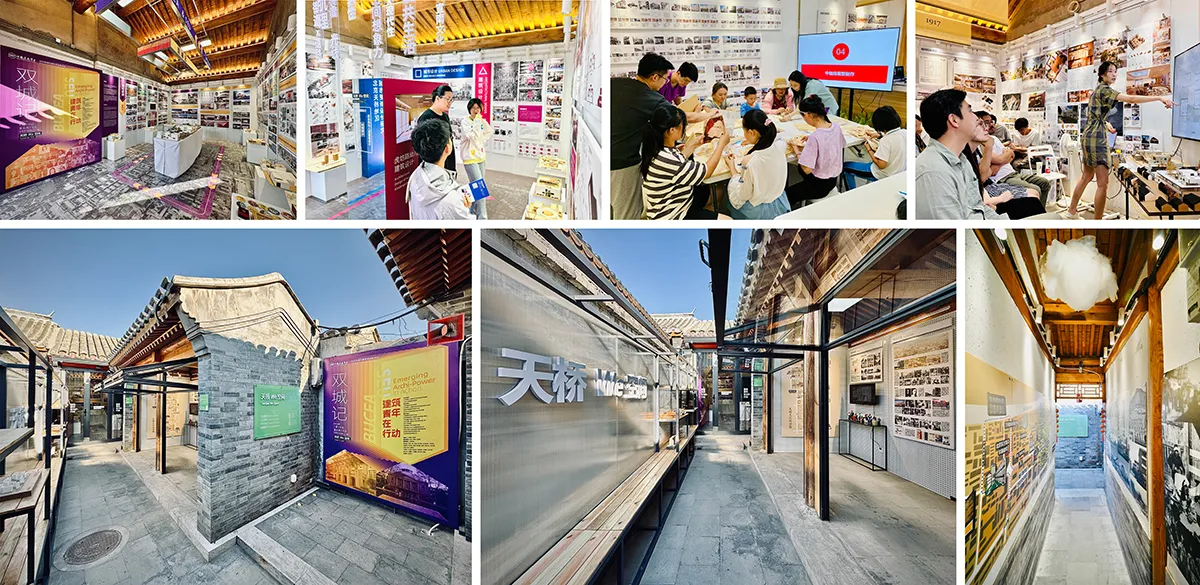
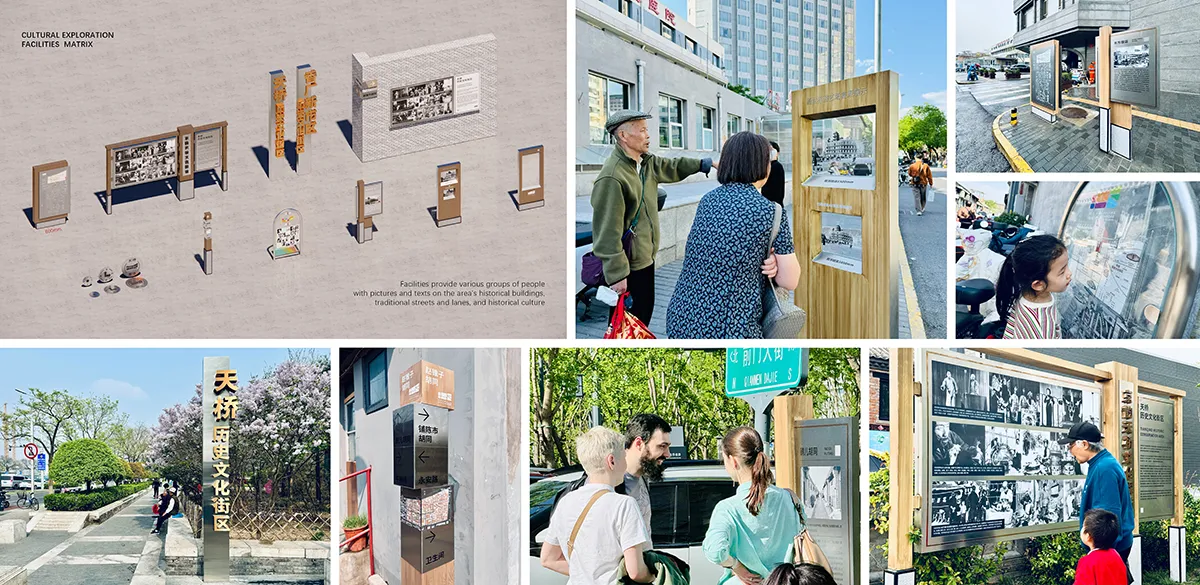
Following up, the team implemented a synchronized cultural system integrating physical infrastructure, digital PaaS, and volunteer services, reestablishing the connection between local communities and cultural heritage. In addition, residents and students were engaged to organize Citywalk events, periodically sharing the stories of the Tianqiao area with the public and tourists. An 80㎡ courtyard was transformed into Tianqiao We-Space — A Neighborhood Cultural Center, serving as a link between local residents and broader society.
At the same time, the team demonstrated a bottom-up planning approach by involving a wide range of stakeholders in a joint effort among community organizations and government entities. Drawing on the curriculum of Beijing University of Civil Engineering and Architecture, the joint team explored practical toolkits and methodologies for urban heritage protection, adaptive reuse, and educational strategies to prepare future generations of designers and professionals to address real-world challenges. The team also provided professional training for local government officials to strengthen governance capacity and ensure long-term, self-sustaining regeneration.
WALKING INTO HISTORY, STEPPING INTO THE FUTURE
Three years of cultivation and efforts have given birth to WE-SPACE, is not merely a physical transformation, but a platform for inclusive governance and cultural continuity. It activates the local sense of belonging, enables intergenerational participation, and strengthens urban resilience. The project’s tripartite model—linking community, university, and government—ensures that heritage conservation and social innovation proceed hand in hand.
WE-SPACE: A Hutong Community Renovation Reshaping Belonging & Identity
Location: Tianqiao Subdistrict, Xicheng District, Beijing, China
Designer Credit:
Urban Designer & Landscape Architect: Beijing University of Civil Engineering and Architecture
Investigator & Architect: Architecture Design and Research Institute of BUCEA Co., Ltd.
Landscape Architect & Digital Art Designer: Beijing Institute of Fashion Technology
Consultant: ShineWing Group
Collaborators/Other Consultants:
Zhenkun Gan, Urban Designer, Beijing University of Civil Engineering and Architecture
Xinze Wu, Lead Landscape Designer, Beijing University of Civil Engineering and Architecture
Mengyixin Li, Lead Landscape Designer, Beijing University of Civil Engineering and Architecture
Lingege Long, Lead Landscape Designer, Beijing Institute of Fashion Technology
Rui Qian, Director & Principal Consultant, ShineWing Group
Zhaoyi Liu, Principal Investigator, Architecture Design and Research Institute of BUCEA Co., Ltd.
Pengyuan Zhang, Lead Architecture Designer, Architecture Design and Research Institute of BUCEA Co., Ltd.
Lu Li, Lead Graphic Designer, Beijing Junyun Technology Co., Ltd.
Zhen Feng, Principle Event Planner, Beijing Digital Star Media Co., Ltd.
Huang Li, Lead Digital Art Designer, Beijing Institute of Fashion Technology
Songjie Guo, Lead Digital Technology Engineer, Beijing Volumetric Capture Technology Co., Ltd
Images Credit: Zhenkun Gan