
Baghdad Avenue is a major public realm and landscape vision for one of Iraq’s largest new residential developments. Conceived as more than a collection of parks, streetscapes, and open spaces, the project is designed as a landscape of revival, identity, and community. It responds to Baghdad’s deep cultural history while creating a forward-looking public realm that supports everyday life, social connection, recreation, and resilience.
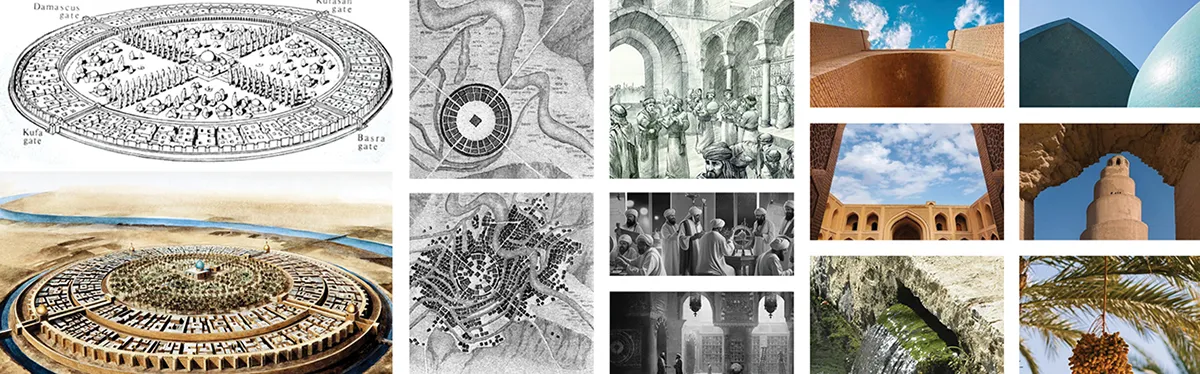
The design takes inspiration from Baghdad’s most celebrated period, the Golden Age, when the city stood as a global center of knowledge, science, commerce, culture, and civic life. During this time, Baghdad was not only a powerful urban capital but also a place of learning and exchange, home to institutions such as the House of Wisdom, where scholars, thinkers, and translators gathered to advance science, medicine, astronomy, mathematics, philosophy, and literature. This spirit of knowledge, discovery, and gathering became an important starting point for the landscape concept.
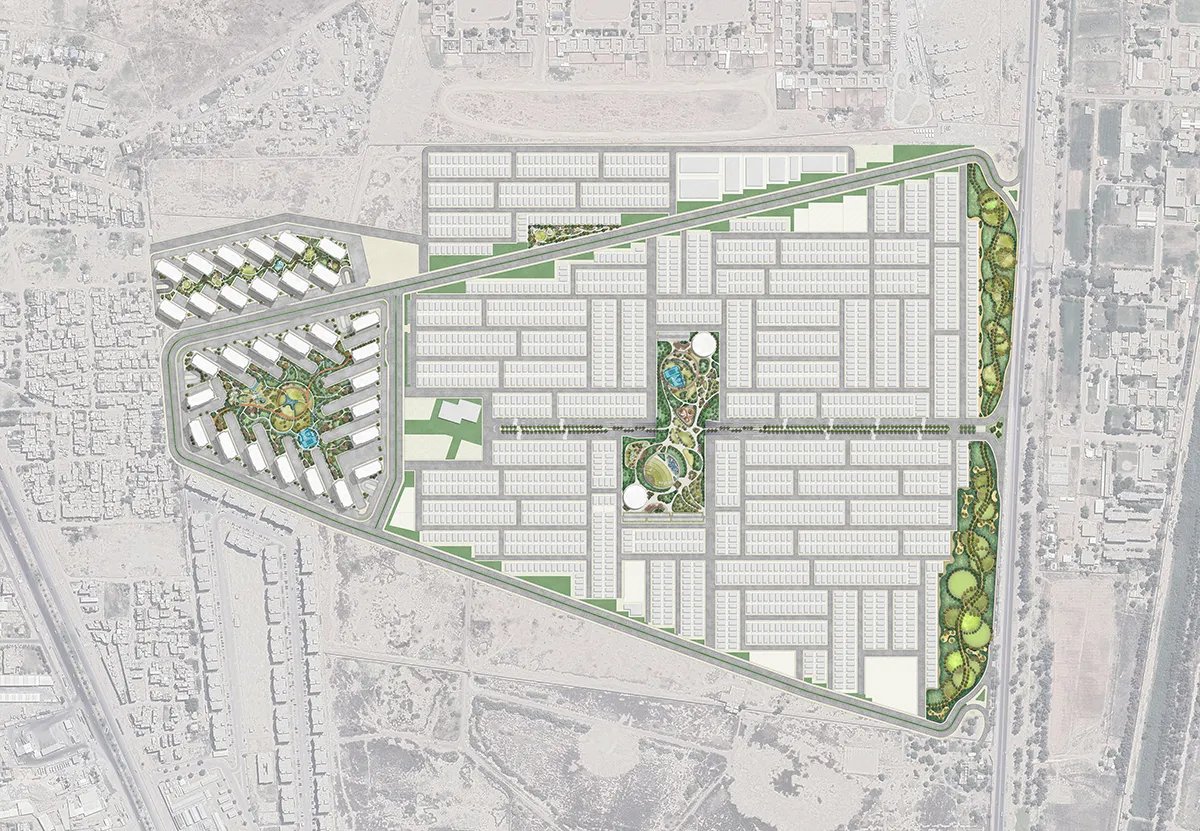
Rather than recreating historic forms literally, the design interprets Baghdad’s legacy in a contemporary way. The planning of the historic Round City, with its sense of order, centrality, and connection, inspired the project’s structure of linked public spaces and clear movement routes. Historic references such as shaded courtyards, geometric patterns, gardens, water channels, and civic gathering spaces are abstracted into a modern landscape language. These elements are not used as decoration, but as design principles that shape how people move, gather, rest, play, and interact across the development.
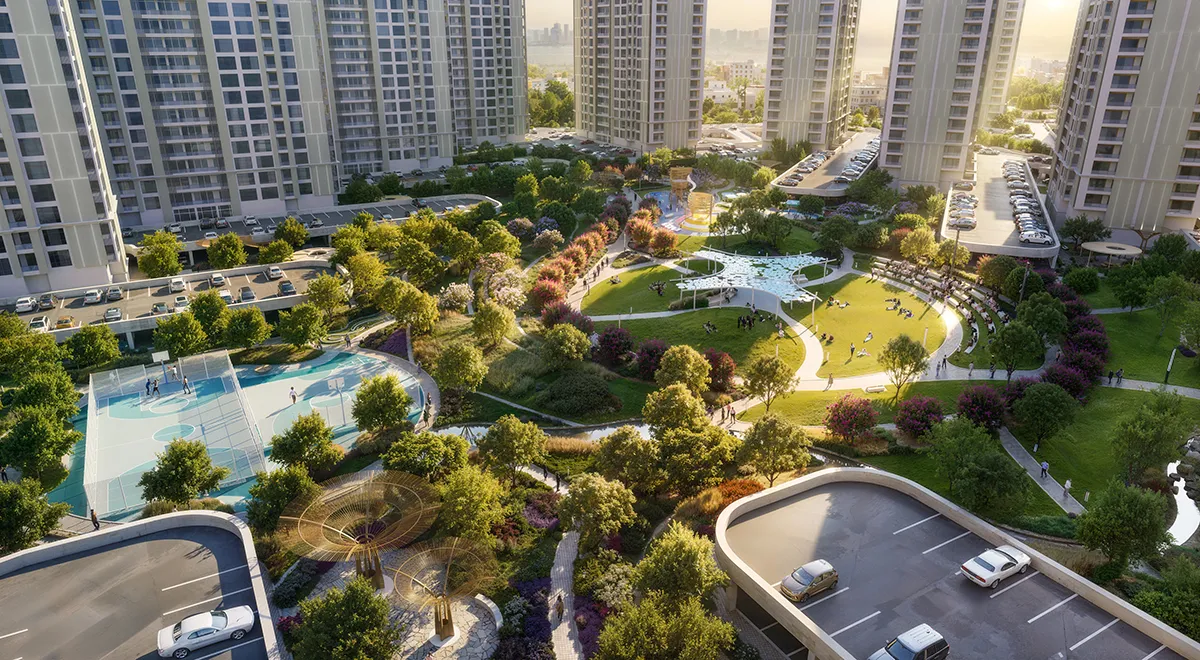
At the heart of the project is Al Baraha Park, a 30,000-square-meter civic anchor located in the central area of the development. Designed as the main gathering space, the park brings together flexible lawns, shaded seating, an amphitheater, play areas, and active community programs. It is intended to support both daily use and larger community events, from informal family gatherings to outdoor markets and performances. The park is open, flexible, and human-scaled, creating a place where residents and visitors can meet, pause, and participate in public life.
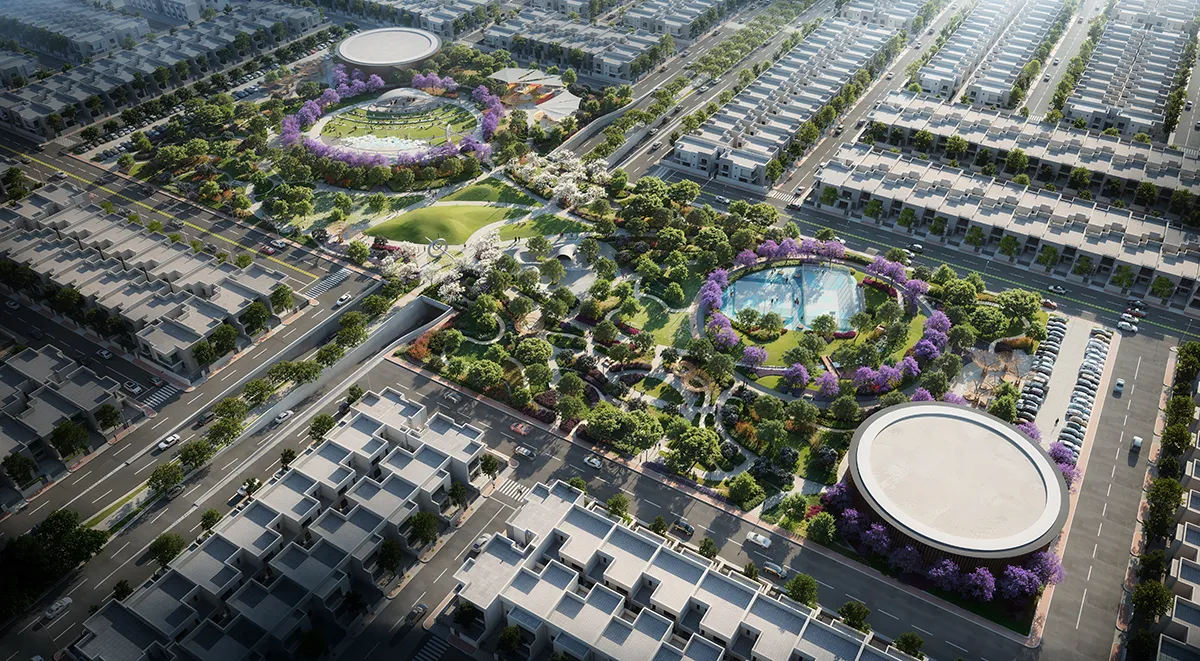
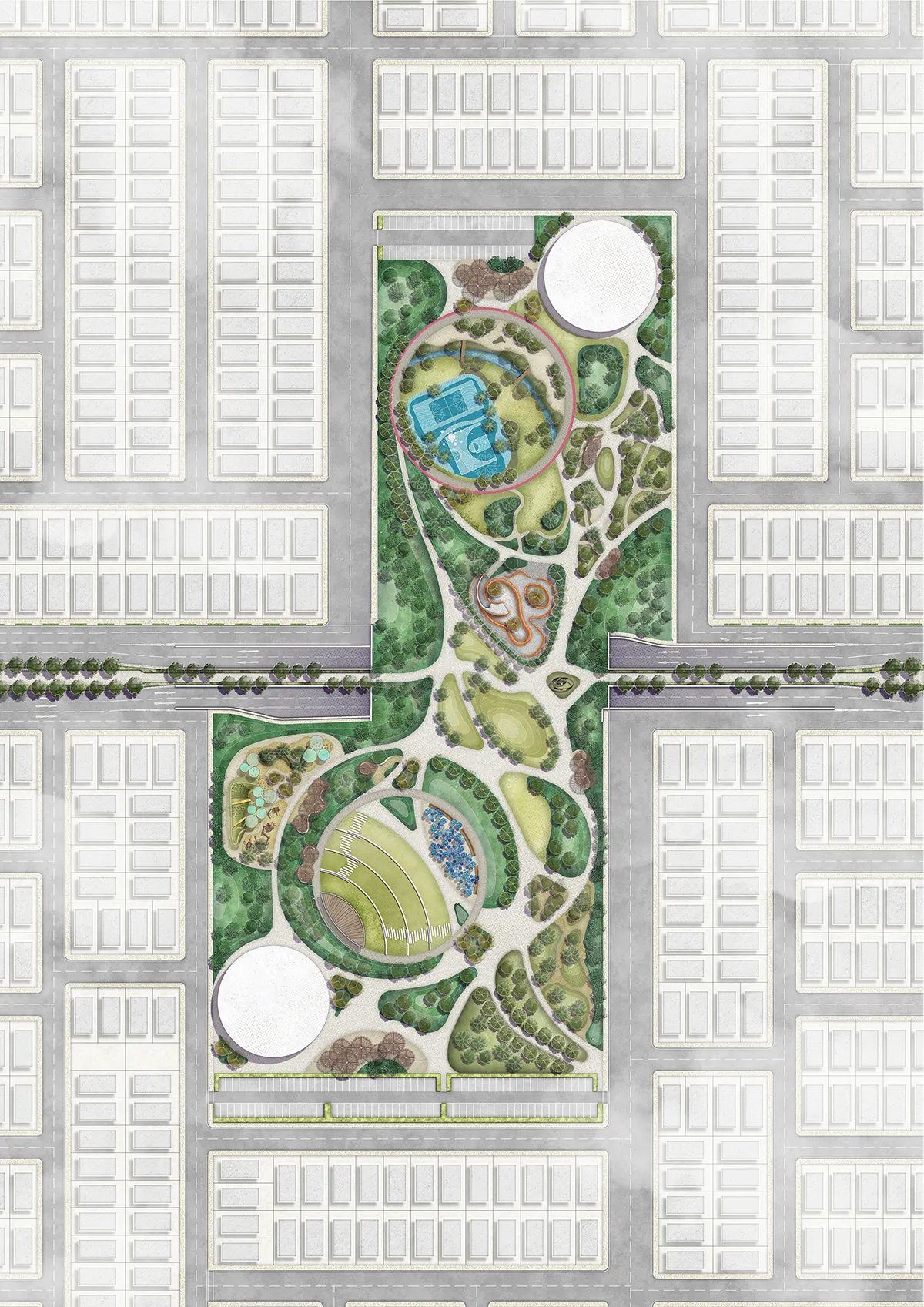
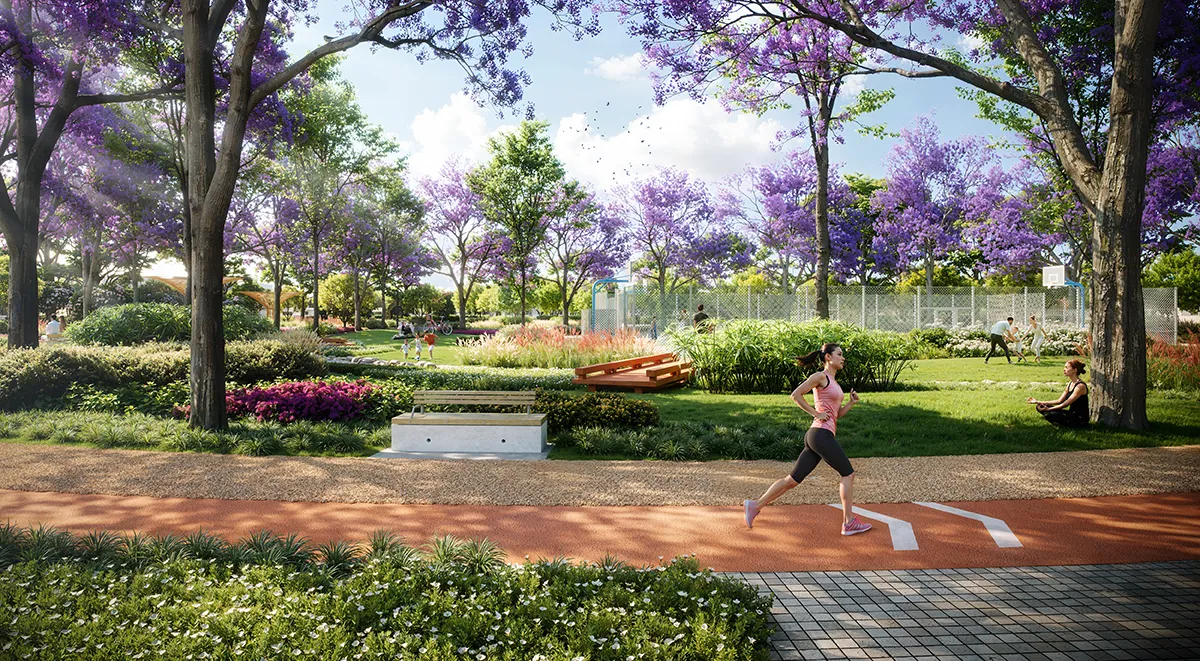
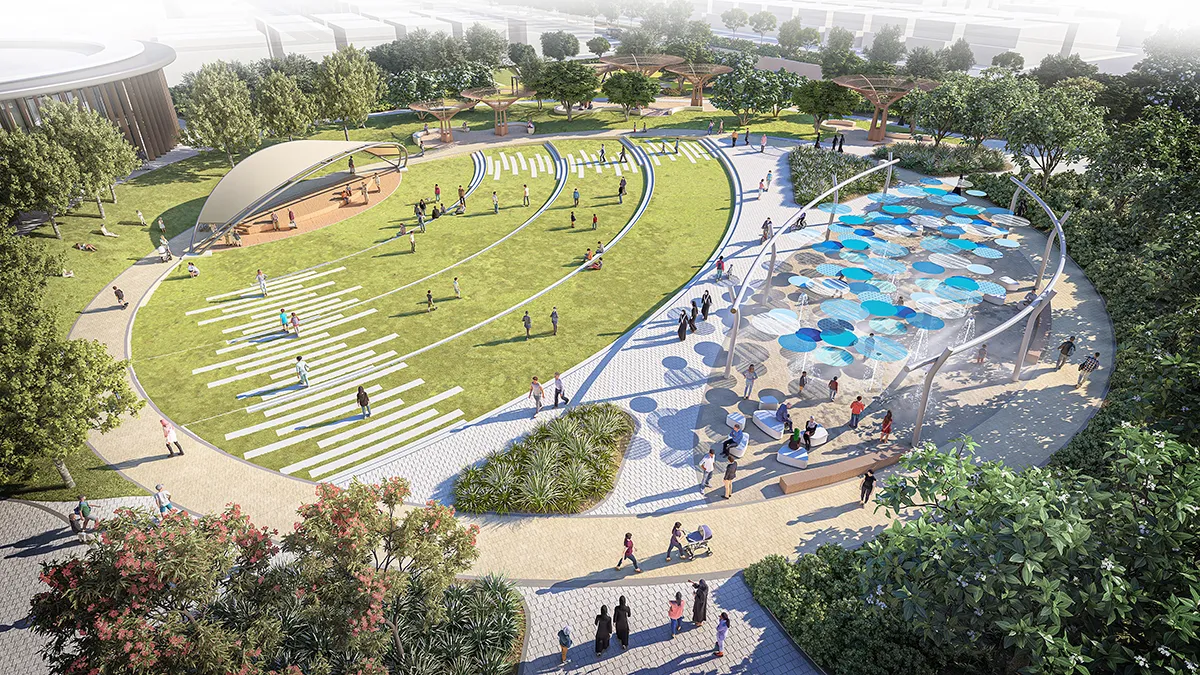
To the north, Jannat Park forms a 50,000 square meter living garden, focused on wellness, recreation, and neighborhood life. Its design is shaped by meandering pathways, shaded nodes, planted areas, water features, play spaces, sports zones, fitness areas, resting places, and picnic spaces. As a community-focused park, it is more intimate in character, providing a landscape where local residents can walk, exercise, gather with family, or spend time outdoors within a comfortable green setting.
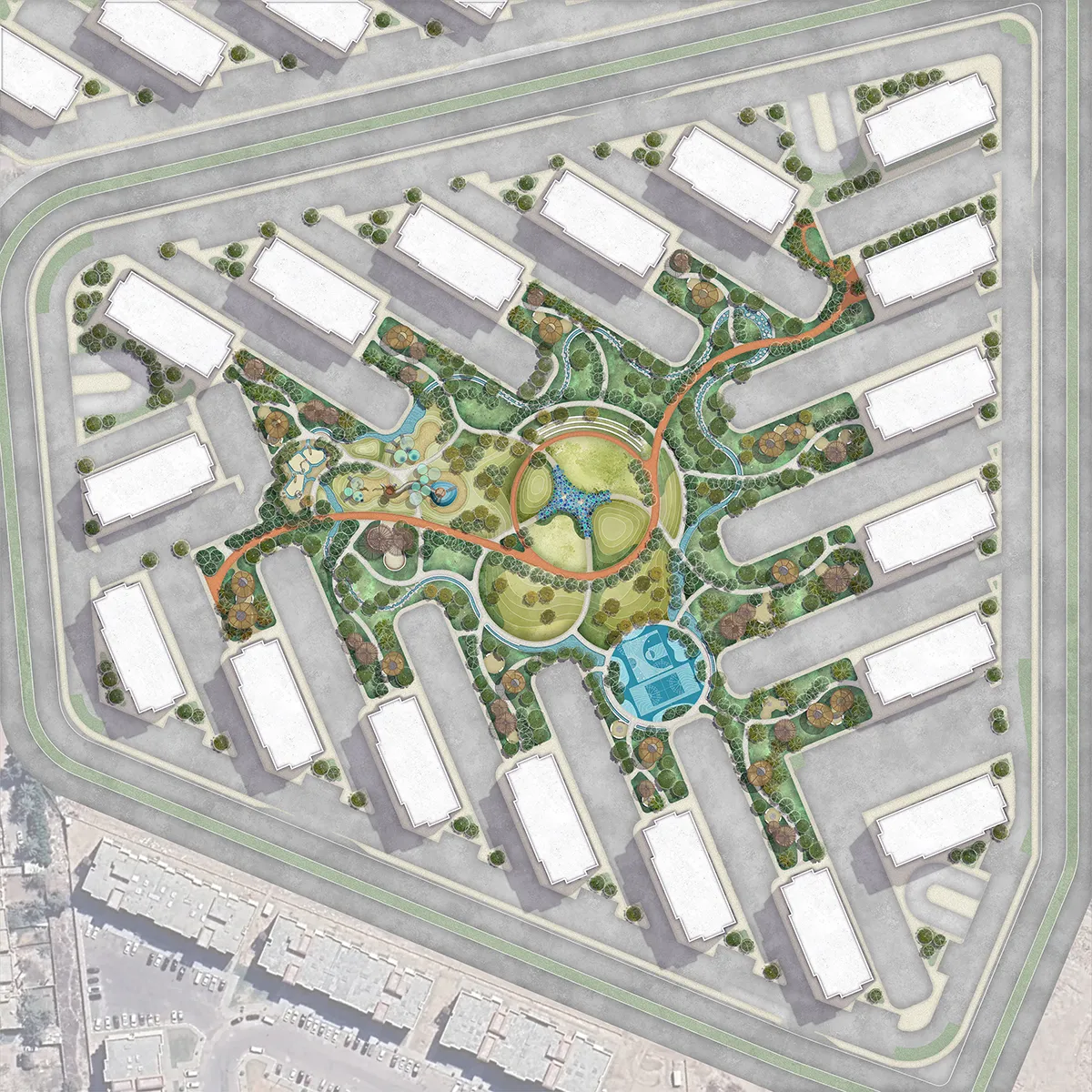
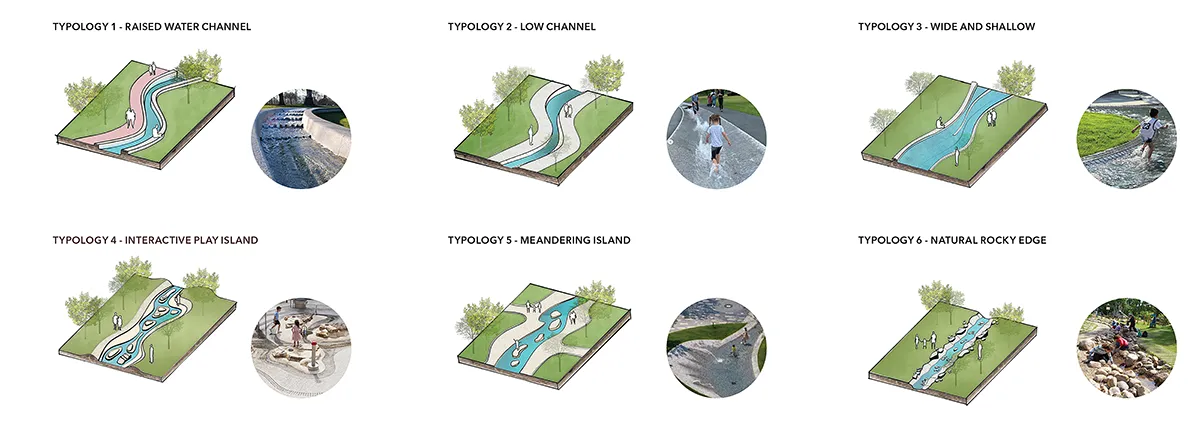
Water is one of the key organizing elements within the project. In Jannat Park, a continuous organic water canal wraps through the landscape, referencing Baghdad’s historic relationship with the Tigris River and traditional irrigation systems. Beyond its symbolic role, water is used as an experiential and environmental feature. It supports cooling, movement, play, sensory engagement, and stormwater management. Across the project, a series of water typologies are introduced, including raised channels, recessed channels, wide and shallow water areas, meandering streams, interactive play channels, and natural rocky channels. Together, these features create moments of sound, reflection, interaction, and relief within the urban landscape.
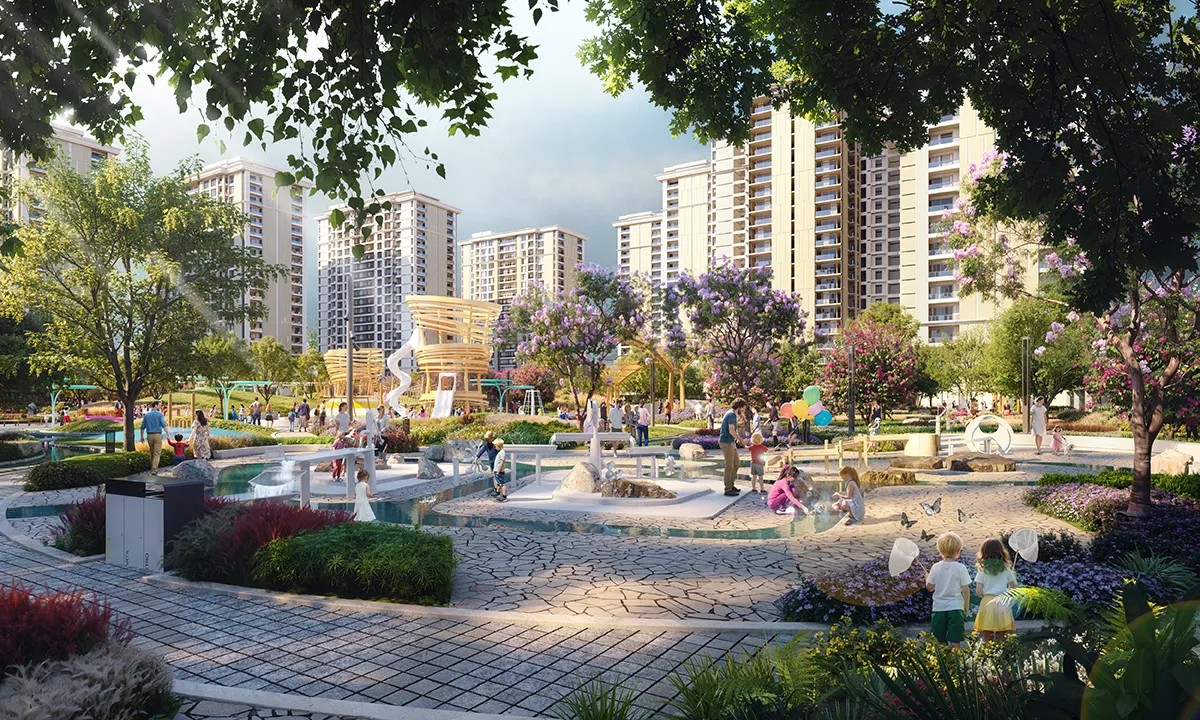
The play strategy also reflects Baghdad’s cultural and scientific legacy. In Jannat Park, the custom-designed playground is inspired by astronomical exploration, referencing Baghdad’s historic contribution to science and astronomy during the Golden Age. Interlinked towers, bridges, climbing structures, and constellation-inspired floor patterns create a play environment that encourages curiosity, imagination, discovery, and physical movement. The playground becomes more than a recreational space; it becomes a subtle educational experience that connects children to the city’s history of learning and exploration.
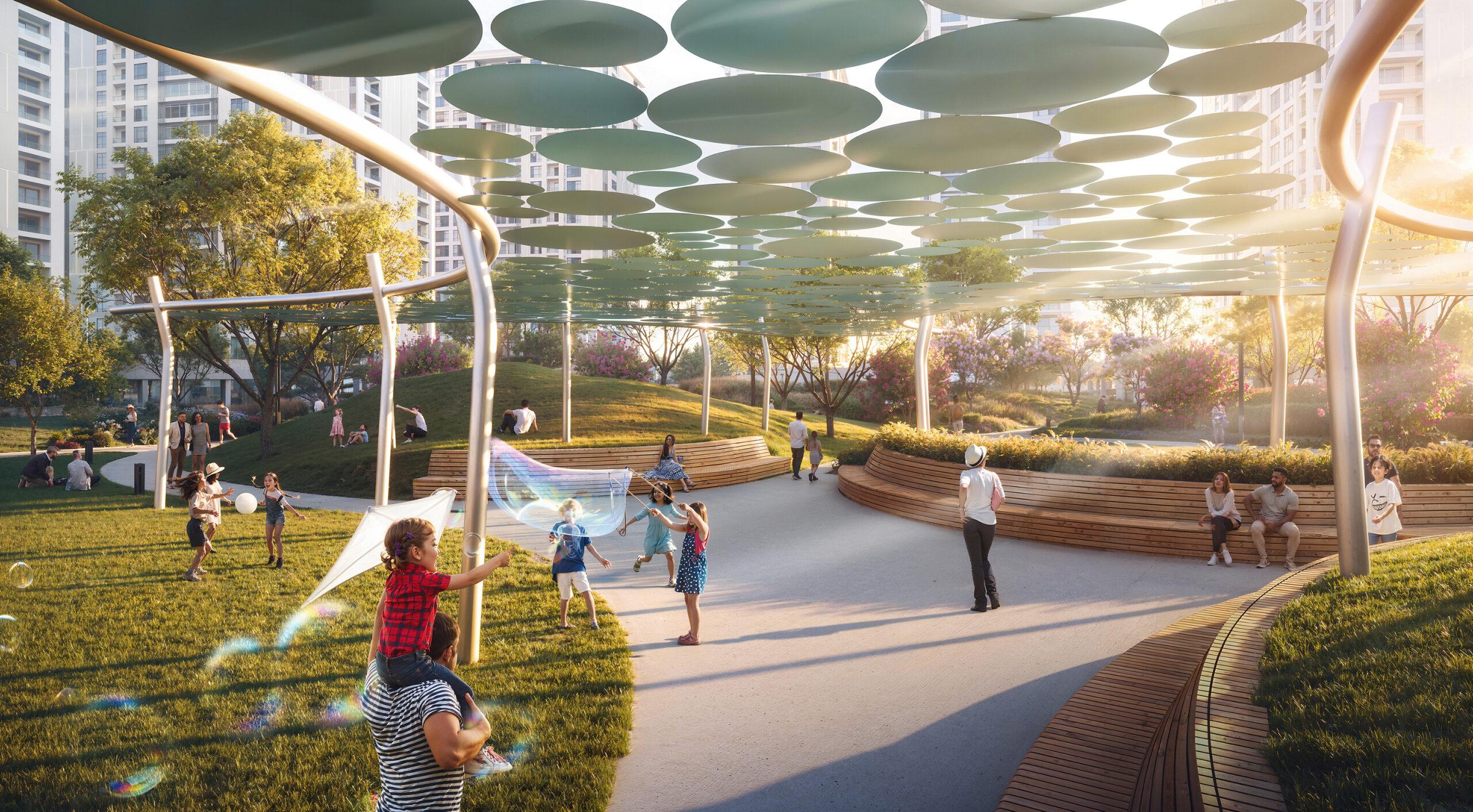
Across the wider public realm, the design responds carefully to Baghdad’s hot climate. Comfort is supported through shaded walkways, tree-lined routes, integrated seating, layered planting, water features, and shade structures inspired by local geometry and spatial patterns. These elements make the landscape more usable throughout the day and across different seasons. The planting strategy uses native and adaptive species to reduce water demand, provide shade, define spatial edges, soften the built environment, and bring seasonal variation to the public realm. Planting is not treated as a background layer, but as an important part of the spatial and environmental experience.
The project also includes a wide range of programs that support different users and age groups. Children’s play areas, jogging tracks, sports courts, skate areas, amphitheater seating, fitness zones, shaded lounges, picnic areas, open lawns, and social gathering spaces are distributed across the parks and avenue network. This mix of active and passive uses helps create a public realm that is inclusive, lively, and adaptable. It allows the landscape to serve families, children, youth, older residents, and visitors in different ways.
Baghdad Avenue reimagines the public realm as a foundation for community life. It transforms the avenue from a simple movement corridor into a connected civic landscape, where memory and modernity meet. Rooted in Baghdad’s past and designed for its future, the project celebrates identity, resilience, and public life, while creating a shaded, active, welcoming, and inclusive landscape for generations to come.
Jadat Baghdad
Location: Baghdad, Iraq
Landscape Architect: InSite International
Client: Jadat Baghdad – Saud Saad Al Arife Group
Architect: Upscale Architects
Lighting Design: InSite International
Irrigation Design: InSite International
Visualisation: Lifang Vision