
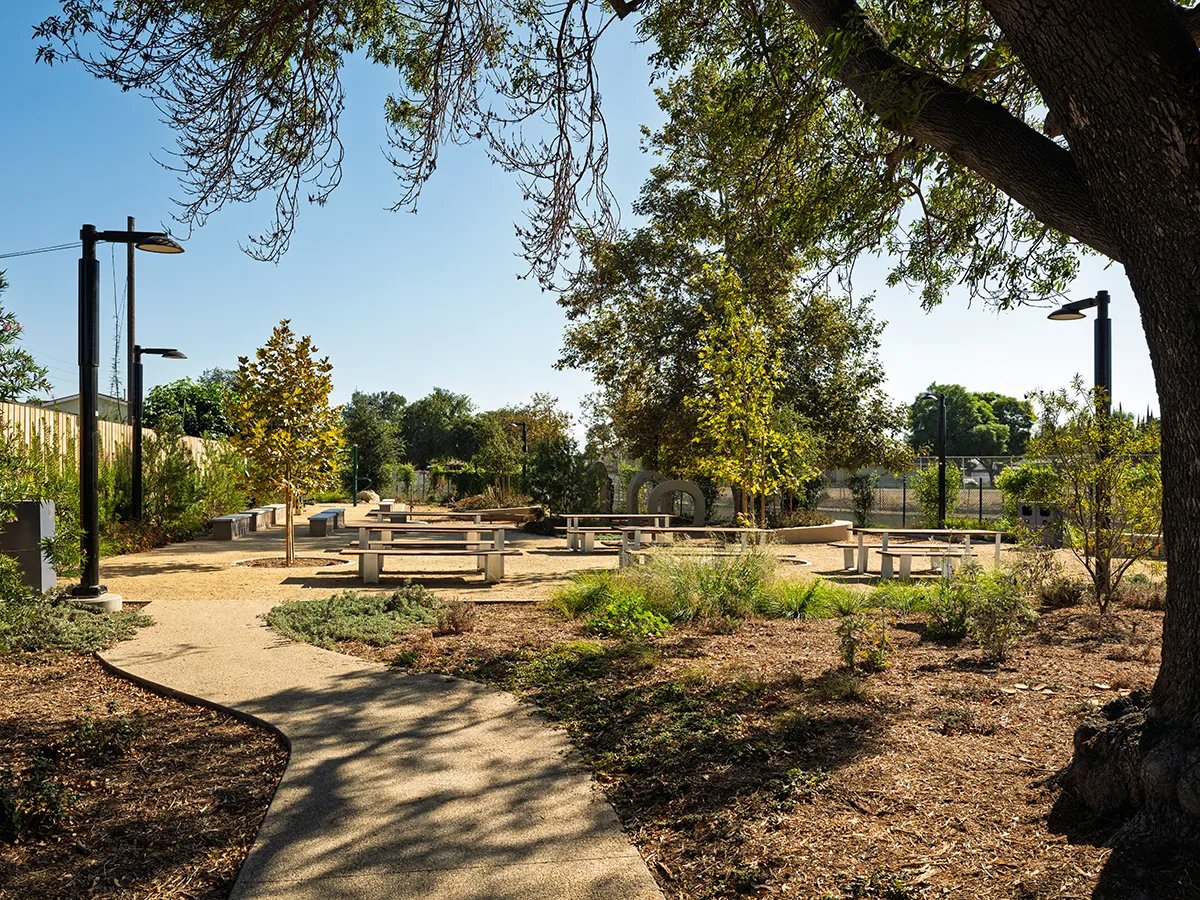
Alondra Gateway Park reclaims a once-vacant half-acre parcel along Compton Creek and transforms it into a compact but highly active civic space rooted in local culture and identity. First envisioned in 2008 as part of the Compton Creek Garden Park Master Plan, the project represents long-awaited public investment in a neighborhood that has historically experienced environmental neglect and limited access to green space. Today, the park supports families, walkers, cyclists, and the area’s well-known equestrian community with a nature-inspired playground, California native plantings, picnic and exercise areas, a community-made mosaic, and a central plaza designed to foster connection, wellbeing, and neighborhood pride.
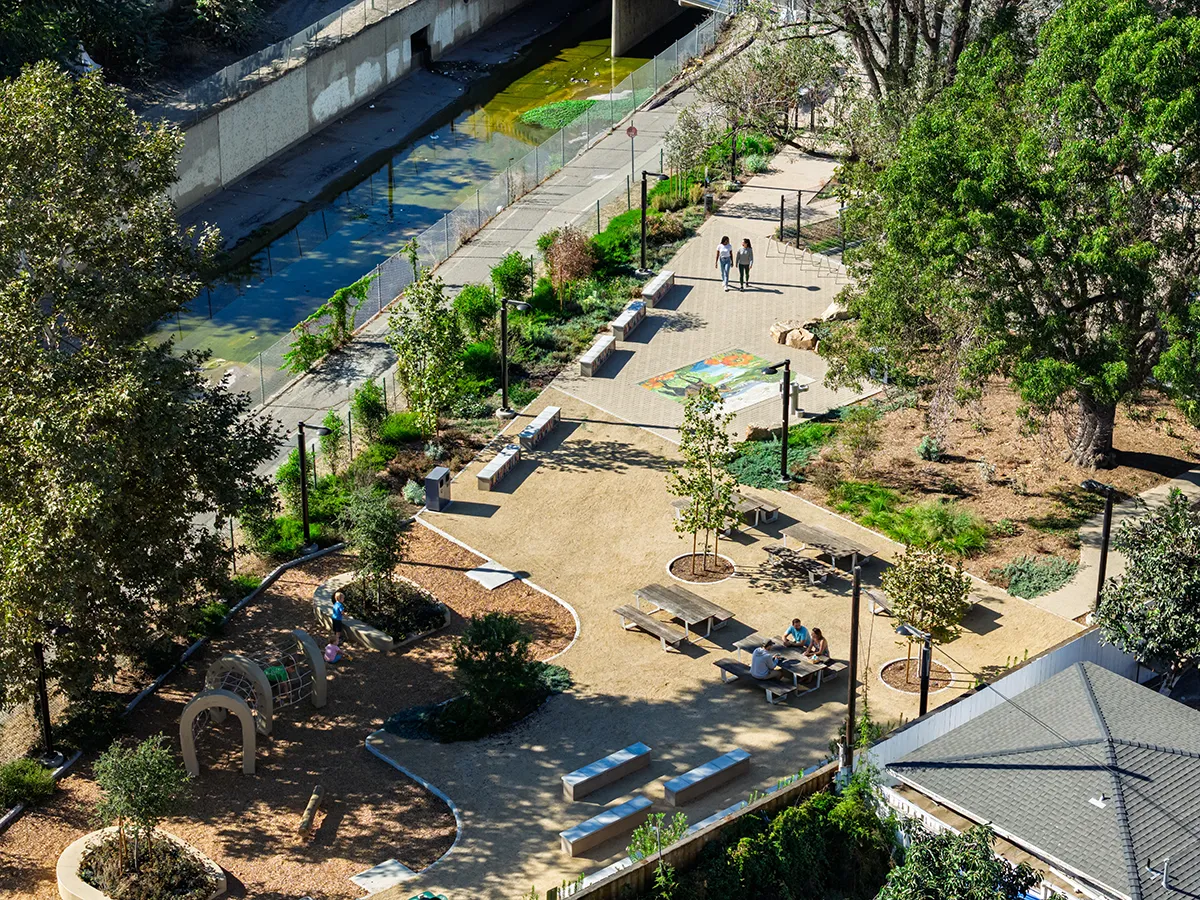
“It’s a very small site—just a half acre—but we packed a lot into this space,” says Mike Hee, PLA, Technical Director at Studio-MLA. “There are open community areas, picnic zones, a playground, planting areas, and stormwater functions. Getting a project the community had been talking about for years over the finish line was a big accomplishment for everyone involved.”
Community engagement shaped both program and character. For decades, Compton Creek and its surrounding neighborhoods have been disproportionately affected by climate risk and underinvestment. Studio-MLA worked closely with residents, local businesses, and equestrian groups—including the Compton Cowboys—to ensure the park reflects everyday use and local identity. “It’s informally an extension of Sr. Cliff’s Texas-Style Burritos next door—he’s the steward of the park, with eyes on it every day,” Hee notes. “We also incorporated equestrian tie-ups so riders can stop, rest, and enjoy the space. Every visit, you see families at the playground, neighbors having lunch, cowboys with their horses—it’s their park.”
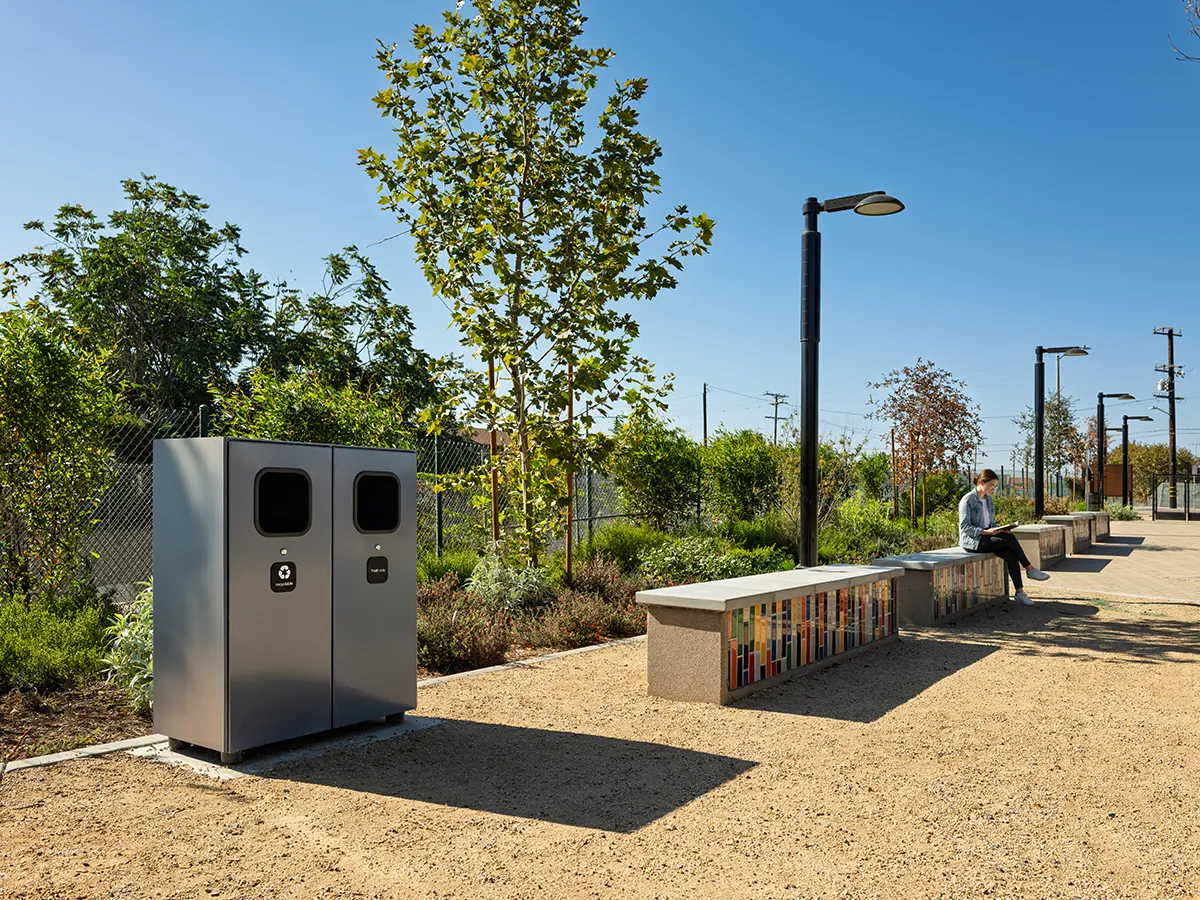
Site furnishings and lighting play a critical role in unifying the design and supporting inclusive use. MultipliCITY benches and tables, Bola bike racks, Select recycling systems, and LEO 360 Solar area lights were specified in consistent finishes to create a cohesive public realm. “Everything feels the same when you touch it,” says Hee. “The benches and tables are accessible, with options to make them ADA-compliant, which is central to universal access.”
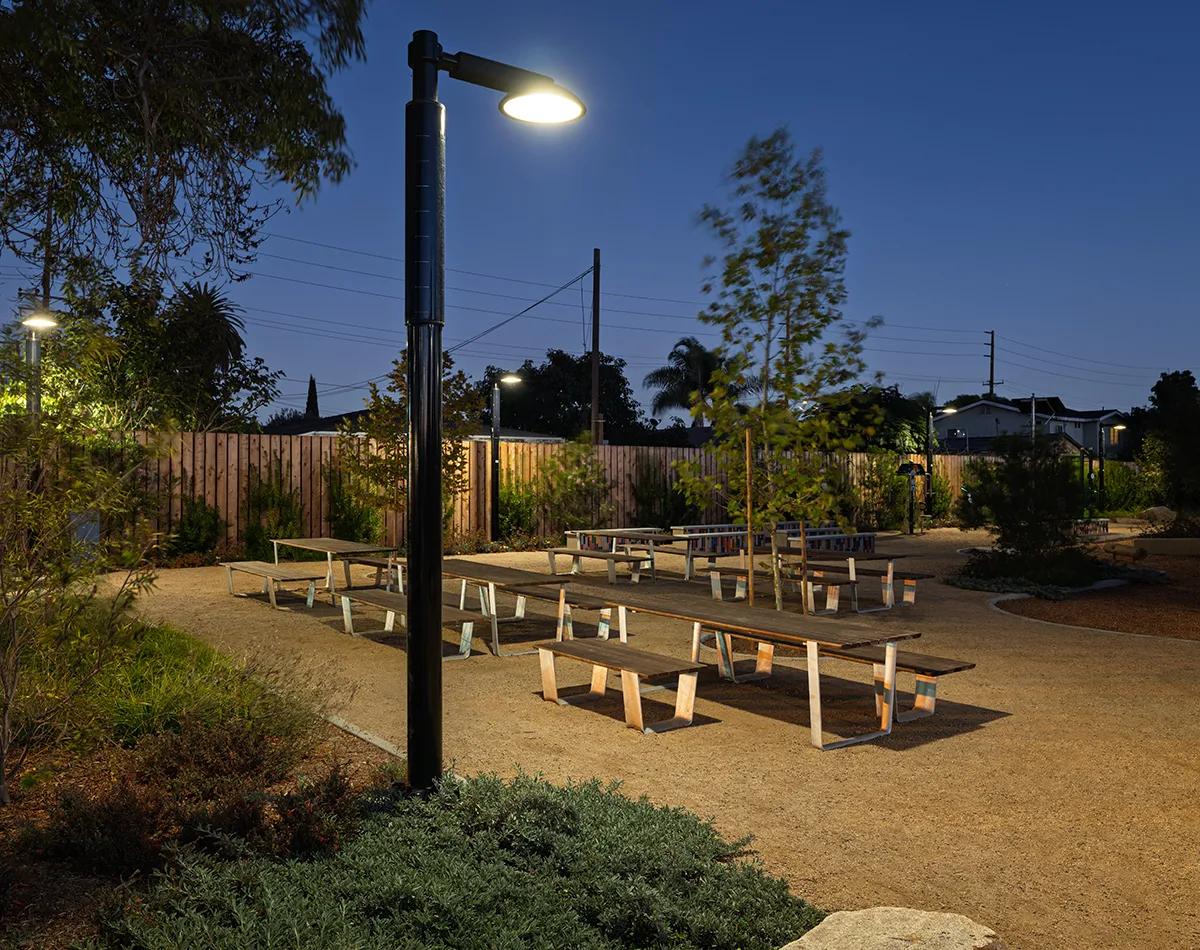
The solar lighting strategy proved especially consequential. When a grid connection was not feasible, the team pivoted to LEO 360 Solar area lights—one of the first completed installations of the solar version. “We couldn’t get electricity to the site and had to move quickly,” Hee explains. “This project really kickstarted our thinking about using solar lighting on other sites as well.”
Though modest in size, Alondra Gateway Park demonstrates how small, constrained sites can deliver outsized social and environmental value. Through native landscaping, shade trees, integrated stormwater strategies, and interpretive elements that acknowledge a history of place, the park offers a replicable model for equity-driven, community-led transformation. As Hee observes, “It’s a great pilot project. It shows what’s possible in communities that haven’t traditionally had access to spaces like this—and how thoughtful landscape architecture can change that.”
Alondra Gateway Park
Location: Compton, California, USA
Landscape Architect: Studio-MLA
Site Elements: Landscape Forms – LEO 360 Solar Area Lights; MultipliCITY Tables and Benches; Bola Bike Racks; Select Recycling Systems;
Photography: Hunter Kerhart
Landscape Forms is a proud sponsor of World Landscape Architecture