
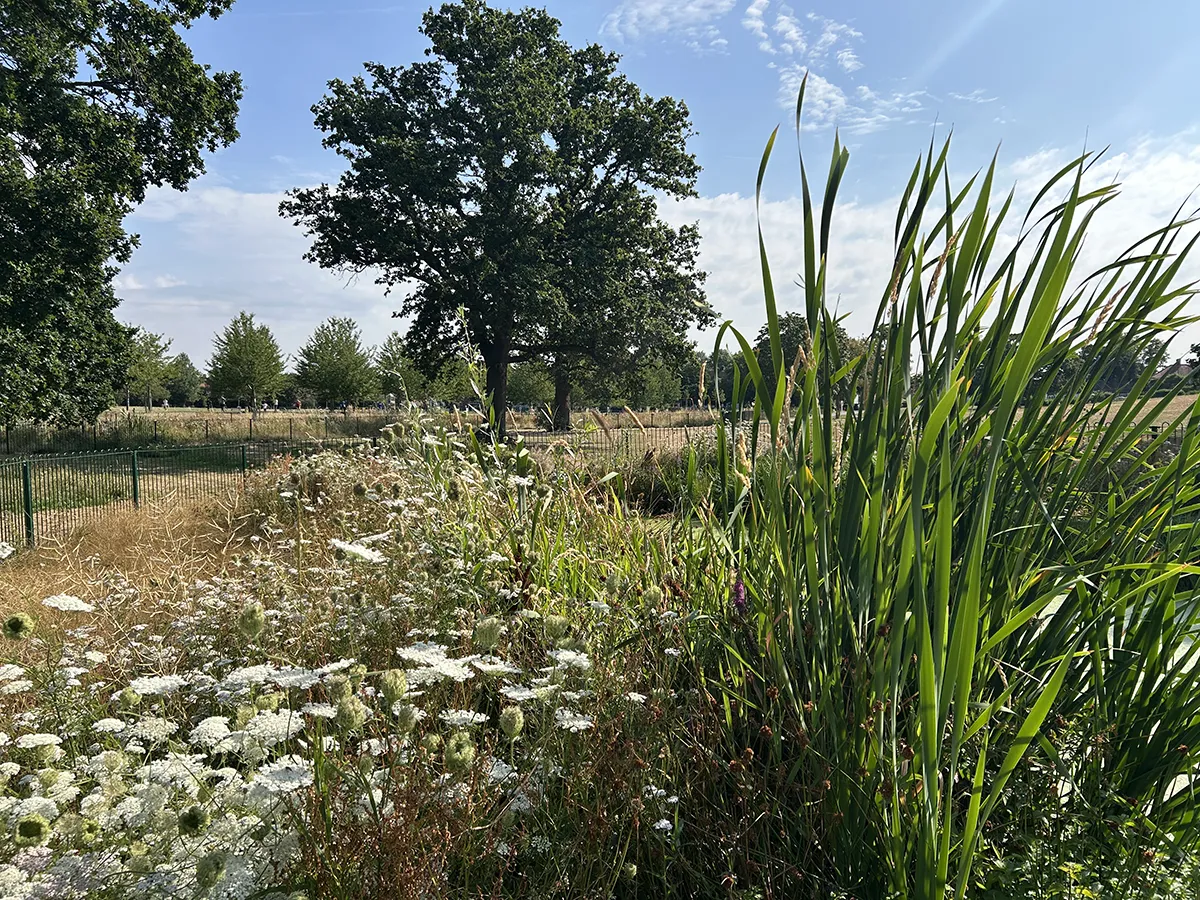
Action for Silk Stream is a multi-disciplinary flood resilience initiative funded by DEFRA and managed by the Environment Agency. The project spans borough boundaries and addresses flood risk through nature-based solutions within the Silk Stream catchment. LUC worked in close collaboration with civil and hydraulic engineers to design and deliver river restoration works that balance water management, ecological enhancement and community benefit. During this phase of the project, LUC worked across multiple sites: Watling Park, Chandos Recreation Ground, Lyndhurst Park and The Meads. This also coincided with the delivery of wider improvements to paths and play provision.
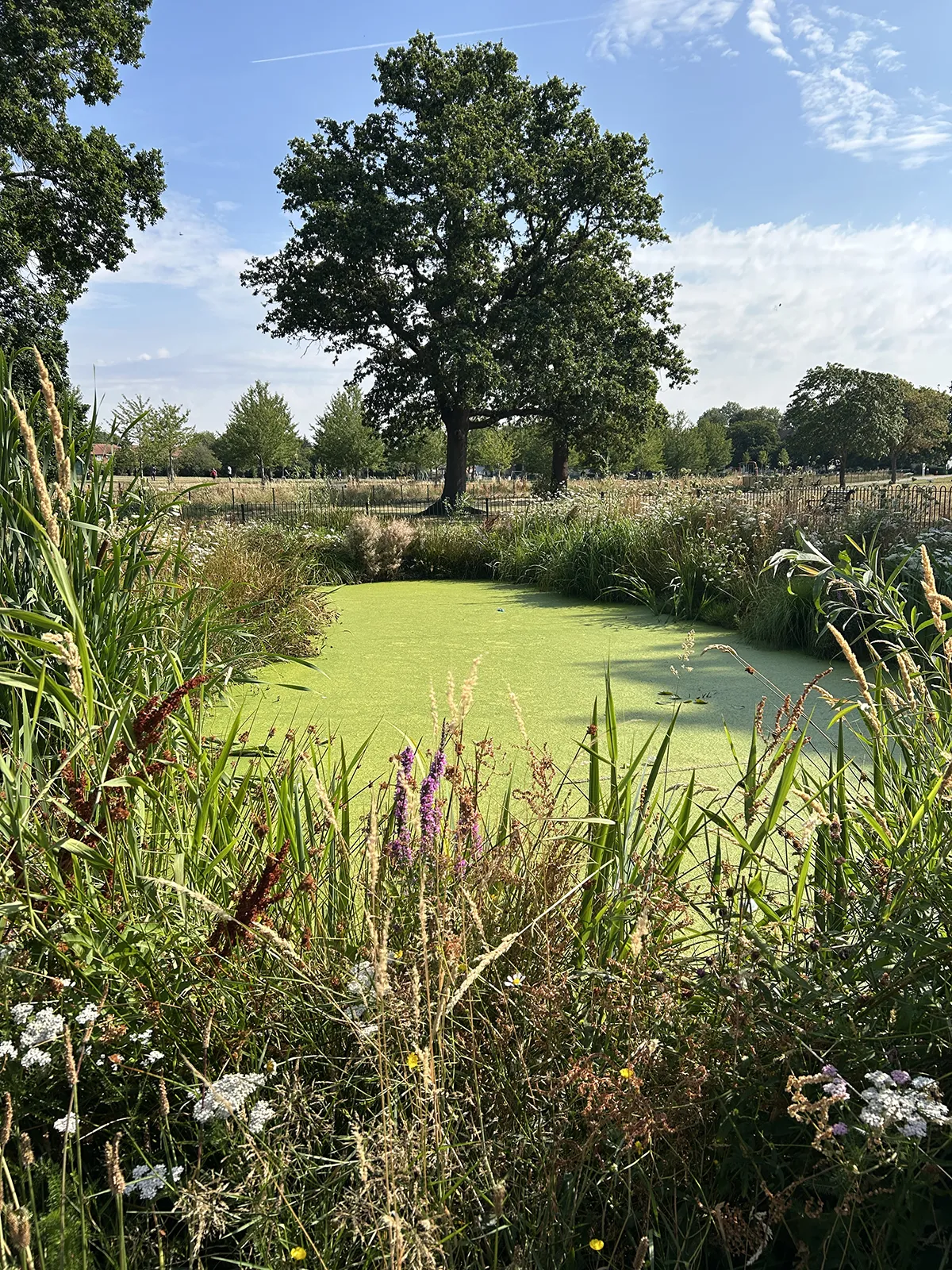
The project is centred on the principle of making space for water, with the objectives of reducing flood risk, improving water quality and boosting biodiversity in the Silk Stream catchment. The landscape design approach integrates Sustainable Drainage Systems (SuDS) with public park environments, creating multifunctional spaces that accommodate both environmental and community needs.
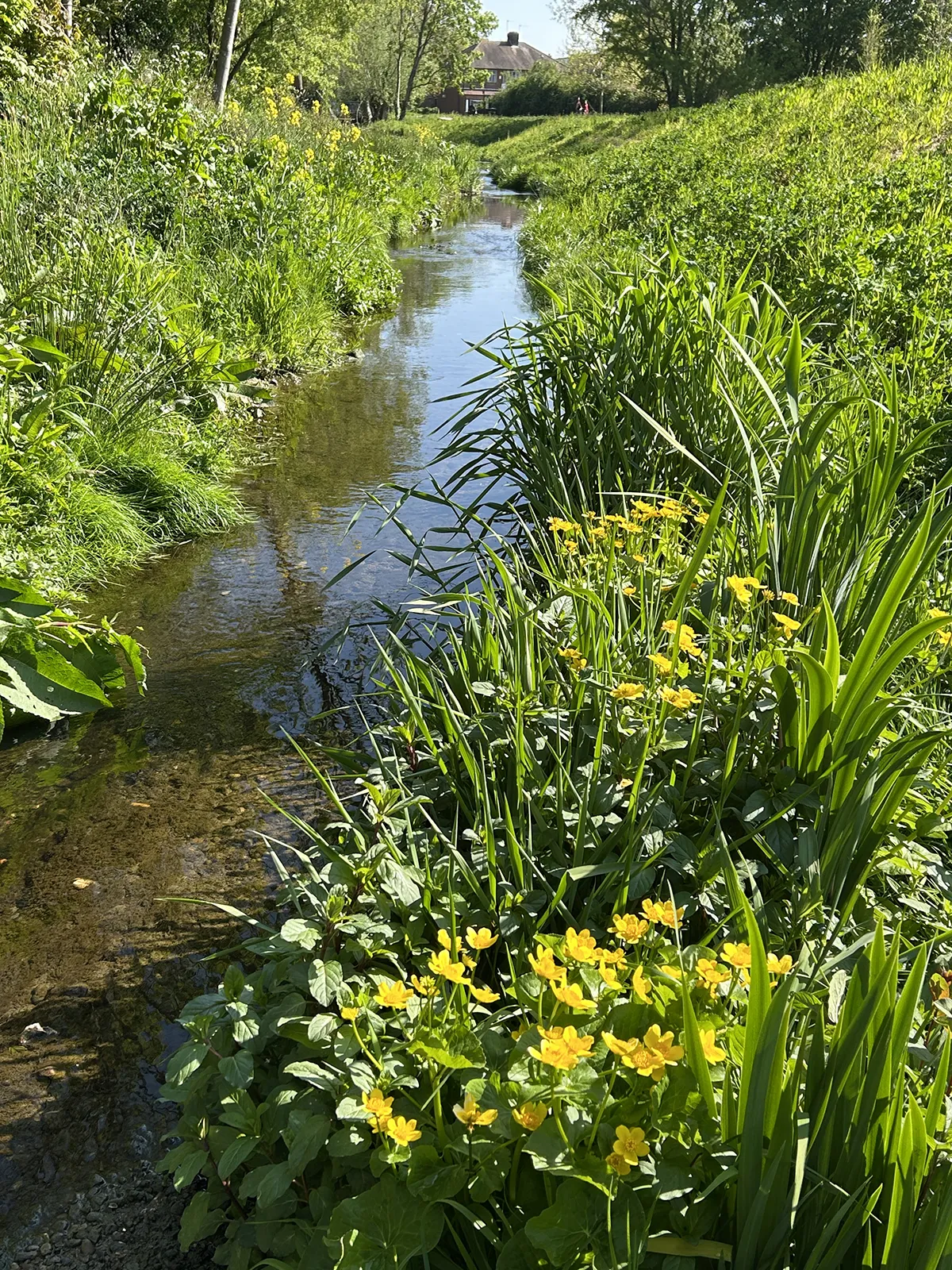
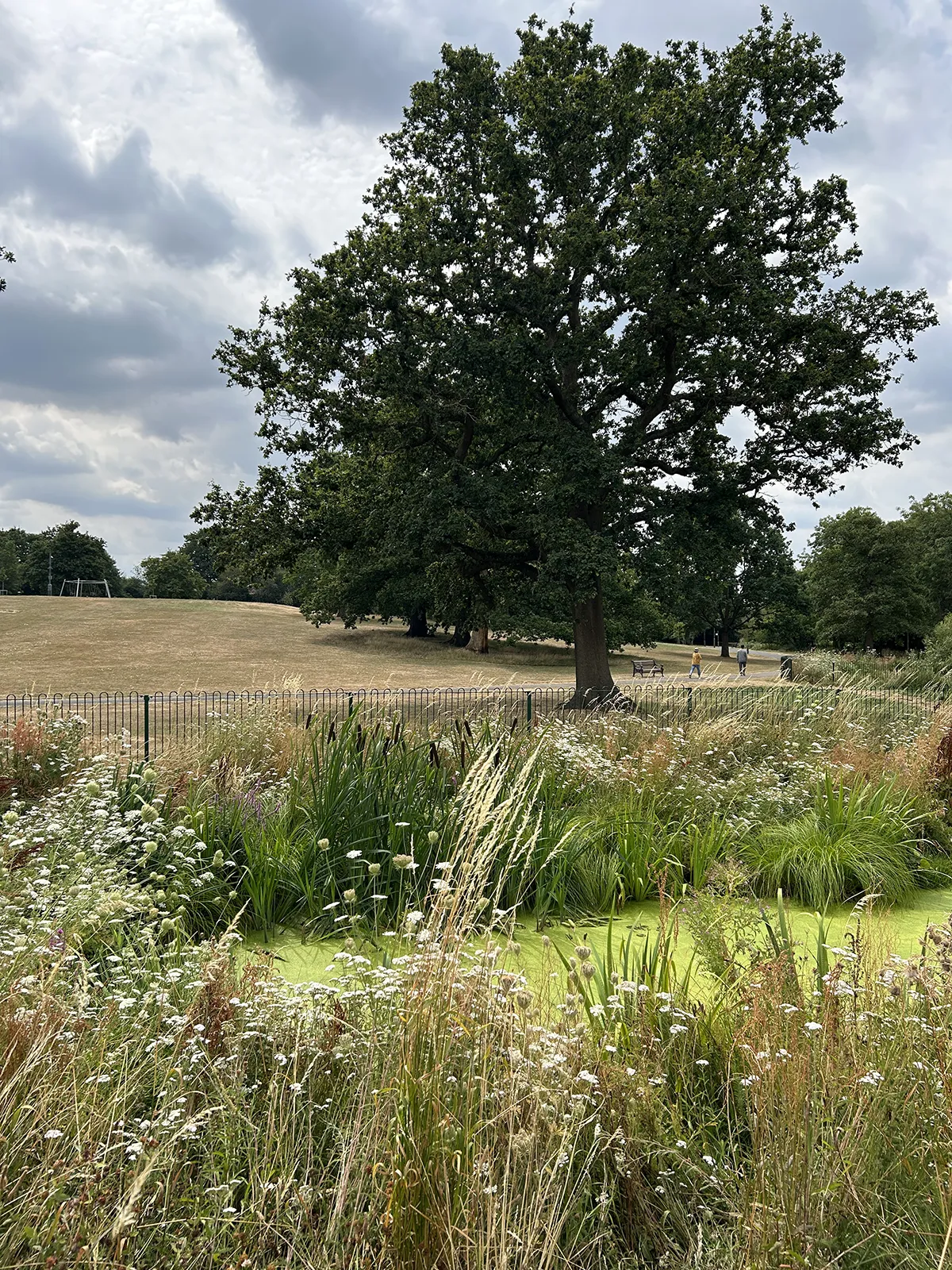
At Chandos Park in Harrow, LUC’s design integrates hydraulic engineering works into the wider park landscape, transforming functional infrastructure into a visual and ecological asset. To increase and manage flood storage capacity, the design introduced new meanders, channel widening, wetland cells and swales throughout the park. These interventions were incorporated within the park setting to deliver flood resilience while contributing to the character of the landscape.
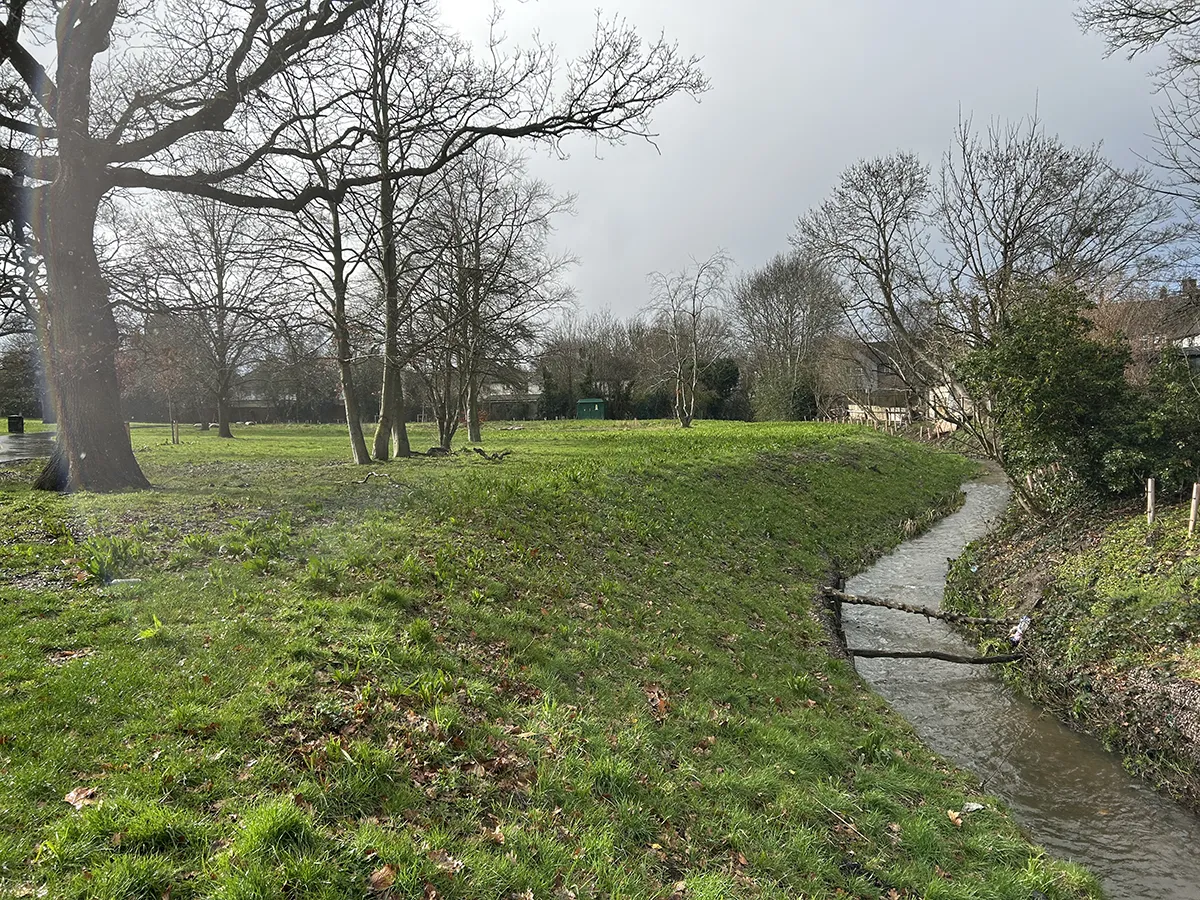
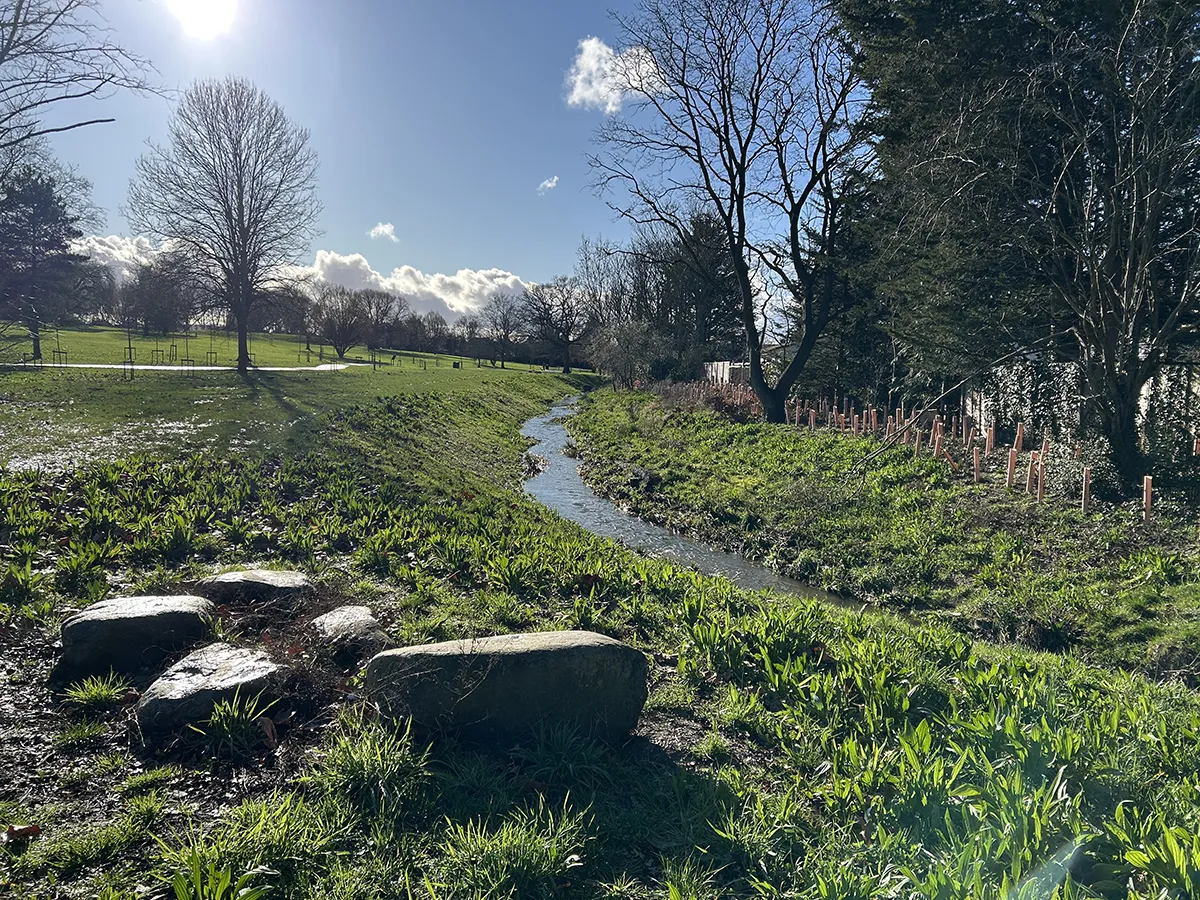
The design also sought to reconnect the river with the wider park landscape. Redundant fencing and invasive species were strategically removed, improving physical and visual connections along the watercourse. Diverse wetland and riparian plantings were introduced to foster a resilient local ecosystem and improve connectivity across the site. Extensive tree planting was also implemented to offset tree losses during the works and provide shade for park users.
Alongside the flood resilience works, Chandos Park received a range of public realm improvements. The project introduced a new play offer featuring a secure area for younger children and an expansive informal play landscape integrated into new landforms. Additional recreational facilities include new table tennis and picnic areas, together with path resurfacing and updated signage. These interventions support the park’s role as a community destination while complementing the wider landscape improvements.
At Watling Park in Barnet, the design interventions focus on mitigating downstream flood risk to residential areas while daylighting hidden water infrastructure. A key component of the work was the re-meandering of the northern stream section. This realignment restores more natural flow patterns and slows water velocity during peak flood events.
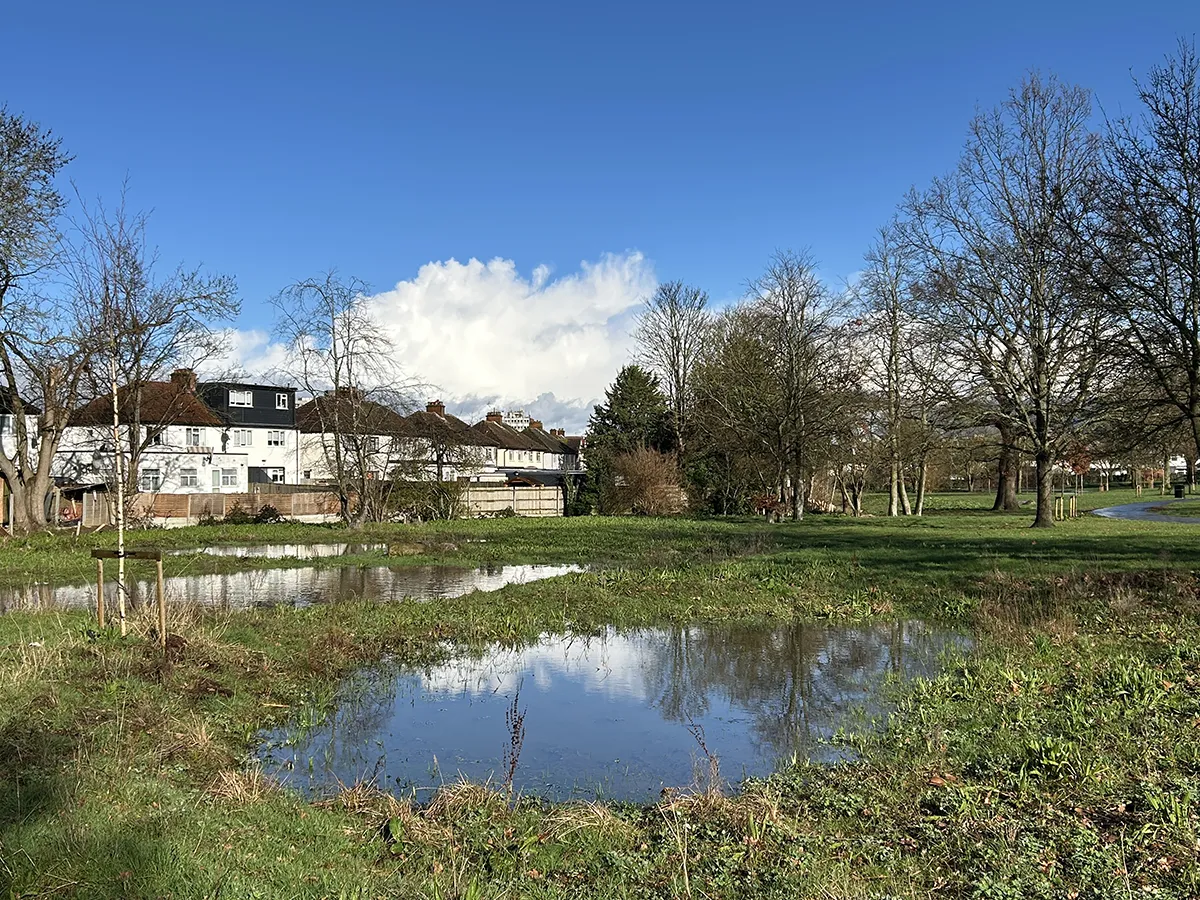
Another significant intervention involved daylighting a previously culverted surface-water route. The newly exposed route was incorporated into the park landscape and linked with the creation of new wetland cells. These wetland features provide attenuation and improved water quality while contributing to the wider flood management strategy.
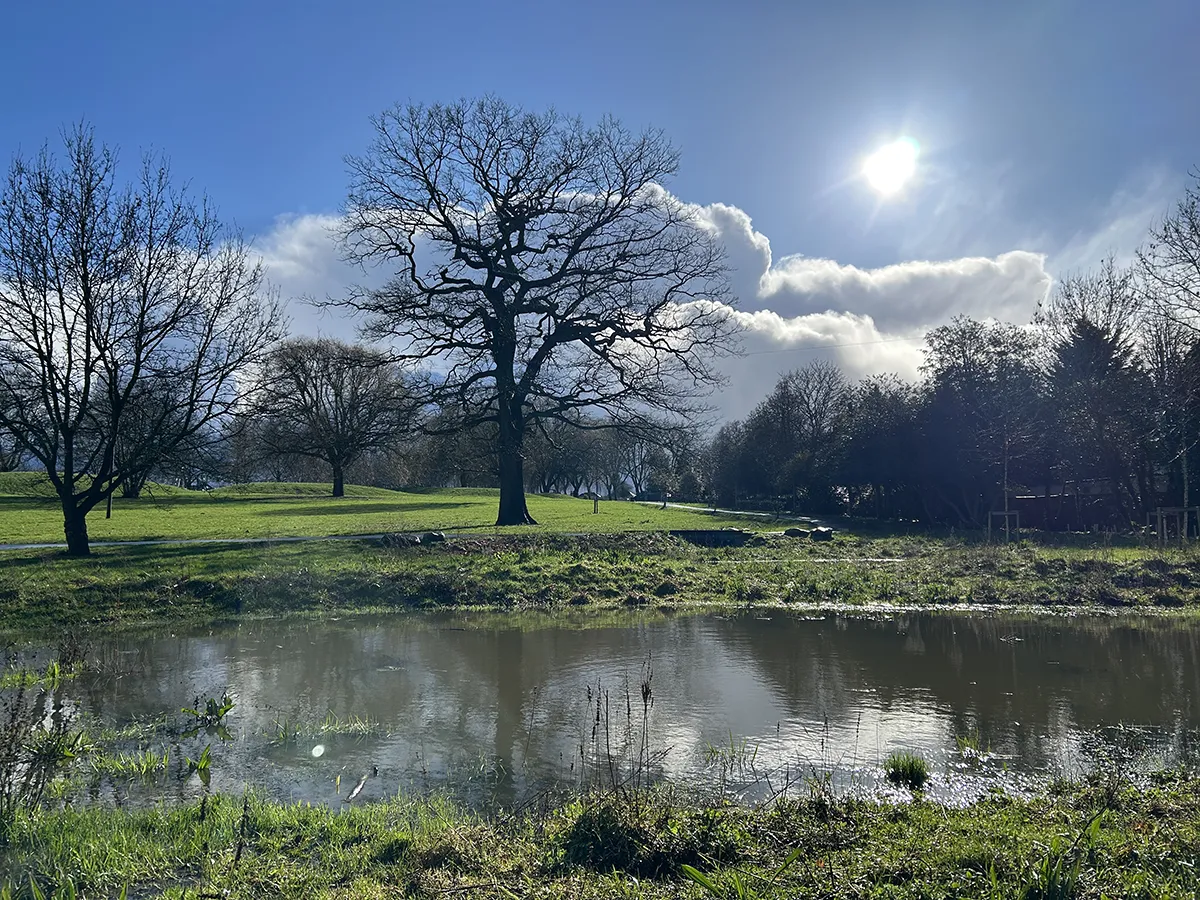
The project also included measures to improve safety and passive surveillance. Strategic thinning of riparian vegetation along Burnt Oak Brook improved sightlines for park users and increased light penetration, supporting aquatic biodiversity. As at Chandos Park, ecological enhancement works included the introduction of diverse wetland and riparian planting together with extensive tree planting.
Across both sites, LUC provided lead landscape architecture services, designing landscapes that harmonise engineering requirements with public use. The practice worked closely with hydraulic engineers to ensure compliance with flood risk requirements and prepared ecological specifications for wetland habitats, tree planting and native planting schemes. LUC also enhanced recreational assets, including play areas and social spaces, and provided contract administration and implementation oversight during construction and on-site delivery.
Technical Information
The Action for Silk Stream project uses nature-based solutions to reduce flood risk across the Silk Stream catchment through the implementation of Sustainable Drainage Systems (SuDS). The technical strategy manages catchment-wide hydraulic pressure by mimicking natural hydrological processes, delivering flood attenuation, water quality improvements, river restoration and ecological enhancement.
Flood attenuation is achieved through the strategic storage and management of surface water runoff. At Chandos Park, the river corridor was reconfigured through the creation of new meanders, channel widening, wetland cells and swales. These interventions increase flood storage capacity, slow water flows and contribute to the wider flood resilience strategy for the catchment.
Water quality improvements are delivered through the integration of wetland treatment features. Wetland cells filter urban runoff and reduce pollutants before water continues downstream, helping improve ecological conditions while supporting broader environmental objectives.
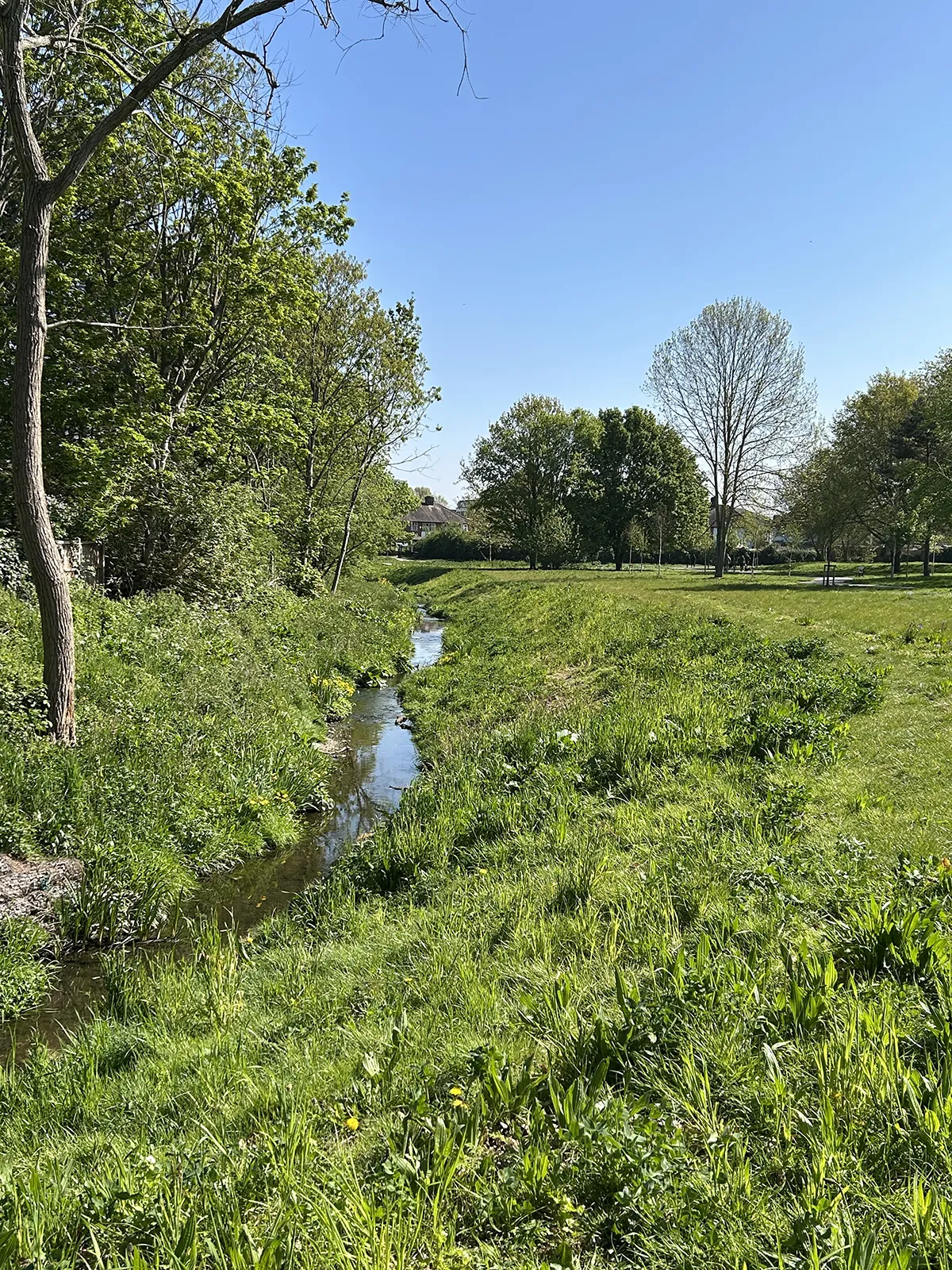
River restoration is a key component of the scheme. Existing concrete channel linings were removed to create a more naturalised and dynamic watercourse, restoring natural river functions and supporting the catchment’s long-term restoration goals.
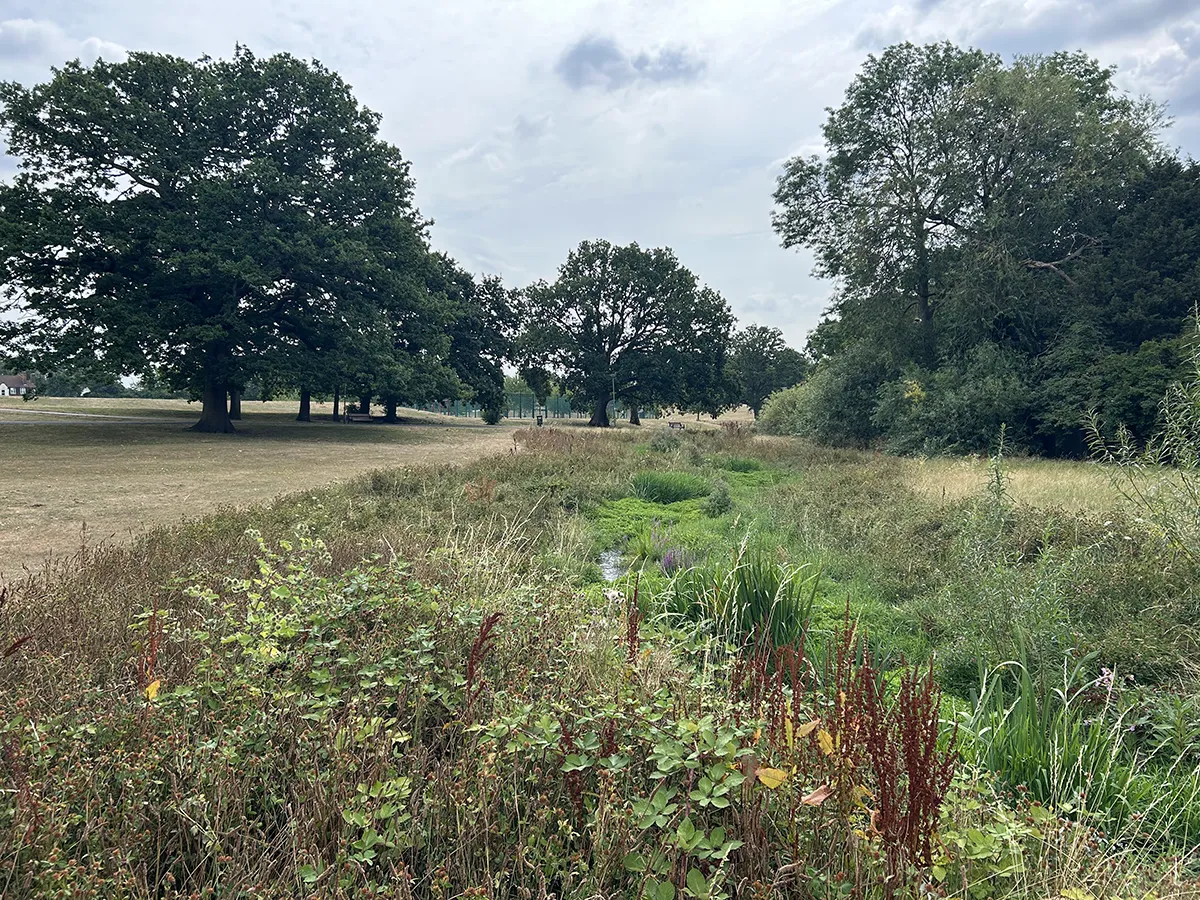
At Watling Park, interventions focused on reducing downstream flood risk while revealing previously hidden water infrastructure. The northern stream section was re-meandered to restore natural flow patterns and reduce flow velocities during peak rainfall events. A previously culverted watercourse was daylighted and integrated into the park landscape, with associated wetland cells providing additional attenuation and water treatment benefits.
Ecological enhancement was embedded throughout both sites. At Chandos Park, invasive species and redundant fencing were removed to reconnect the river with the surrounding landscape. Wetland and riparian habitats were expanded through diverse planting, while extensive tree planting compensated for construction-related losses. At Watling Park, selective thinning of riparian vegetation along Burnt Oak Brook improved light penetration and visibility, supporting aquatic biodiversity. Additional wetland, riparian and tree planting further strengthened habitat networks.
LUC’s role included lead landscape architecture, multidisciplinary design coordination with hydraulic engineers, ecological specification, community infrastructure enhancement, and contract administration during construction. The project demonstrates the successful integration of flood risk management, river restoration, biodiversity enhancement and public realm improvement within a landscape-led framework.
Action for Silk Stream
Location: London Boroughs of Barnet and Harrow – London, UK.
Landscape Architect: LUC
Engineers: Metis
Quality Surveyors: Huntley Cartwright
Contractor: Ground Control, Landscape architects LUC
Engineers: Metis Consultants
Civil Engineers: Stirling Maynard
Contractors: Ground Control / PVR
Monitoring & Engagement: Lumby Consultancy