
Winner of an Honourable Mention in the 2026 WLA Awards – Built | Institutional Landscape Design
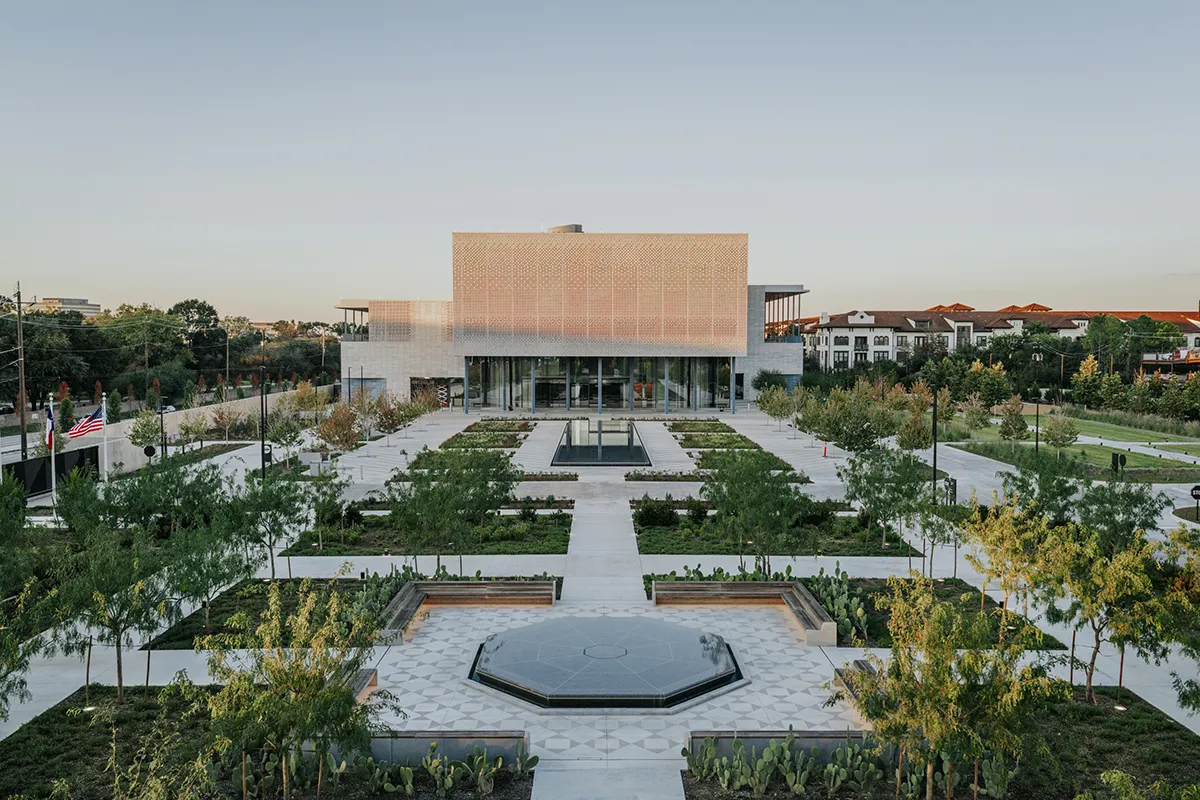
Water, mineral, and horticulture are unified by symmetry and axial relationships to create a landscape rooted in Islamic tradition and grounded in regional ecozones. The Gardens establish a resilient landmark that invites connection across cultures.
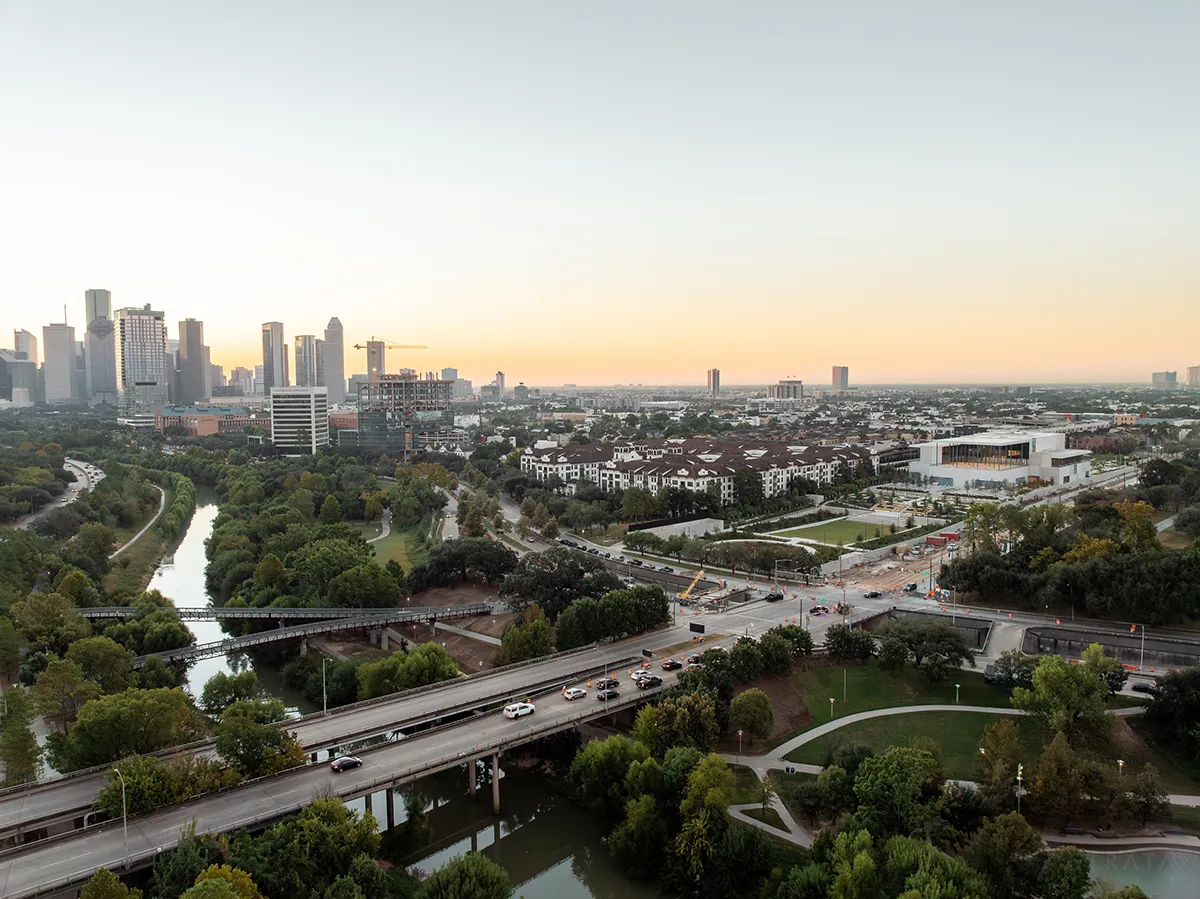
The Ismaili Center, Houston is the first of its kind in the U.S. It joins a network of six other Centers around the globe as a cultural and spiritual hub for the Ismaili community and as a welcoming site for reflection, education, and connection. Located in the heart of Houston, the design transforms an urban site into a contemplative space that emphasizes the Ismaili values of pluralism, bridging culture, ecology, and community.
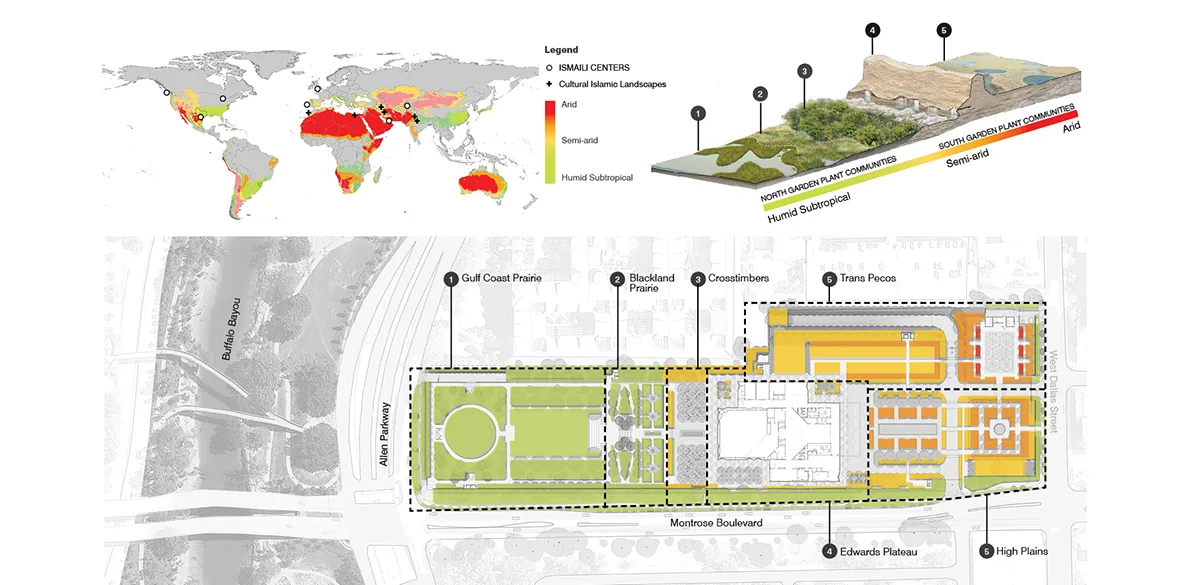
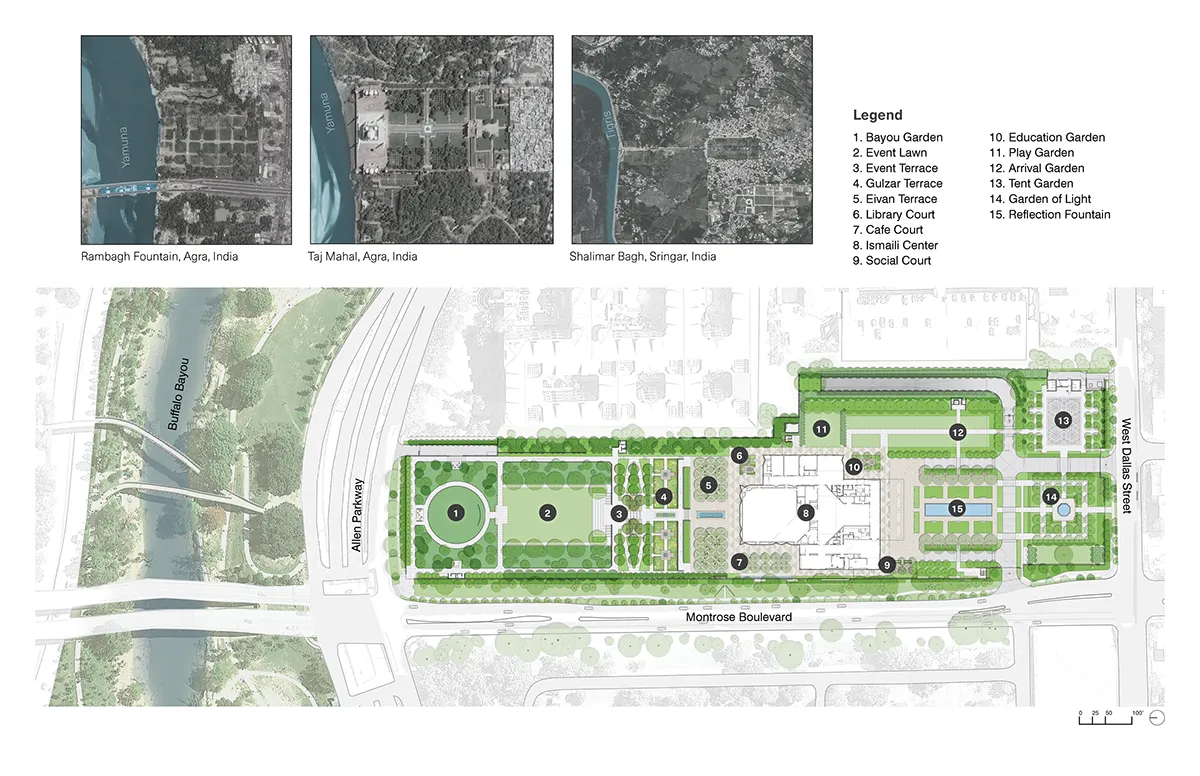
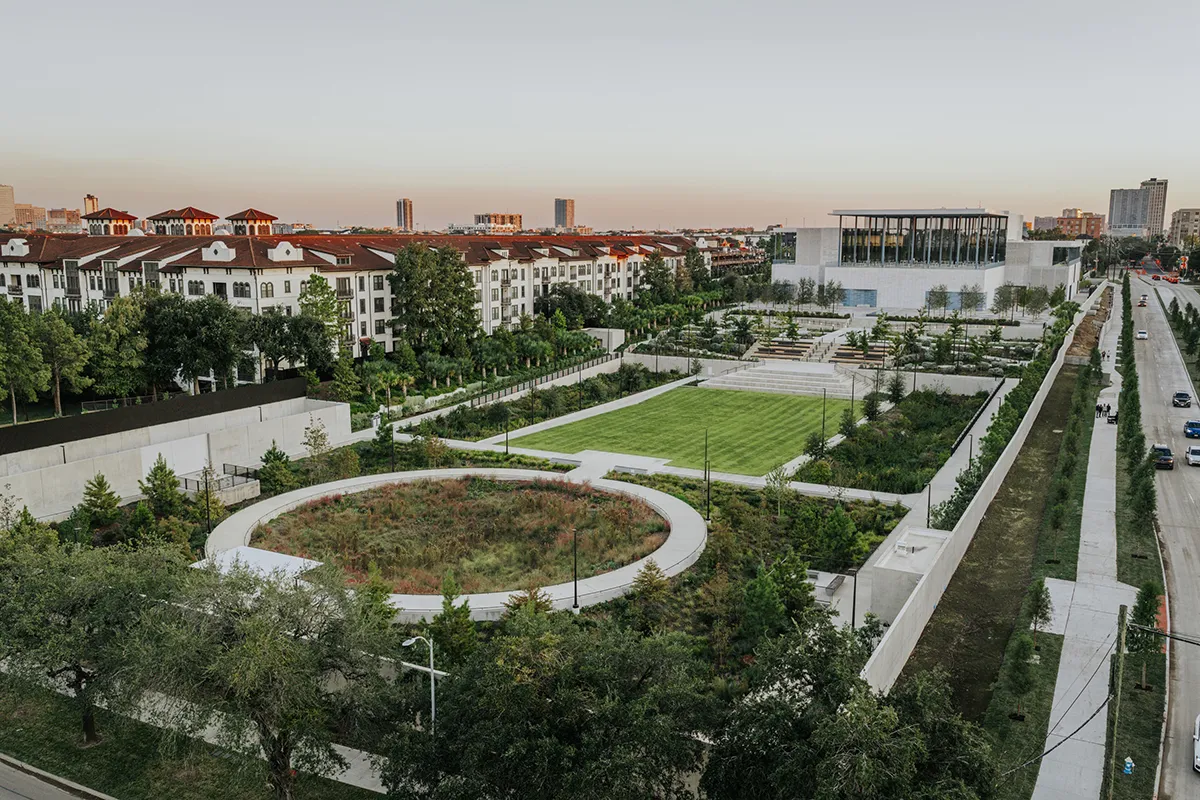
The 11-acre landscape unfolds over 30 feet of grade change as a sequence of 14 distinct gardens, courts and terraces from the higher elevation, where the Center is sited, to the lower level proximate to Buffalo Bayou. Harmonizing this significant institution with the site’s unique conditions, the design interprets Islamic garden traditions through the lens of regional ecozones. Across the design, gardens showcase six Texas eco-regions from the Gulf Prairie to the High Plains, reflecting each garden’s relationship to elevation, solar aspect, and water. These native plant communities will grow and thrive in the coming years while educating visitors on endemic horticulture and its ability to withstand Houston’s climate extremes. In all, more than 800 trees and thousands of perennials establish a biodiverse, resilient framework that reflects regional identity while extending the cultural memory of the global Ismaili community.
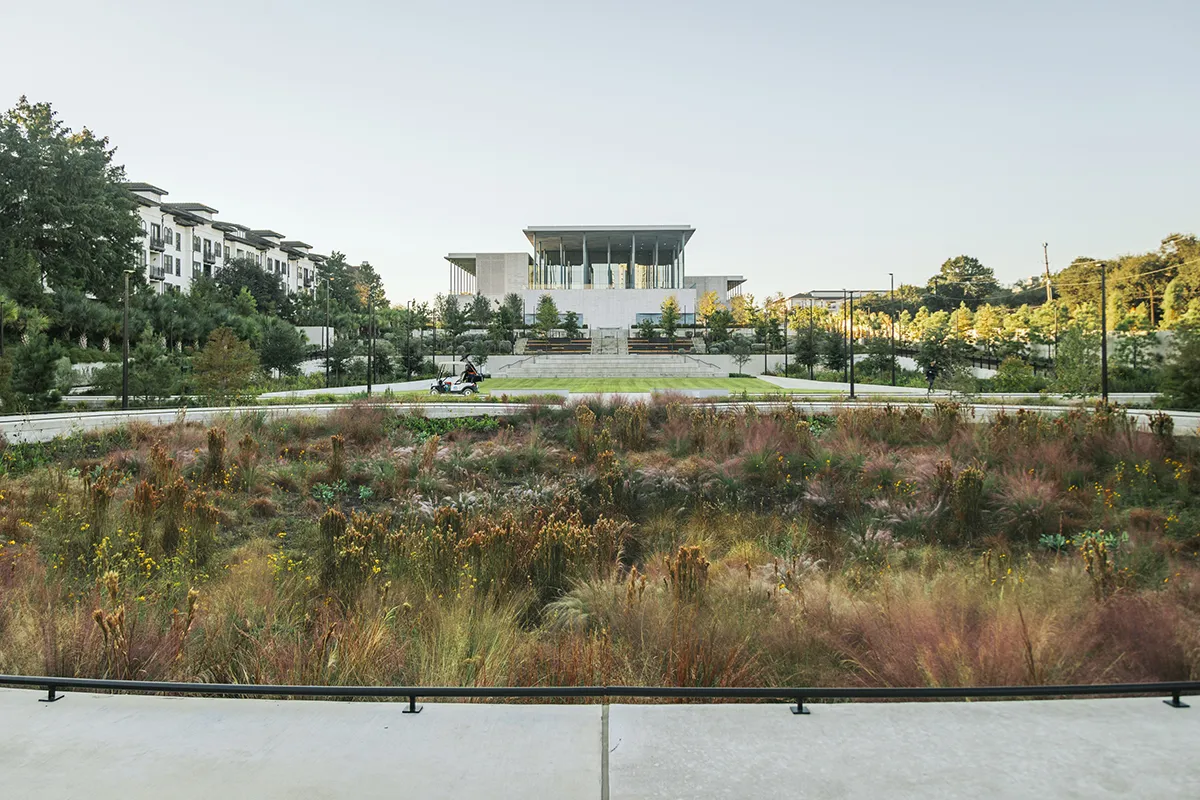
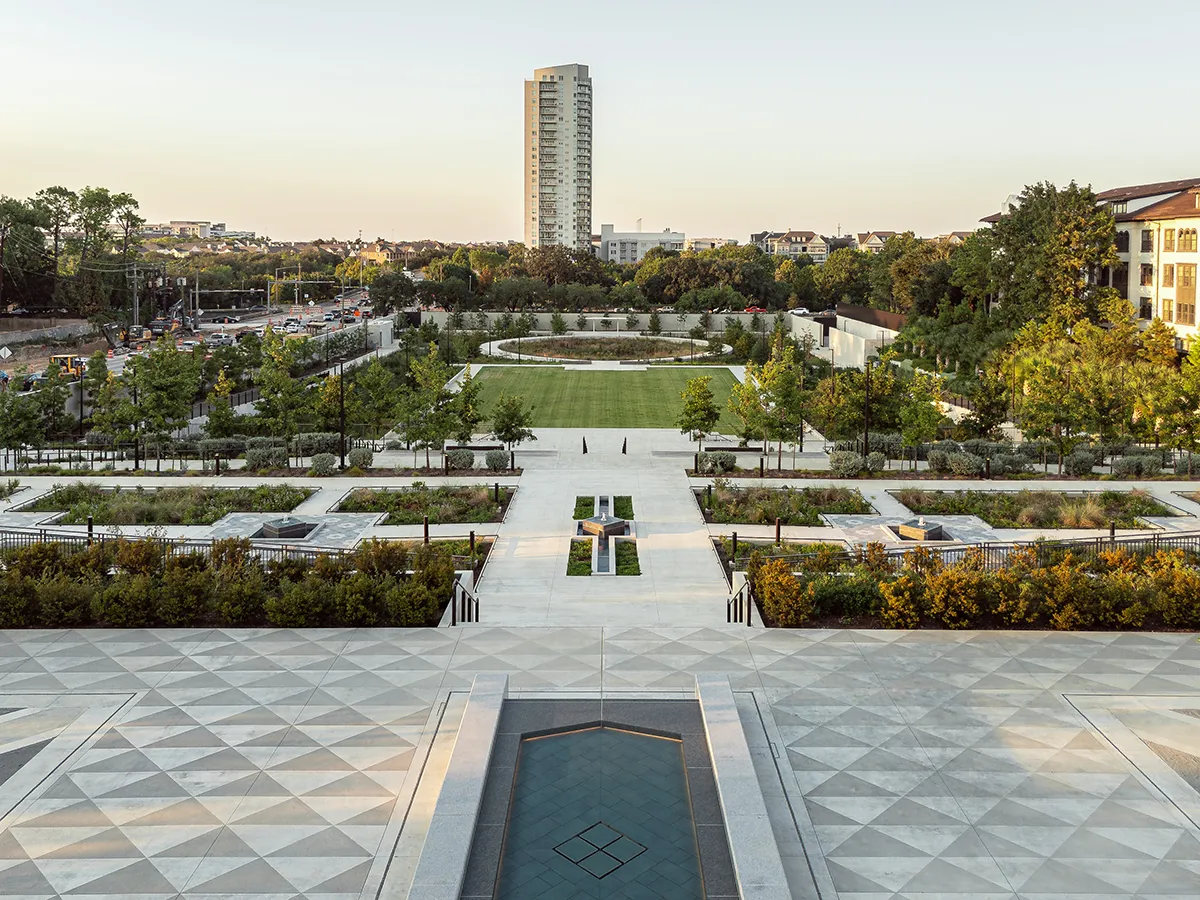
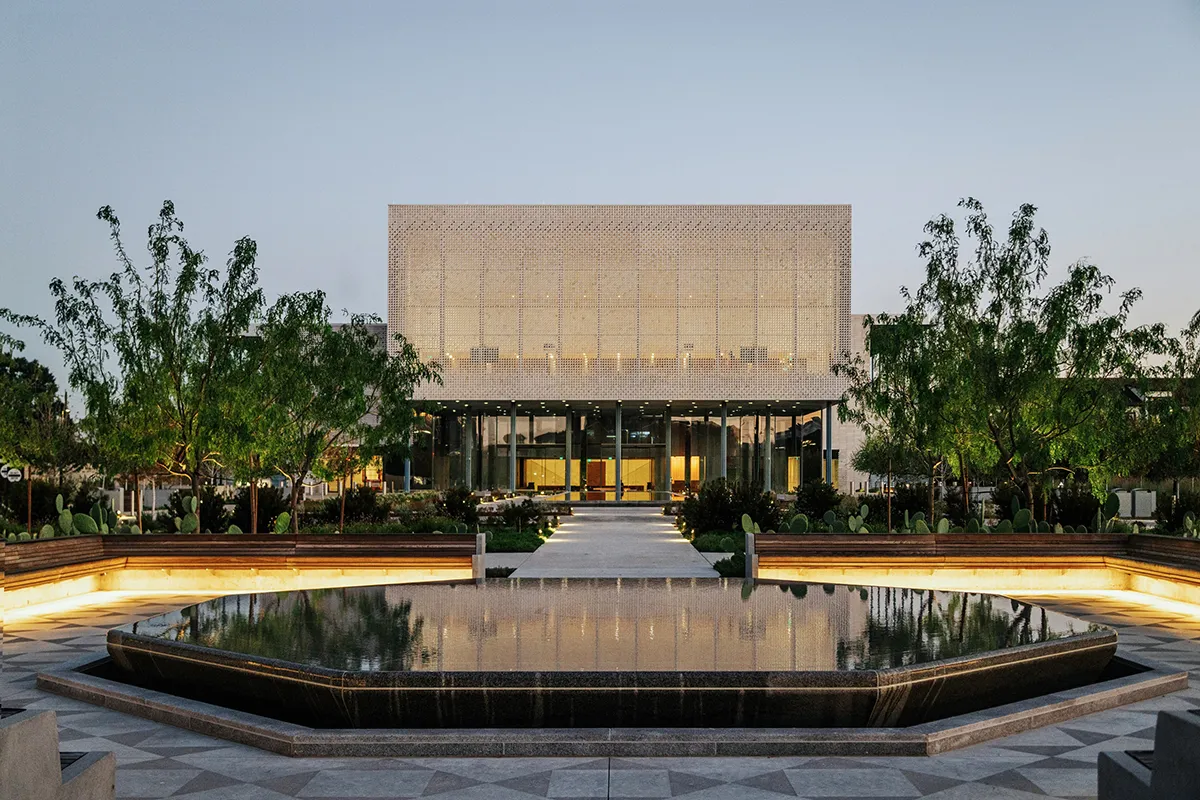
Given the site’s location within the bayou floodplain, environmental resilience was a defining criterion. The design raises the building above the 500-year flood level and shapes the lower half of the site to accommodate inundation. The Bayou Garden features a circular basin with a diameter that aligns with the Center’s central eivan (veranda) and prayer hall. The circular walk, ringed by a series of bald cypress trees, is flanked by sunken gardens that double as floodwater storage. These systems integrate within the garden’s geometry, allowing ecological performance while maintaining aesthetic and spatial integrity.
The symmetry of the overall design recalls the order of historic Islamic Gardens and extends the Center’s programming. A 5-foot geometric grid aligns terraces, courtyards, and fountains with architectural axes and alcoves that extend in all four directions. This allows for a seamless indoor-outdoor experience, where covered eivans open directly onto shaded gardens, reflecting pools, and communal spaces.
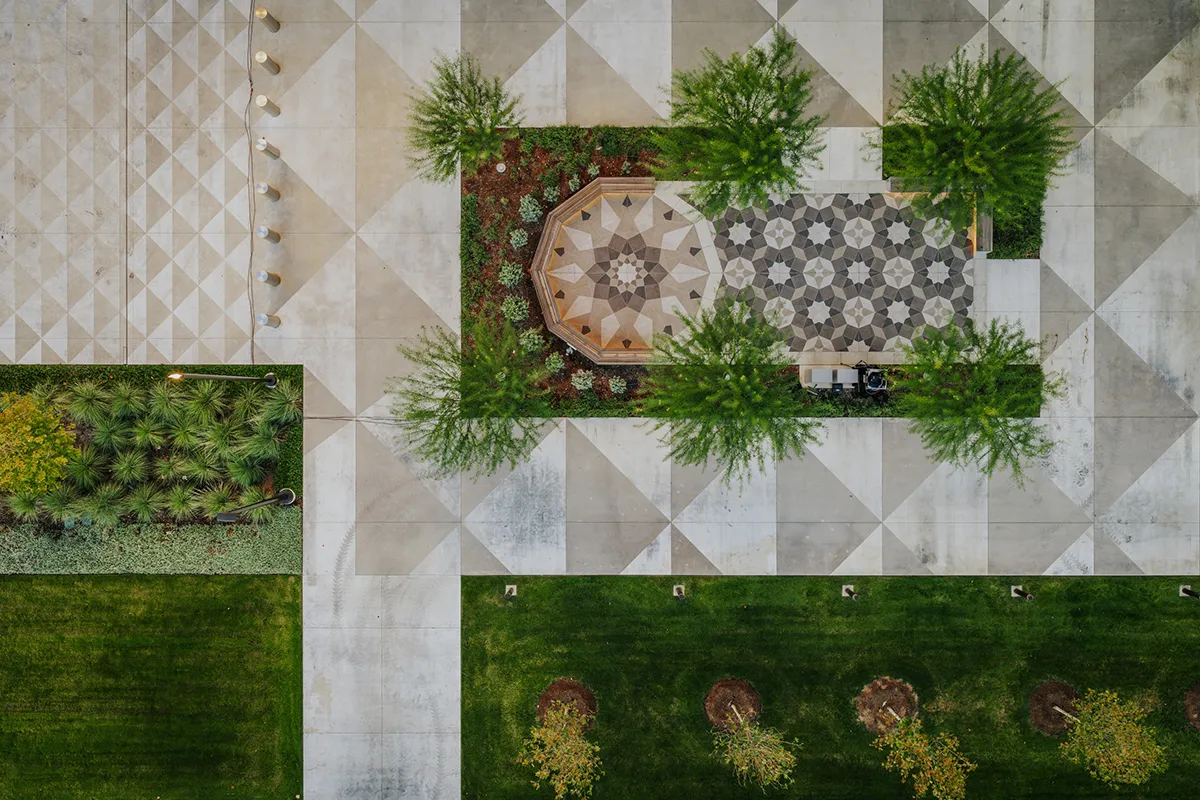
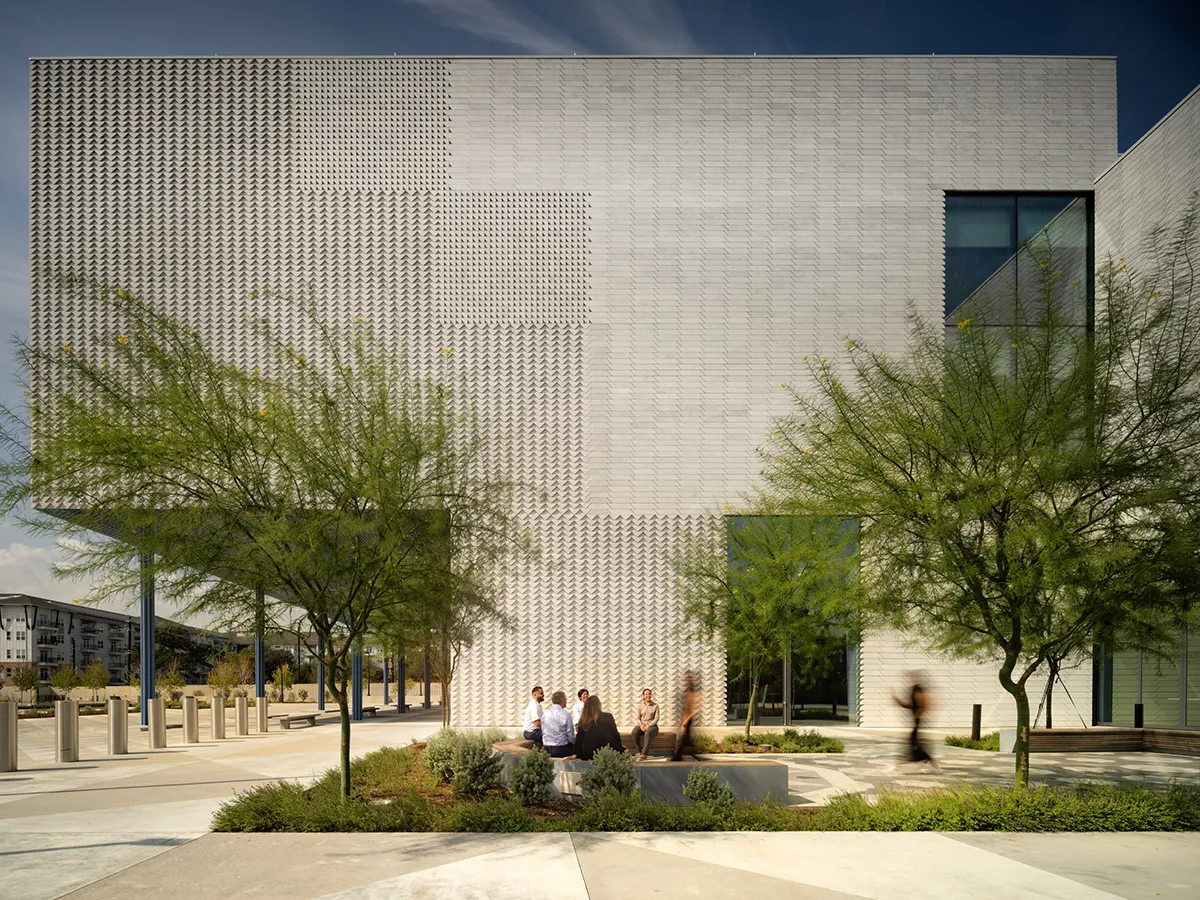
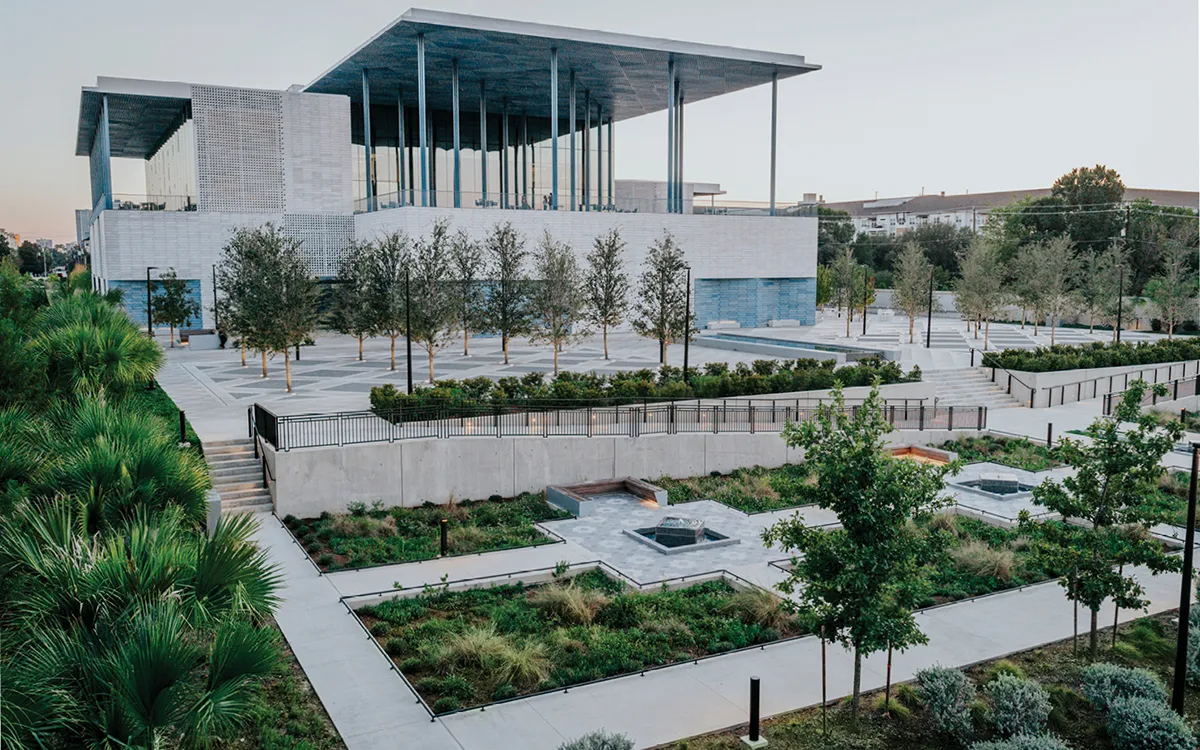
Material selection prioritizes durability, craft, and climate performance. Paving patterns, mosaics, and water features are inspired by Islamic precedents while using local construction methods. Planting emphasizes structure and texture, with layered ground covers, perennials, and grasses providing year-round interest and defining each garden’s identity. The use of native plants significantly reduces potable water use, while planting sequesters carbon and mitigates heat island effects.
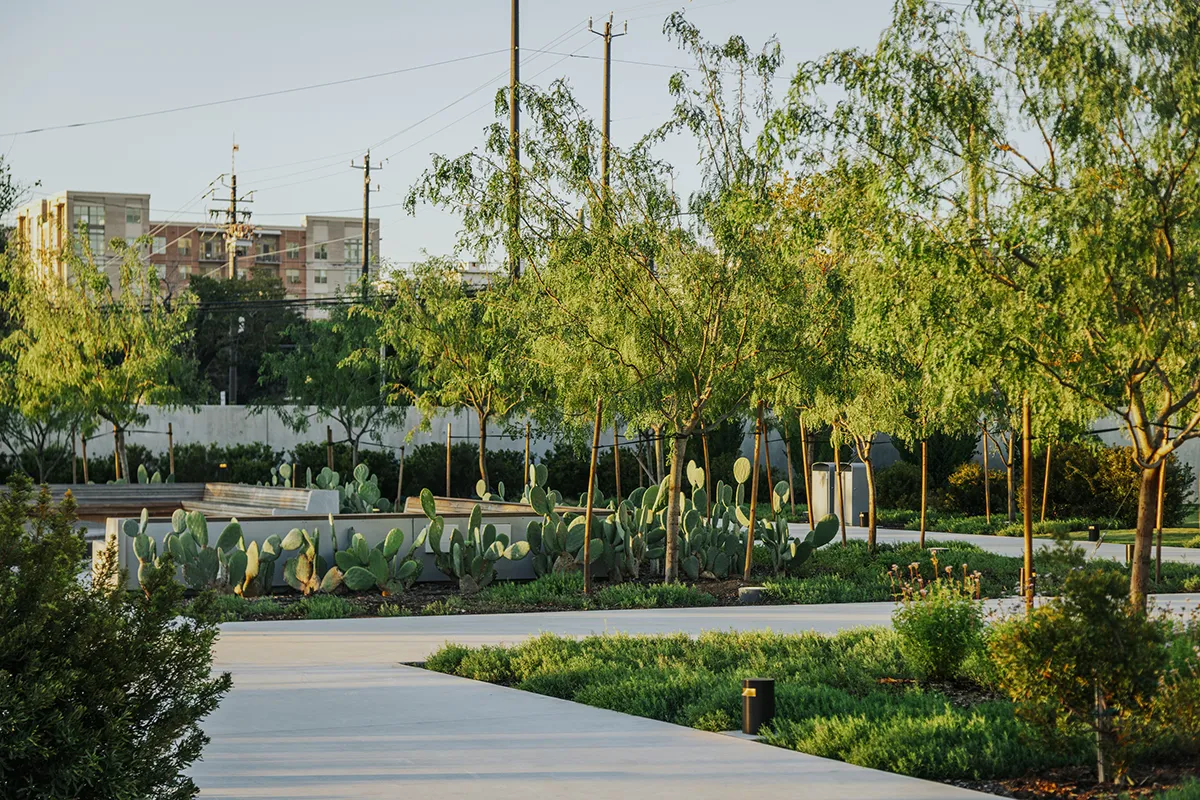
The design integrates ecological and cultural values down to the alignment of a single paving joint. The result is a landscape that is as resilient as it is symbolic: a landmark that invites belonging and communal strength.
Ismaili Center
Location: Houston, Texas, USA
Landscape Architect: Nelson Byrd Woltz Landscape Architects
Design Architect: Farshid Moussavi Architects:
Architect of Record, Structural, Lighting: DLR
Contractor: McCarthy Building Companies
Civil Engineer: Duplantis Design Group
Horticulture: Adam Black
Fountain Design: Hydro Dramatics
Irrigation: Texas Environmental Irrigation Design
Client: Ismaili Community
Text: Nelson Byrd Woltz Landscape Architects
Photography: Nic Lehoux
Be the first to comment