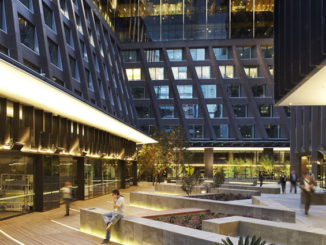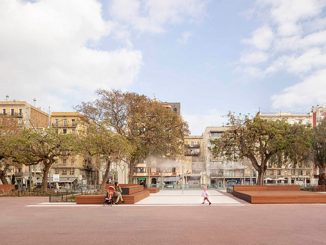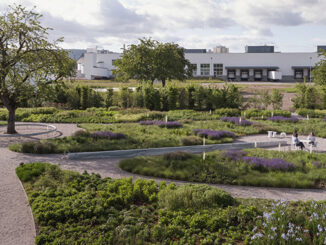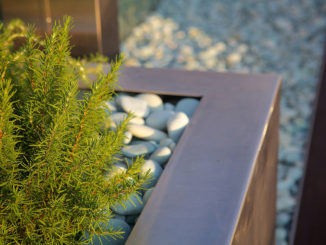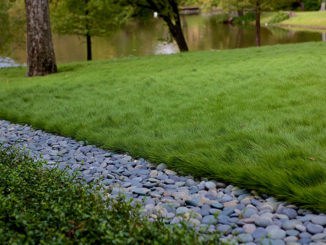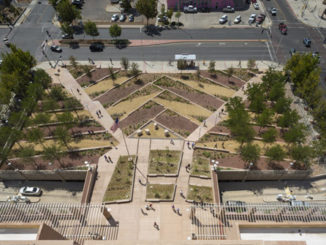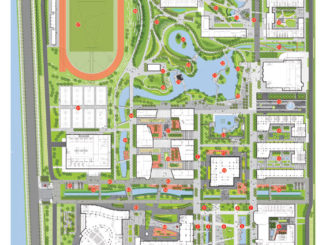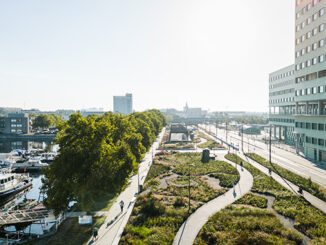

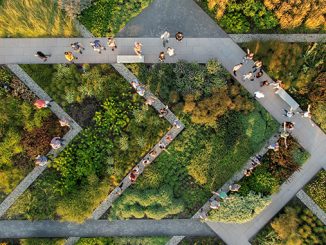
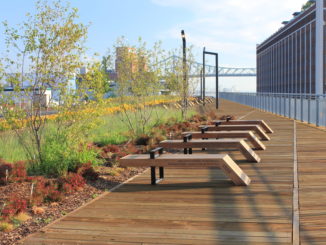
The Canadian Museum of Civilization, designed by Canadian architect Douglas Cardinal and inaugurated in 1989, is comprised of two pavilions, their architecture a startling embodiment of the country’s distinguishing geographical features. The public display wing replicates the dramatic effect of the glaciers; the contours of the curatorial wing symbolize the majestic Canadian Shield; and the open Plaza simulates the vast Great Plains. The layout and sheer size of the Plaza were planned in such a way as to visually incorporate the Museum buildings and the Parliament Buildings perched across the Ottawa River. However, the Plaza’s lack of appeal had left it empty of visitors for much of the year. To remedy the situation, we extended the Museum’s original conceptual metaphor, bringing to life what had long remained latent: the swaying grasses of the Prairies.
TV Gardener Charlie Dimmock helping local children with planting
The first of 4,000 new semi-mature trees are taking root in the London’s Olympic Park with around 100 ash, cherry and hazel trees, grown in Hampshire, already planted. The first of 300,000 wetland plants, grown in Norfolk and Wales for the UK’s largest ever urban river and wetland planting, were laid on the river banks today by Minister for Sport and the Olympics Hugh Robertson, TV Gardener Charlie Dimmock, Olympic Gold medal winner Jonathan Edwards, Olympic Delivery Authority (ODA) Chairman John Armitt and children from the Olympic Park construction crew.
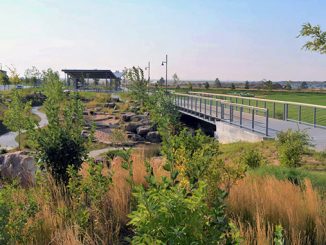
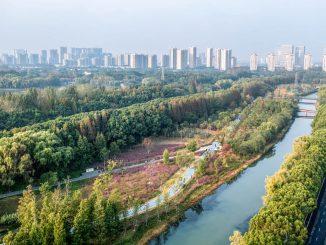
The new reed beds are being created in a large wetland bowl in the north of the Olympic Park, formerly a 100 year old landfill site, where visitors during the Games will be able to relax and watch the action in 2012 on live screens. In legacy the riverside area will be a tranquil space for people and wildlife which will also help protect 5,000 properties in the area from flooding.
Over 30 species of native reeds, rushes, grasses, sedges, wet wildflowers and irises have been grown initially by Salix in its nursery on the Gower peninsular in Wales with around a third grown from cuttings and seeds collected in and around the Olympic Park before construction started in 2008.
You can watch the park turn from brown to green with two new webcams