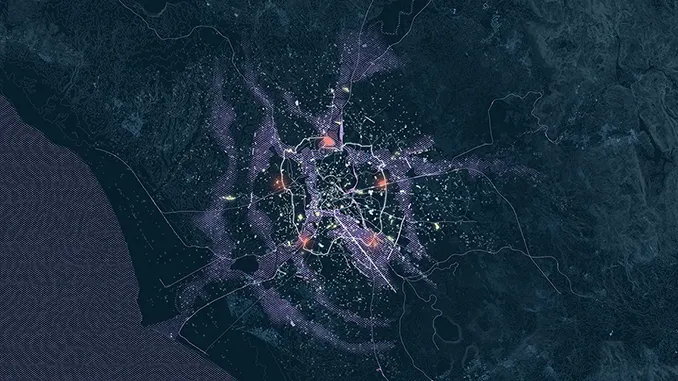

On the southern face of the Freshkills landfill’s North mound, four large ponds of salt water capture and store heat radiating from both the sun and the landfill. Each pond is coupled with a tall solar chimney that extracts the heat and converts it to electricity. Multiple smaller salt ponds utilize the same heat to create an artificial hot springs for New York: The Solar Baths at Freshkills Park. The entire system is driven by the concept of the heat-cascade: the multi-stage reuse of residual thermal energy by temperature level. It aims to make that concept tangible to New Yorkers by inviting them to bathe in the heat of their own trash.


Design Adds Value to the Commonswas a design symposium hosted by The University of Kentucky College of Design in conjunction with Lexington’s Downtown Development Authority’s Town Branch Commons Design Competition. Design Adds Value to the Commons was five landscape architects discussing the importance of good design for downtown development and including presentations by
Mark Johnson of Civitas, Shane Coen of Coen+Partners, Petra Blaisse of Inside Outside, Julien de Smedt & Diana Balmori of JDS Architects/Balmori Associates and Kate Orff of Scape
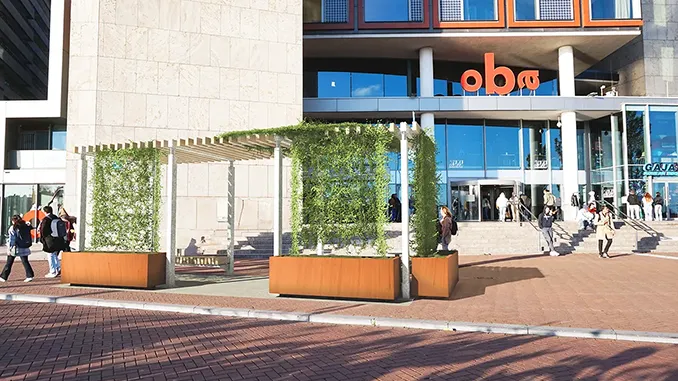
Rundle Mall has been Adelaide’s premier shopping district since its pedestrianisation in 1976. Today it comprises over 700 retail stores, 350 commercial businesses, three department stores and 15 arcades connected by 10,000 sqm of open public space. Continue reading Rundle Mall Redevelopment | Adelaide Australia | HASSELL
Cummins Inc | Columbus Indiana | Design by Dan Kiley | Image Credit | berriehol
Landscape links from around the world in the week that was Dan Kiley: A great yet little known Modernist | Charles A. Birnbaum | Huffington Post
“Kiley was also among the most important, influential and personally idiosyncratic landscape architects of the 20th century and designer of more than 1,100 projects – yet today he is not well known.”
Urban sprawl affects inner-ring suburbs, too | Don Jacobson | Star Tribune
“….residents of closer-in areas also say they “feel” those characteristics of sprawl in their neighborhoods despite their higher population densities, and a University of Minnesota researcher says a study she performed indicates their perception in many cases is indeed more than just a feeling.”