
Ecosystem-based Adaptation (EbA) has grown in importance since the late 2000’s when it was defined at the Convention on Biological Diversity. Over the past fifteen years, we have seen EbA grow in prominence as UNEP has invested in over 45 projects across numerous countries [1]. Many of these projects are utilising nature-based solutions and ecosystem services from reforestation of deserts, mangrove rehabilitation, adaptive forestry and agriculture, and land conservation. These projects occur not only on coastlines and in forests but also in urban areas, watersheds, and across multiple ecosystems.
Ecosystem-based Adaptation (EbA) is the use of biodiversity and ecosystem services to help people adapt to the adverse effects of climate change, including the sustainable management, conservation and restoration of ecosystems, as part of an overall adaptation strategy that takes into account the multiple social, economic and cultural co-benefits for local communities. [2]
Ecosystem-based Adaptation (EbA) addresses not only current climate impacts but also future ones. Climate change creates uncertainty and extends beyond environmental issues to socio-economic challenges that affect millions of people. Ecosystem-based Adaptation integrates nature-based solutions (NbS) into broader projects to showcase the benefits and co-benefits of adapting to climate change and mitigating its impacts.

Ecosystem-based Adaptation (EbA) projects need to be altered to suit local conditions and geographic contexts to improve the chances of success. Whether on a mountaintop in a low-income village or in a dense urban environment, there is a need for well-designed processes and plans to implement Ecosystem-based Adaptation (EbA) projects.
Examples of Ecosystem-based Adaptation (EbA) [3] include:
- Riparian reforestation along riverbanks to minimise flooding and sedimentation from extreme rainfall events.
- Reforestation with native and climate-resilient species to stabilise slopes and prevent landslides and mudflows.
- Creation of urban green spaces to increase canopy cover, reduce the heat island effect and increase water availability. Also design green spaces to mitigate flooding, reduce siltation and reduce water pollution.
- Establishment of green belts to increase water availability, improve soil, provide wind breaks and create shade. These green belts can also be used to improve food security and income.
- Wetland rehabilitation to reduce flood damage, enable groundwater recharge, improve water quality and improve food security and income.
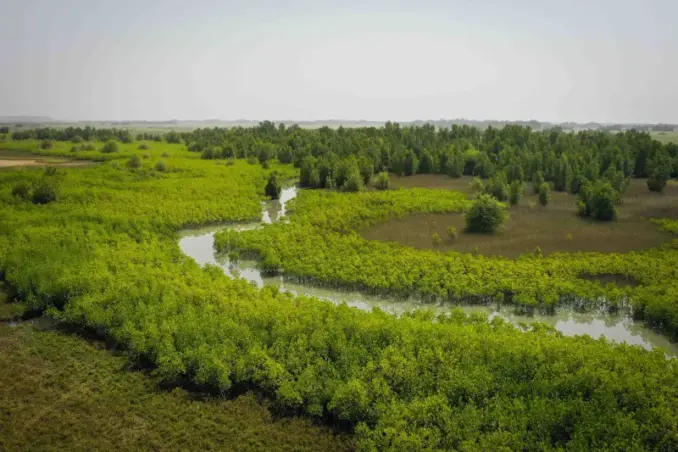
- Rehabilitate or plant mangroves to reduce wave energy, erosion and the impacts to storm events, thus limiting saline intrusion and inland flooding.
Project Examples: https://storymaps.arcgis.com/collections/a3bd1077481249c8bacbe4126e623ef8
When developing an Ecosystem-based Adaptation strategy, it needs to draw upon a full range of adaptation solutions. These can include ecosystem (nature) based, built or hybrid solutions. There is a greater need to shift from built solutions to a more ecosystem-based or hybrid approach to leverage the strengths of each while mitigating their limitations.

When implementing Ecosystem-based Adaptation projects, there is a need to go beyond strategies and plans and build local capacity, raise awareness, and share knowledge of successes and failures. Social measures can also support long-term behavioural change across generations, enhancing the effectiveness of Ecosystem-based Adaptation projects.
The success of Ecosystem-based Adaptation projects depends on choosing appropriate measures and objectives to effectively target the intended changes and outcomes. There is also a need to effectively assess adaptation approaches and responses to ensure that future Ecosystem-based Adaptation projects incorporate evidence-based design into their development processes and plans.
Overall, when looking to implement Ecosystem-based Adaptation projects, there is a need to pull all the pieces together from the (Indigenous, Traditional and Local) knowledge and also across various networks of the UN, IUCN, Global EbA fund, etc., to ensure that the time and resources expended have the greatest impact possible.
Article by Damian Holmes, Founder & Editor of World Landscape Architecture
References
[1] UN – Ecosystem-based Adaptation – https://www.unep.org/topics/climate-action/adaptation/ecosystem-based-adaptation
[2] INTRODUCTION TO ECOSYSTEM-BASED ADAPTATION: A nature-based response to climate change – © Copyright 2015 United Nations Development Programme
[3] EbA in different ecosystems: placing measures in context. Prepared by UNEP-WCMC and UNEP, 2019.
COVER IMAGE Credit: UNEP/Lisa Murray
Bibliography:
Ecosystem-based Adaptation Briefing Note Series, 2020 ©UNEP https://www.unep.org/resources/factsheet/ecosystem-based-adaptation-briefing-note-series