
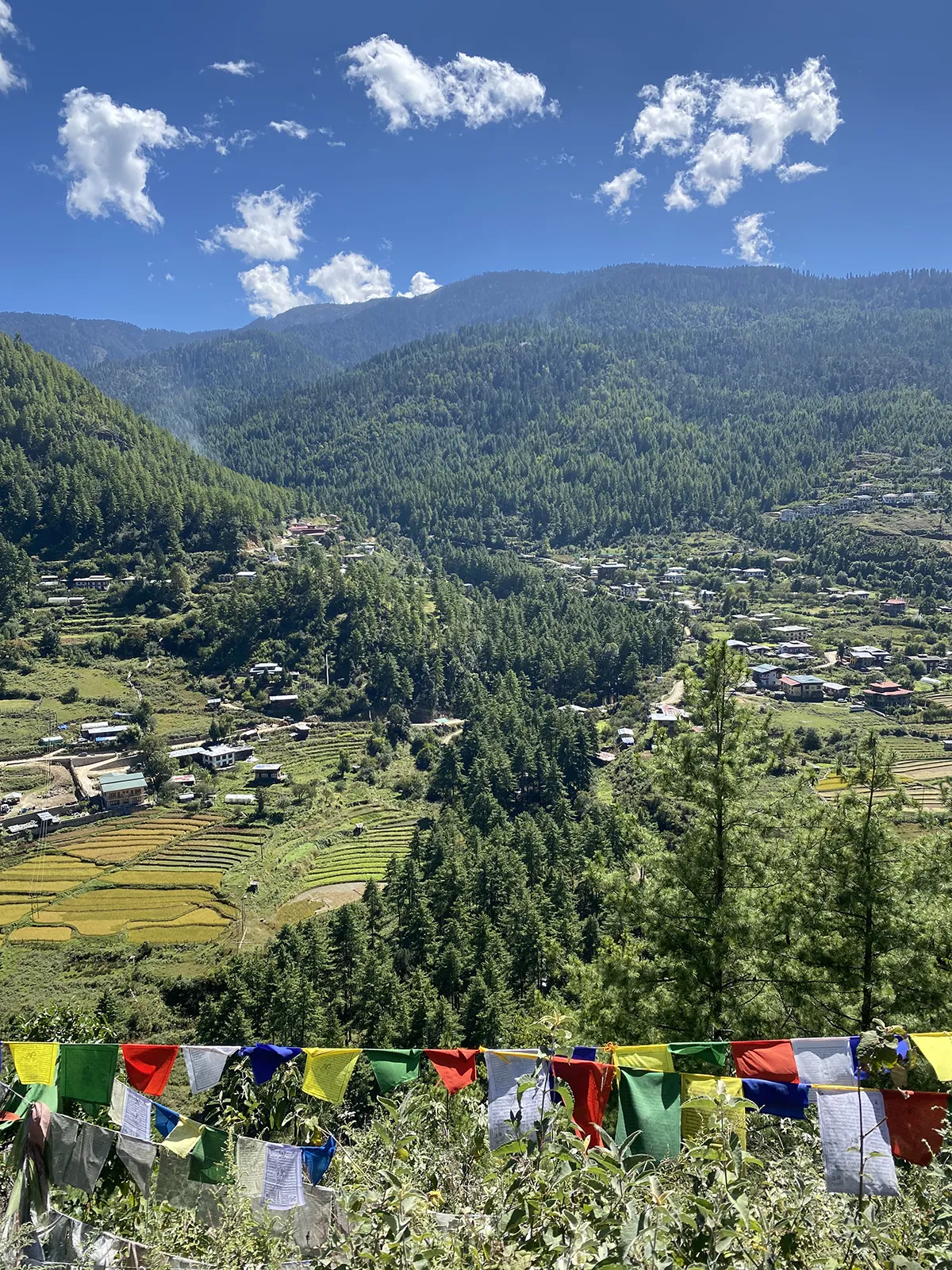
The Kingdom of Bhutan is nestled in the Himalayas between India and China, with a population of about 750,000 people. Known for its unique philosophy of Gross National Happiness, the country’s vision for the future is to preserve its culture and environment while enhancing social and economic development. Covering 70% of the land, forests serve as a crucial resource for the Bhutanese. The country’s legislation aims to protect the environment and biodiversity, ensuring a constitutional minimum of 60% forest cover remains. Over 50% of Bhutan consists of protected areas and biological corridors. Thimphu, the capital, offers dramatic mountain landscapes and sacred peaks and supports numerous endangered species.
Despite Thimphu’s unique environmental and cultural assets, unregulated development has significantly degraded its urban environment. The city’s open space per capita falls below the World Health Organisation’s recommended standard, with developable land constrained by steep terrain and dense forests. As a result, available areas have been prioritised for hard infrastructure, often at the expense of green space. The Wang Chhu, a key ecological and movement corridor, is fragmented by road infrastructure and inaccessible areas, with limited, disconnected pedestrian routes. Broader issues include poor east-west connectivity, car dominance, habitat loss, underutilised public spaces, and inadequate integration between landscape and infrastructure. Ongoing neglect and lack of maintenance further threaten the long-term success of urban improvements.
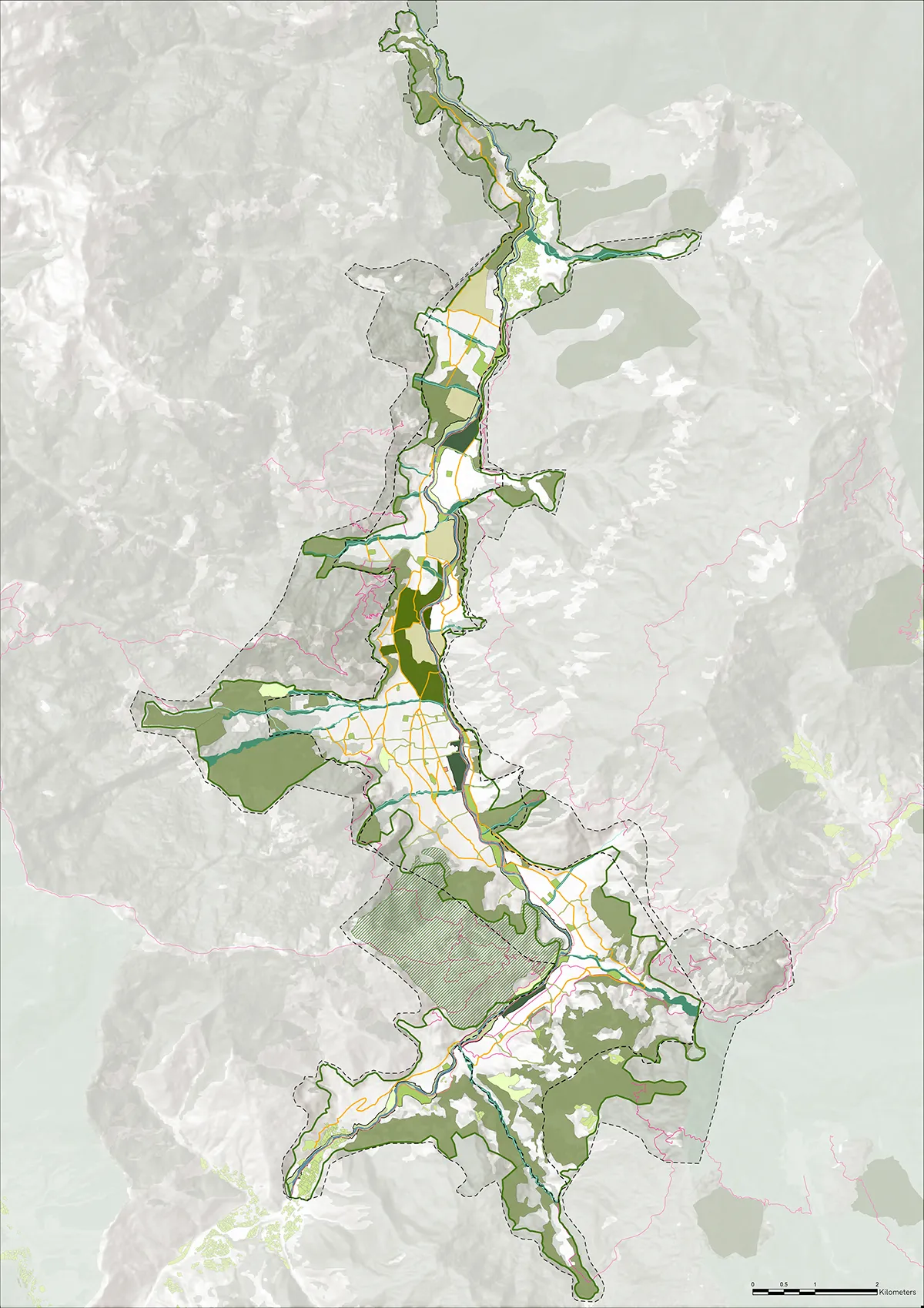
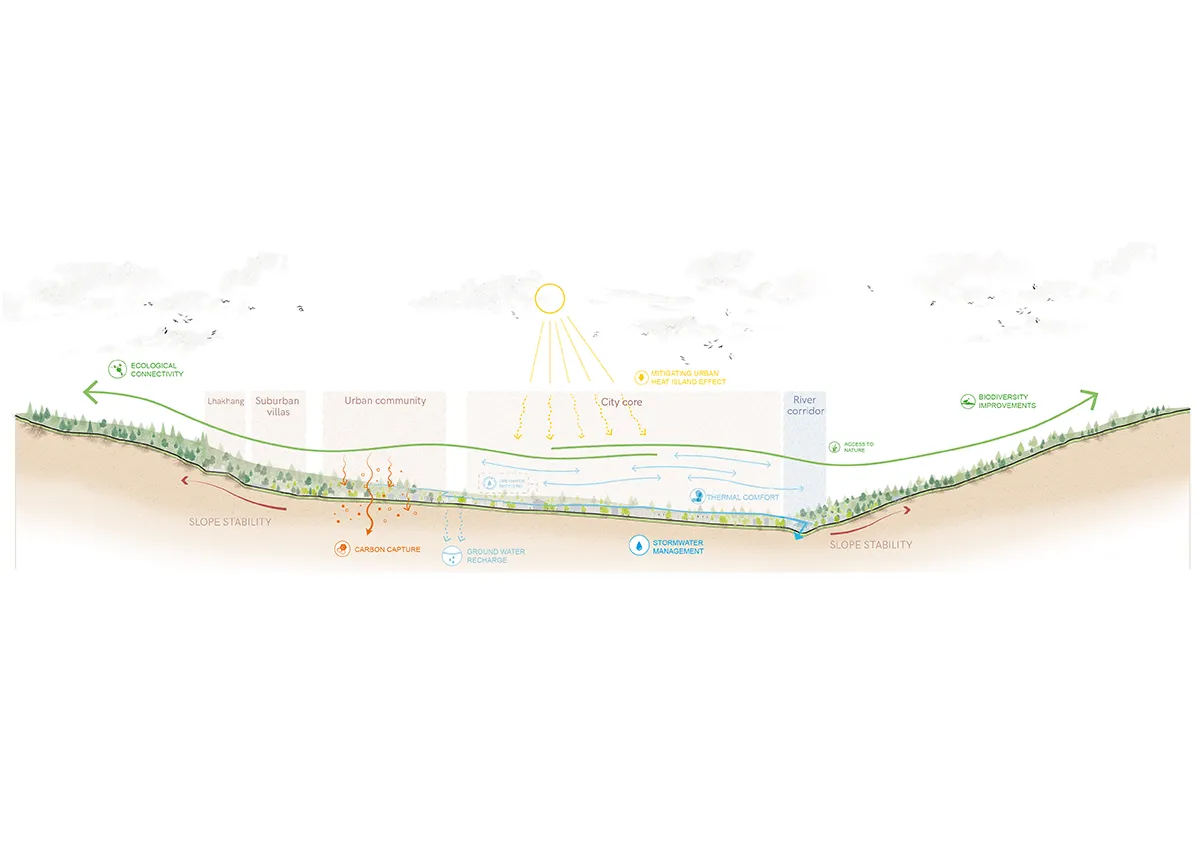
The Green Infrastructure and Open Space Masterplan aims to address the spatial, environmental and climate change challenges that the city is facing, and to deliver a well-connected, inclusive and beautiful network of multifunctional green infrastructure that restores harmony between people and nature, celebrates traditional Bhutanese identity, supports sustainable economic growth and delivers resilience benefits for the city. The landscape strategies were guided by three main objectives a) protecting habitats and nature from overdevelopment, encroachment and habitat loss, as well as protecting people from natural hazards (landslides, flooding, earthquakes), b) connecting landscapes and people and c) providing new open and green spaces for local communities and visitors, employment opportunities, cultural spaces, and more. The strategies support long-term goals of controlling urban sprawl, increasing flood resilience, improving air quality, reducing urban heat and improving access to natural open space.
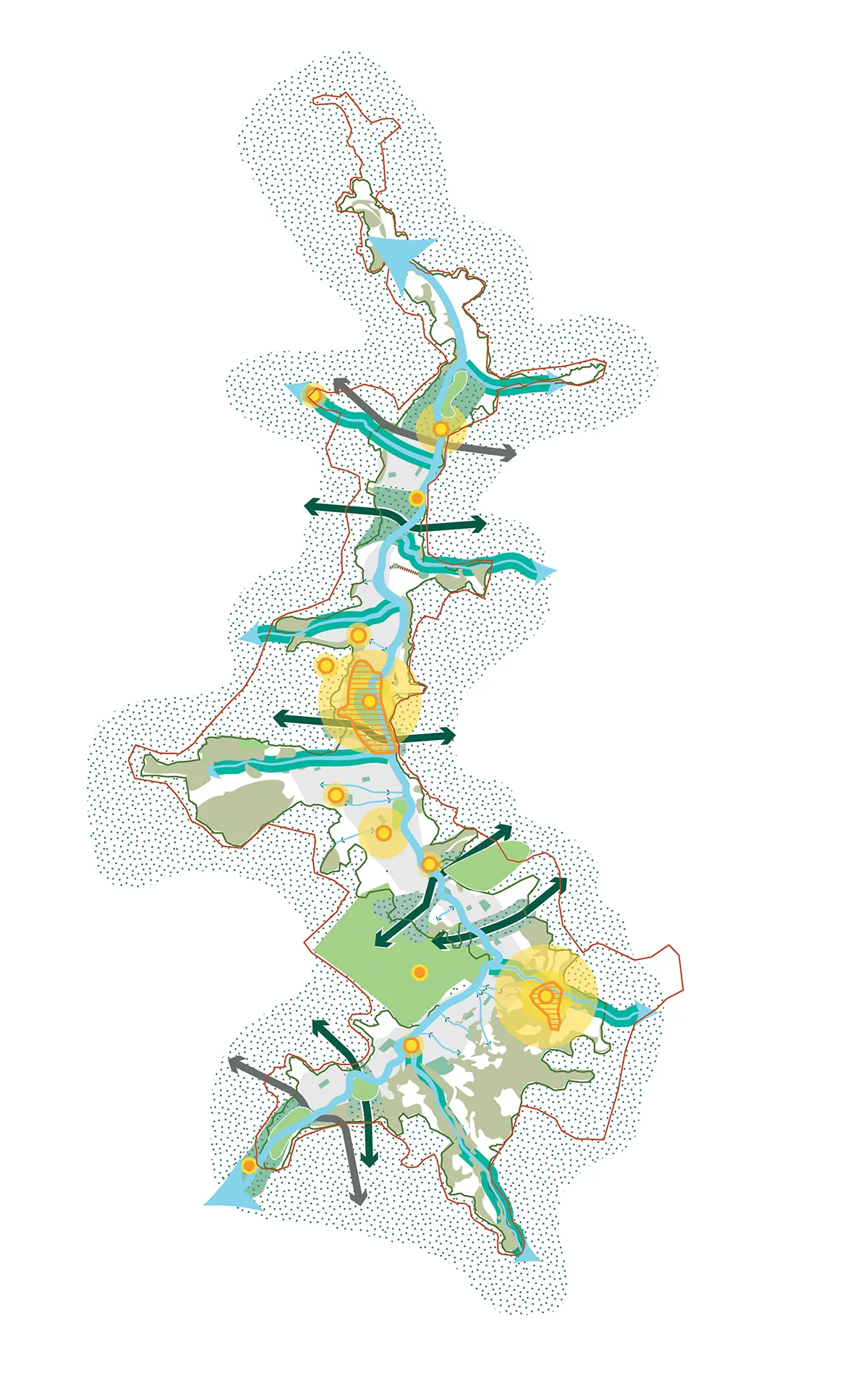
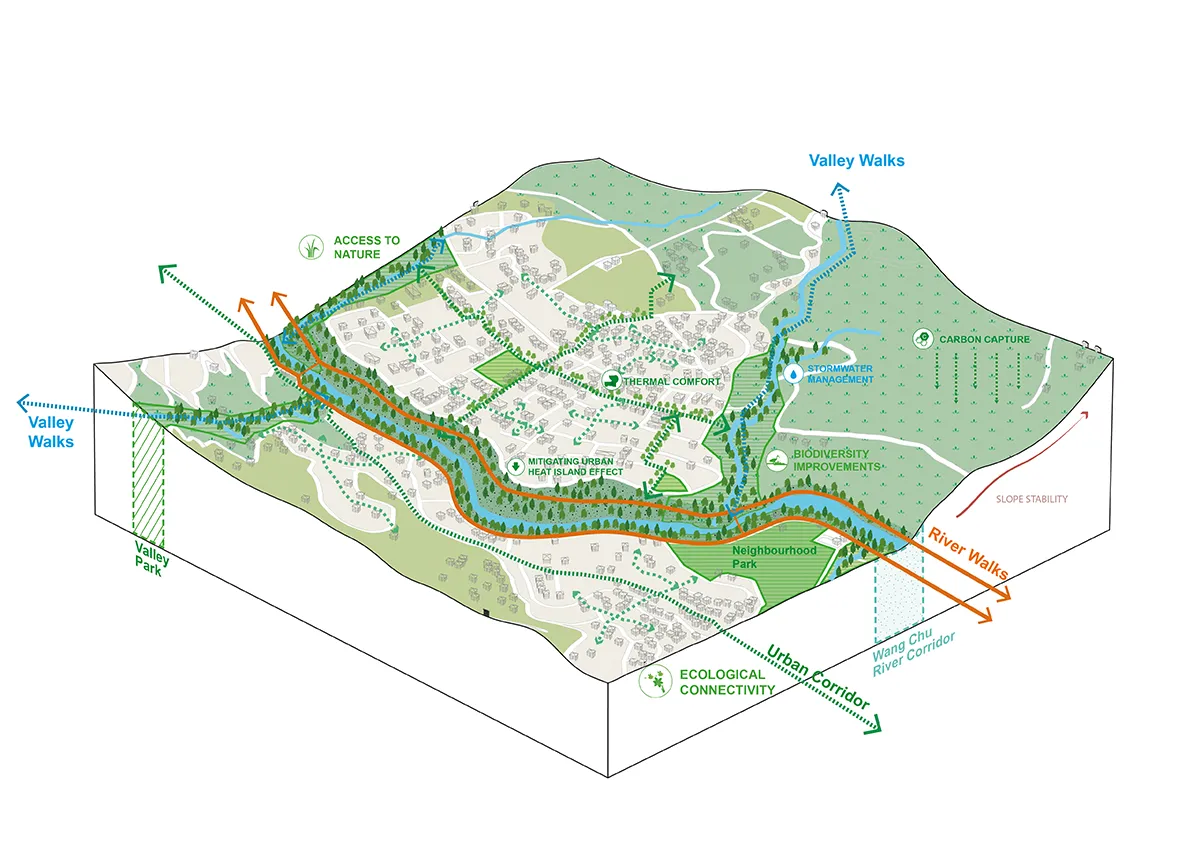
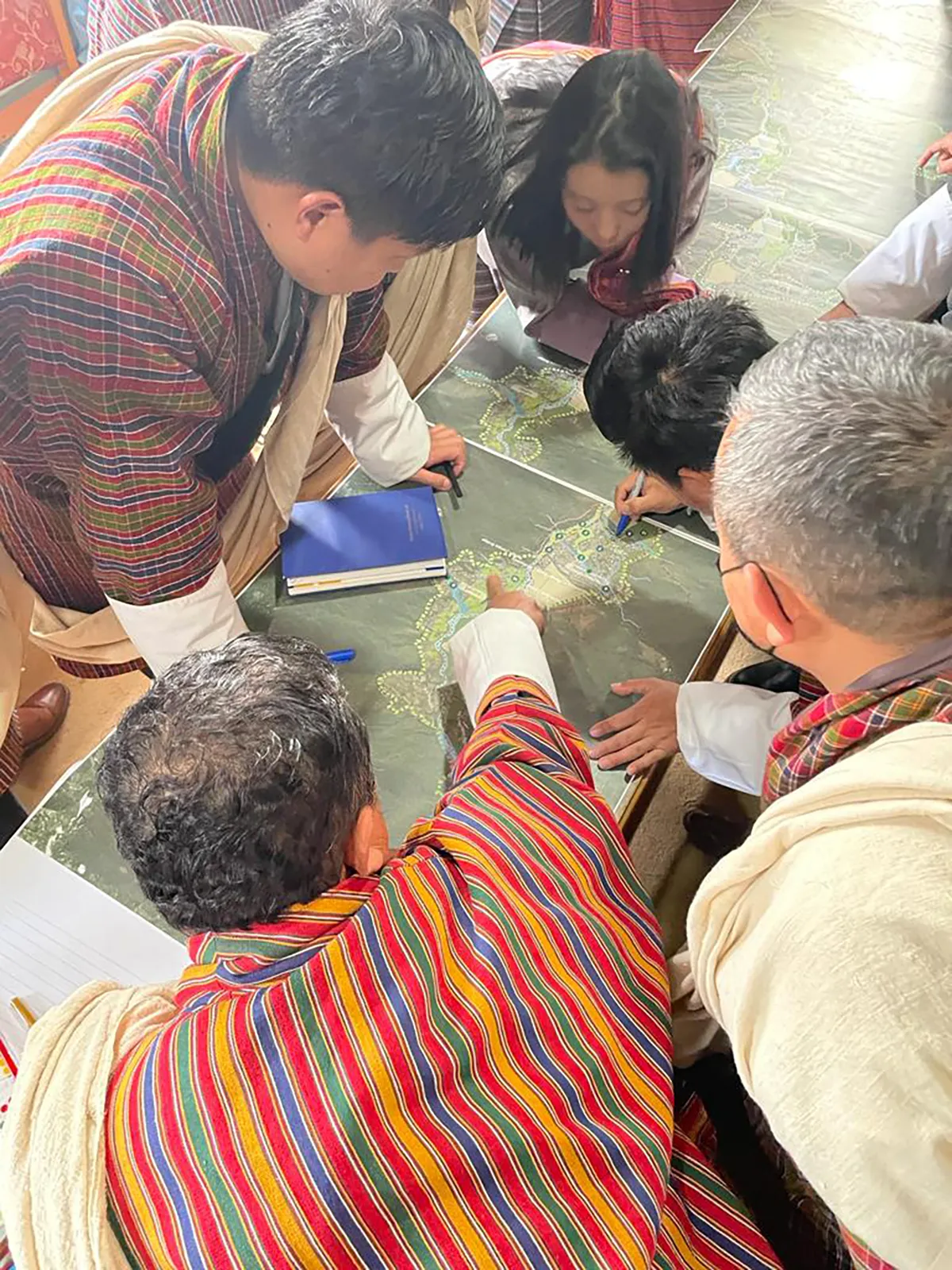
The team led a collaborative engagement process, including workshops with key stakeholders, to identify green infrastructure opportunities and priorities across Thimphu. A structured, multi-criteria assessment was used to evaluate a long list of projects based on benefits, deliverability, and climate resilience.
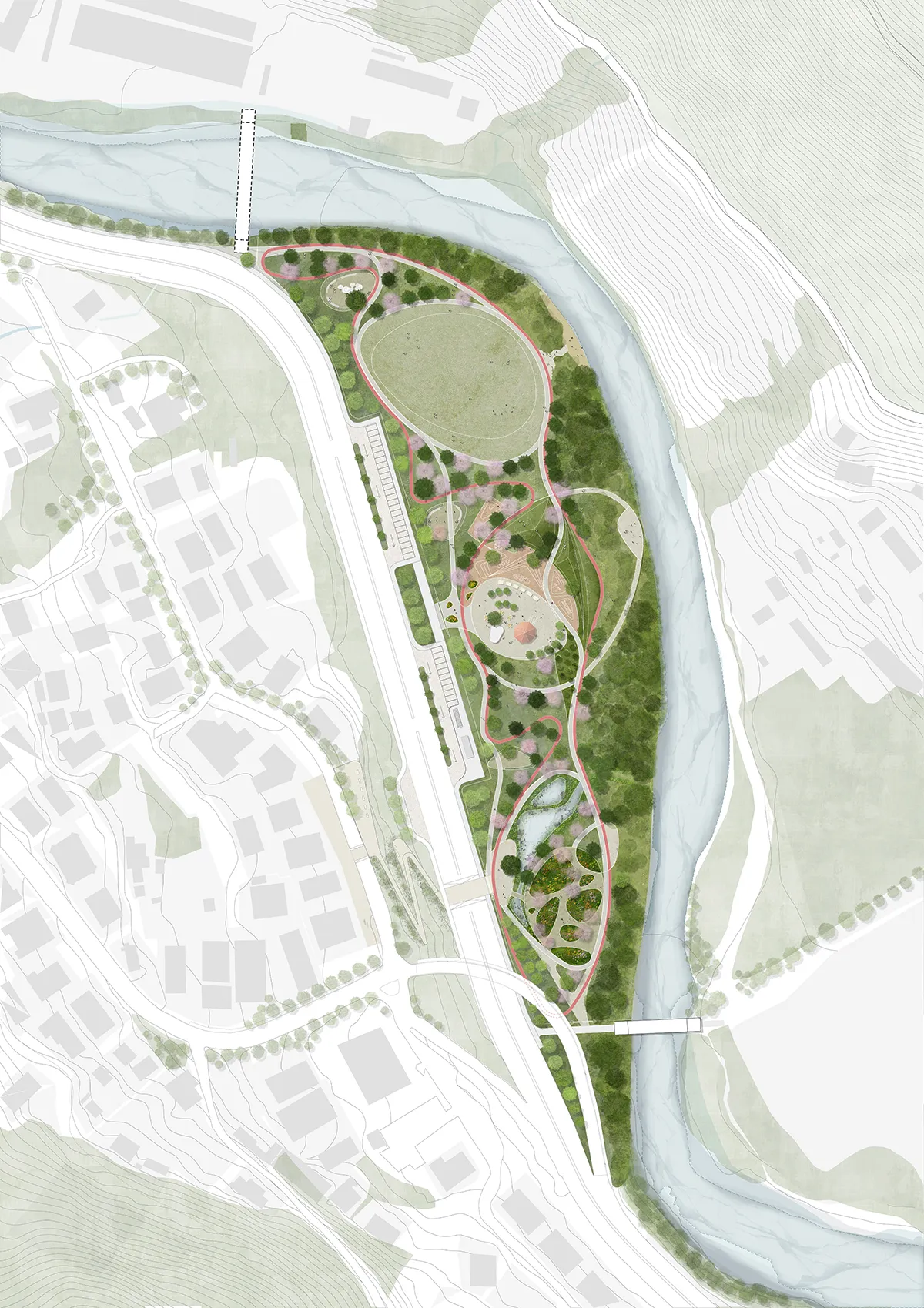
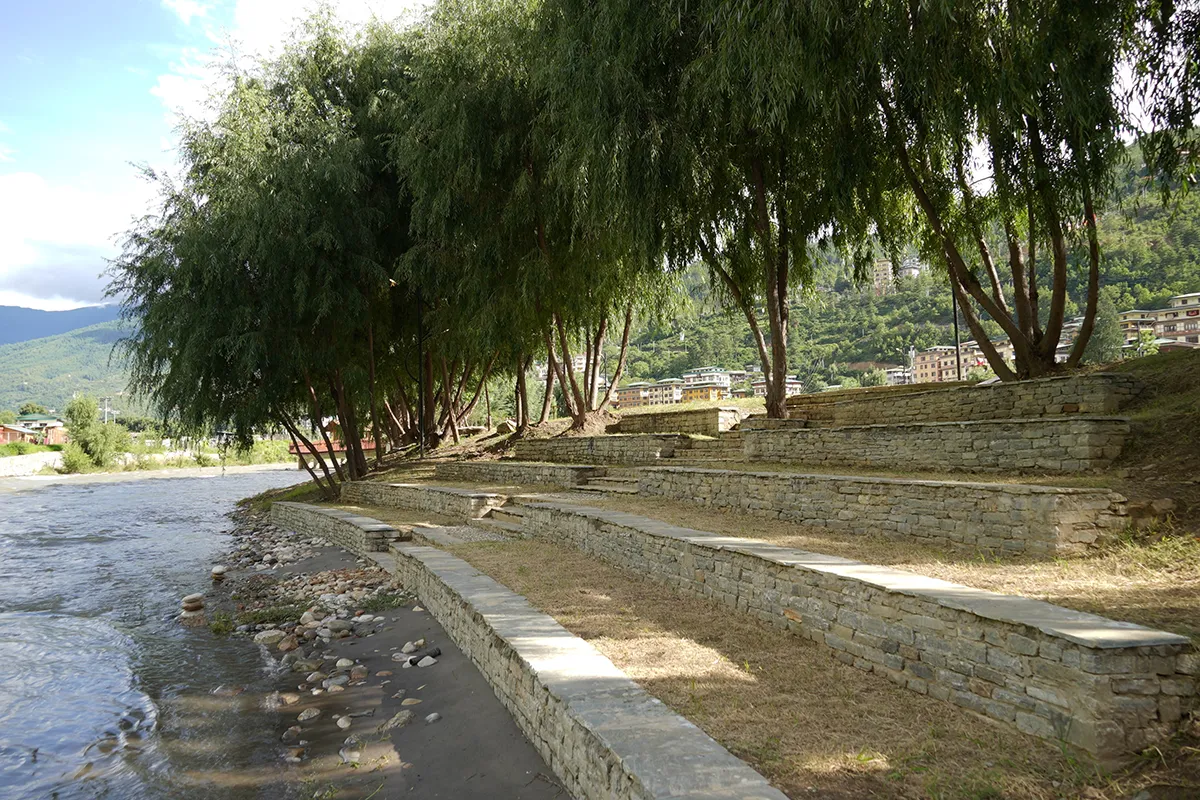
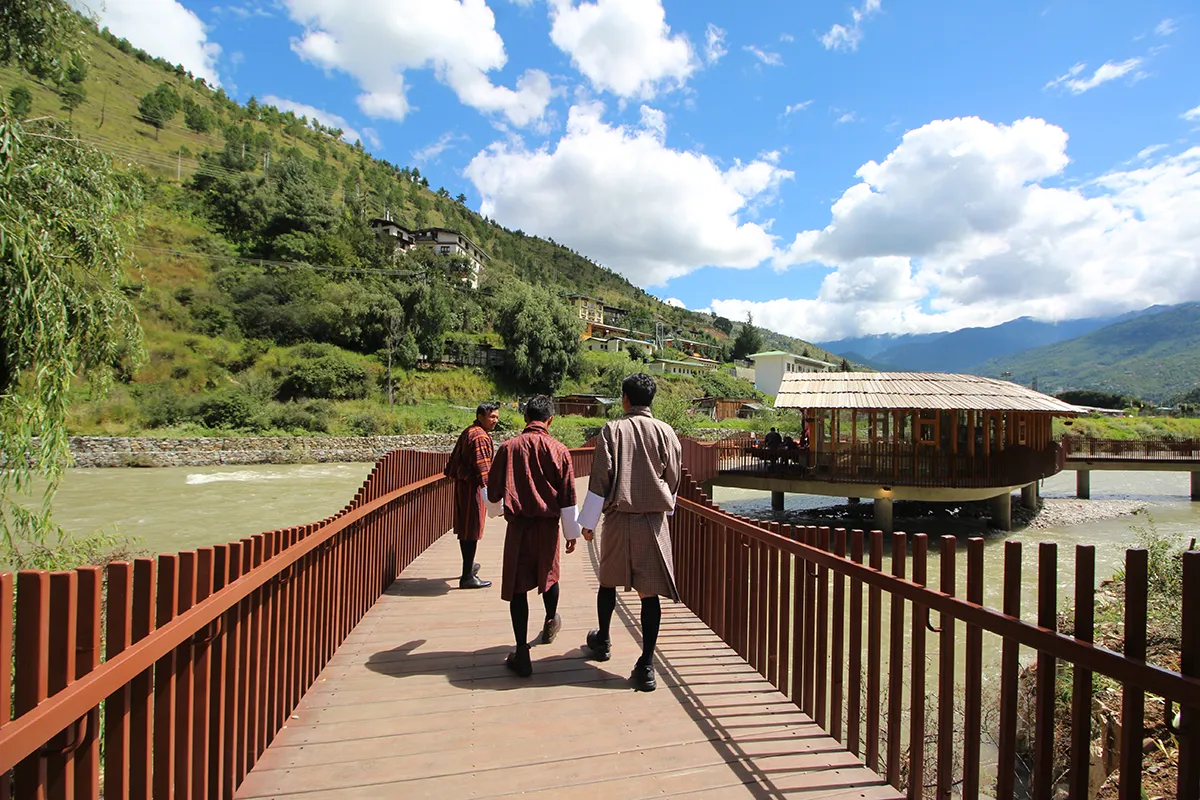
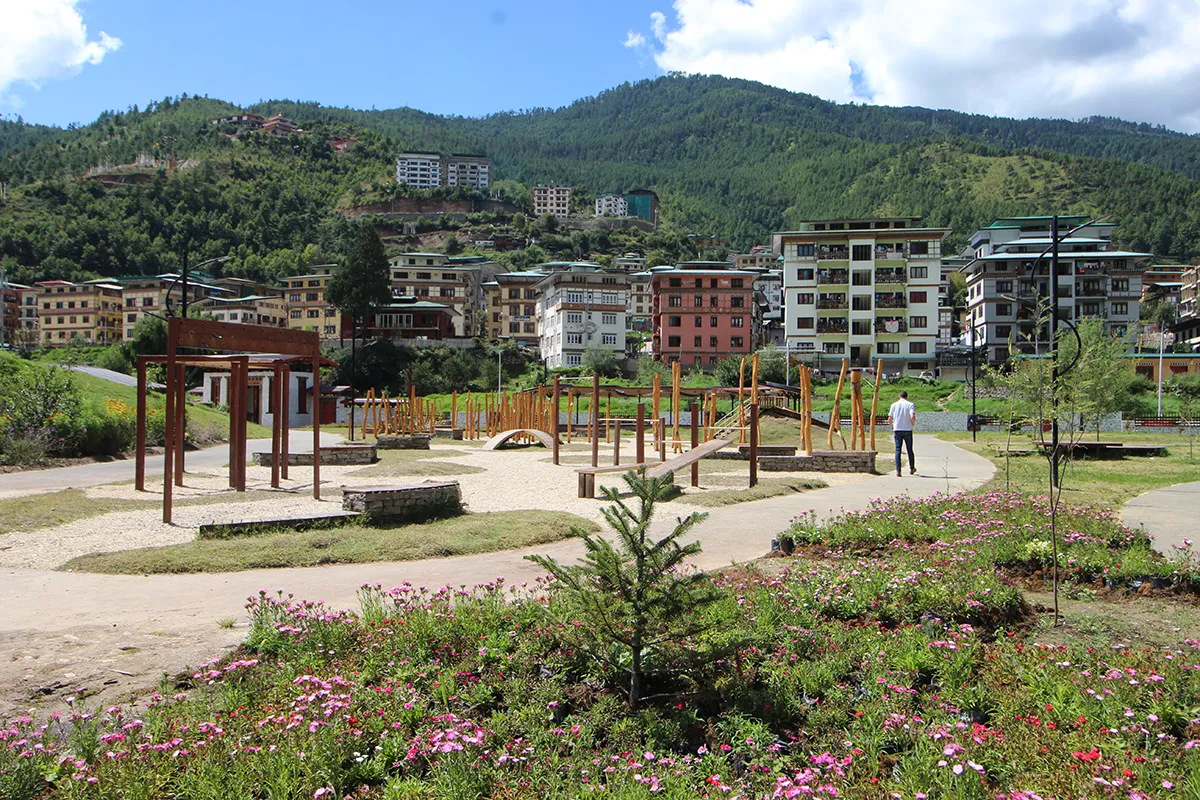
One of the priority projects is Chang Yul Park, a riverside park in the heart of Thimphu. The park was built and completed in 2024, and acts as a pilot project that demonstrates best practice in nature-based solutions, ecosystem-based adaptation and biodiversity enhancement, whilst providing a new public park to the neighbourhood and the surrounding community.
The Green Infrastructure and Open Space Masterplan forms part of a wider plan for Thimphu, titled Thimphu Structure Plan, which prepares the city for the future, driven by the sustainable design principle of ‘good growth in the right places’.
Thimphu Green Infrastructure and Open Space Masterplan
Location: Thimphu, Bhutan
Design firm: Arup
Collaborators: Prior + Partners, Gerald Eve
Client: Ministry of Infrastructure and Transport of Bhutan (MoIT) and United Nations Development Programme (UNDP)
Image Credit: Arup