
Winner of an Honourable Mention in the 2026 WLA Awards – Concept – Public Space Design category
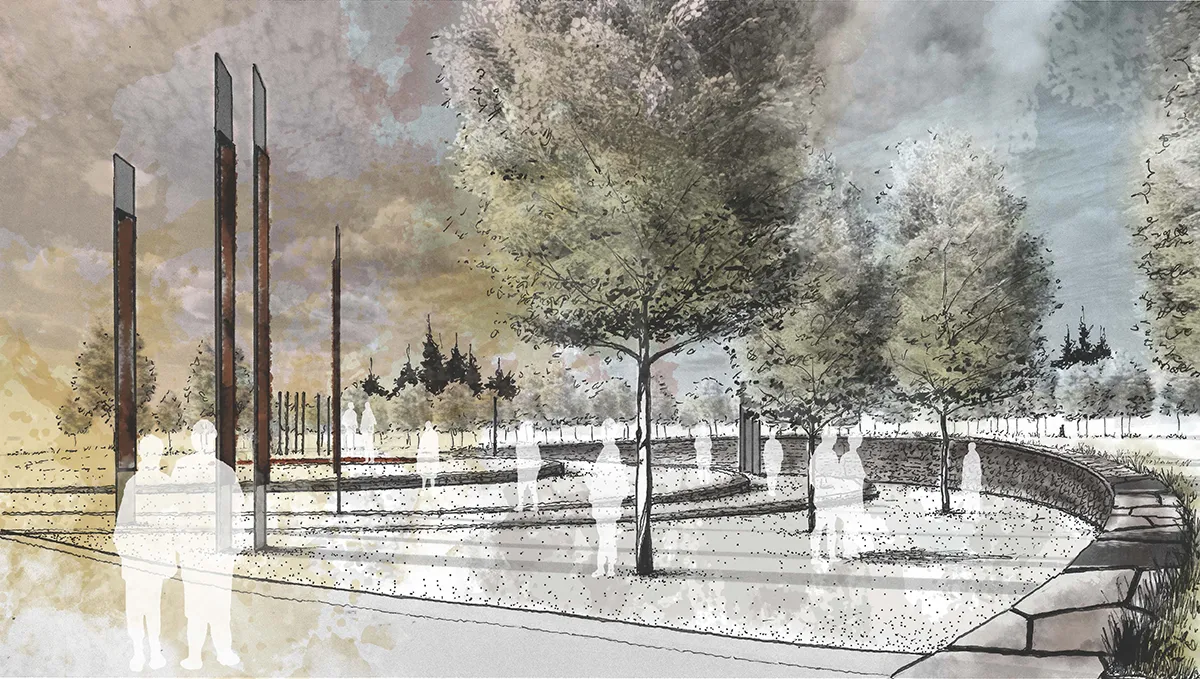
The Indian Residential School Memorial at The Confluence Historic Site & Parkland emerged from an international design competition to create a permanent place of remembrance, reflection, and gathering at the meeting of the Bow and Elbow Rivers in Calgary, Alberta. For thousands of years, this site has held profound cultural, spiritual, and historical significance as a place of exchange, ceremony, and storytelling, making it a deeply meaningful setting for a memorial rooted in Truth and Reconciliation.
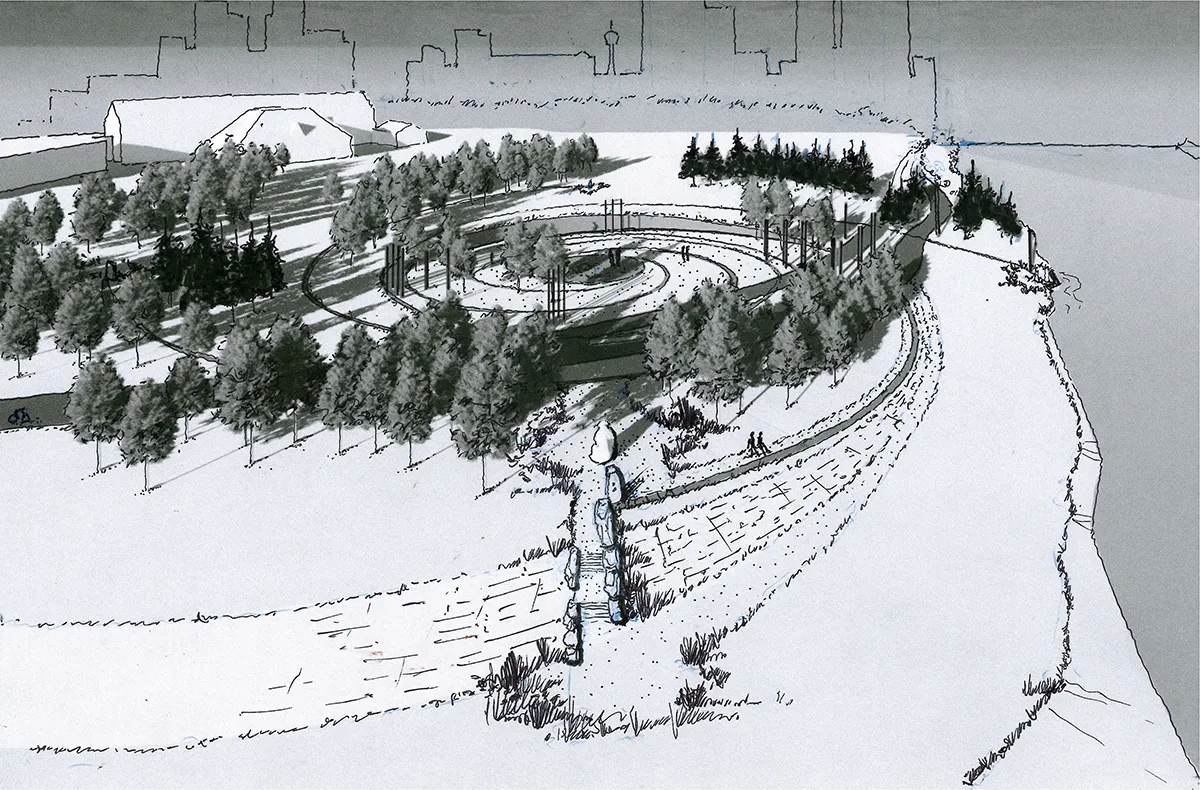
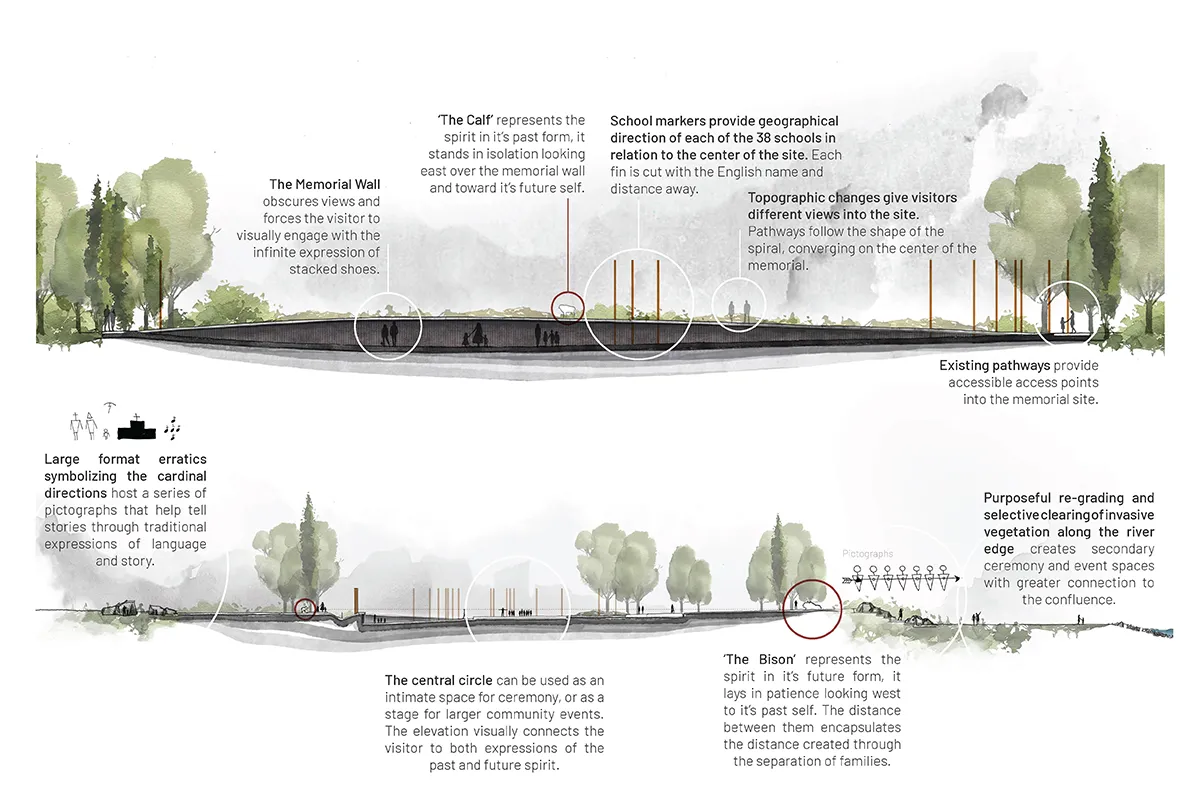
The memorial responds to the lasting intergenerational impacts of the residential and day school systems on Indigenous children, families, and communities. More than a commemorative landscape, it is conceived as a living place that supports reflection, ceremony, learning, and the continued presence and resilience of Indigenous cultures. The project builds upon the emotional legacy of the temporary memorial that previously occupied space at the nearby City Hall, carrying forward its spirit while establishing a permanent and enduring expression within the landscape.
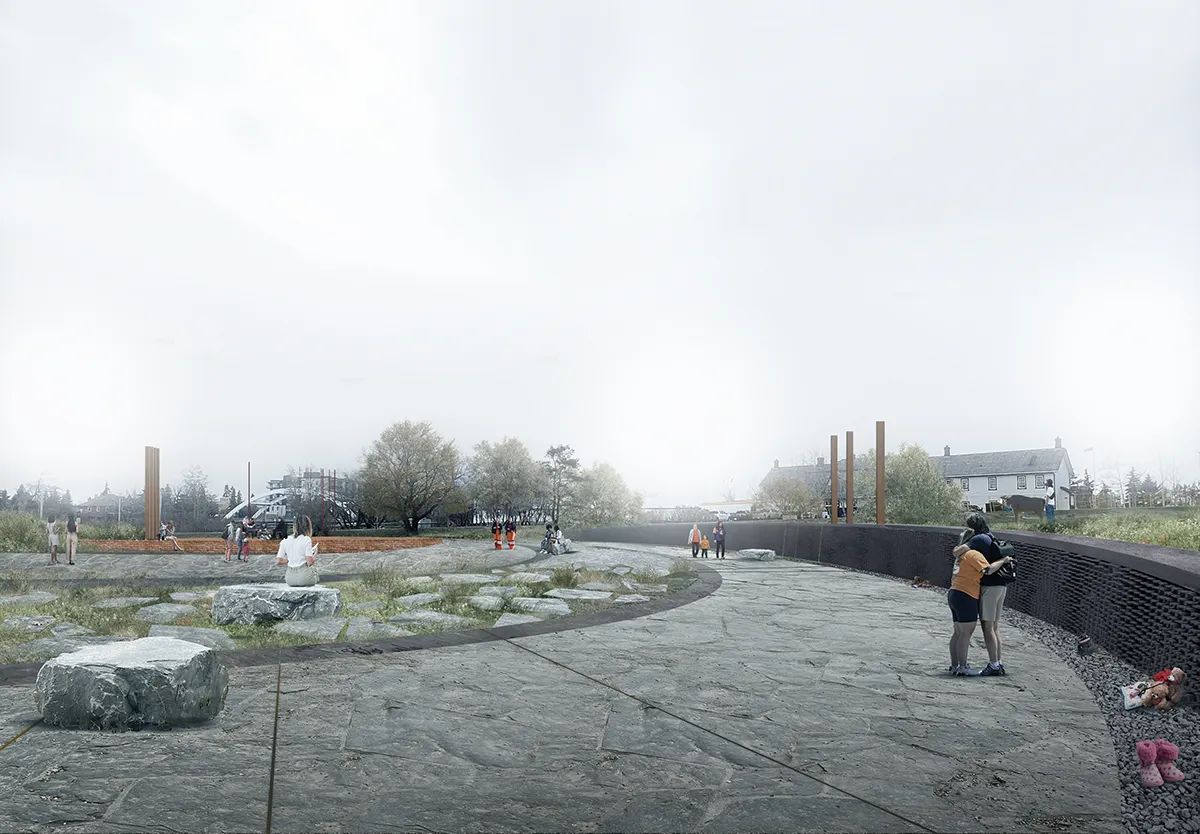
Developed through ongoing collaboration with a local Indignous Artist as the project team lead, Indigenous Elders, Knowledge Keepers, Survivors, and community members, the memorial is organized as a sequence of interconnected spaces that allow for multiple forms of experience and engagement. Spaces for quiet reflection and mourning are balanced with areas for gathering, ceremony, transition, and collective healing. Rather than prescribing a singular narrative, the memorial encourages visitors to move through the site at their own pace, recognizing that remembrance, grief, and healing are deeply personal and experienced differently by each individual.
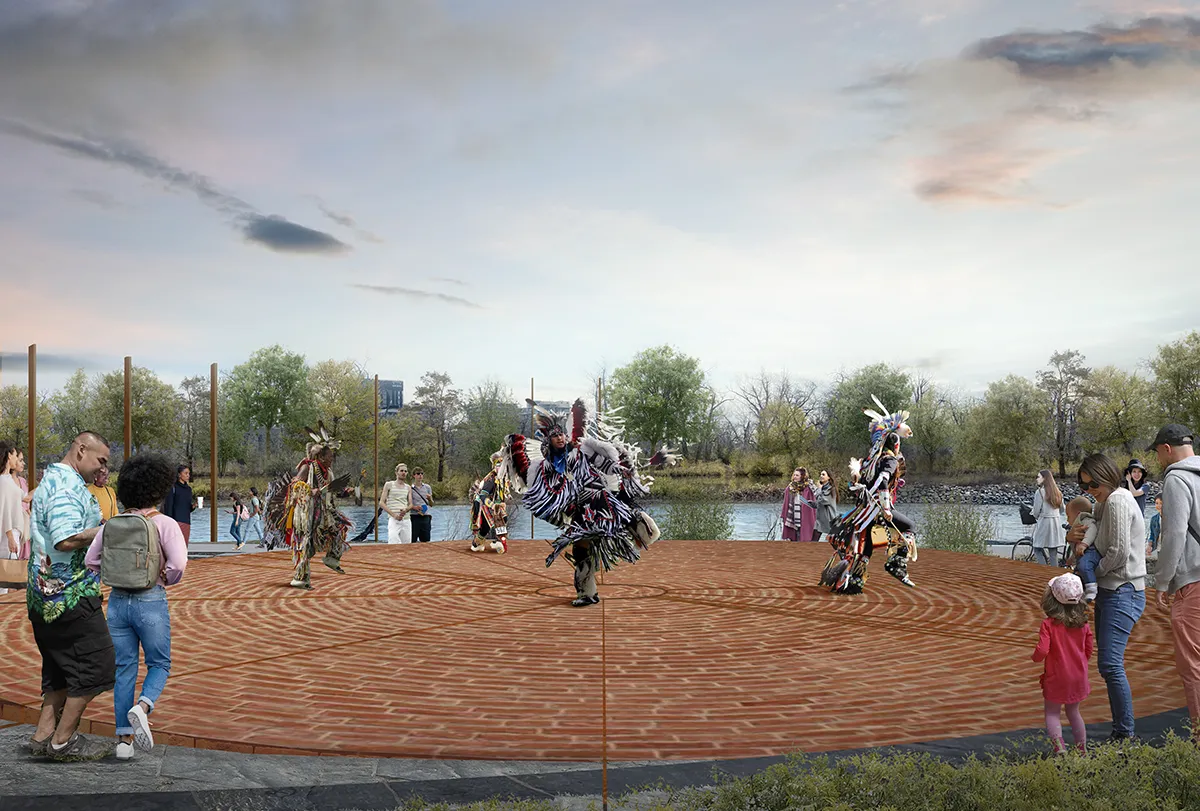
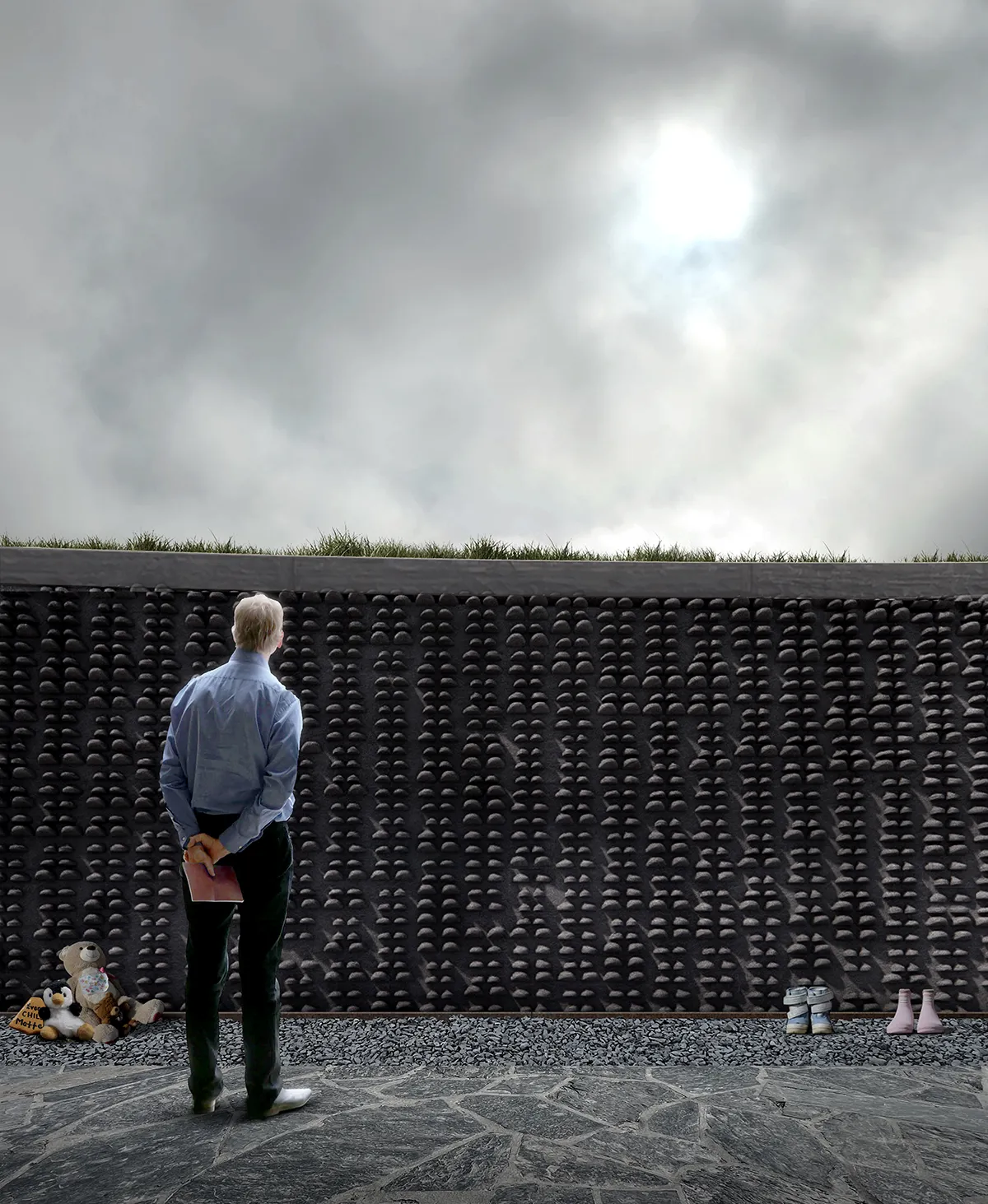
The material language of the memorial is intentionally restrained yet deeply symbolic. Large stone erratics serve as enduring surfaces for pictographic storytelling, reflecting Indigenous traditions of carrying memory and knowledge through the use of stone. Red brick references the forced labour of Indigenous peoples and acknowledges the bricks historically manufactured to construct some residential schools in Southern Alberta. Cast shoes continue the legacy of the temporary memorial at Calgary City Hall, honouring the countless children impacted by the residential school system and recognizing the care and intention shown by families and community members who placed shoes in acts of remembrance and solidarity.
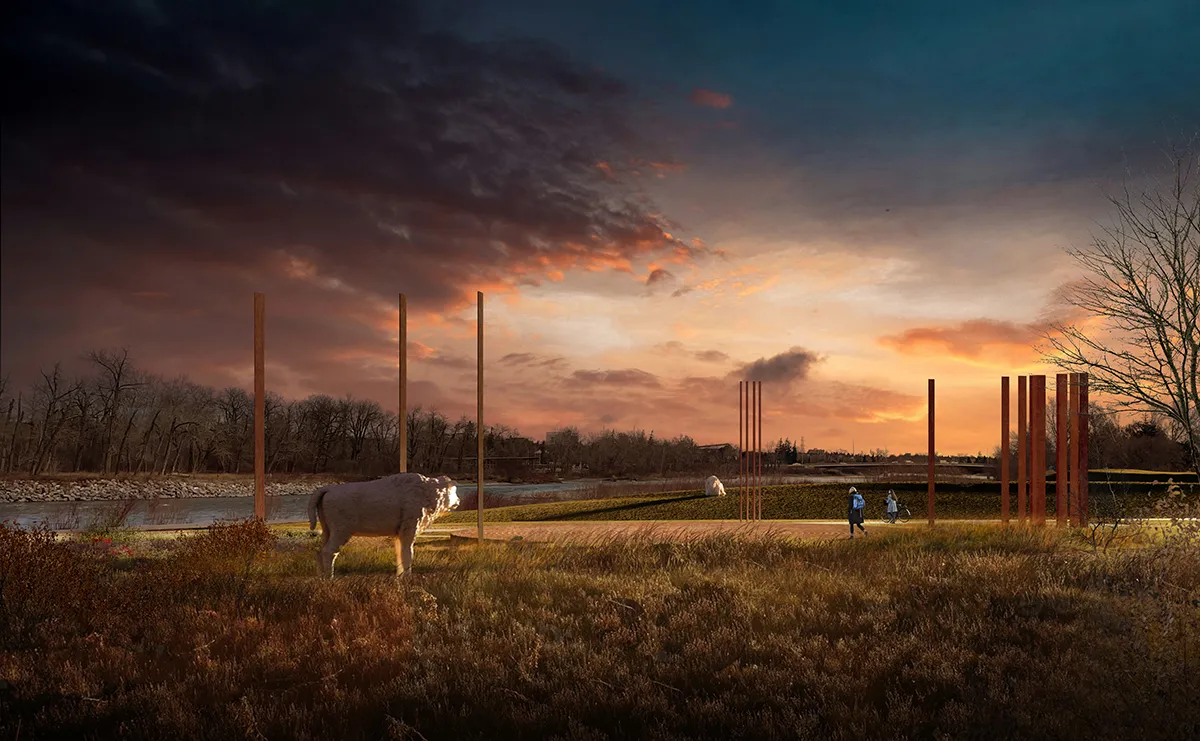
Natural surfacing and subtle landform reinforce a grounded relationship to the earth, situating the memorial within broader cycles of time that connect past, present, and future. Two sculptural buffalo (one calf and one cow) anchor the site as powerful symbols of strength, resilience, survival, and cultural continuity. Large steel fins are arranged across the landscape to correspond with the locations of the 38 residential schools that operated within Alberta, their rigid material expression speaking to the imposed and colonial nature of the system itself.
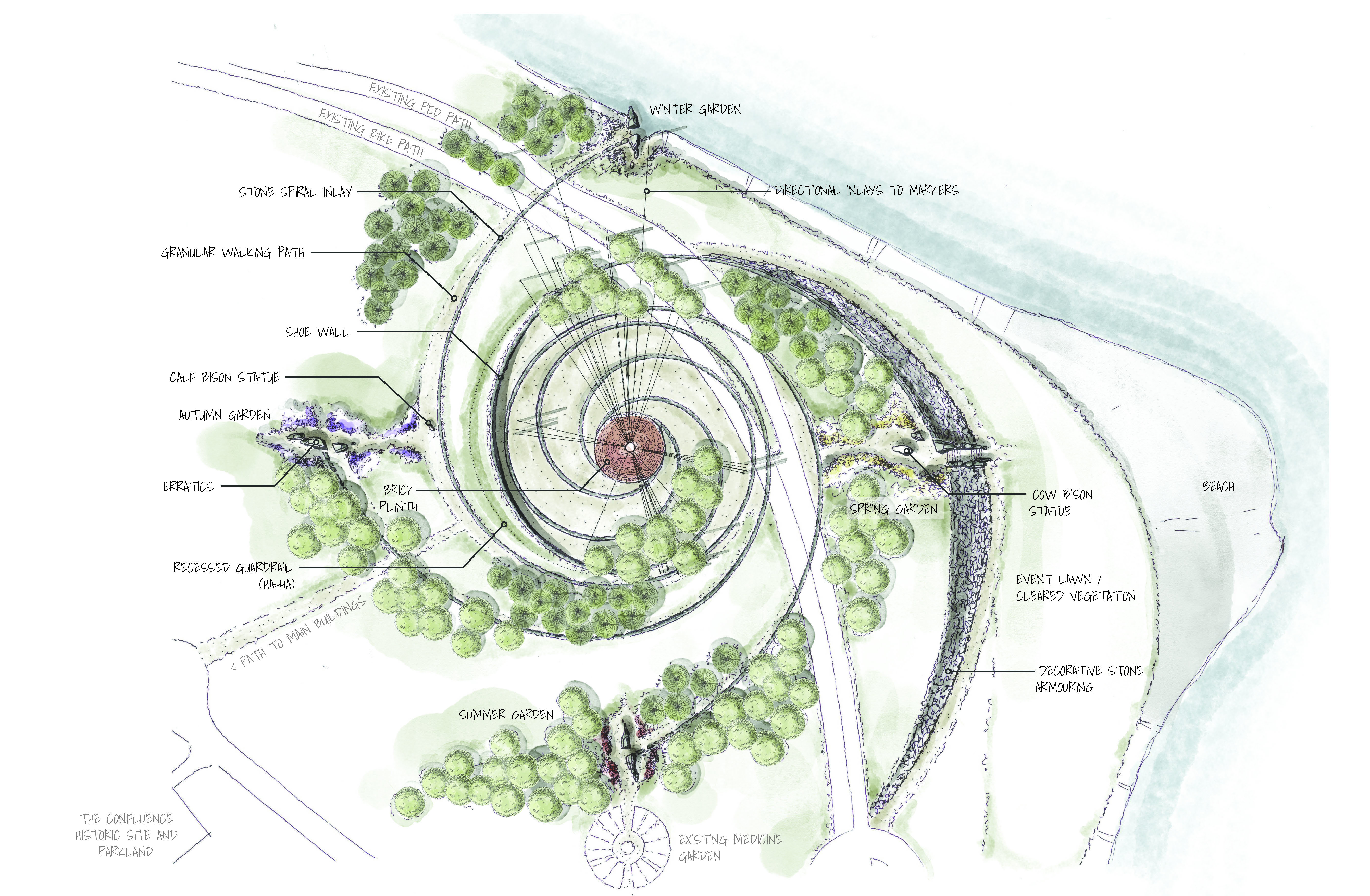
Together, the landscape, materials, and spatial organization create a memorial that is solemn without being static: a place that supports ceremony, reflection, education, truth-telling, and ongoing dialogue, while honouring Survivors, those who never returned home, and the generations who continue to carry these stories forward.
The Wandering Spirit: Indian Residential School Memorial
Location: Calgary, Alberta, Canada
Design Team:
groundcubed
Adrian Stimson (Artist)
HEREBY Architectural Inc.
Many Chief Consulting Ltd.
Be the first to comment