
Place Design Group and Ingenium Research have published a white paper arguing that urban development should account for how people live, work and connect throughout the day and night. Building Resilient Cities Through the Dawn Economy brings together economic evidence, international precedents, property market insights and planning and design expertise to propose a more integrated approach to city-making.
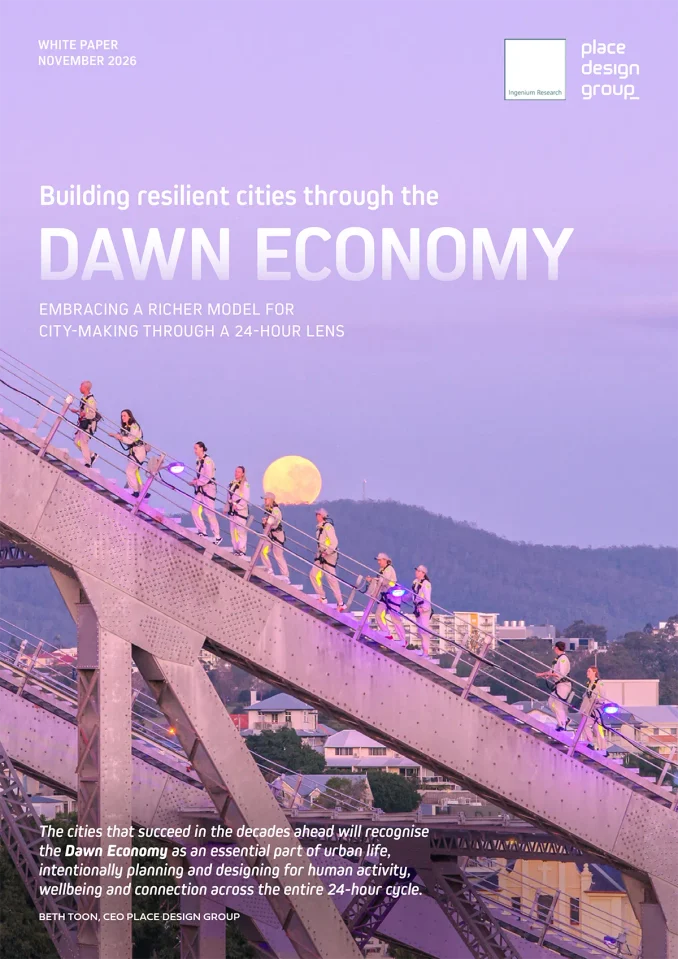
While cities have increasingly recognised the importance of the night-time economy, the economic and social activity that takes place throughout the morning has received comparatively little attention in urban planning and investment decisions. The white paper presents the Dawn Economy as a missing lens in conventional city planning, emphasising the importance of early-morning work, movement, wellbeing, commerce and social connection.

Economic analysis by Ingenium Research highlights the scale of morning activity already taking place across Australian cities. Visa transaction data from Australian capital city centres shows that spending between 5am and 11am represents approximately 12 to 20 per cent of daily expenditure—broadly comparable to spending between 7pm and midnight. Further analysis of approximately 7,830 venues across 20 global precincts reveals notable differences in early-morning trading: around 30 per cent of venues in Brisbane and Perth are open between 6am and 7am, compared with approximately 19 per cent in Sydney.
The white paper also draws on insights from global commercial real estate firm CBRE to examine how changing lifestyles, occupier expectations, wellness and experiential retail are shaping the design, operation and long-term performance of buildings and urban precincts.
While elements of this research have been published previously, the white paper brings the evidence together with broader economic, social and property trends to examine what these patterns mean for the future of urban development.
At the heart of the white paper is a proposed six-part framework for developing multi-rhythm precincts, places that support complementary activities and experiences at dawn, during the day and at night. It encourages governments, developers, designers and asset owners to consider how buildings, public spaces, transport networks and major precincts can serve different users and activities throughout the 24-hour cycle, rather than being planned mainly for a single use or peak period.
“We have become very good at designing places for peak moments. The next evolution in city-making is planning and designing for everything in between. We invest significantly in buildings, infrastructure and public spaces, yet too often assess their success around a narrow window of activity. By understanding how people use places across the full day, we can make better decisions about planning, design, investment and management, creating more connected, adaptable and resilient cities.”
Place Design Group CEO Beth Toon
With its established early-morning culture, subtropical climate and significant investment ahead of the Brisbane 2032 Olympic and Paralympic Games, Brisbane is well positioned to pioneer and test this approach, with lessons for cities globally. Place Design Group CEO Beth Toon said the opportunity extends beyond delivering major infrastructure to establishing a more comprehensive model of city-making.
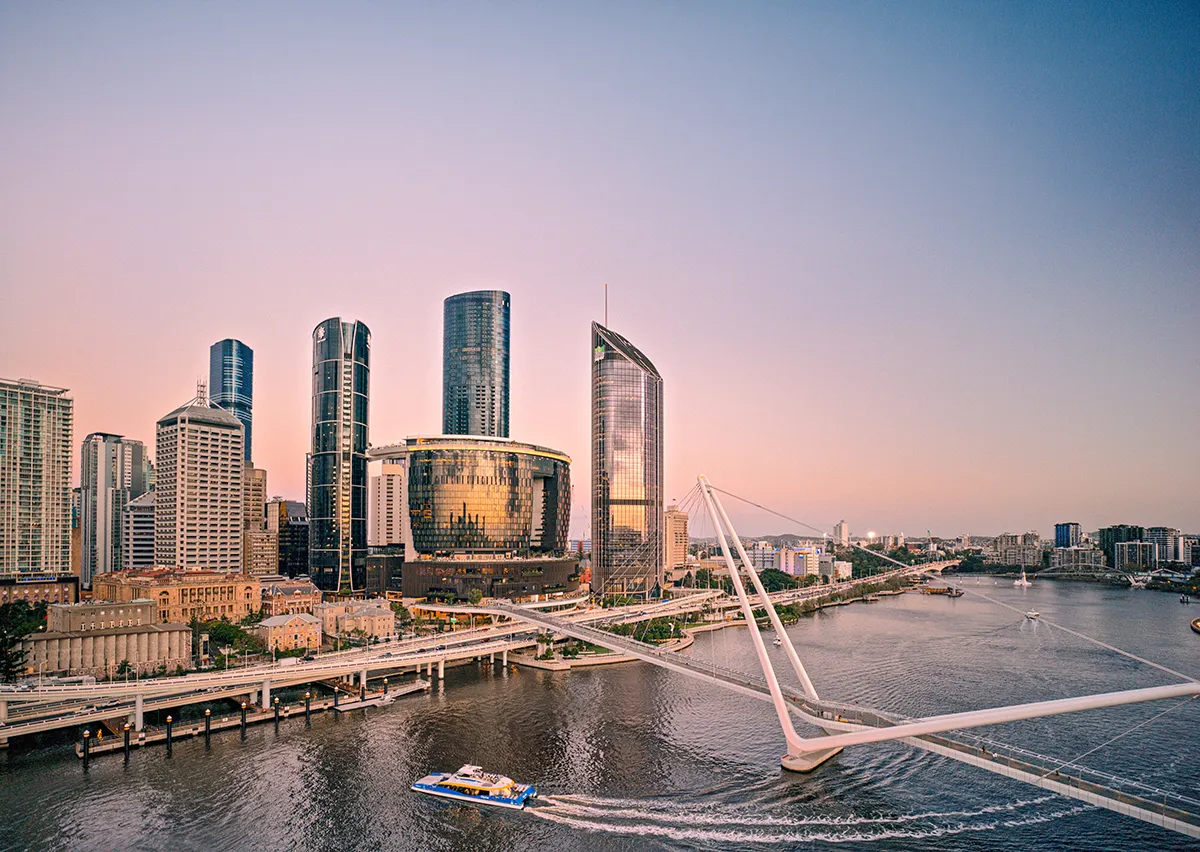
The white paper urges more nuanced urban performance measures, looking beyond daily footfall, event attendance and headline economic activity to track how places function throughout the day—including movement, spending, safety, accessibility, community participation, asset use and environmental performance.
Building Resilient Cities Through the Dawn Economy is jointly developed by Place Design Group and Ingenium Research, with industry insights from CBRE and available at: https://placedesigngroup.com/dawn-economy-white-paper/
Image credit: Courtesy of Place Design Group
Be the first to comment