
Climate solution that handles water from all sides, and weaves together the unique landscape and urban structure of Randers.
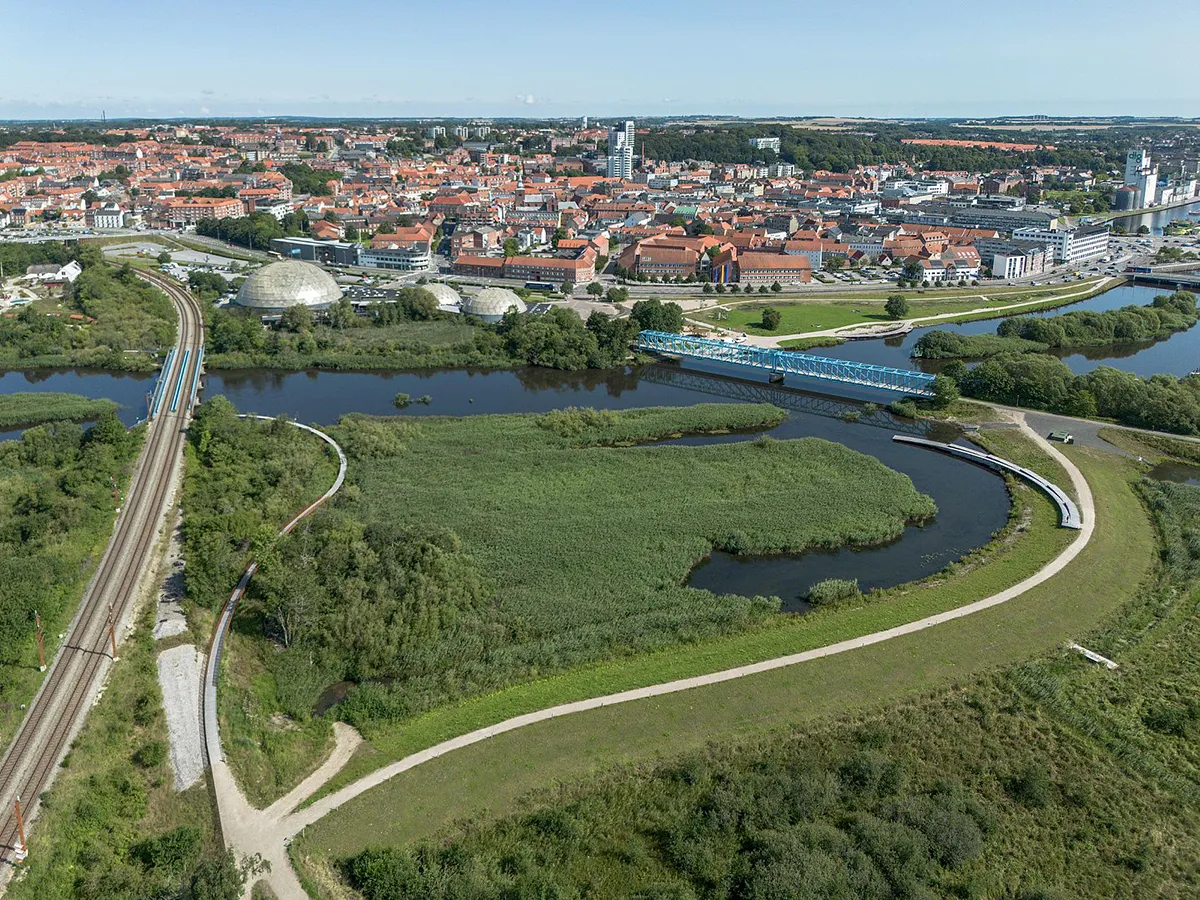
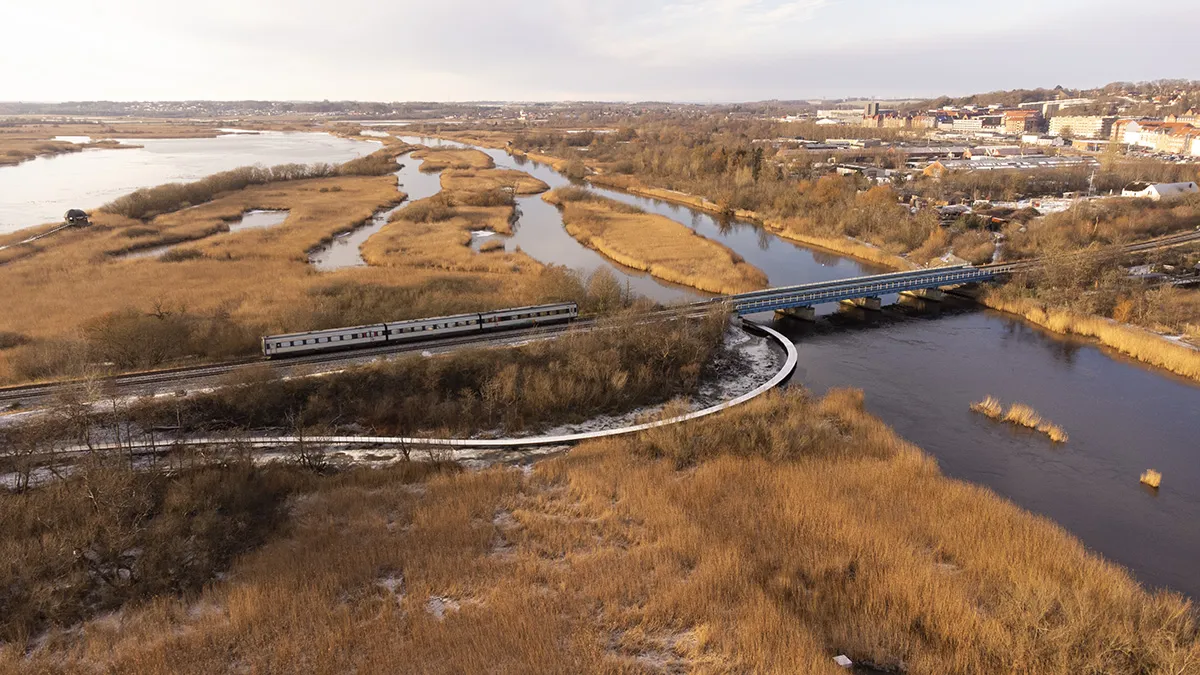
The Stork Meadow project is an essential part of the urban development project ‘City by the Water’ in Randers Municipality. As Denmark’s only river city which is also located at the end of a fjord, Randers is currently threatened by storm surges, sea level rise, extreme cloudburst and rising groundwater levels.
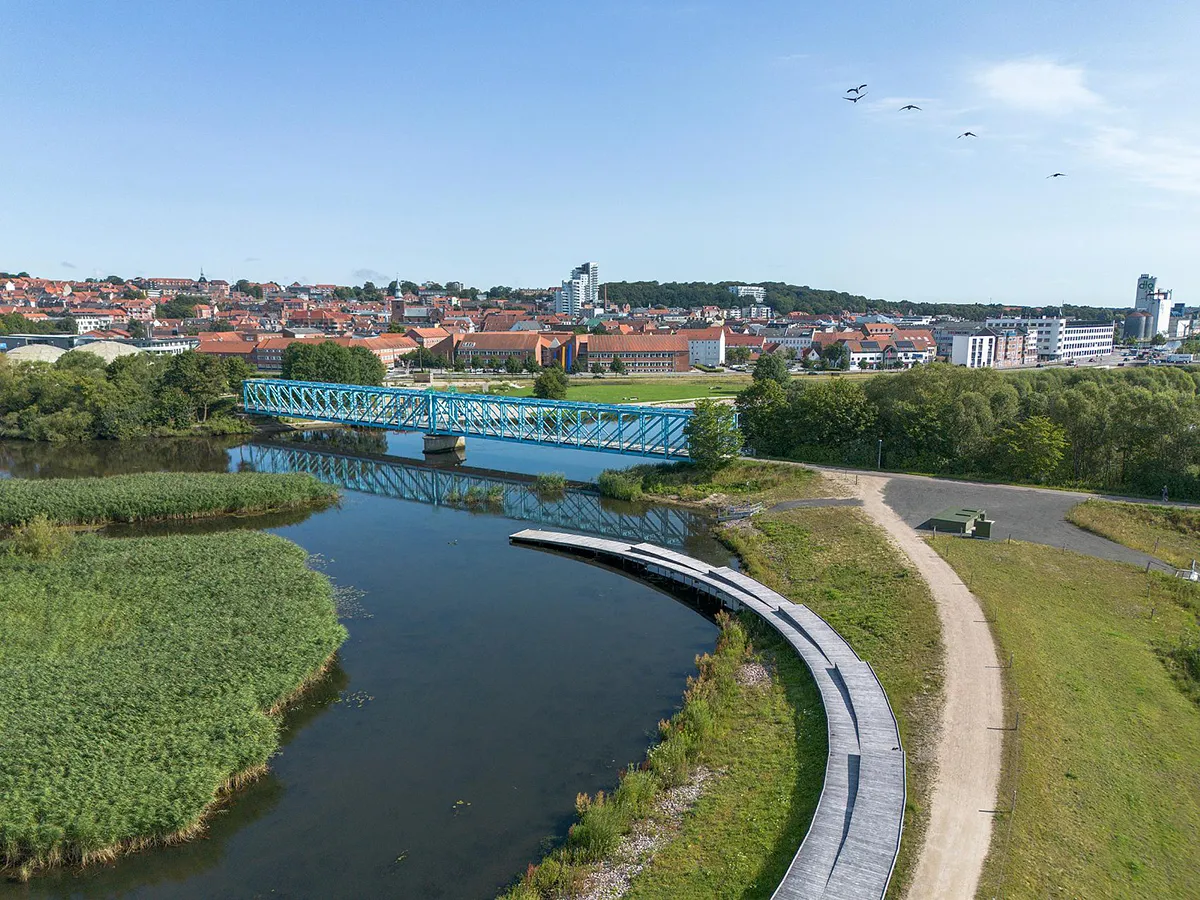
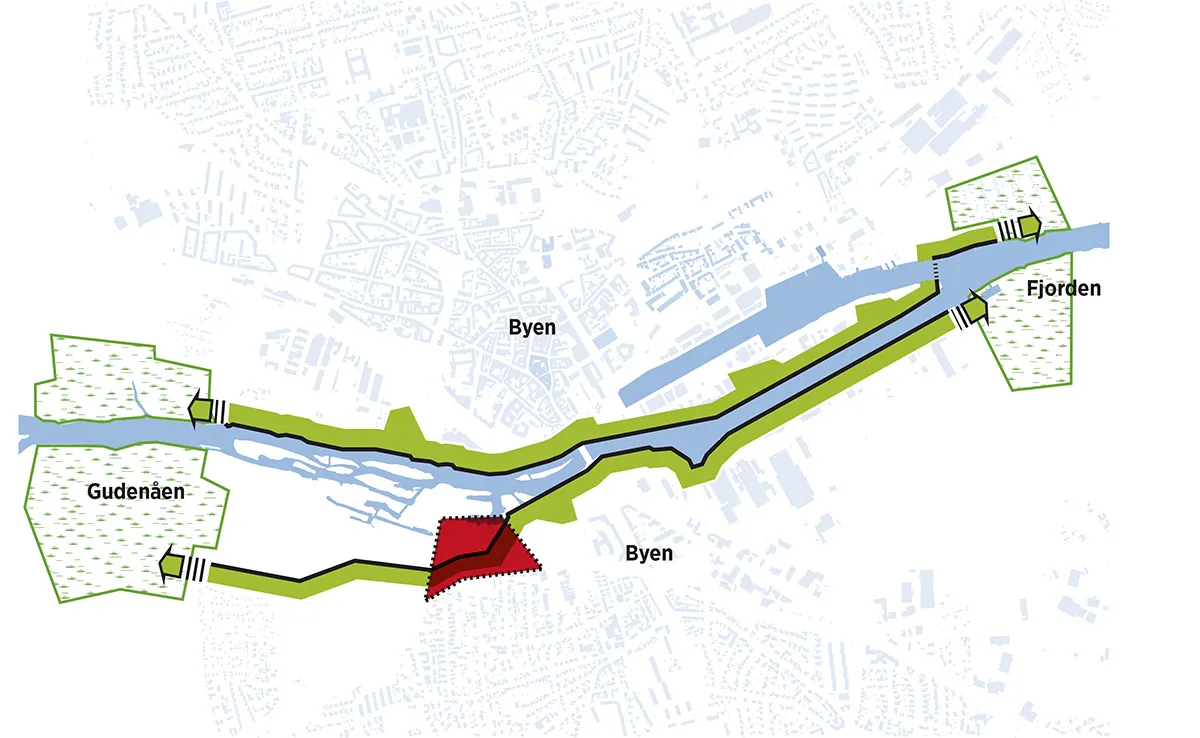
The Stork Meadow is the first realisation of the 8.8 km long stretch along the fjord and Gudenåen. This development plan strengthens the city’s resilience, while allowing close interaction with the river, its natural habitat and its recreational opportunities.
Challenge and solution
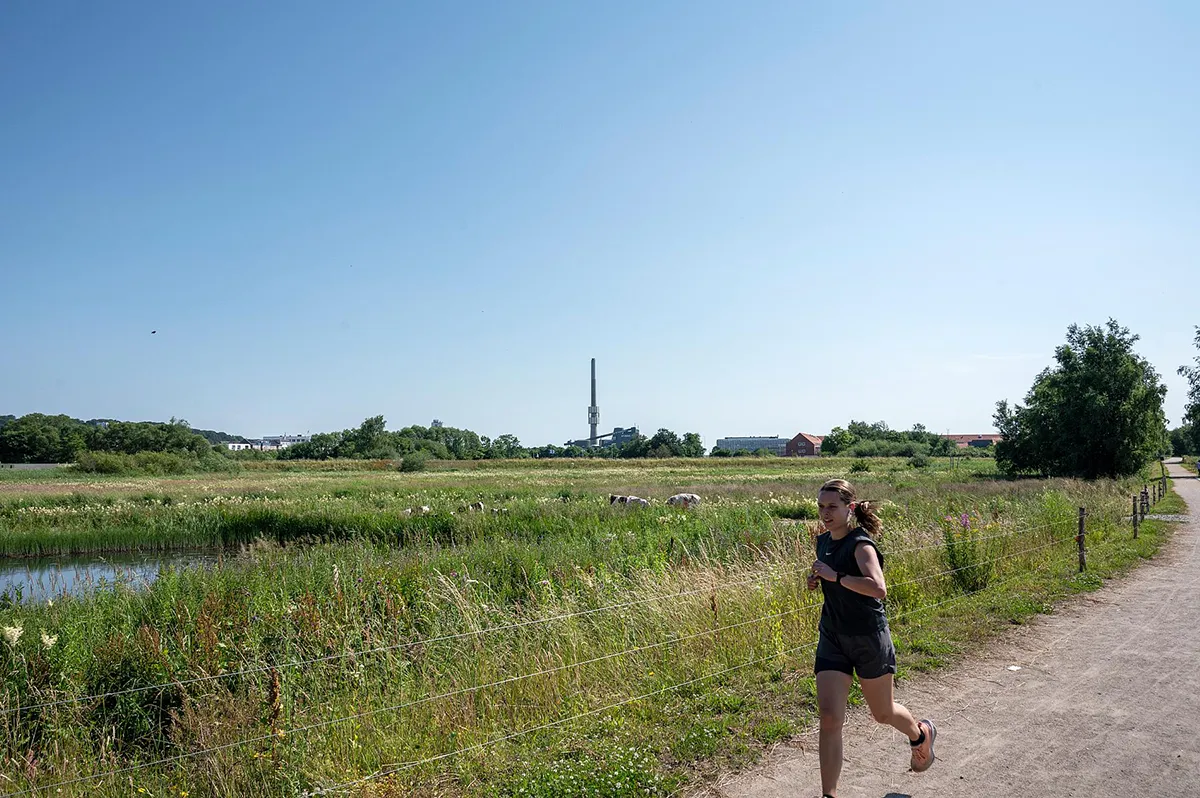
Randers Municipality is facing current climate change, particularly in the vulnerable lowlands near Vorup, where extreme rainfall and rising water levels in Gudenåen pose a threat. Through the Stork Meadow project, the wetland area is transformed to a public nature park that manages rainwater and makes the area attractive. This involved integrating recreational oases and providing frameworks for activities.
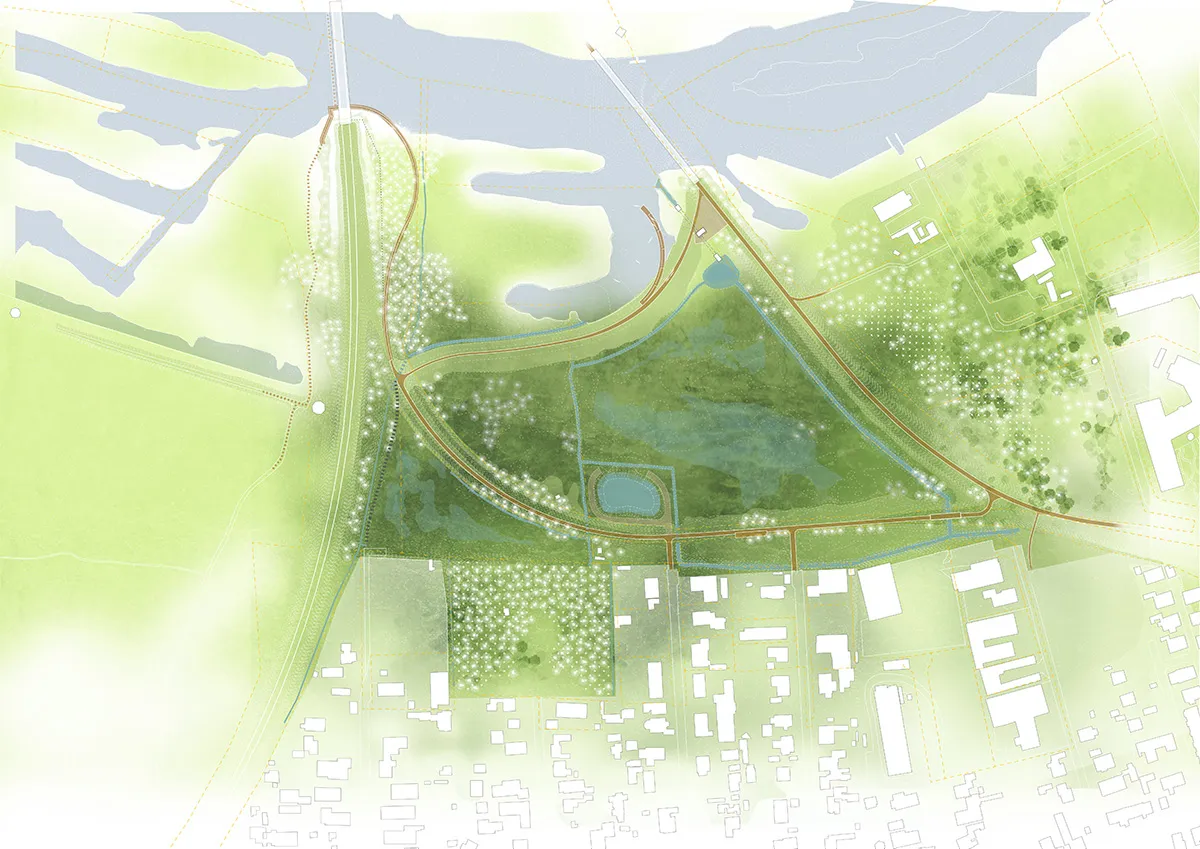
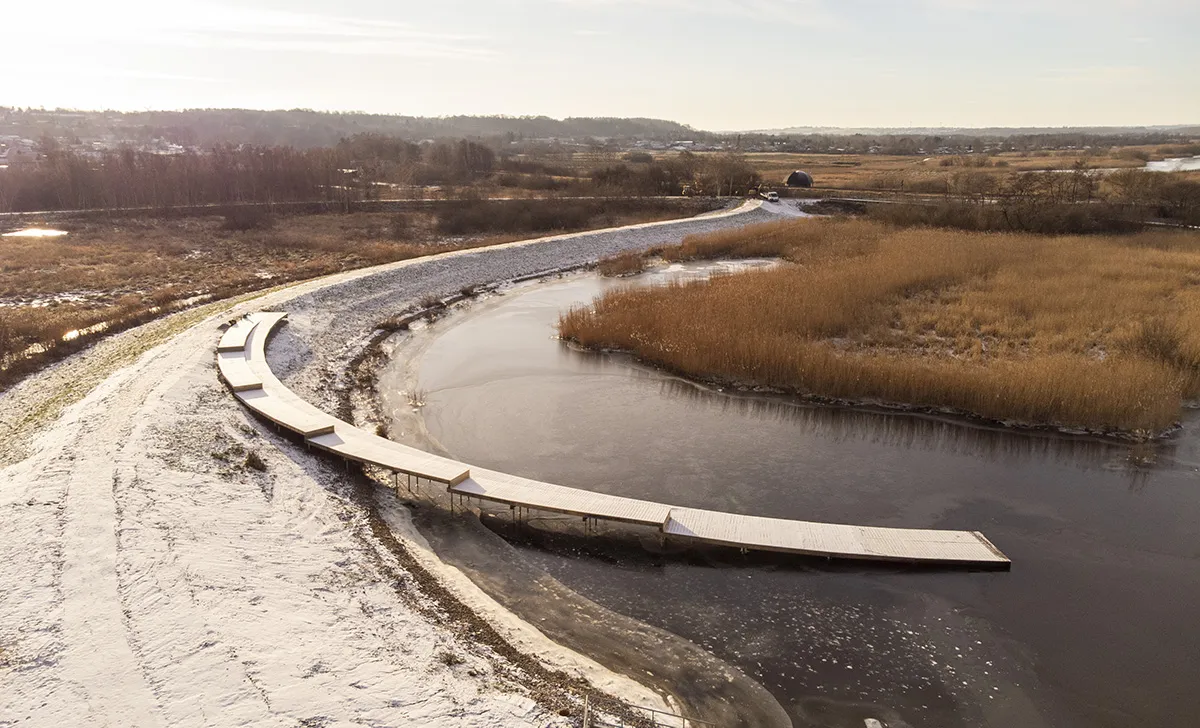
The project is designed to handle rainfall corresponding to a 100-year event in the year 2100, equivalent to 72 mm of rain in four hours. In addition to 100-year protection, the project also addresses rising water levels and potential storm surges from Gudenåen by establishing a 2-metre-high dike extending 270 metres.
Flood barrier and connector
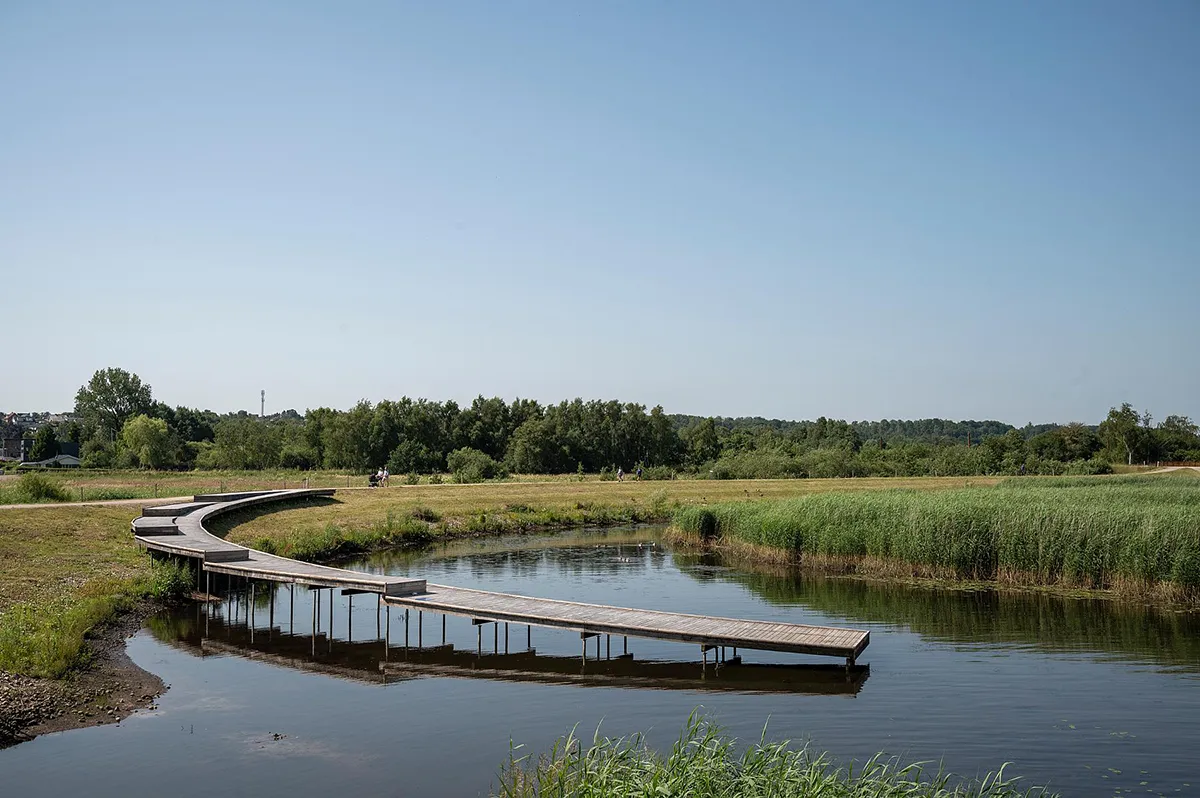
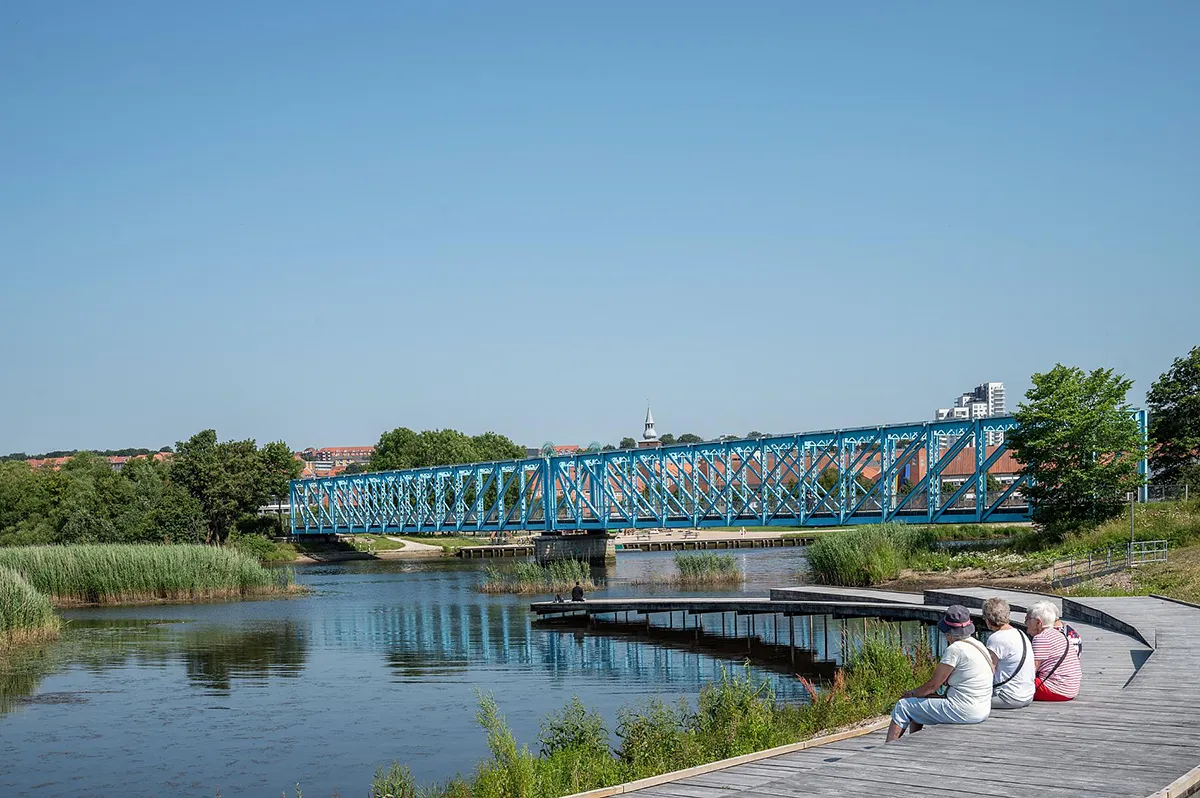
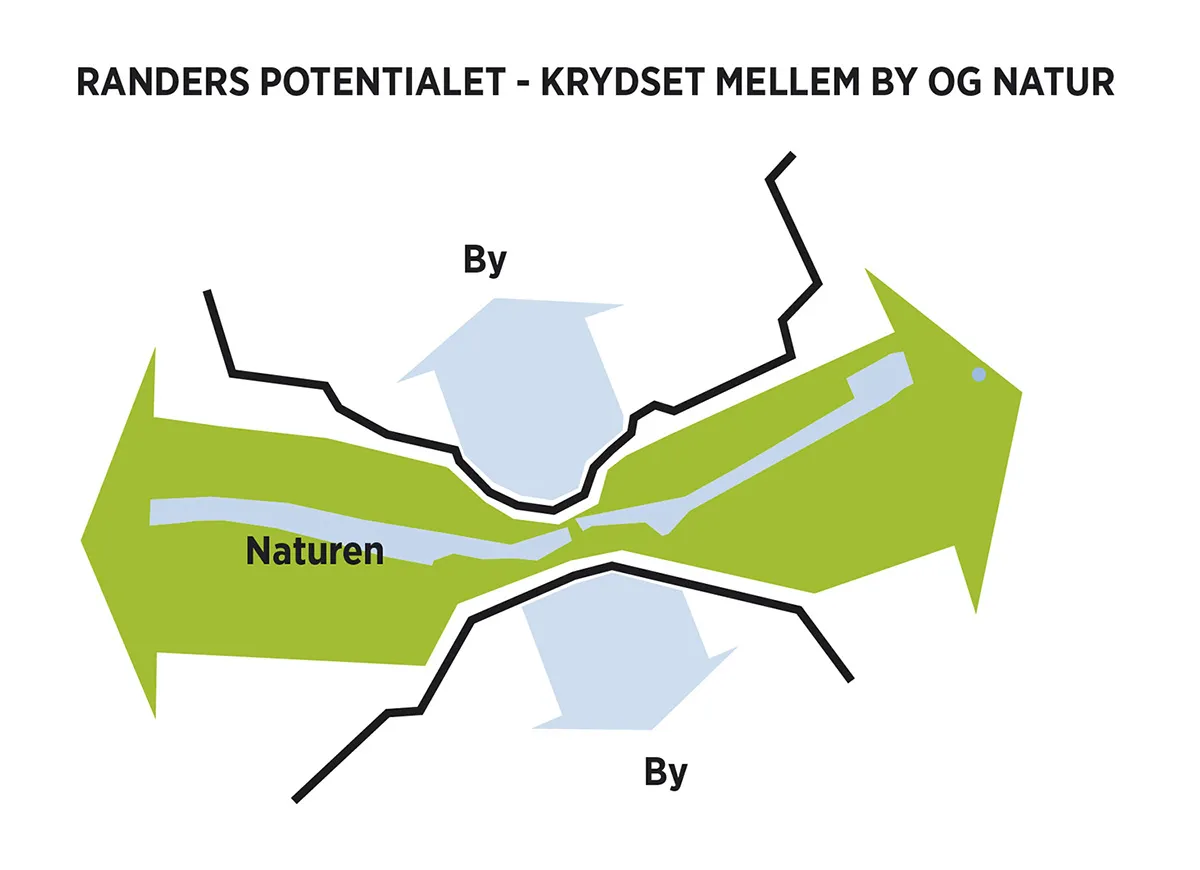
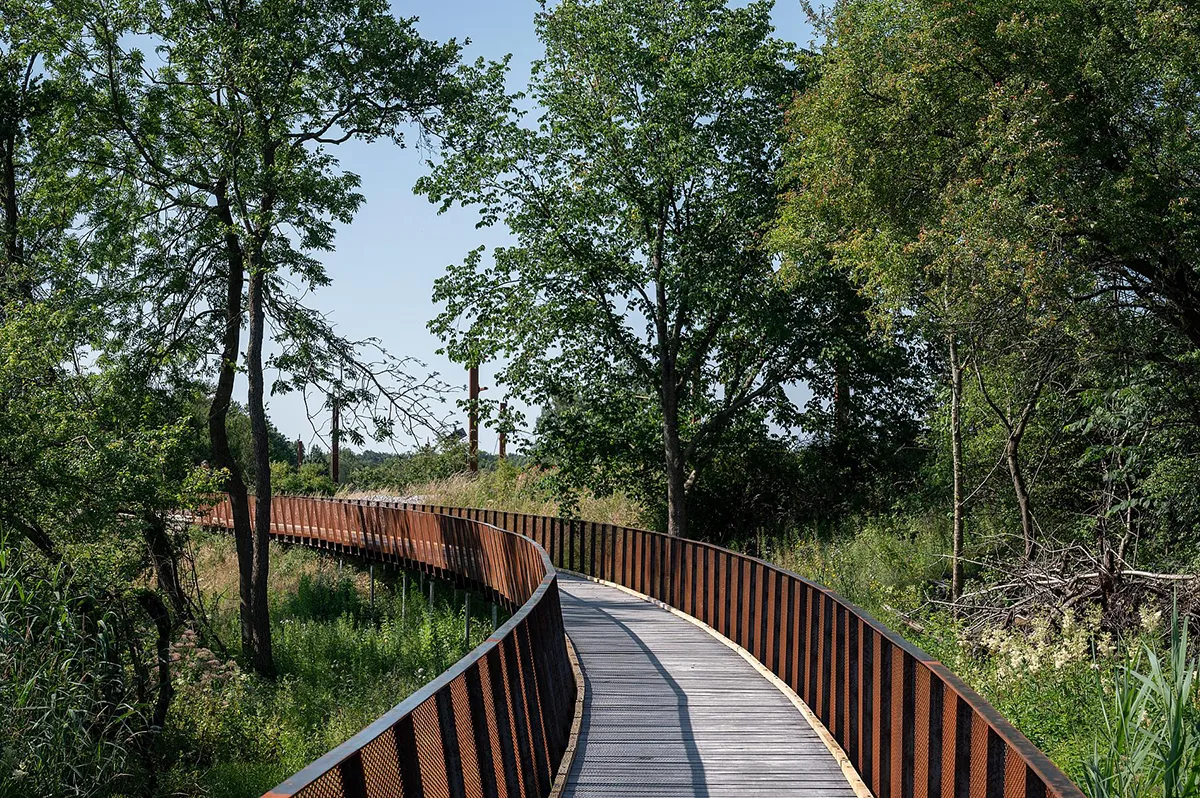
The dike protects Vorup from high tides and functions as a retention area. It contributes to the natural wet meadow areas – and with a trail system and elevated walkways, tourists and locals can enjoy nature dry- shod while the vulnerable wetland is protected. The integrated and holistic approach to climate adaption is emphasized by the fact that the dike also creates new connections between Randers city and the nature areas.
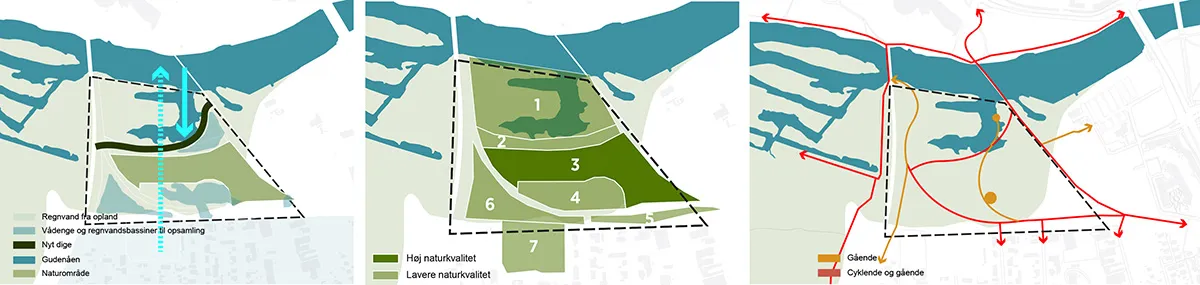
To manage rainwater from elevated surfaces in Vorup, cloudburst roads have been created. Their design is based on existing roads, so they retain their original shape and width. Via ditches in the Stork Meadow, the cloudburst water runs down and is handled in two basins. And at the dike a pumping station ensures that the cloudburst water is pumped into Gudenåen, even during storm surges and high tides.
Climate-proofing and beyond
The future of Randers lies in close interaction with the river and its recreational opportunities. And this project demonstrates how climate proofing can be more than rainwater management and storm surge protection by combining these solutions with a designed area that enriches nature experiences close to the heart of Randers city.
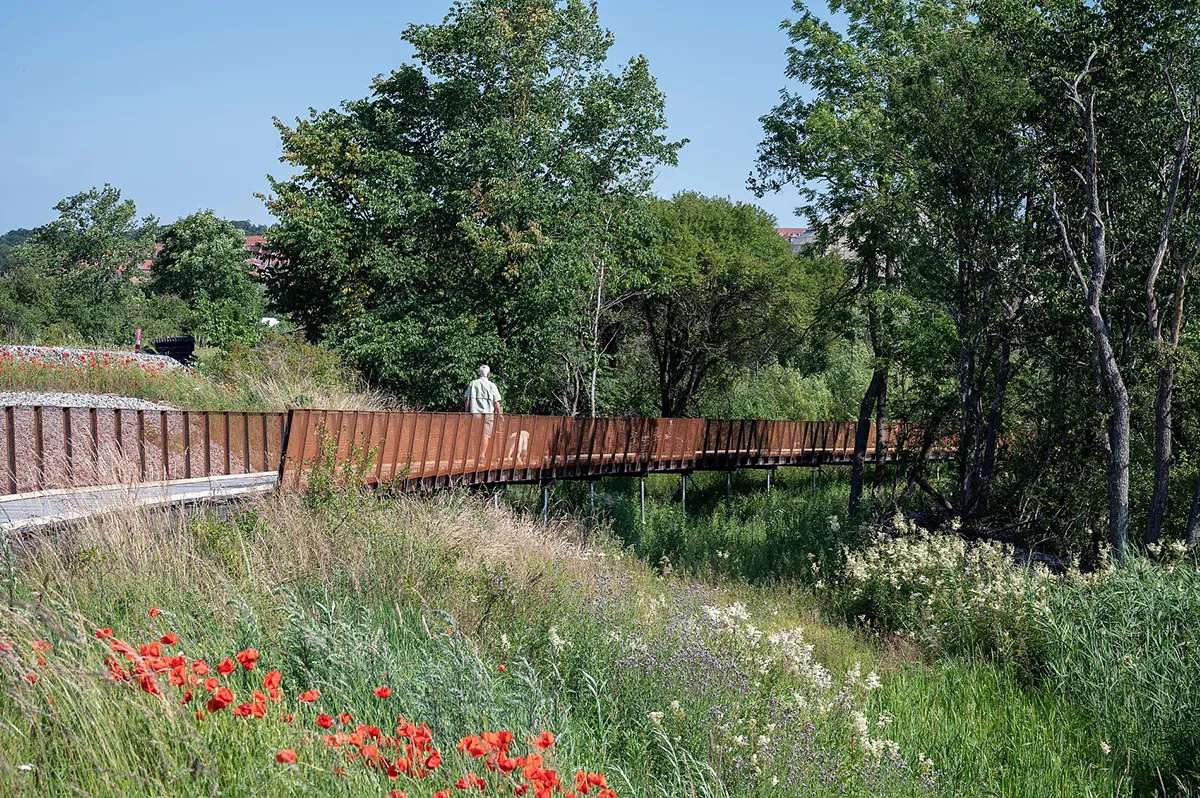
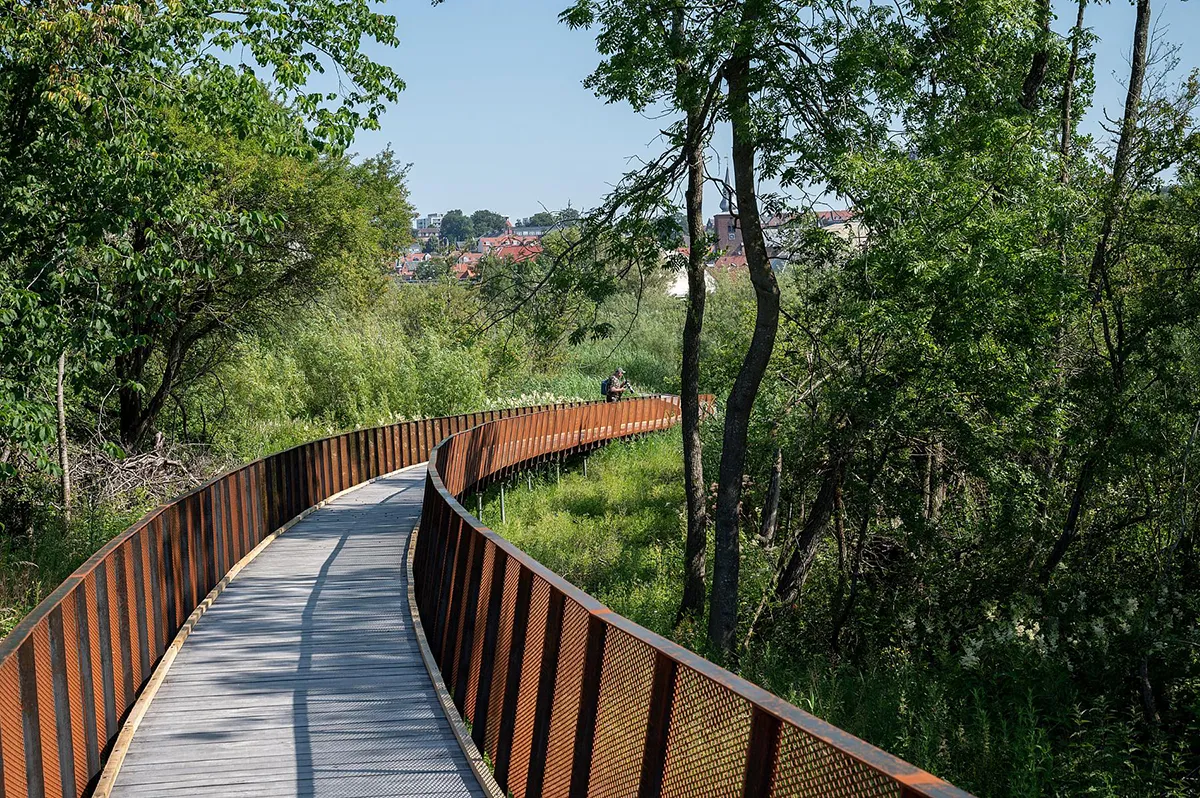
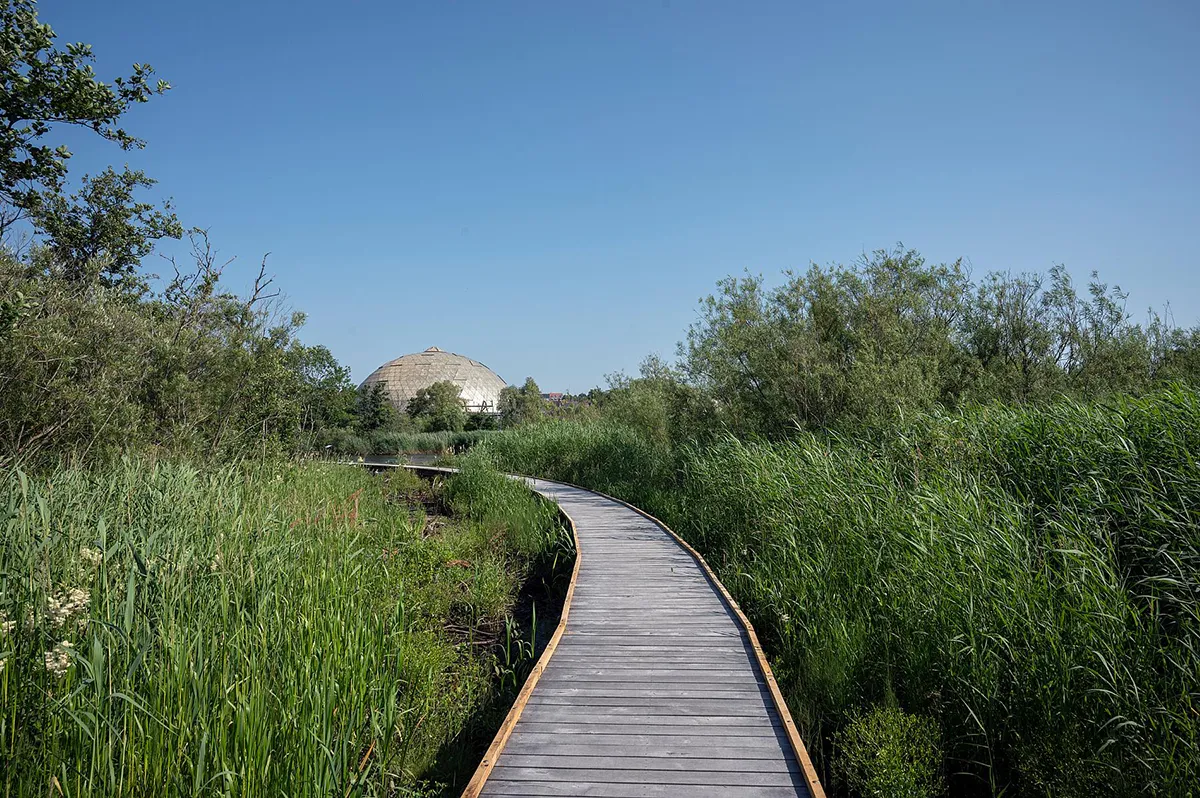
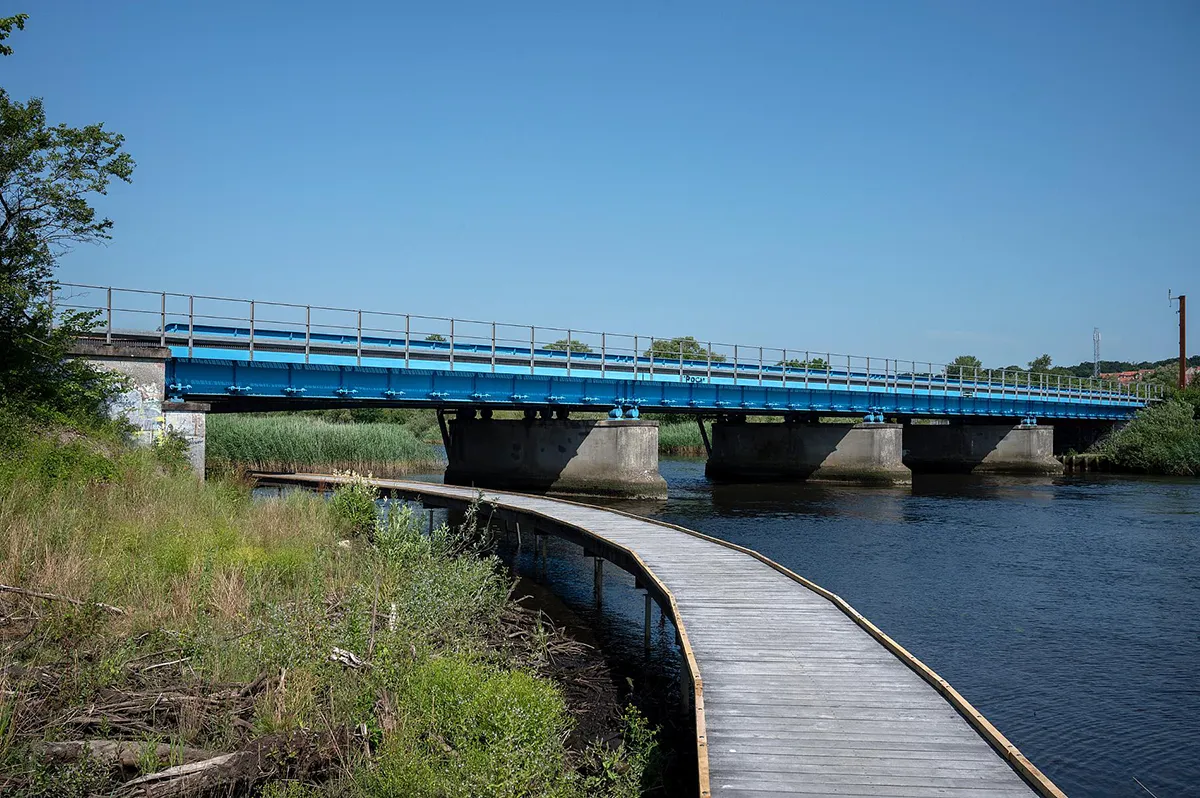
The initiatives at the Stork Meadow also promote the area’s biodiversity with wet meadow areas. By releasing large areas along Gudenåen, space is created for more nature and enhanced biodiversity, preserving the nature that already exists.
This holistic approach to climate proofing shows the potential of coastal areas to create nature parks that climate-proof, integrate with the city and adds value. And it demonstrates how climate solutions can be a tool to bring more nature into the urban landscape.
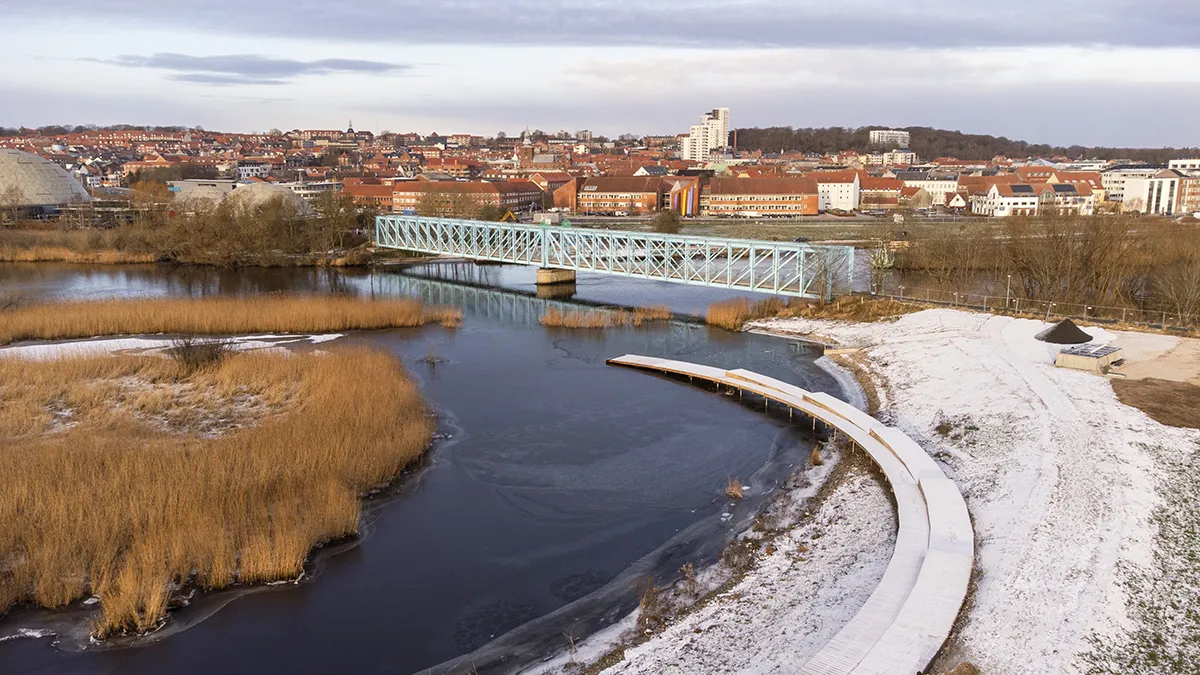
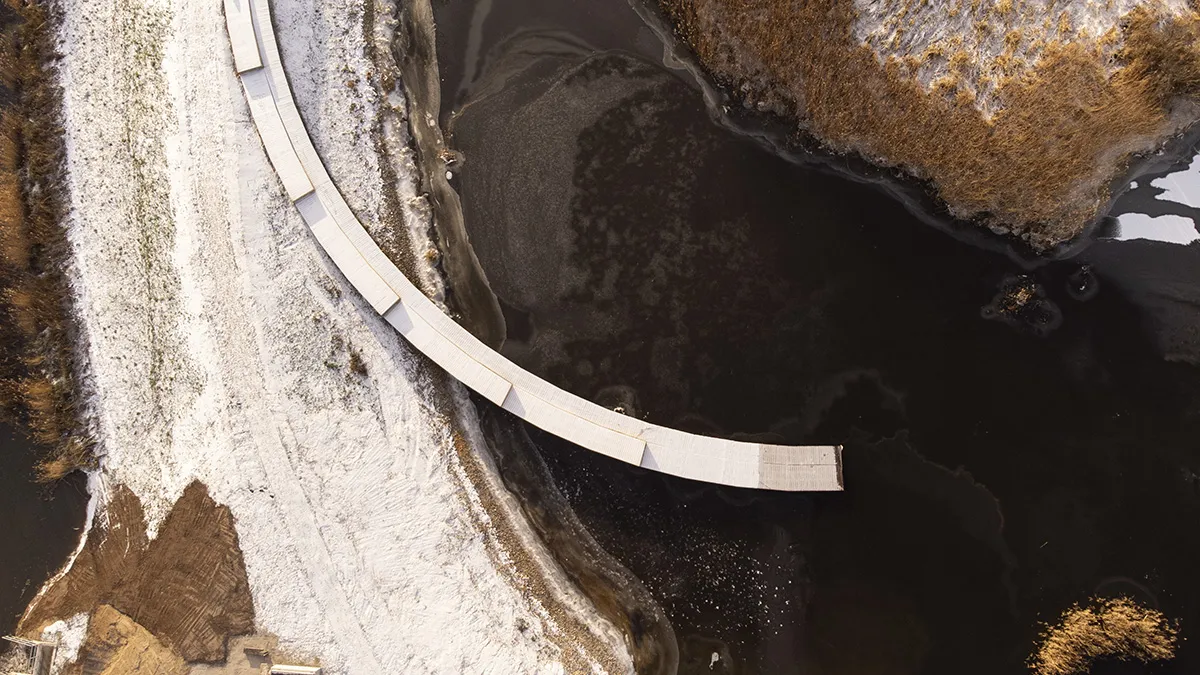
The Stork Meadow
Designer: C.F. Møller Architects
Collaborators:
Engineer: WSP Danmark
Contractor: Jakobsen & Blindkilde
Other collaborators: Geo
Client: Randers Municipality and Vandmiljø Randers
Photography: Peter Sikker Rasmussen; Silas Smed Andersen;
Technical Drawings credit, C.F. Møller Architects