
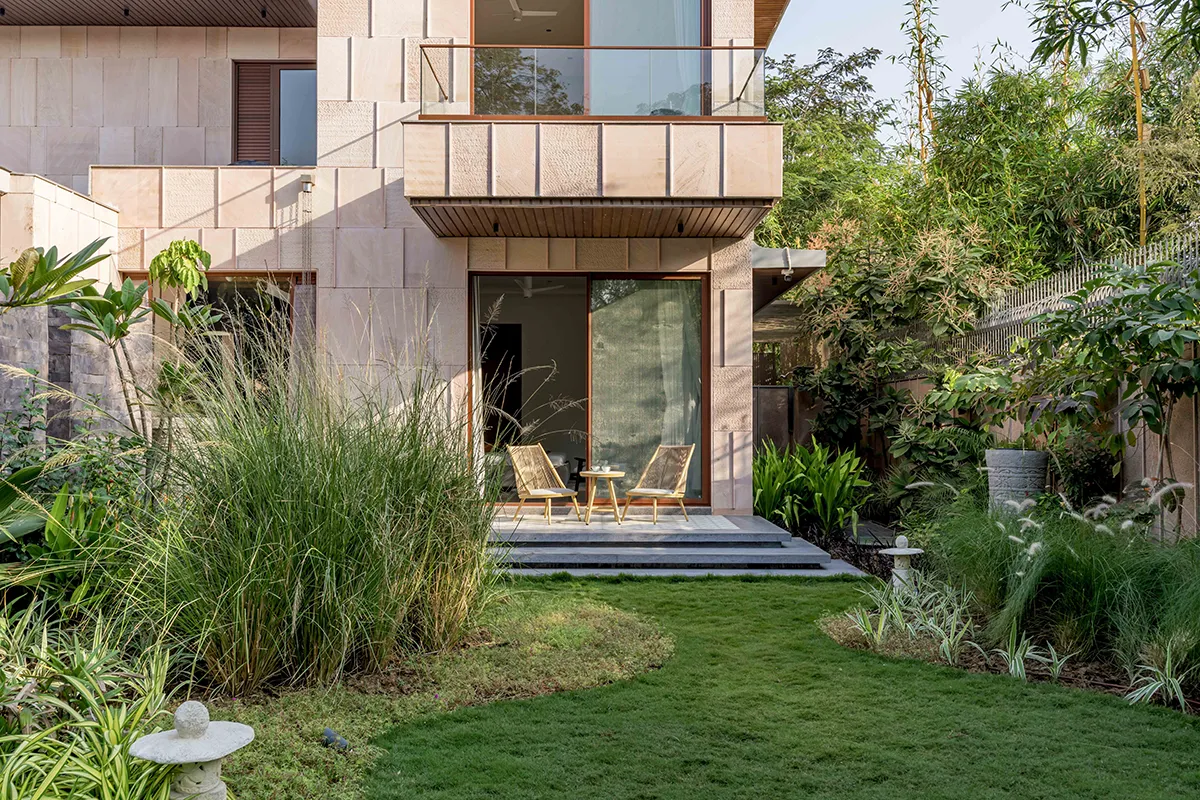
Nestled within a serene setting, The Siris House is a landscape-driven architectural experience, seamlessly integrating biodiversity, artistic expression, and spatial fluidity. Designed to celebrate the richness of native ecosystems while maintaining an unbroken dialogue between built and open spaces, the landscape unfolds as a layered, immersive journey from the moment one arrives.
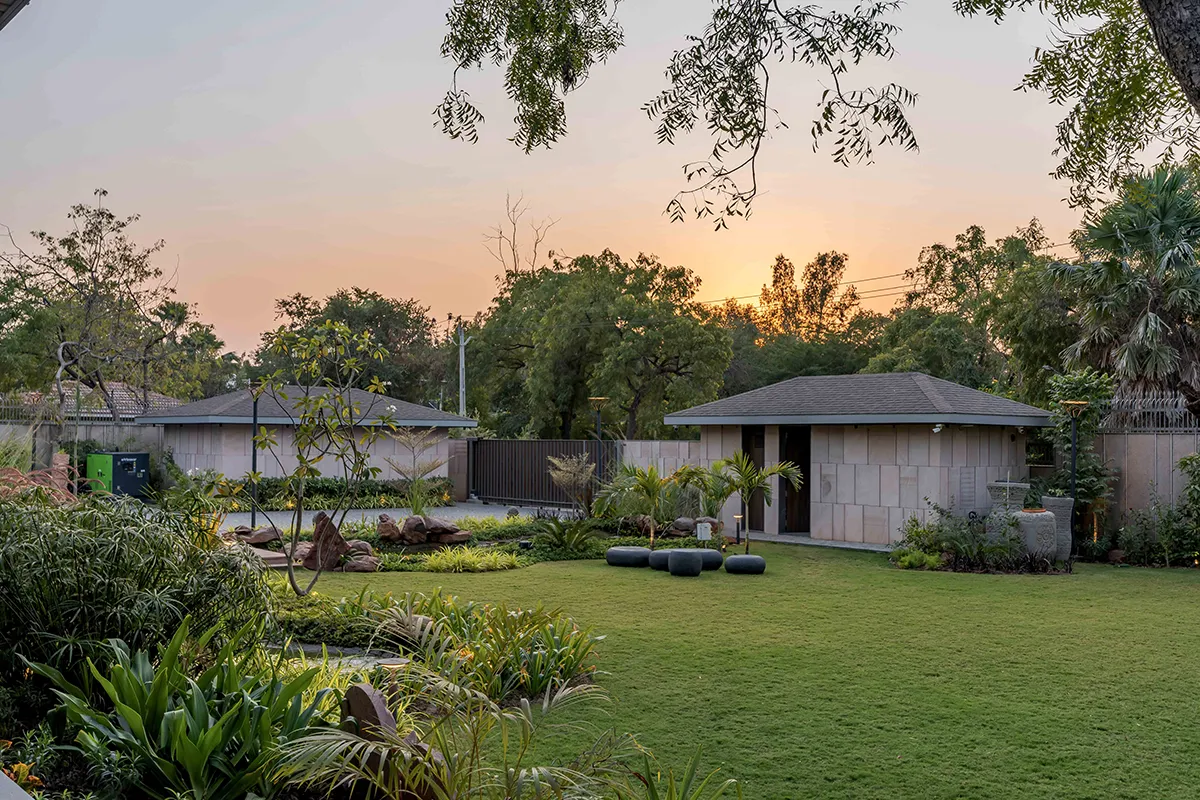
At the heart of the project stands a majestic Siris tree (Albizia lebbeck), the defining anchor of the design. The architect has thoughtfully crafted an open-air courtyard around this existing tree, allowing its expansive canopy to frame the spatial composition. Interior spaces are meticulously orchestrated around this central green void, ensuring that views, air circulation, and natural light are inherently shaped by the landscape.
A Seamless Dialogue Between Indoor and Outdoor Spaces
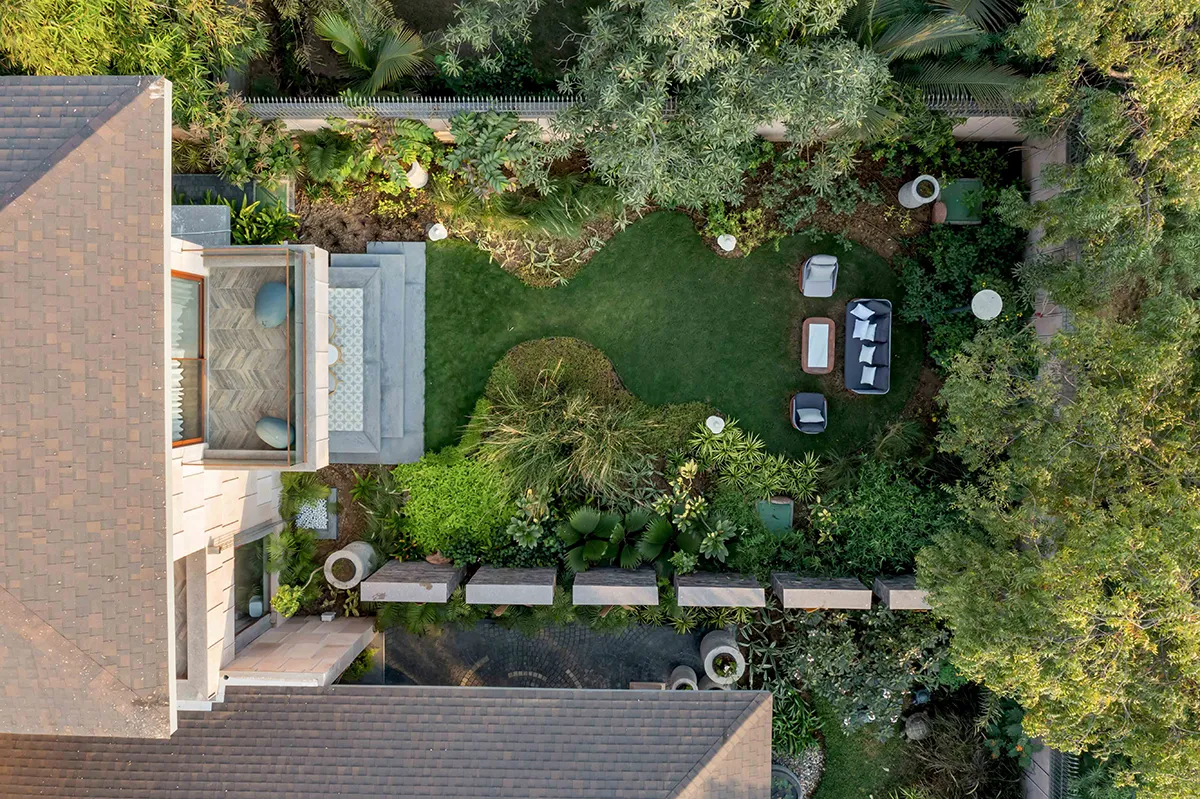
The landscape architect has choreographed the site’s planting palette, material selection, and spatial organization to blur the boundaries between interior and exterior environments. Shaded verandahs and transitional spaces dissolve into the surrounding green fabric, allowing the architecture to breathe within the landscape. Strategic plant placements and layered textures extend sightlines outward, softening edges and fostering an uninterrupted visual and sensory experience. Large fenestrations, screened openings, and framed vistas are employed to create a constant interplay of light, shadow, and movement, where nature is not merely observed but felt within the built form.
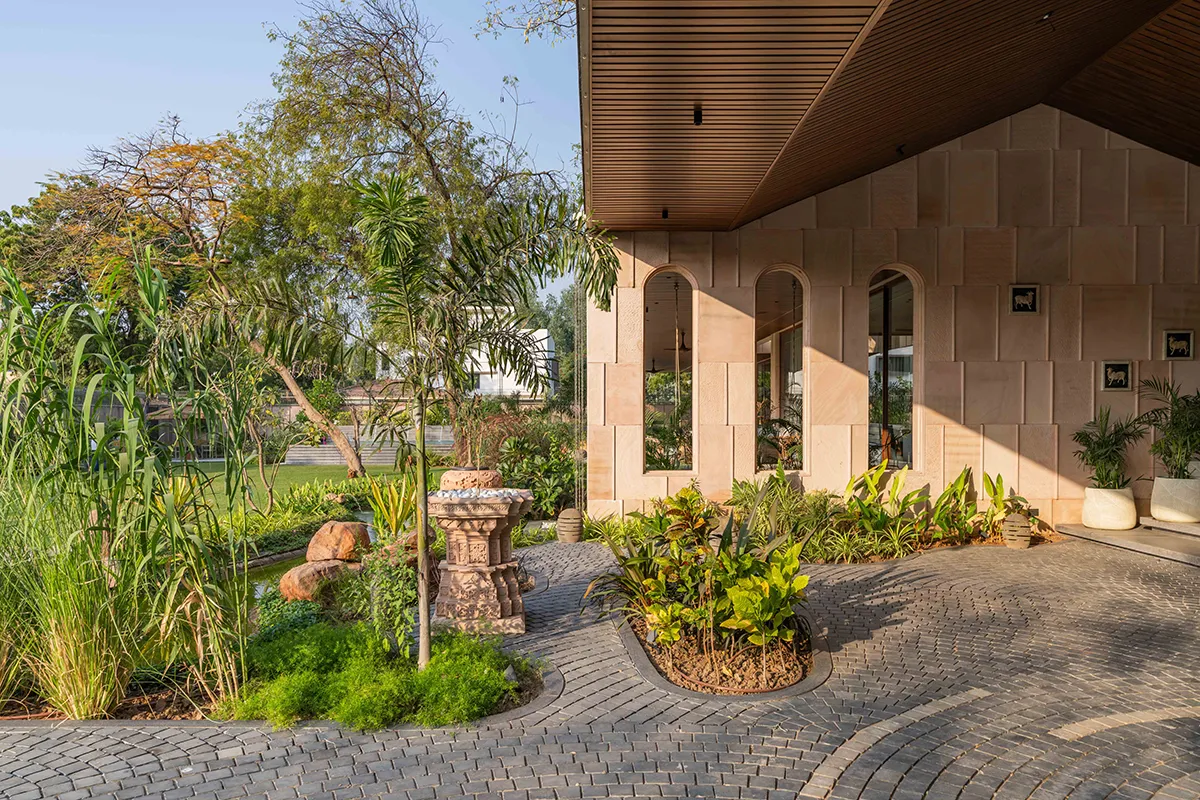
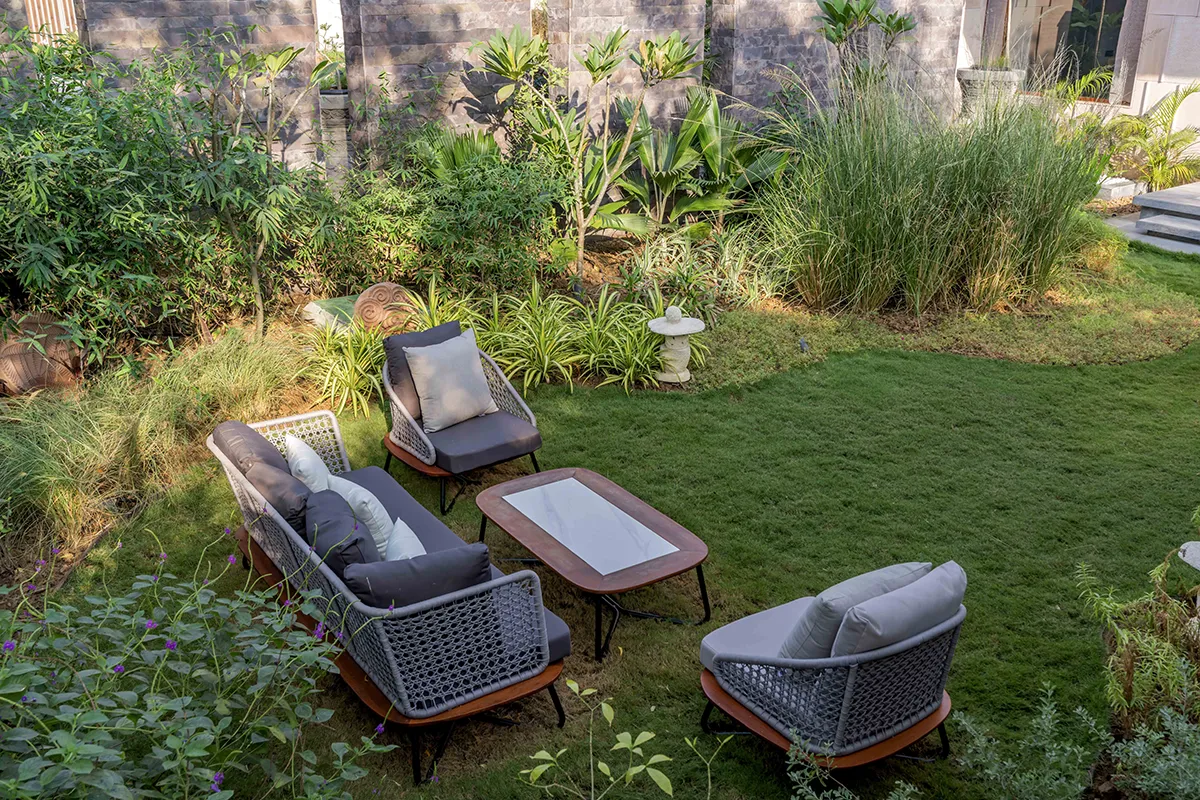
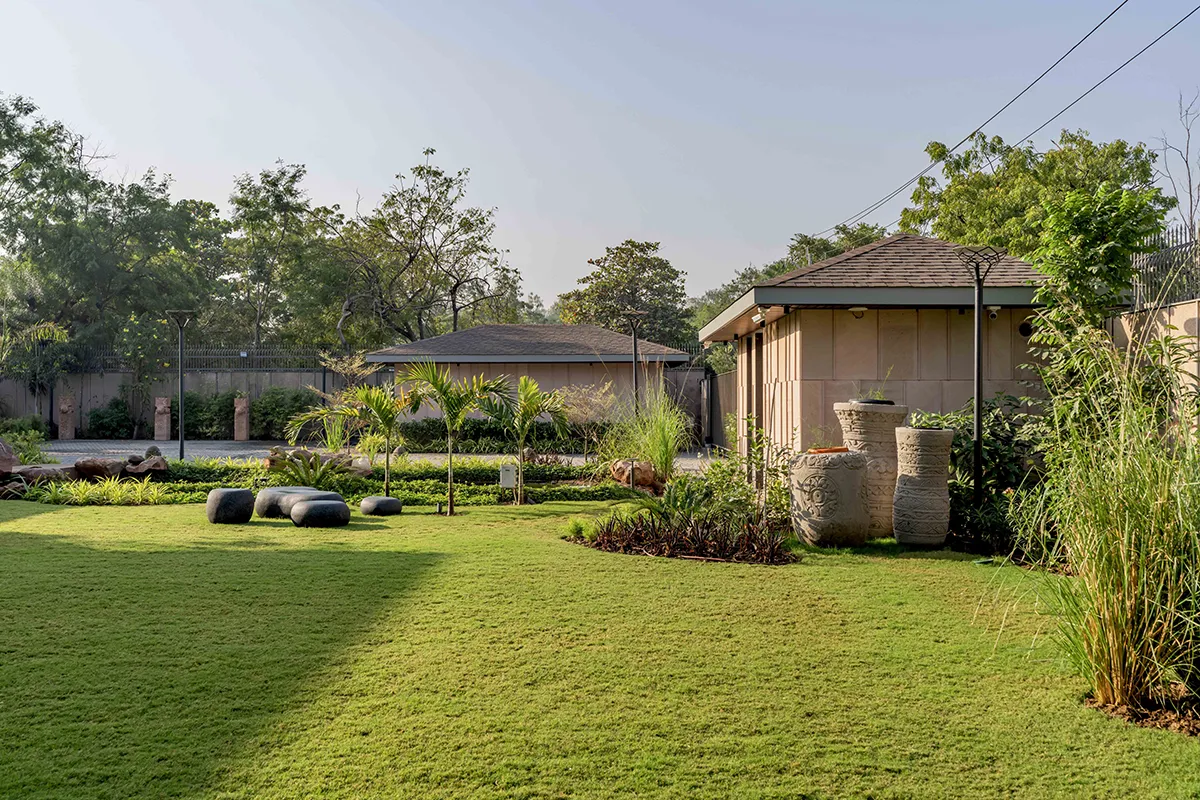
The landscape is conceived as an extension of the interiors, transforming residual areas into intimate outdoor sanctuaries. These semi-enclosed landscape pockets invite users outdoors, while maintaining a sense of enclosure and privacy, akin to outdoor rooms. Defined by a delicate balance of planting, hardscape, and transitional thresholds, these spaces foster moments of retreat, reflection, and engagement with nature—whether as a quiet reading nook, a shaded tea corner, or a meditative pause amid textured foliage.
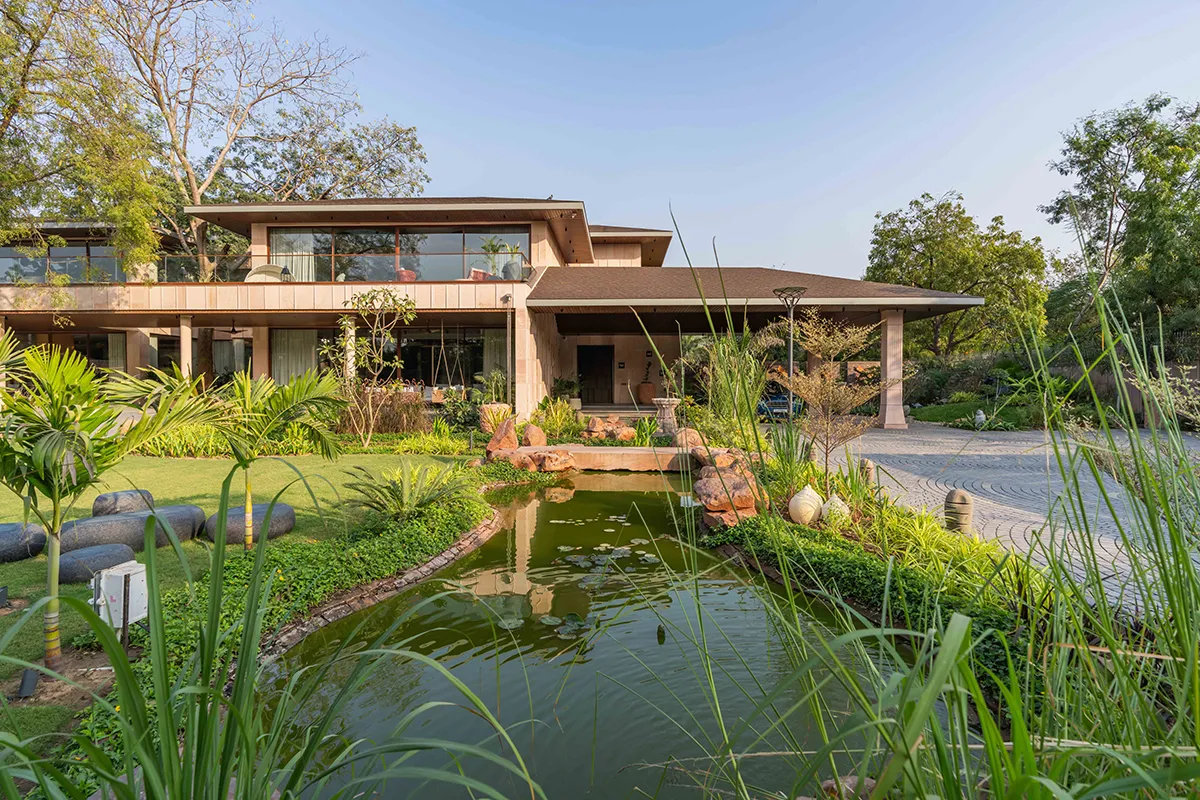
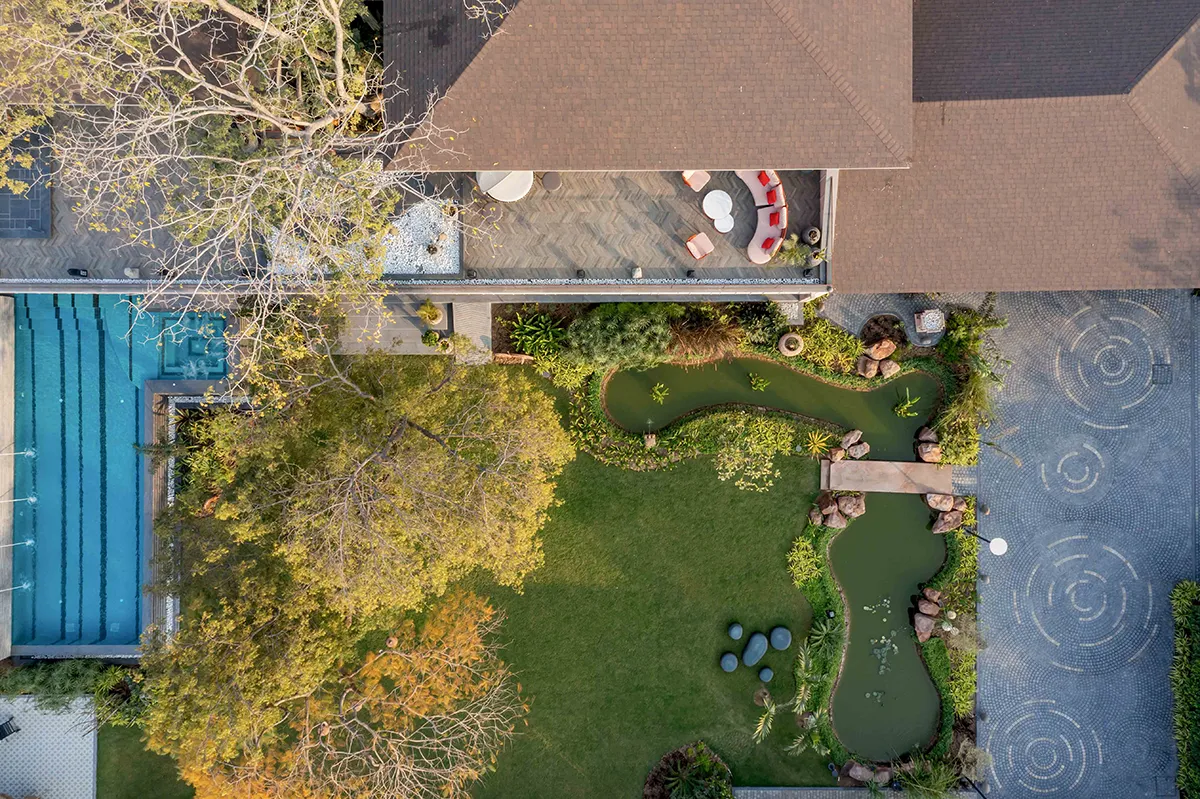
As visitors enter, they are greeted by a free-flowing natural lake on the left, establishing an immediate sense of tranquility. The waterbody anchors the microclimate and serves as a thriving habitat, attracting birds, butterflies, and aquatic life, reinforcing the ecological resilience of the site. The arrival experience is further accentuated by the presence of a Nandi statue, a sculptural element that provides a spiritual and cultural grounding, seamlessly woven into the landscape composition.
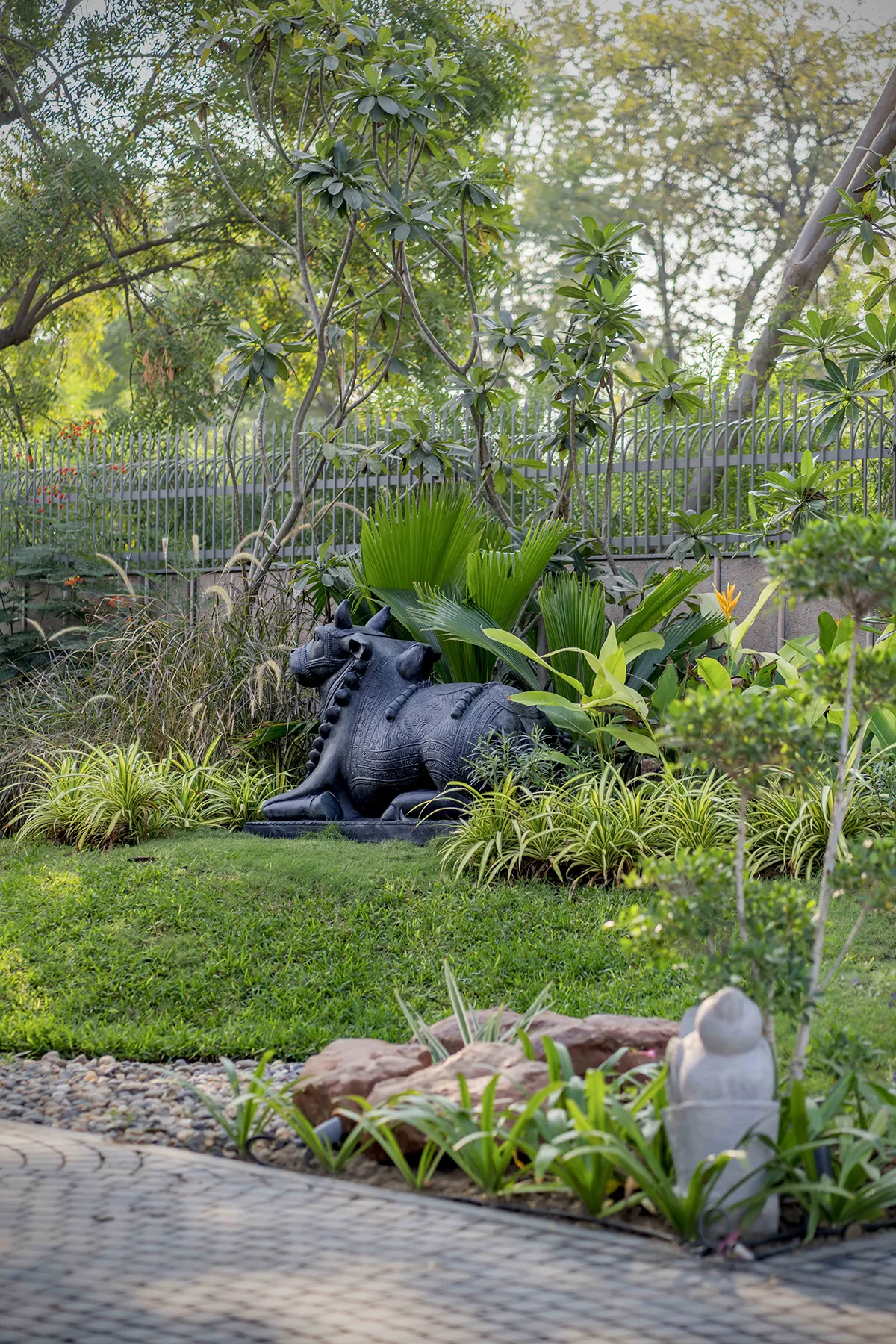
Across the site, a series of sculpted landscape mounds, wild grass plantations, and natural rock formations create a topographic rhythm, echoing the organic contours of nature. The planting strategy prioritizes over 100 species, with 80% native vegetation, ensuring long-term ecological sustainability while offering a dynamic seasonal expression in color, texture, and form.
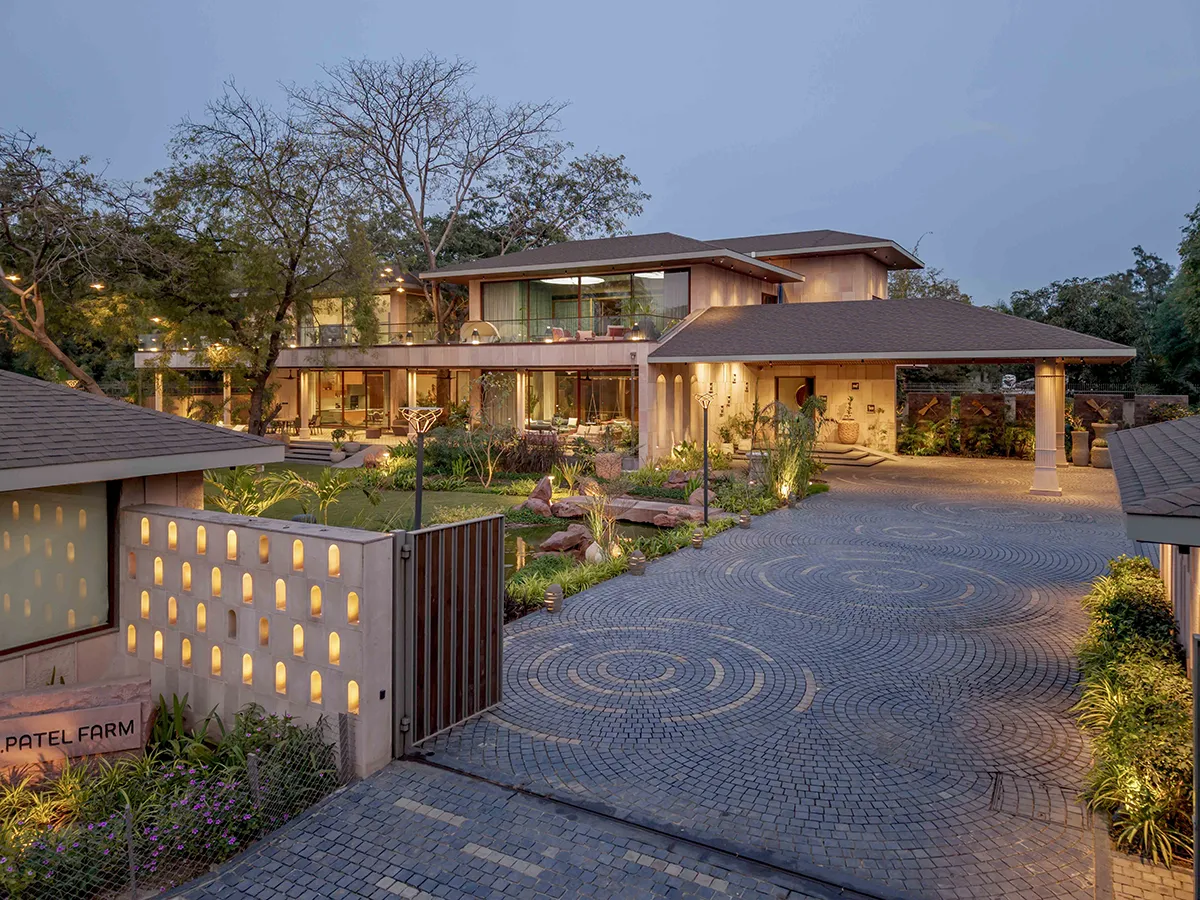
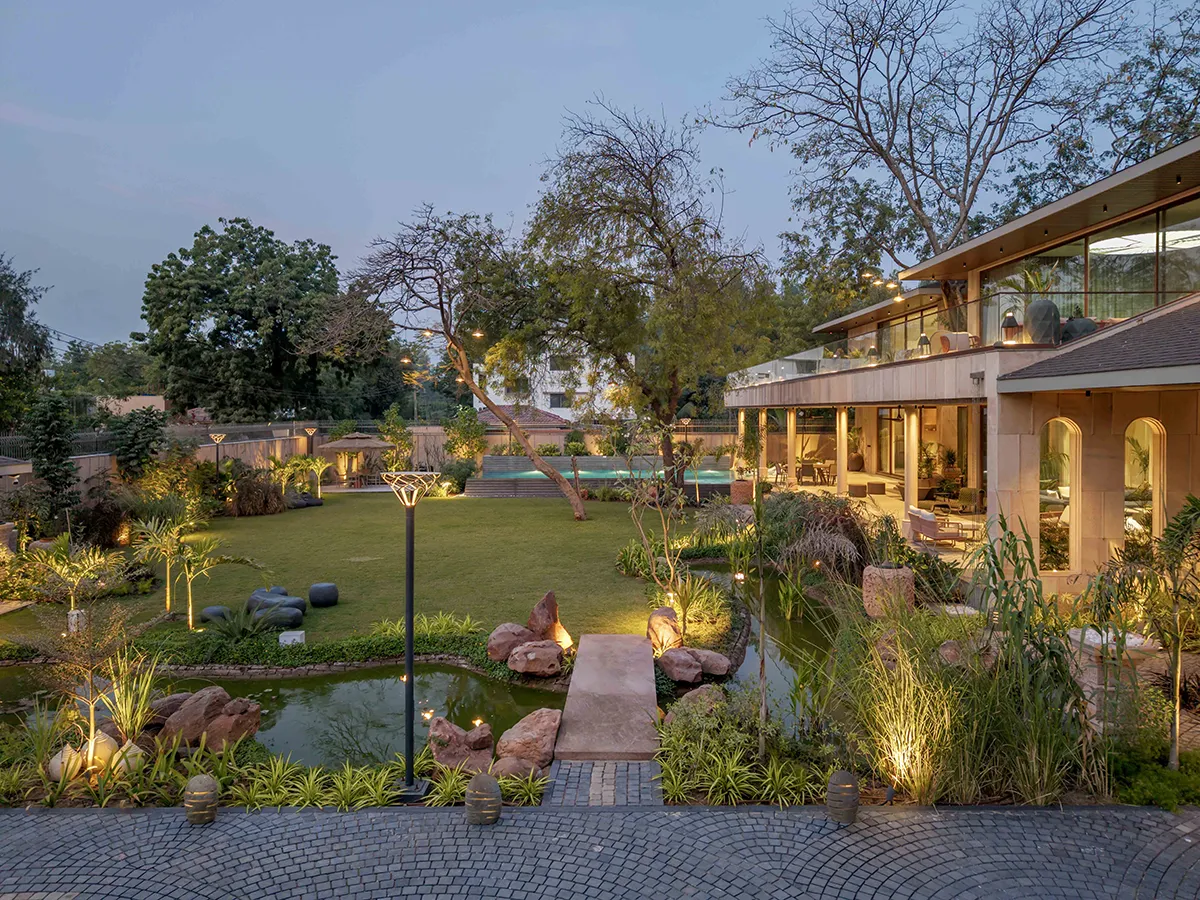
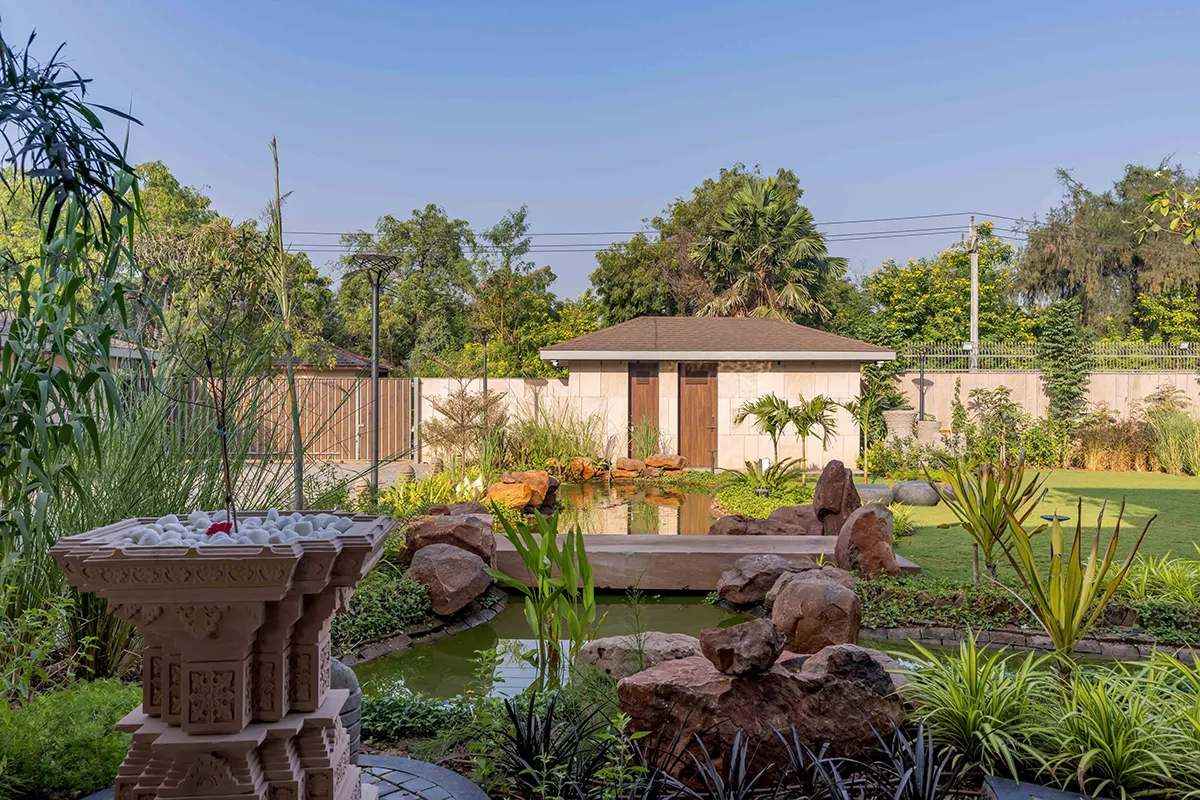
Subtle yet striking sculptural interventions and curated planters are placed with intentionality, creating moments of pause and contemplation. The interplay of hardscape and softscape fosters a tactile relationship between users and the land, reinforcing the idea that this is not just a designed space but a living, evolving ecosystem.
The Siris House is more than a landscape; it is an orchestrated experience of time, space, and nature, where architecture and ecology exist in seamless dialogue, creating a sanctuary of balance and belonging.
The Siris House
Location: Telav, Gujarat
Design Firm: Akshar Landscape Architects
Photo Credits: Inclined Studio