
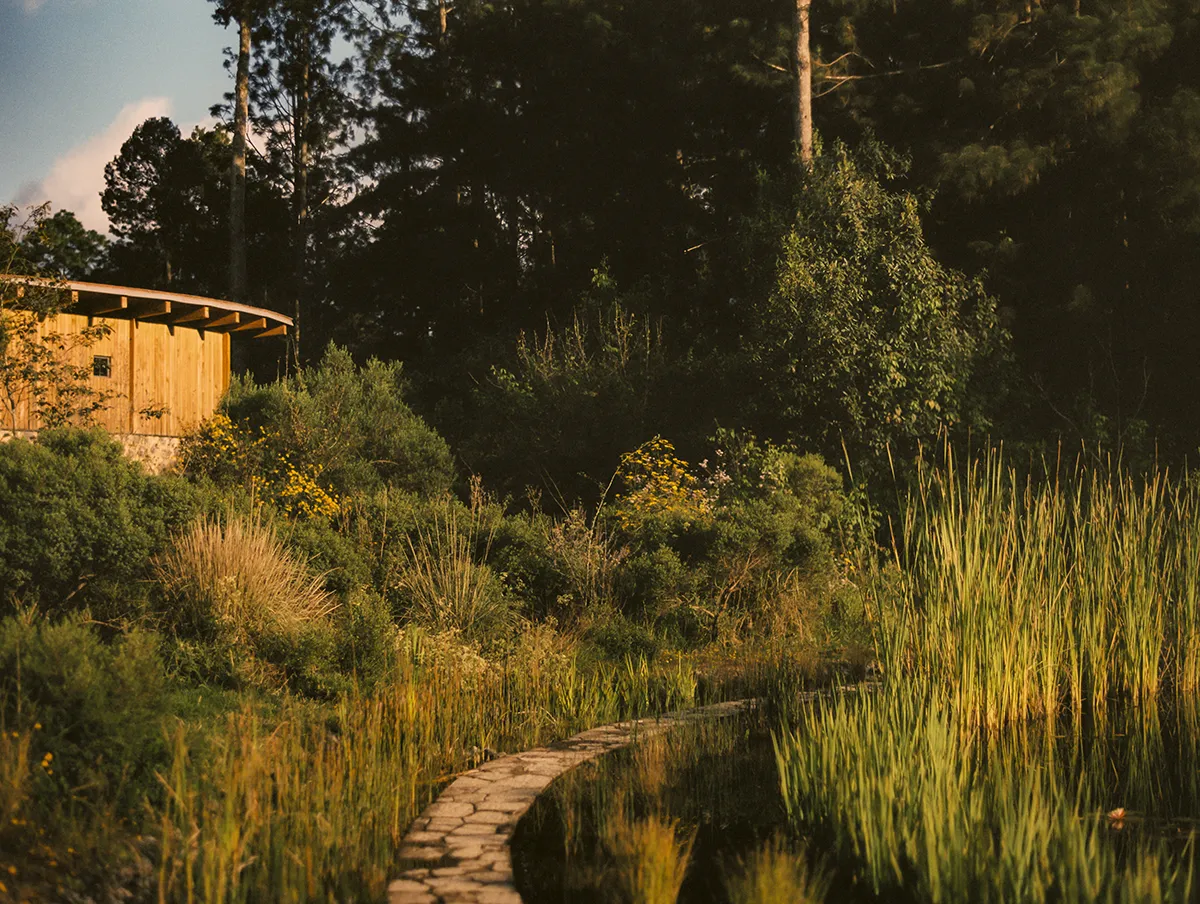
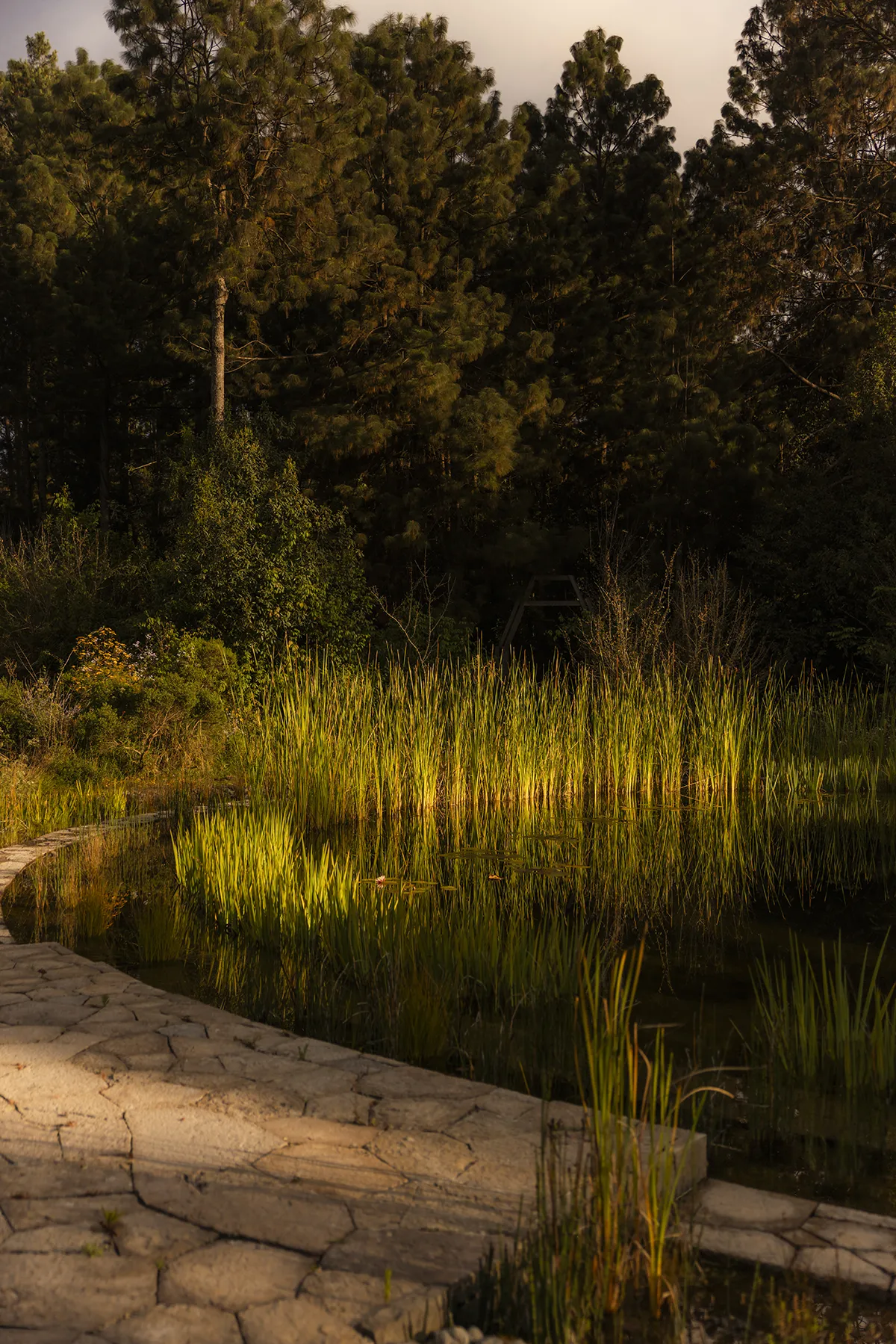
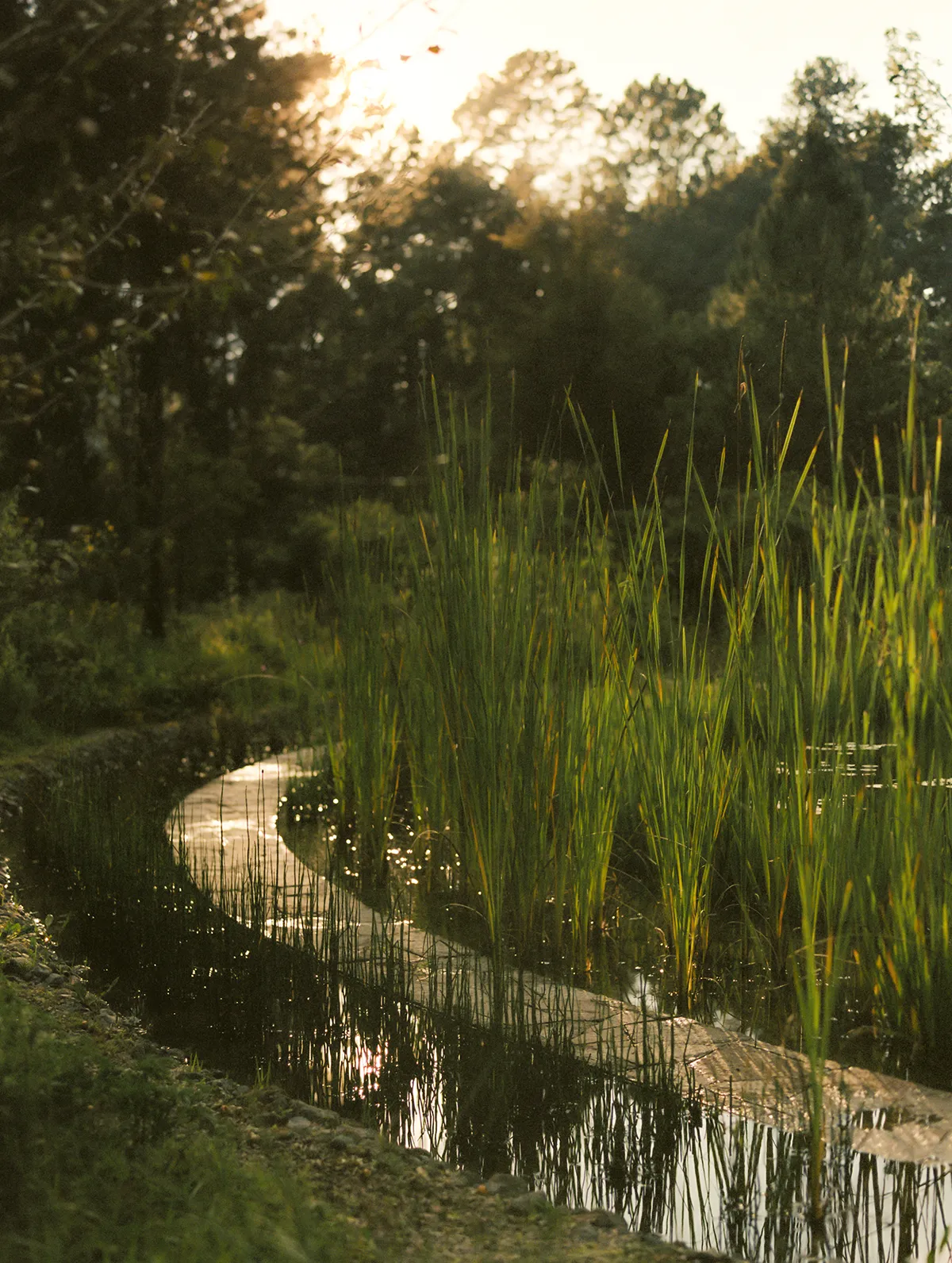
From the first site visit we felt a strong contrast between an existing prairie and forest that made us question how the landscape project could disappear and be rediscovered? A series of low stone walls and a large main terrace surround the house. The strong patterns of the stone walls, carpets and paths were designed to be gradually overtaken by the wild. Rainwater is harvested through thoughtfully designed drains and a collection of ditches that gather and lead the valuable water to the lake. Like ripples, the lake contains circular paths that slowly emerge during the dry season. A wooden gate gives an entrance to the thick forest. Once under the trees, a long wooden walkway gives the soft experience of walking flat but observing the changing topography. Its elevated structure allows water flow and respects the alive soil.
The Ruins sits 2,184 metres above sea level in the oak-pine tree forests of Mexico. In the 1.7 hectares site, a self-sufficient house-studio requiring a rainwater cistern, was to be built.
First Discoveries
From the first visit, we felt a strong contrast in between a blooming prairie and a rich
forest. The wilderness, made us question how the project could disappear with time and reappear when used. How to create a place that you rediscover each time you visit?
Ruins
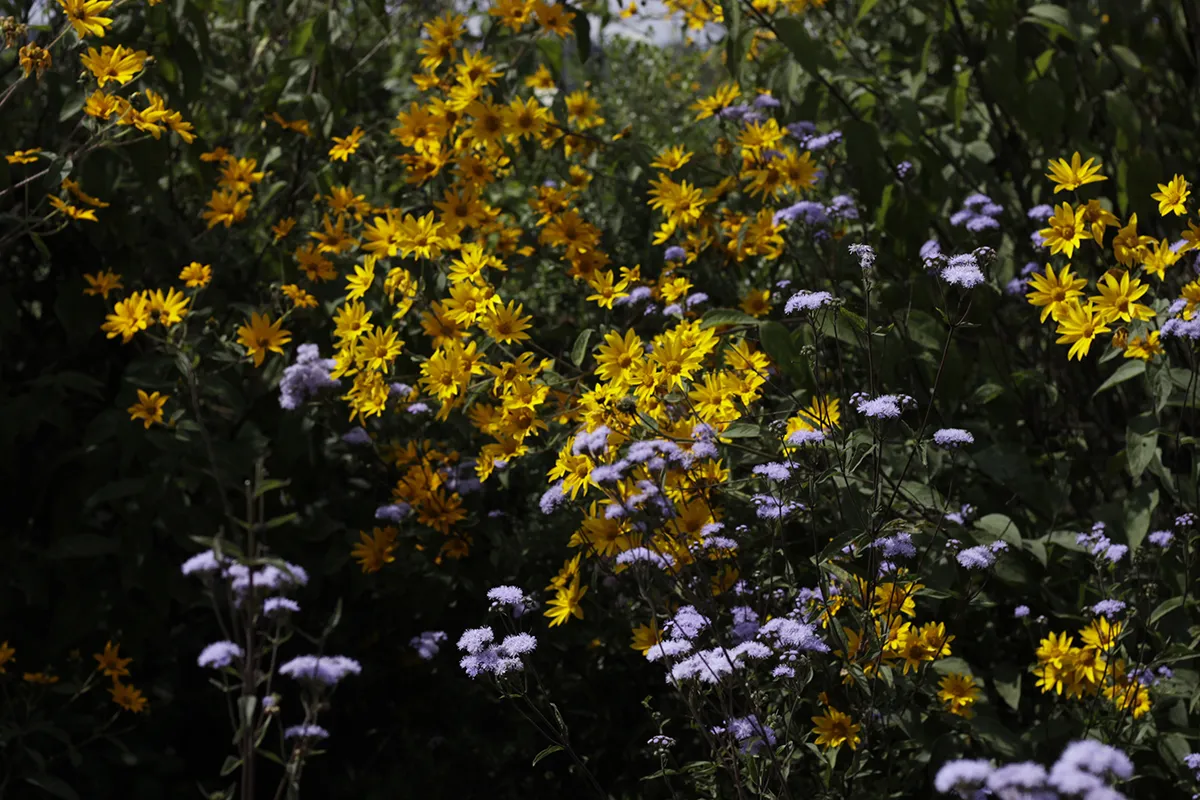
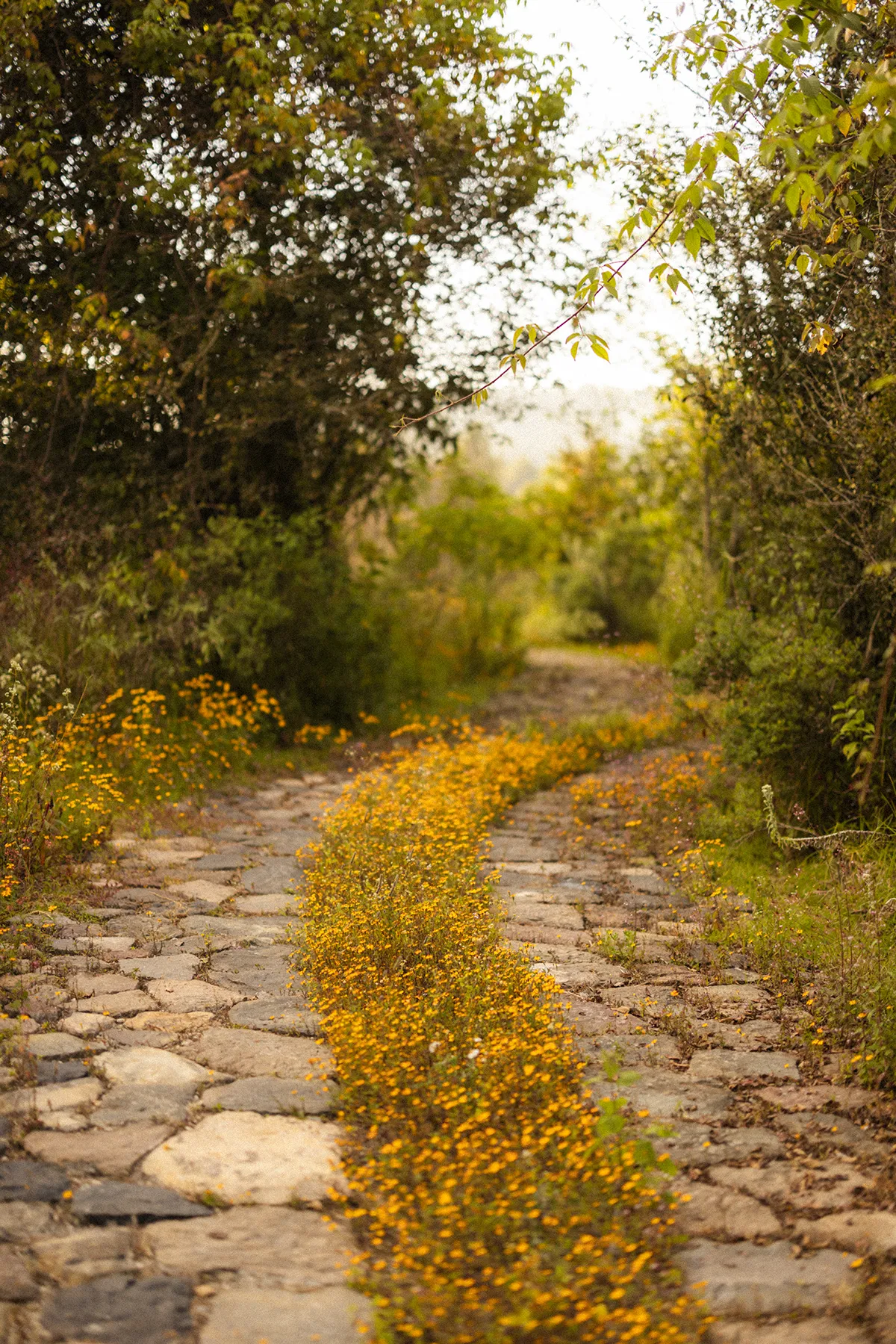
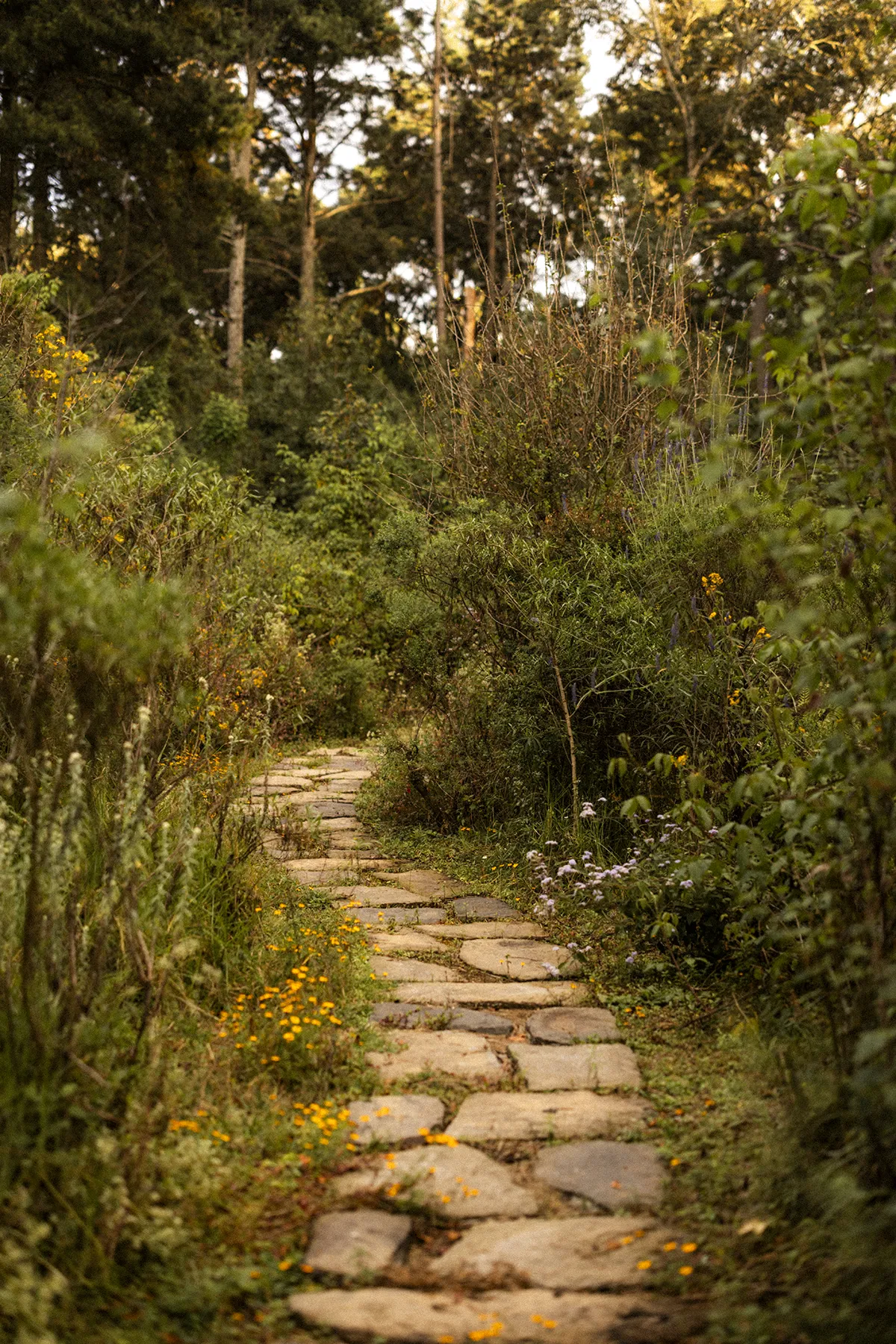
The idea of working with an overgrown ruin landscape came instantly. Stone is a material that once placed in a garden barely moves and enhances vegetation but also changes when in contact with water. Three types of stone paths were designed depending on the intensity of its use. What they have in common is the wish for the vegetation to overgrow them and a recognisably strong pattern ready to be rediscovered, just as archaeologists would find an ancient floor. Two types of walls accompany them, simulating the effect of time, with designed collapses. The scale of these spaces allows for a timeless transition between the new architecture and the untamed landscape.
Rain
At the forest edge, the house is surrounded by a series of low stone walls and a large
main terrace that completes the semi-circular house. They become the everchanging
stage for its inhabitants, a space for performance, bringing outdoor uses to the artist’s studio. Young flowering trees such as the black cherry were planted in dense groups together with herbal and medicinal plants to be used in the kitchen. An outdoor kitchen was also designed and integrated into the walls. The endemic Quercus laurina was chosen as the central tree, giving a light and delicate shadow to the bright surface.
Forest
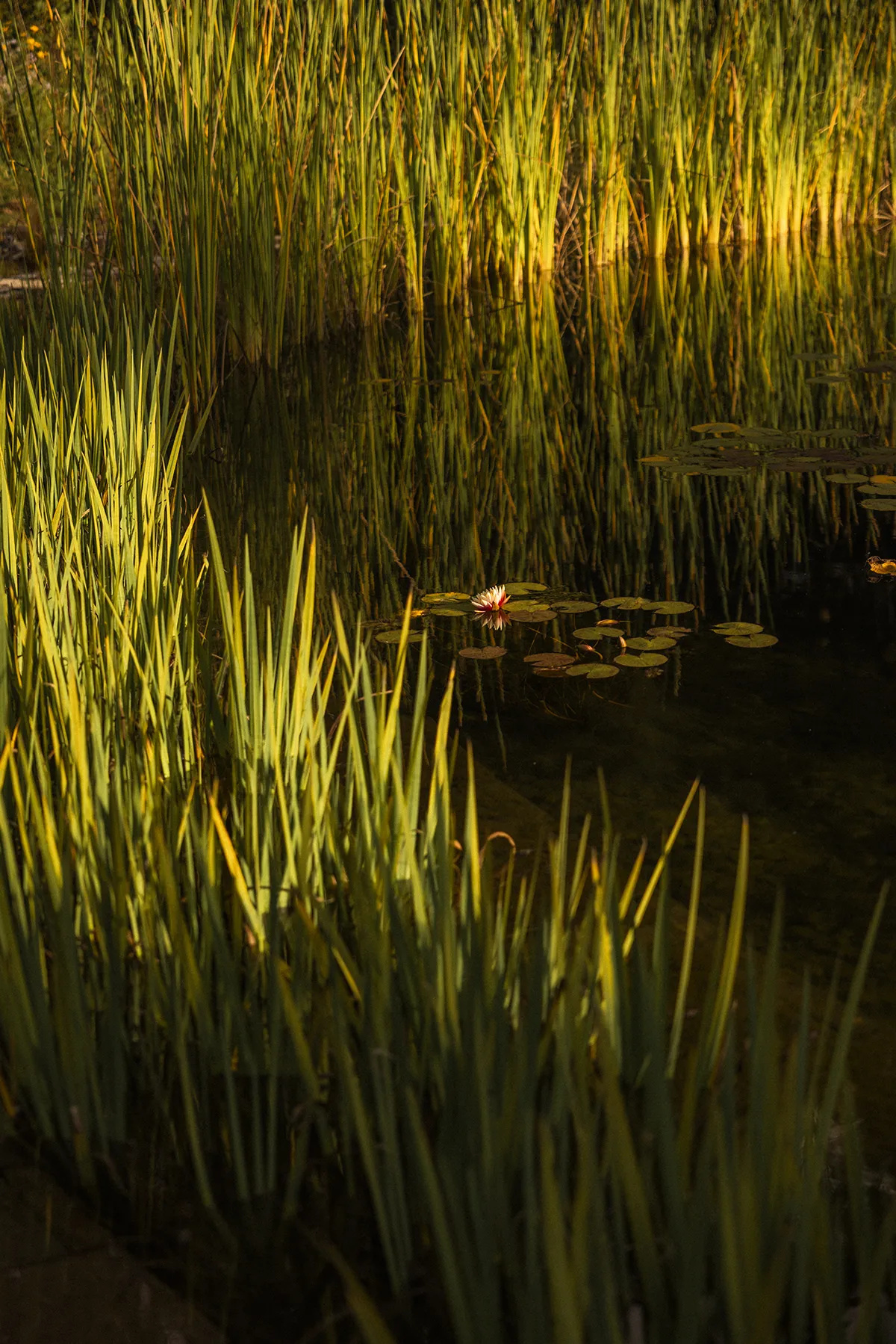
Rainwater is harvested from surface run-off and the roof. A collection of ditches along the paths gather the water and leads it towards the lake. A main challenge was the open cistern due to the long dry season in Mexico causing evaporation, a design opportunity. How would the lake look like upon reaching its lowest level? A series of stone rings at different levels show the water level changing, and create specific microclimates. A circular water scape felt right, inspired by Moray, the Peruvian site. During the rainy season it becomes a mirror to the forest and welcomes courageous swimmers.
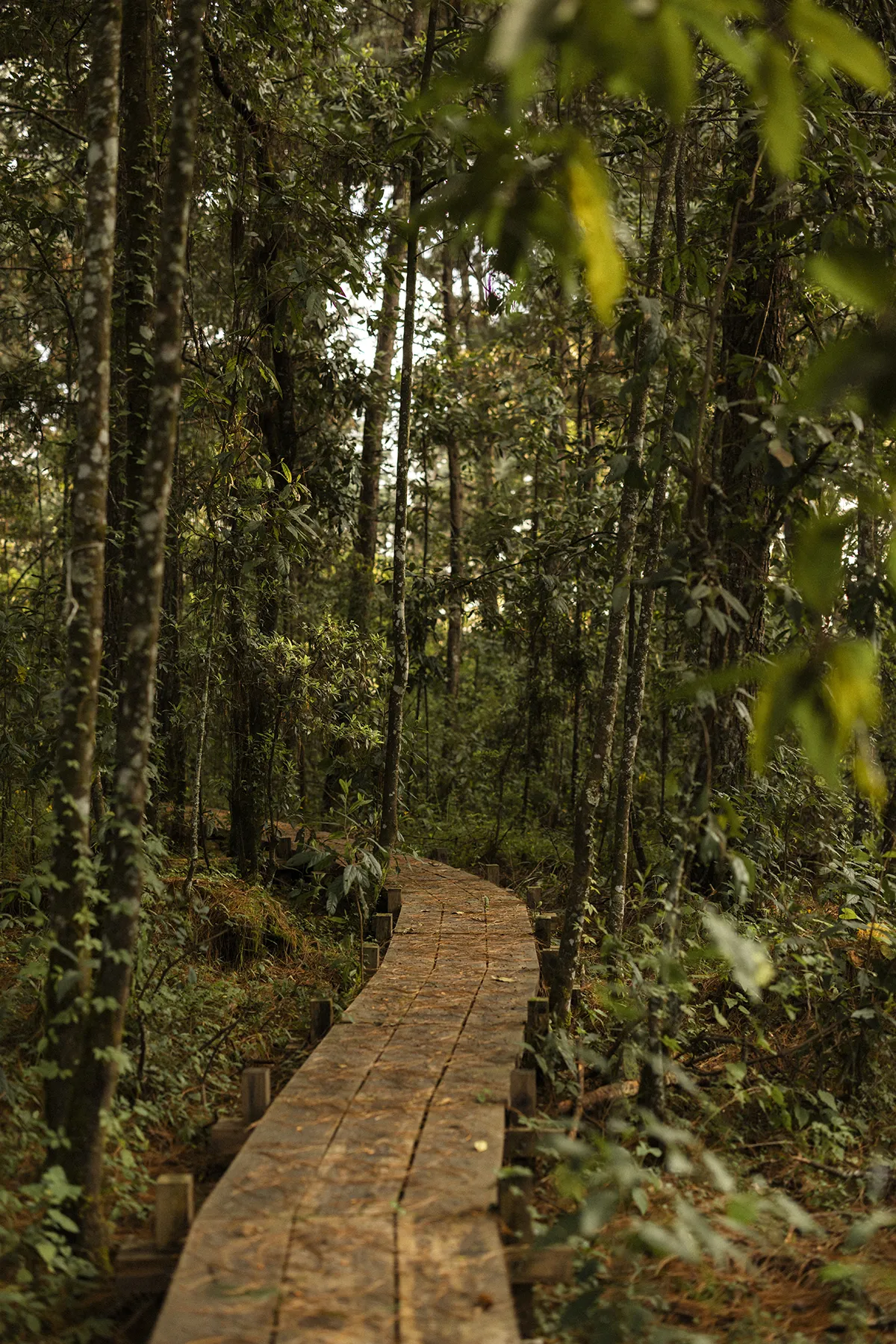
A wooden gate to the forest was built to give an entrance to the thick forest. Inspired by
the Mayan shape of stone gates, the high threshold marks the beginning of a different
journey and can be seen from long distance, reminiscent of the Japanese Tori. Once
under the trees, a wood walkway follows one same level, giving the experience of walking flat but observing the topography. The wooden structure is elevated, allowing water to run and plants to grow, respecting the alive soil.
The photographs show a winter landscape, now ready to surrender to time and growth.
The Ruins
Location: Valle de Bravo, Mexico
Landscape architecture: Estudio Ome
Architecture: Rozana Montiel Estudio de Arquitectura & Claudia Rodríguez
Water engineering: Taller Nuevos Territorios
Photography:
Image Credits: Maureen M. Evans (unless otherwise captioned)