
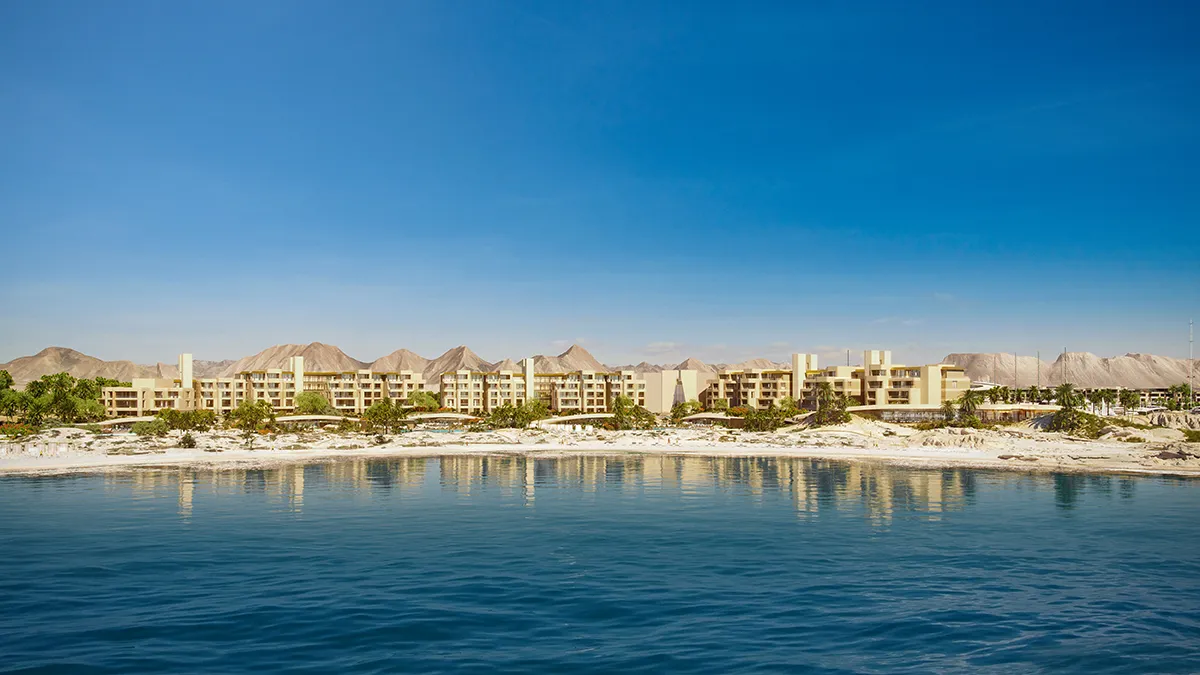
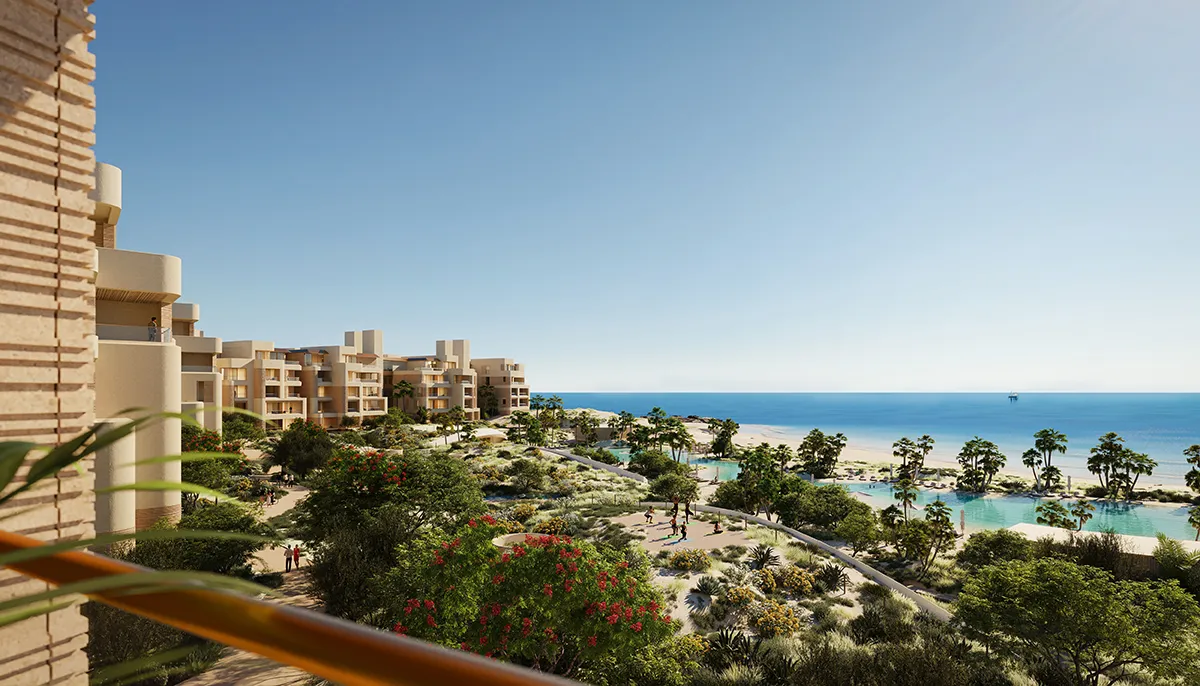
Set within the Triple Bay Marina Village, The Ritz-Carlton, AMAALA emerges as a seamless dialogue between landscape and architecture, where nature is not merely preserved but curated. The landscape design takes its cues from the region’s native ecology, weaving together the language of coastal geology, vernacular patterns, and contemporary restraint. From the moment of arrival, the spatial experience is choreographed to unfold with subtle grandeur: a calculated blend of visual framing, open-air transitions, and immersive natural textures that heighten the guest’s relationship with the Red Sea and surrounding natural rock formations. What makes the landscape approach distinctive is its quiet confidence, avoiding ornamental excess in favor of a grounded, climate-responsive minimalism that amplifies the power of place.
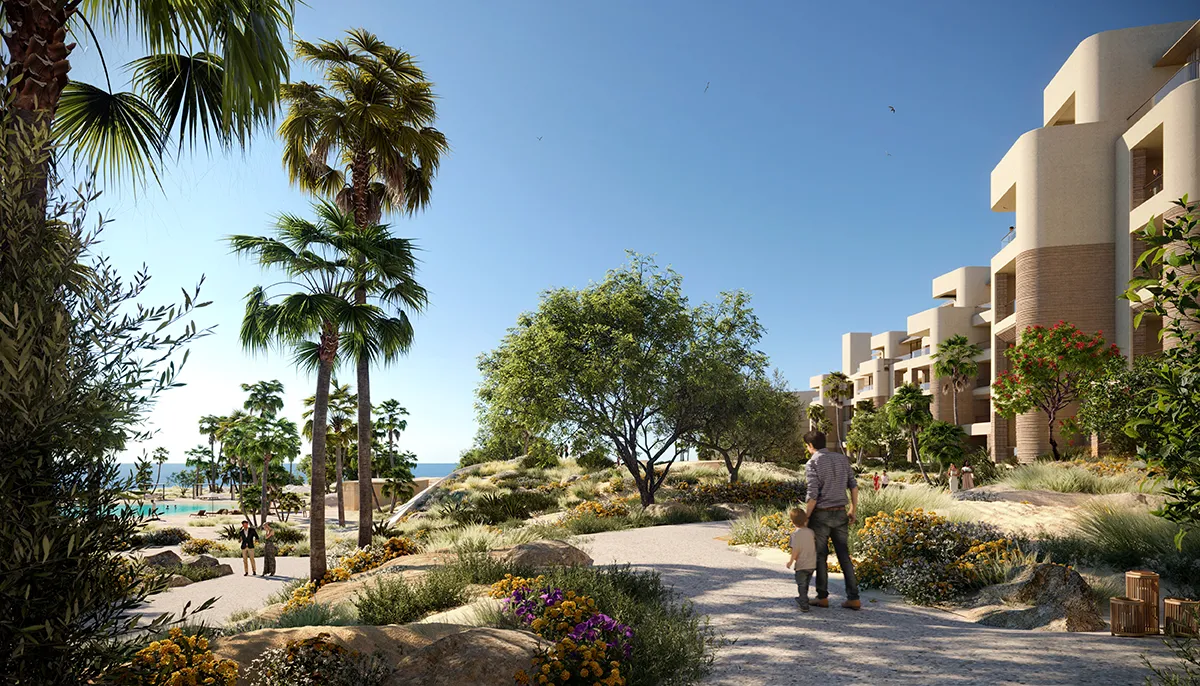
The topography is embraced rather than manipulated. Layers of terraced gardens gently step down from the resort’s architecture toward the marina edge, mirroring the rhythm of the natural wadi systems. Pathways are carved into the slope with materials drawn directly from the geology of the region, anchoring the development to its context. The palette is restrained but intentional: limestone paving, native stone, and hand-finished plaster blur the boundaries between built and organic. Every element feels embedded rather than placed, as if the resort emerged from the land rather than being imposed upon it. The vegetation strategy, too, rejects ornamental excess. Instead, it champions native flora, salt-tolerant species, coastal grasses, and hardy perennials that thrive with minimal irrigation emphasizing both ecological relevance and sensory richness.
Rainwater is slowed, captured, and directed through discreet swales and gravel trenches embedded into the site’s contours, ensuring minimal surface runoff to the Red Sea. Shallow channels guide water into planted basins, subtly referencing traditional falaj systems while encouraging groundwater recharge and microclimate regulation. These interventions remain nearly invisible to the untrained eye but are foundational to the site’s environmental intelligence. The planting strategy builds on this sensitivity structured to provide shade where needed, openness where views must be preserved, and texture where tactile engagement enriches the guest experience.
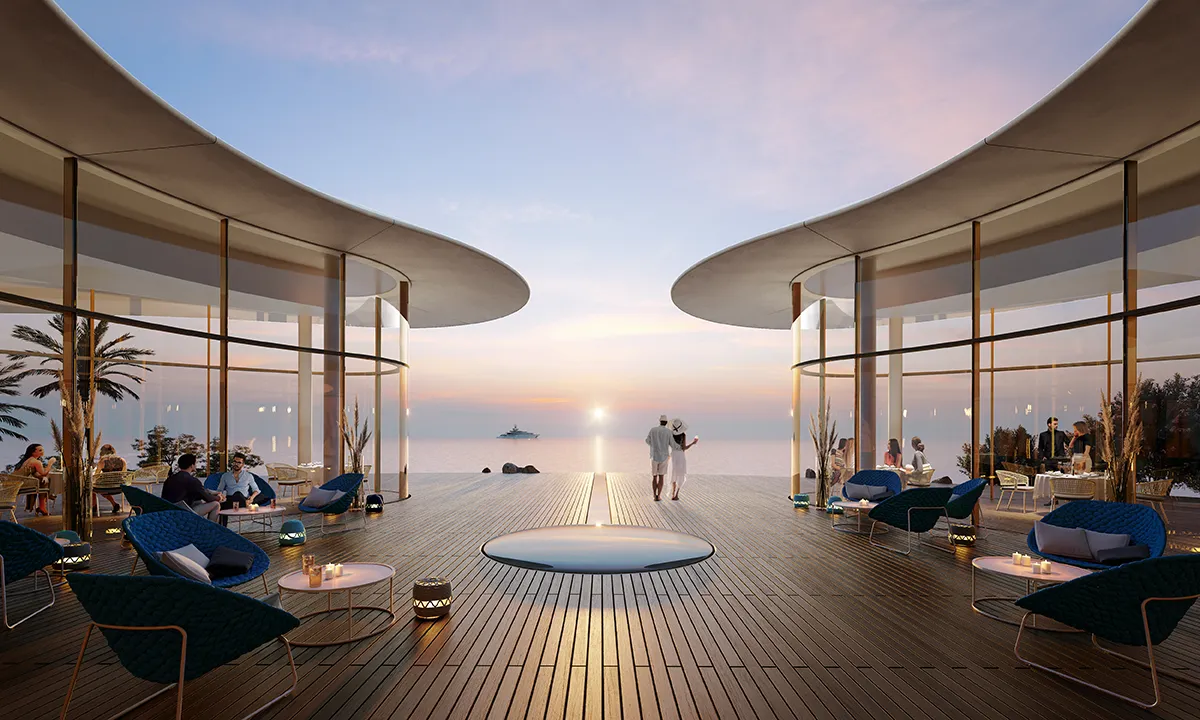
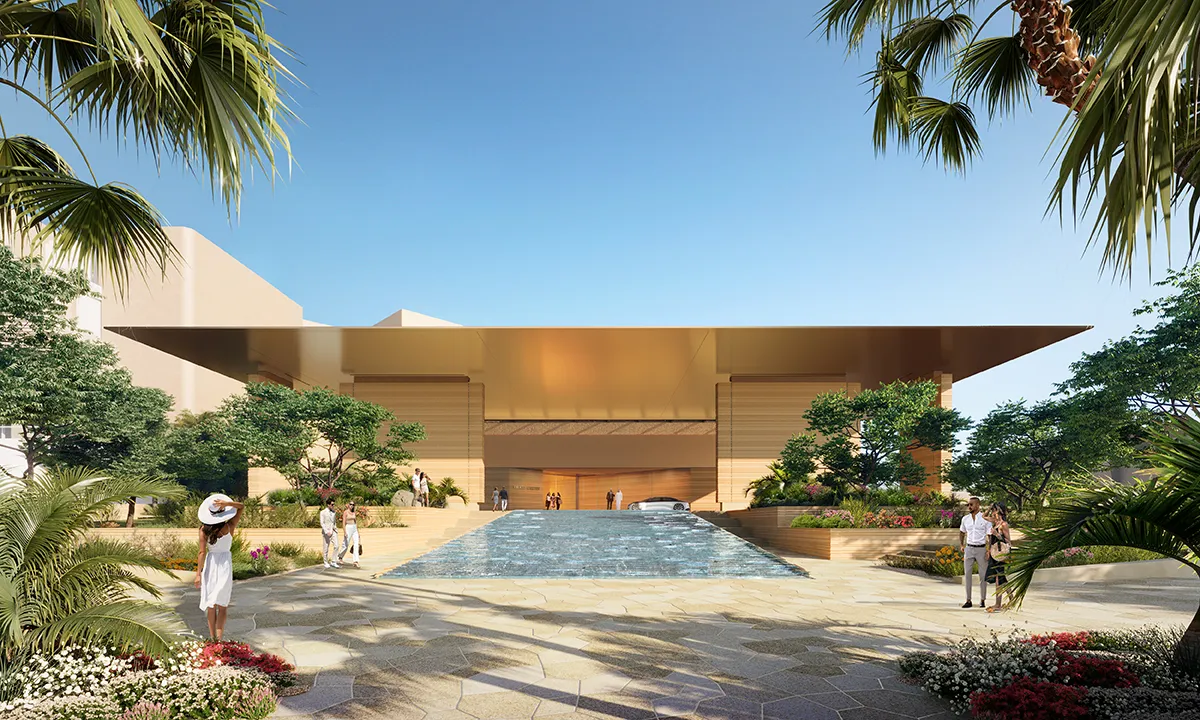
A defining quality of The Ritz-Carlton, AMAALA landscape in Triple Bay Marina is its narrative layering. Spaces unfold gradually, almost cinematically, as guests transition from the arrival court to the reception terraces, then down toward the coastal boardwalk. These are not decorative gestures, but experiential nodes: moments that allow stillness, reflection, and sensory immersion. The marina edge, while highly programmed, resists the temptation of commercial spectacle. Plantings are used to soften boundaries, frame key vistas, and provide a tranquil counterpoint to the vibrancy of the waterfront activities.
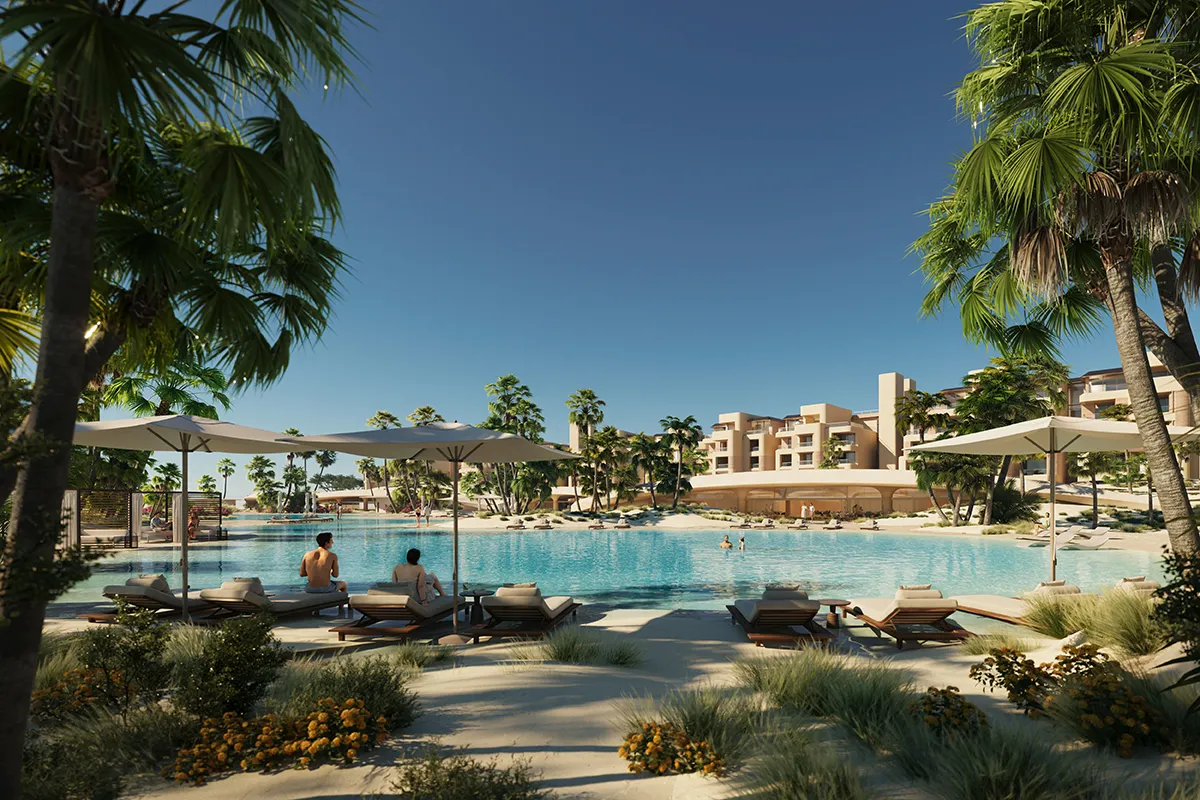
Nightfall does not diminish the impact of the landscape, it enhances it. Light is used with extreme restraint. Low-level, shielded fixtures guide the path without overpowering it, allowing the nocturnal ecosystem to remain active and undisturbed. This approach aligns with the development’s broader commitment to ecological stewardship. Powered entirely by renewable energy and shaped around zero-discharge principles, the landscape serves as a quiet ambassador for the region’s Vision 2030 goals. Its restraint is not a lack of ambition but rather a deeper form of luxury, one that prioritizes harmony, context, and long-term resilience.
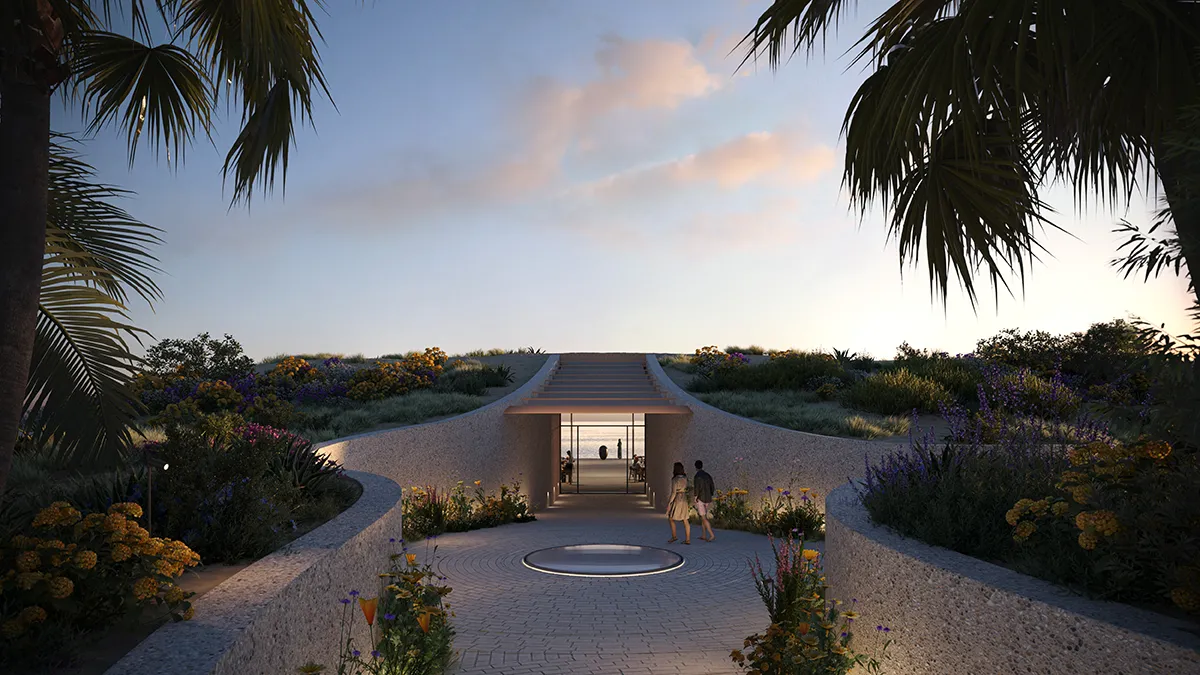
The landscape at The Ritz-Carlton, AMAALA does more than frame the architecture, it evokes a deep emotional connection to the land. From arrival to every intimate corner, the design is thoughtfully composed to foster a profound connection between people and place. Rather than showcasing nature as a spectacle, the design allows guests to feel quietly immersed within it. It is a project that avoids spectacle in favor of atmosphere, creating spaces that do not compete with nature but resonate with it. Each element from the textures underfoot to the carefully selected vegetation and subtle landforms is thoughtfully crafted to root visitors in a landscape that honors timeless heritage while embracing a forward-looking vision. This is not a resort landscape; it is a living, breathing extension of the land itself.
The Ritz-Carlton, AMAALA
Location: AMAALA, Kingdom of Saudi Arabia
Landscape Consultant: The Vero Studio
Client: Red Sea Global
Lead Consultant: Foster + Partners
Engineering Consultant: WSP
Lighting Consultant: Delta Lighting Design
Signage & Wayfinding: Limah Design
Water Feature MEP Consultant: Water Design Engineers
Irrigation Consultant: Metts
3D Renderers: Asymmetrica
Image Credits: Asymmetrica / Foster + Partners / The Vero Studio
Shortlisted in the 2025 WLA Awards – Concept Private Space category