
The most-read projects of 2025 on WLA reflect the breadth of the landscape architecture profession. This year’s most-read includes projects from design firms and students, including concept designs, built projects, and award winners. The list consists of climate parks, resilient rivers, regenerative campuses and parks utilising recycled materials. Below is the most-read project from 2025.
Copenhagen’s new climate park, where form follows nature | SLA

Copenhagen’s latest and most radical climate park, Grønningen-Bispeparken, transforms a barren grass area into a cohesive 20,000 m2 lush, playful, biodiverse, and art-filled urban nature park for all.
Currie Park Redesign | West Palm Beach, USA | OLIN

Currie Park is being developed by a multidisciplinary team of experts as a community-based, ecological vision, creating a key place of exchange between the city of West Palm Beach and its urban estuary on the shores of the Intracoastal Waterway.
From Concrete Walls to Living Water: Regenerating the Chaobai River Basin | Sasaki
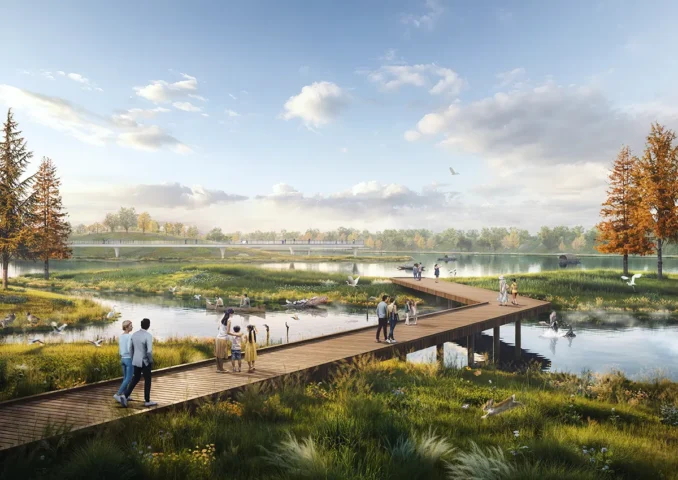
For centuries, the 28 villages of the Chaobai River Basin have thrived through adaptive coexistence with seasonal flooding, rice cultivation, and water-based cultural practices. 20th-century channelization, however, imposed rigid concrete embankments that fragmented communities and eroded ecological-cultural connections. Through a three-pronged regeneration process, Sasaki was selected by the Baodi District Planning Bureau to embark on an initiative to return the basin to an era of abundance and vitality for generations to come.
Sustainable Mangrove and Coastal Ecosystem Development in Phetchaburi, Thailand | Arsomsilp

The Sustainable Mangrove Management and Coastal Ecosystem Development in Phetchaburi Province project aims to develop a Sustainable Mangrove Management and Coastal Ecosystem Master Plan. The Master Plan will showcase support for the conservation of biodiversity rich mangrove ecosystems, as well as being inclusive and equitable to social and economic development for the surrounding dependent communities in Phetchaburi.
Rainforest Wild Asia opens in Singapore

Rainforest Wild Asia opened to the public in mid-March 2025. Designed to offer an immersive and sensory journey, the 13-hectare wildlife park is a bold new addition to the Mandai Wildlife Reserve, a world-leading nature and wildlife destination in Singapore.
Bridgefoot Street Park | DFLA
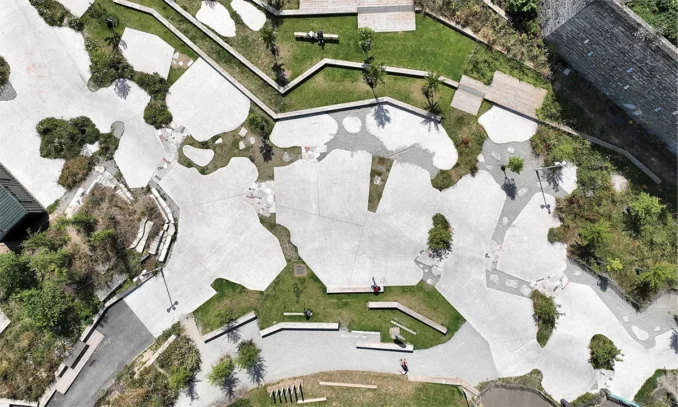
Bridgefoot Street Park is a unique spatial composition, which uses construction and demolition waste, in the form of secondary raw materials, to create Ireland’s first such permanent public space. The new one-hectare park in Dublin’s city centre addresses global environmental challenges in a synthesized and beautiful way, laying the foundation for aesthetic and even legislative change in Ireland.
Reconciliation Garden at University of Queensland | Arcadia Landscape Architecture
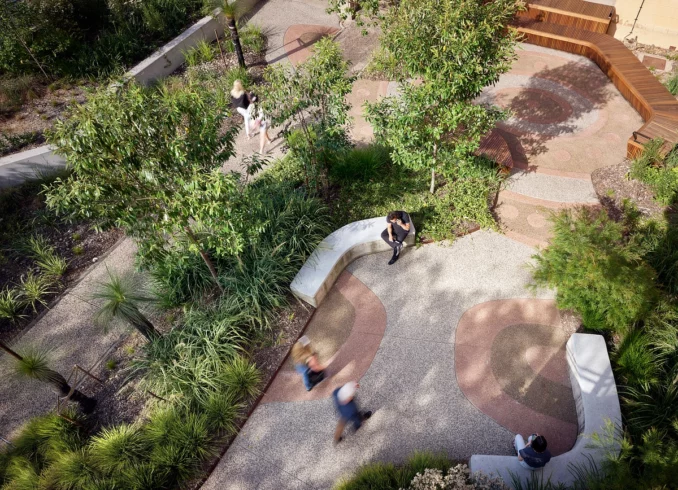
The Reconciliation Garden at the University of Queensland’s Herston campus embraces and celebrates Indigenous culture and place, fostering cultural exchange and learning while respecting and aligning with its context of health and higher education.
ASPECT Studios designs a regenerative campus for Alibaba

ASPECT Studios recently unveiled the Alibaba Xixi Campus (Park C) in Hangzhou, China. This innovative project establishes new standards for blending natural and built environments, supporting a community of 30,000 people by providing a network of lush, biophilic spaces.
City of Hope Medical Campus: Resilient Healing Landscape | HKLA

Student Project | Zipping Gentrification | Han Wu
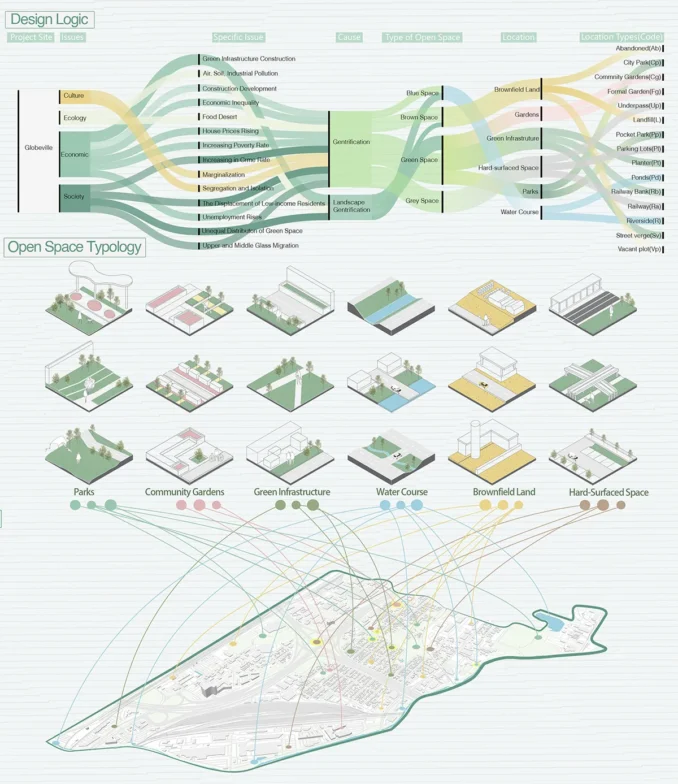
In Denver, Colorado, economic expansion has fueled infrastructure growth and a booming real estate market, but it has also driven up housing prices, displacing long-term residents. Additionally, green gentrification, similar to what was seen with New York’s High Line Park, has emerged. While green space improvements boost environmental quality and property values, they also attract wealthier populations, leading to the displacement of original residents. This creates a cycle where green development and gentrification reinforce each other.