
Article by Alexander Tully, Dana Al Haron and Michael Holm – InSite Master Planners and Landscape Architects
Abstract
Nature-based solutions (NbS) have rapidly evolved from an emerging concept introduced by the IUCN in the early 2000s to a globally endorsed framework widely adopted through major UN climate processes by 2021. Their rise reflects a fundamental shift in how the global development sector understands and responds to climate change, biodiversity loss, and the accelerating pressures placed on natural systems. In parallel, scientific evidence, such as studies showing that human-made materials now outweigh all living biomass on Earth, has intensified recognition of the need to work with, rather than against, ecological processes. This convergence of climate urgency, economic rationale, and policy alignment has positioned NbS as a critical pathway for building resilience, supporting national climate commitments, and delivering wide-ranging environmental, social, and health benefits.
Within this context, InSite Master Planners and Landscape Architects apply NbS as a foundational principle in shaping places that are functional, resilient, and ecologically coherent. By embedding ecological intelligence across strategy, master planning, and design, we prioritize natural systems as drivers of thermal comfort, water management, biodiversity enhancement, and community wellbeing. Our landscape-led planning approach integrates green infrastructure, biophilic design, ecosystem services, and adaptive spatial strategies to create connected, high-performing environments. In detailed design, we promote native planting, tree-led microclimate solutions, water-efficient systems, soil-health regeneration, permaculture-based water management, and community-driven planting models such as Miyawaki forests. These interventions form part of a holistic framework that supports regenerative outcomes rather than merely mitigating environmental impact.
Implementation is supported through robust delivery assurance, stewardship-focused maintenance planning, materials circularity, and monitoring to ensure long-term ecological performance. By aligning technical design, policy thinking, and onsite execution, we employ NbS as an integrated component of placemaking. Ultimately, this enables us to help shape healthier, more resilient, and more livable environments for present and future generations.
Introduction
Developed as a concept in the early 2000s by the International Union for Conservation of Nature (IUCN), Nature-Based Solutions became globally recognized by 2016, before gaining mainstream adoption between 2019 and 2021 as part of United Nations climate processes.
As part of the global development community and as technical contributors to shaping the places where people live, work, and interact with their environment, we have long relied on human needs as the guiding framework for how development should look, feel, and function. As landscape and ecological professionals, we understand the natural environment and the systems that support it. Historically, however, we have focused on protecting these systems from the impacts of human activity rather than maximizing the benefits they can provide to development and other living things.
More recently, the growing influence of major climate science bodies, including successive IPCC reports, has significantly raised global awareness of the fragility and importance of natural ecosystems. This heightened awareness has led to widespread declarations of climate and nature emergencies, alongside the development of action plans to address these accelerating challenges.
Within this context, Nature-Based Solutions resonate strongly with our InSite team’s core values and professional principles. They reflect the way we approach our work across both macro and micro scales, supporting the creation of places that are not only functional and beautiful but also resilient, adaptable, and firmly rooted in ecological integrity.
Why are we talking about this, and why does it matter?
Recent global evidence shows a profound shift in the relationship between human development and the natural world.
A landmark study published in Nature (Elhacham et al., 2020) revealed that by 2020, the total mass of human-made materials, such as concrete, metals, plastics, bricks, and asphalt, had surpassed the mass of all living biomass on Earth. This “tipping point” underscores how rapidly human activity now reshapes global systems.
This realization, combined with the broad global acceptance of climate change and its widespread impacts on communities, economies, and public health, has renewed interest in learning from and working with natural systems rather than against them.
Against this backdrop, Nature-Based Solutions have gained significant global momentum. Their rise is driven by a convergence of climate urgency, economic rationale, and policy alignment.
- Support global climate commitments, including NDCs under the Paris Agreement
- Offer cost-effective, multi-benefit resilience strategies
- Demonstrate proven effectiveness in reducing climate-related risks
- Contribute to net-zero pathways
- Create cross-sector value for governments, businesses, and communities
- Provide scalable, nature-aligned responses to intensifying climate threats
Beyond environmental resilience, these approaches also have health benefits, including improved air and water quality, reduced disease risk, enhanced mental wellbeing, and the promotion of physical activity and social cohesion. The World Health Organization highlights that these benefits are supported by thoughtful design and integration into broader masterplans, an area directly aligned with InSite’s contribution.
Nature-Based Solutions and our perspective at InSite
The International Union for Conservation of Nature (IUCN) defines Nature-Based Solutions as actions that protect, sustainably manage, and restore natural or modified ecosystems to address societal challenges while benefiting both people and nature.
The WHO similarly frames NbS as conservation and restoration actions that deliver co-benefits for ecosystems and human health, ranging from small-scale urban green spaces to large-scale landscape interventions addressing flooding, pollution, and biodiversity loss
Within this context, our InSite master planning and design teams analyze a wide spectrum of local challenges when shaping places, balancing spatial constraints and revenue generation with community needs, quality of life, and long-term viability. Increasingly, global development pressures associated with climate change, rapid population growth, rising temperatures, rising sea levels, and more frequent flooding are influencing how we plan and design.
This shift has expanded our approach from one focused primarily on sustainability and mitigating climate change, toward a resilience-led approach that emphasizes adapting to its unavoidable impacts.
At InSite, we collaborate with owners and clients globally helping address specific climate and cultural dynamics. As part of this, we prioritize maximizing the benefits natural systems can bring to development, rather than viewing nature solely through the lens of impact mitigation.
We embed Nature-Based Solution principles by:
- Strengthening ecological connectivity across sites
- Integrating flexible spaces and adaptable design elements
- Incorporating natural components such as trees, vegetation, and broader green infrastructure
- Enhancing complementary strategies like water management, microclimate optimization, and thermal comfort
This approach supports the broader adoption of regenerative design, enabling places to restore ecological function, drive community wellbeing, and build long-term environmental and economic resilience.
How are we contributing
In practice, the InSite team applies Nature-Based Solutions by embedding environmental knowledge directly across the planning, design, and delivery of every project we are involved with. This includes:
- Integrating ecosystem services such as natural cooling, water filtration, carbon storage, and habitat creation into urban and rural designs.
- Using natural systems as infrastructure, employing features such as wetlands, riparian corridors, restored shorelines, green roofs, and native planting to manage stormwater, reduce heat, stabilize soils, and enhance biodiversity.
- Designing with climate resilience in mind, considering spatial arrangements and elements that can adapt to rising temperatures, changing rainfall patterns, and increased flood risk.
- Working with natural processes rather than against them, allowing landscapes to evolve, regenerate, and self‑maintain wherever possible.
- Co‑creating solutions with communities, helping deliver social value, inclusion, wellbeing, beauty, and cultural connection, alongside environmental performance.
- Applying multidisciplinary thinking, bringing together ecology, engineering, design, policy, and placemaking to deliver solutions that are technically robust and environmentally restorative.
Nature-Based Solutions are not simply an additional layer but a fundamental principle shaping our work. They shape the decisions we make, the strategies we develop, and the places we deliver, aiming at development that enhances, rather than diminishes, the ecosystems that sustain us.
We help address the impacts of climate change by applying the principles of Nature-Based Solutions across our planning and development strategies, design interventions, and project implementation.
Strategy and Master Planning Frameworks
Our approach to strategy and master planning is rooted in place shaping, bringing together open space, movement networks, and residential or mixed-use areas to create connected, adaptable, and human-centered places. By integrating placemaking principles with a landscape-led planning philosophy, we embed Nature-Based Solutions at the heart of the design process. This helps link different land uses, strengthens people’s connection to natural features, and supports the creation of environments that are resilient, meaningful, and adaptable over time.
Central to our master planning frameworks is the promotion of high-quality open space, specifically green open spaces, as a driver of health and well-being. These benefits are amplified through green infrastructure, enhancing connectivity, walkability, and access to everyday nature across the development. Our frameworks aim to maximize the ecosystem services that natural systems provide, from microclimate regulation to stormwater management and biodiversity enhancement.
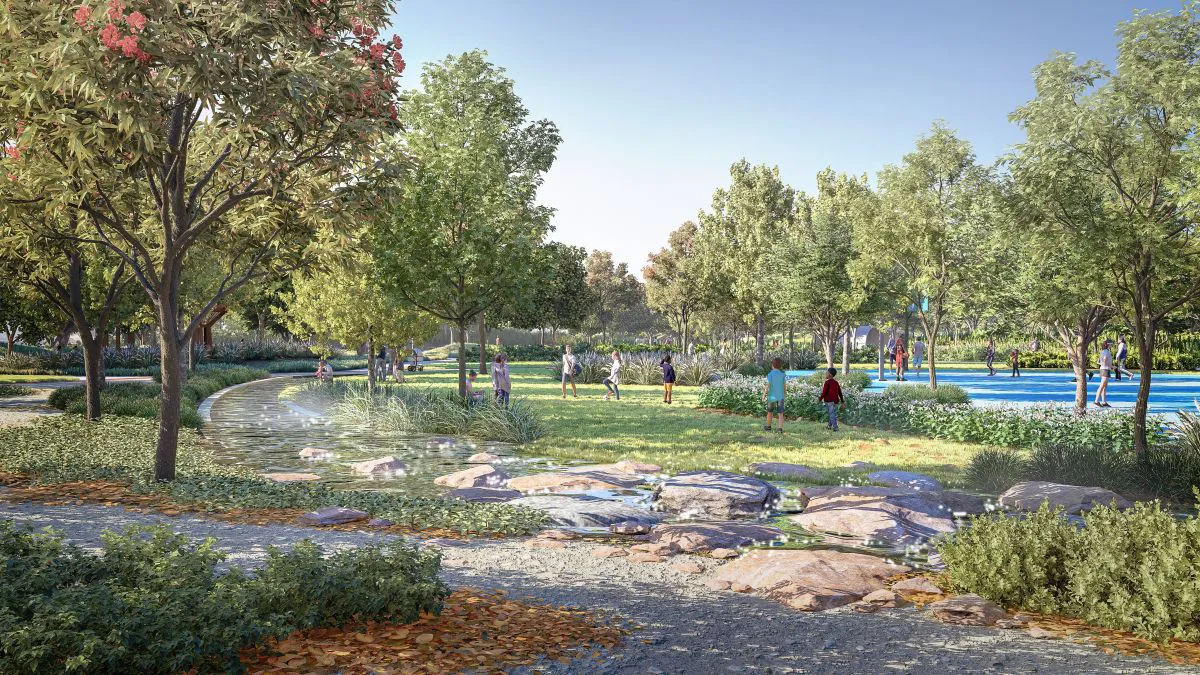
At an approach and strategy level, we actively foster the benefits of nature by embedding Nature-Based Solutions and their principles into our team’s processes and project charters. This ensures that all disciplines align around a shared ethos of environmental stewardship and climate-responsive design. Biophilic design principles are applied to strengthen ecosystem performance, connect people with their natural surroundings, and contribute to carbon sequestration through strategic planting and material choices.
Nature-Based Solutions are applied as a means of unlocking the potential of natural resources, helping address climate-related challenges such as heat stress, flooding, and declining biodiversity, particularly relevant to InSite’s work in the MENA region. Rather than focusing solely on mitigating impacts, our strategy prioritizes the maximization of opportunities, ensuring that landscapes work harder, deliver more value, and support long-term environmental resilience.
Design interventions
Our strategic spatial design arrangements aim to help shape natural linkages between spaces and uses, strengthened through the integration of natural elements such as views, visual corridors, and natural navigation cues that support intuitive movement, complementing other development and design strategies. Together, these approaches help places function as interconnected, high-performing systems.
We leverage Nature-Based Solutions to address a wide range of environmental challenges, supporting improvements in thermal comfort, leveraging natural shading, enhancing flood management and stormwater retention, and delivering visual and experiential benefits that reinforce local identity and a strong sense of place.
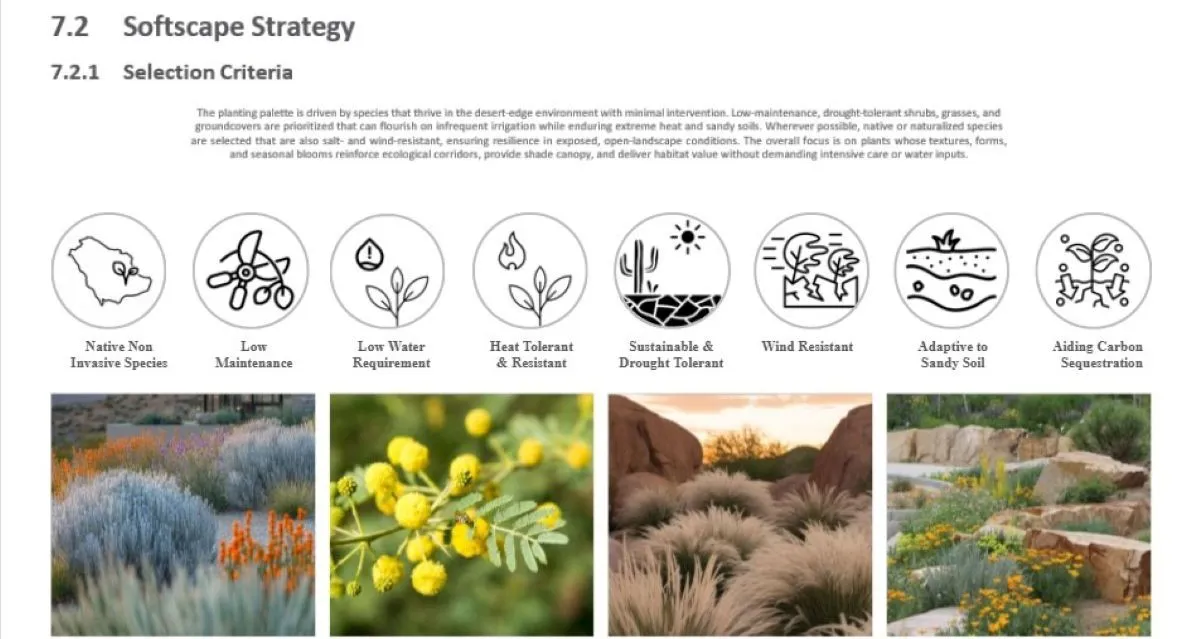
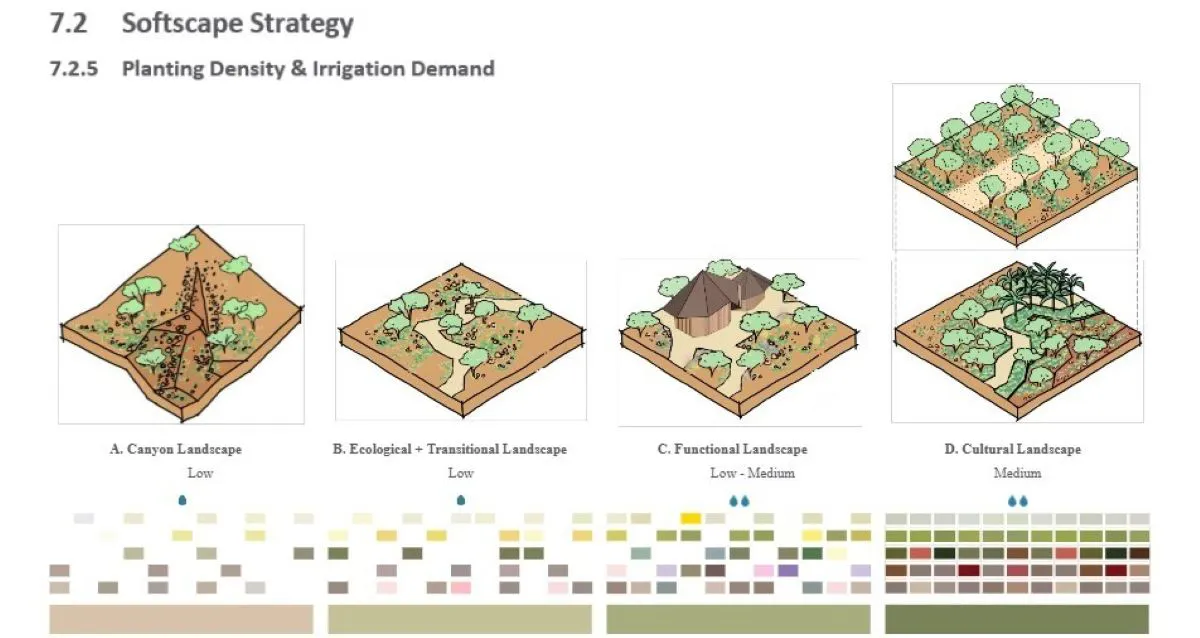
A core component of our planting design approach involves the promotion of native plant species, selected for their efficiency, resilience, and ability to enhance biodiversity. Planting is organized for maximum impact, with xeriscape-inspired approaches employed where appropriate to reduce water demand across different spatial types.
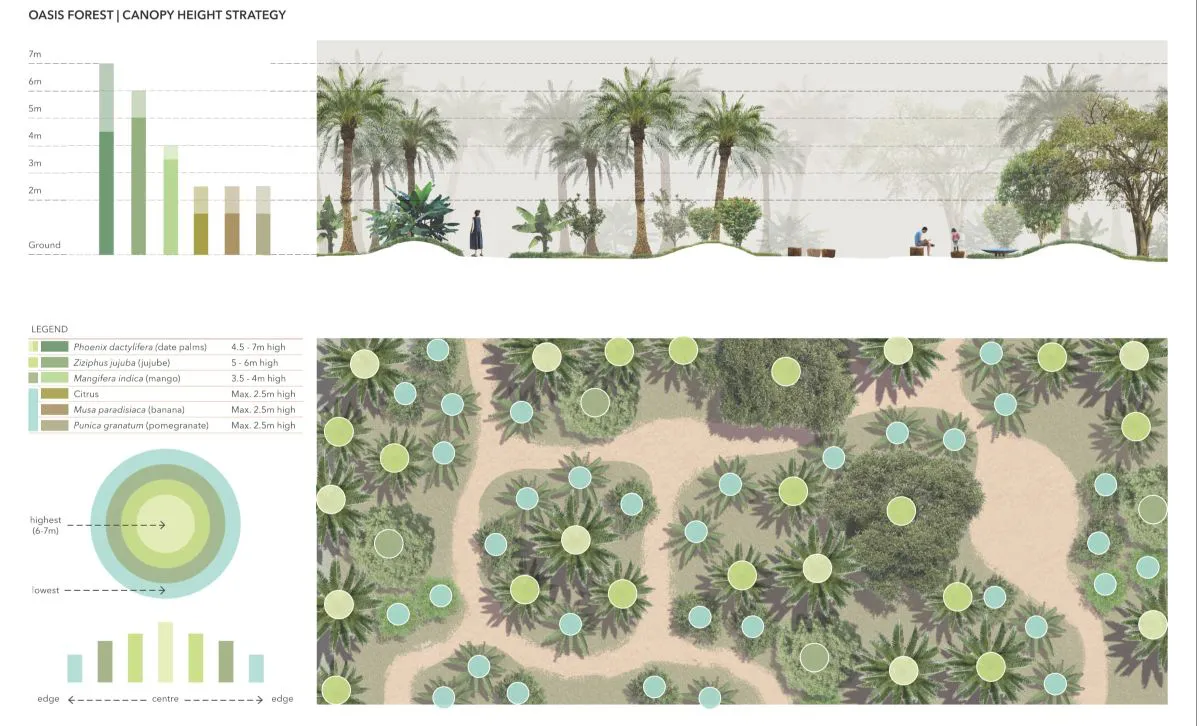
Trees are prioritized over palms wherever shade is needed, with palms reserved for distinctive functions such as gateways, nodes, or sculptural landmarks. Wherever possible, natural shade from trees is promoted over artificial alternatives due to its microclimatic and ecological advantages.
We promote and support efficient water use through the implementation of SMART irrigation systems, which calibrate water delivery based on soil conditions, temperature, and seasonal variations, helping vegetation thrive while minimizing waste. Our planting strategies and specifications reference soil health and soil retention to underpin long term landscape resilience.
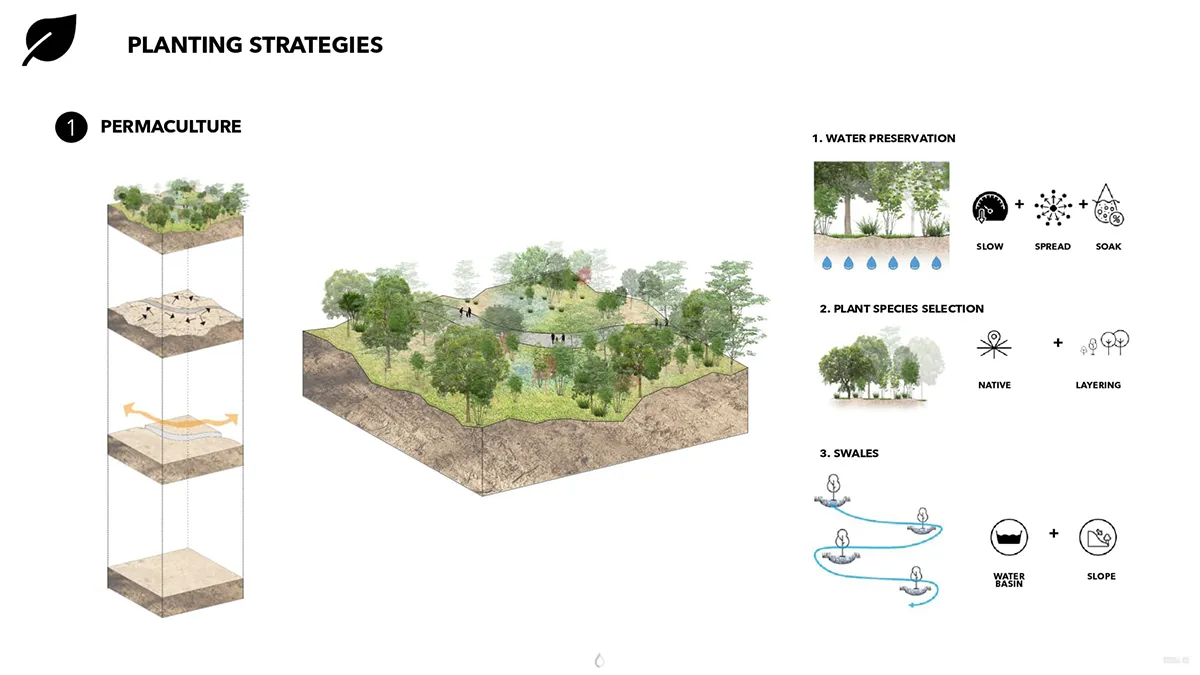
Our design approach uses level design, contouring and basins to apply the permaculture principle of the three S’s, helping manage water while supporting plant establishment and growth:
- Slow down water movement through levels, introduce swales, mulch and groundcover, and protect soils from runoff.
- Spread water across the landscape to increase infiltration, reduce erosion and hydrate larger areas of soil. We work closely with our water engineering partners to plan levels and contouring to help this.
- Sink water into the soil profile, where it can nourish plants and recharge groundwater. We achieve this through deep mulching, enhancing soil organic matter, planting strategies that improve soil structure, and maximizing permeable surfaces.
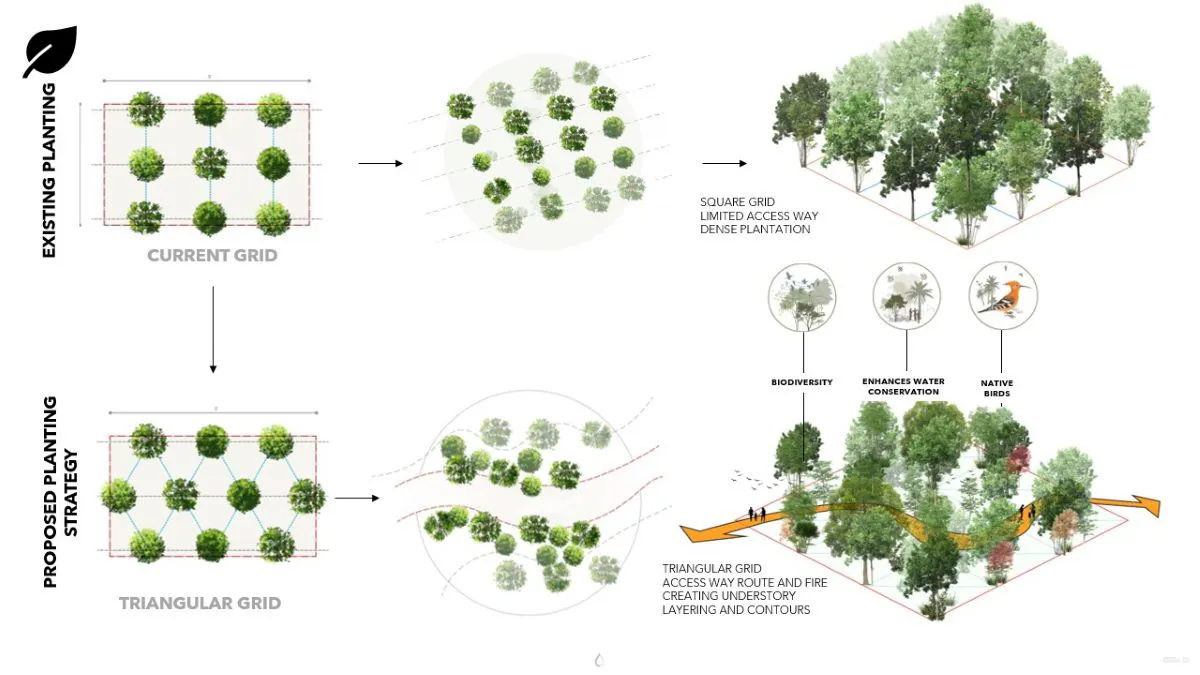
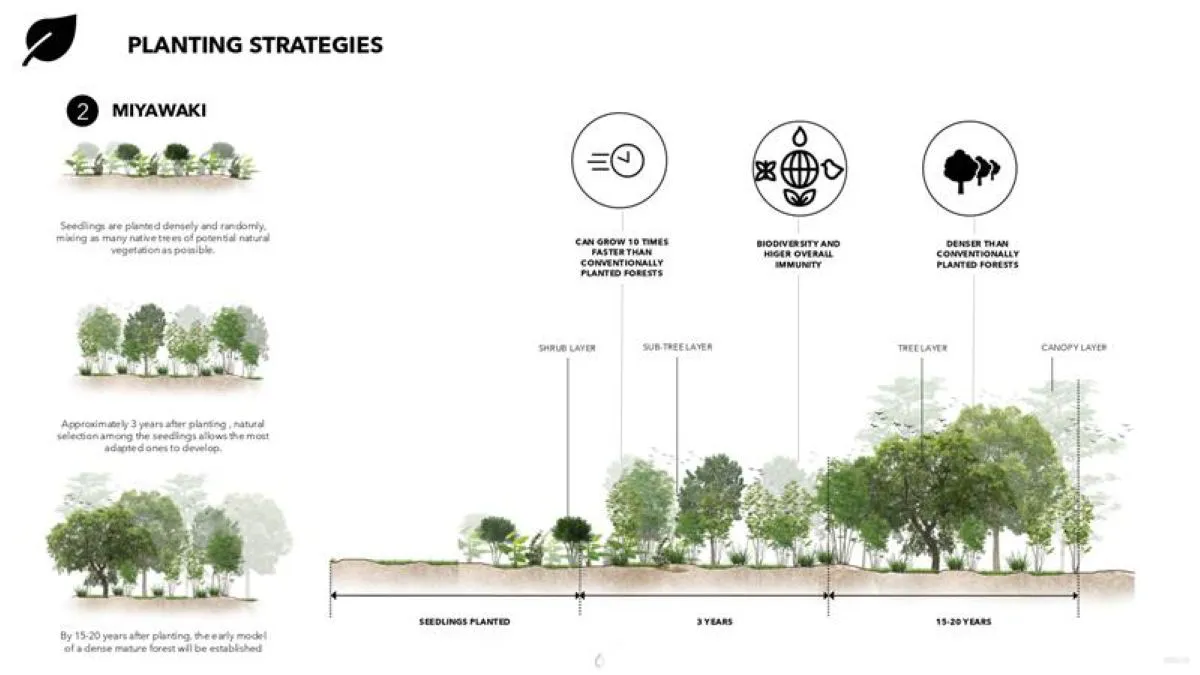
Our InSite specialist teams have developed planting designs using plant-community-driven methods such as the Miyawaki approach to support the creation of dense, biodiverse plant communities that grow through symbiotic relationships. Green infrastructure plays a crucial role in this broader system, reinforcing water management strategies while delivering ecological, thermal, and social benefits.
Finally, applying biophilic design and biomimicry principles allows our designers to utilize the benefits of natural processes, shapes, and forms, creating environments that feel intuitive, restorative, and connect people with nature.
On site delivery and Implementation
Our InSite/OnSite team is focused on implementing the principles established during the design phases. They use strong assurance processes to ensure that what is specified during design is fully realized, and they integrate closely with on-site delivery teams so that the intended benefits of each intervention are preserved through construction and into early occupation. The team also relies on close collaboration with our partner facilities management (FM) teams to ensure that environmental and operational factors are incorporated into long term maintenance plans from the outset. These factors are also incorporated into our Project Charters to foster stewardship conversations from the project outset.
A stewardship-led approach is promoted throughout the project lifecycle, with long term responsibilities, management needs, and associated costs discussed, costed and agreed early. During the crucial first 12 to 24 months after completion, efforts should focus on minimizing plant loss and avoiding unnecessary replacement through appropriate establishment care.
Our InSite/OnSite specifications and tender documents promote materials efficiency and circular practices, including the reuse of site-generated waste and compost to support soil health and reduce reliance on imported materials. Our InSite/OnSite team also helps monitor the performance of shade studies and other predictive assessments, as part of post-completion maintenance checks. They take the opportunity to raise questions around overzealous maintenance practices that may inadvertently reduce canopy cover or remove beneficial vegetation.
Integrating principles such as “No Mow May” into specifications and maintenance schedules supports natural regrowth, enhances biodiversity, and creates a more resilient landscape. These small but strategic changes help foster healthy ecosystems while aligning day-to-day maintenance activities with the wider ambitions of nature-based design
Conclusion/summary
For landscape, ecological, and spatial design professionals, Nature-Based Solutions offer a practical and principled pathway to integrate natural systems into the design and management of places. By focusing on ecological connectivity, climate resilience, and the co‑benefits nature provides (cooling, flood mitigation, habitat creation, and improved human wellbeing), these solutions allow us to shift from reactive mitigation to proactive, regenerative placemaking. They support healthier environments, stronger communities, and development strategies that enhance rather than deplete the ecosystems on which we depend.
Nature‑Based Solutions represent more than a design approach; they embody our philosophy to work with rather than against natural systems. As global development continues to grapple with accelerating climate risks, rapid urbanization, and biodiversity loss, Nature-Based Solutions support a scalable, adaptable, and evidence‑based pathway toward more resilient and regenerative place development.
Our role as planners, landscape architects, ecologists, and design professionals is central to this transition. By embedding ecological intelligence into strategy, policy, design interventions, and long‑term implementation, we can help reshape development frameworks to harness the power of natural systems. This includes integrating ecosystem services into master plans, leveraging green infrastructure, applying biophilic and resilient design principles, and making sure that communities remain at the heart of nature‑aligned solutions.
Through this commitment, we aim to address immediate environmental challenges and lay the foundation for healthier, more livable, and more sustainable environments for future generations. Nature-Based Solutions are helping us to respond to development goals and support ecological restoration, enabling adaptable places to support us now and in the face of future change.
Article by Alexander Tully, Dana Al Haron and Michael Holm – InSite Master Planners and Landscape Architects