
Winner of the Award of Excellence in the 2025 WLA Awards – Built Hospitality category
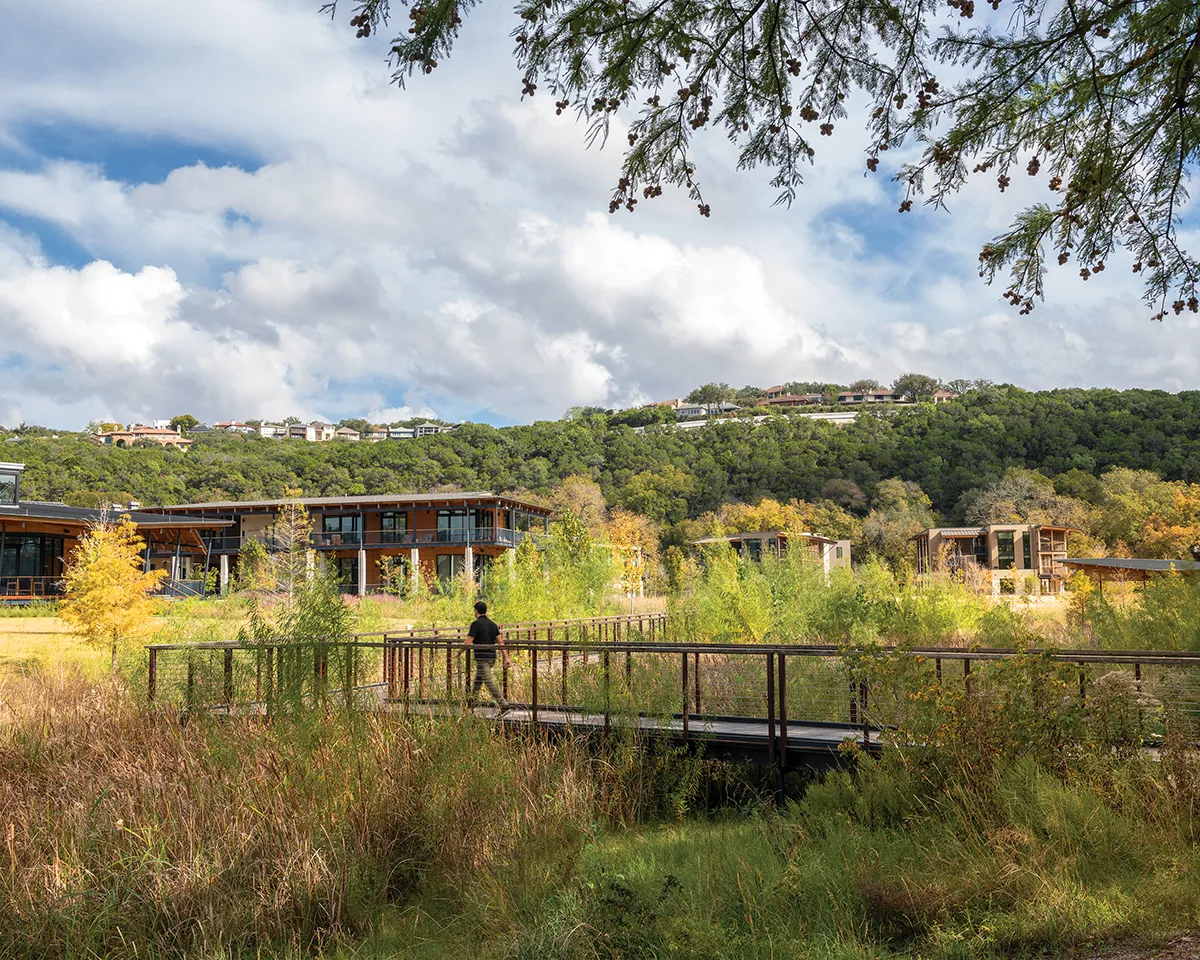
Named for Mary Elizabeth Holdsworth, a teacher and social justice advocate, The Holdsworth Center strives to improve “the quality of K-12 public education for all Texas students by supporting and developing educational leaders.” The landscape architect focused on sculpting this former cattle ranch into a restorative and inspirational learning environment to support this paramount cause.
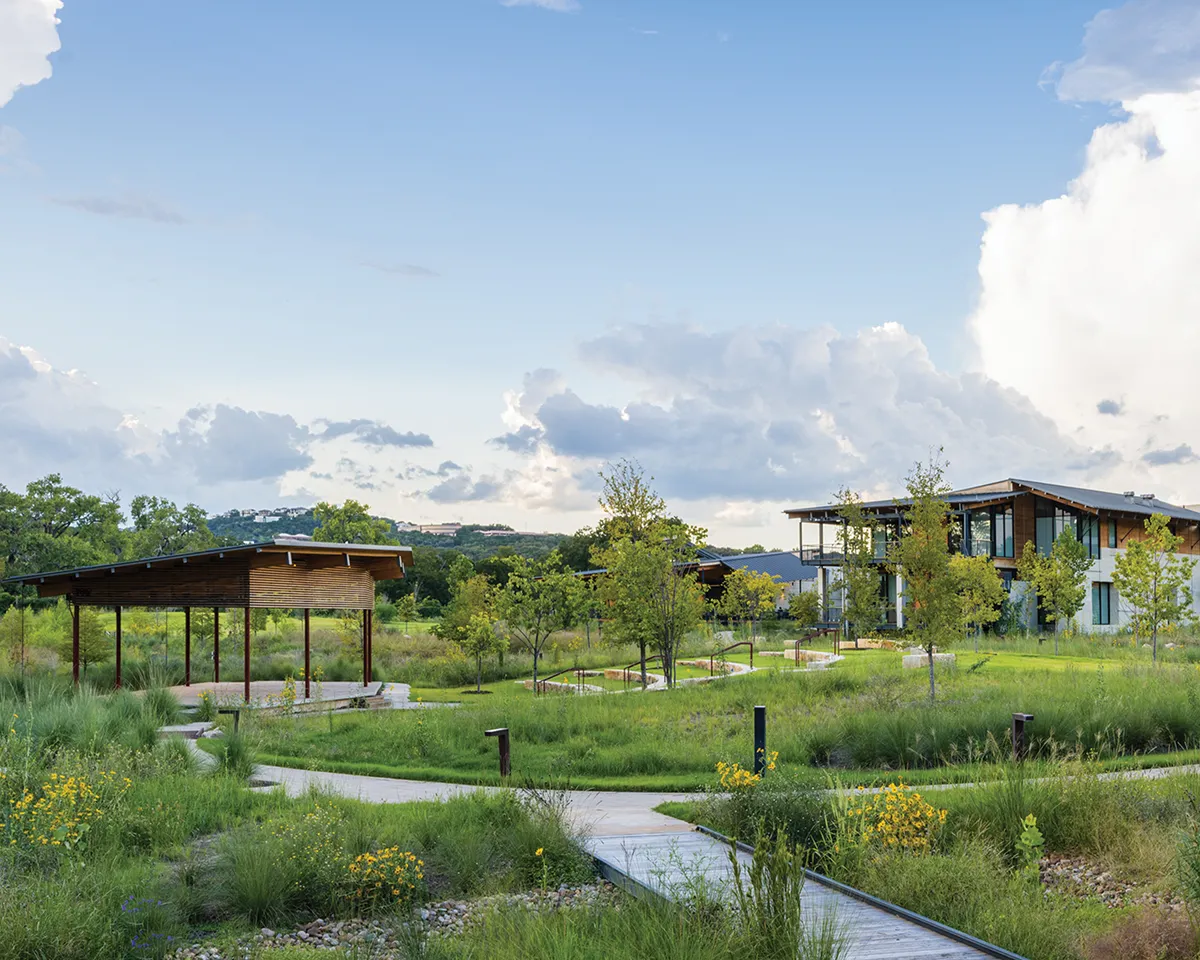
Situated at the edge of the Balcones Escarpment within the Bull Creek Watershed, the campus required intensive restoration to return it to the flourishing biodiverse site it is today. Years of ranching and clear cutting had grossly compromised the site’s unique ecology, allowing it to become overrun with invasive species and severely limiting its ecosystem functions. Utilizing minimal herbicides, the team removed 110 Chinese Tallow trees and 18 acres of Bermuda grass while preserving over 3,000 native trees to revive the site’s distinctive ecological fingerprint. New native and adaptive planting are woven into the existing to aid in erosion control, shade, and water pollution mitigation.
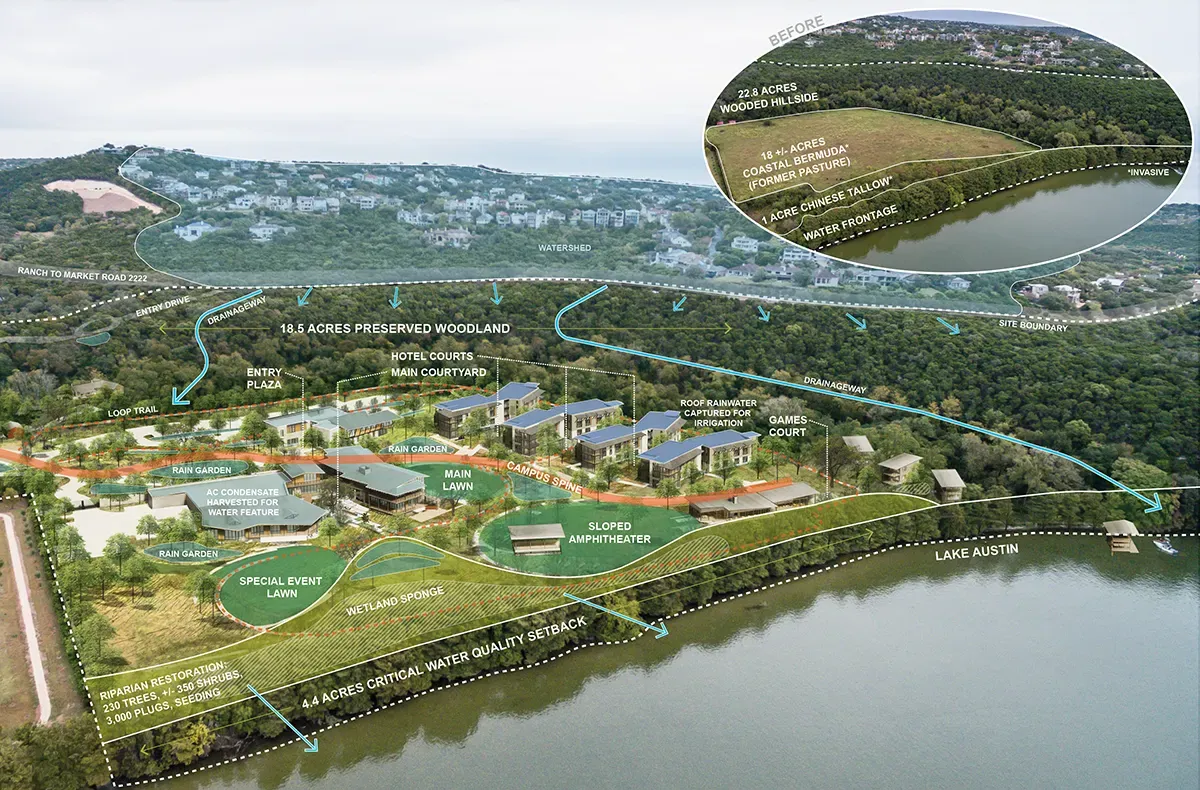
Of the 44 acres, only 15 were developed, allowing the existing vegetation and geologic character of the site to be retained. Rocky outcrops along the property’s boundary informed the design of the entry road which descends over 150 feet; stacked limestone blocks retain the grade and frame views to Lake Austin beyond. At the base of the slope, the entry is accentuated by small rain gardens that help slow and cleanse runoff from the access road and parking area while providing a textural threshold into the campus. Beyond, the ground gives way to the campus heart which is knitted into the restored landscape.
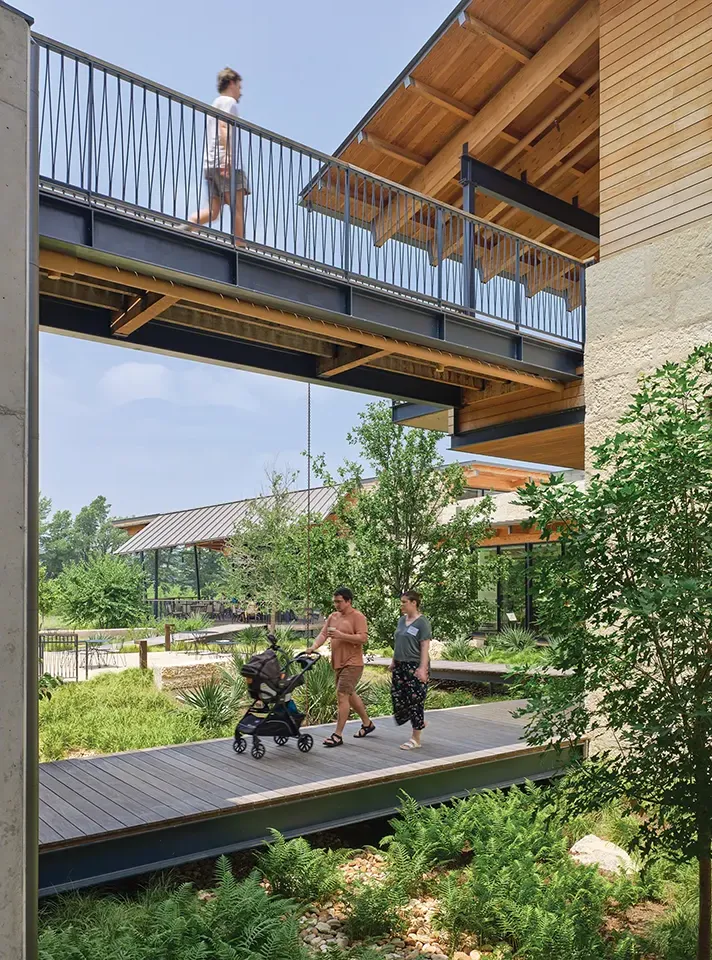
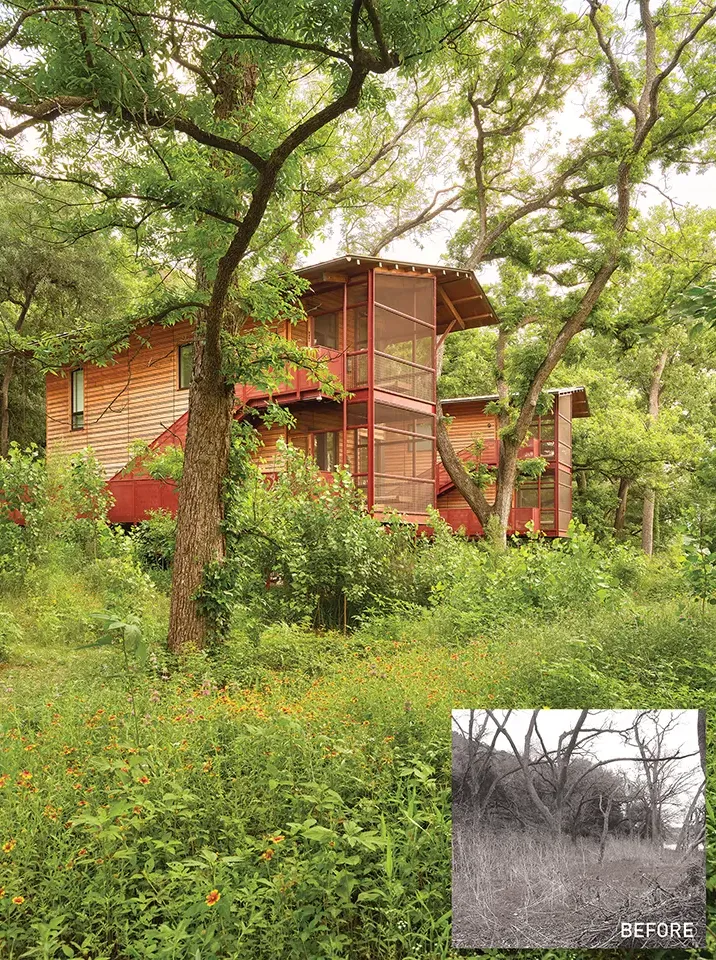
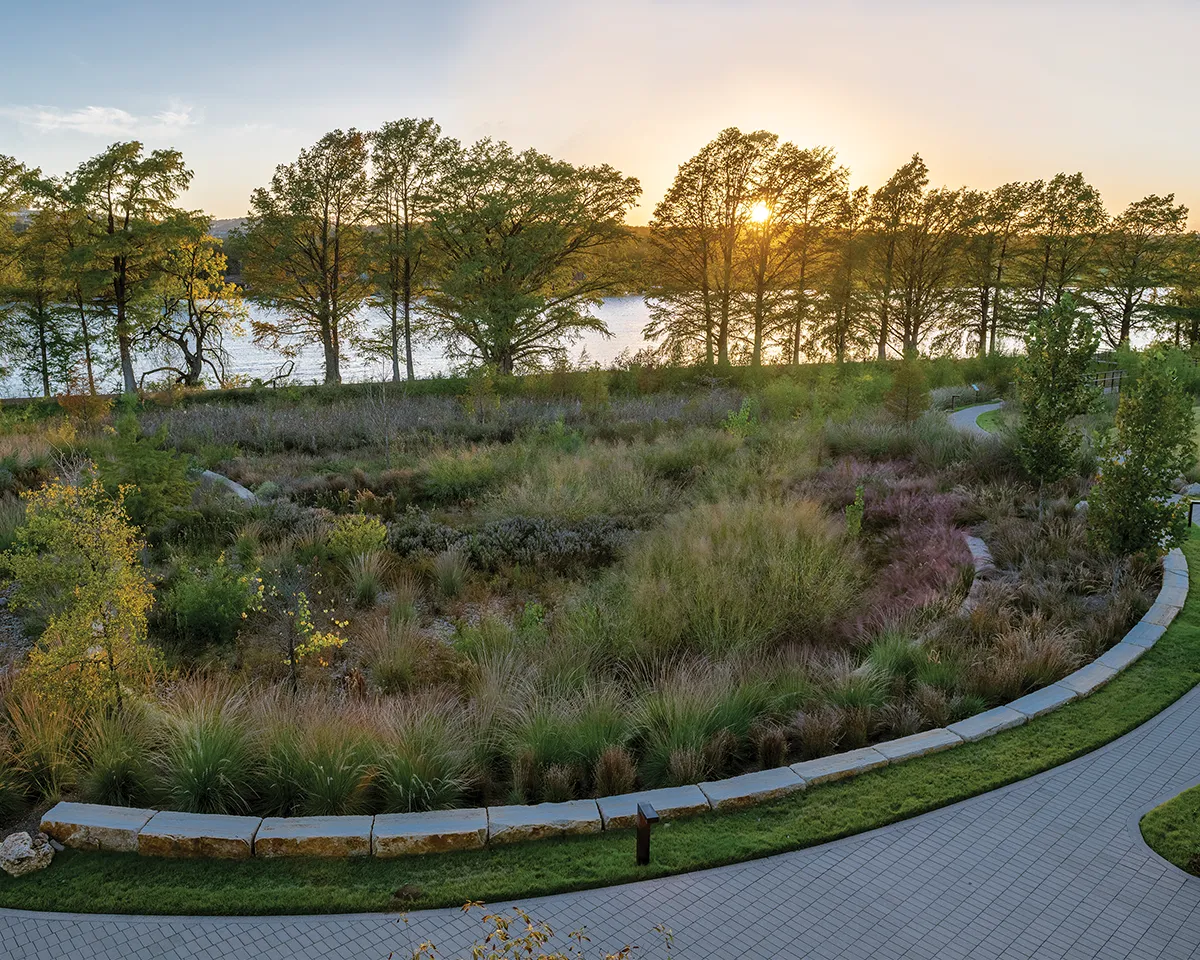
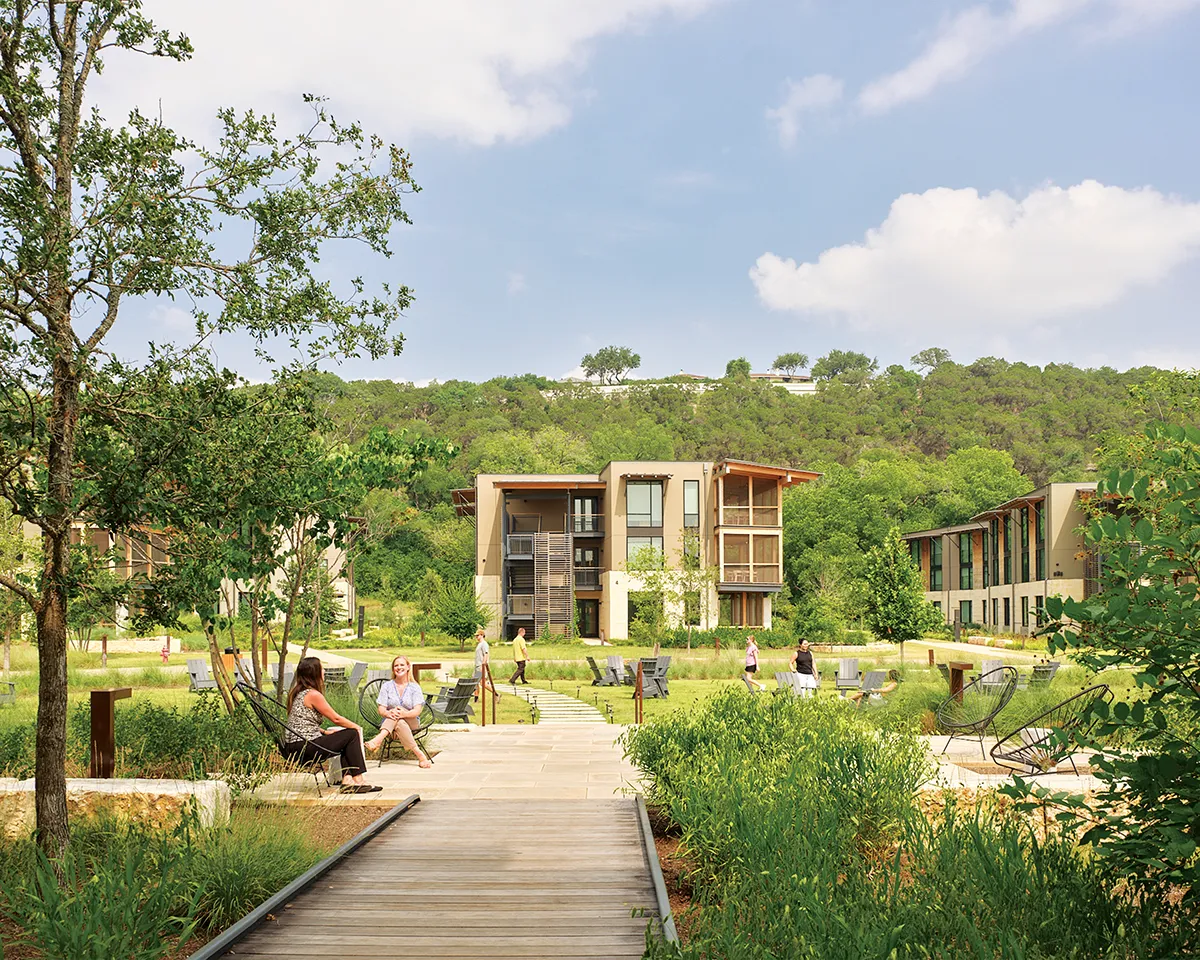
Campus buildings and new circulation were carefully sited to ensure minimal ecosystem disruption while still providing universal access throughout the site. Lush courtyards of showy natives like dwarf sabal palms, muhly grasses, and shrubby boneset envelope site structures and define the outdoor rooms. A condensate-fed water feature creates a soothing aural backdrop in the Learning Center courtyard, both enlivening and cooling this central gathering space. An amphitheater and pavilion, embraced by native meadow, sit on the south terrace and provide visitors with stunning lake views filtered through the branches of preserved Bald Cypress. Two miles of meditative walking trails, boardwalks, and bridges meander through swirling masses of plantings native to the Edward’s Plateau ecoregion.
Sitewide, the project employs low-impact development strategies to manage offsite runoff from the surrounding road and hillside; it also treats 100% of the stormwater within its boundaries. Captured water flows into a large swale and a series of 26 rain gardens, which work holistically to maximize infiltration and cleansing before releasing runoff into the 1-acre wetland that buffers the edge of Lake Austin, a drinking water supply for the city. Along the way, interpretive signage highlights these unique features and encourages visitors to engage with and learn from the site’s hydrology.
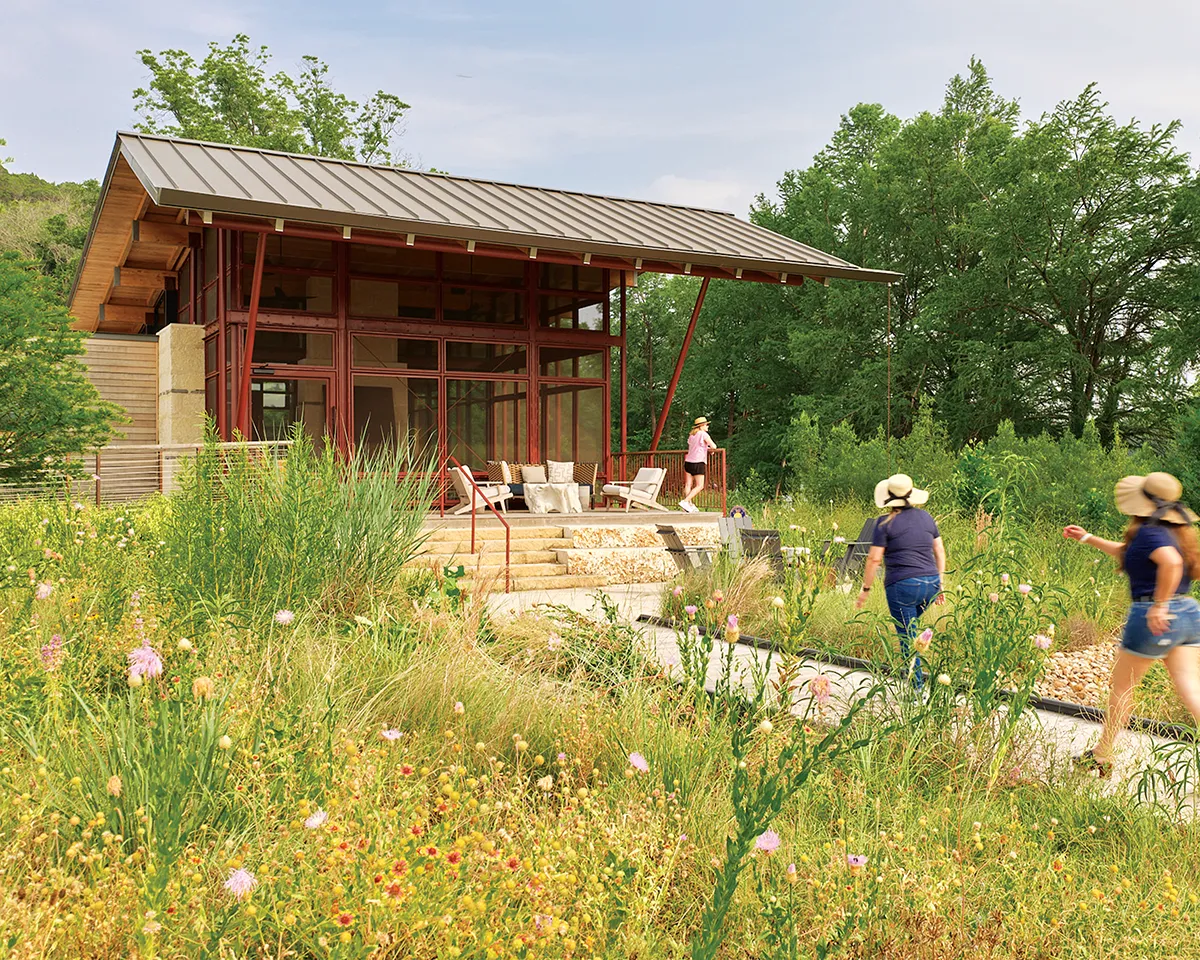
Nestled into the larger woodland and riparian ecosystem, Holdsworth Center harnesses the restorative powers of nature to help public educators renew their passion and skills for educating the next generation. Having served over 1,500 educators since its founding, Holdsworth is a reminder that landscape architecture’s transformative qualities can reach far beyond the site.
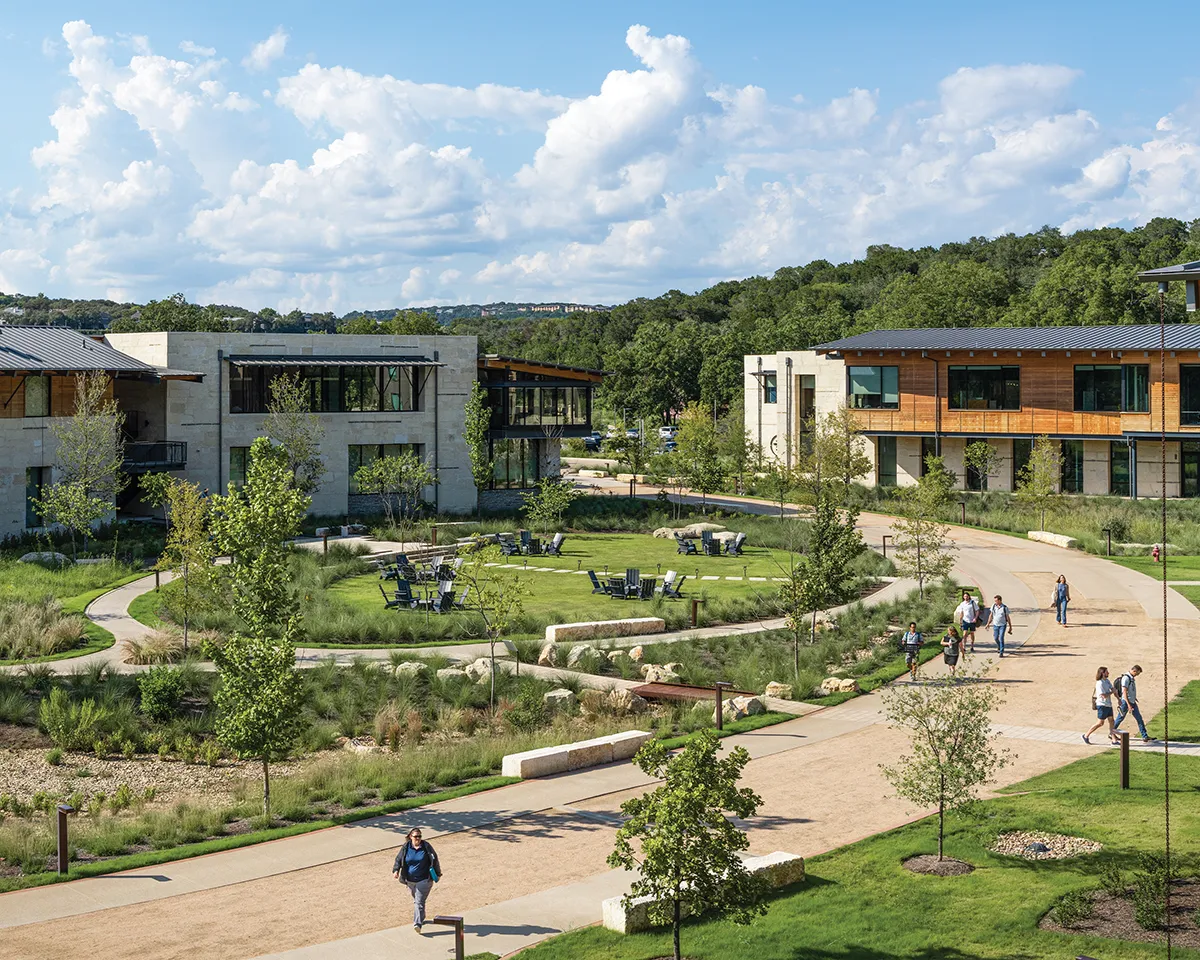
The Holdsworth Center Campus at Lake Austin
Location: Austin, Texas, USA
Landscape Architect: Ten Eyck Landscape Architects
Architect: Lake | Flato Architects
Interior Designer: Looney & Associates
Client Rep / Project Manager: Square One Consultants
Civil Engineer: Stantec
Structural Engineer: Architectural Engineers Collaborative
MEP Engineer: Integral Group
Irrigation Designer: Hines Inc
Environmental Consultant: Siglo Group
Water Feature Designer: Waterline Studios
Lighting Designer: Mazzetti
Signage Consultant: Page/Dyal
Contractor: Beck Group
Diagram Image: Ten Eyck Landscape Architects
Photography Credits: Paul Hester; Andrea Calo; Casey Dunn; Kristian Alveo;