
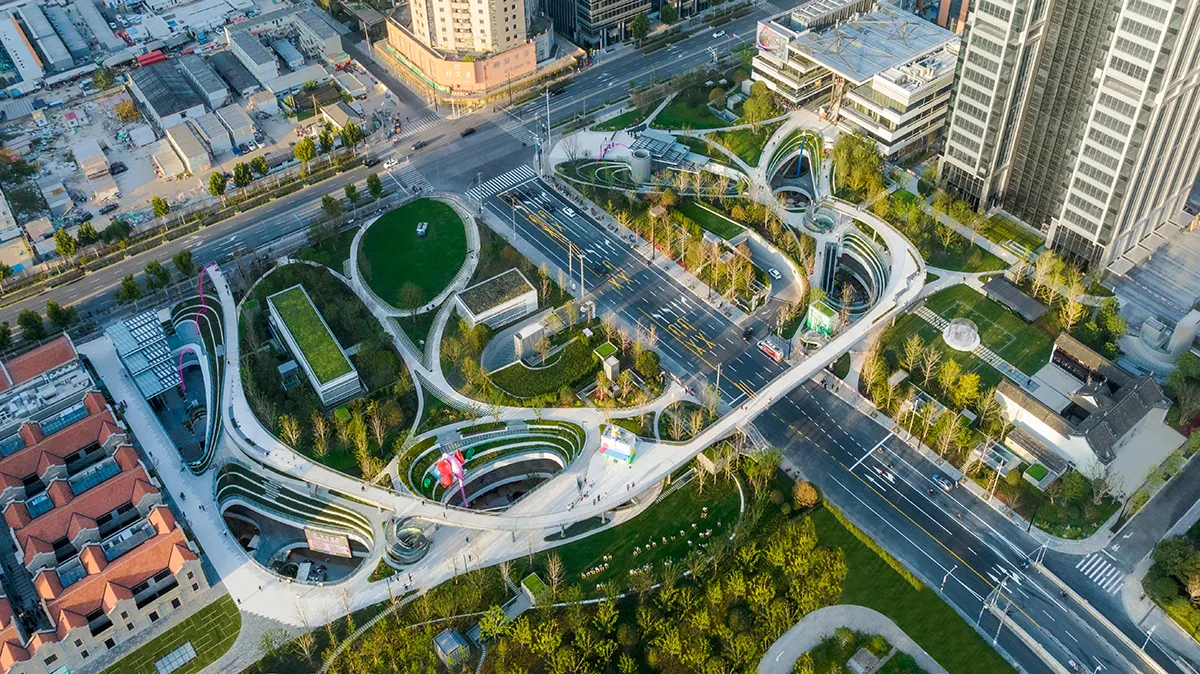
The Suzhou River Park project in Shanghai is a significant accomplishment in balancing commercial growth with the development of inclusive public spaces. By relocating commercial activities underground, the project preserves valuable above-ground areas for public use. The design seamlessly blends the city’s cultural heritage with modern architectural elements, integrating commercial areas with pedestrian walkways, green spaces, and recreational amenities. This creates a visually striking and cohesive park environment that serves as a hub for social and commercial activities. The park offers a welcome respite from the urban landscape, promoting social inclusion and reinforcing a sense of community ownership.
THE “GREEN HEART” OF CITY
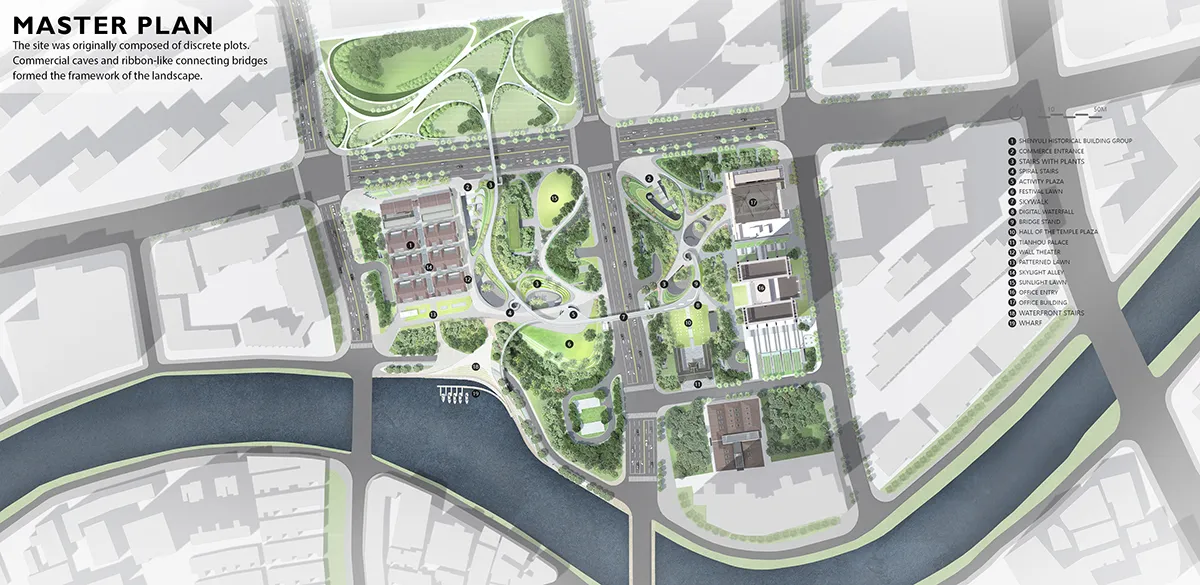
The site is situated in the heart of Shanghai where invisible walls of capital restrict access for certain groups. The prime location of Suzhou River Park makes it a core target of capital. Traditional intensive development would have inevitably led to its transformation into a commercial complex. The project prioritized the creation of a precious “green heart” within the city by ceding commercial activity to the underground, freeing up the ground floor for public use.
YIELD THE GROUND FLOOR
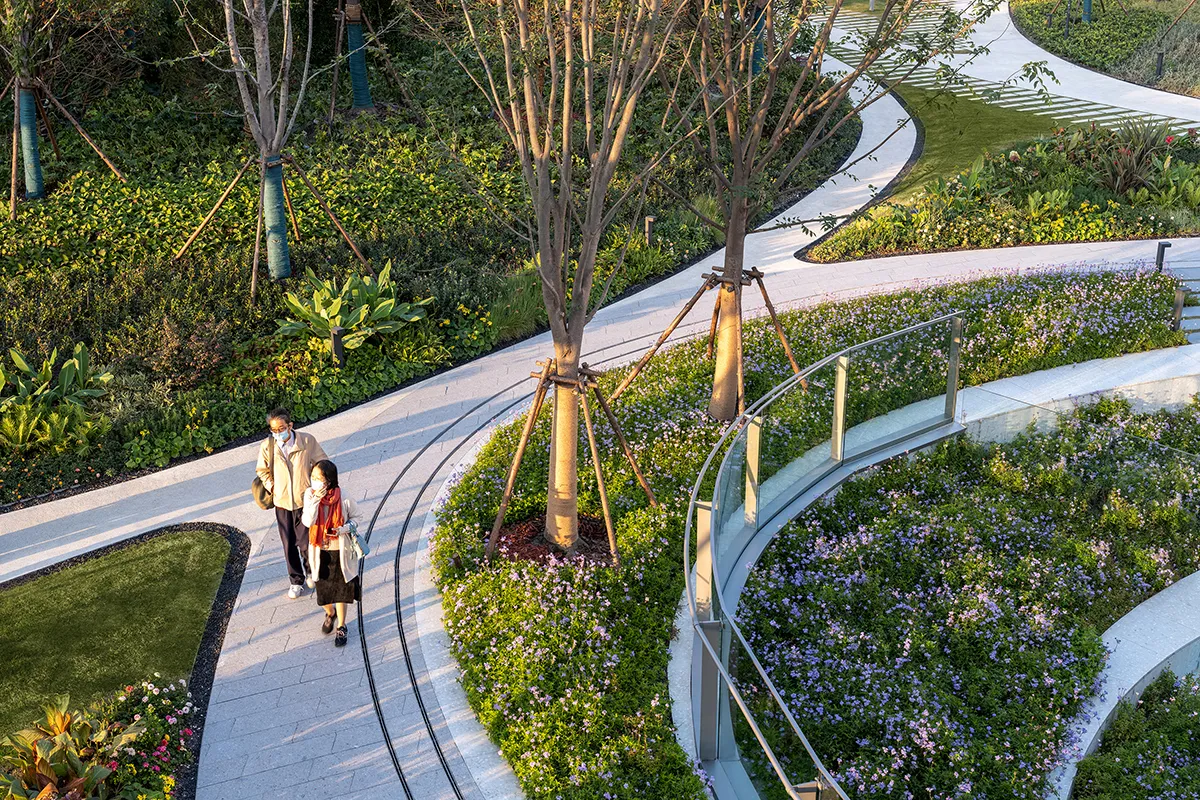
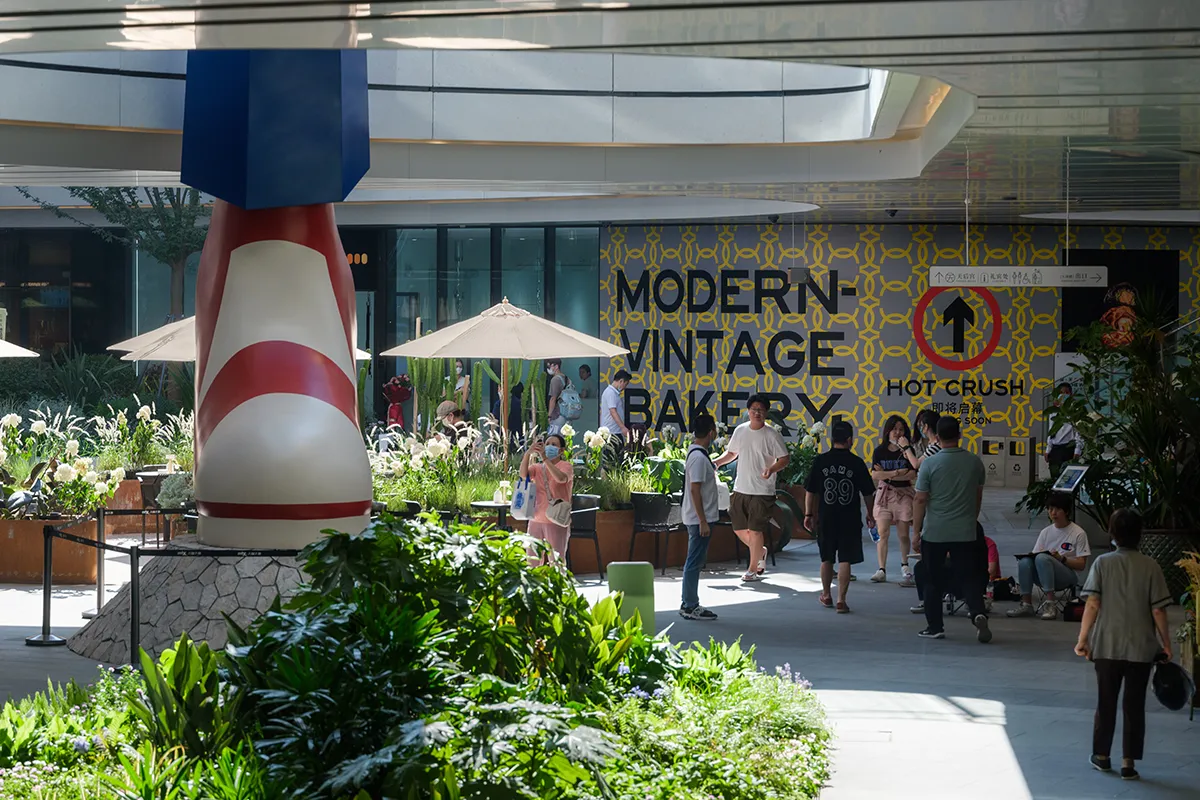
The Park allocates a valuable ground floor area to public space, even weakening the entrance to the sunken commercial area to enhance the perception of the site as a public space. This “concession” breaks down the invisible walls created by commercial development, allowing people to freely enter and exit the space without feeling any pressure as consumers.
CONNECTION
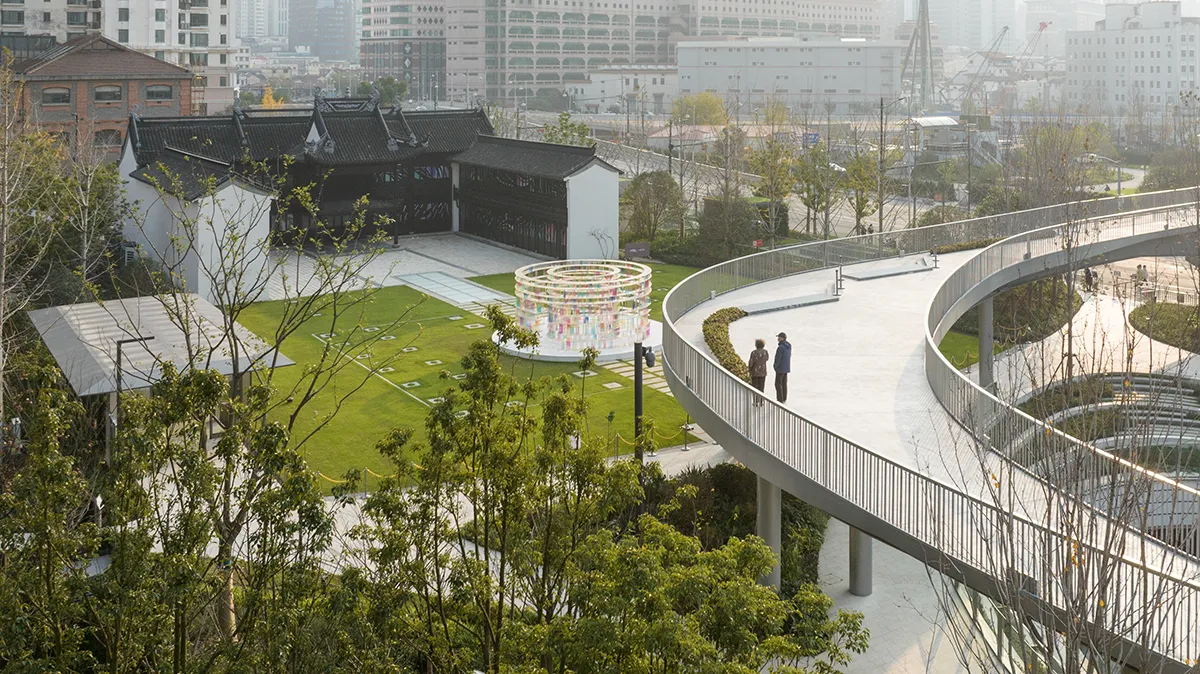
The site of Suzhou River Park was originally comprised of several disjointed blocks separated by a busy road. To create a cohesive park experience, the landscape design utilized a unified design language to connect the different blocks with pedestrian bridges.
NATURAL FLOWS INTO COMMERCIAL
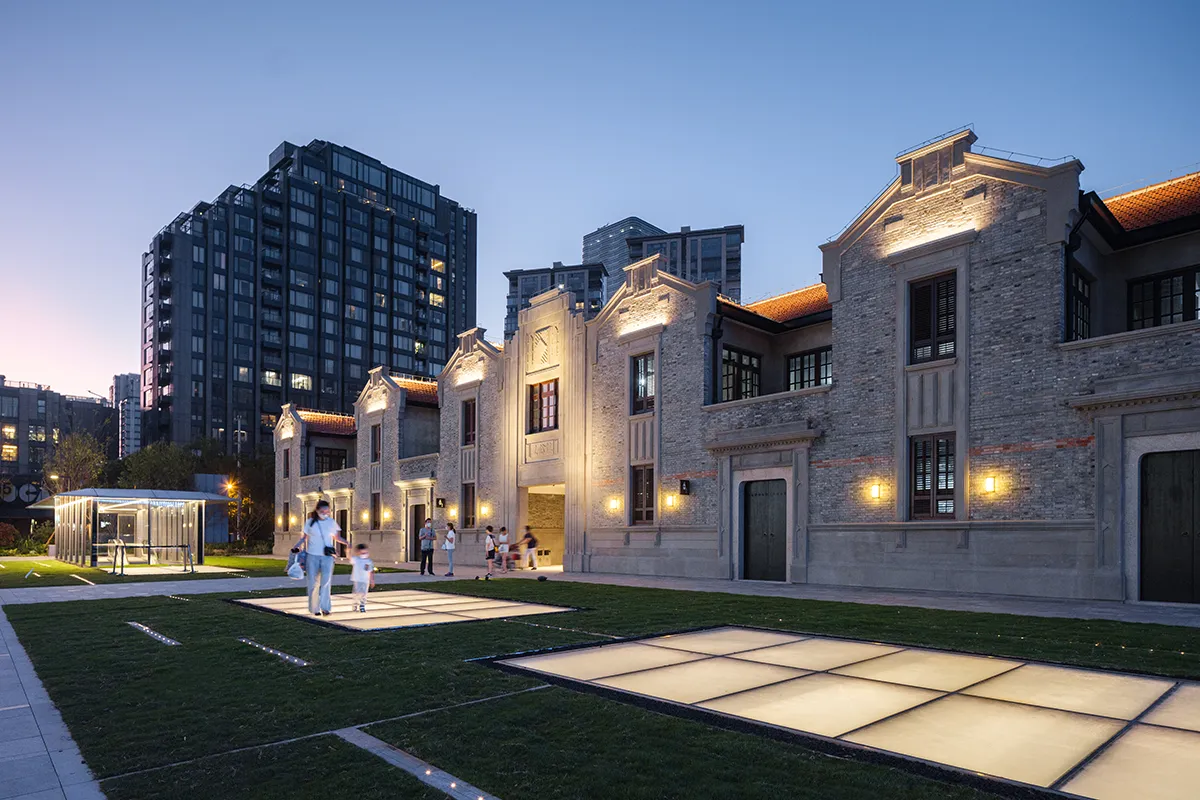
The landscape design integrates greenery throughout the site, both above and below ground, enriching the park experience with diverse textures and forms. The memorial of historic buildings on the site is accomplished through the incorporation of green spaces, which retain the spot of original pillars, and other elements. Skylights left in the pavement serve as special paving and bring natural daylight into the underground commercial area.
RESERVE FOR THE POSSIBILITIES
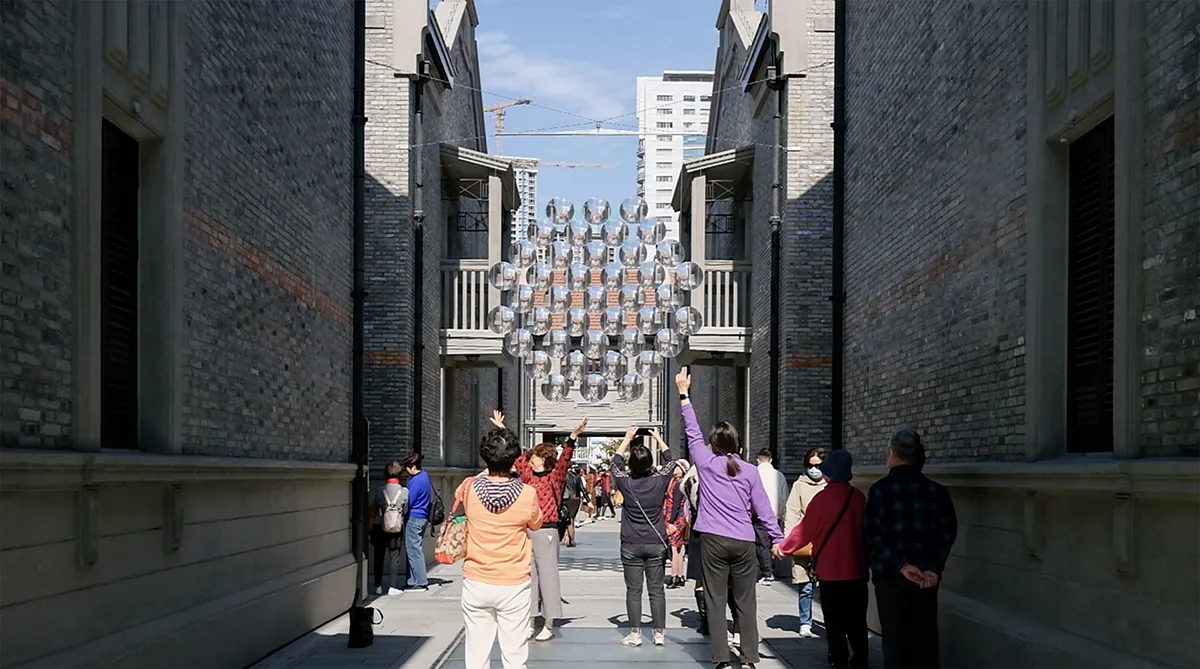
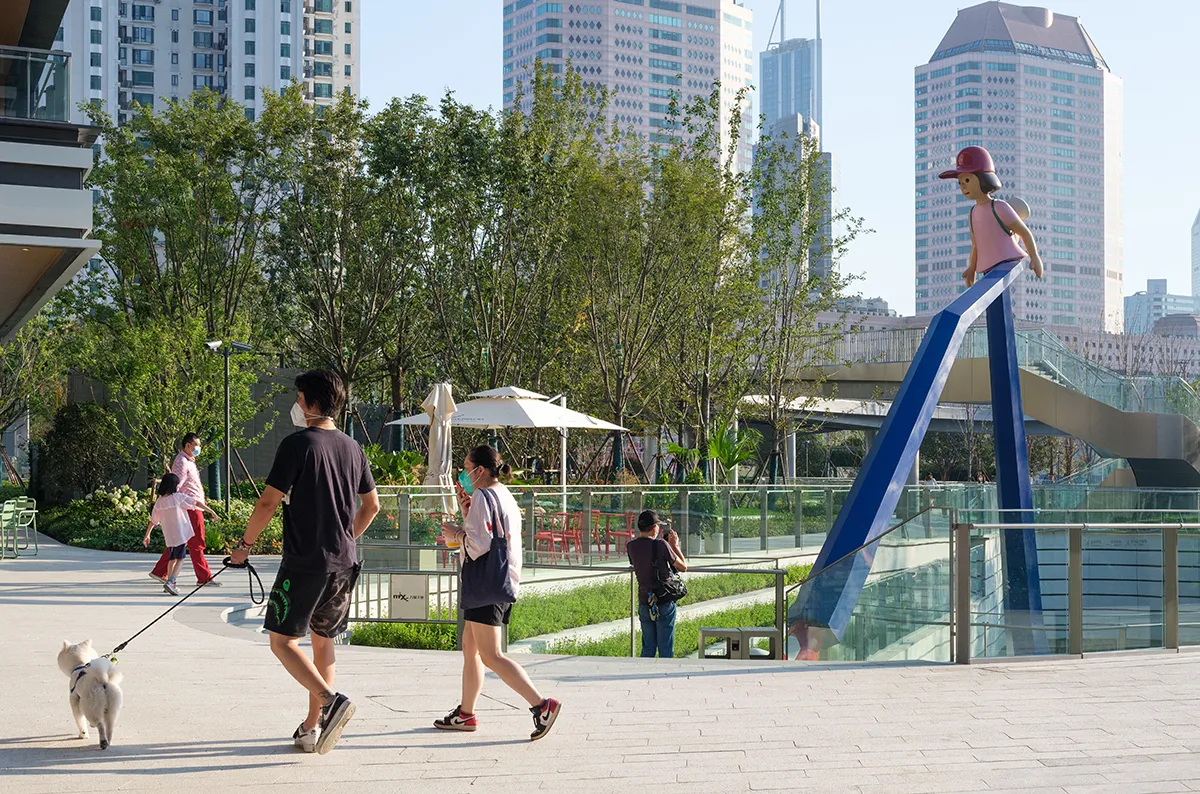
Despite its young age, the park already showcases an impressive range of artistic and urban activities that enrich the experience for visitors and residents alike. The flexibility of the public space provides endless opportunities for artistic expression, turning the park into a vital hub within the urban fabric of Shanghai
A LESSON LEARNED
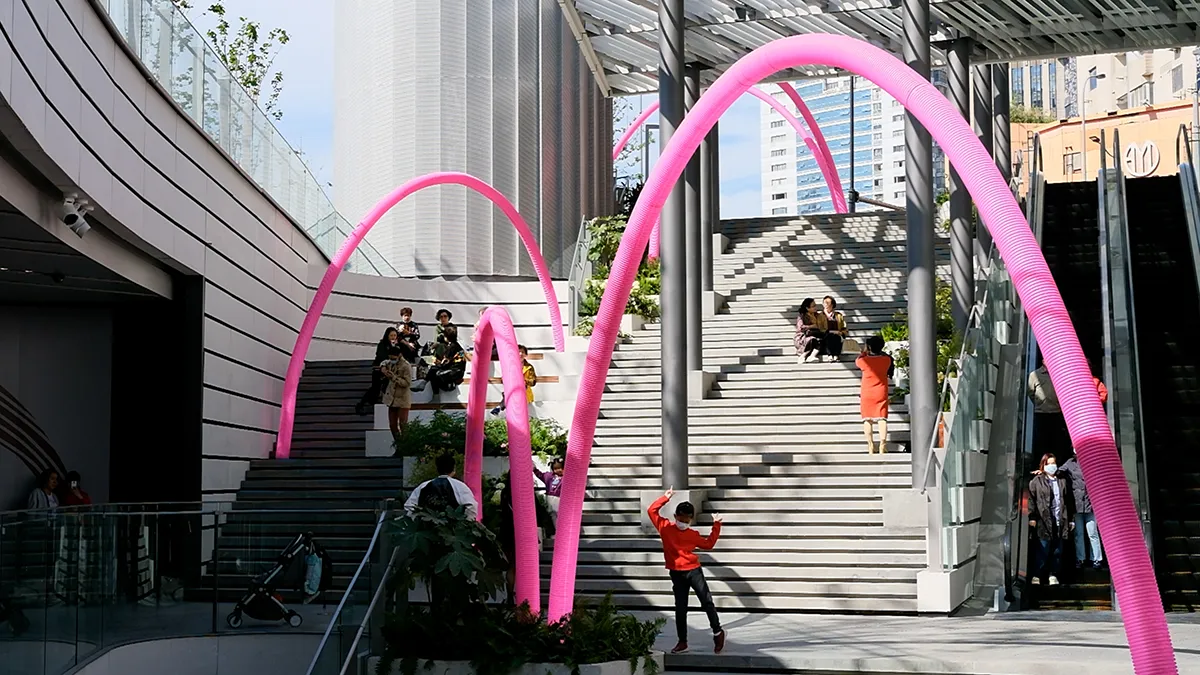
The project in Shanghai is revolutionizing the relationship between public space and commerce. By prioritizing public use and strategically conceding aboveground commercial space, the project has created a vibrant, inclusive park environment that fosters community engagement and creativity. Its success challenges the notion that public space and commerce are incompatible and offers a new model for revitalizing cities that prioritizes community engagement and social well-being alongside commercial interests. This innovative approach has important implications for the future of urban design.
The Green Heart: an Inclusive public Space within a commercial site
Shortlisted for the 2025 WLA Awards in the Built – Commercial Landscape Design category
Landscape Architect: Lab D+H Shanghai
Collaborators/Other Consultants:
Architects: Kokaistudios
Electromechanical Consultant: Meinhardt Group, Promising Engineering and Consulting(Shanghai)Co.,Ltd.
Structural Consultant: Arup
Curtain Wall Consultant: RFR Shanghai
Landscape Construction Drawing: Shanghai Landscape Architecture Design & Research Institute Co., Ltd. Lighting Consultant: Arup
Art Consultant: AllRightsReserved. Limited
Signage & Wayfinding Consultant: GK Shanghai
Office Building Design + Interior Design: Foster + Partners Limited
Shenyu Lane Preservation: Office for Urban Renewal(OUR)
Tianhou Palace Preservation: Shanghai Jiao Tong University Design & Research Institute Co., LT
Client: China Resources Land Limited, Shun Tak Holadi
Photography: IAM PHOTOGRAPHY