
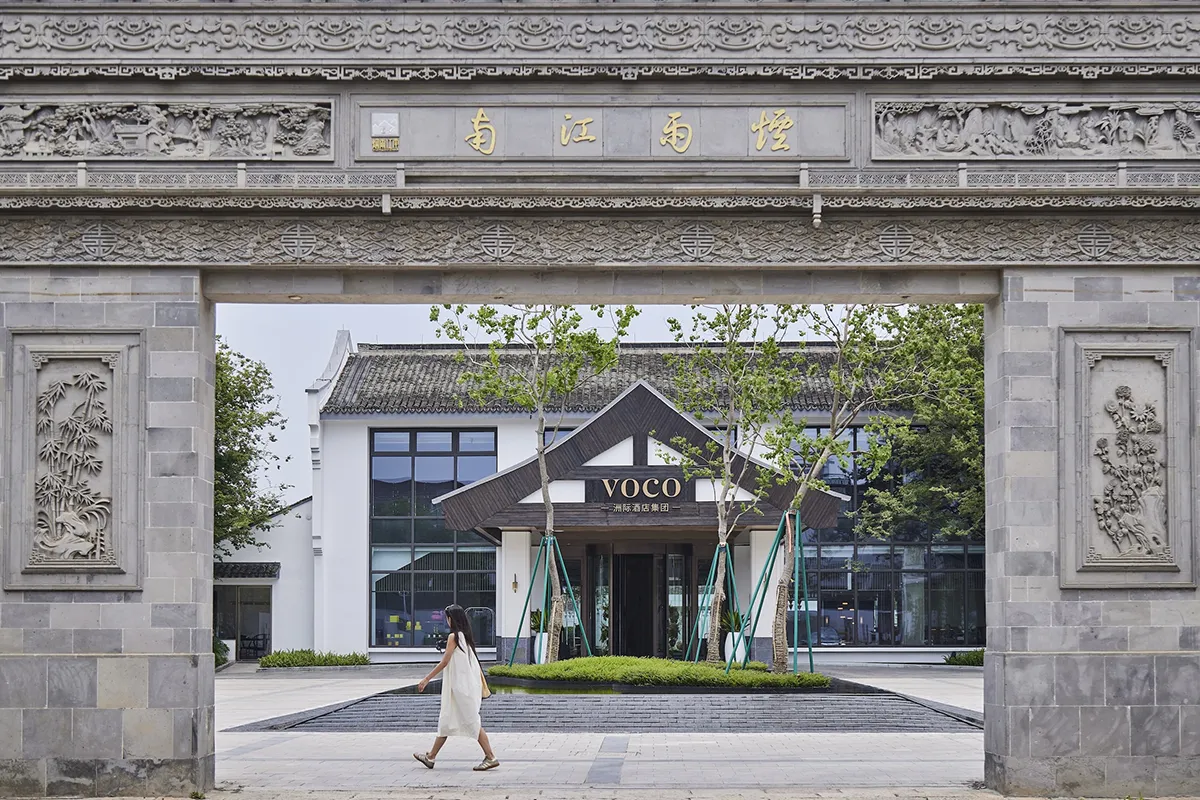
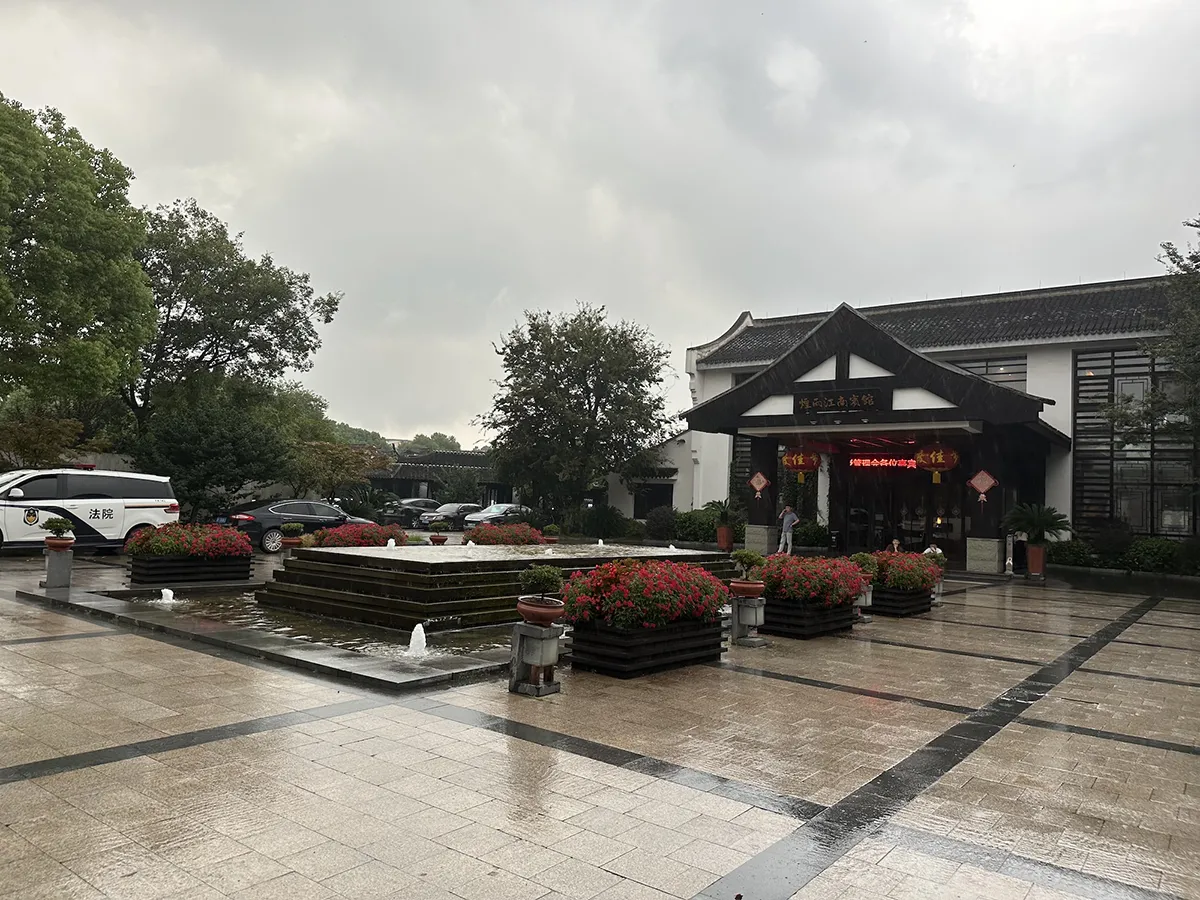
The ancient town of Xitang in Zhejiang Province is known for its canals, stone bridges, and authentic Jiangnan atmosphere, with origins tracing back to the Ming Dynasty. Nearly twenty years ago, a local company built a three-story, villa-style resort here. Over the years, however, the resort struggled to keep pace with contemporary expectations of hospitality. Aging facilities, undersized guestrooms, and outdated layouts led to a decline in guest numbers.
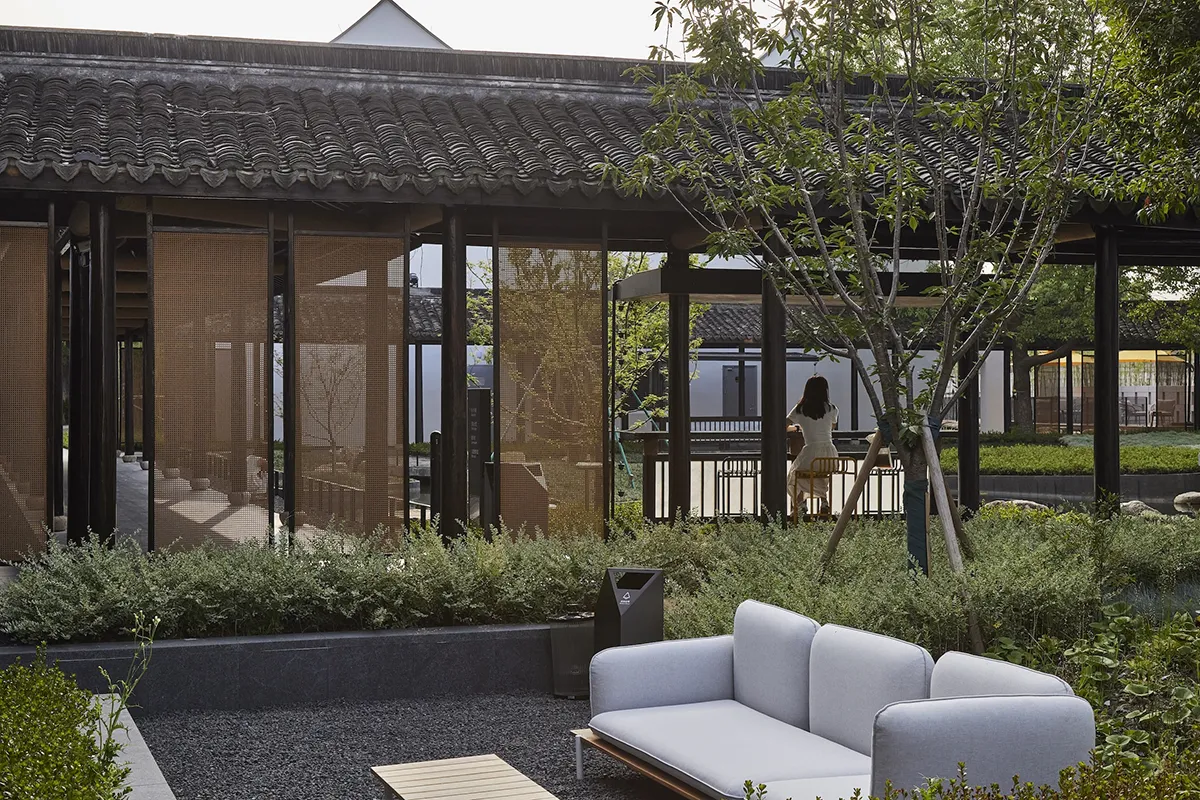
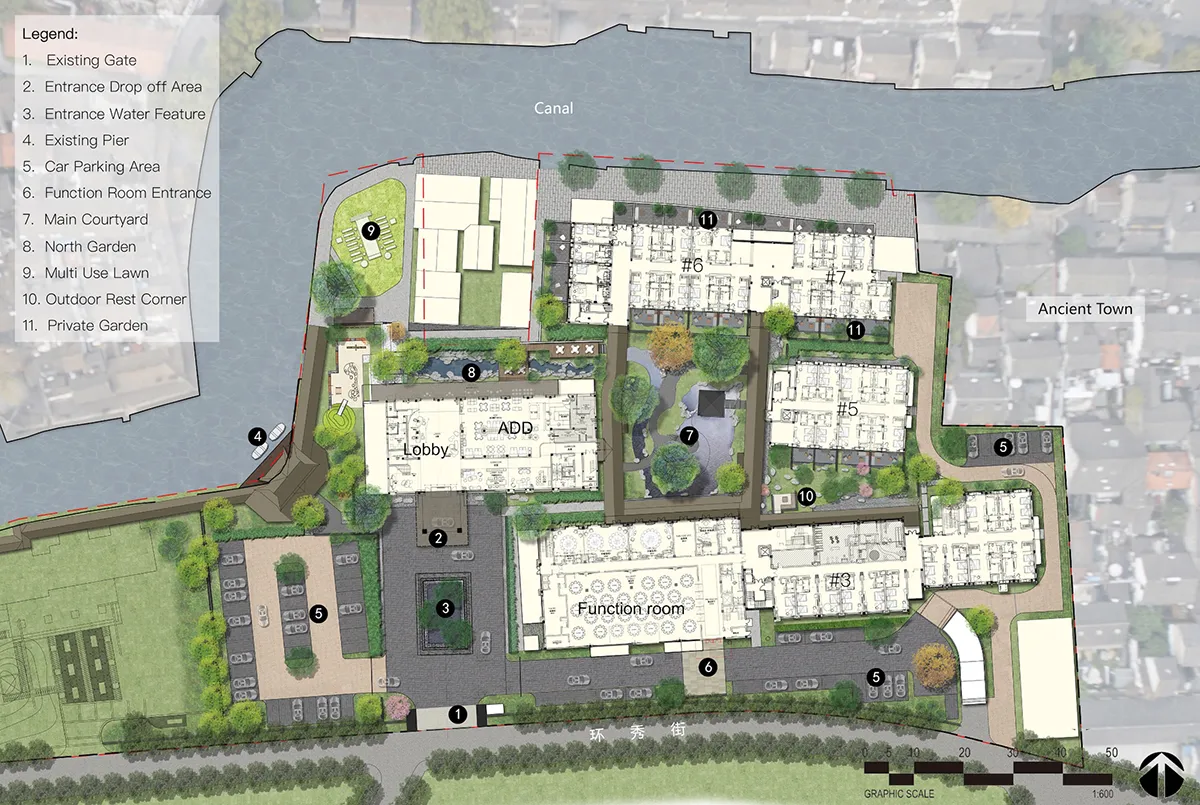
To reposition the hotel and attract new visitors, the owners partnered with InterContinental Hotels Group and relaunched the property under the VOCO brand. The renovation included extensive updates to interiors, facilities, and landscapes. Rather than replacing everything, the project sought to make efficient interventions—retaining mature trees and structures where possible, while carefully redesigning the most essential outdoor areas: the entrance, the north garden of the lobby, the central courtyard, and the spaces around guestrooms.
Entrance Drop-Off
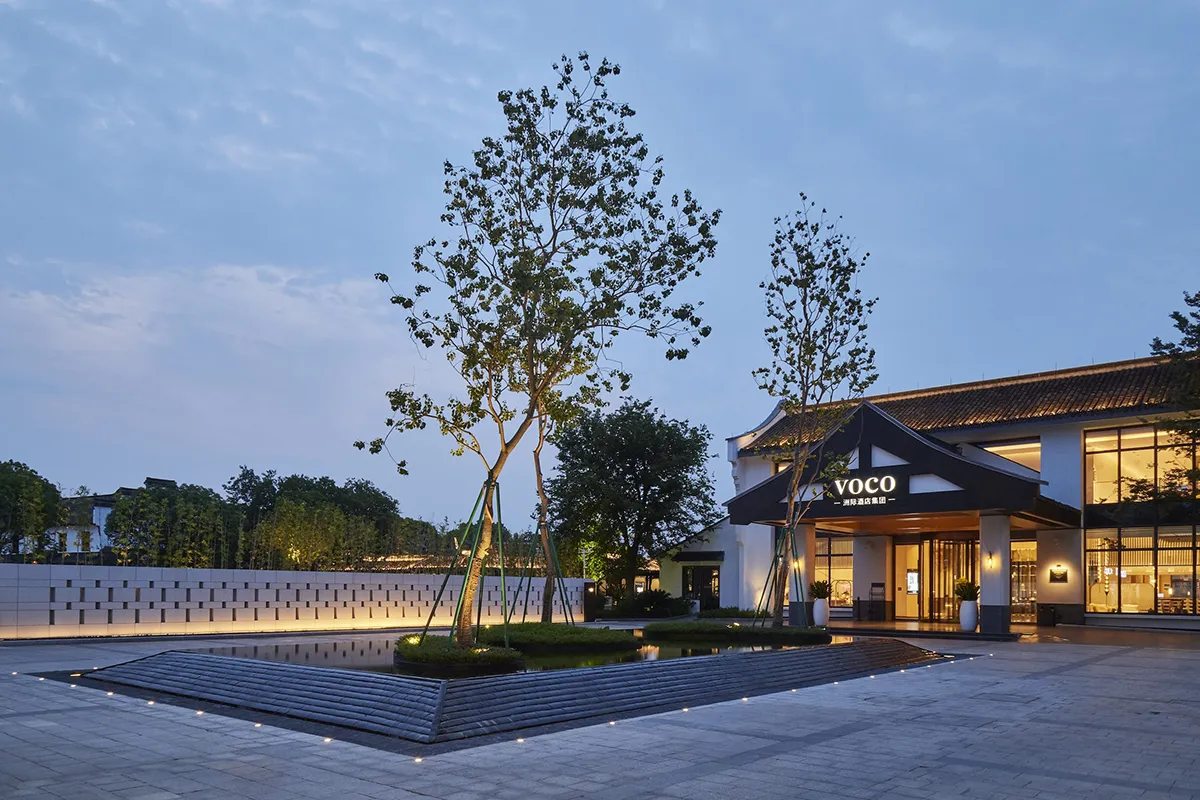
The entrance was seen as the “first impression” of the resort. Existing features such as the Jiangnan-style gate and granite-paved driveway were preserved, while the central fountain was rebuilt in its original size and position. To hide the view of the parking lot and neighbouring plots, a bamboo screen and a new landscape wall were added. This created a clear, ceremonial axis from the main gate through the water feature to the lobby, offering a refined arrival experience.
Lobby North Garden
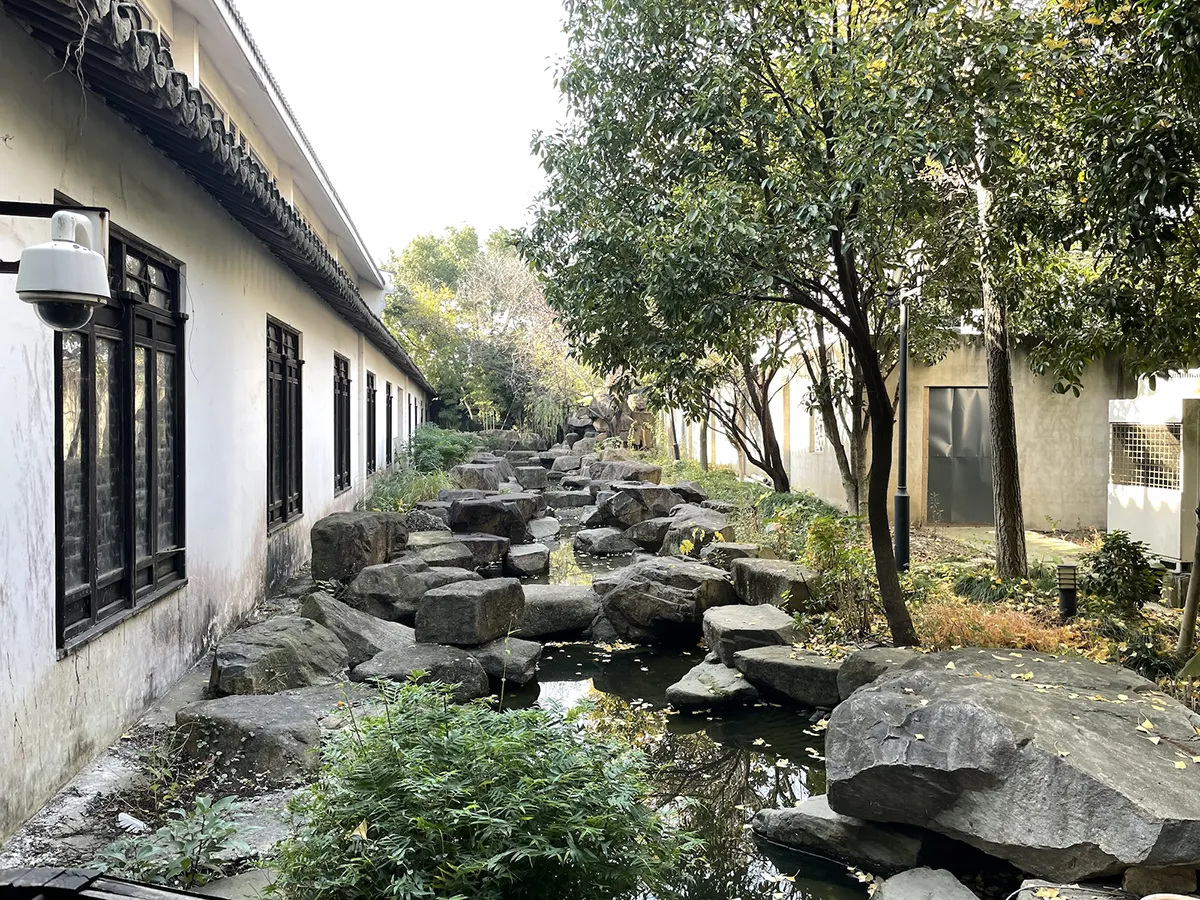
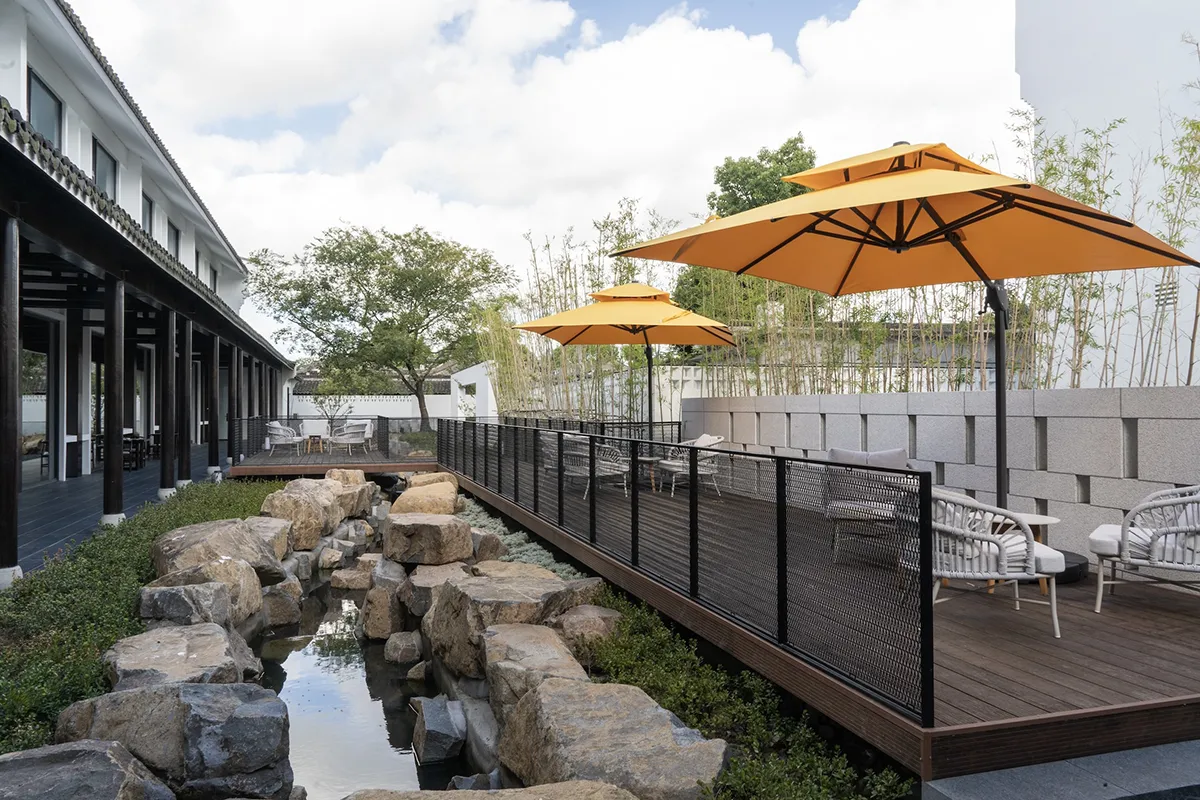
Stone streams and heavy planting had once dominated the garden beside the lobby, but it lacked a strong connection to the interior. By opening the north-facing walls of the lobby and all-day dining with glass, the garden became both a scenic backdrop and an active part of the guest experience. Existing streams were retained, while vegetation was reorganised and a water-friendly timber deck was introduced. Guests can now enjoy the garden from indoors or use it as an outdoor dining and relaxation space.
Central Courtyard
Located at the heart of the hotel, the courtyard is the key space all guests pass through. Previously, it contained a traditional Chinese garden that had fallen into disrepair—its structures were old, vegetation was overgrown, and circulation was uncomfortable. The redesign retained the major framework, including the cloisters, mature trees, and pond, but introduced new elements to refresh the atmosphere.
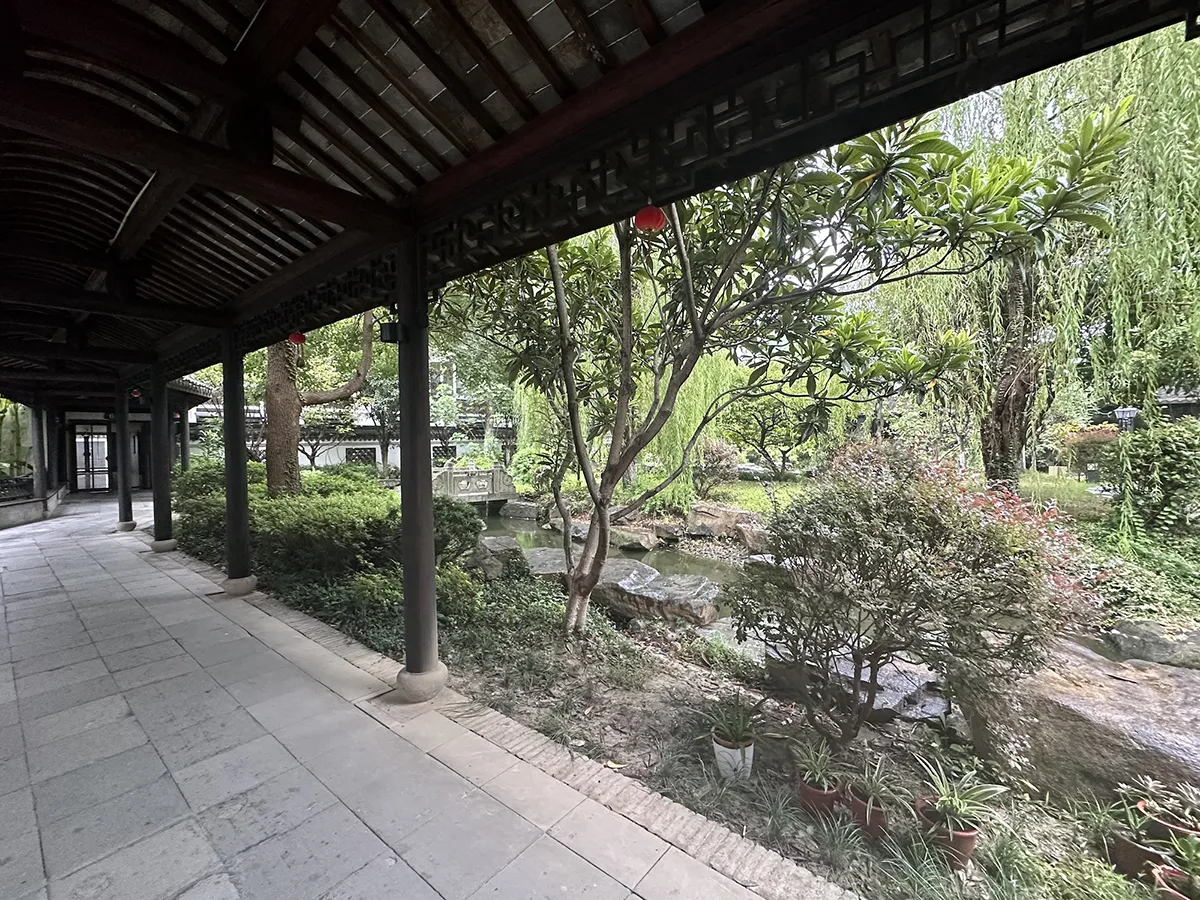
- Overgrown plantings were cleared to open sightlines and create a more accessible atmosphere.
- The old pavilion was replaced with a striking glass tea house set within the pond, becoming a symbolic centerpiece.
- A new sunken pathway was introduced, taking advantage of the absence of underground constraints to create layered perspectives and strolls through the garden. Portions of the pond were expanded to accommodate in-water seating area.
- The cloisters were equipped with counters and benches to enhance usability, while screen walls provided soft separations from guestrooms, doubling as visual accents.
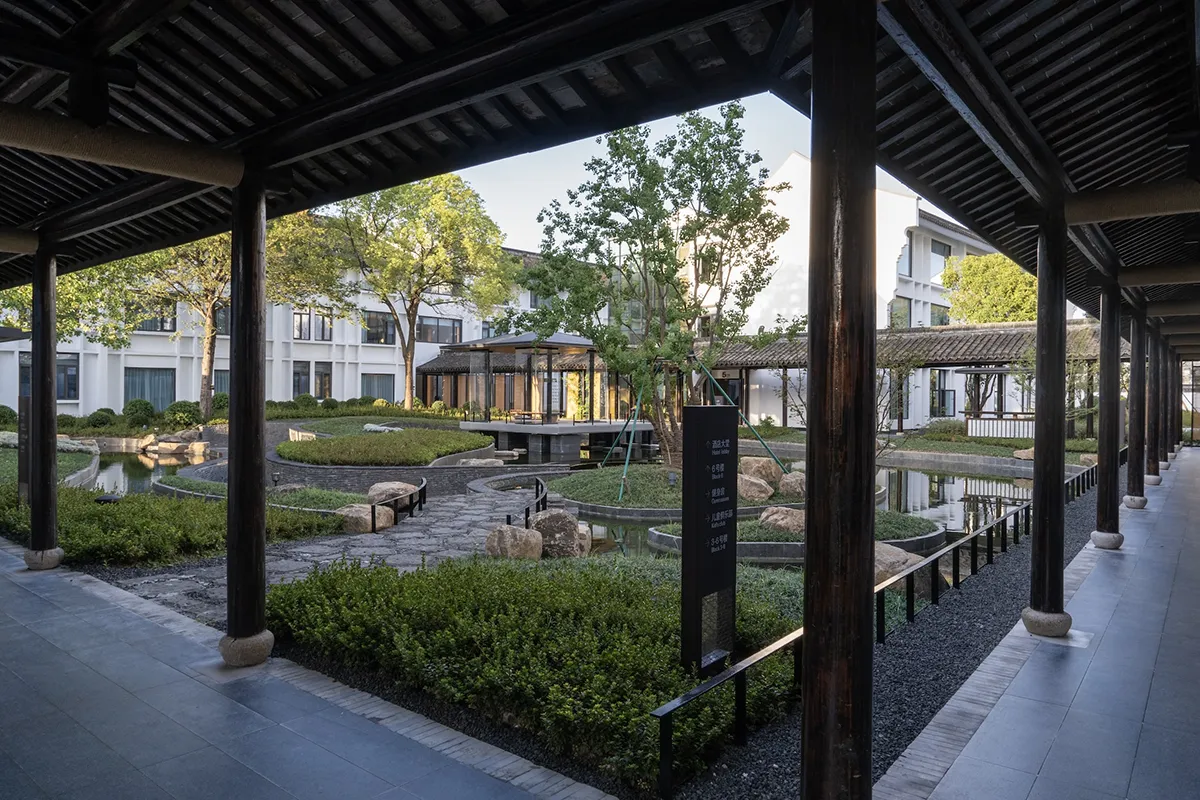
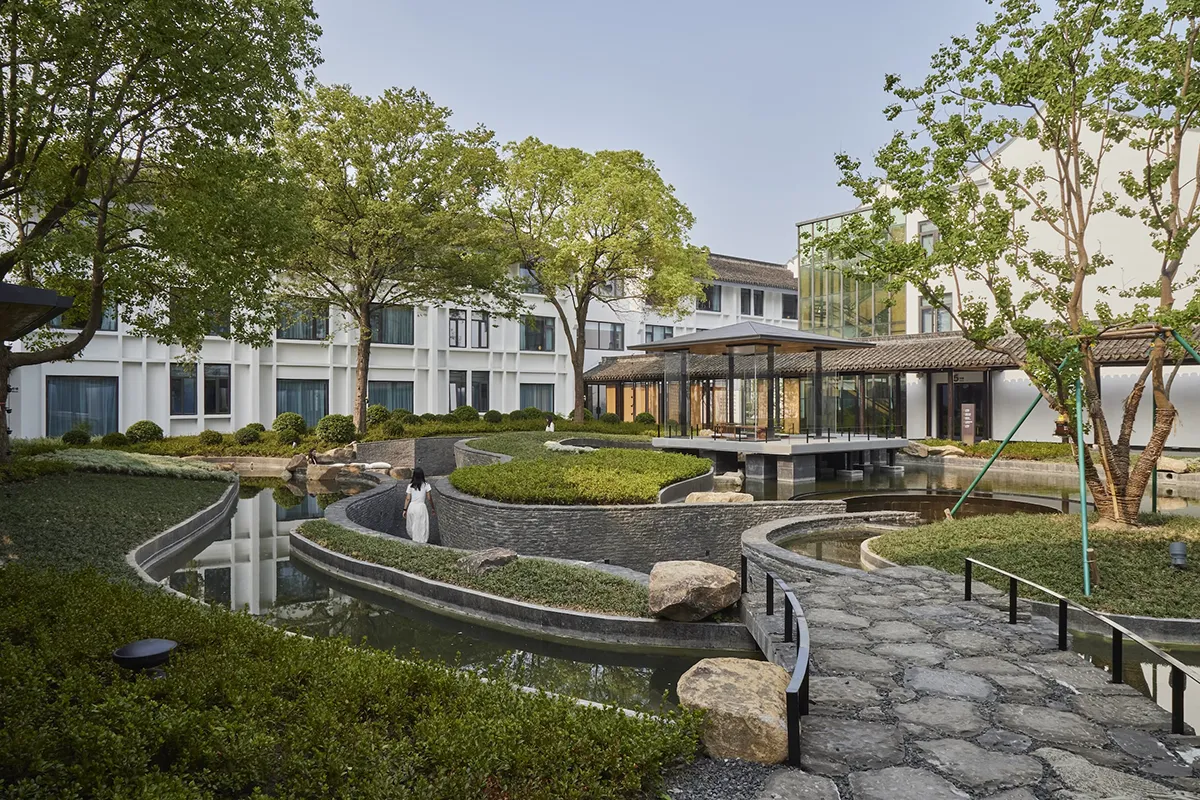
The courtyard now works as both a tranquil retreat and a vibrant gathering space.
Guestroom Surroundings
Around the guest wings, dense shrubs and trees had blocked the natural light, creating a heavy atmosphere. Plantings were renewed to restore views and daylight, while subtle changes in terrain ensured privacy from walkways. For rooms located further from the central courtyard and cloisters, private gardens were introduced on the southern side. These intimate outdoor spaces enhance privacy and elevate the value of the guestrooms.
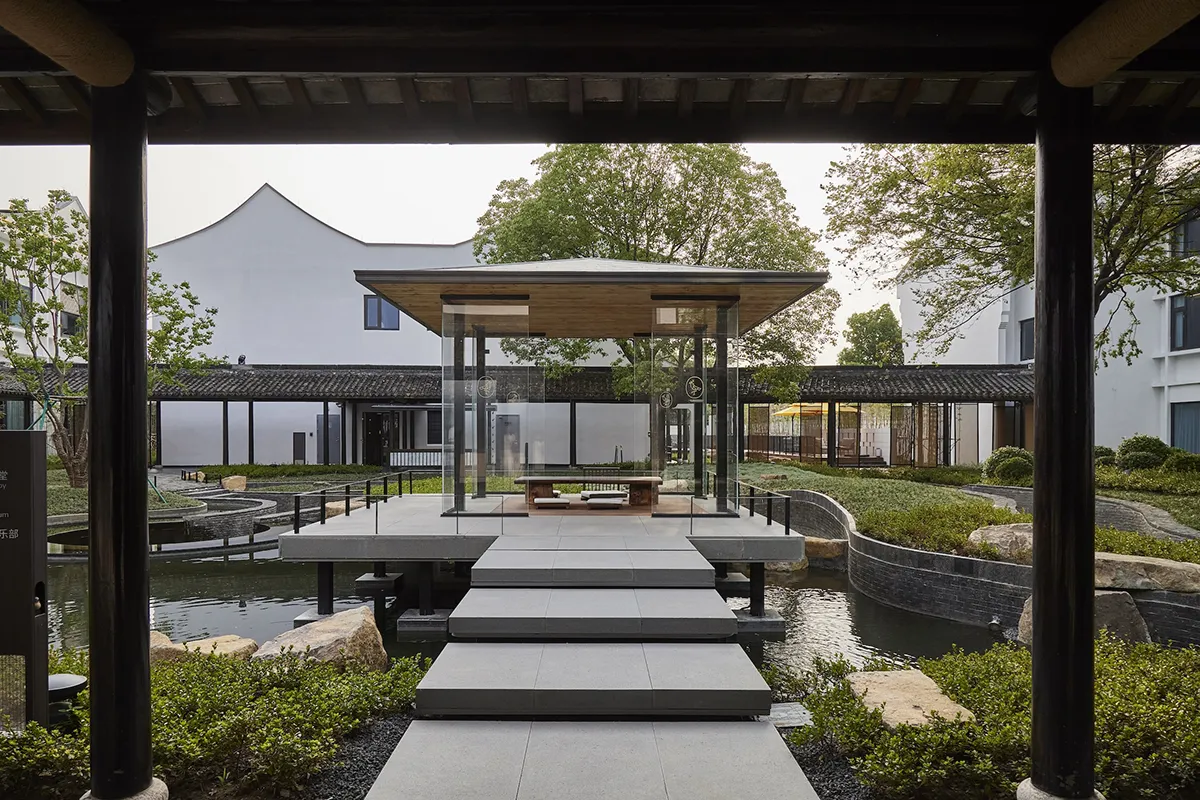
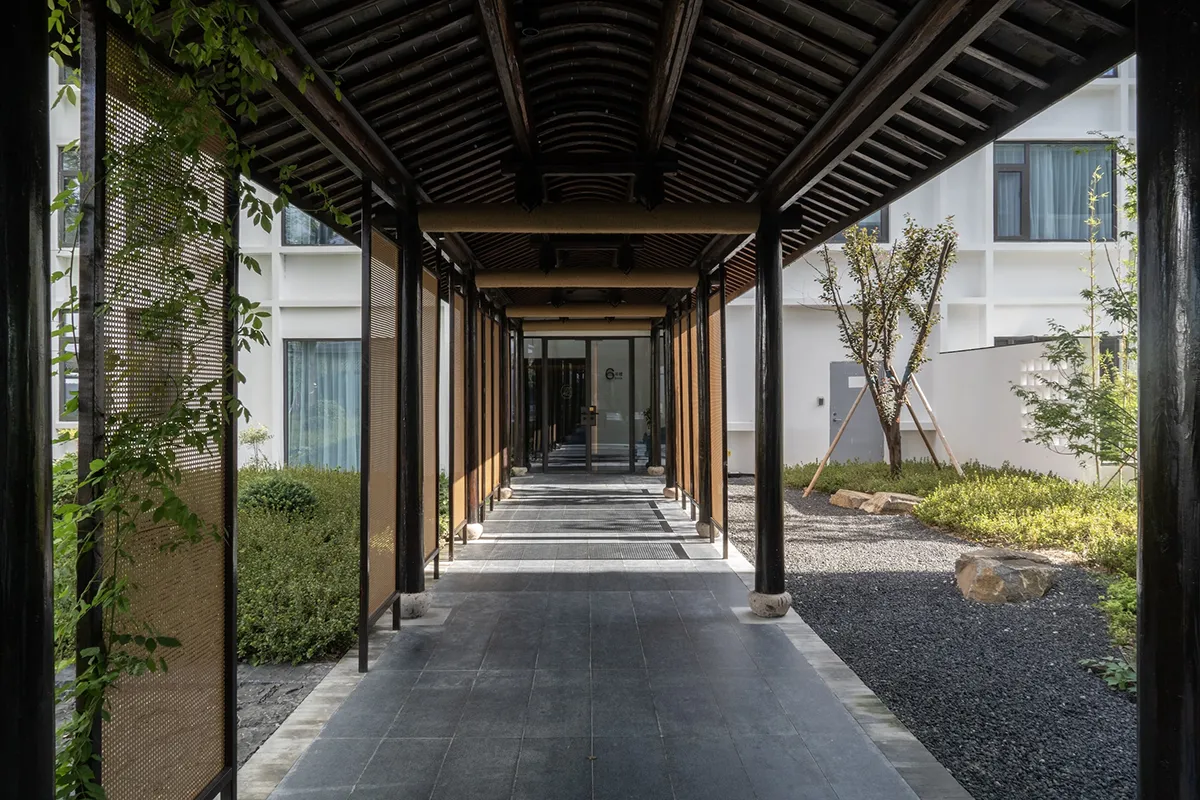
The renovation of the Xitang VOCO Hotel demonstrates how sensitive reuse and strategic interventions can breathe new life into aging hotels. By preserving mature landscapes and architectural heritage while introducing contemporary spatial experiences, the project showcases the unique character of Xitang’s historic setting, offering guests a comfortable and contemporary resort experience.
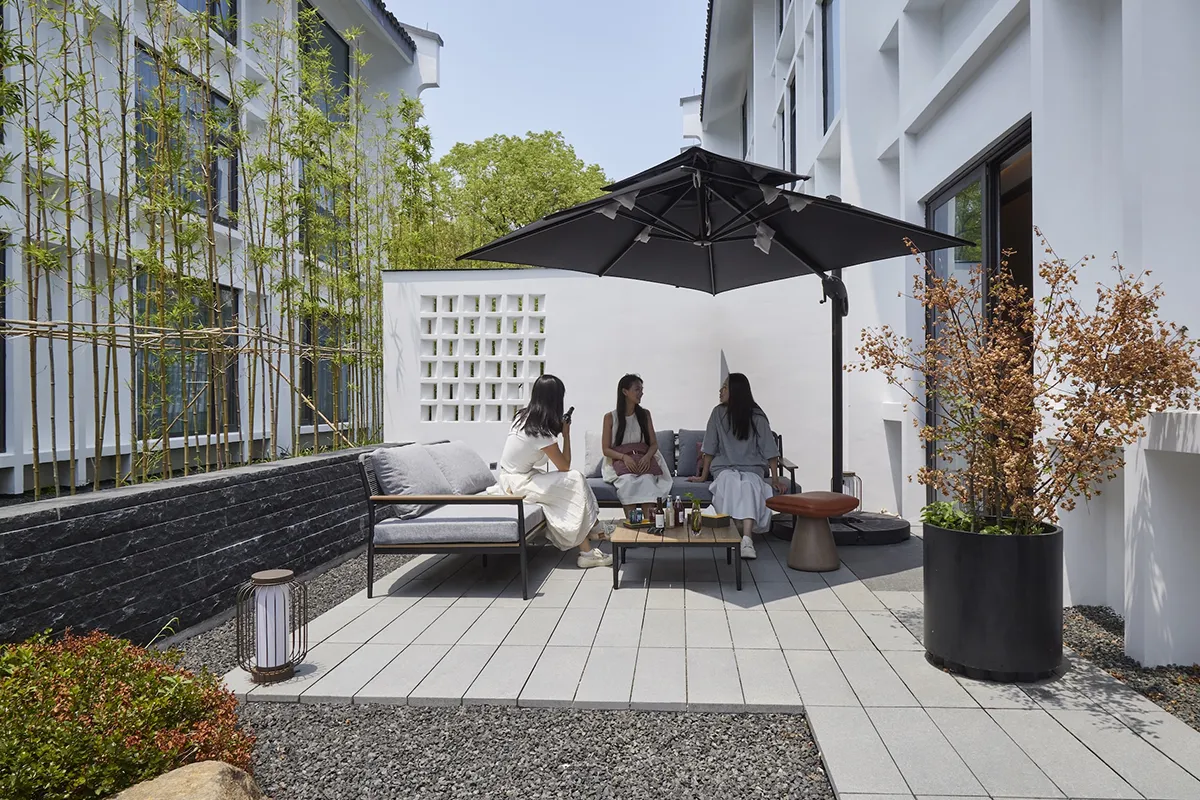
Xitang VOCO Hotel
Location: Xitang, Zhejiang, China
Client: Jiashan Xitang Yanyu Jiangnan Hotel
Landscape architect: TOA Landscape Architecture
Design team: Okawa Yoshinari, Chen Rong, Qu Songda, Liu Junyi, Yu Xiaotong
Photography: TOA Landscape Architecture