
A Transitional Urban Commons
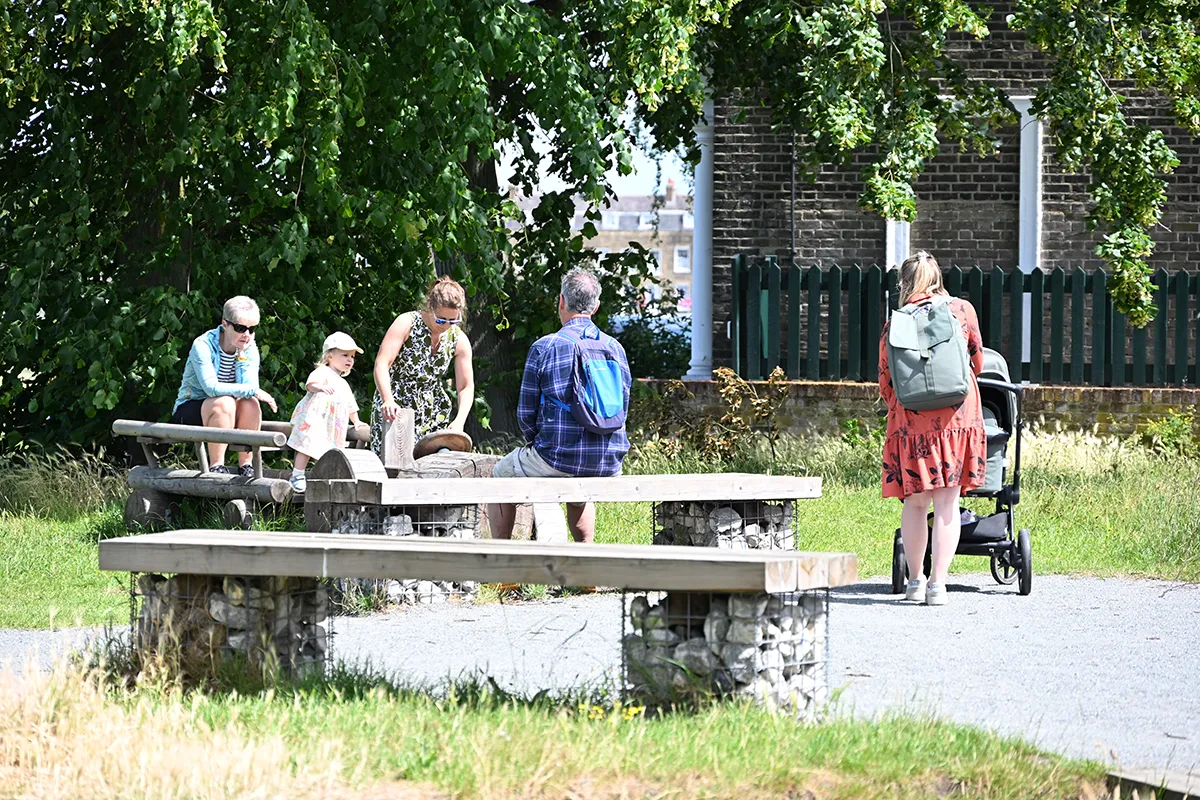
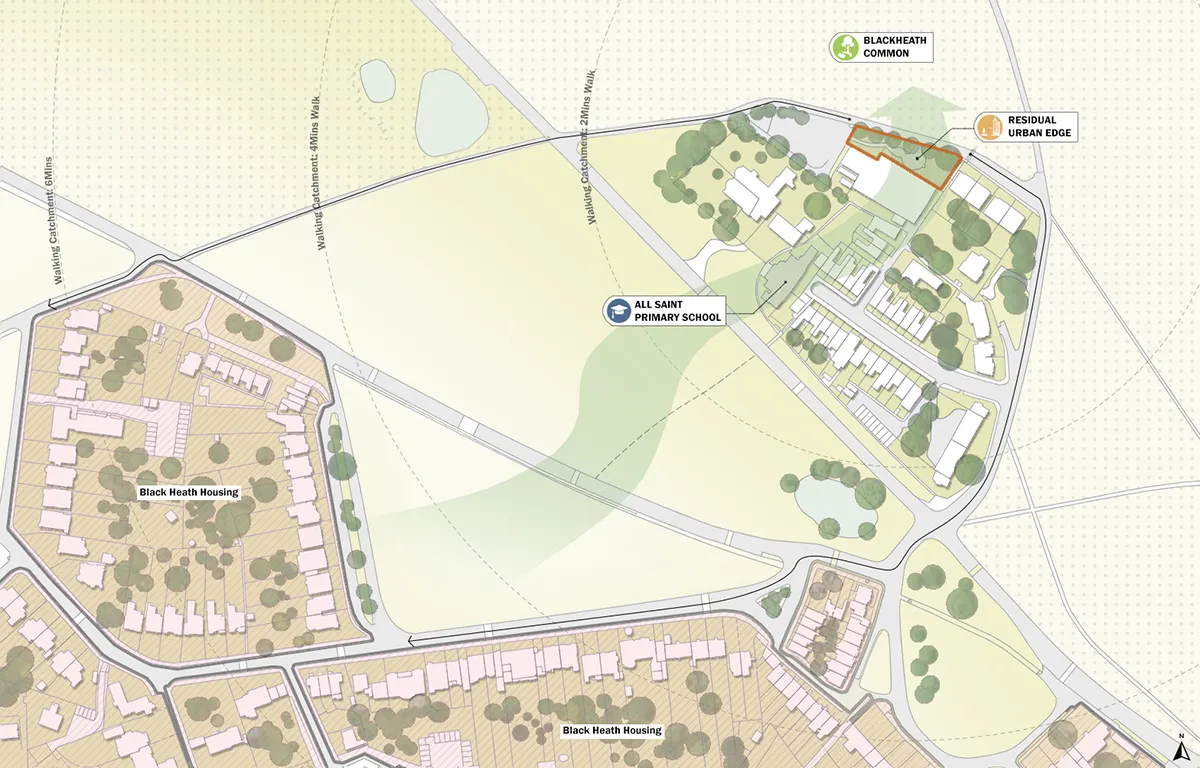
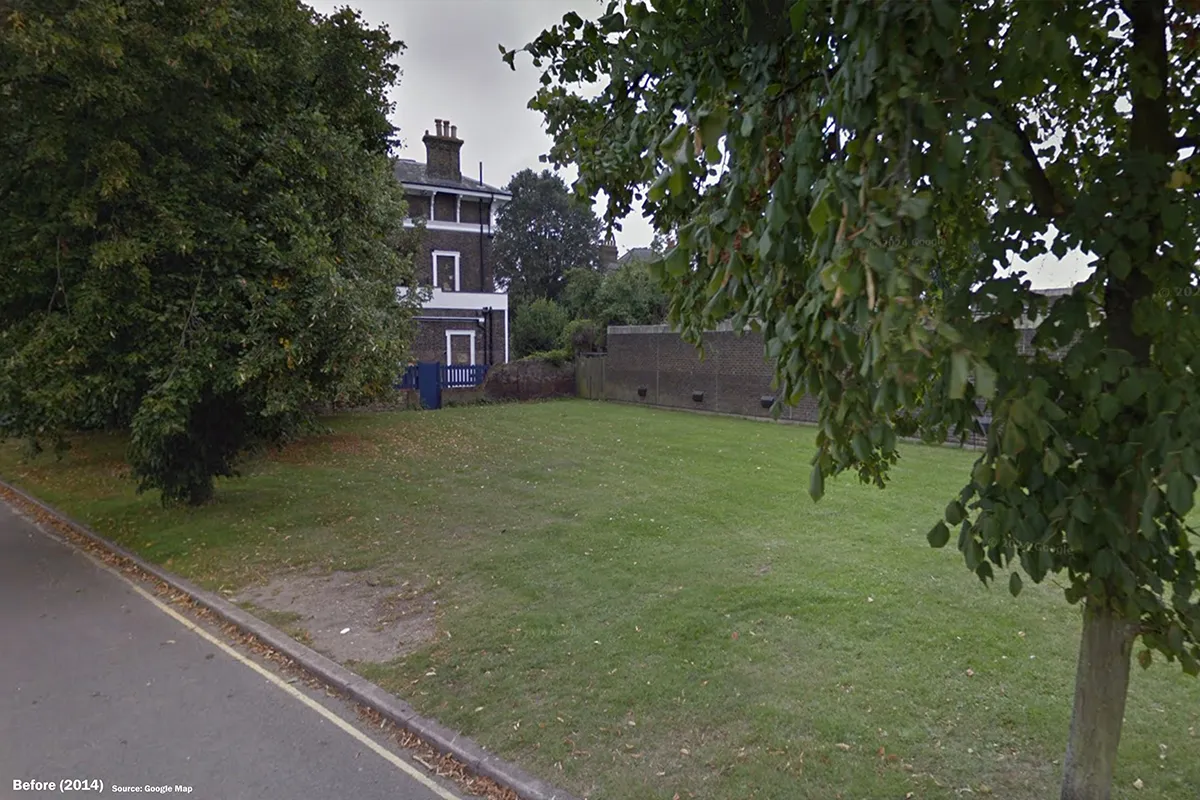
Talbot Place transforms an underused residual site on the edge of London’s historic Blackheath Common into a child-centred transitional urban commons. Situated between a metropolitan common, a primary school and a residential neighbourhood, the project reimagines an overlooked urban edge as a shared landscape where play, ecology and everyday public life coexist. Rather than functioning as a conventional playground, the intervention creates an open civic landscape that strengthens connections between community, nature and movement.
Landscape as Play
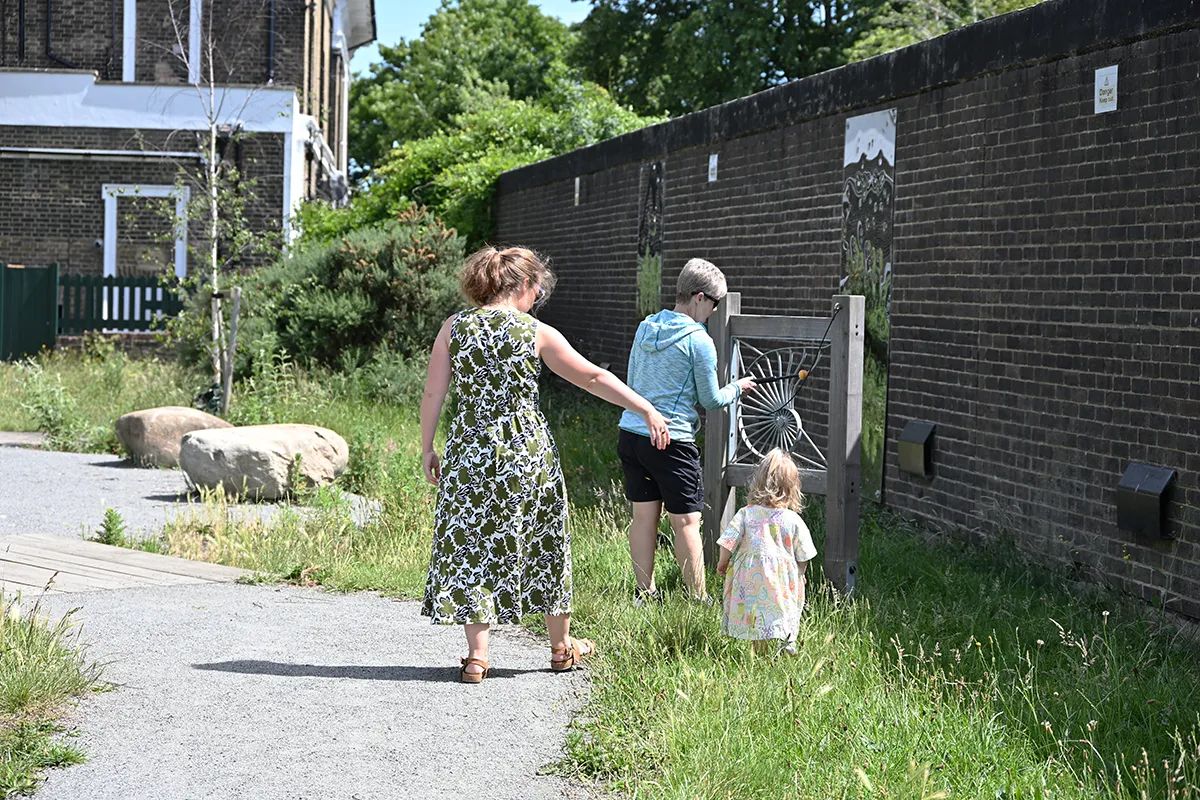
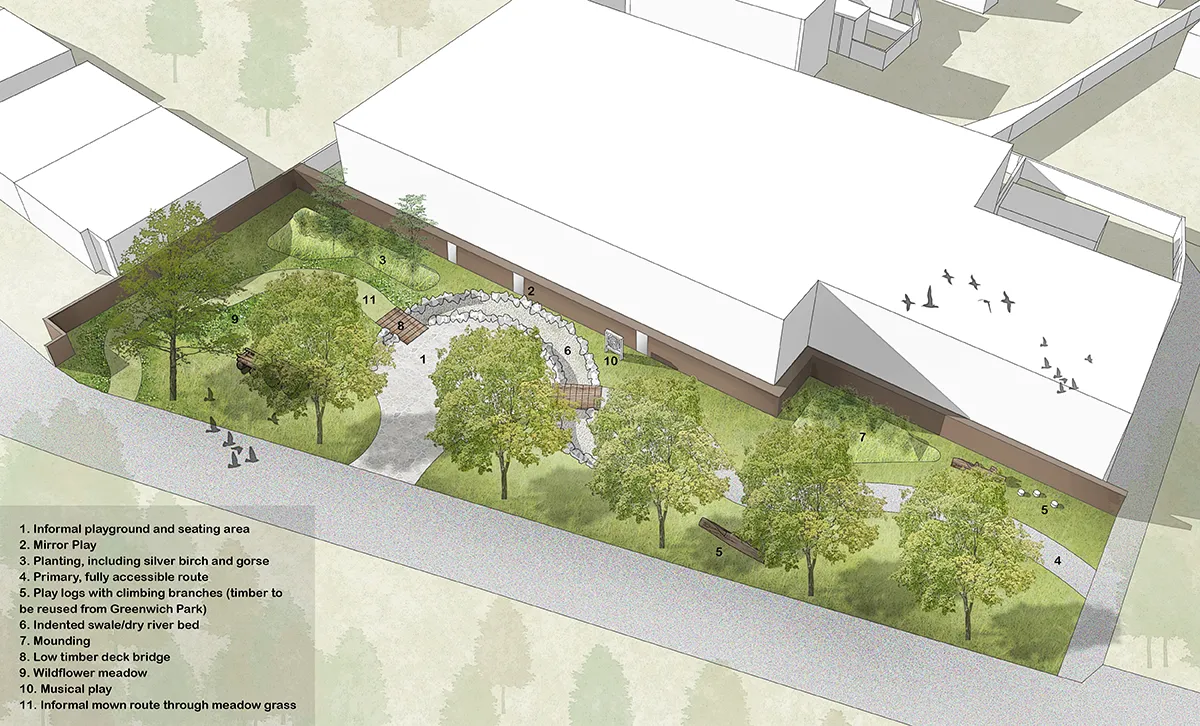
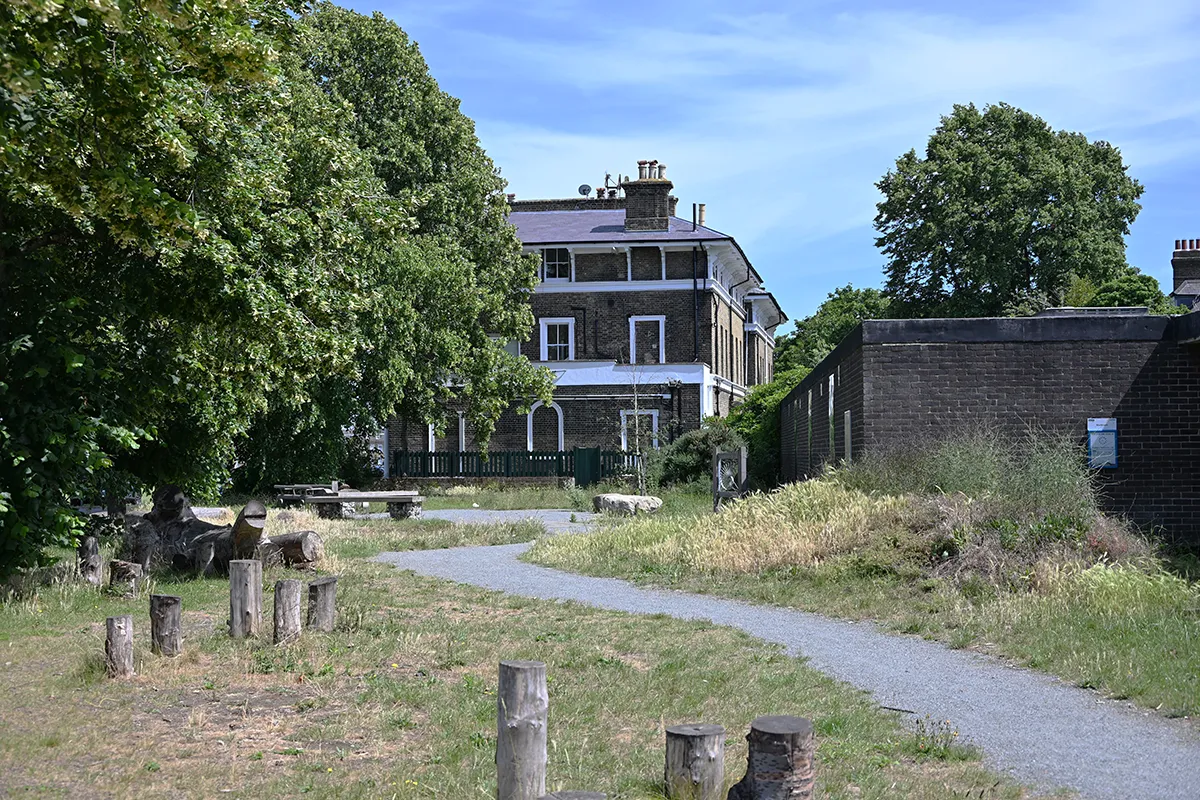
The project challenges the conventional model of enclosed playgrounds and manufactured play equipment by allowing the landscape itself to become the primary play environment. Reclaimed timber, natural boulders, meadow planting, gentle landforms and seasonal water create opportunities for balancing, climbing, exploration and imaginative play without prescribing fixed activities. Children are encouraged to make their own routes, assess manageable risks and engage directly with changing natural conditions, supporting independent mobility and environmental learning through everyday experience.
Meanwhile Use as Urban Transition
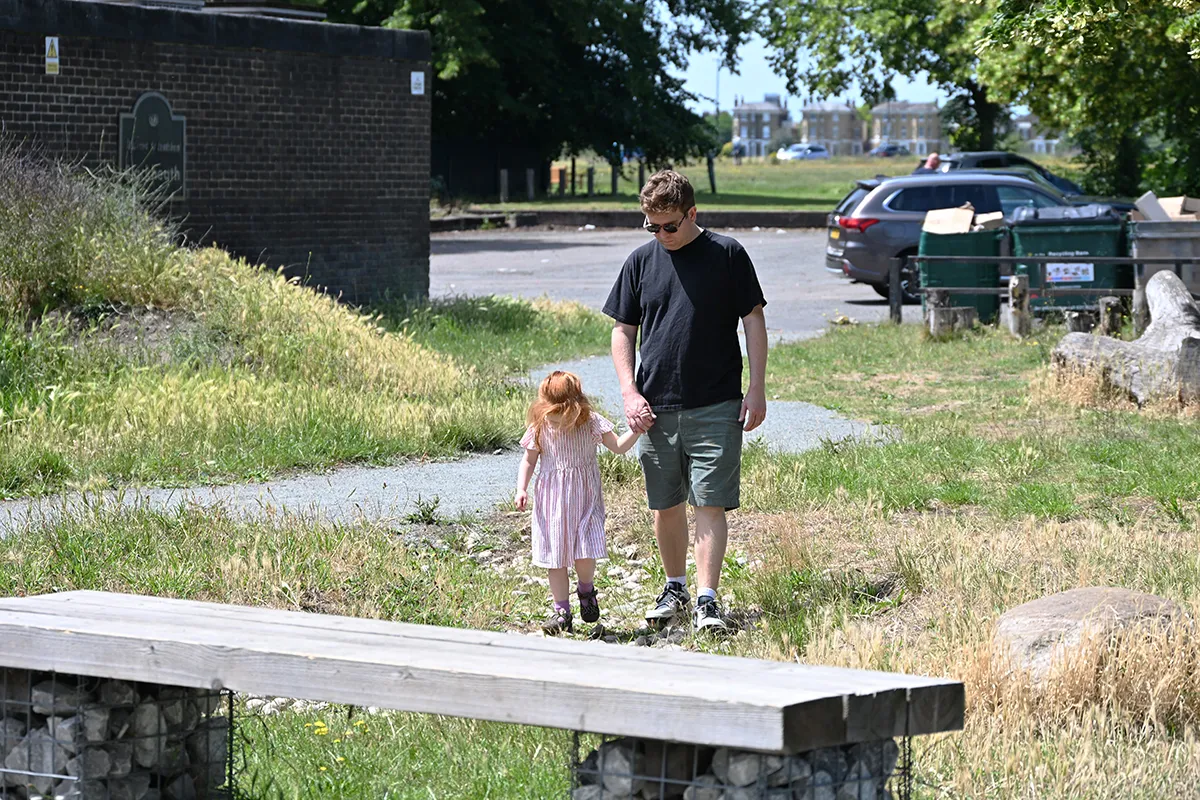
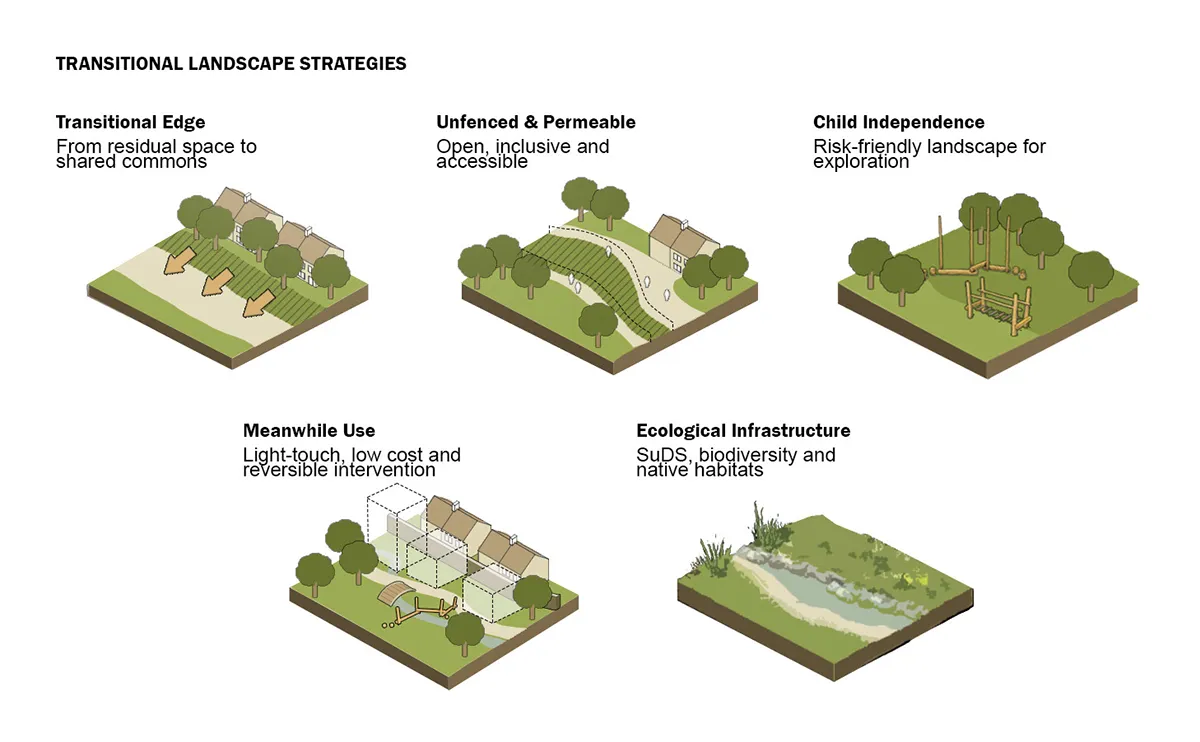
The design embraces the site’s temporary condition through an ecological “Meanwhile Use” strategy. Instead of treating the site as vacant land awaiting redevelopment, the intervention demonstrates how lightweight and reversible landscape design can generate immediate ecological and social value while remaining adaptable to future change. The project establishes a flexible framework that can evolve over time rather than a permanent object.
Ecological Infrastructure as Experience
Sustainable Drainage Systems (SuDS) are integrated into the landscape as visible, playable elements rather than concealed engineering infrastructure. Vegetated bio-retention swales, permeable pathways, and gentle earth mounds manage stormwater while creating varied spatial experiences across the seasons. During dry periods, the swales serve as informal routes and play spaces; following rainfall, they temporarily become shallow aquatic habitats, allowing hydrological processes to become part of everyday public life.
Landscape Succession
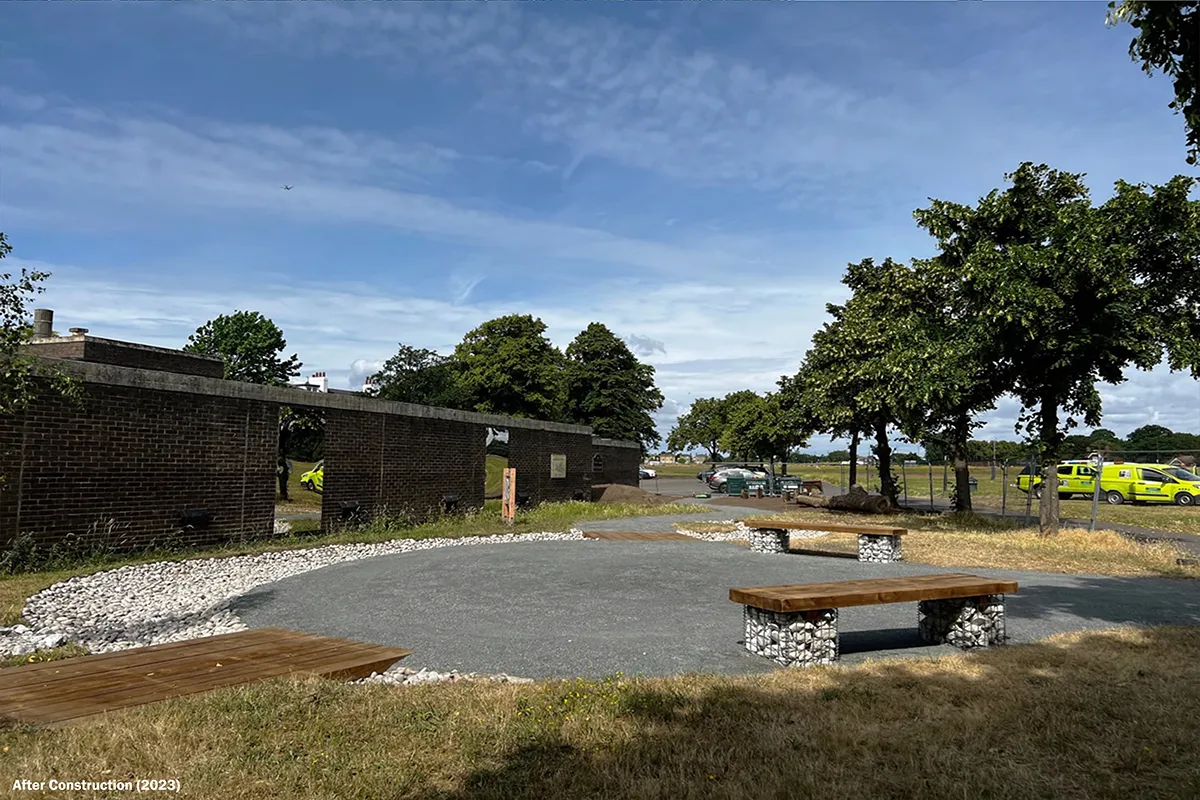
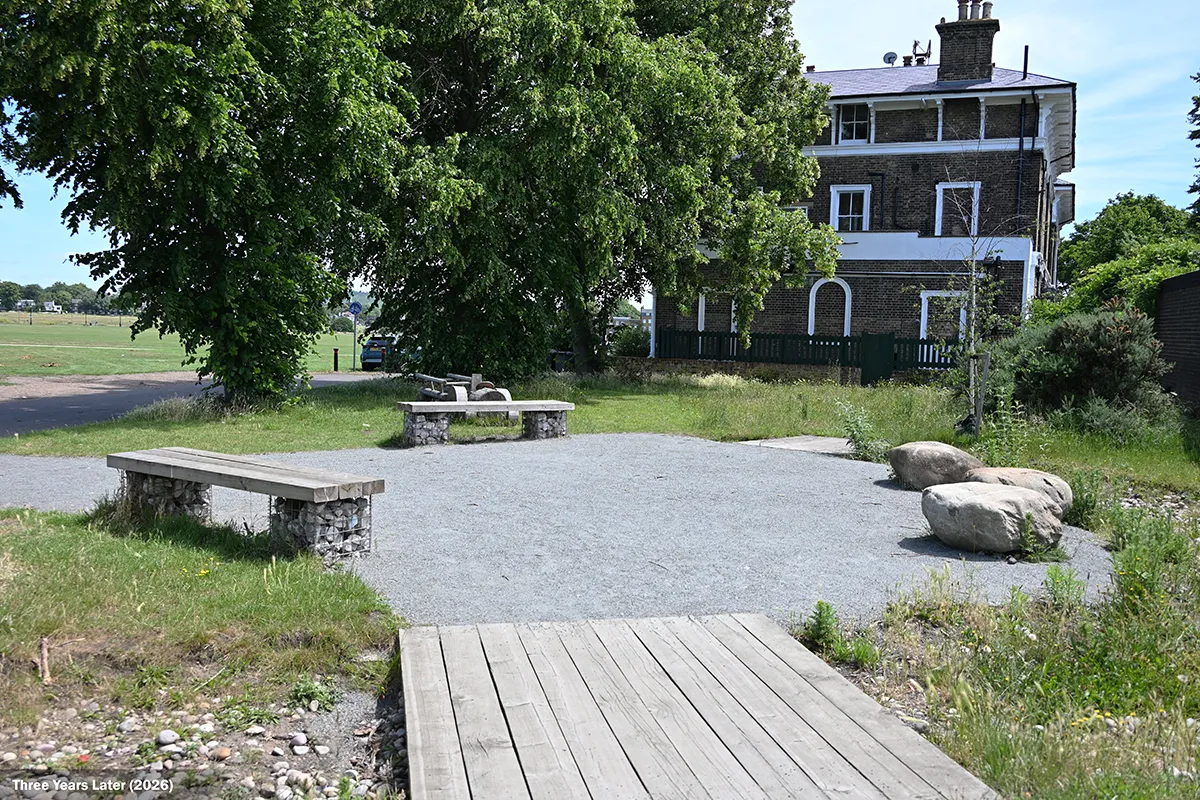
Since completion, Talbot Place has continued to evolve through natural ecological succession. Wildflower meadows, native trees and spontaneous vegetation have progressively colonised the landscape, increasing biodiversity while reinforcing the site’s changing character. The project demonstrates how light-touch interventions can transform neglected urban fragments into resilient public landscapes where ecological processes are embraced as part of the design rather than controlled through intensive maintenance.
Technical Information
Lightweight and Reversible Construction
The landscape was conceived as a lightweight, reversible intervention in response to its protected status as Metropolitan Common Land and an uncertain long-term future. The meanwhile landscape strategy avoids permanent engineering works, allowing the site to evolve or be adapted with minimal disturbance. Permanent concrete foundations were eliminated, reducing embodied carbon while preserving existing ground conditions. Gabion seating, timber play elements and deck bridges are freestanding or lightly founded, enabling future relocation, reuse or removal.
Permeable Landscape
The circulation network uses permeable gravel pathways that integrate accessibility with sustainable drainage. Vegetated bio-retention swales and timber bridges manage surface water naturally while creating a playable landscape that changes with the seasons. Rather than concealing drainage infrastructure, the design allows hydrological processes to become part of the everyday landscape experience.
Circular Material Strategy
The project adopts a circular material strategy that prioritises reclaimed, locally sourced and low-carbon materials. Wind-blown oak and sweet chestnut trees from nearby Greenwich Park were salvaged and repurposed as balancing logs, climbing elements, seating and informal play structures, extending the life of valuable timber that would otherwise have become waste. Gabion benches utilise locally sourced stone contained within reusable steel baskets and are paired with sustainably sourced timber seating. These robust materials minimise maintenance requirements while reinforcing the site’s natural character and reducing the environmental impact associated with new construction materials.
Planting Strategy
The planting design reinforces ecological continuity with Blackheath Common through a restrained palette of native species and wildflower meadows. Silver birch, meadow grasses and native planting support pollinators and local wildlife while encouraging seasonal change and ecological succession. A low-intervention management strategy allows the landscape to mature naturally over time, creating an evolving environment that responds to both people and nature.
Sustainability
- 0 m³ permanent concrete foundations
- 100% permeable pedestrian surfaces
- Reclaimed oak and sweet chestnut timber reused from Greenwich Park
- Integrated SuDS through vegetated bio-retention swales
- Lightweight, reversible and adaptable construction
- Native planting supporting biodiversity and pollinator habitat
- Low-maintenance landscape management promoting long-term ecological succession
Talbot Place
Landscape Architect: epd
Client: Lewisham London Borough Council
Landscape Contractor: Glendale Countryside Ltd
Image Credit: Yuwei Chen
Photography: Yuwei Chen