
Jane Jacobs, in The Death and Life of Great American Cities, highlights gentrification as a process triggered by urban redevelopment and rising property values, leading to the displacement of low-income residents by wealthier groups. She criticizes traditional urban planning for neglecting the complexity of communities, which exacerbates gentrification and erodes local culture.
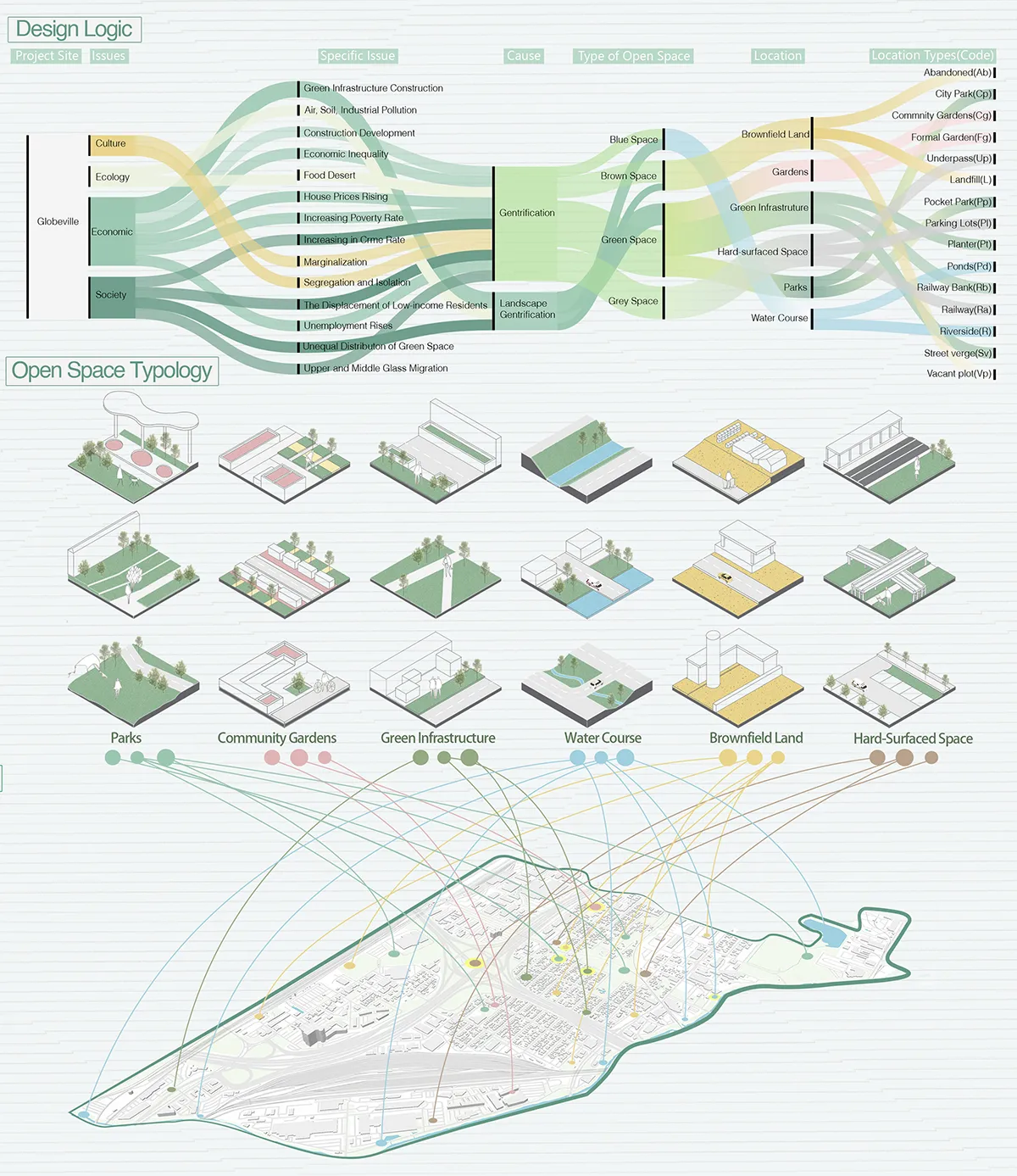
In Denver, Colorado, economic expansion has fueled infrastructure growth and a booming real estate market, but it has also driven up housing prices, displacing long-term residents. Additionally, green gentrification, similar to what was seen with New York’s High Line Park, has emerged. While green space improvements boost environmental quality and property values, they also attract wealthier populations, leading to the displacement of original residents. This creates a cycle where green development and gentrification reinforce each other.
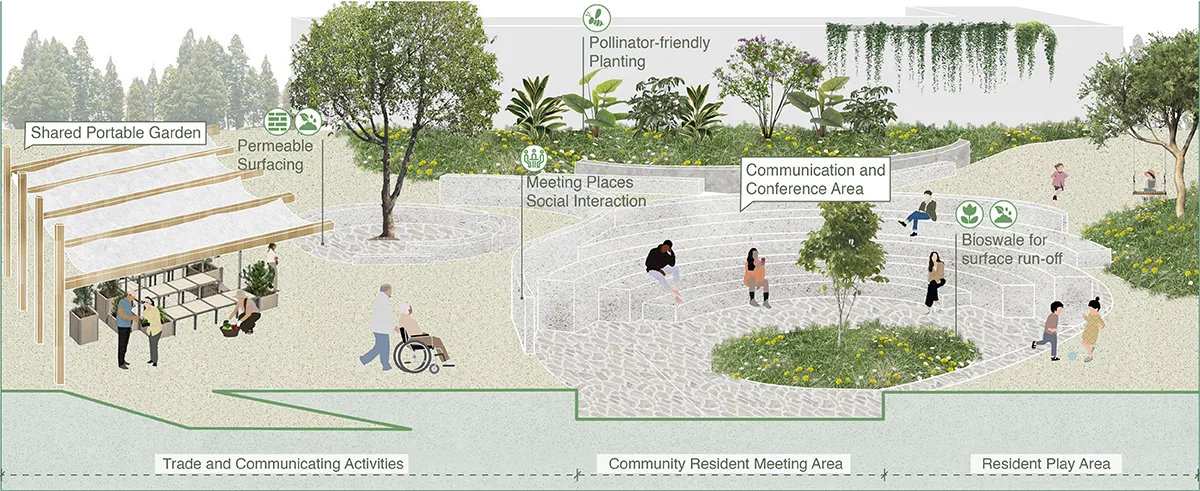
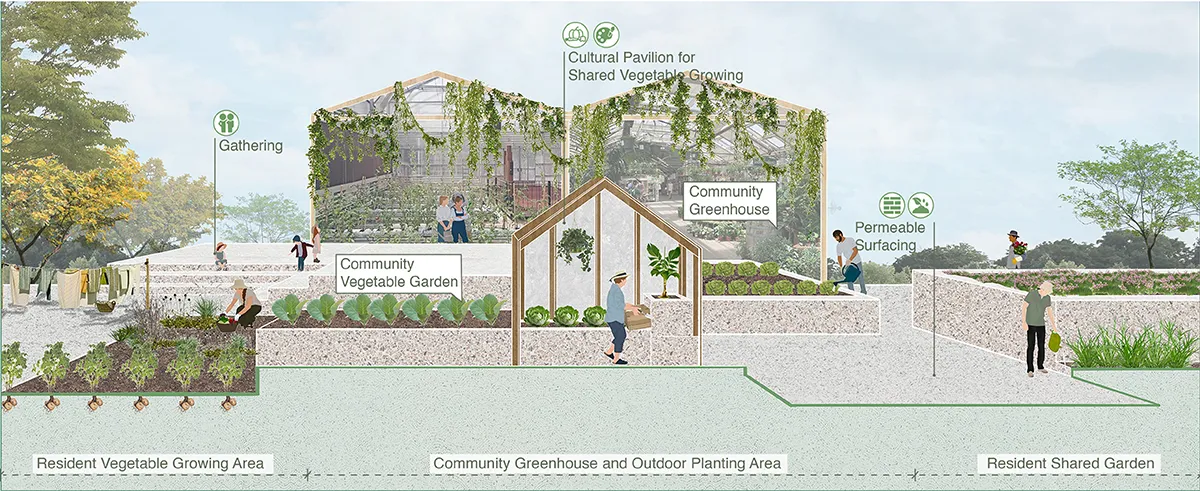
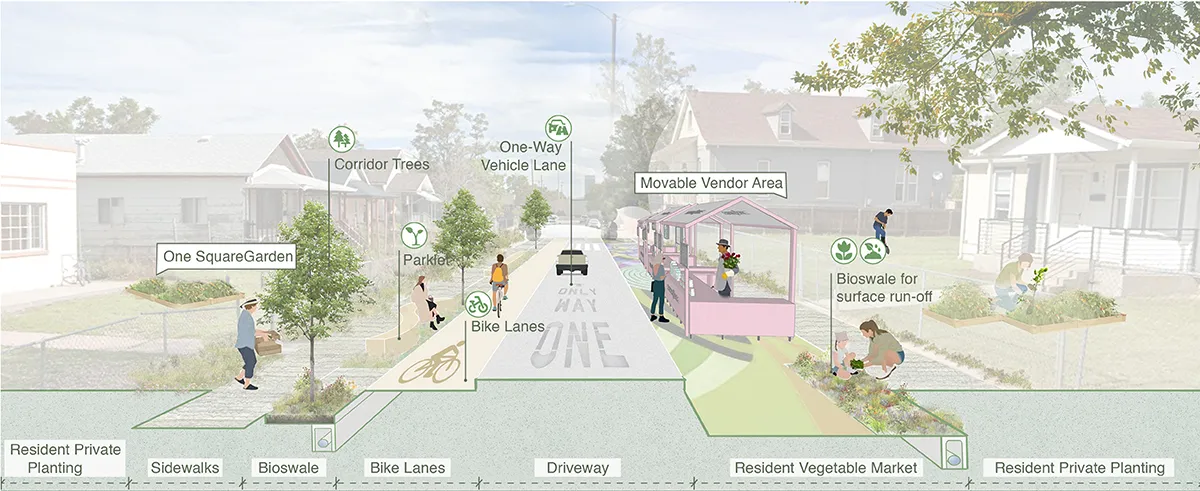
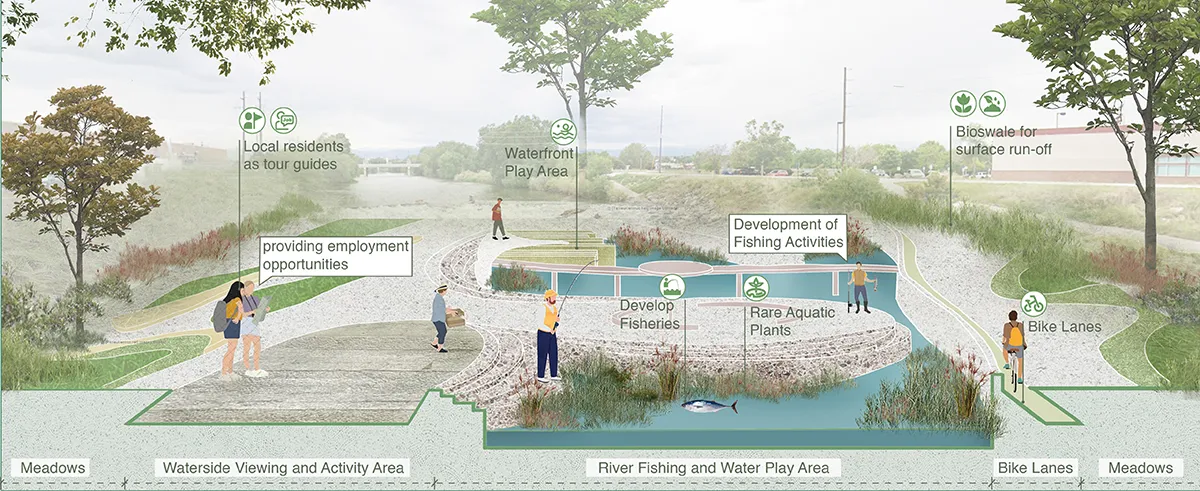
Given this context, the project aims to address Denver’s gentrification challenges by focusing on preventing community displacement and cultural loss through design. It selects six typical urban space types, each with unique design strategies and visions:
- Parks: Small pocket parks are created as “welfare pockets,” offering community members a space for social interaction and activities.
- Community Gardens: These gardens meet the needs of residents, incorporating local culture and providing both cultural exchange spaces and areas for urban farming.
- Green Infrastructure: Greener streets are designed to promote eco-friendly interactions, commerce, and mobility, transforming them into “Greener Streets.”
- Water Course: By protecting rivers and promoting tourism, the project creates jobs in tourism for local residents, providing economic support.
- Brownfield Land: Revitalizing abandoned rail yards into pop-up markets offers dynamic spaces for commerce and socializing, reinvigorating these areas.
- Hard-Surface Spaces: The space under elevated highways is transformed into a “lowline corridor” using pop-up art markets, local murals, and green planting areas.
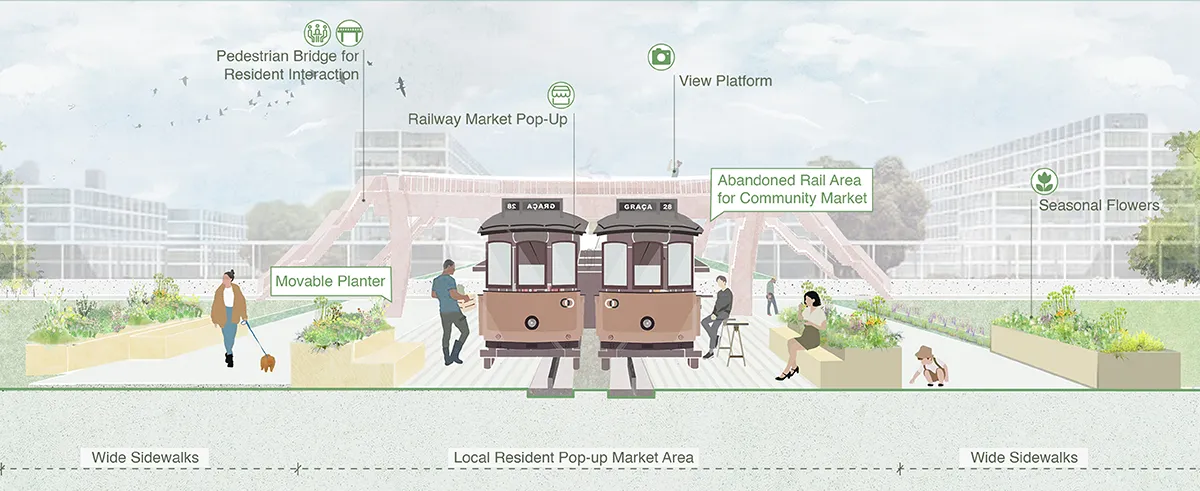
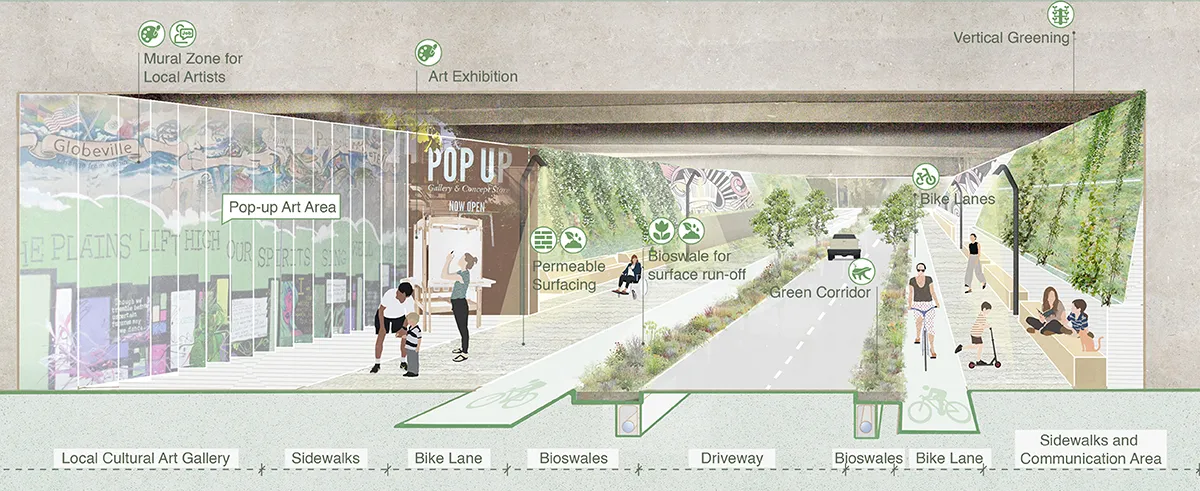
This toolkit-like approach not only addresses Denver’s issues but also serves as a model for other cities facing similar gentrification challenges, promoting equitable and balanced urban development globally.
Zipping Gentrification
Student: Han Wu
University: Chengdu University of Technology
Advisor: Yu Ou