
Winner of the 2025 WLA Student Awards – Award of Excellence in the Concept – Large Design category
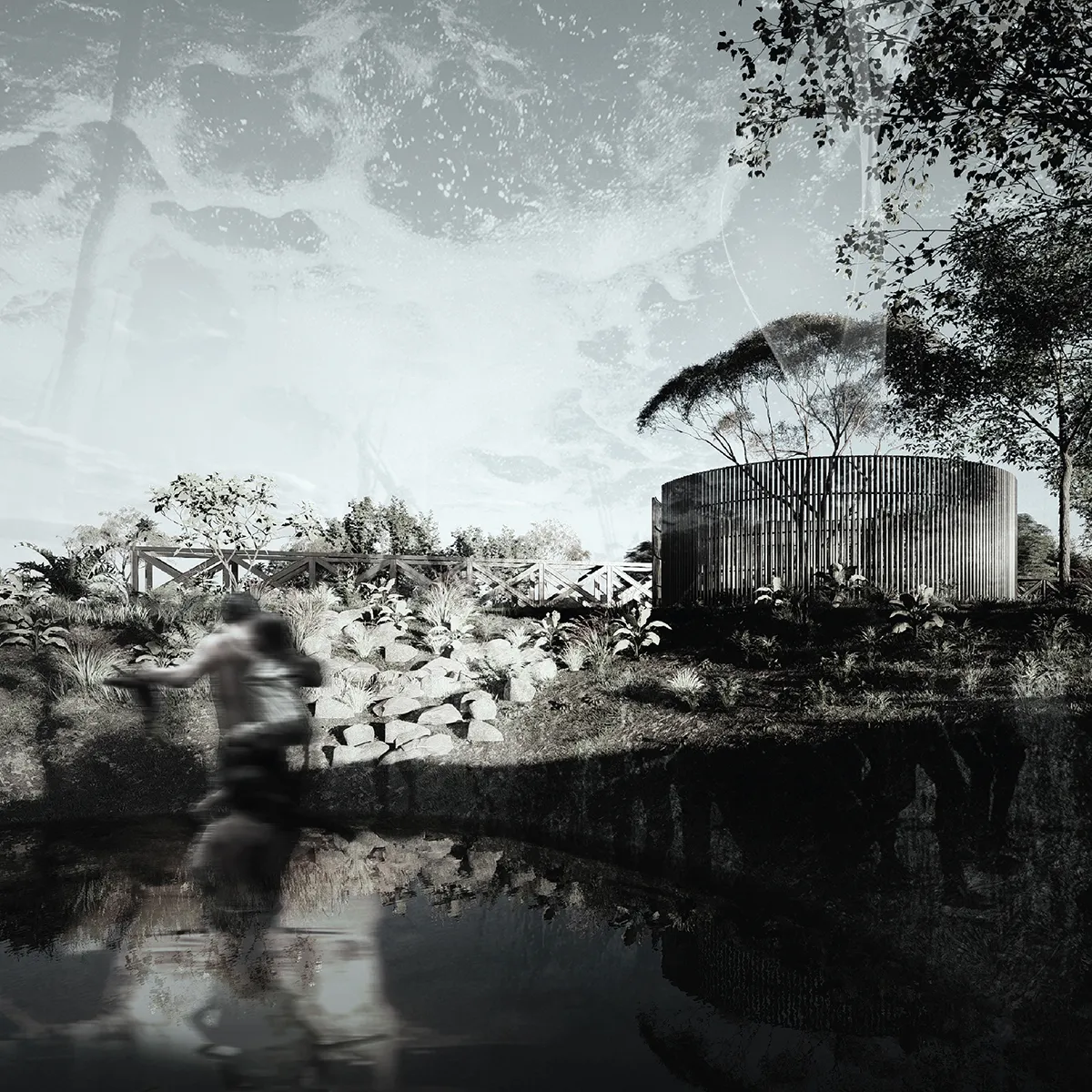
“Unearthing Waters” challenges heritage preservation in landscape architecture, exposing how conventional practices often reinforce systems of exclusion instead of dismantling them. Placed as a spatial archive and speculative fiction, it foregrounds river heritages as counter-frameworks for mobilized initiatives in Brazil’s Amazon River basin, envisioning alternative pathways toward territorial justice across three contested sites. Set in 2035, the project introduces the Amazon River Reparation Complex—a regional endeavor that mobilizes design to unearth historical erasures and submerged perspectives.
Inspired by Macarena Gomez-Barris’ concept of “unearthing”, each intervention frames design as a political act of revelation, retracing erased histories concealed beneath water, sediment, and infrastructure—both materially and symbolically. Grounded in this premise, the interventions engage UNESCO’s World Heritage Convention as a point of departure, reimagining heritage as a means to challenge extractive and colonial legacies through a reparative act.
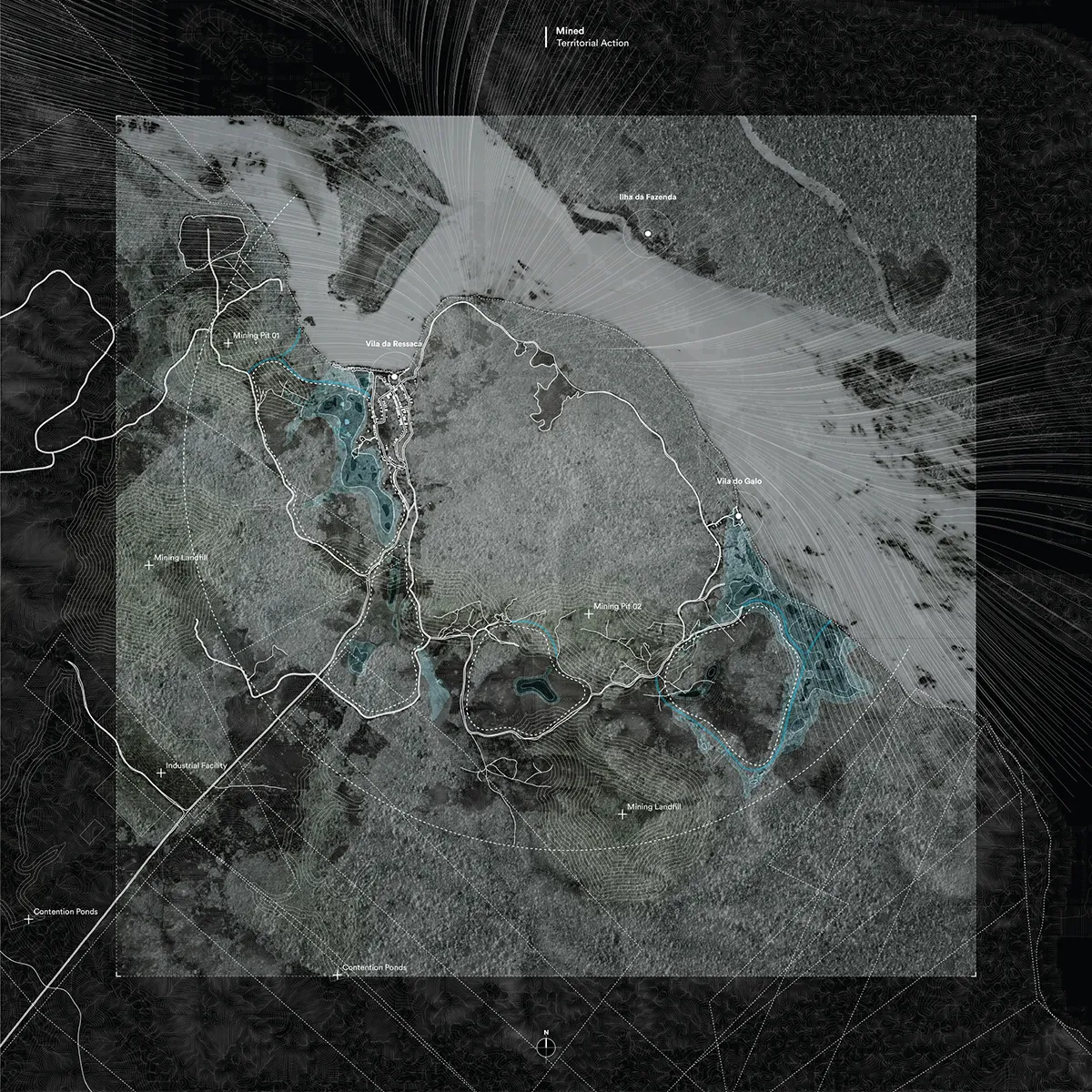
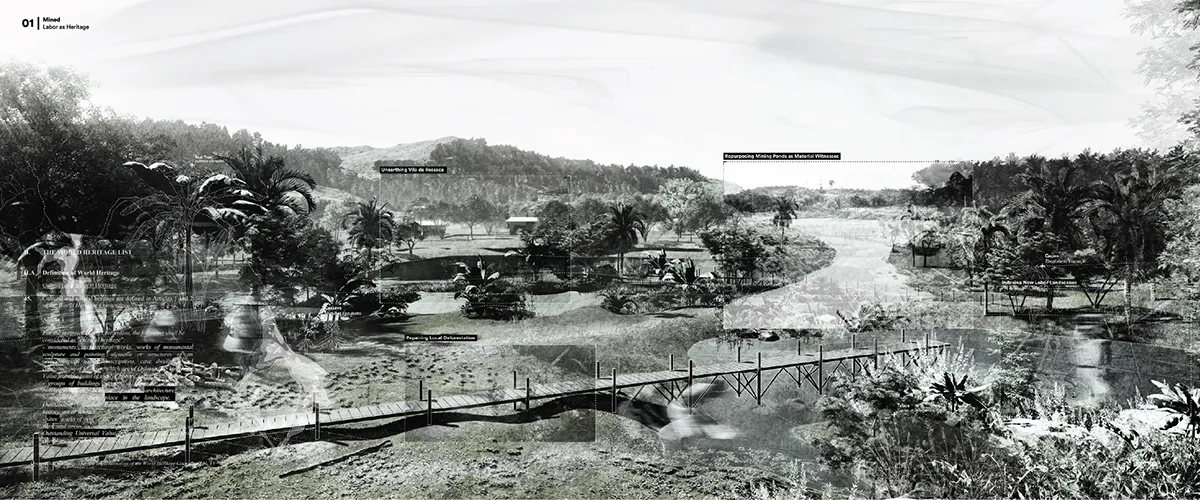
The first action unfolds in Vila da Ressaca, a riverine community along the Xingu River, threatened by the Canadian Belo Sun mining project. Whereas Belo Sun’s planimposed pits and tailings dams, local unions mobilized to reclaim the riverine landscape. Rather than erasing the scars of displacement and degradation, the working areas are repurposed as material witnesses, engaging in new forms of labor as reparation and care — enabling seasonal fluctuations and the emergence of new ecologies. In doing so, it
challenged dominant heritage frameworks proposed by UNESCO, which often prioritize static preservation over evolving practices such as labor.
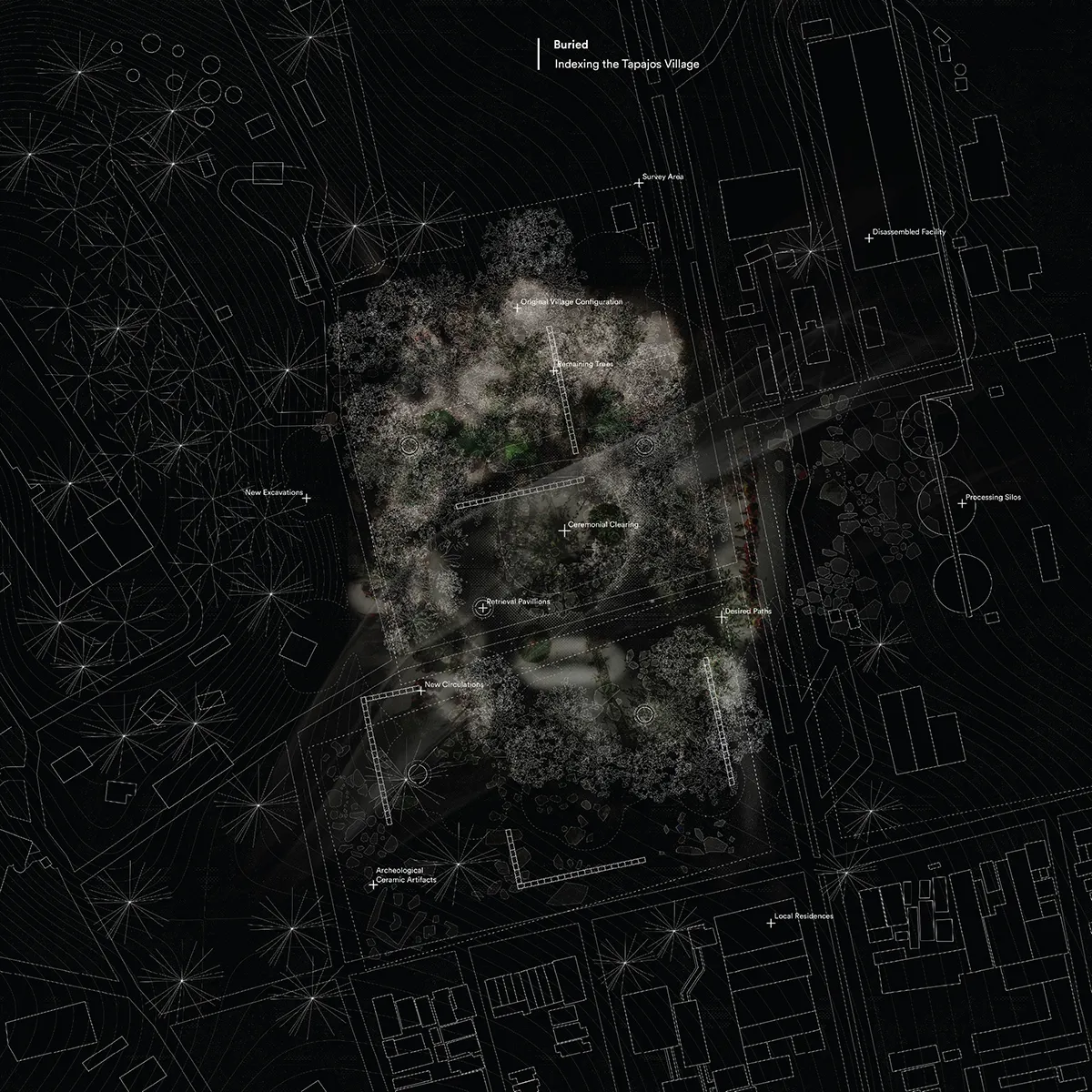
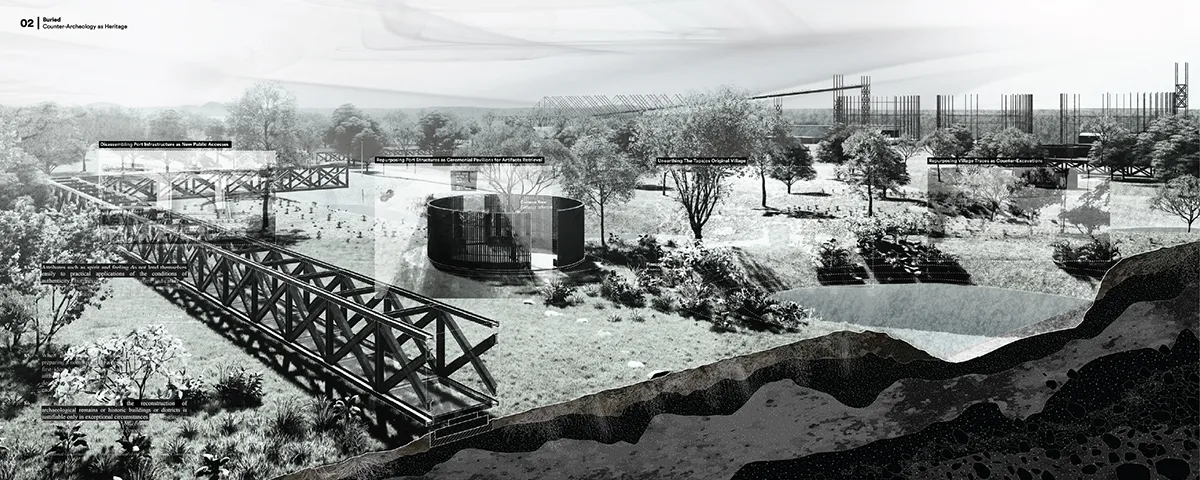
In 2040, the Complex reached the Cargill Port in Santarém, a facility built in 2003, where archaeological artifacts and vegetation patterns revealed the traces of a Tapajós Indigenous village buried beneath industrial logistics. Refusing to wait for legal recognition, the Regional Council of Indigenous Peoples transformed the site into an active excavation, reclaiming the port’s rigid edges through newly created flood zones.
Conveyor belts were dismantled and repurposed as circulation paths, while excavated hollows marked the footprints of former circular dwellings, exposing ceramic artifacts for collective retrieval. The site was reactivated as a participatory archive—through ritual and gathering—repositioning archaeology not as a tool of classification, but as an instrument of resistance.
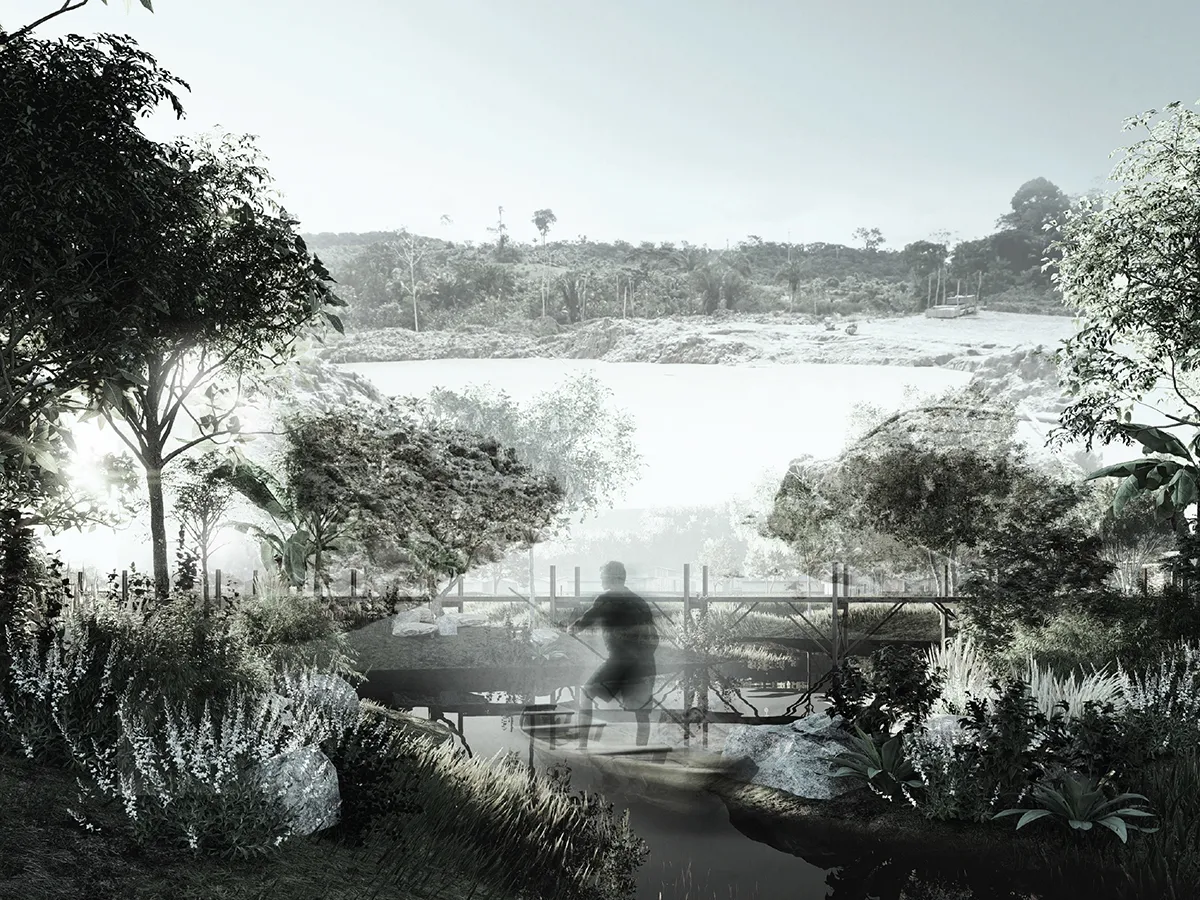
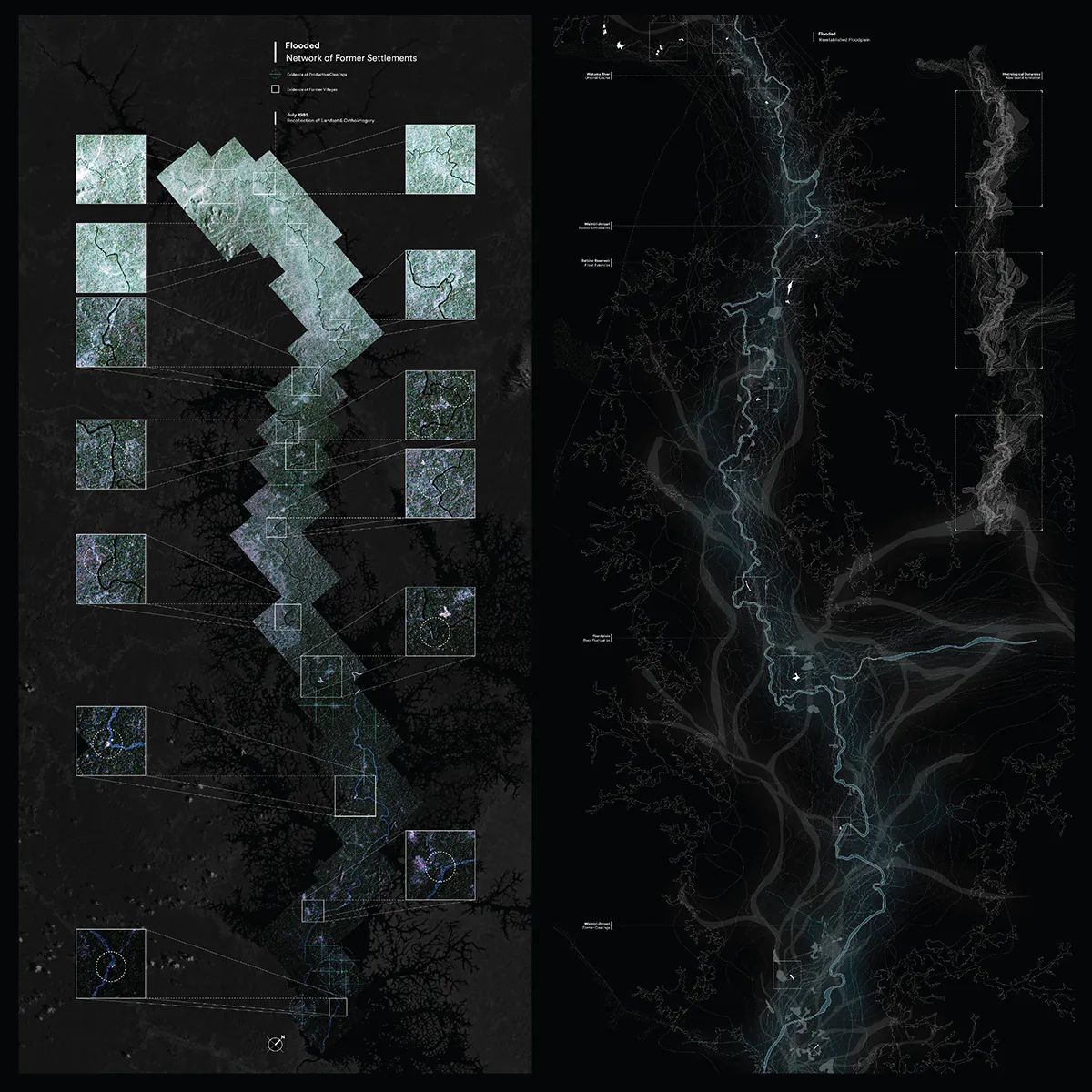
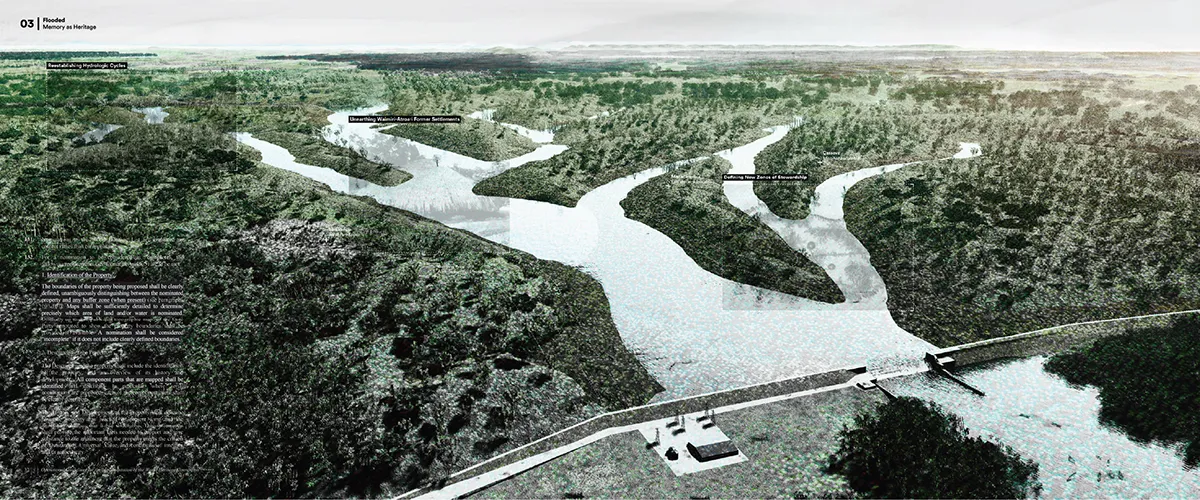
The final act, in 2049, confronted the drowned forests of the Balbina Reservoir, where the Waimiri-Atroari were displaced by constructing a hydroelectric dam in 1989. For decades, their land remained submerged, recoverable only through forensic cartography. Within this site, the land was repossessed through controlled dam breaches. As sediments settled, floodplains and wetlands resurfaced, guided not by rigid zoning but by hydrological cycles — resisting the Convention’s defined property boundaries. Through this process, islands reappeared as dispersed monuments, reviving seeding grounds and ancestral territories.
Across these sites, water, memory, and labor converge to resist erasure and sustain new futures, exposing how heritage cannot remain static or monumental. As Ailton Krenak writes, “The rivers, those beings that have always inhabited the world in different forms, are the ones who suggest to me that, if there is a future to be considered, that future is ancestral, because it was already here.”.
Unearthing Waters – River Heritages of Amazonia
Student: Pedro Brito – Harvard Graduate School of Design
Supervisor: Rosalea Monacella – Harvard Graduate School of Design