
Revitalizing Monsoonal Landscapes through Fungi, Flora, and Water Ecologies
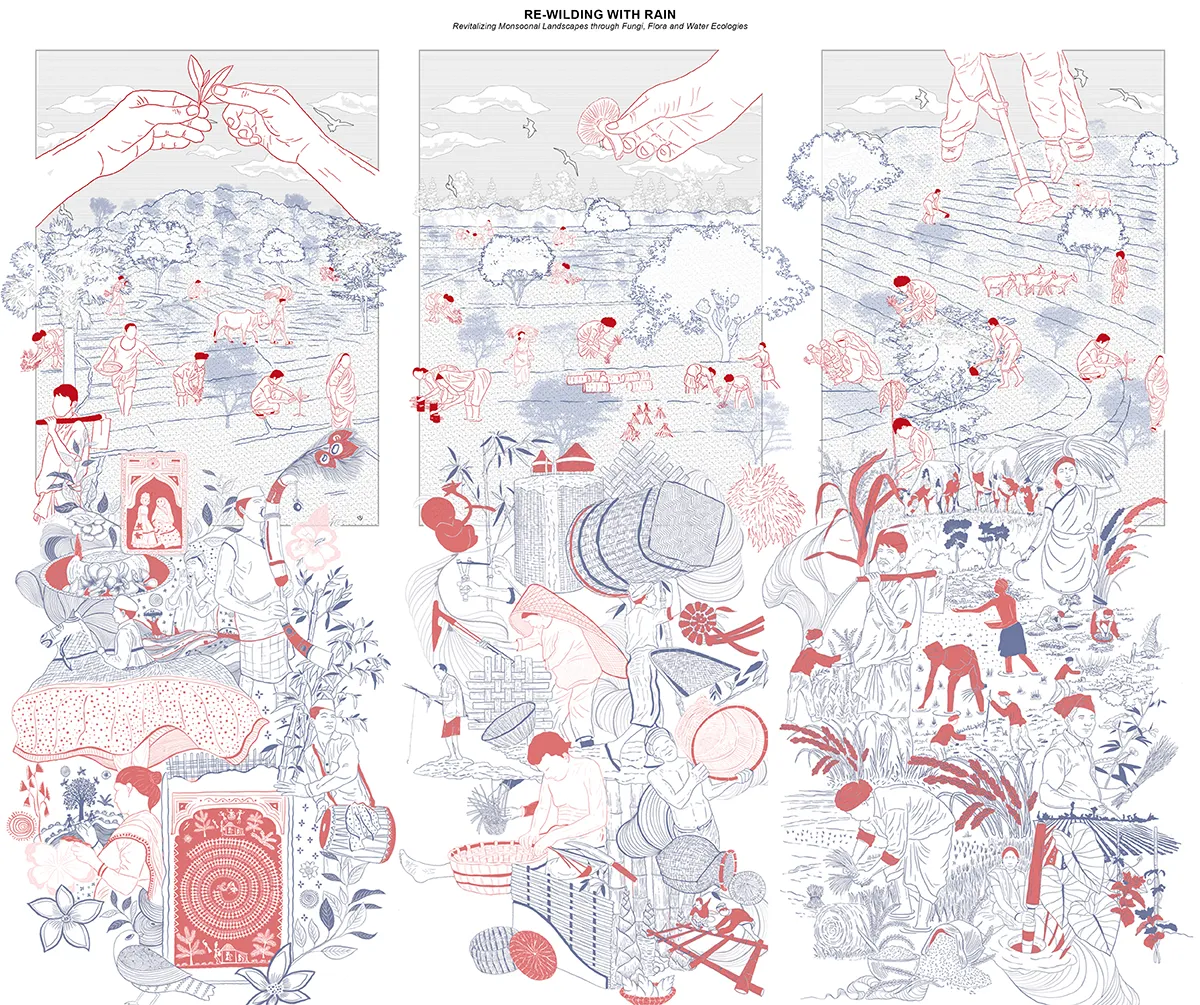
Re-wilding with Rain explores landscape resilience in the monsoon biomes of South Gujarat by restoring ecological and cultural systems shaped by seasonal water dynamics. Located on the eroded
leeward slopes of Luheri village, the proposal responds to decades of deforestation, soil erosion, altered
rainfall patterns, and hydrological disruptions that have diminished biodiversity and weakened traditional
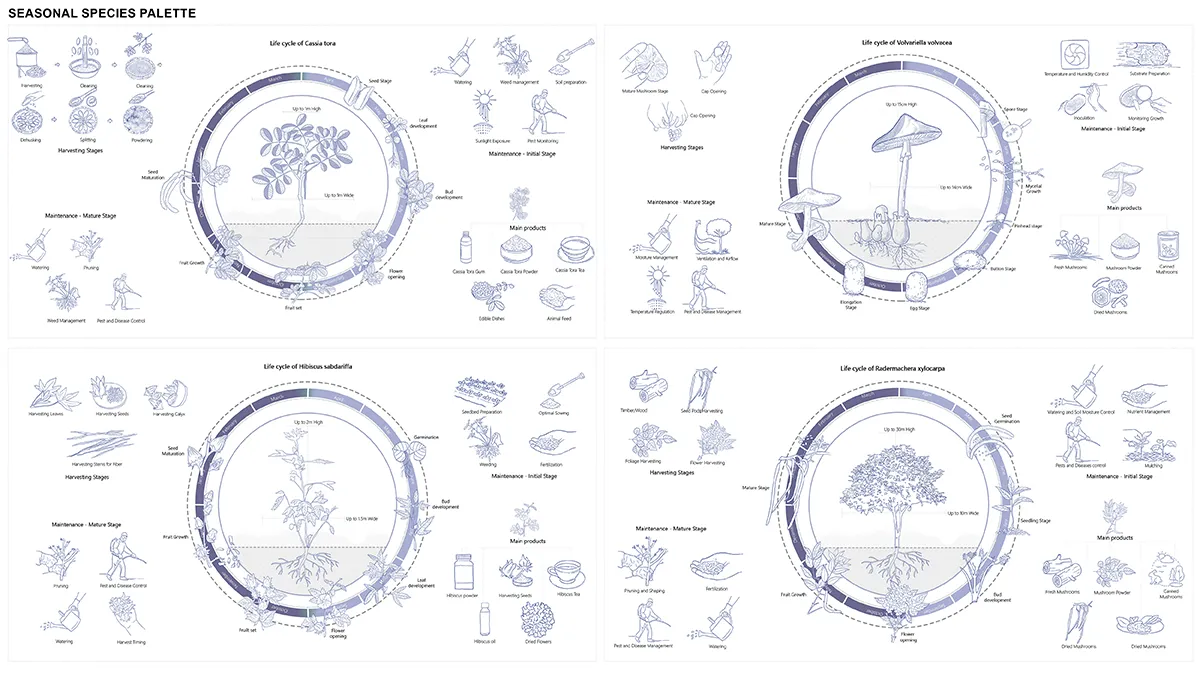
foraging practices associated with monsoonal greens and edible mushrooms.
Through regional temporal mapping of monsoonal changes over the past fifty years, the project identifies
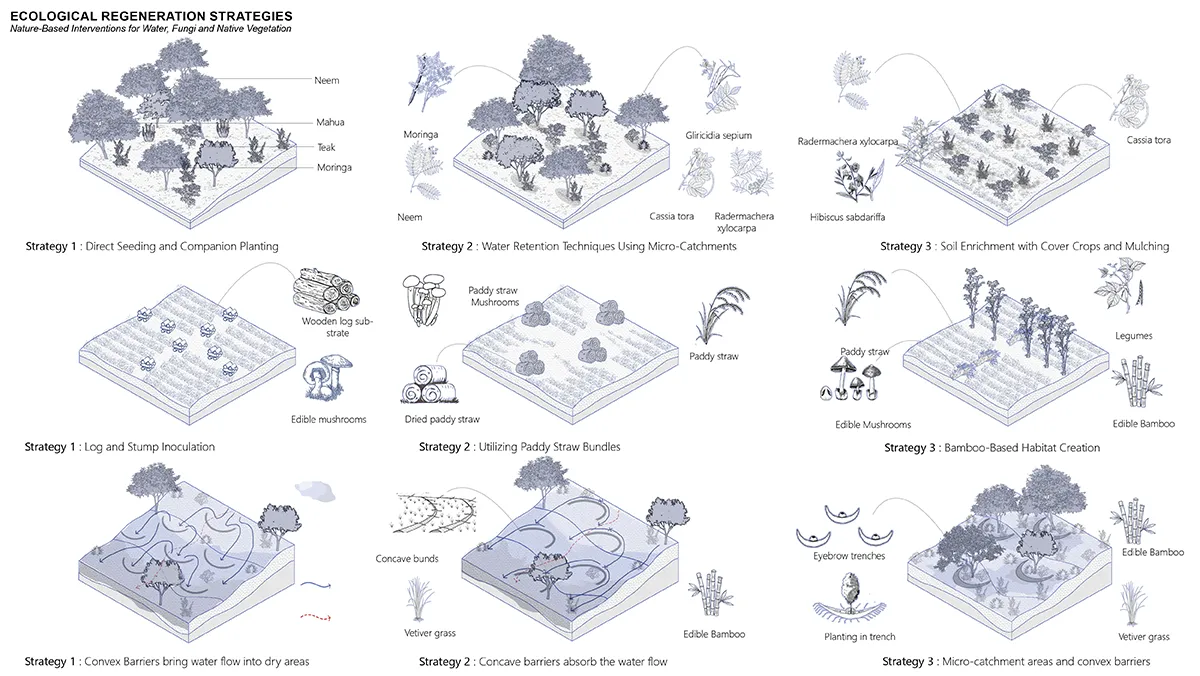
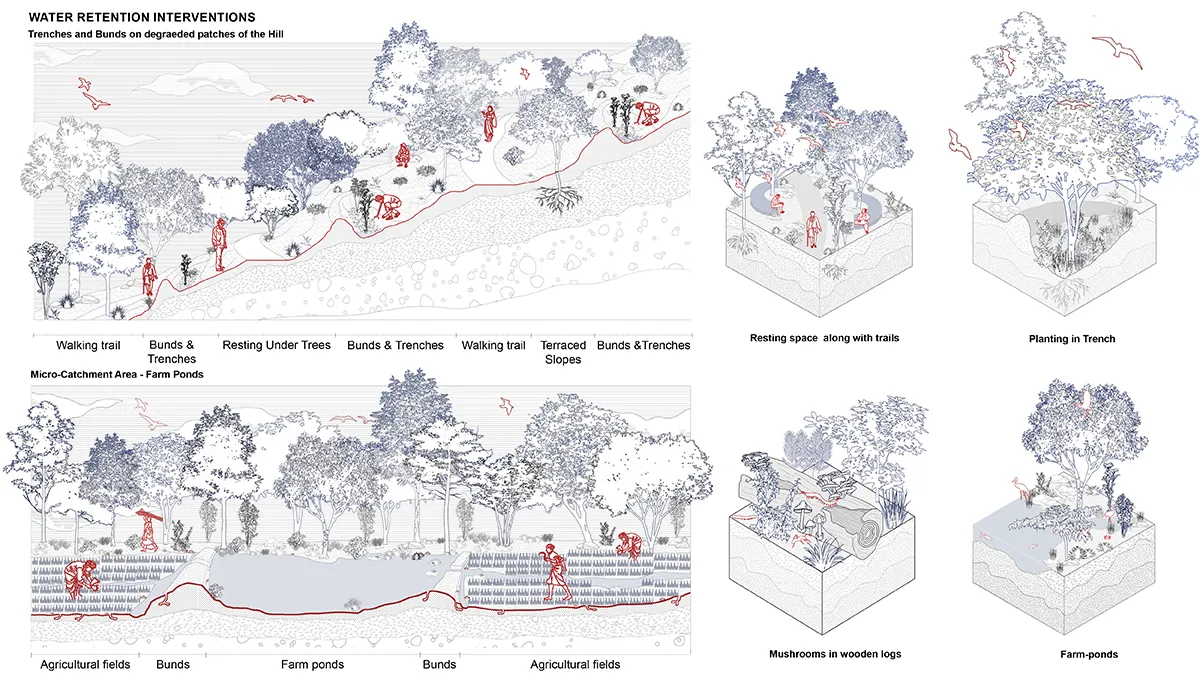
the relationship between water retention, soil moisture, vegetation patterns, and ecological productivity. The intervention proposes a re-wilding strategy that uses cascading shallow trenches, micro-habitat creation, and native vegetation restoration to slow runoff, recharge groundwater, and regenerate moisture-rich ecologies.
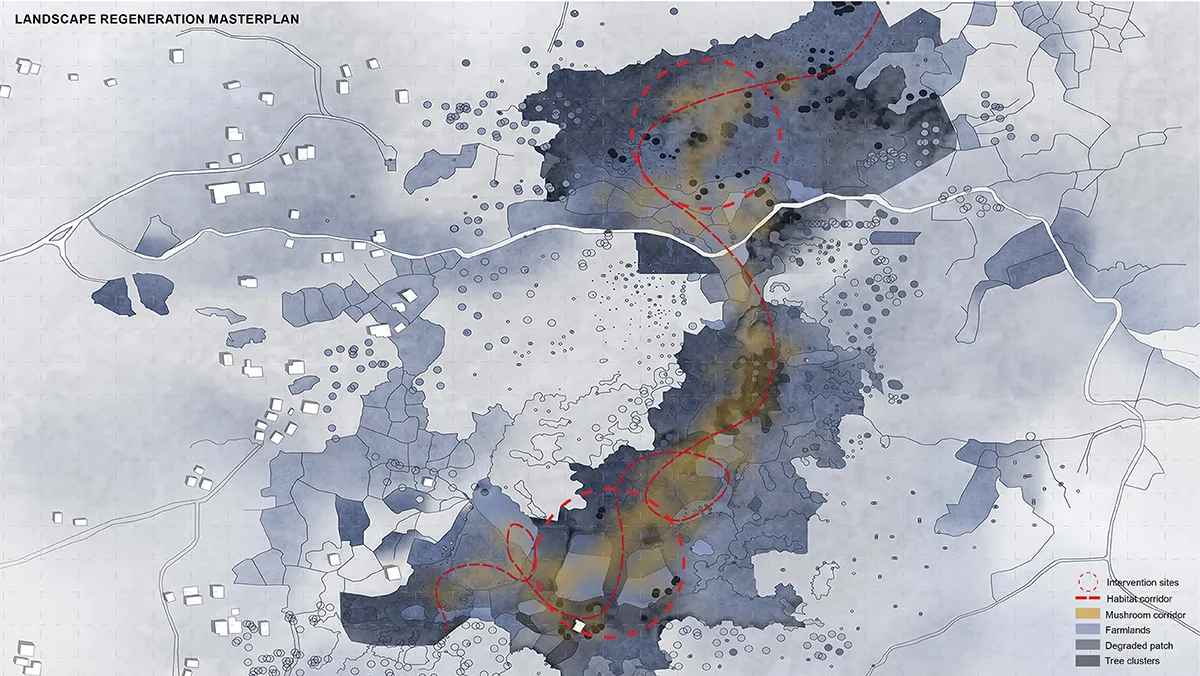
By integrating hydrological restoration with fungal and plant regeneration, the project re-establishes
biodiversity corridors between leeward slopes and paddy fields while supporting traditional ecological
knowledge and seasonal foraging cultures. Rather than treating landscape as a static form, the proposal
frames it as a living, adaptive system shaped by monsoon temporality, ecological succession, and cultural
continuity.
Problem
Over the past several decades, changing monsoon patterns, deforestation, check dam construction, and
soil erosion have significantly altered the ecological balance of the leeward landscapes in South Gujarat.
Seasonal water retention has declined, resulting in rapid runoff, reduced groundwater recharge, and the
degradation of habitats essential for native flora, fungi, and wildlife.
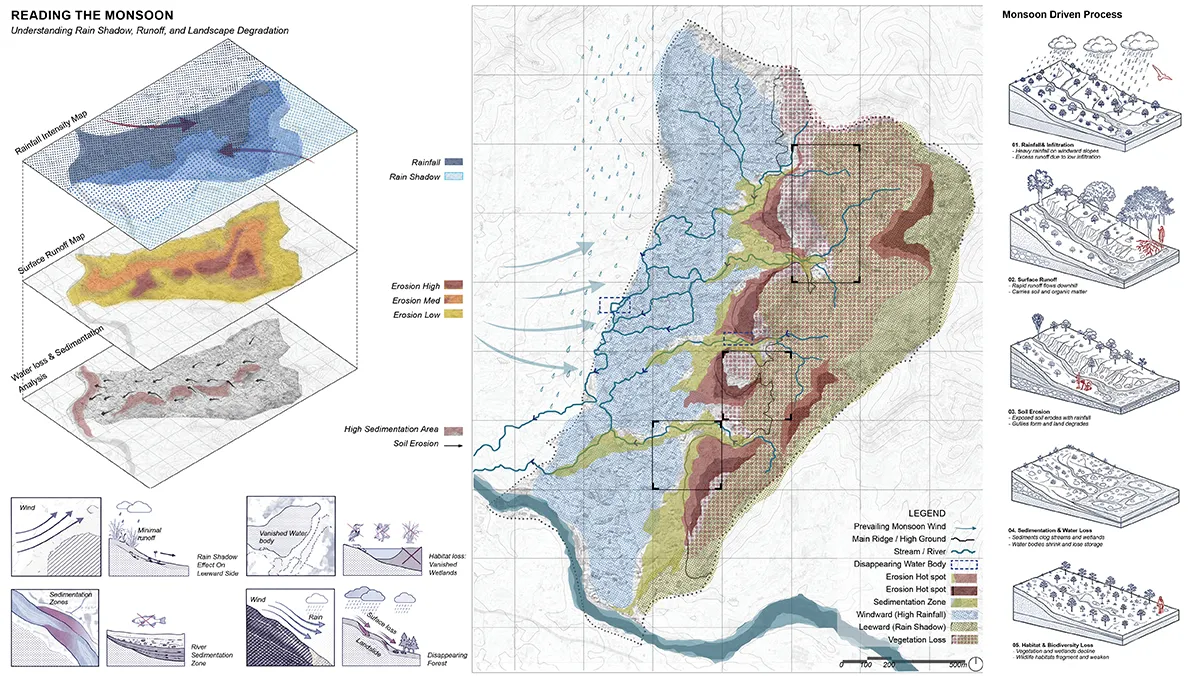
These ecological disruptions have also impacted traditional cultural practices dependent on monsoonal
cycles, including the seasonal harvesting of wild greens and mushrooms. Encroachment on water bodies
and the transformation of diverse landscapes into mono cultural systems have further weakened biodiversity and disrupted long-standing relationships between people, water, and land.
Aim
The project aims to regenerate degraded monsoonal landscapes by restoring water retention systems,
rebuilding fungal and vegetative ecologies, and reviving traditional foraging practices through adaptive and nature-based landscape interventions.
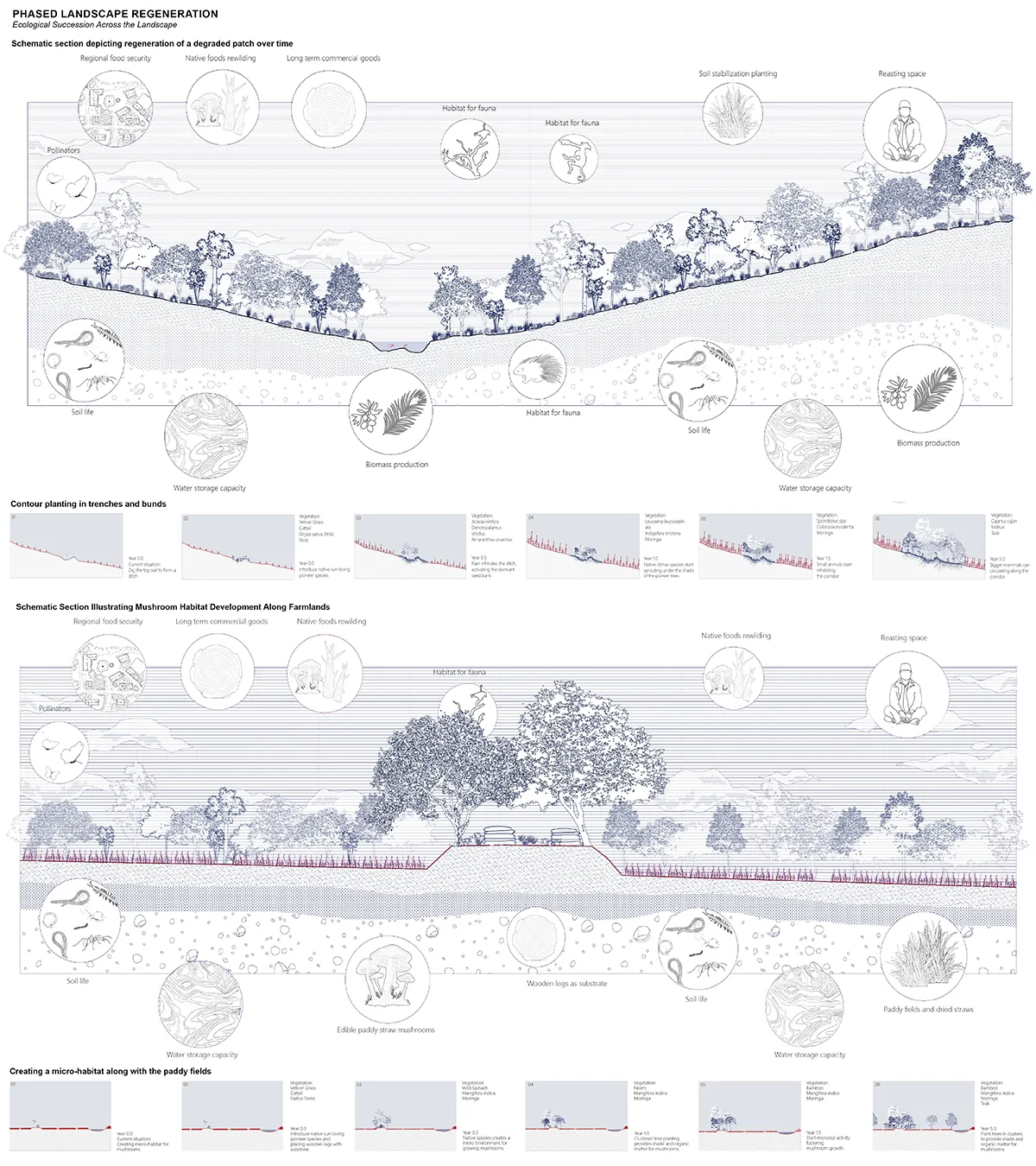
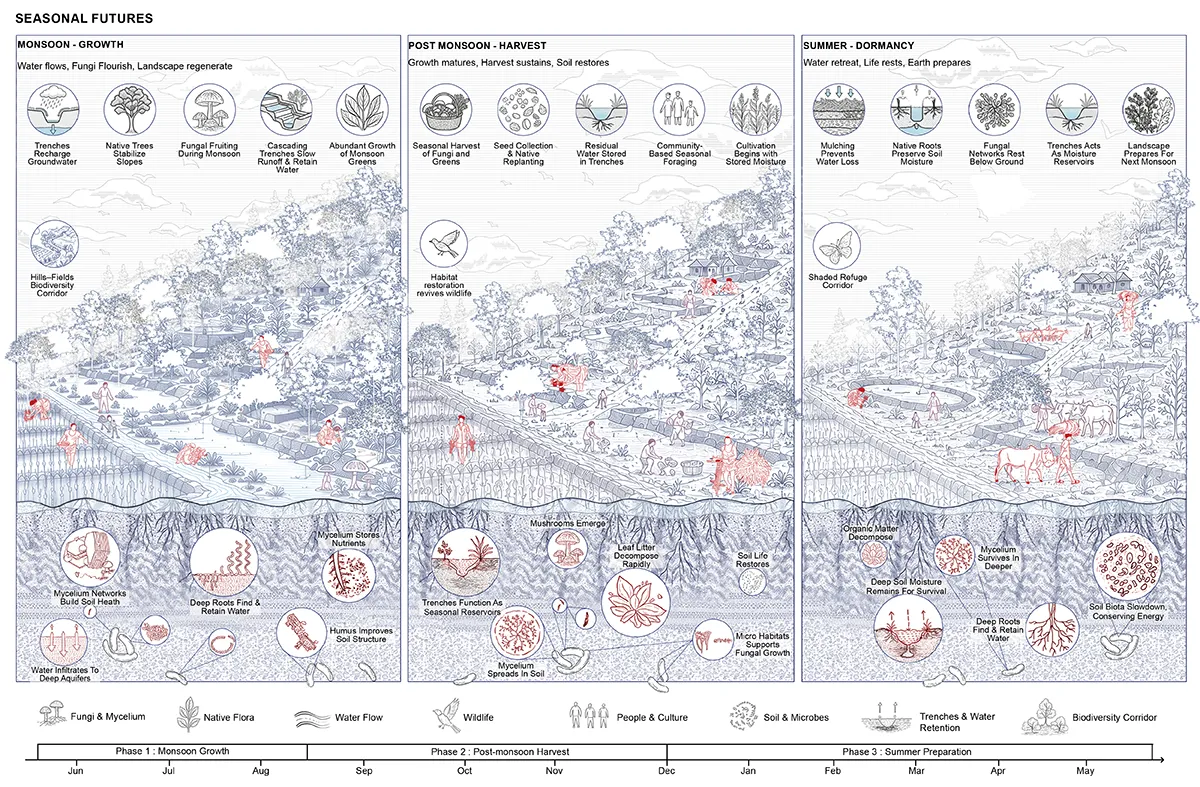
Strategies
- Ecological Strategy
Reintroduce native monsoonal greens, edible mushrooms, and moisture-supporting vegetation to
rebuild biodiversity and stabilize eroded soils. - Hydrological Strategy
Implement cascading shallow trench systems and water retention interventions to slow runoff, increase
infiltration, reduce erosion, and recharge groundwater. - Micro-climatic Strategy
Create moisture-rich micro-habitats that support fungal growth, ecological succession, and seasonal
regeneration across the slope landscape. - Cultural Strategy
Reconnect ecological restoration with traditional monsoon-based foraging practices, strengthening
cultural continuity and local ecological knowledge. - Landscape Strategy
Establish a biodiversity corridor linking leeward slopes and paddy fields to create a resilient and selfregulating
monsoonal landscape system.
Re-wilding with Rain
Student: Devi S Nair – CEPT University
Supervisors: Prof. Rhea Shah & Prof. Prasanna Mattikop – CEPT University
Be the first to comment