
Winner of the 2025 WLA Student Awards – Award of Excellence – Graduate category
Designing a landscape infrastructure frame to connect Voorne-Putten Island and the Port of Rotterdam
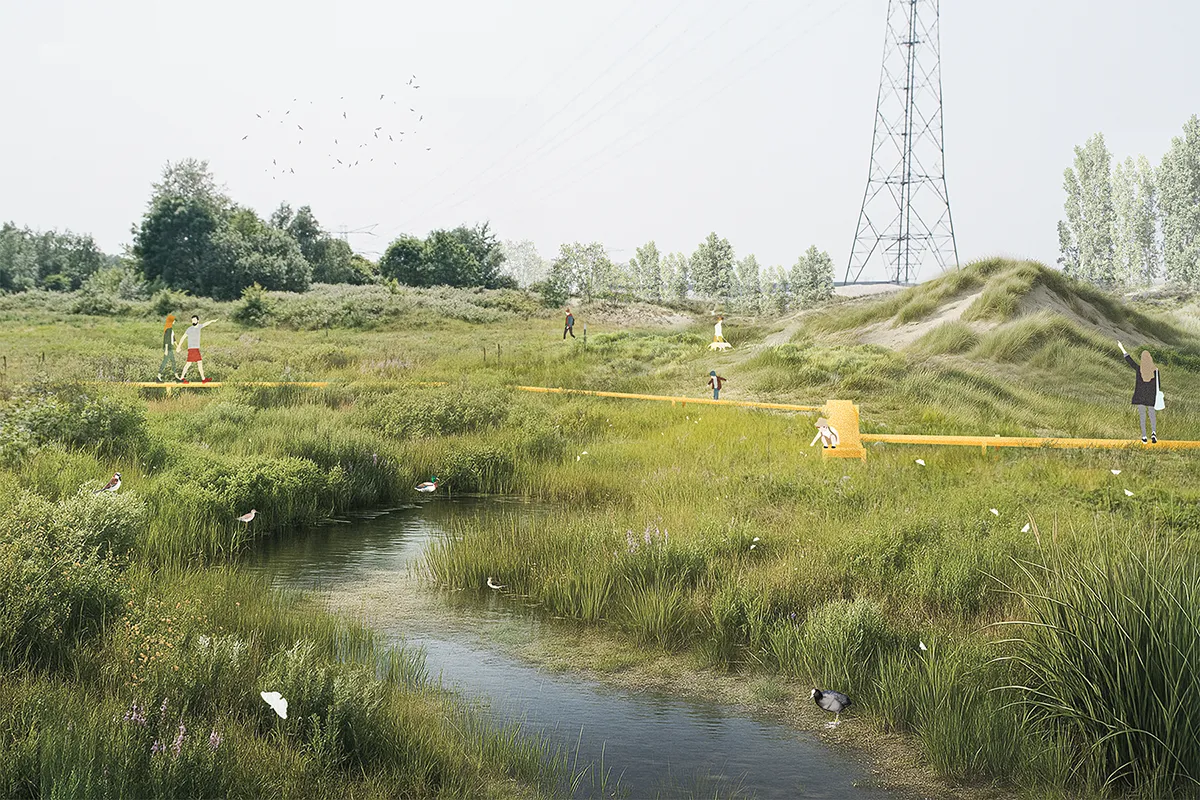
The New Port-Island Connector research investigates the transitional landscape between the Port of Rotterdam and Voorne-Putten Island, with the objective of reconfiguring the relationship between natural systems and anthropogenic environments through the lens of landscape infrastructure. Situated at the forefront of the Rhine-Meuse Delta, this region has been substantially altered by land reclamation, industrial development, and urban expansion. These interventions have resulted in compounded spatial and ecological challenges, including freshwater scarcity, landscape fragmentation, land-use conflicts, and heightened vulnerability to climate change. The freshwater lake system—once a vital ecological and productive resource—is now increasingly compromised by saltwater intrusion, intensive agricultural practices, urban runoff, and extreme climatic events.
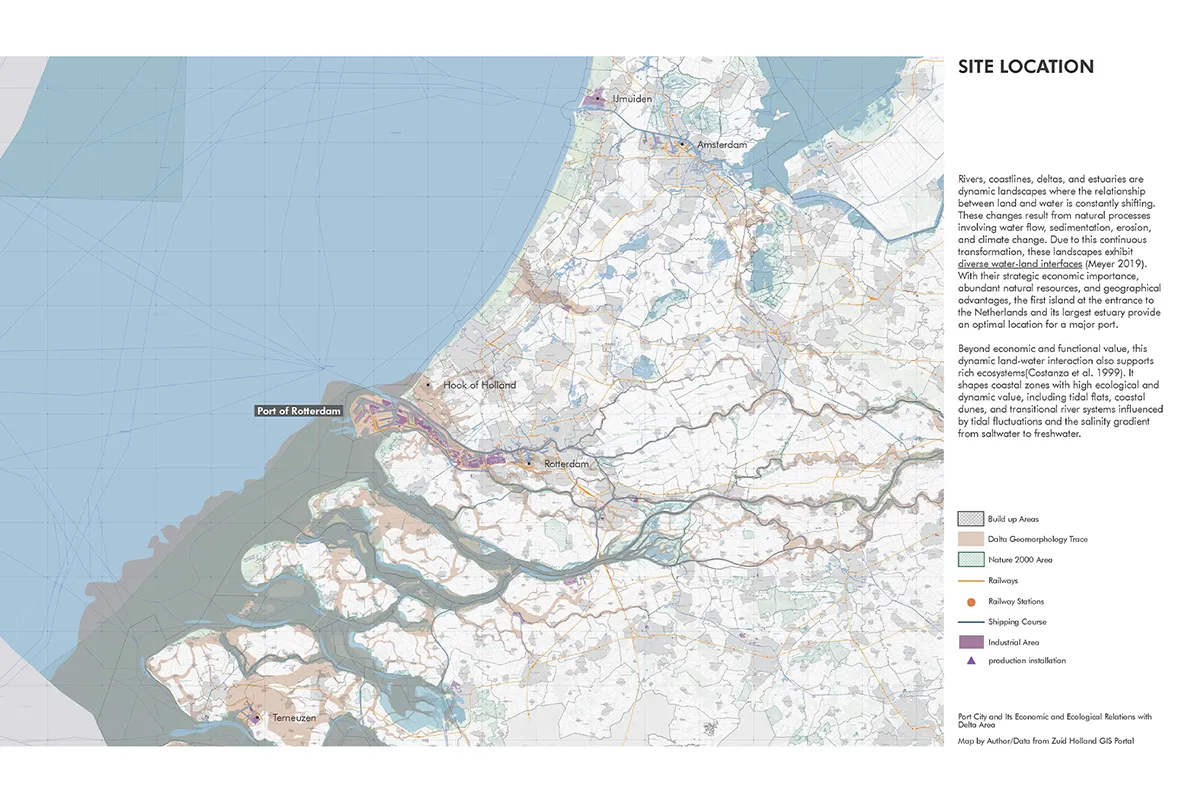
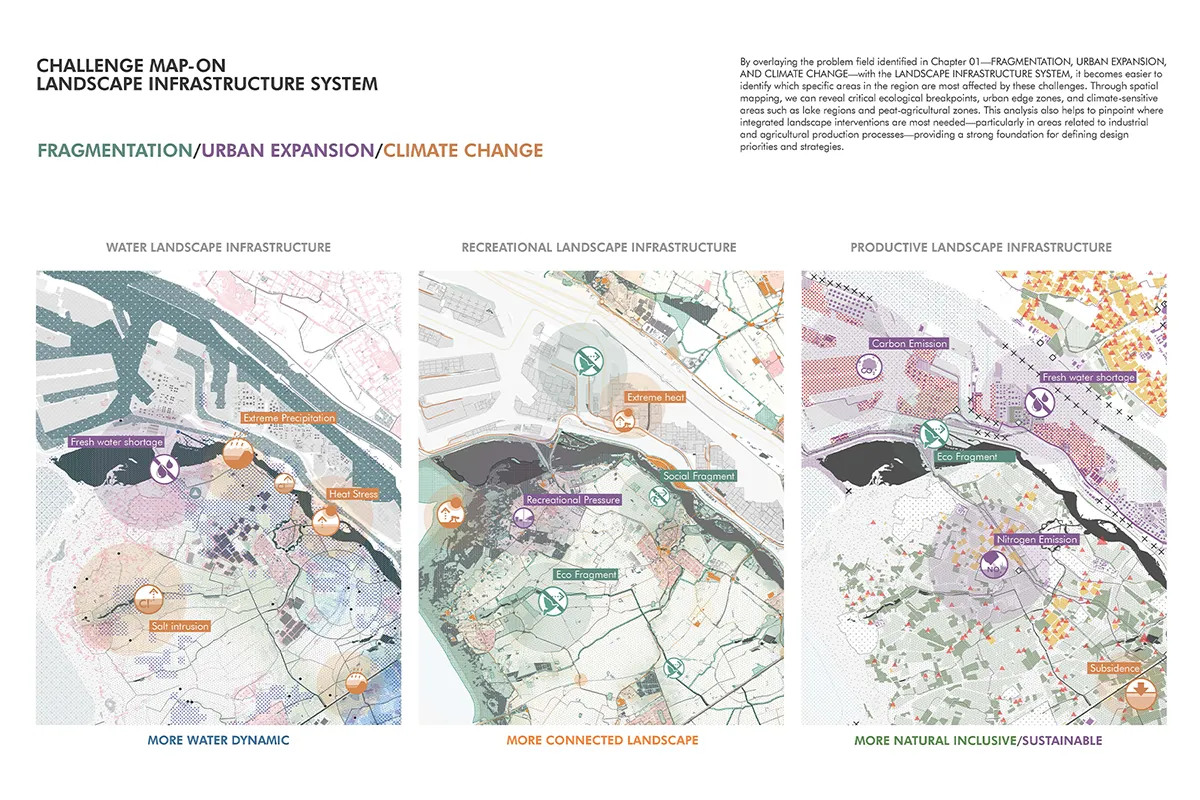
Informed by the theoretical framework of landscape-based urbanism, this study proposes the reorganisation of hydrological-ecological networks, agroecological systems, and industrial-port functions through the implementation of multi-scalar landscape infrastructures. At the regional scale, the research identifies critical spatial tensions within the existing infrastructural landscape and proposes three interrelated strategies: a dynamic, climate-adaptive network; an ecologically inclusive network; and a network that fosters spatial identity and collective experience. The design methodology integrates spatial and temporal dimensions, positioning landscape infrastructure as a catalyst for the sustainable transformation of port-related territories and their surrounding productive landscapes.
By conceptualising infrastructure as an operative structure, the project transcends conventional functionalist paradigms, embedding ecological, socio-cultural, and aesthetic dimensions into its design. The research demonstrates the potential of landscape to mediate between urban-industrial systems and vulnerable ecological zones, offering both a spatial prototype and a methodological contribution to the discourse on resilient urban development in deltaic territories.
In the sustainable transformation of the Port of Rotterdam and its surrounding areas, the landscape infrastructure design demonstrates a clear logic that bridges regional and site scales—from strategic vision to detailed implementation. At its core, it establishes a layered, multi-scale, and integrated system that aligns ecological, social, and industrial functions.
At the regional level, the strategy builds a multifunctional infrastructure network through blue (climate-adaptive), green (social-ecological inclusive), and orange (landscape identity) corridors and nodes. For example, the lake belt acts as an ecological spine linking agricultural zones, urban areas, and port industries. Existing hard infrastructure, such as railways, pipelines, and powerlines, is transformed into ecological or public corridors, integrating ecological processes and providing spatial guidance for future development.
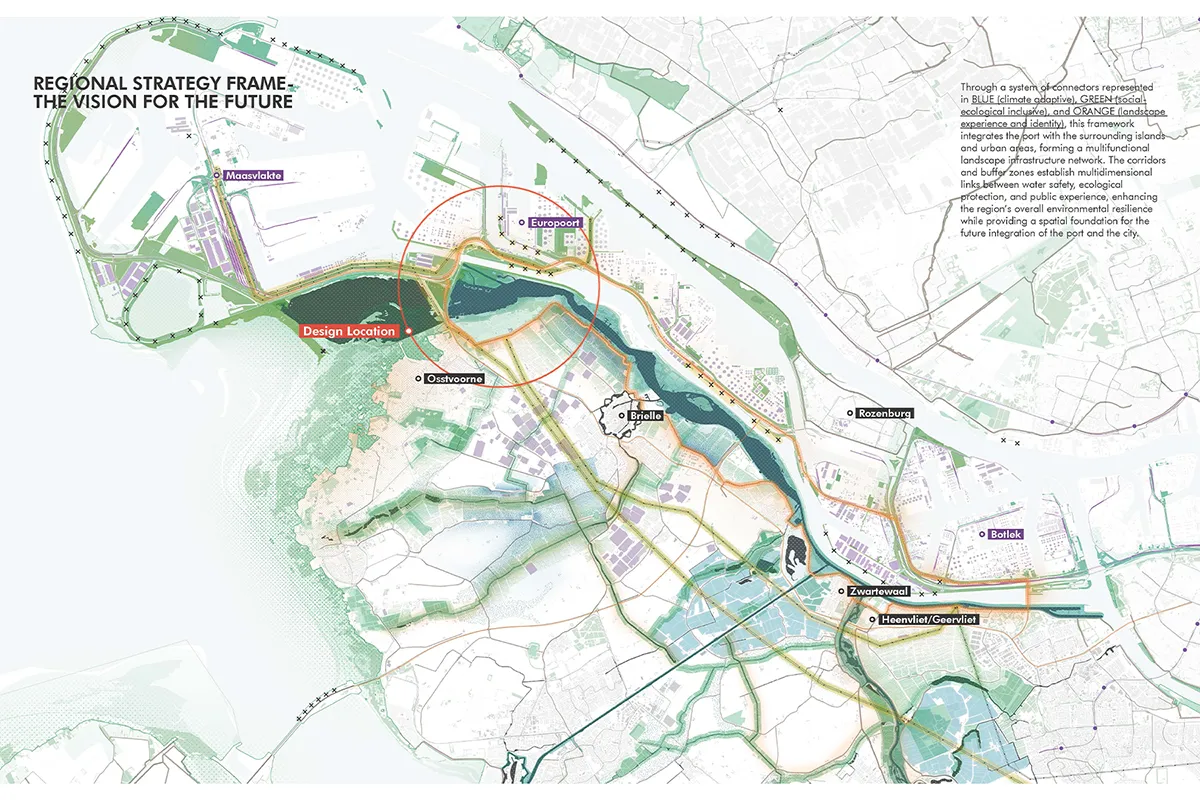
At the local level, the design concept of “Flowscape” translates regional strategies into tangible and experiential spaces. In the “Exploration Garden,” for instance, regional water strategies are materialized through rain gardens, wetlands, and retention ponds, combined with native planting and microtopography. This ensures the continuity of ecological logic while enhancing site-specific biodiversity and water management.
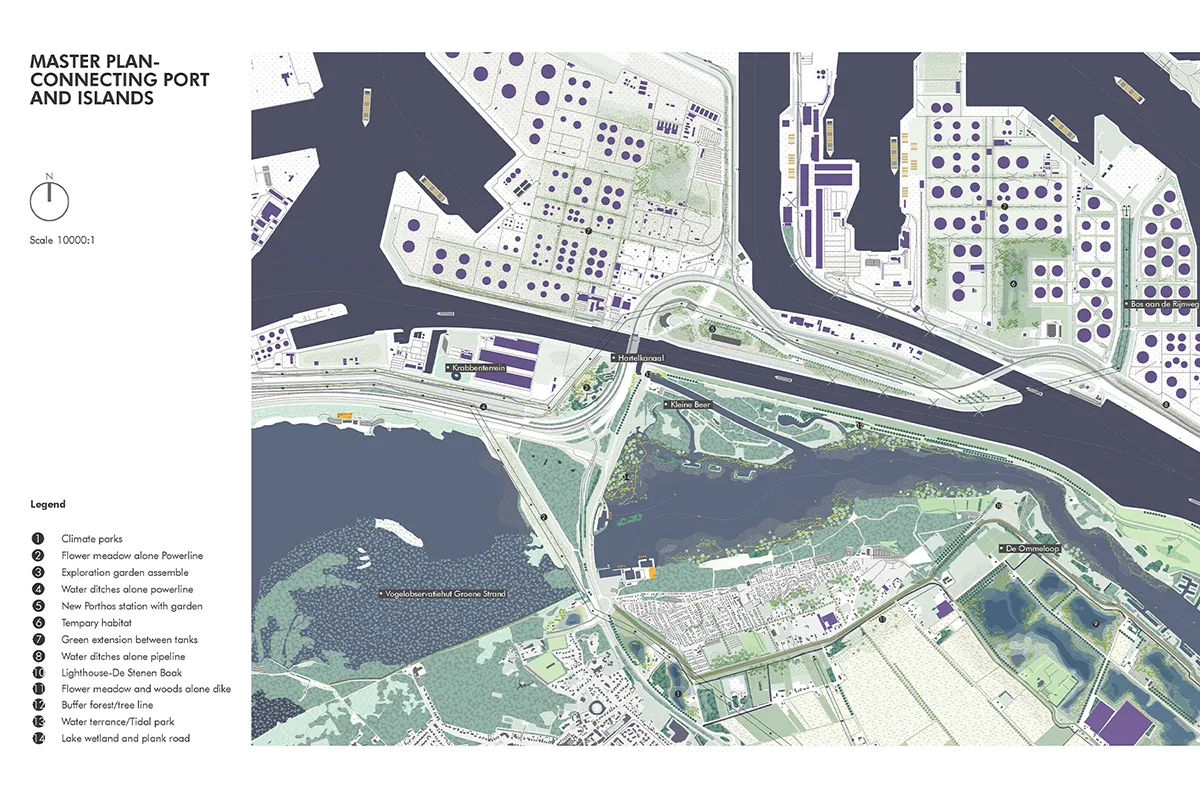
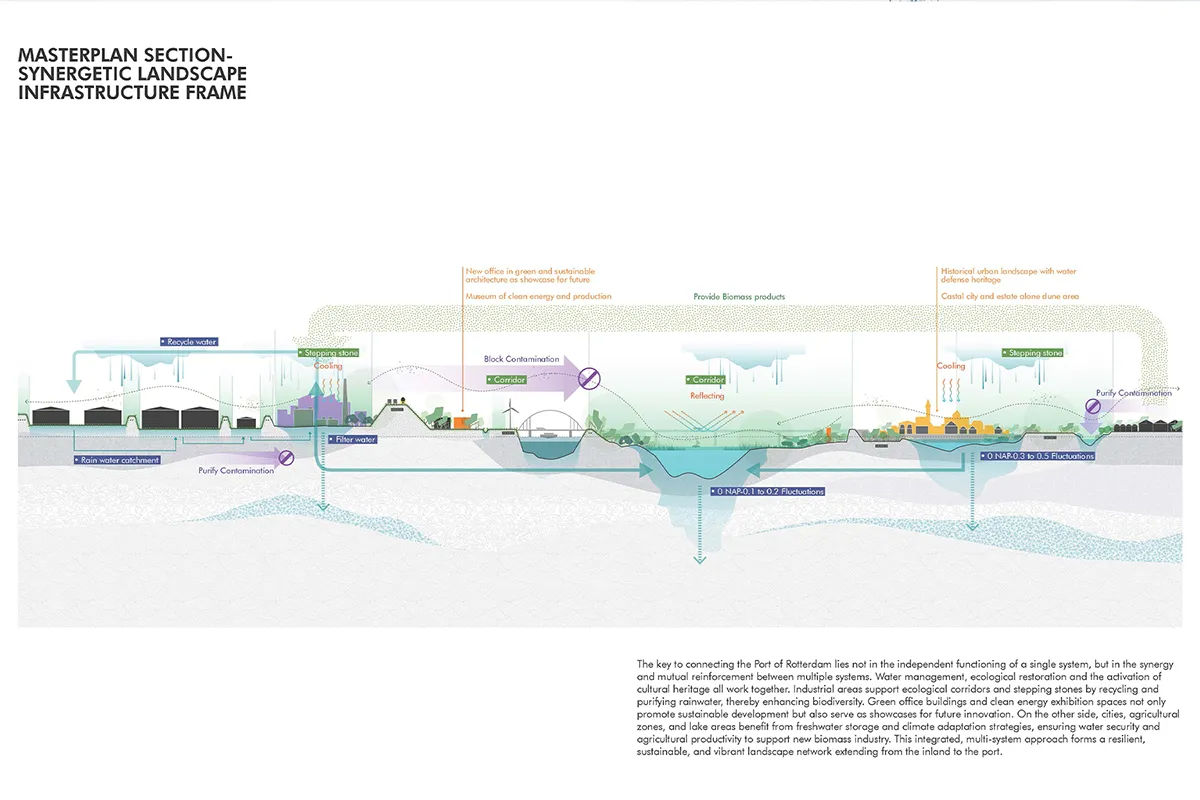
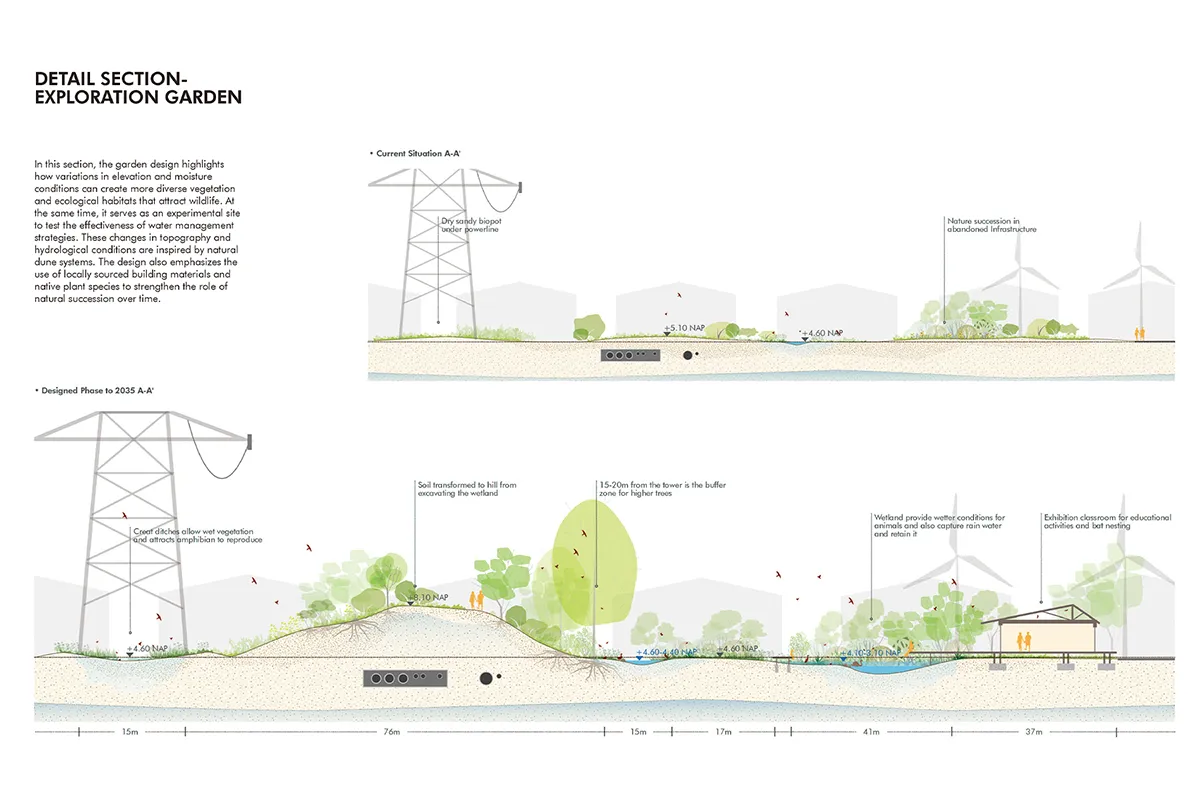
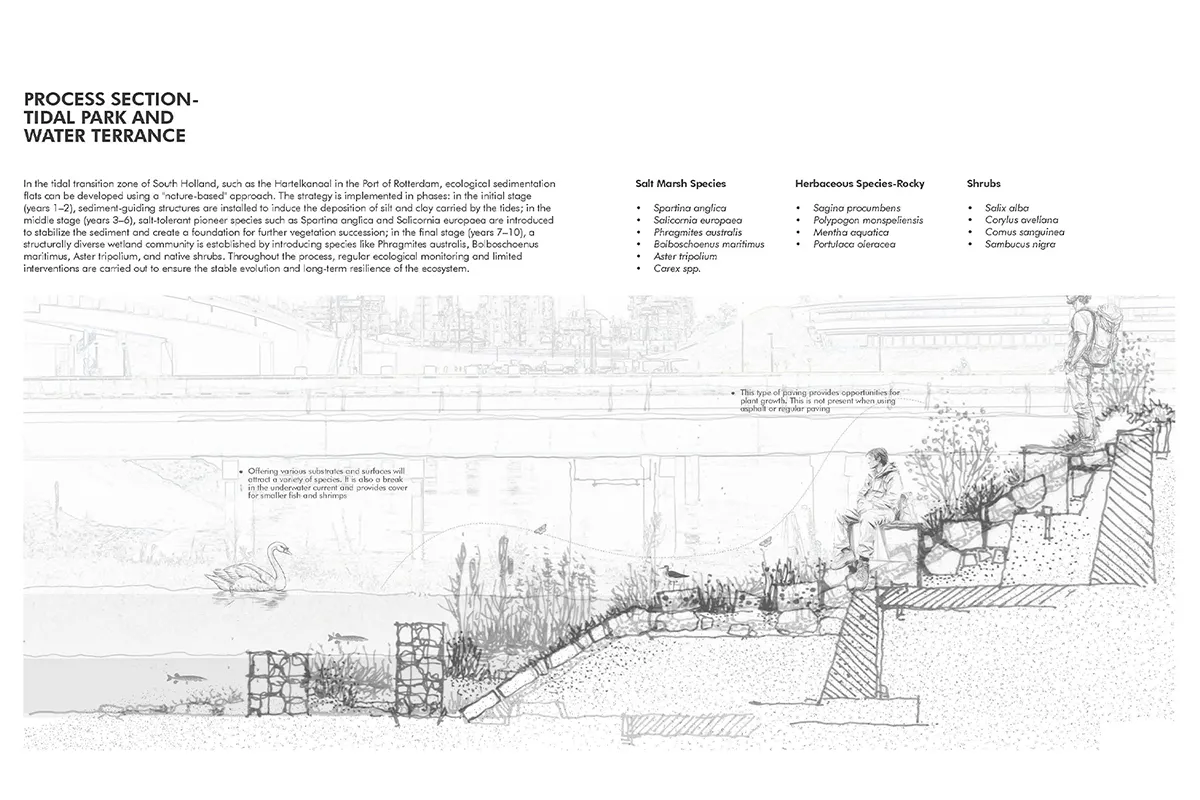
A key strength lies in the continuity of system logic and spatial language between scales. The regional “lake–corridor–node” structure is echoed at the site through wetlands, forest belts, and public spaces. This seamless transition ensures that users can perceive and experience the spatial narrative from large-scale frameworks to local interventions.
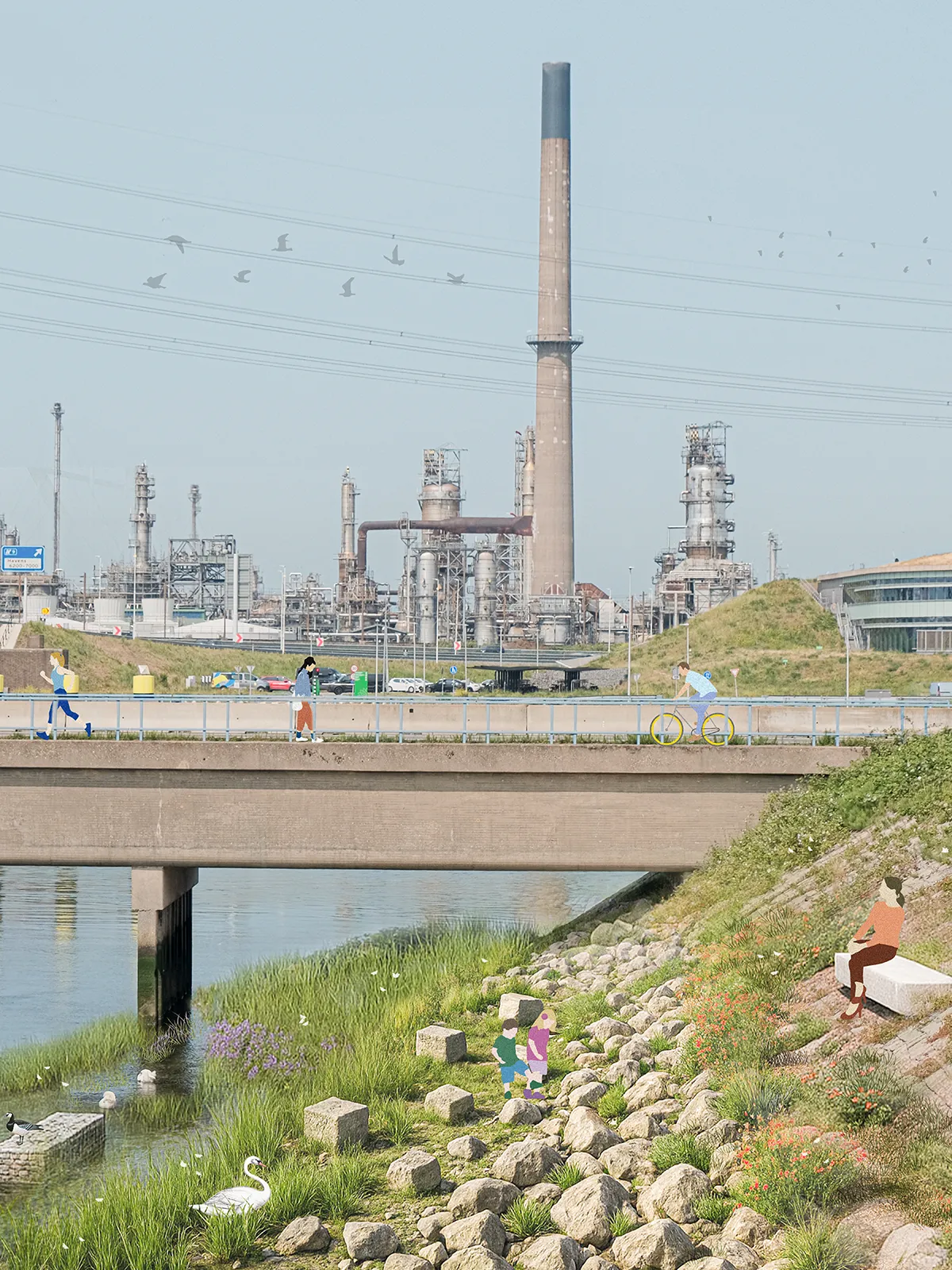
New Port-Island Connector
Student: Jiaming Huang – Technische Universiteit Delft
Supervisors: Supervisors: Steffen Nijhuis, Marco Lub – Technische Universiteit Delft