
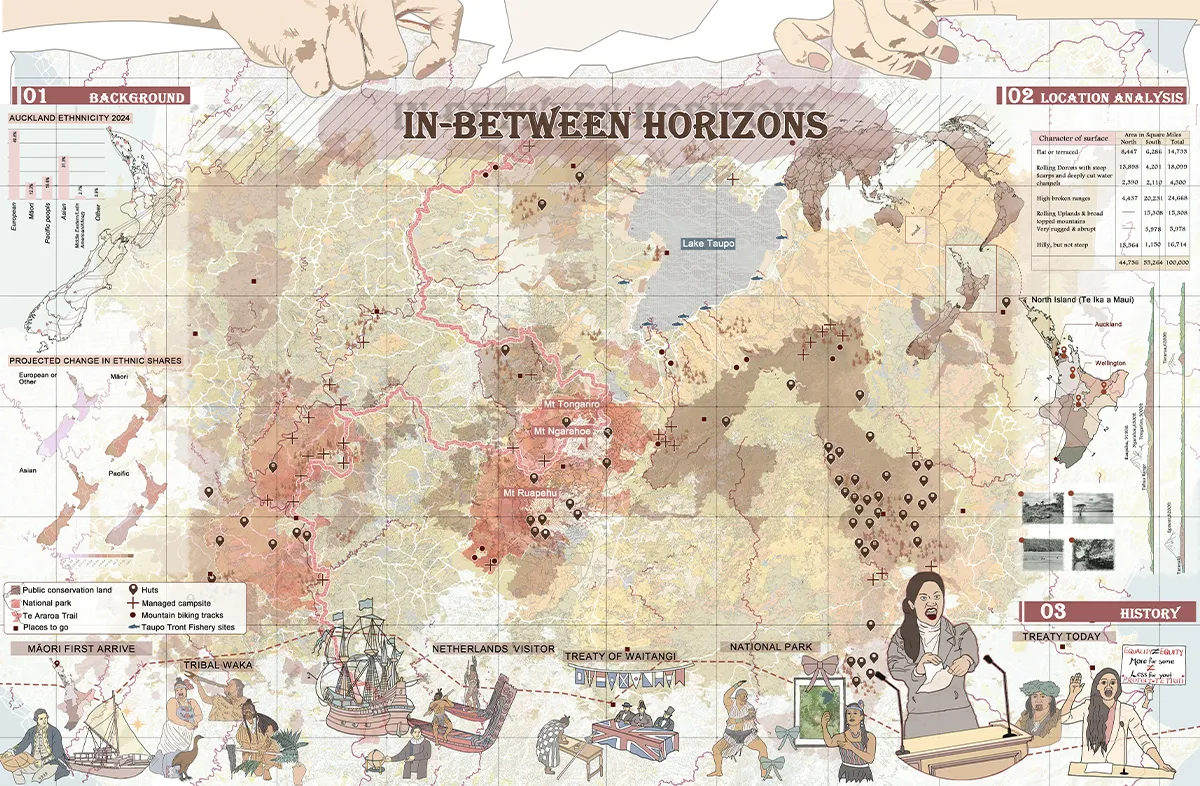
In January 2025, New Zealand’s Department of Conservation (DOC) proposed a NZ$57 nightly fee for roughly 950 previously free campsites and huts in national parks. The move instantly triggered public protests, with critics arguing it perpetuates the “commodification of nature”—reducing the ecological value of natural resources to nothing more than economic assets managed via market mechanisms.
For Māori people, the policy raises deeper issues. Historically, Māori iwi (tribes) voluntarily donated land to assist the government in establishing New Zealand’s First National Park, Tongariro National Park, to protect its sacred landscapes jointly. However, DOC’s fee-charging policy disregards these cultural and ecological values, further escalating existing tensions.
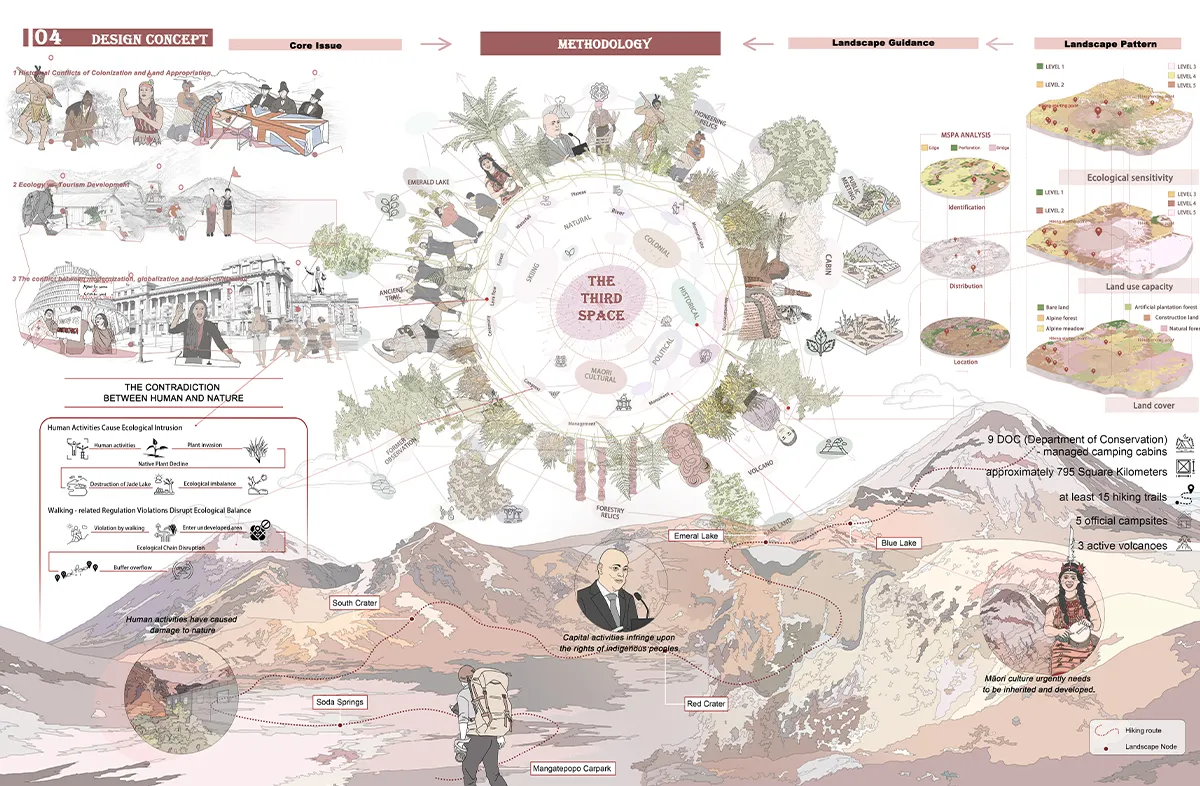
To address the conflict between “nature commodification” and Māori ecological worldview, the “Third Space” approach has been proposed, with Multi-Scale Pattern Analysis (MSPA) technology serving as its foundational support. This technology can accurately identify key ecological corridors and core functional zones, map connectivity for fragmented habitats and pinpoint potential ecological connectivity pathways. It lays a solid scientific groundwork for the subsequent implementation of strategies, ensuring that environmental, social, and cultural initiatives are advanced with greater targeted precision. At the ecological level, the “Third Landscape” transcends the binary division between “protected areas” and “developed areas,” creating semi-natural, ecologically resilient transitional zones. While connecting fragmented habitats, it also maintains the ecological integrity of Tongariro National Park.
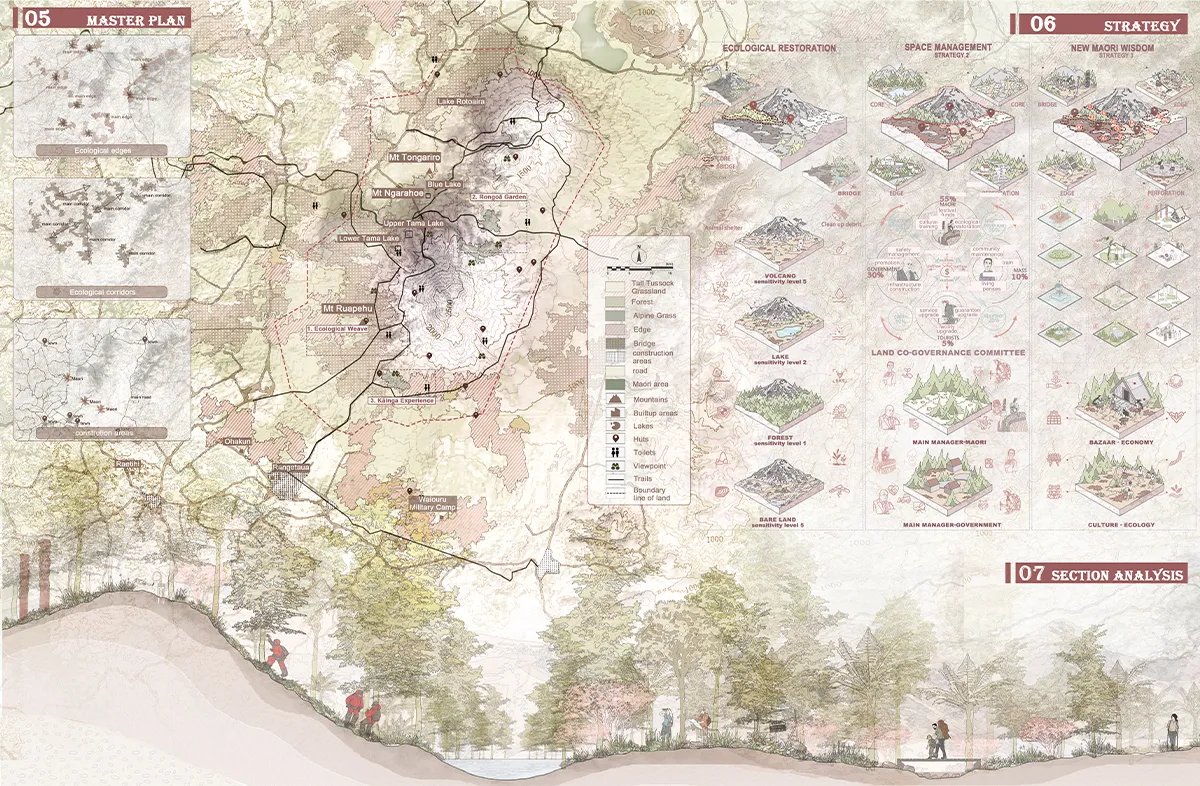
At the social level, the core focus is on building a “Third Space” communication network and establishing a tripartite governance committee composed of Māori, government, and visitor representatives. Serving as a platform for equal dialogue, the committee operates as follows: Māori representatives, anchored in traditional ecological knowledge (such as wisdom on sustainable resource recycling and rituals for safeguarding sacred landscapes), speak up to defend the inheritance of cultural heritage; government representatives coordinate policy adaptability (to ensure alignment with ecological protection baselines) and resource allocation (e.g. funding for environmental restoration and support for cultural heritage projects); and visitor representatives bring perspectives on tourism experiences to help balance “the momentum of tourism development” and “the intensity of environmental protection.” Through multi-stakeholder collaboration, diverse voices are fully integrated into the national park management decision-making process.
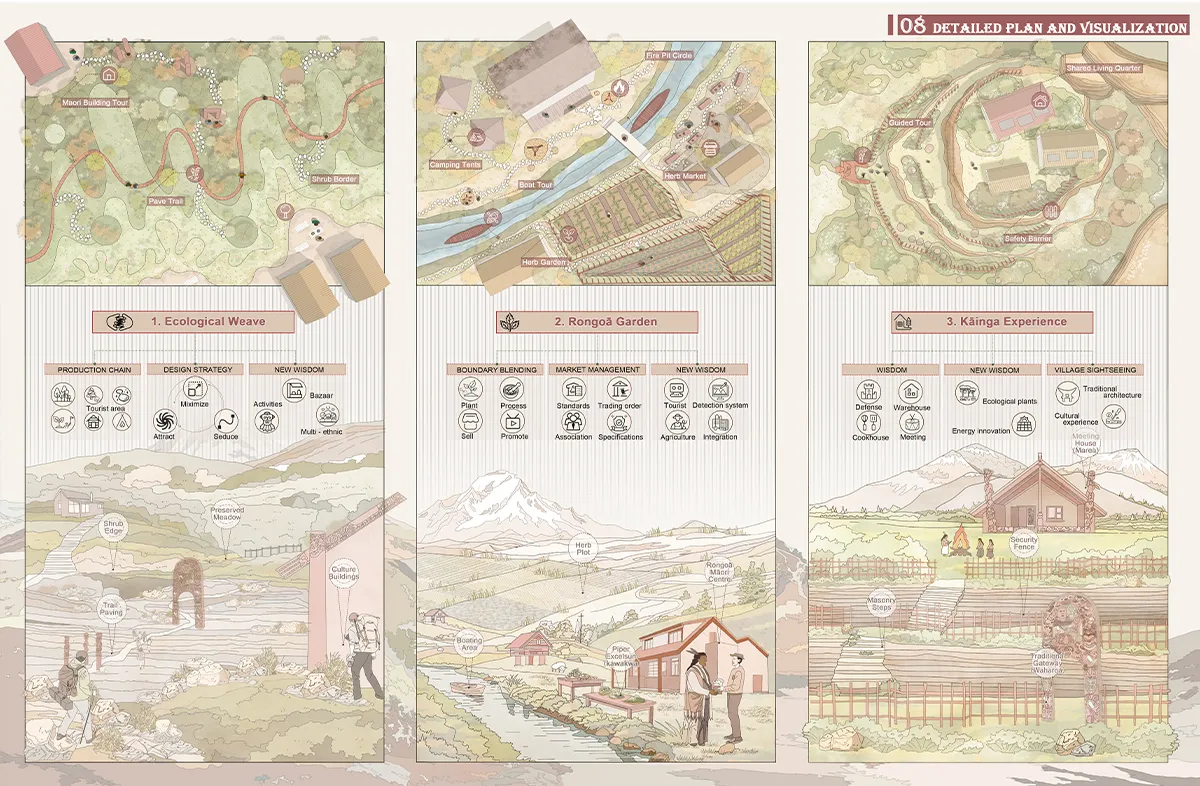
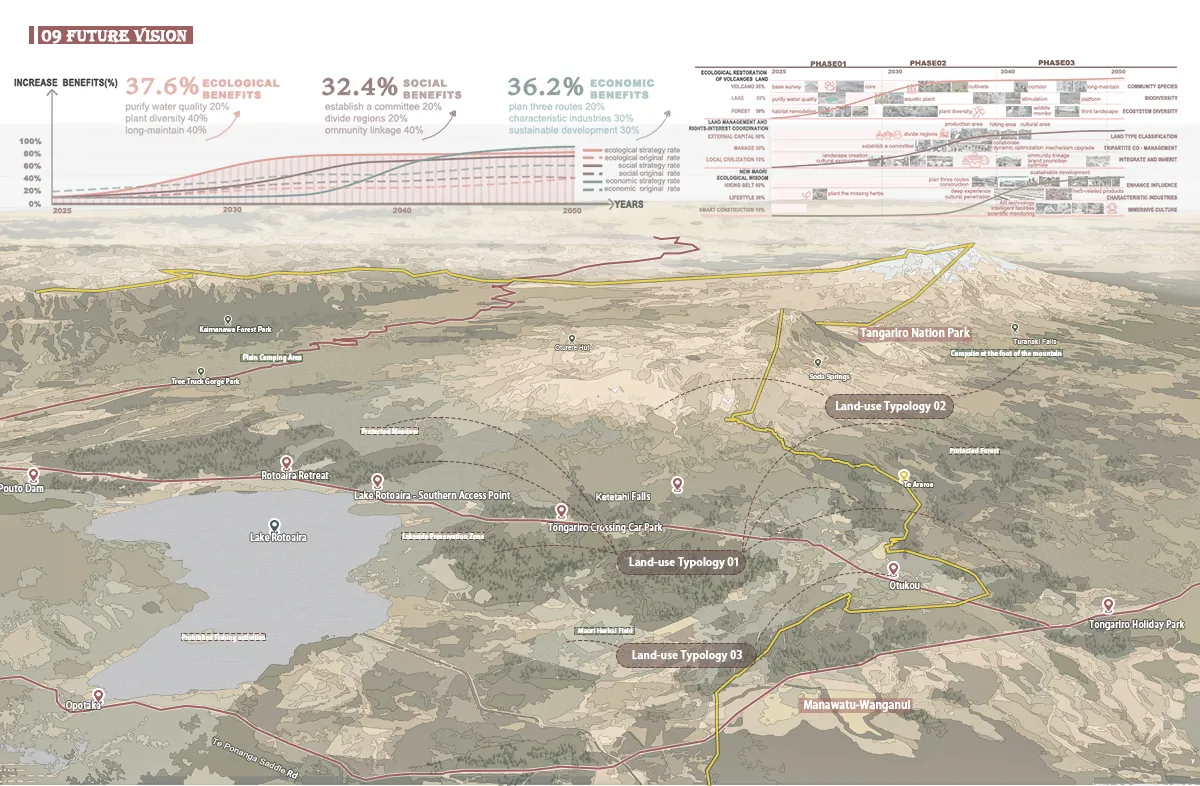
At the cultural level, sustainable practices that enable mutual empowerment between ecological protection and cultural inheritance are promoted. The approach encourages the exploration of industries rooted in Māori traditional wisdom—such as the integration of environmental cultivation of distinctive medicinal herbs with cultural experiences. This approach not only avoids “landscape alienation” caused by excessive commercialisation but also uses cultural assets to reinvest in ecological protection and community development, thereby building a more resilient industrial ecosystem.
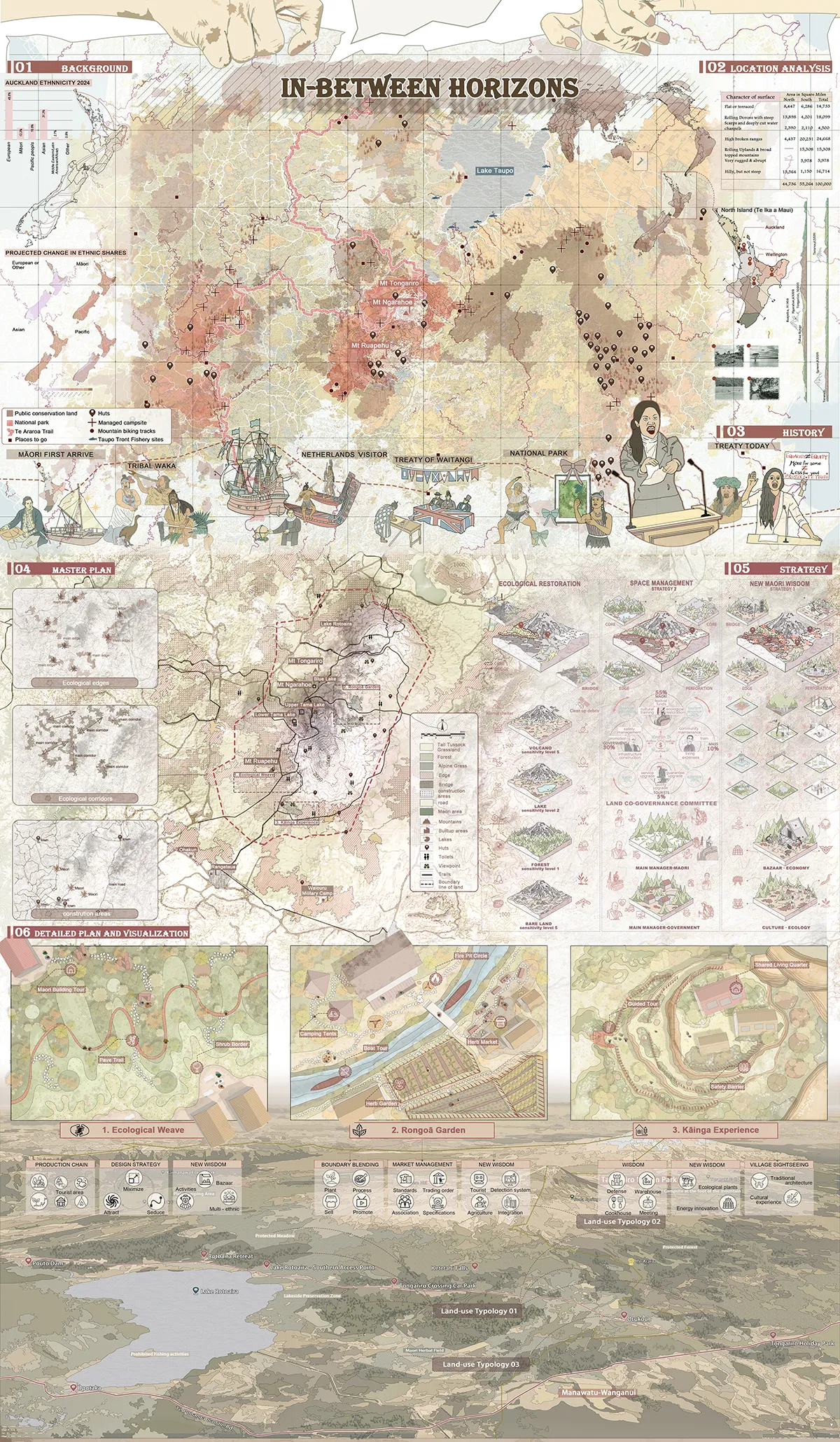
In-Between Horizons: Hybrid Ecologies and Third-Space Wisdom in Tongariro
Hanying Long – Nanjing Foresty University
Xianxuan Meng – Tianjin Chengjian University
Hangyu Li – Xi’an Jiaotong-Liverpool University
Yimeng Huang – Shandong Agriculture University
Zheliang Guo – South China University of Technology
Supervisor: Xinwang Sun – Nanjing Forestry
Winner of the Outstanding Award in the 2025 WLA Student Awards – Conceptual Analysis & Planning