
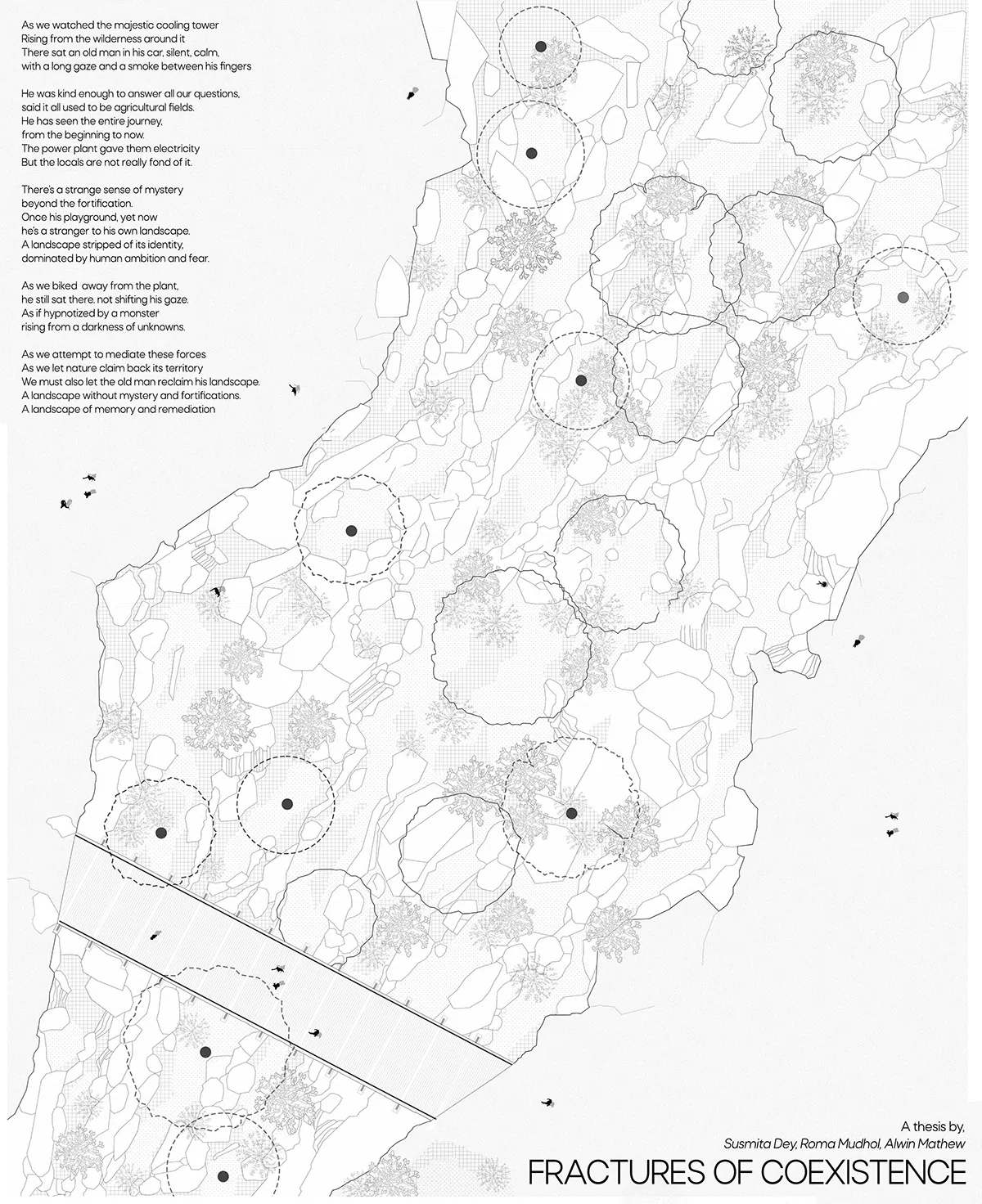
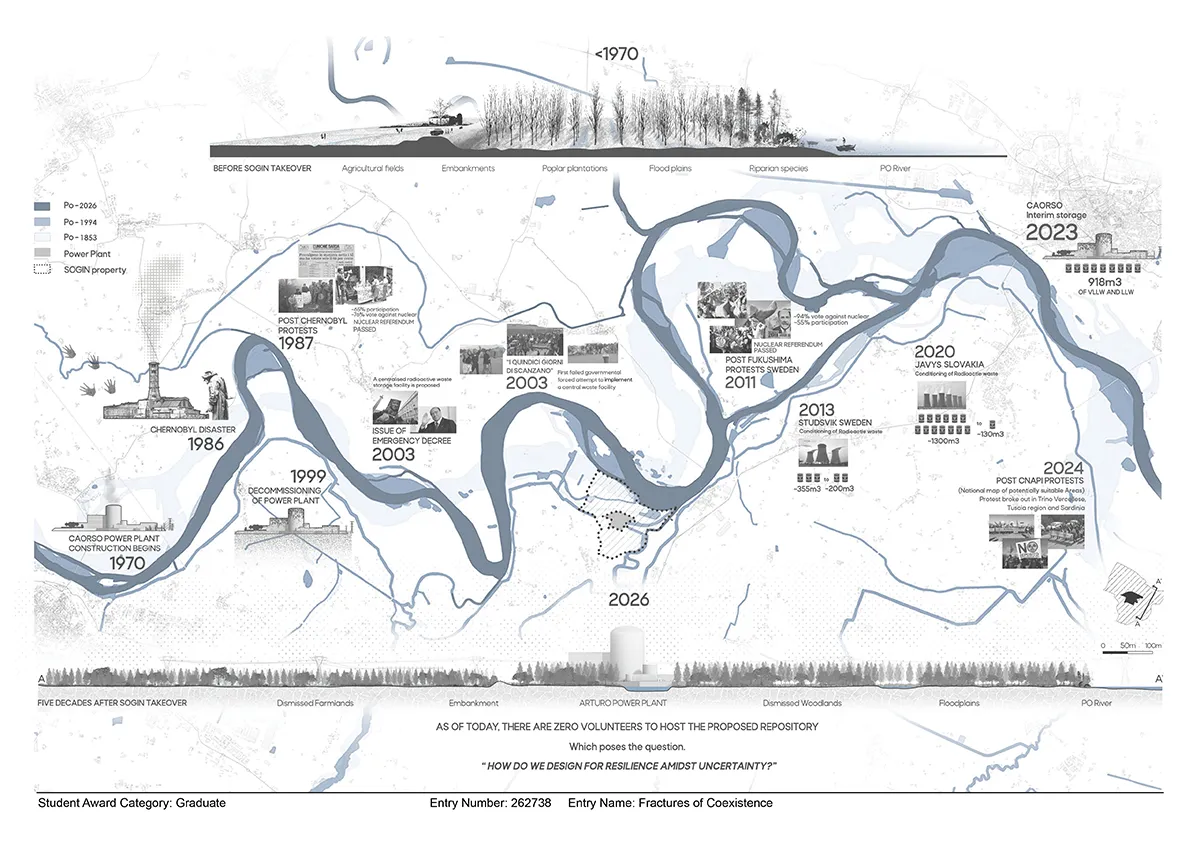
The post-industrial transformation of the Caorso Nuclear Power Plant marks a critical juncture in Italy’s socio-techno-political history, shifting from a site of high-technology energy production to a landscape of decommissioning and ecological reclamation. Fractures of Coexistence interrogates the uncertain future of Italy’s nuclear heritage following the 1986 Chernobyl disaster and the subsequent national shift away from atomic energy. Located within the fertile floodplains of the Po Valley, the Caorso facility, affectionately termed “Arturo” by the local community, has existed for nearly five decades as a monolithic non-place, a restricted industrial island severed from its regional hydrological and agricultural context. As the nation continues to grapple with the unresolved realization of a national nuclear waste repository, this research proposes a landscape framework that addresses this ambiguity through adaptive design strategies capable of navigating dual future scenarios. A future with and without the repository and, more importantly, the uncertain present.
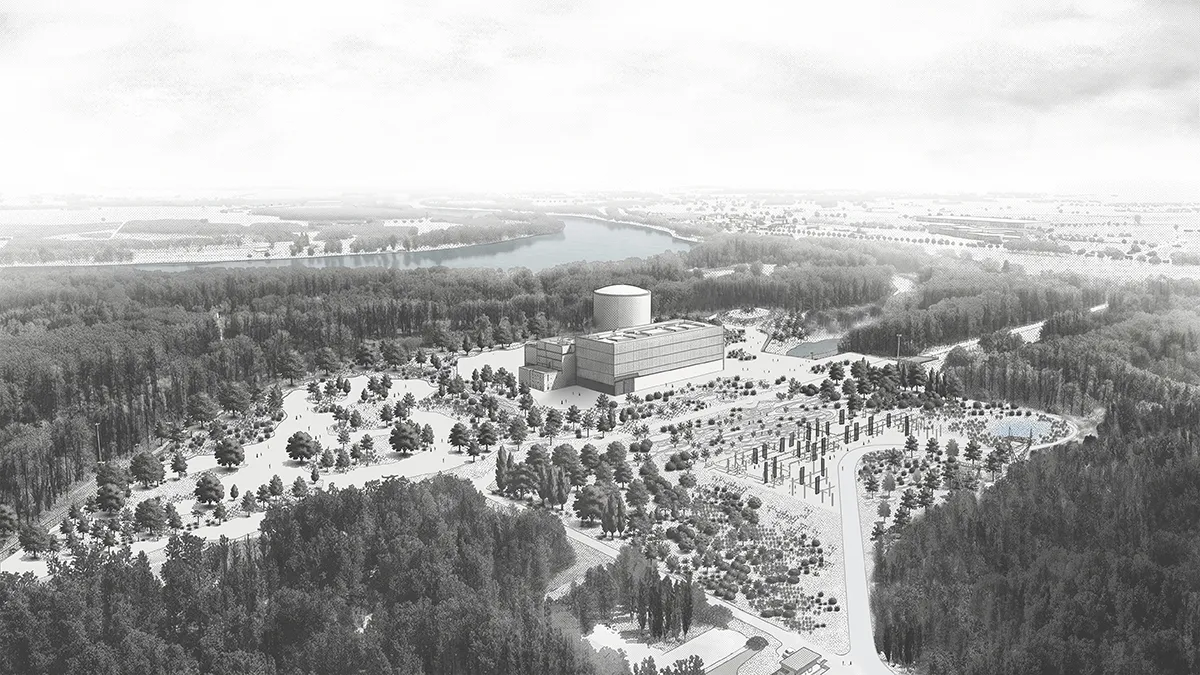
Central to this investigation is the observation of anthropic immobility, a condition where decades of restricted human access have inadvertently catalyzed a powerful acceleration in natural evolution. The exclusion zones surrounding the plant have become accidental biodiversity reserves, hosting a mosaic of floodplain forests and wetlands that have largely vanished elsewhere in the valley. The research utilizes landscape analysis and ecological assessment to frame the site not as a static relic of industrial production, but as a living laboratory of technical and natural tensions. By recognizing the secondary ecological succession already exerting pressure on the margins of the facility’s massive concrete platform, the project shifts away from traditional masterplanning toward a strategy of facilitation, seeking to accelerate latent processes of reclamation while preserving the site’s monumental industrial memory.
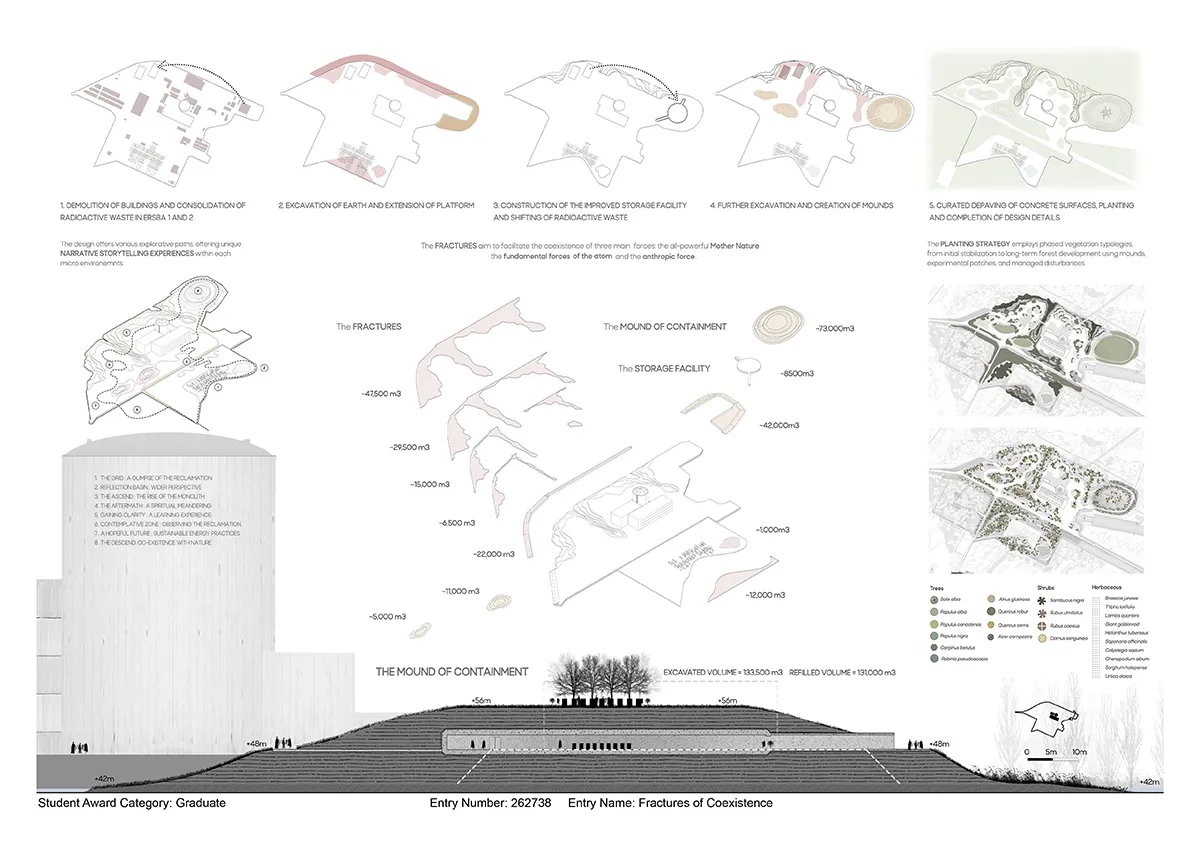
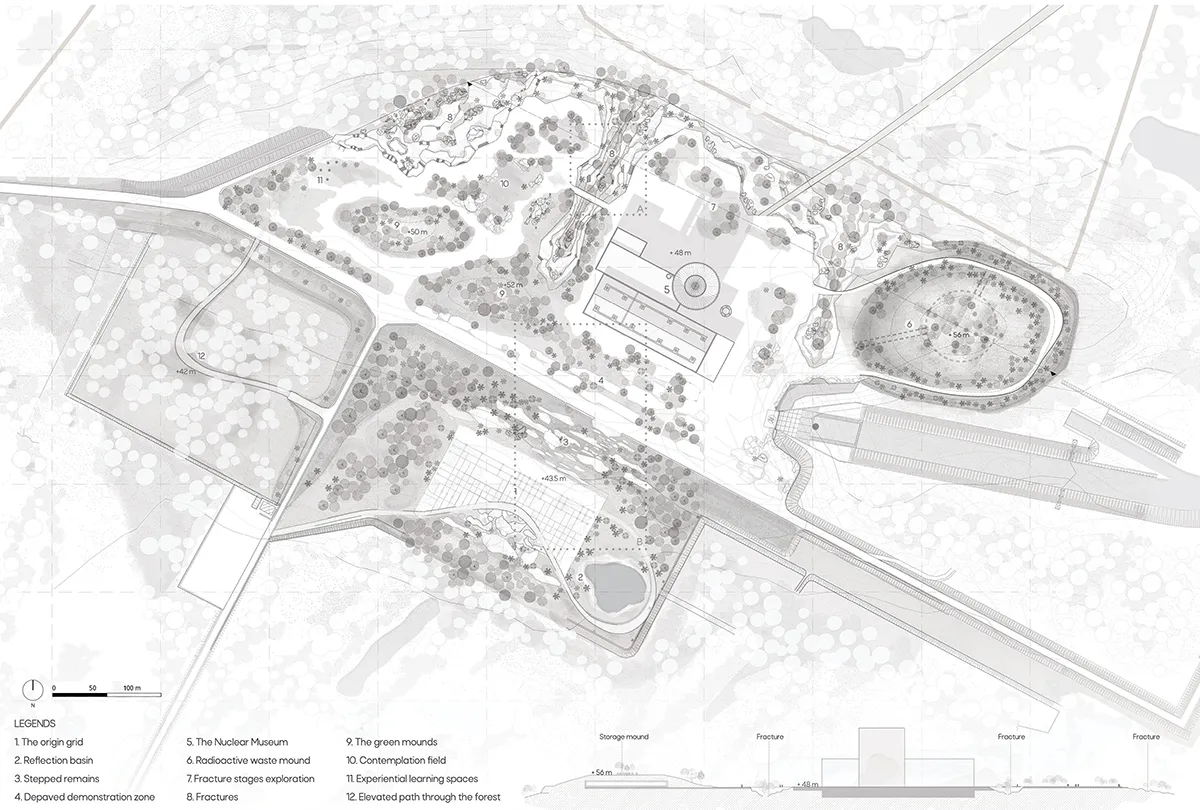
The intervention is manifested through fractures: deliberate incisions into the concrete crust sealing the ground. These active conduits facilitate ecological and social reintegration, allowing surrounding ecosystems to permeate the sterilized industrial environment. This spatial gesture structures a narrative landscape integrating restoration methodologies with radioactivity monitoring. Within these carved spaces, the project introduces a National Nuclear Museum and contemplative zones, converting secrecy into public transparency. Crucially, excavated material forms a topographic mound housing a radioactive waste facility. This dual strategy addresses political uncertainty regarding waste storage while enabling ecological succession, shifting the site into a landscape of perpetual, peaceful coexistence.
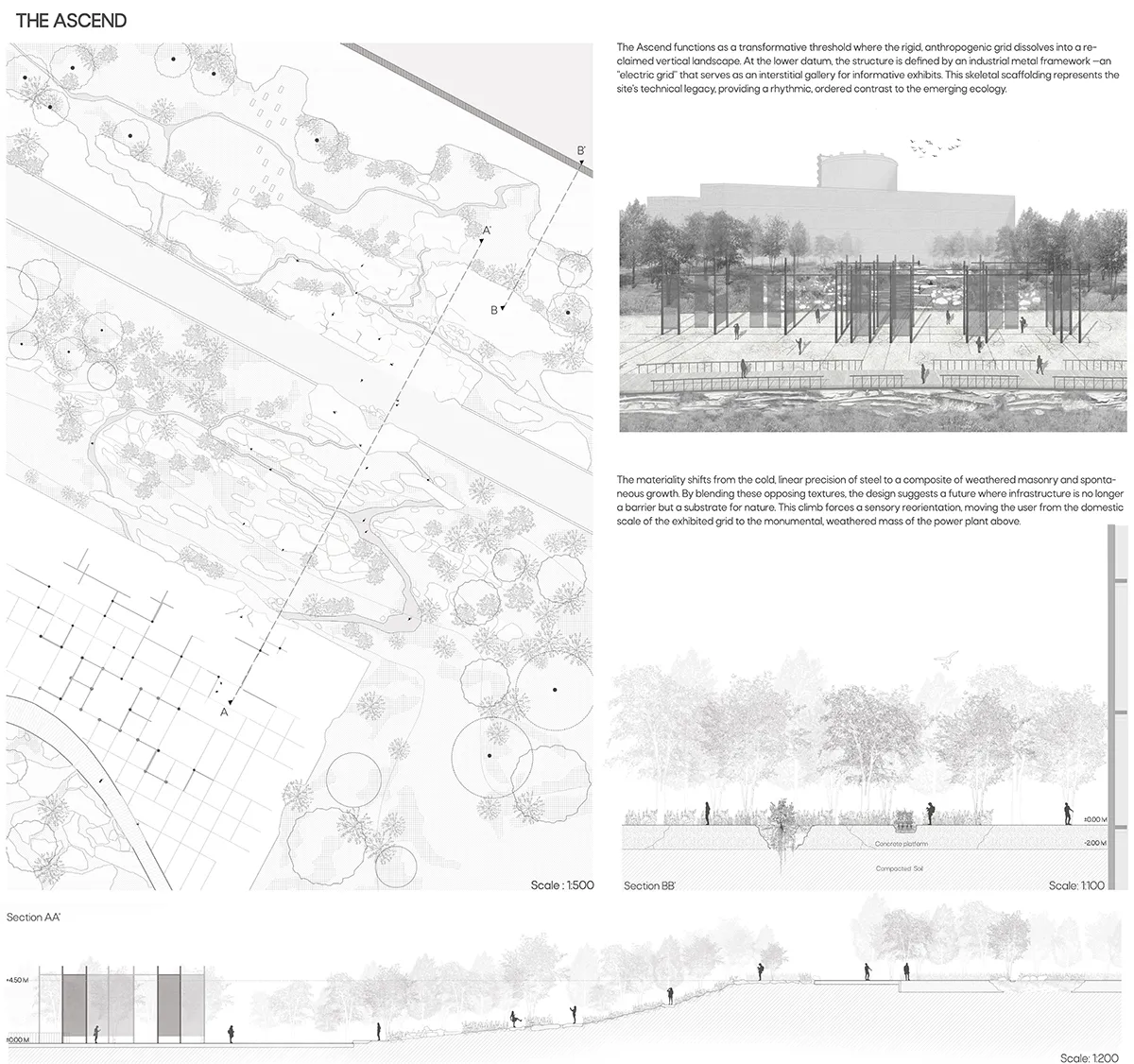
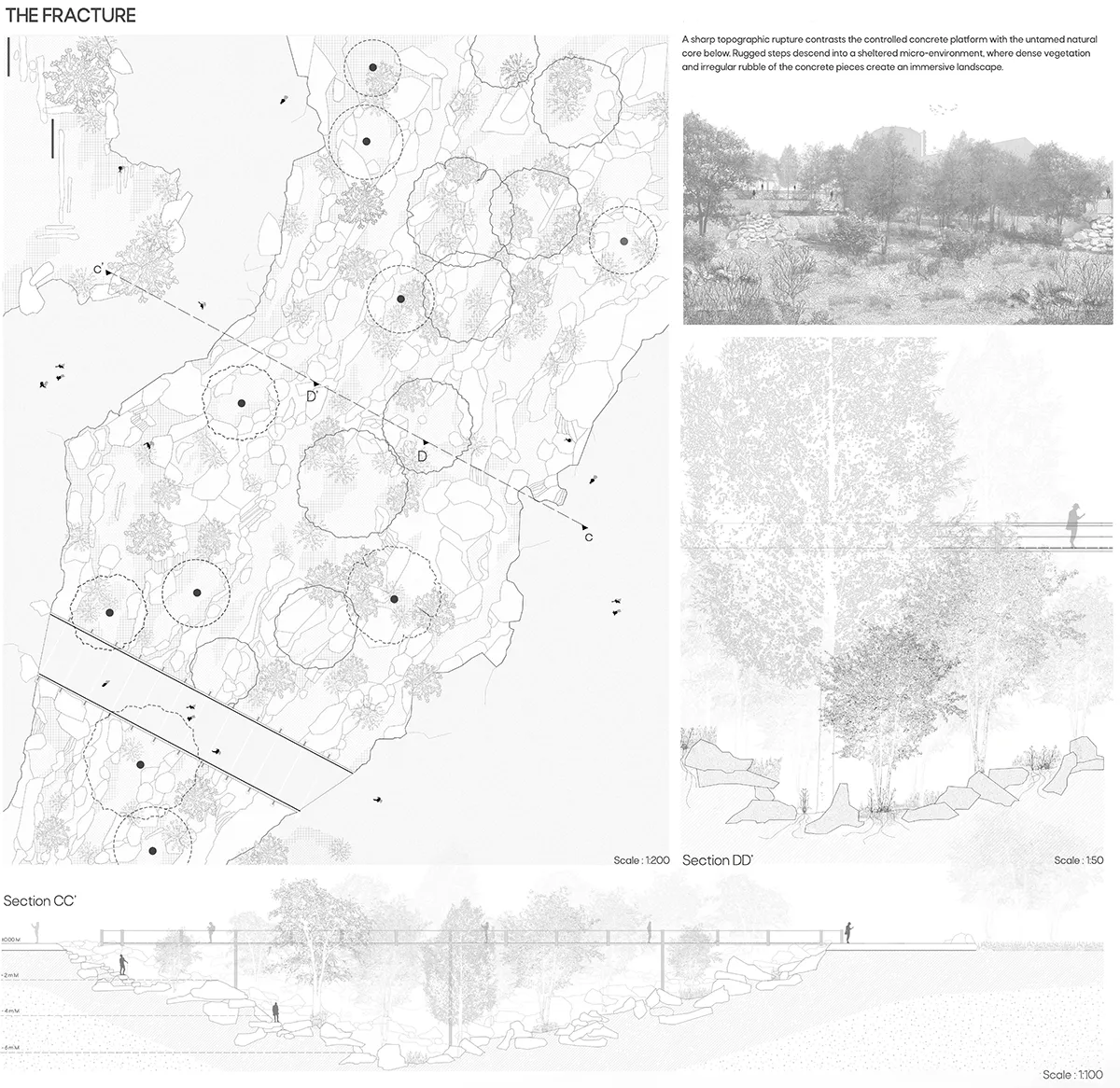
Ultimately, Fractures of Coexistence reimagines the Caorso site as a polysemic landscape that reconciles the community with its lost territory. By treating the industrial carcass as a cultural monument rather than an erasable burden, the design preserves the complex stratigraphy of the Po Valley’s energy corridor. The resulting environment is one of curated decay, where the rigid requirements of waste containment coexist with explorative public paths. Through this synthesis of architecture and ecology, the project transforms the plant from a state of suspension into a landscape of perpetual contemplation, ensuring that Italy’s nuclear heritage is critically engaged rather than forgotten.
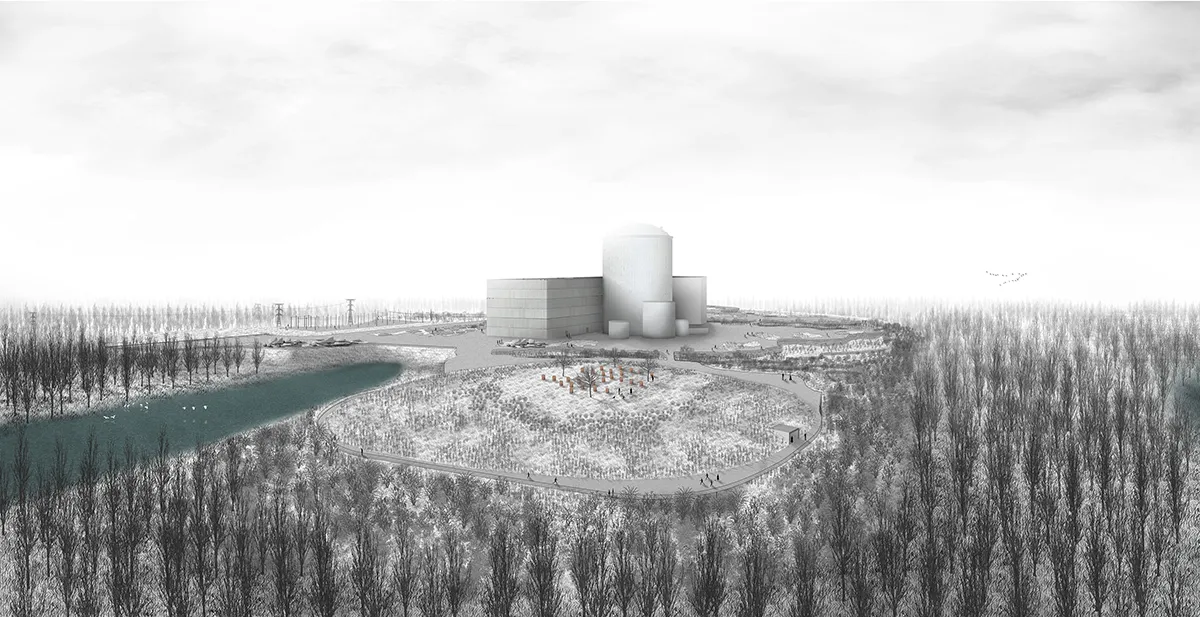
FRACTURES OF COEXISTENCE
Students: Susmita Dey, Alwin Mathew, Roma Mudhol – Politecnico di Milano
Supervisor: Sara Protasoni; Co-Supervisor: Ali Reza Hakim
Be the first to comment