
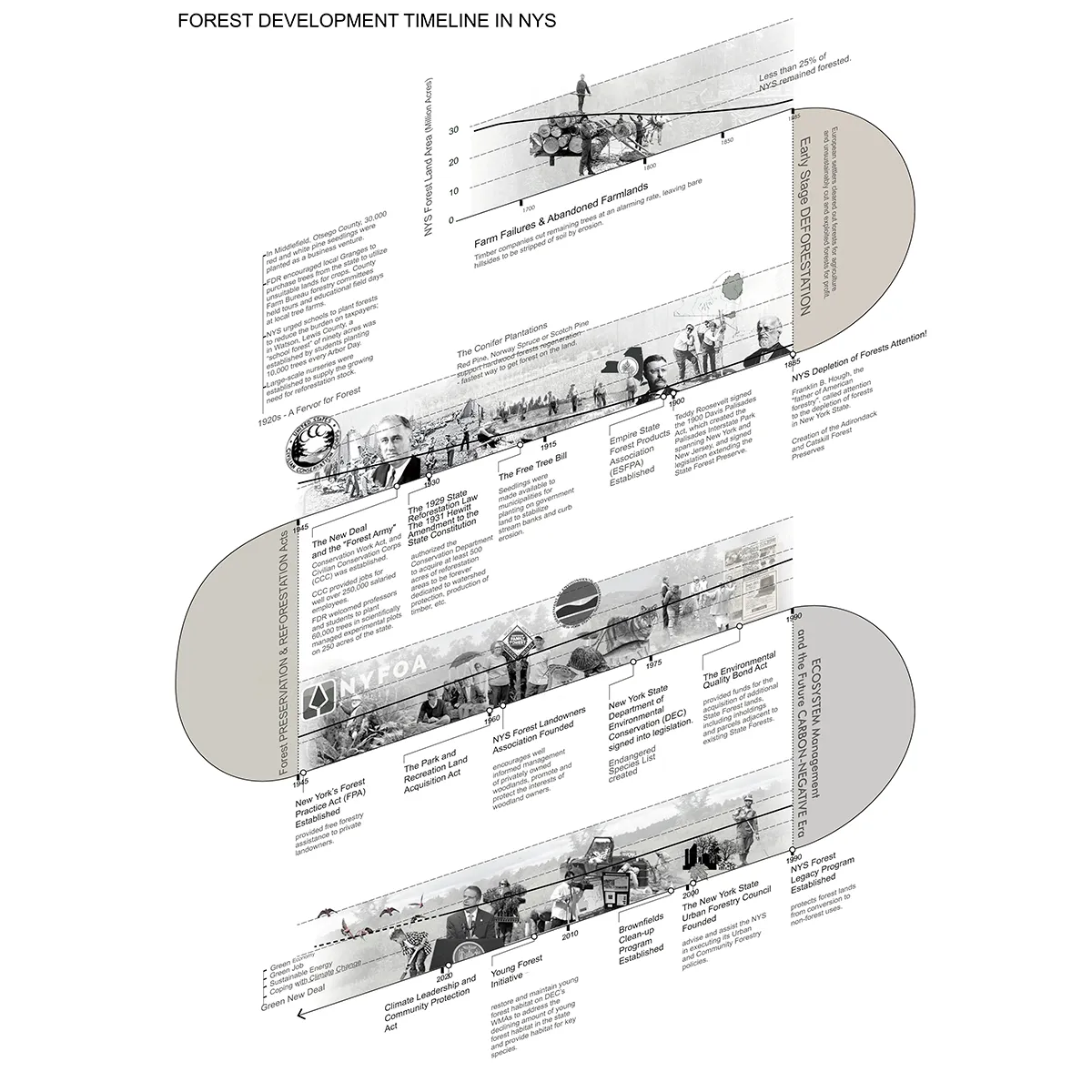
Inherited from President Franklin D. Roosevelt and his forest army Civilian Conservation Corps (CCC) which hired more than 3 million people in the national forests and planted more than 3 billion trees, reforestation and forest structure improving works are effective techniques to incorporate forest as parts of the Green New Deal. Furthermore, functioning forests are significant carbon sinks, sequestering and storing carbon, and as carbon trading are becoming increasingly popular, well-performed forests can act as carbon emission offsets in carbon trading marketplaces. Thus, more related jobs can be created.
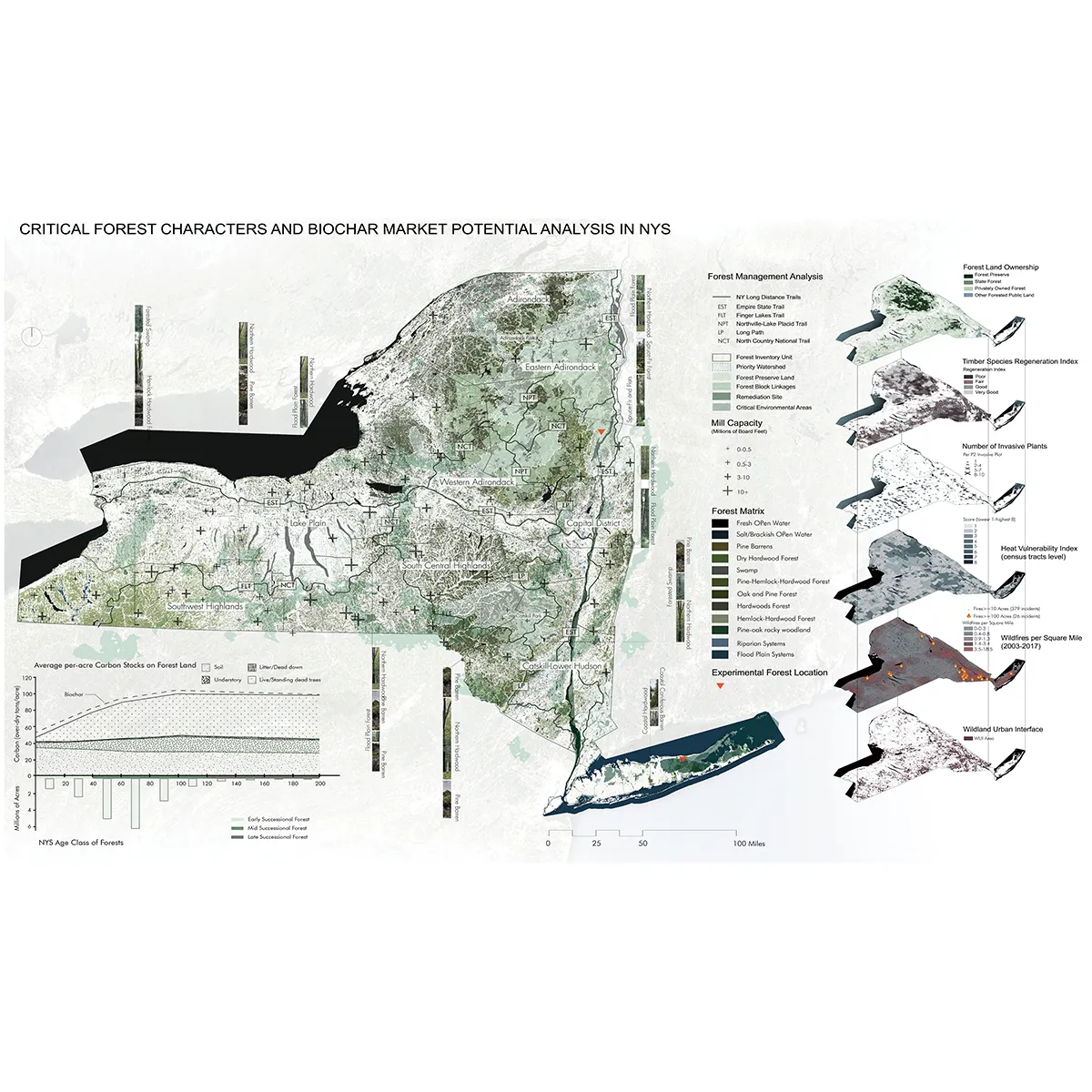
Exploring New York State (NYS) forests, I found that the forests are facing issues like lessening early and late forest successions, certain species’ insects and diseases, and wildfire and landslide hazards. These closely connected to forest health, functioning, and carbon performance. On the other hand, the state has great potential to develop biochar market based on existing sawmills, which will benefit for forest structure improvement when combined with sustainable forest stewardship.
Then I thought of biochar application to forest soil. Though biochar studies are still in early stages, there are sufficient documents that can prove biochar’s capabilities to amend soil structure, promote land self-resiliency, reduce water run-off, etc. In addition, the feedstock of biochar can be various: wood resources from biomass residue to timber chips could all be utilized.
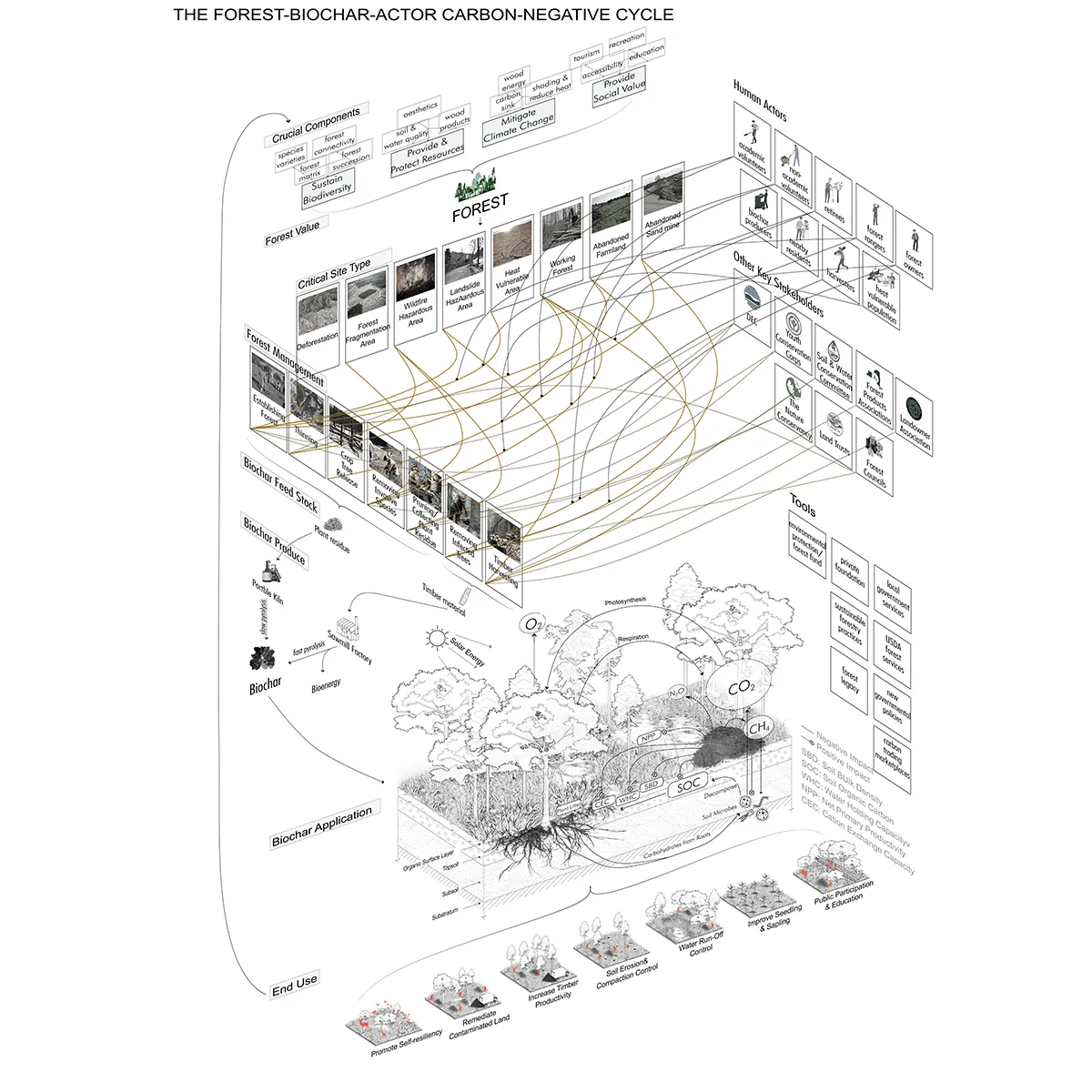
I then proposed a FOREST-BIOCHAR-ACTOR CYCLE, where forest surplus and residue work as biochar feedstock, and biochar are applied to forest soil as problem-solving implement. In this cycle, job positions are created and human actors such as biochar producers, harvesters, and volunteers are included.
Two characteristic sites with distinctly urgent needs of forest improvement or conservation are chosen to locate experimental forests: Long Island Pine Barrens and Private Timberland in Washington County.
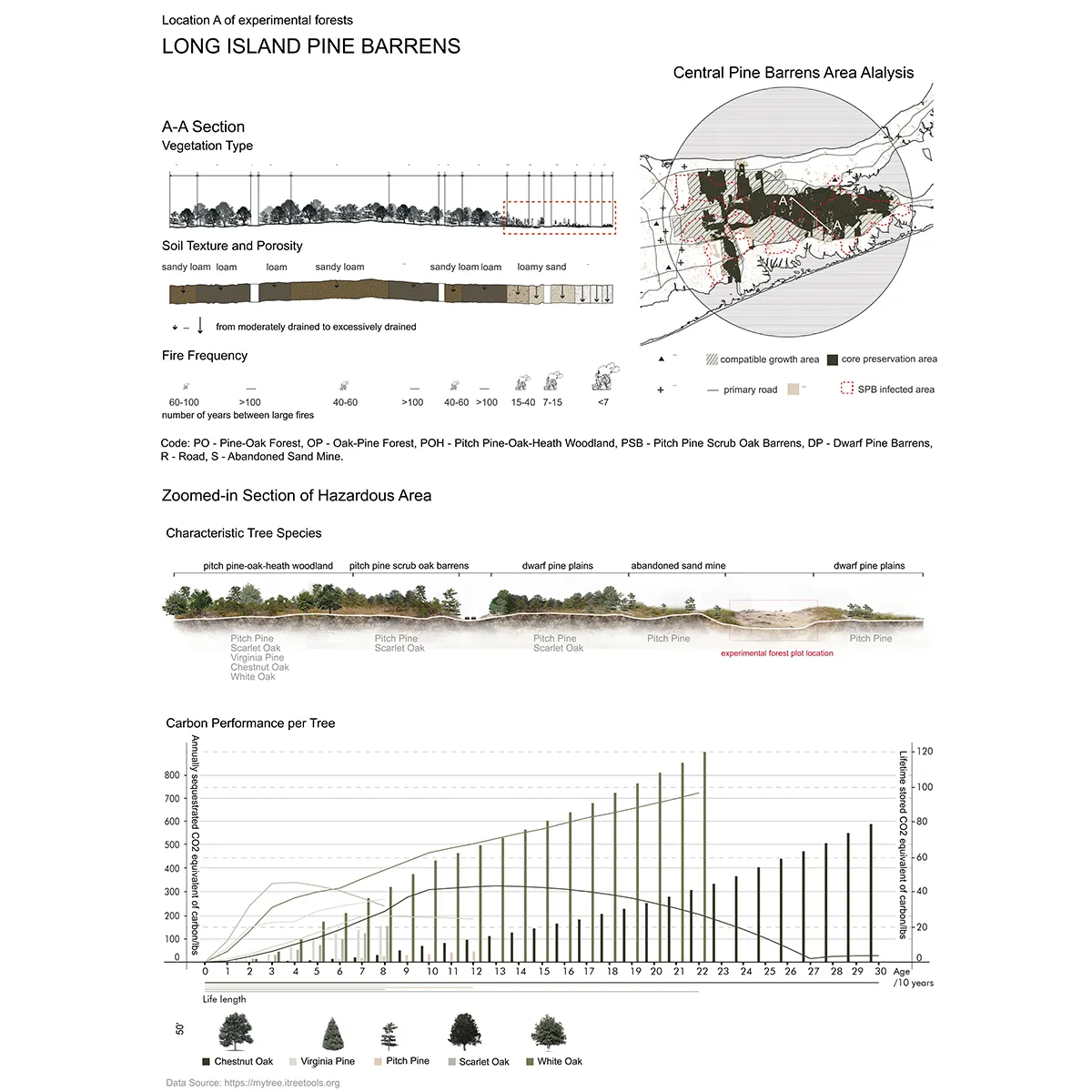
Within Long Island Pine Barrens, there are several out-of-used sand mines which would not reforest itself because of destructive disturbances to soil. What is more, pines are at high risk of infection by pine beetles. Suppression of natural fire disturbance and a lack of forest management have caused much of the pine barrens to become densely packed with overcrowded and weakened trees, which decrease the resiliency of pines against the beetles. Without maintaining and restoring natural process to the Pine Barrens ecosystem, net loss in the acreage of natural communities will continue to increase.
While Washington County has a percentage of 100 private owned timberlands. Thus, the decisions and choices that landowners, foresters, and other users of forests make about forestlands will considerably influence and change the resources. However, based on the fact that many of those working forests are even-aged monocultural stands and are harvested clear cutting, there are gaps of knowledge and limited availability to owners and managers to practice active and sustainable forest management. What is more, the central area of Washington county has high susceptibility of landslide hazard, most likely triggered by logging or destruction of the forest cover. Sustainable forest stewardship is an urgent need.
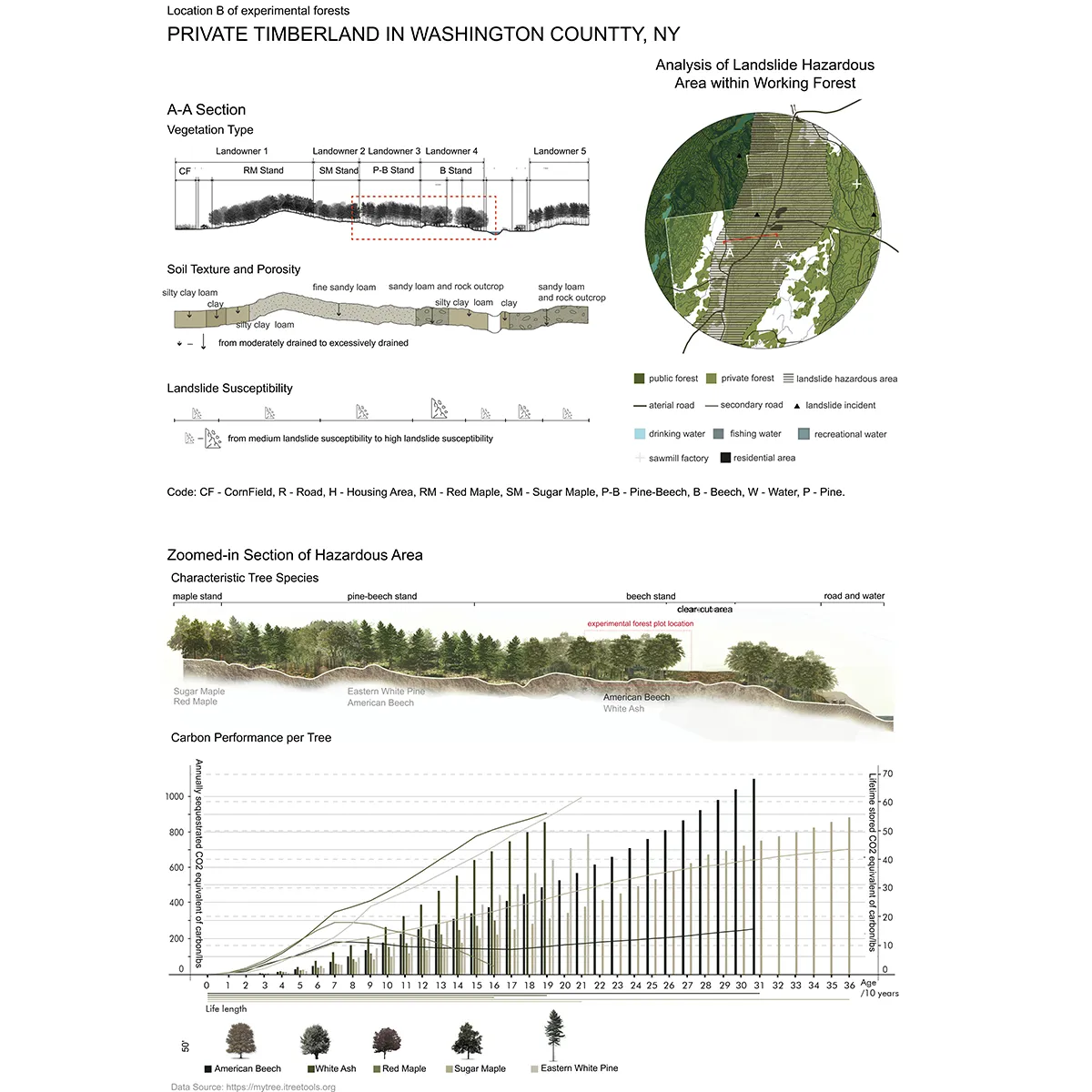
Finally, in the experimental forests, I purposed succession strategies to demonstrate how those disturbed forests regenerate, and I calculated the carbon performance of the two one-acre experimental forests in each stage to show how much carbon a tract of healthy forest can absorb and store, and to reveal the potential of forest carbon performance in the Green New Deal context.
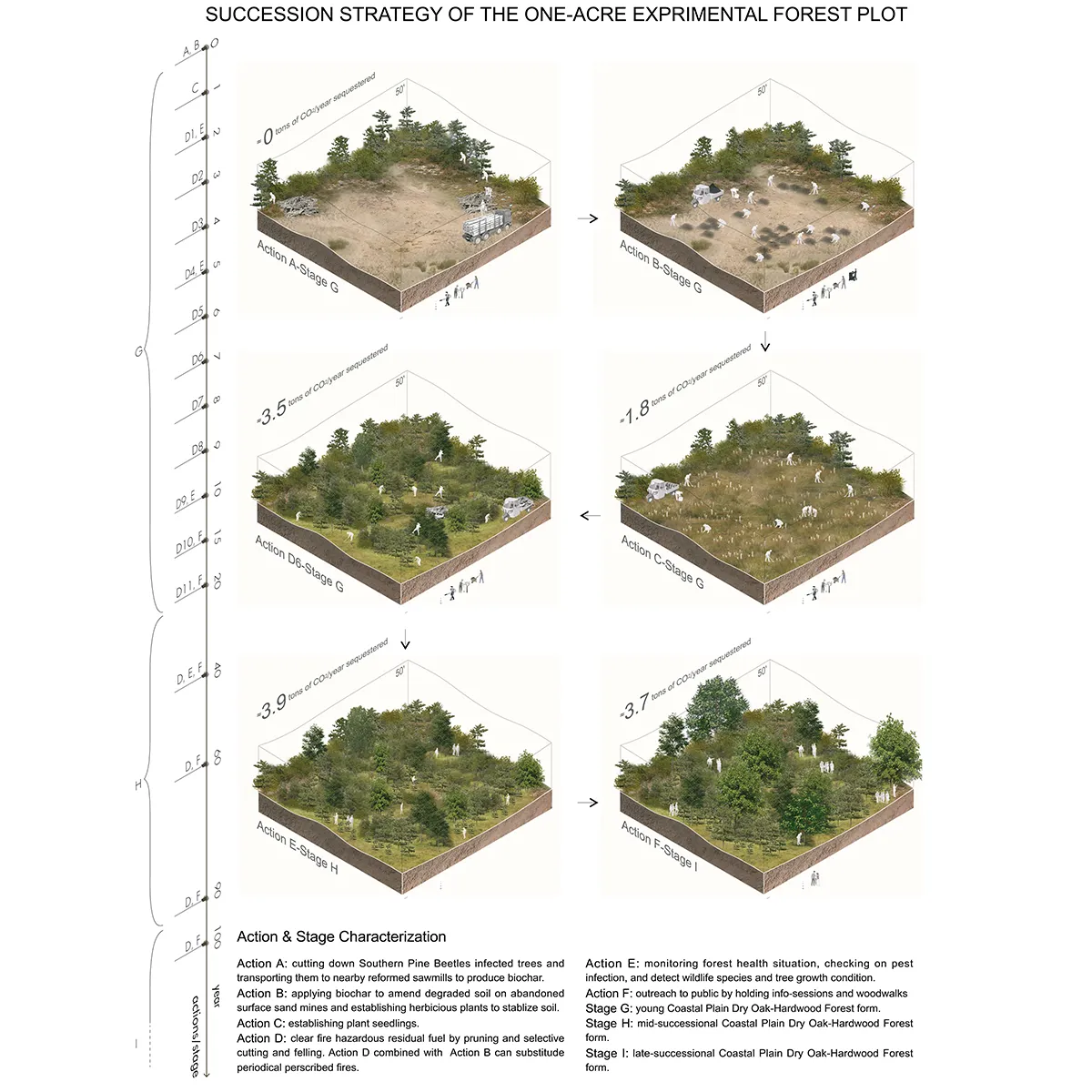
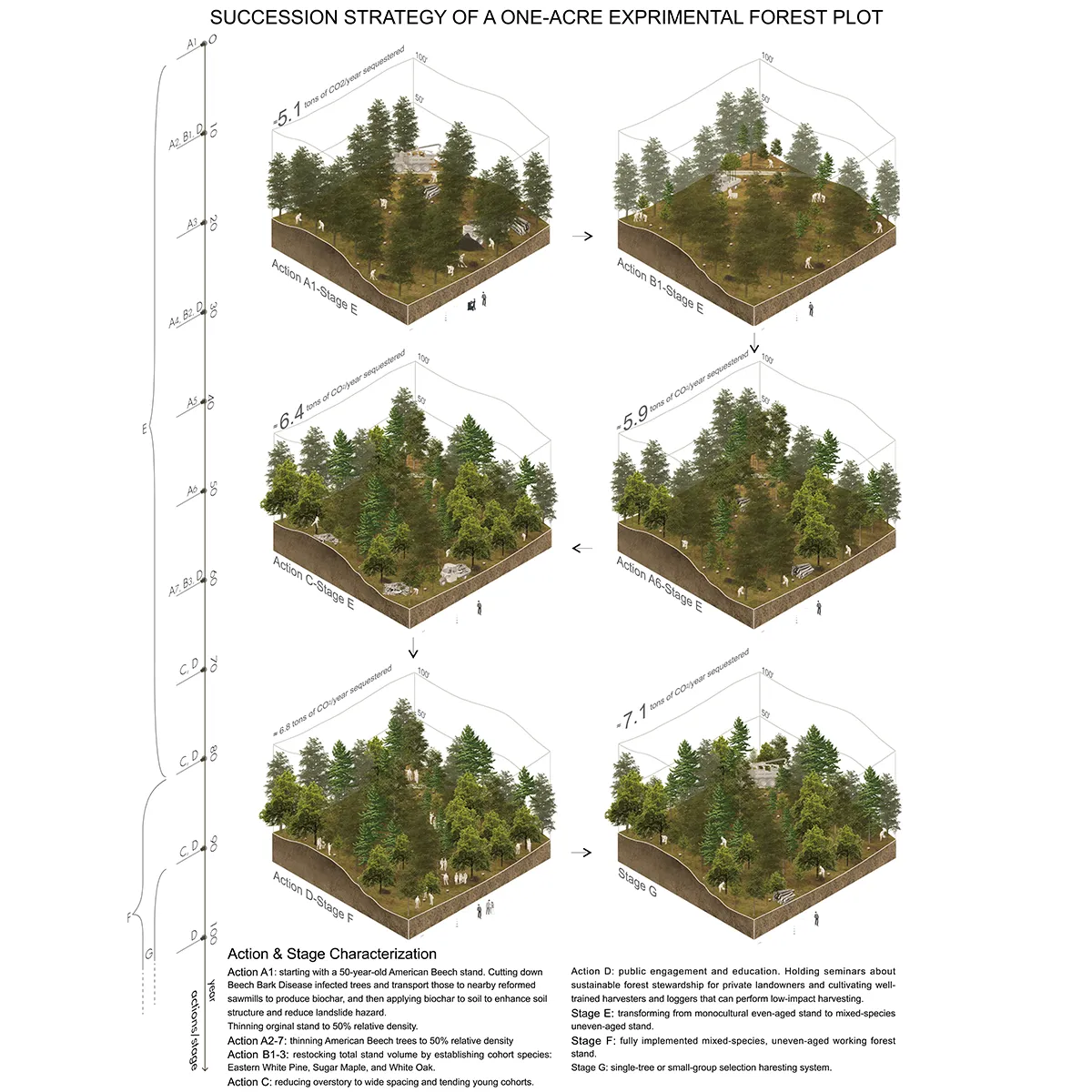
Biochar-Forestry Carbon Negative Cycle
Student: Fan Feng, Cornell University.
Supervisor: Jamie Vanucchi
Image Credits: Fan Feng