
AI Fungi and Residual Ground investigates how residual landscapes can be reimagined through fungal intelligence, environmental sensing, and AI-mediated ecological design. Developed as an honors thesis project, the work begins with a critical question: how can landscape architecture move beyond treating contaminated or abandoned ground as passive land awaiting human redevelopment, and instead recognize it as a living field of decay, metabolism, memory, and future repair?
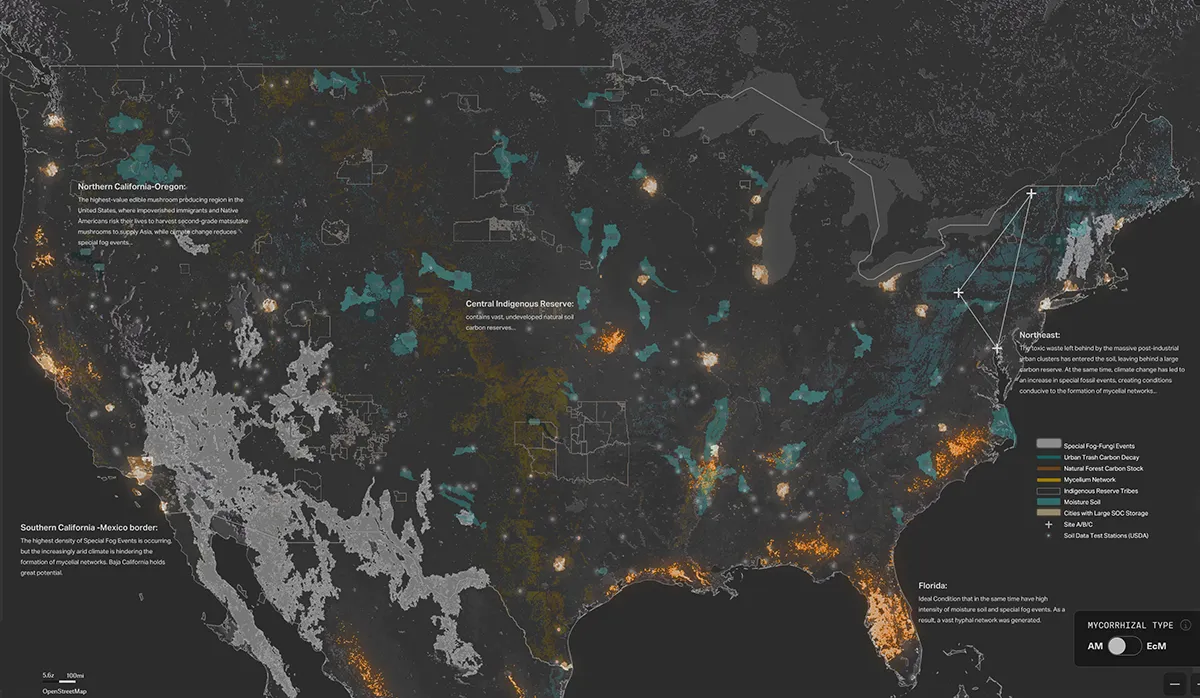
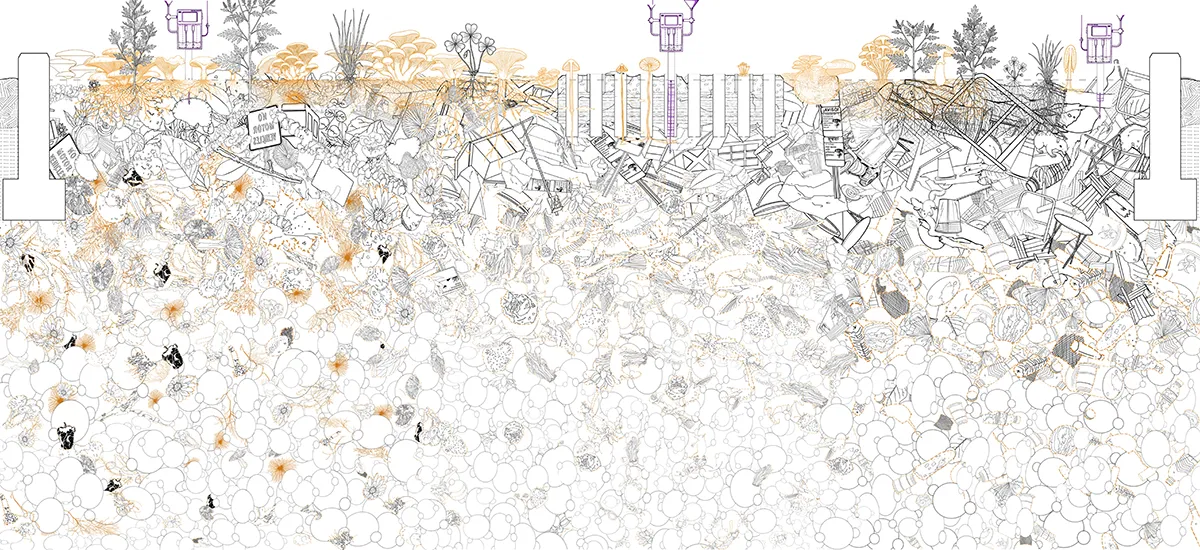
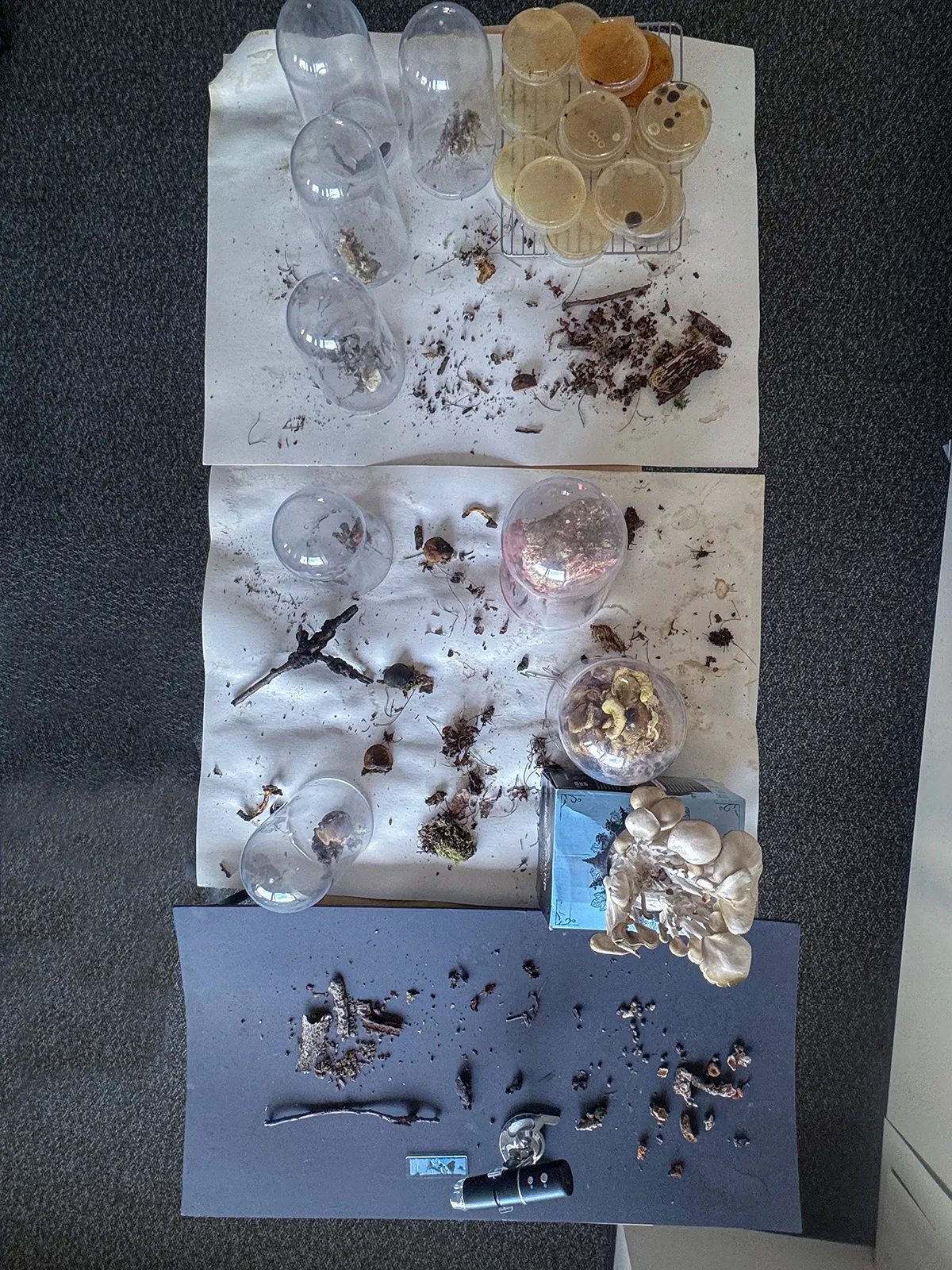
The project focuses on the relationship between fungi, fog, soil, and post-industrial residue. Rather than positioning AI as a tool for producing speculative images alone, the project uses AI as a translation interface between difficult-to-see ecological processes and spatial design thinking. Fungal metabolism, mycelial networks, decomposition, moisture gradients, spore dispersal, and residual carbon cycles are interpreted as design signals. Through this process, AI becomes a mediator between scientific observation, environmental imagination, and landscape intervention.
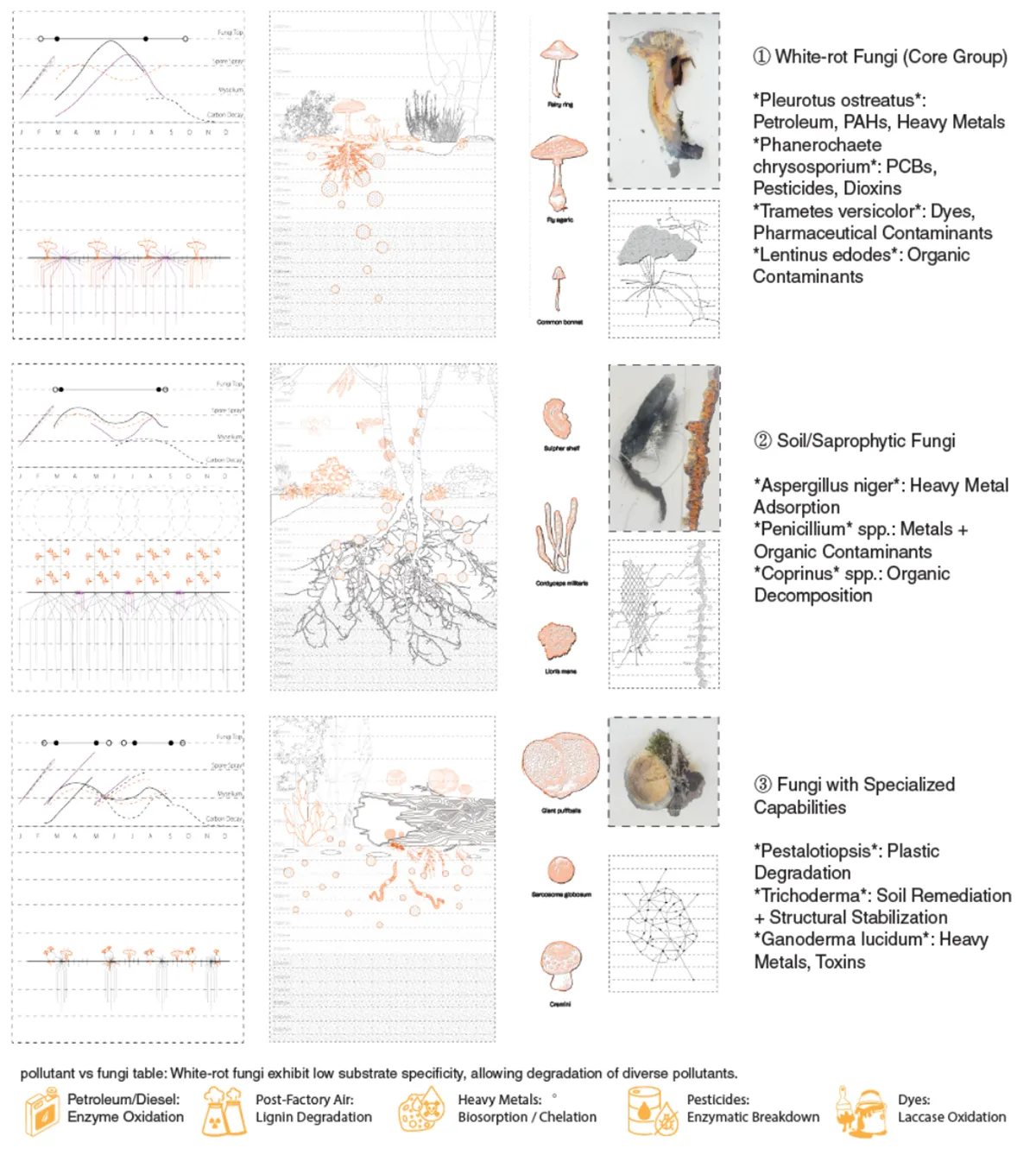
The project proposes a more-than-human design framework in which fungi are not simply represented as biological material, but treated as active agents within the landscape. Residual ground is understood not as waste or vacancy, but as a complex ecological archive where contamination, decay, settlement, and regeneration coexist. The design method combines field observation, ecological research, AI-generated translation, speculative visualization, and landscape system thinking to construct a new way of reading and designing disturbed environments.
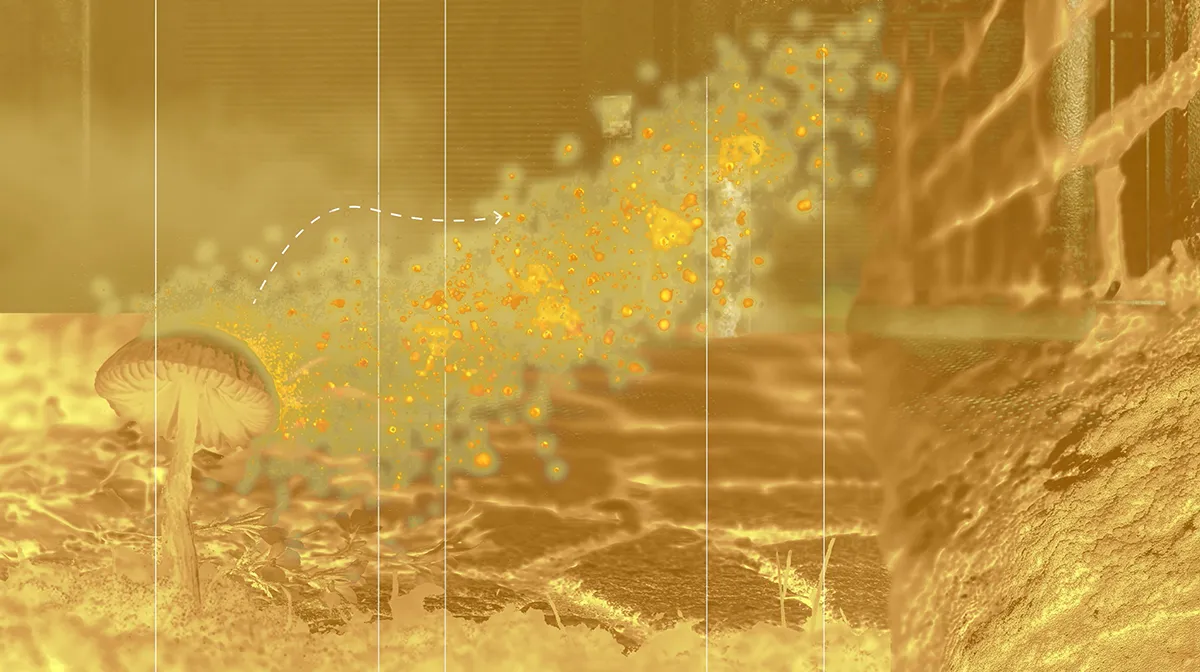
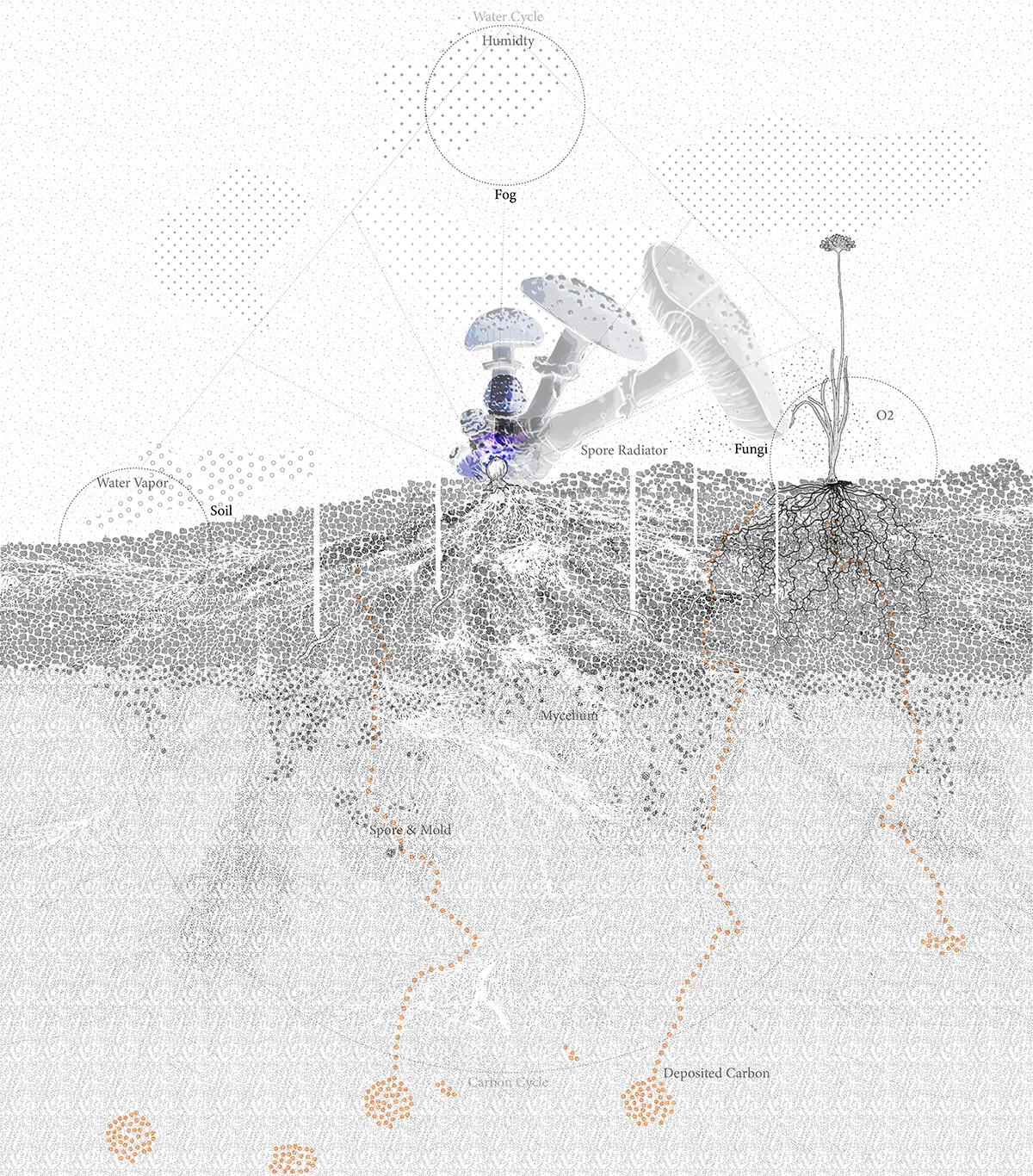
At its core, the project challenges conventional ideas of remediation. Instead of presenting cleanup as a purely technical or human-centered operation, it imagines remediation as a slower, distributed, and negotiated process shaped by fungal life, atmospheric conditions, soil transformation, and human stewardship. The resulting drawings and protocols visualize landscape as an interface: a place where biological processes, artificial intelligence, and residual urban ecologies can communicate.
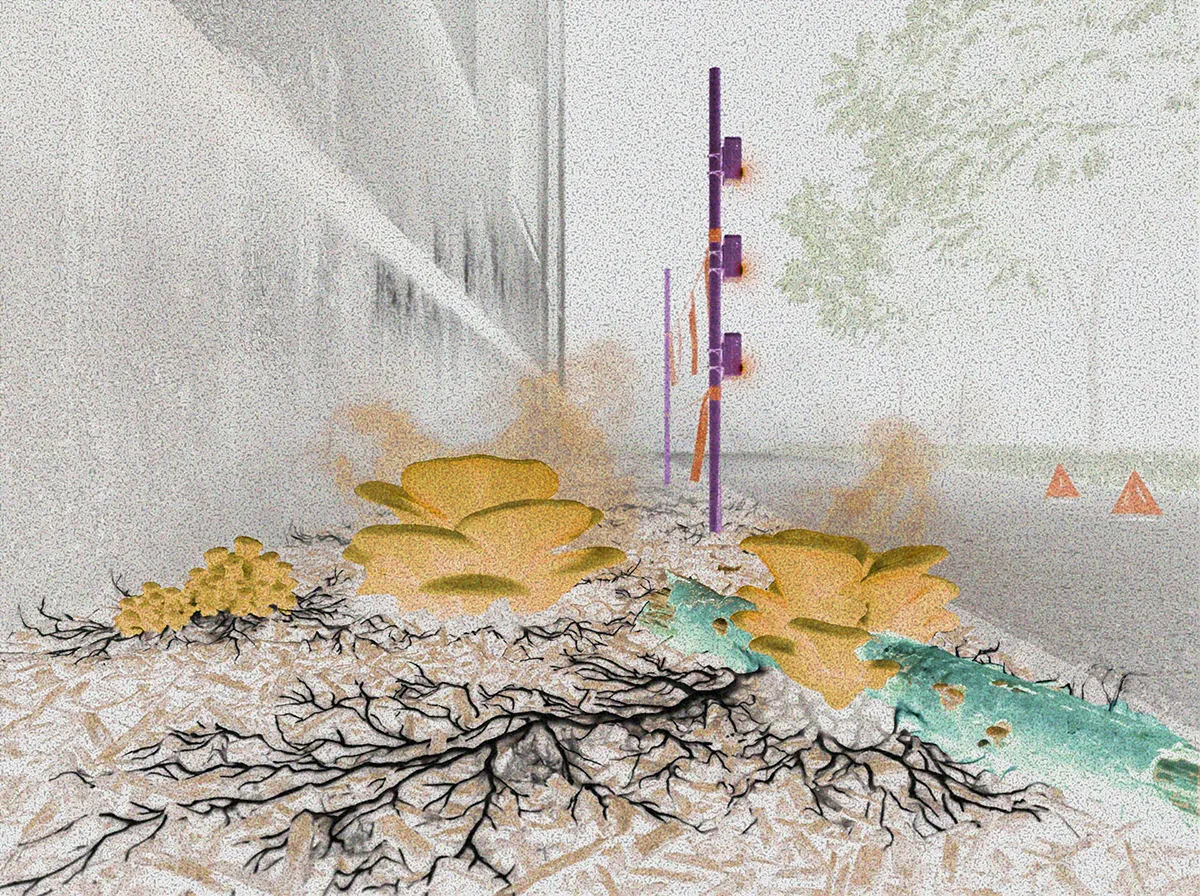
By bringing together landscape architecture, fungal ecology, environmental sensing, and AI, AI Fungi and Residual Ground argues for a future design practice that is less extractive, less anthropocentric, and more attentive to the hidden agencies already working within damaged sites. The project positions landscape not as a static surface to be planned, but as a living computational and metabolic system, one that requires designers to listen, translate, and collaborate with more-than-human processes.
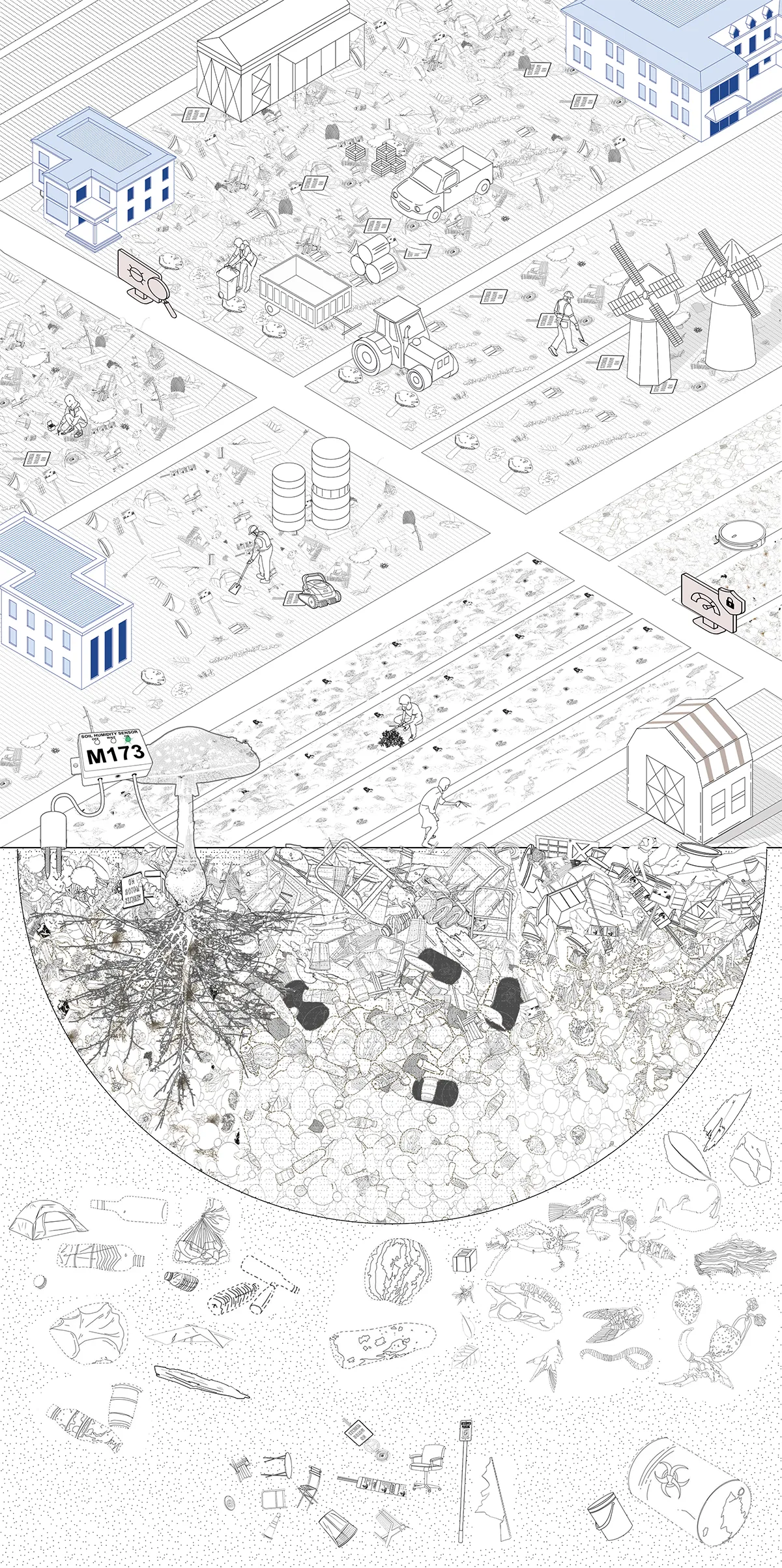
AI Fungi and Residual Ground
Student: David Hancong Ding – Cornell University
Supervisor: Duarte Santo – Cornell University
Be the first to comment