
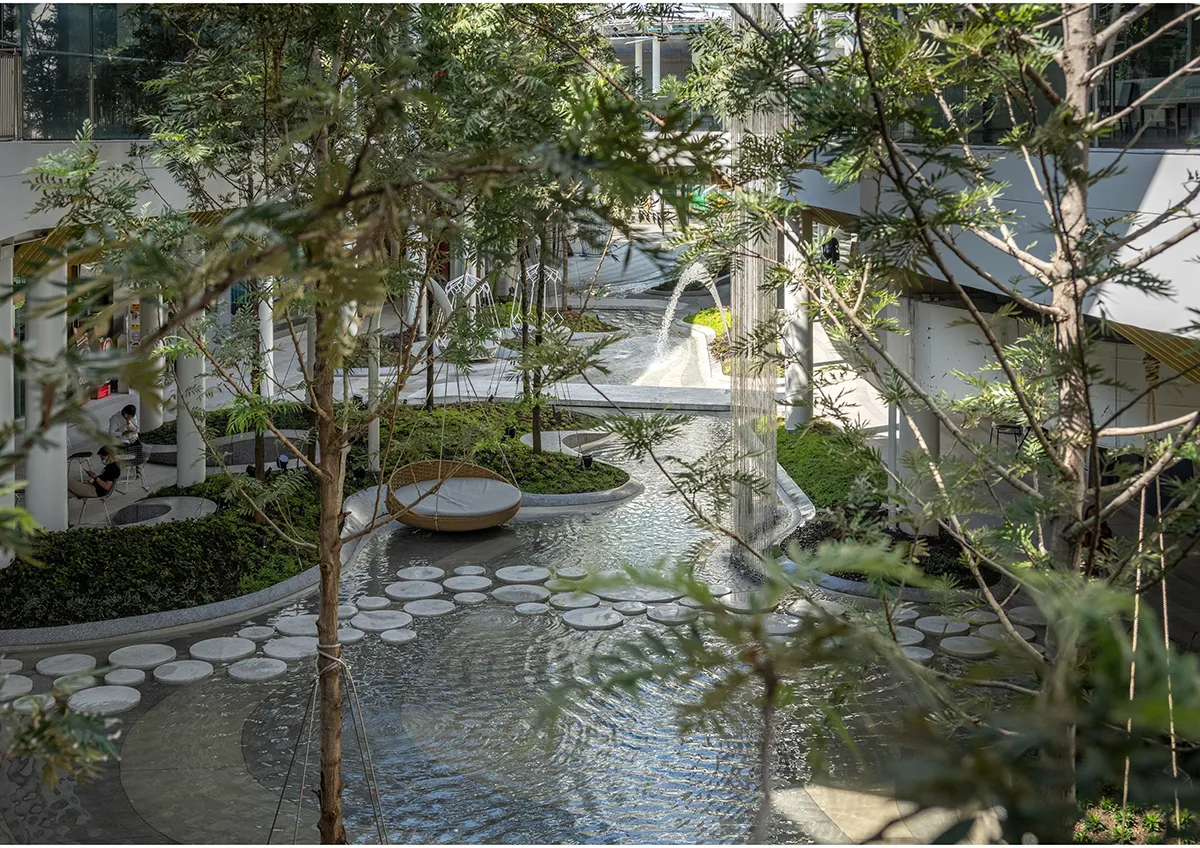
The revitalization of the outdoor promenade at Mega Bangna required a design approach deeply respectful of the site’s existing structural constraints. Through intensive, multidisciplinary brainstorming, the design team envisioned a dynamic new public realm tailored to contemporary lifestyles. By strategically integrating landscape elements to generate a localized microclimate, the overarching goal was to maximize the “Comfort Zone.” Through the diverse application of water features and a carefully curated planting palette, this former transit space has been transformed into a compelling, highly functional sanctuary for relaxation.
Site Analysis and Structural Constraints
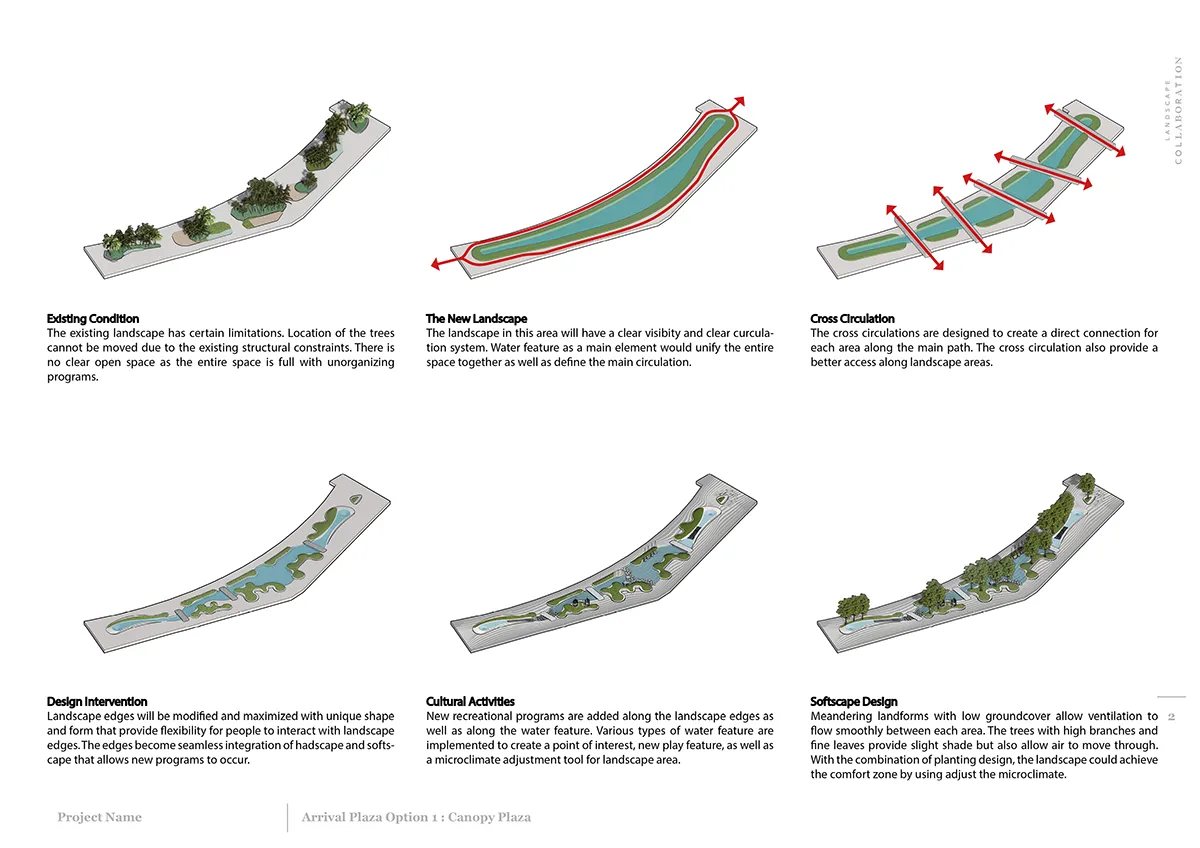
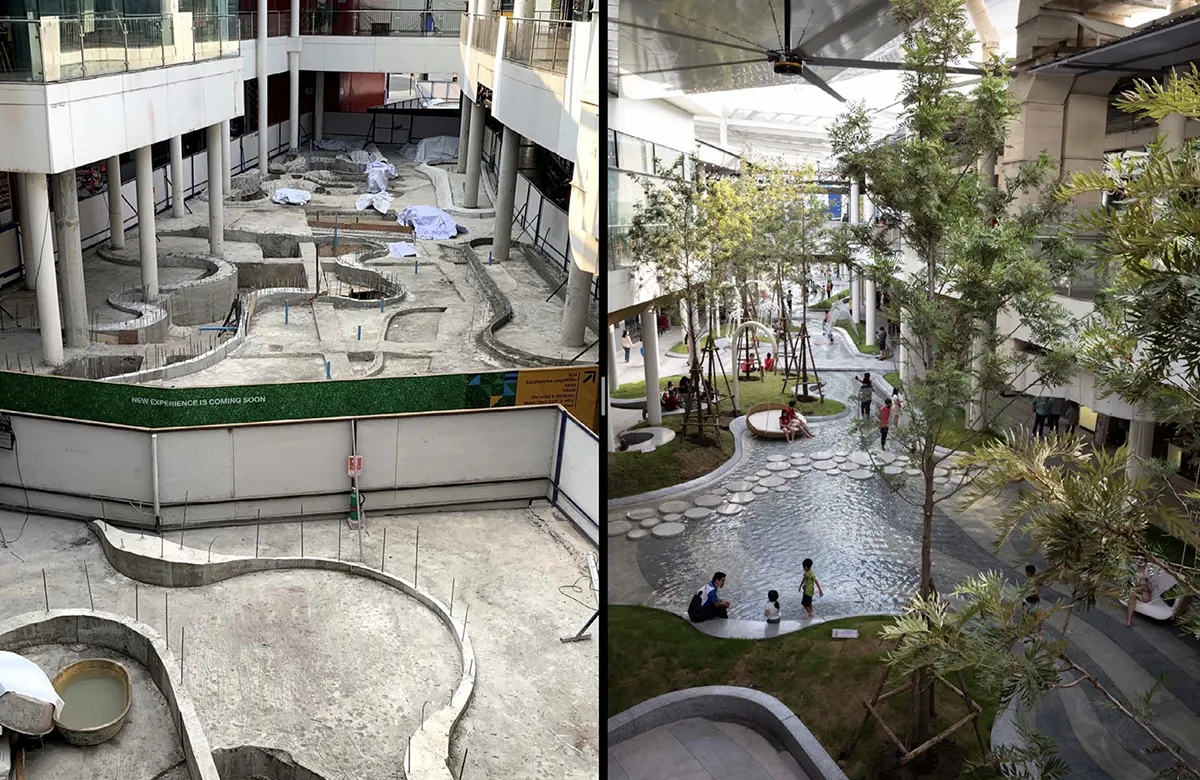
The redesign began with a critical evaluation of the site’s previous iteration. The original landscape suffered from ambiguous circulation paths and overly dense vegetation, resulting in a heated atmosphere that ultimately deterred foot traffic. A major structural reality dictated the new vision: the entire promenade sits atop an existing parking structure. This imposed strict weight limitations, meaning that the placement of large, mature trees was restricted to existing structural load-bearing points. The design challenge was to solve these complex site constraints while crafting a fresh, engaging user experience.
The Aquatic Narrative
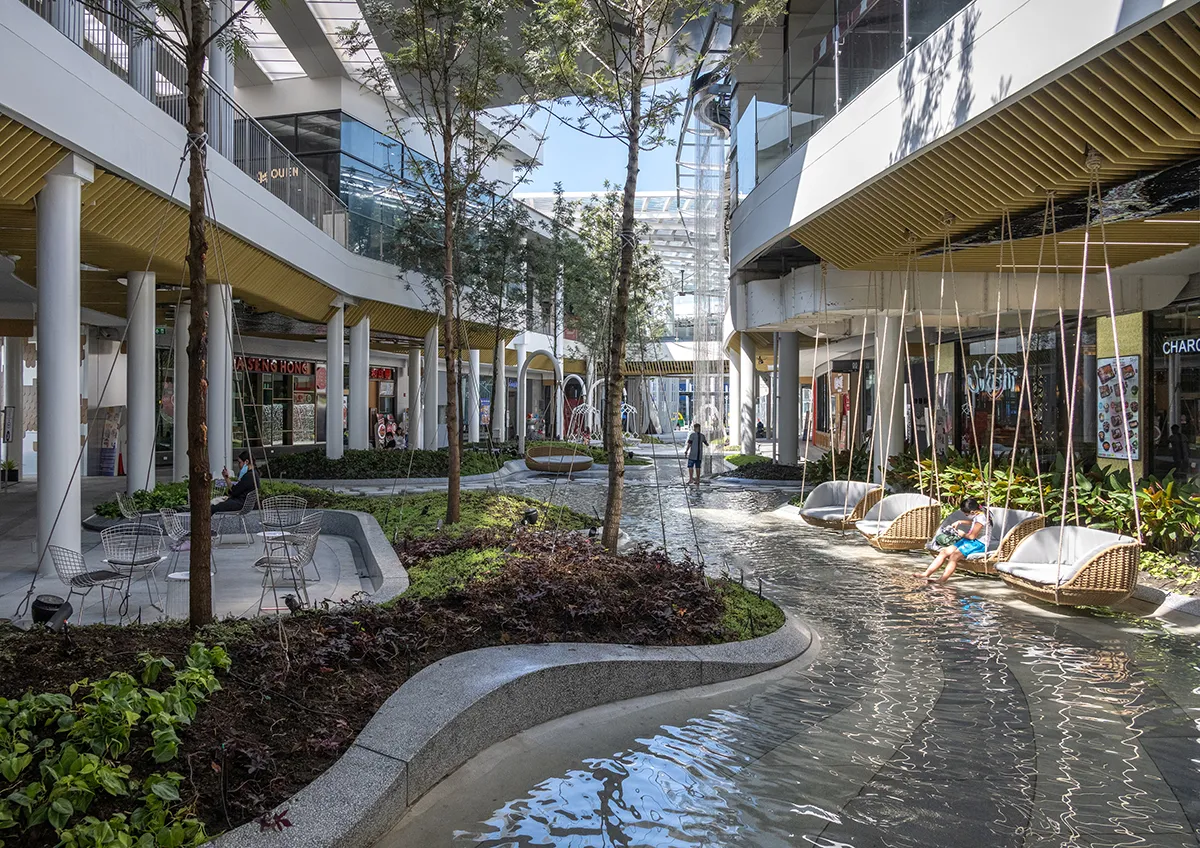
Overcoming Engineering Hurdles Water emerged as the primary connective element—a medium to bridge recreational activities with tranquil lounging zones. However, executing this vision posed a significant technical challenge. To respect the structural load limits, a Shallow Pool (10–17 cm depth) design was adopted. A serendipitous benefit of this shallow depth is that it visually conveys the dynamic movement of a flowing stream much more effectively than deep water. The true hurdle, however, was engineering a continuous flow of water across a 100-meter stretch with a mere 1% topographic gradient.
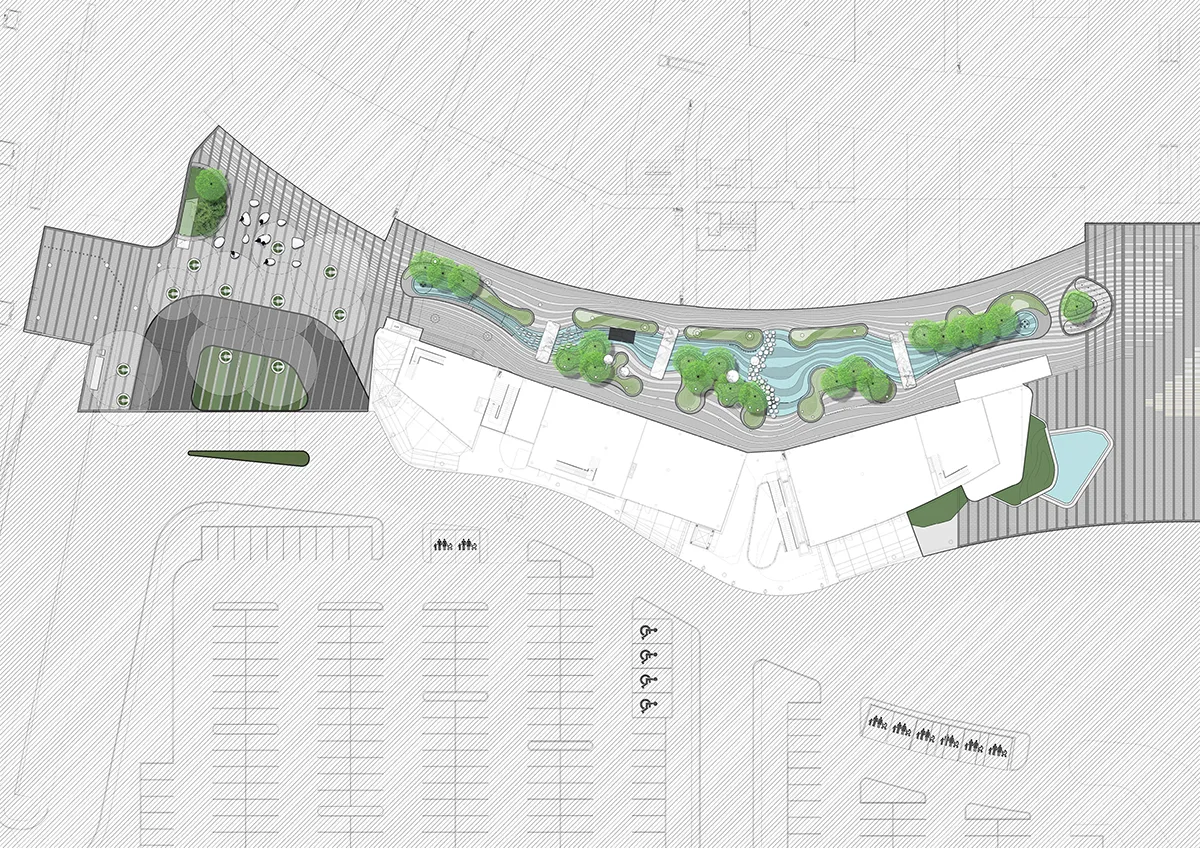
Through rigorous collaborative brainstorming between structural engineers, aquatic systems experts, and the client, an elegant solution was achieved:
Segmented Flow: The 100-meter stream was divided into three distinct sections to shorten the water’s travel distance.
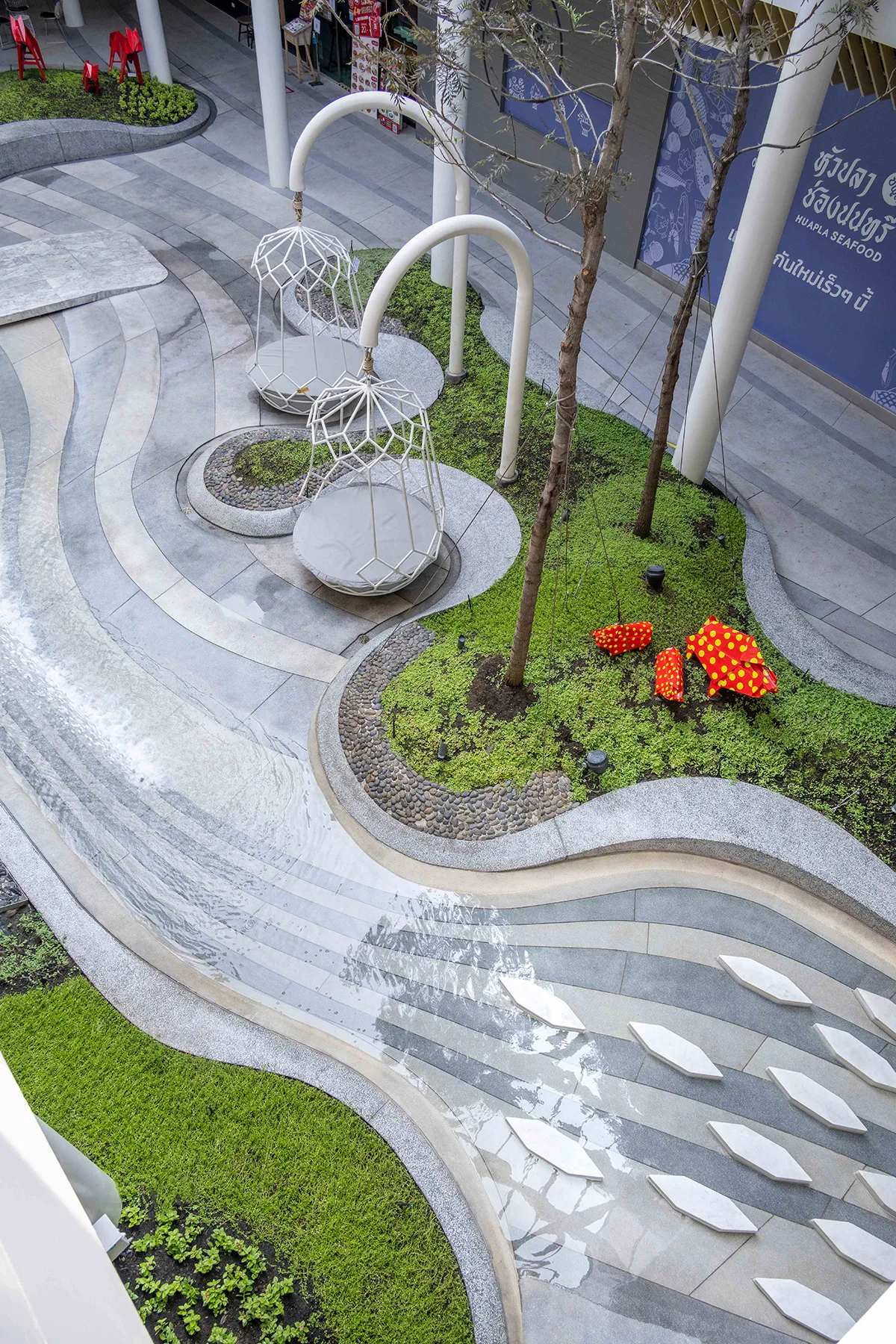
Concealed Infrastructure: Surge tanks were ingeniously hidden beneath pedestrian bridges, integrating seamlessly into the landscape.
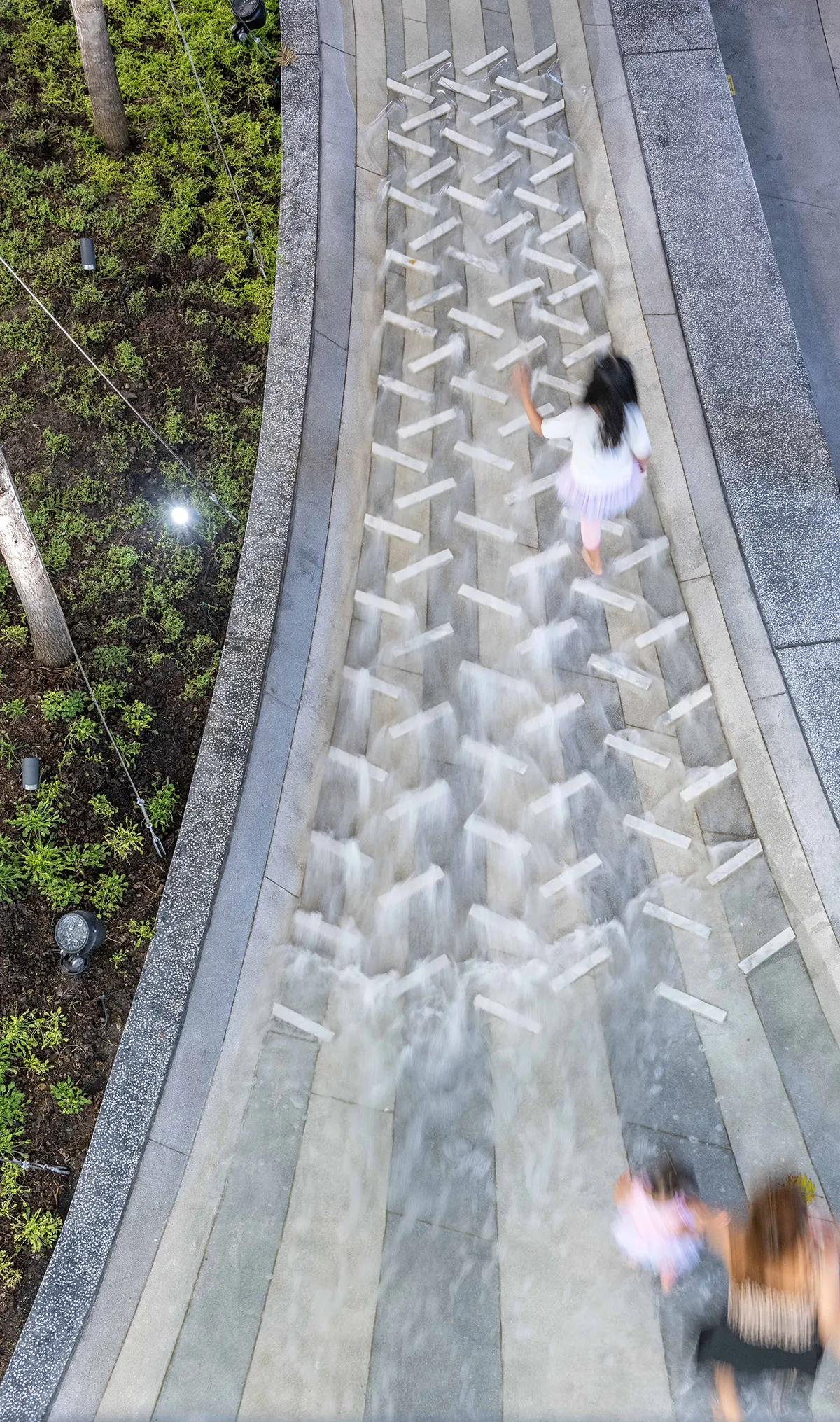
Gravity-Fed Cascades: Upwelling jets subtly raise the water level at specific points, allowing it to overflow and cascade naturally via gravity.
Experiential Zoning
This continuous aquatic ribbon dictates the spatial programming of the promenade, blending varying atmospheres through different water formats:
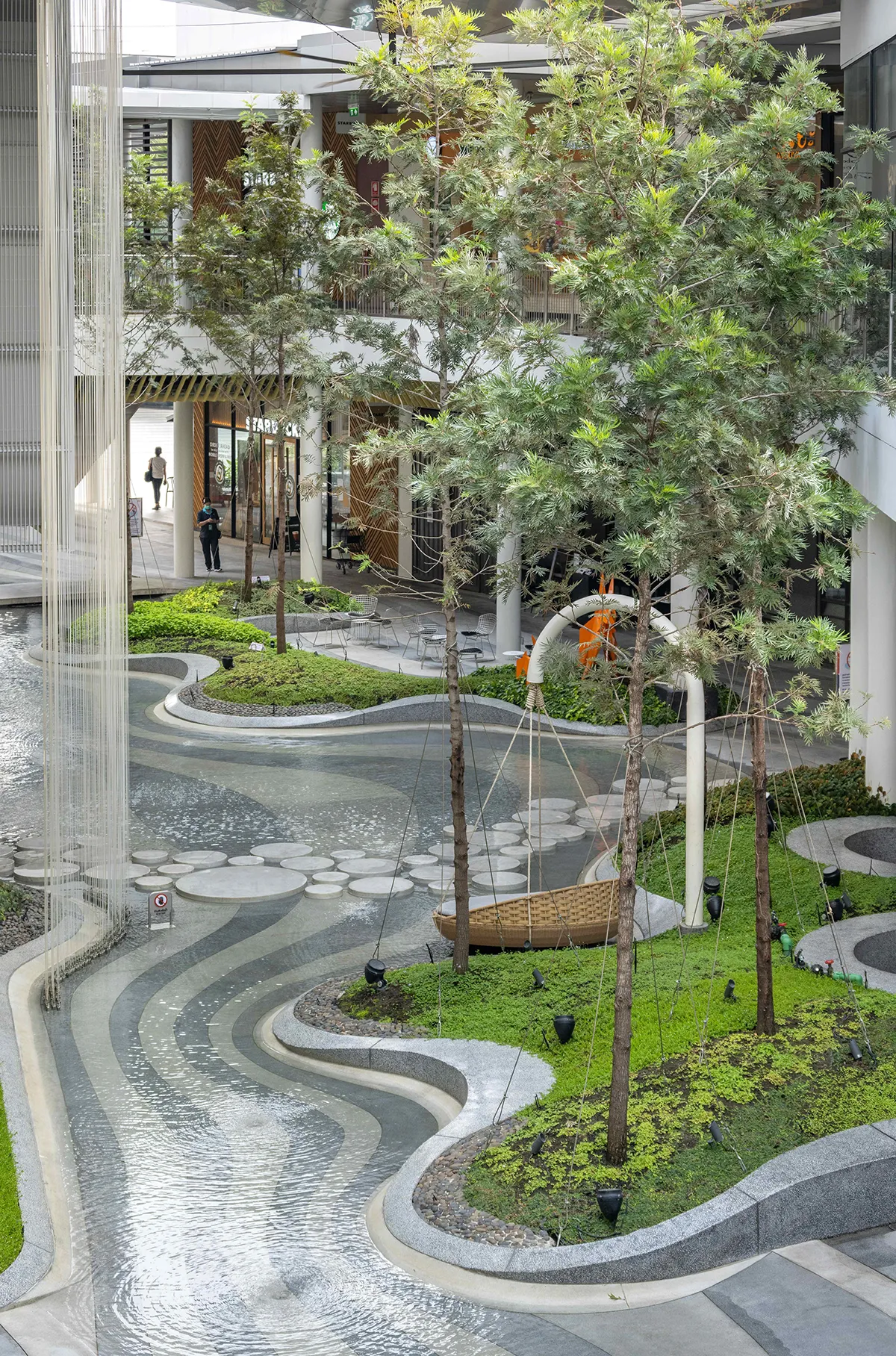
Active Zones: Interactive elements, such as parabolic fountains and stepping stones, inject a sense of playfulness and energy.
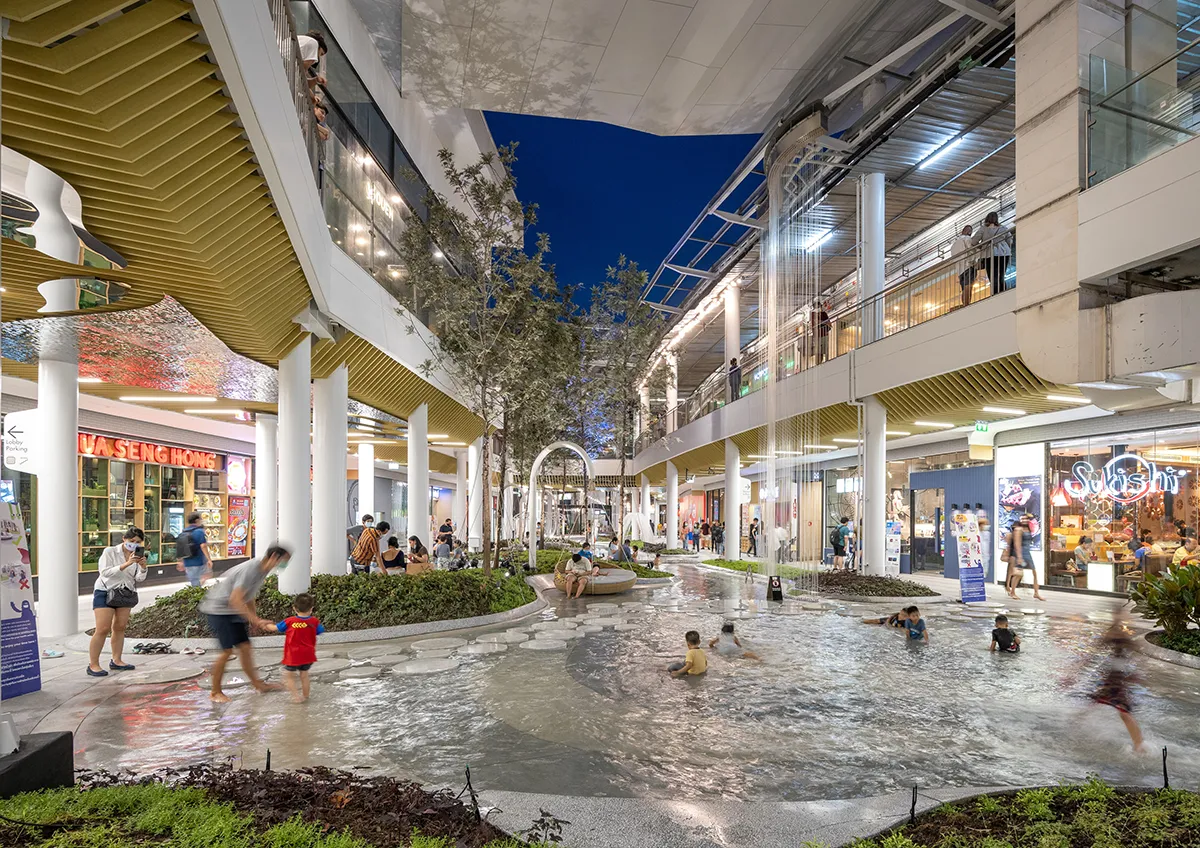
Passive Zones: As the stream meanders, the water’s pace slows, transitioning into tranquil areas where suspended sofa swings hover just above the water’s surface, inviting visitors to sit and absorb the atmosphere.
Cultivating a Microclimate
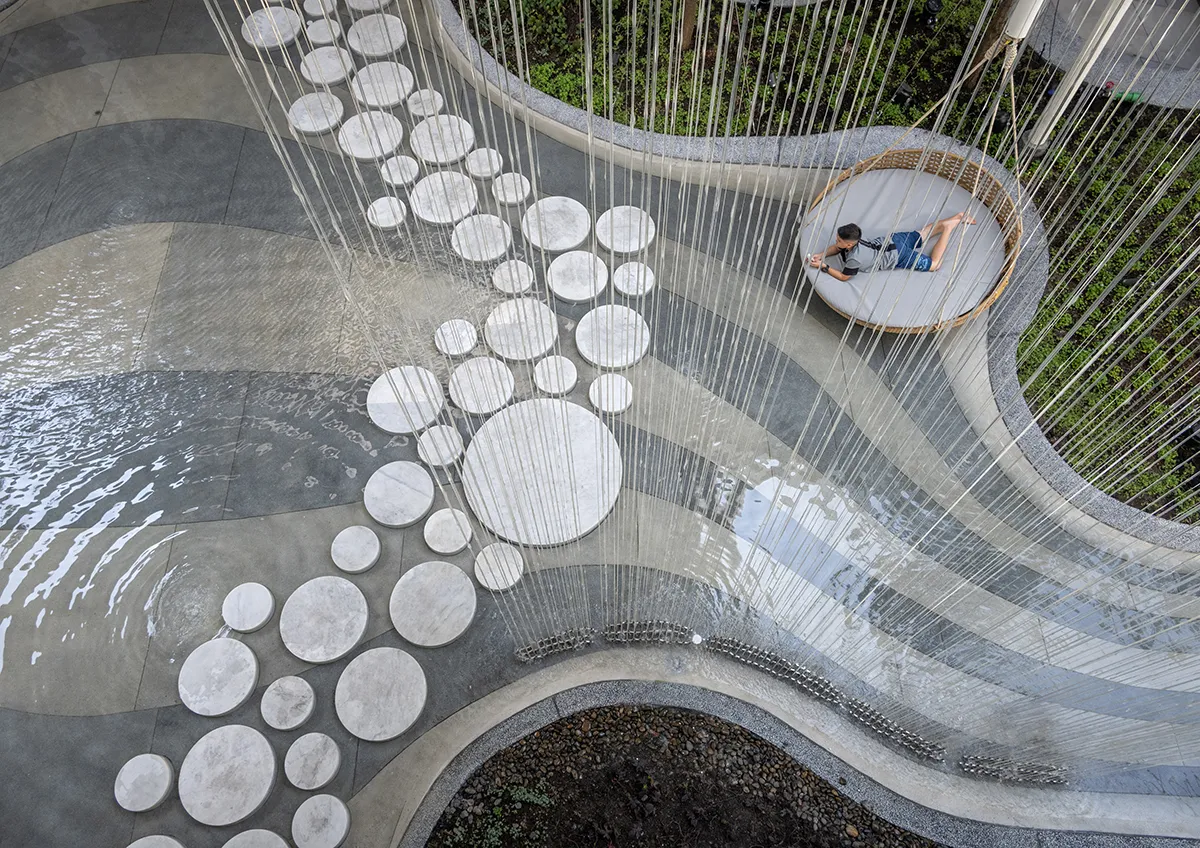
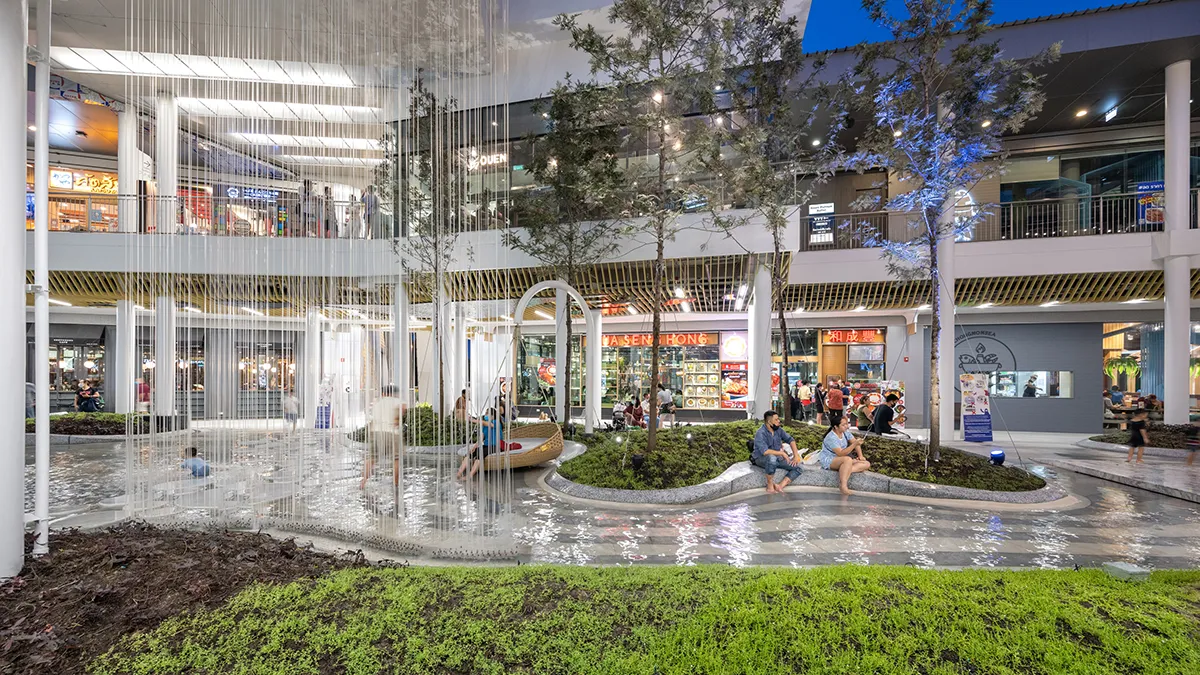
Establishing a true “Comfort Zone” was paramount, especially given the site’s narrow footprint and limited natural sunlight. Vertical Water Curtains were introduced to visually connect the ground floor with the upper architectural levels. Beyond their aesthetic appeal, the mist generated by these falls creates an evaporative cooling effect, significantly mitigating the tropical heat in the lower areas.
Topography and Planting
Strategy The planting palette plays a crucial role in enhancing this comfortable microclimate:
Airy Canopies: Silk Oak trees were specifically chosen for their light, open canopies. They provide gentle, dappled shade that softens the adjacent building’s heavy architectural mass without enclosing the space or making it feel cramped.
Sculptural Mounds: Below the canopy, undulating planter mounds were meticulously calculated to specific heights. They offer a sense of privacy within the public realm while permitting natural breezes to flow freely.
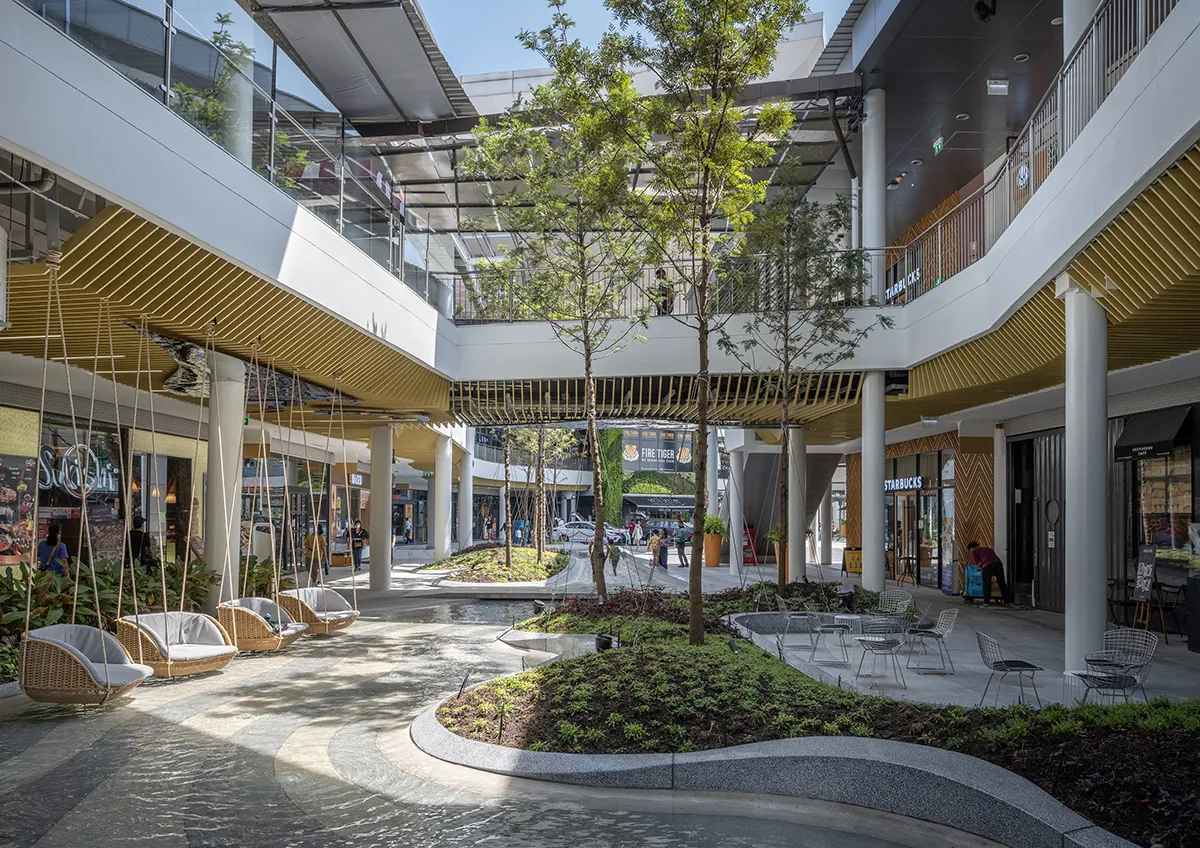
Groundcover Focus: The planting strategy on these mounds—a close collaboration between landscape architects, nurserymen, and the client—relies exclusively on low-growing groundcovers. This deliberate choice highlights the topography’s fluid, curved forms and aids in soil moisture retention. The monochromatic green is punctuated by vibrant flowers and diverse leaf textures, adding delicate, close-up details that invite pedestrians to reconnect with nature.
Stream Valley
Landscape Architect: Landscape Collaboration
Principal Landscape architect: Somkiet Chokvijitkul
Landscape architects: Pavin Banternghansa, Priyanuch Sreechan, Napat Wiwatthanawararom, Suravit Phetchabun Landscape Technician: Hattapon Ninpech, Weerachat Mangiew,
Architect: FOS
Interior Designer: PIA interior
Lighting Designer: FOS
Photography: Rungkit Charoenwat