
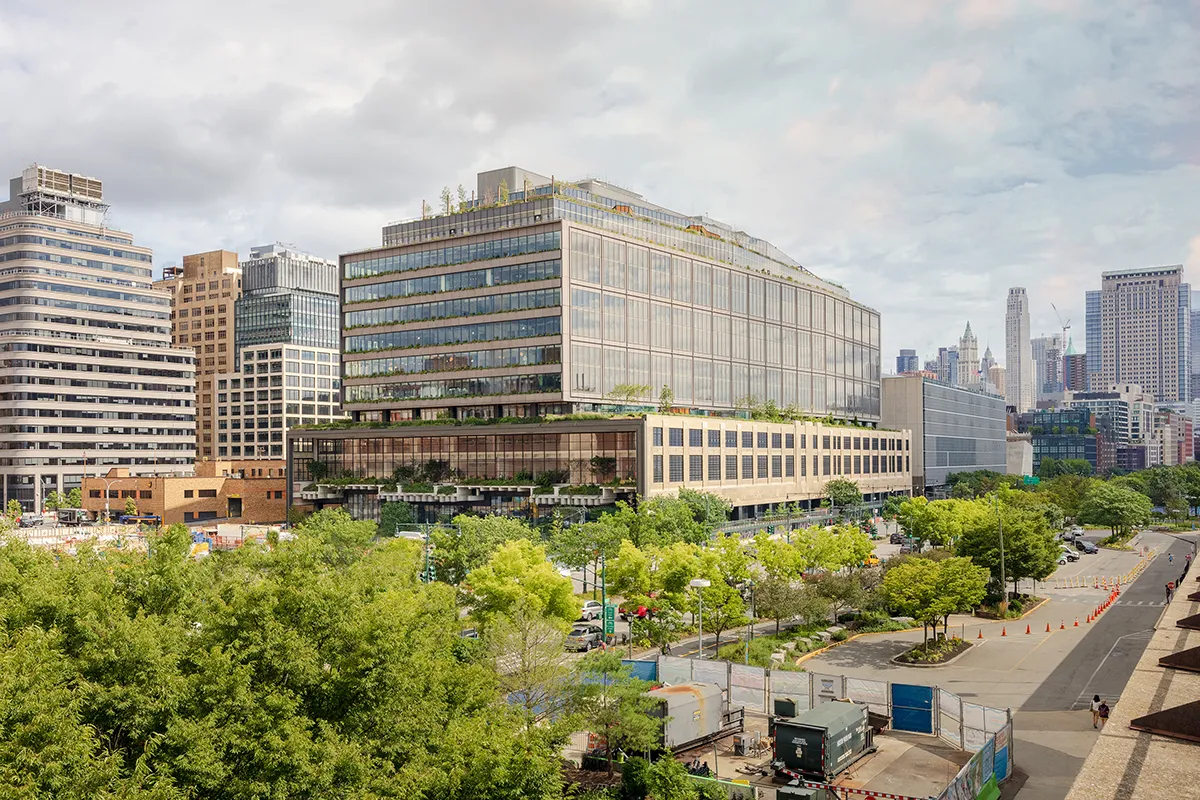
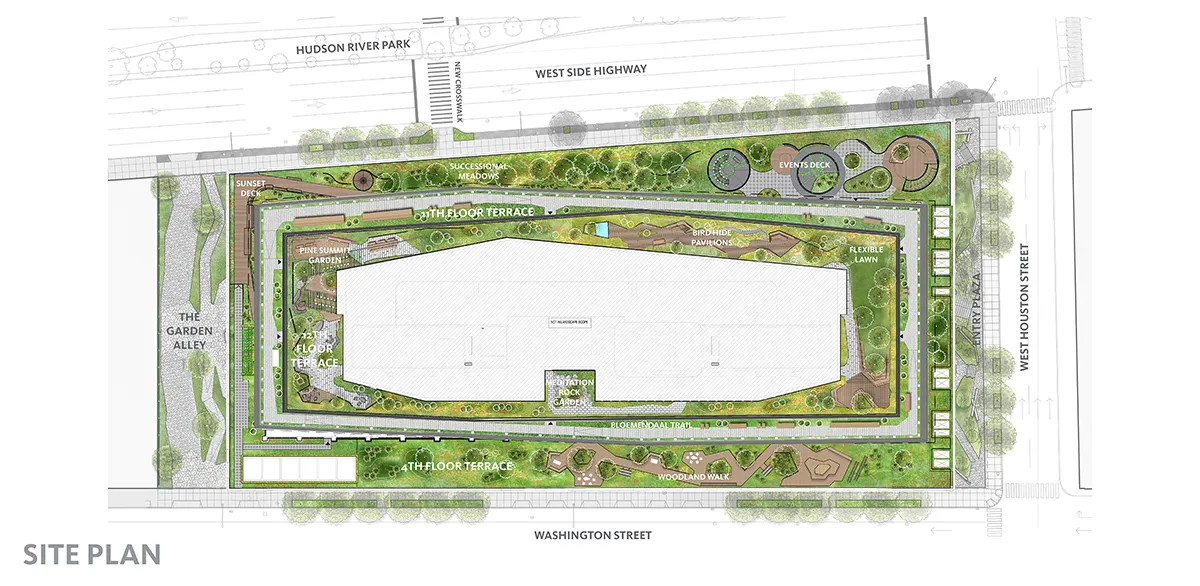
St. John’s Terminal is located in Manhattan, New York was adapted into a center for tech and innovation as the North American headquarters for Google’s Global Business Organization. The former terminus of the raised railway that has been repurposed as The High Line linear park has been skillfully engineered to support extensive landscaped terraces, with roughly 1.5 acres planted with New York native habitat. The new gateway to Hudson River Park incorporates urban design improvements including a new mid-block crosswalk connecting to the park, and a verdant street connection between Washington Street and the West Side Highway.
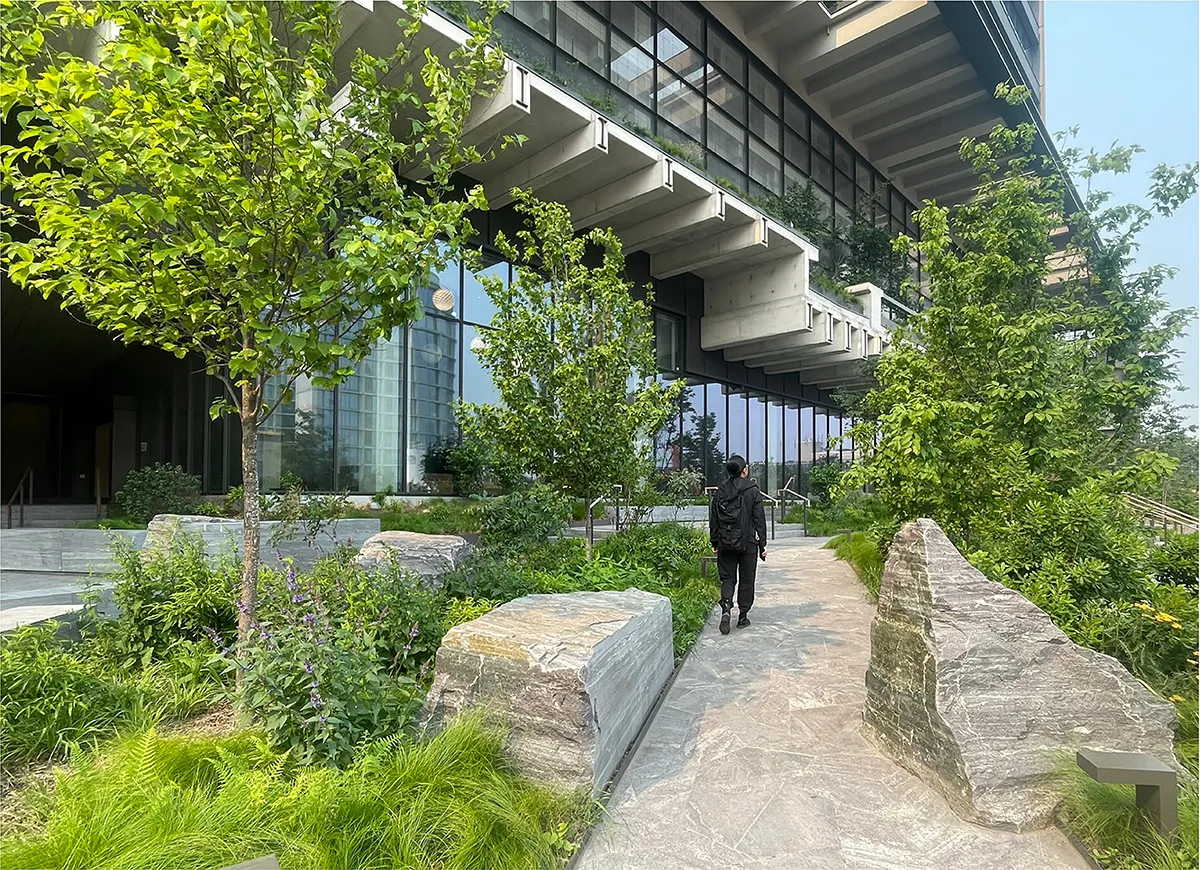
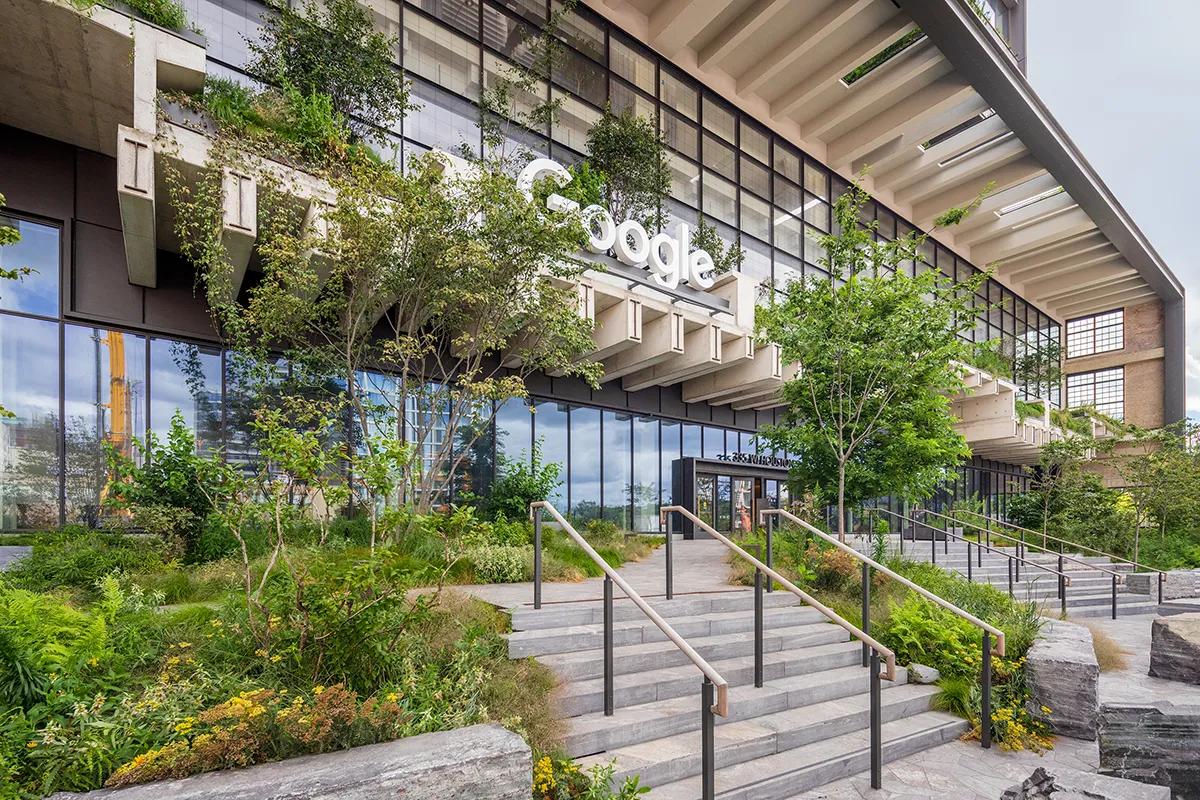
Open to the public, the entry plaza provides an immersive garden experience through lush, resilient understory plantings and groves of native trees. The design draws from natural shoreline forms with planted berms and natural boulders complemented by geometric stone seats and paving sourced from upstate New York. At the exterior of the 2nd floor, the existing train tracks and platforms are planted with native trees, shrubs, and groundcover that appear to have spontaneously taken root there. Seven stories of window boxes on the north façade provide an ecological ladder for local birds and insects. NYC Bird Alliance has documented approximately 40 bird species using the habitat created at St. John’s Terminal—including several species never documented on a green roof.
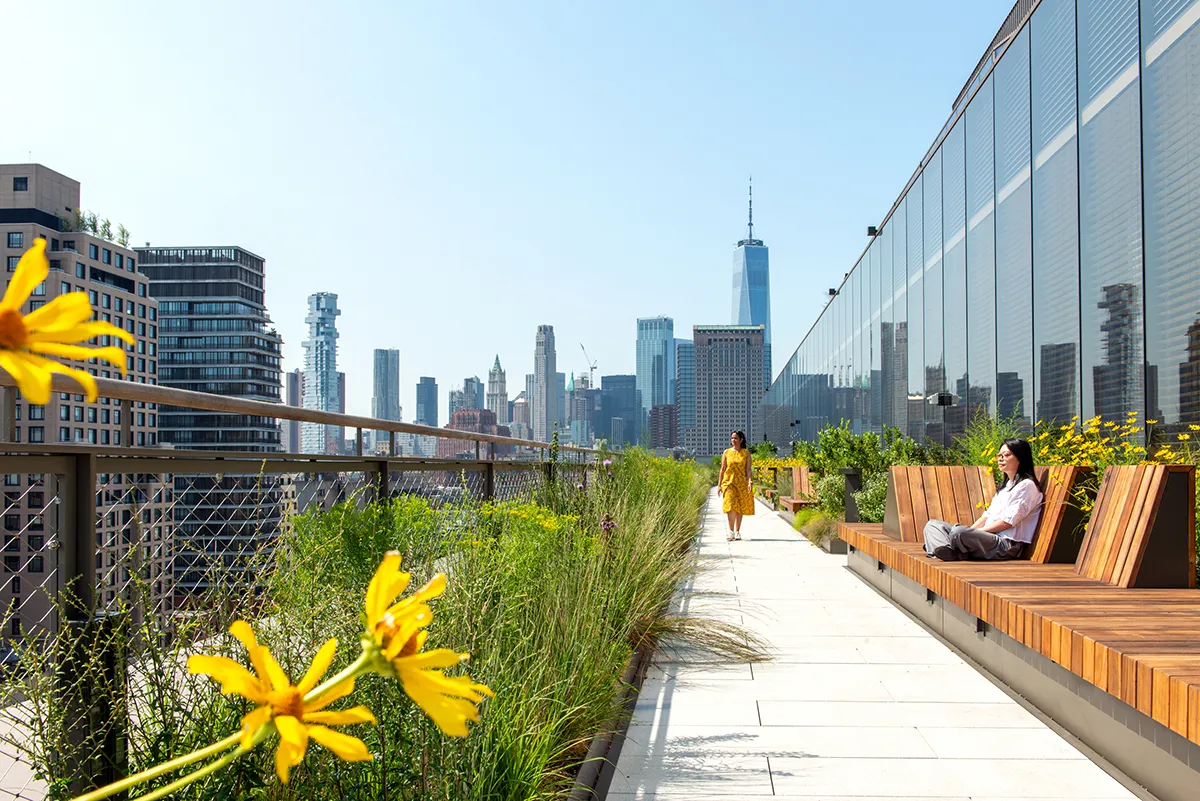
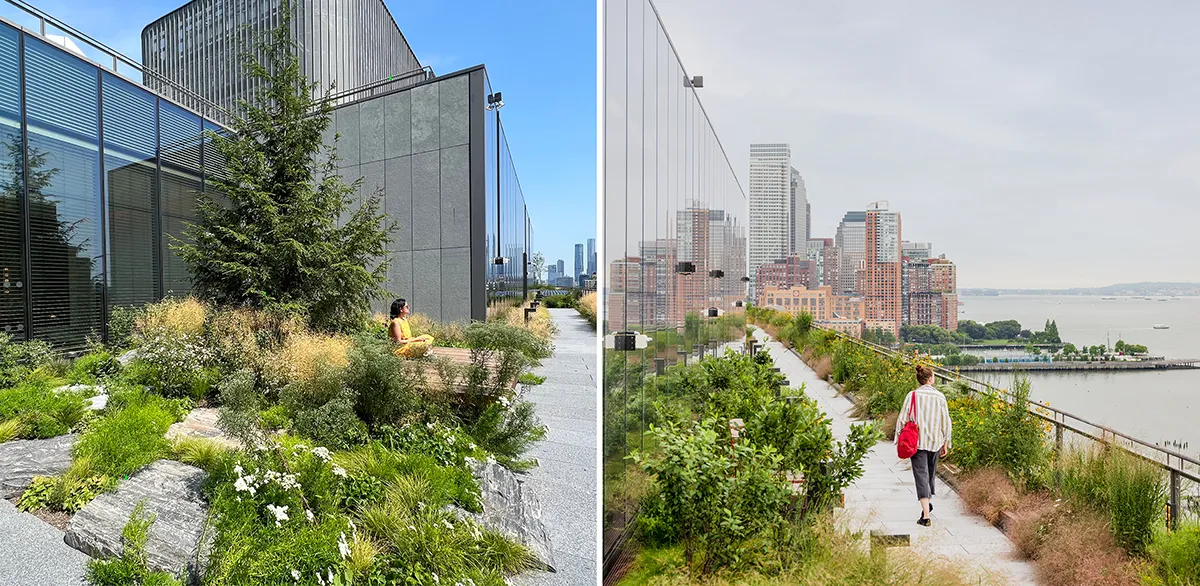
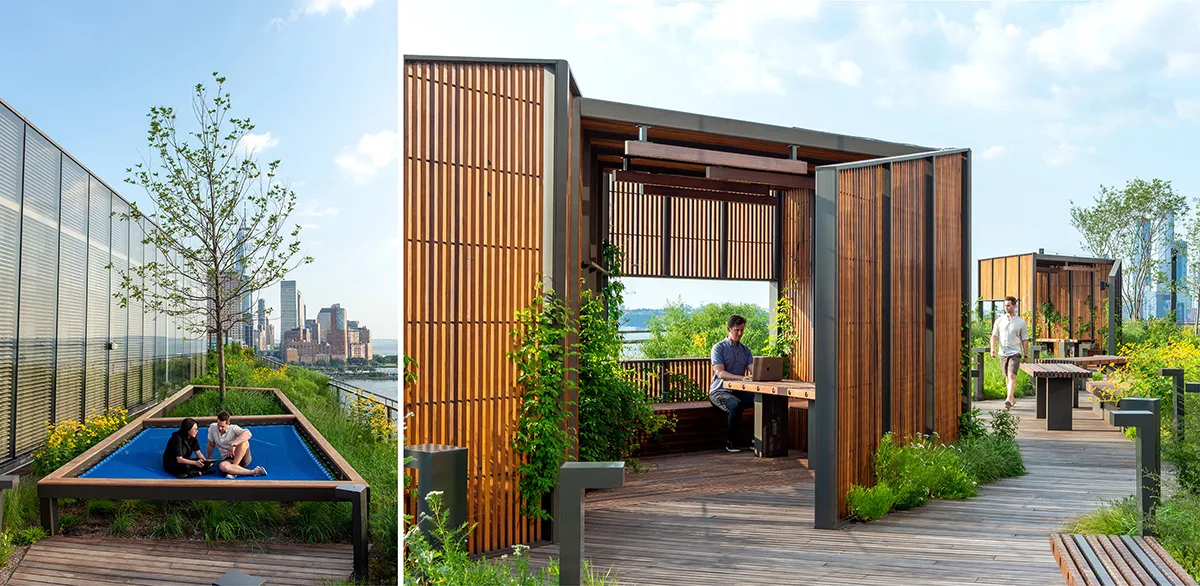
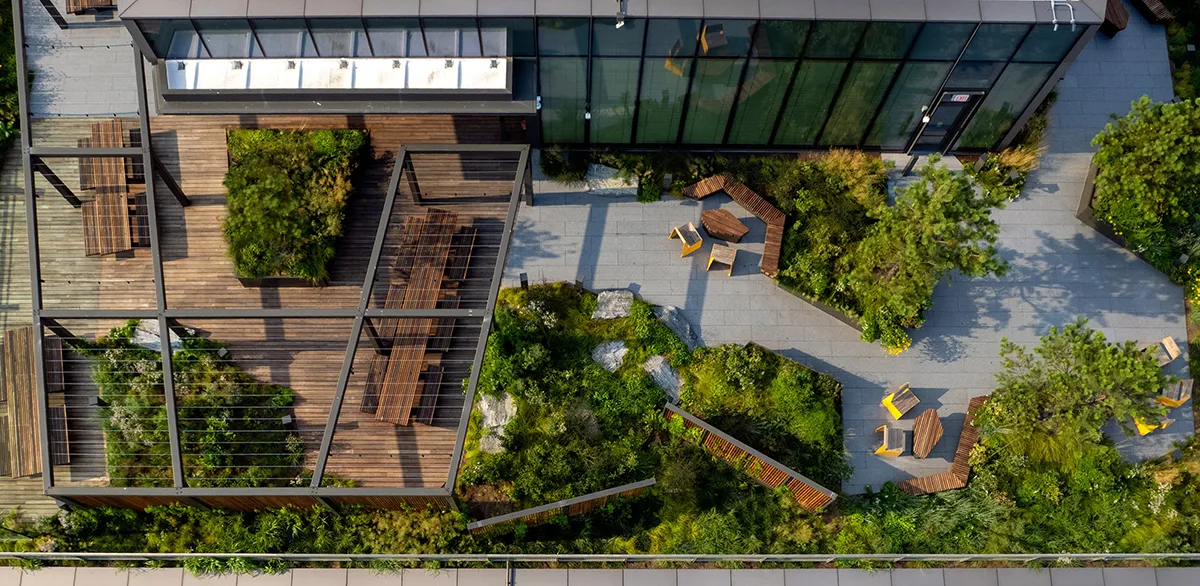
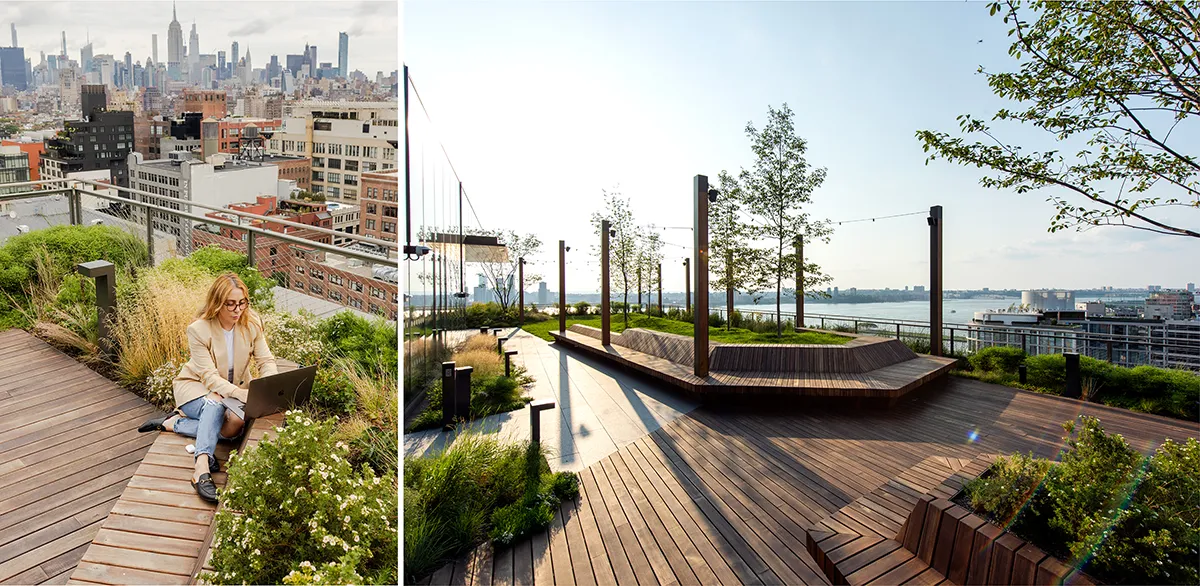
Collectively, the terraces provide a diverse range of work-space environments that inspire collaboration and imagination. The 4th-floor terrace, located on the roof of the existing building, takes cues from its industrial past through distinctive architectural elements, including wind-mitigation screens, pergolas, and seating nooks. The events terrace hosts visitors from the auditorium with a large flexible space, planted islands, fossilized limestone bar counters, and pergolas. The 11th floor terrace is a quarter mile-long, 360-degree walking path that offers a moment of respite, with exceptional views across the water and of the Manhattan skyline. The walking path is framed by plantings inspired by the Dutch term, Bloemendaal – or “Valley of Flowers” – used to characterize the qualities of pre-development Manhattan. The 12th-floor terrace brings employees back to nature with rocky outcroppings and emergent alpine plants at the meditation garden and intimate seating areas nestled in the Pine grove. A large lawn with rolling topography, and a bosque of oak trees supports flexible use for wellness programming, lunch time gathering, and happy hour events.
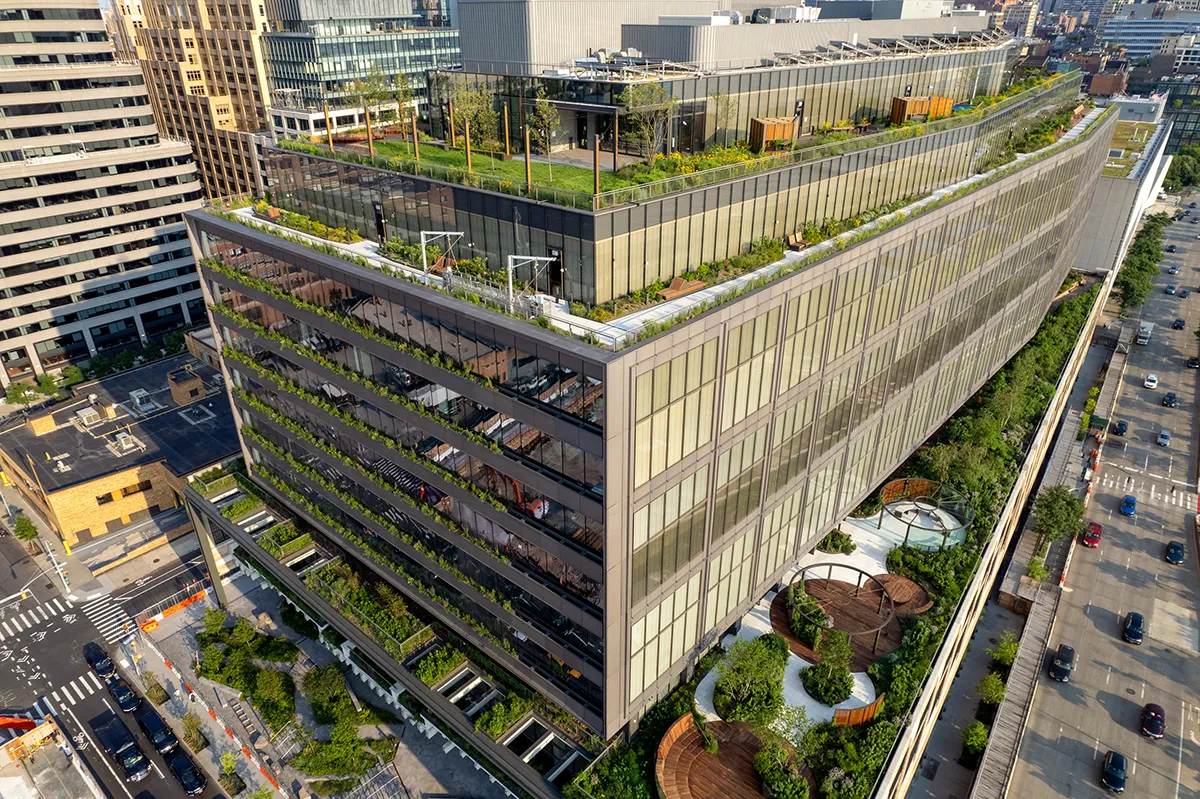
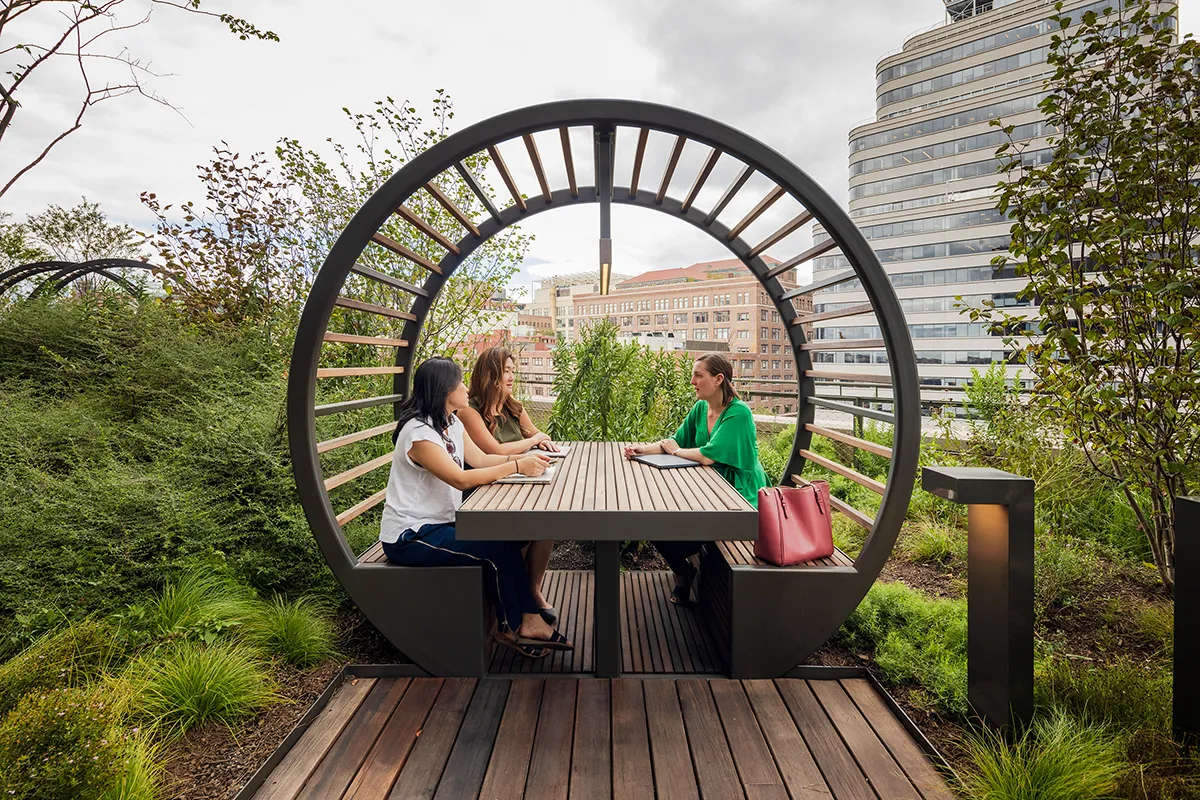
Sustainable strategies are woven through every element of the project; timber for the decking, furniture, and windscreens across the terraces is repurposed from the historic Coney Island boardwalk; 100 new trees have been planted on site; solar arrays at the terraces provide an expected generation capacity of approximately 100 kilowatts of renewable energy; and the site is designed to retain up to 92,000 gallons of rainwater.
St John’s Terminal
Location: Manhattan, New York, USA
Landscape Architect: Future Green Landscape Architecture DPC
Collaborators
COOKFOX Architects
Gensler
AAI Architects, P.C.
ENTUITIVE
Cosetini Associates
Lumen Architecture, PLLC
Client:
Google LLC
Oxford Properties Group