
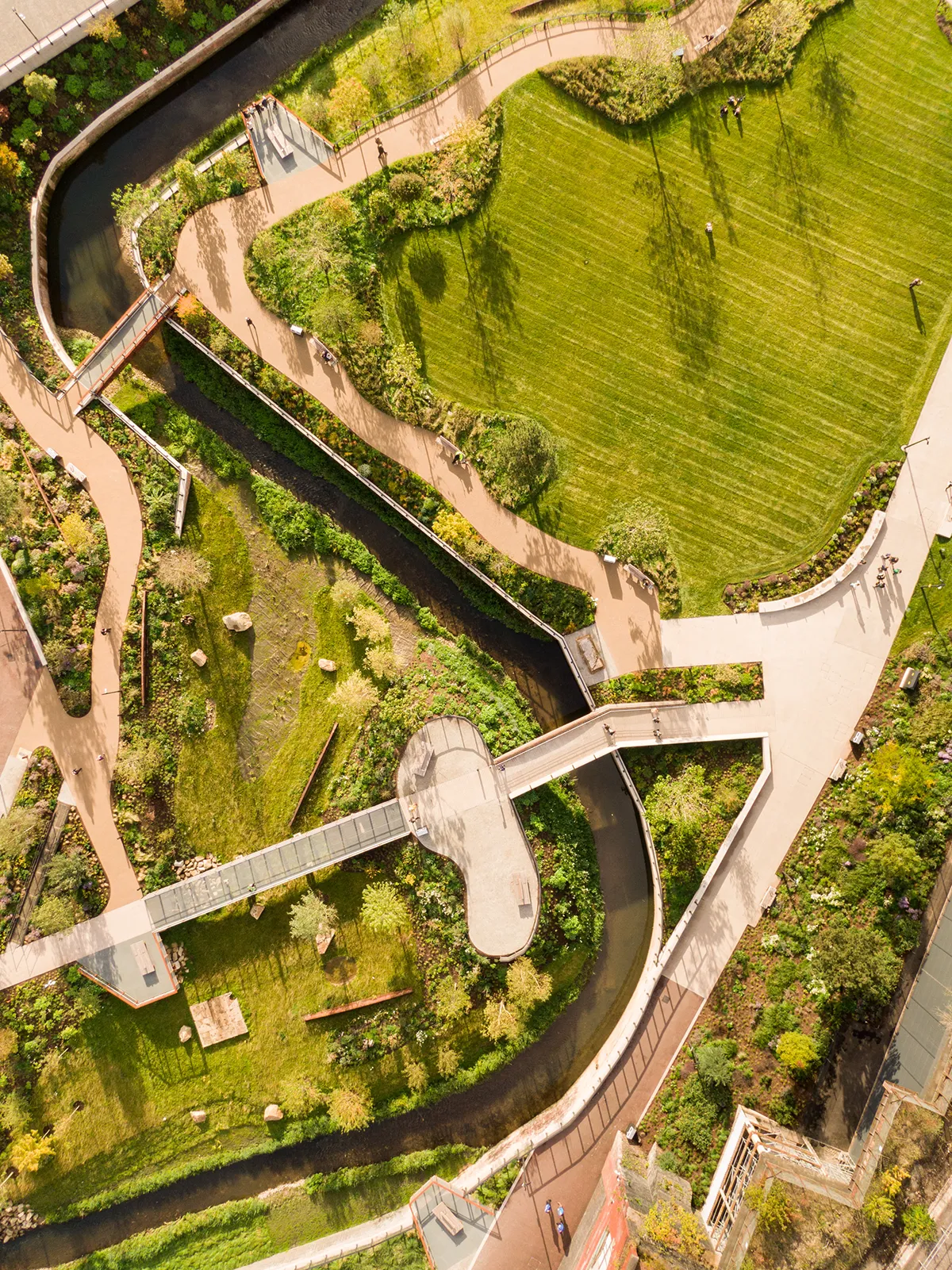
Mayfield, once an area of meadows on the edge of the town of Manchester, has undergone a series of dramatic transformations over the last 200 years. Prior to the 18th century, Mayfield was a collection of open fields along either side of the meandering River Medlock. But as Manchester’s Industrial Revolution took hold, the character of the region changed irreversibly and so did the ground conditions and most importantly the soil.
The Industrial Revolution and its Impact on the Soil
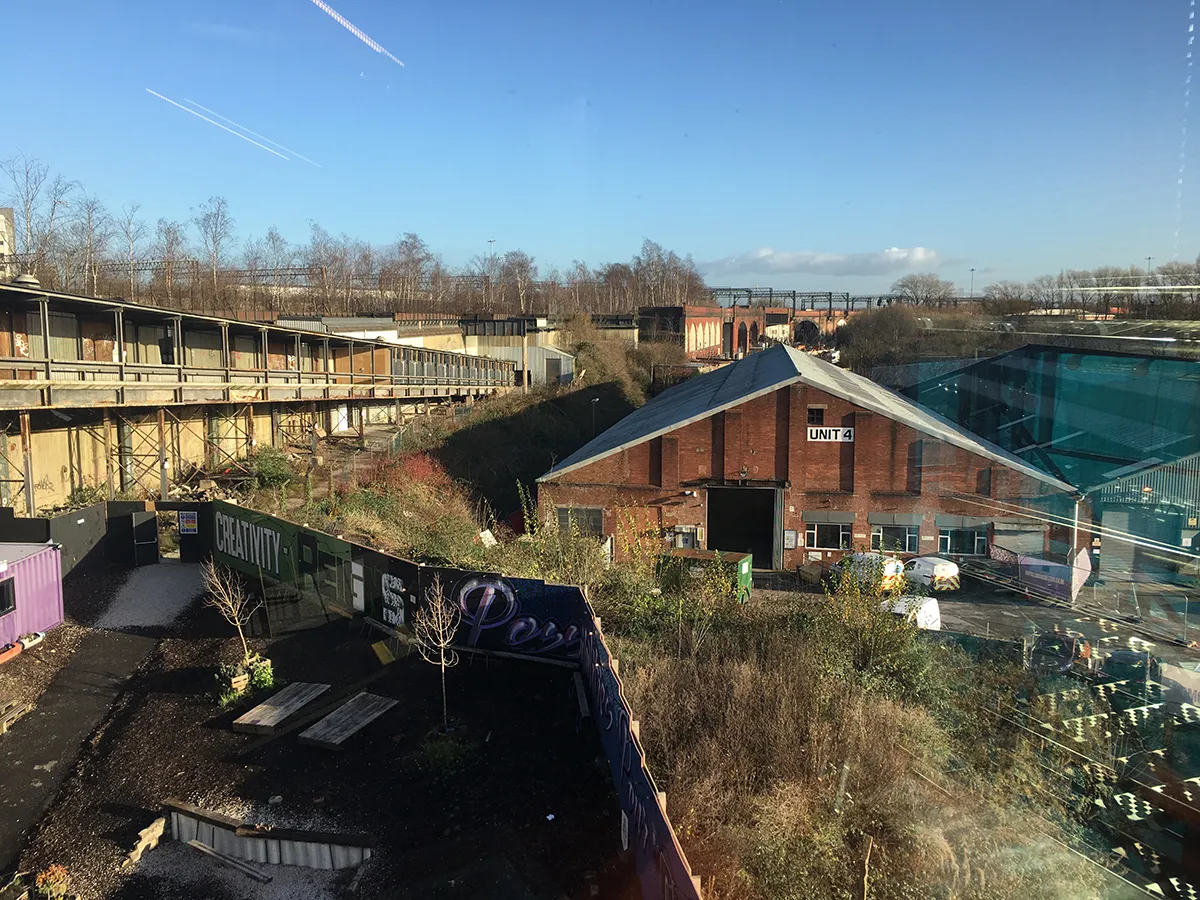
The rivers in Manchester, played a crucial role in the city’s industrial growth. They served as vital conduits for both transportation and waste disposal. As the city expanded rapidly, Mayfield’s once open fields gave way to rows of workers’ housing, factories, mills, and dye works. This was the era of Manchester’s industrial boom, which saw the growth of a complex labyrinth of buildings that included boiler houses, dye houses, bleaching rooms, and even breweries, all of which, unfortunately, contributed to contamination in the land and waterways. The once-pristine River Medlock became a dumping ground for industrial by-products, while heavy metals, hydrocarbons, and other hazardous materials poisoned the soil beneath.
The Challenges of Ground Conditions
When Mayfield was designated as a key regeneration project in central Manchester and the offer of a new 6.5 acre public park, the ground conditions posed a significant challenge. Initial ground investigations during 2020 revealed a mixture of made ground, alluvial soils, and a shallow principal aquifer. These materials were not only varied in their composition but were also tainted with a range of contaminants. Hotspots of heavy metal contamination, asbestos, and hydrocarbons were scattered throughout the landscape. The River Medlock running through the site added a layer of complexity, as it introduced the potential for contaminant migration that could compromise water quality.
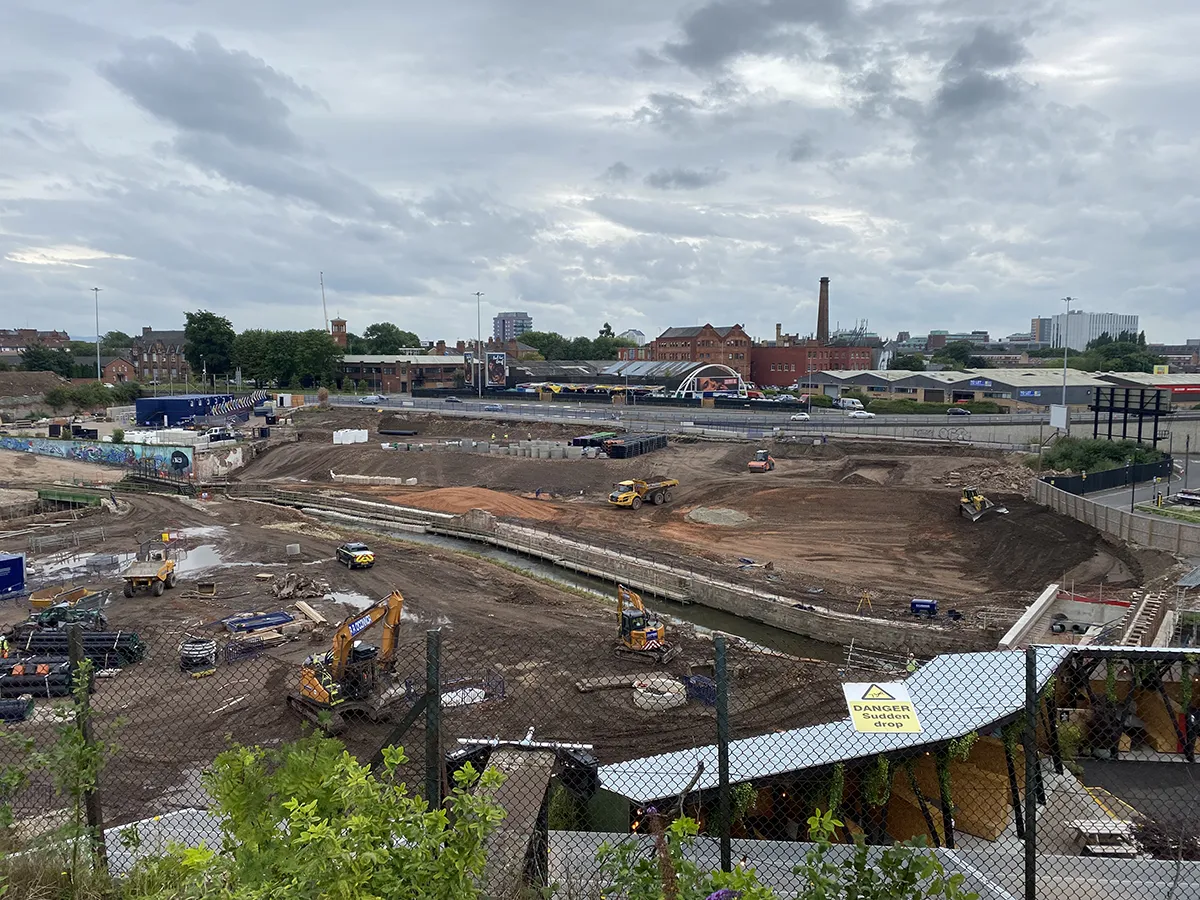
The main objectives for Mayfield’s below-ground surface were clear: ensure safety, protect the aquifer, and create a park that the public could enjoy without exposing them to environmental risks. This involved identifying the sources of contamination, mitigating risks, and ensuring the ground was suitable for its intended purpose.
The Remediation Process
Buro Happold and main contractor P.P O’Connor led and oversaw the remediation process between February and September 2021, focussing on several key areas:
- Contaminant Removal: Contaminated hotspots were excavated and either treated on-site or disposed of in accordance with environmental guidelines. This involved removing contaminants such as heavy metals, hydrocarbons, and PAHs, particularly in areas designated for children’s play and other high-use zones.
- Groundwater Protection: One of the most critical concerns was preventing contaminants from leaching into the principal aquifer. Detailed groundwater investigations and monitoring were conducted to safeguard the aquifer’s integrity.
- Material Reuse: A commitment to sustainability meant that the site-won material was tested for chemical suitability and reused wherever possible. Over 70% of the site-won material was repurposed, either for non-sensitive areas of the park or in engineered fills behind walls and footpaths.
- Geotechnical Validation: Rigorous testing ensured that the integrity of the site’s subgrade was adequate for future development. This included testing the stability of the ground and ensuring it was suitable for new construction.
The Importance of Soil
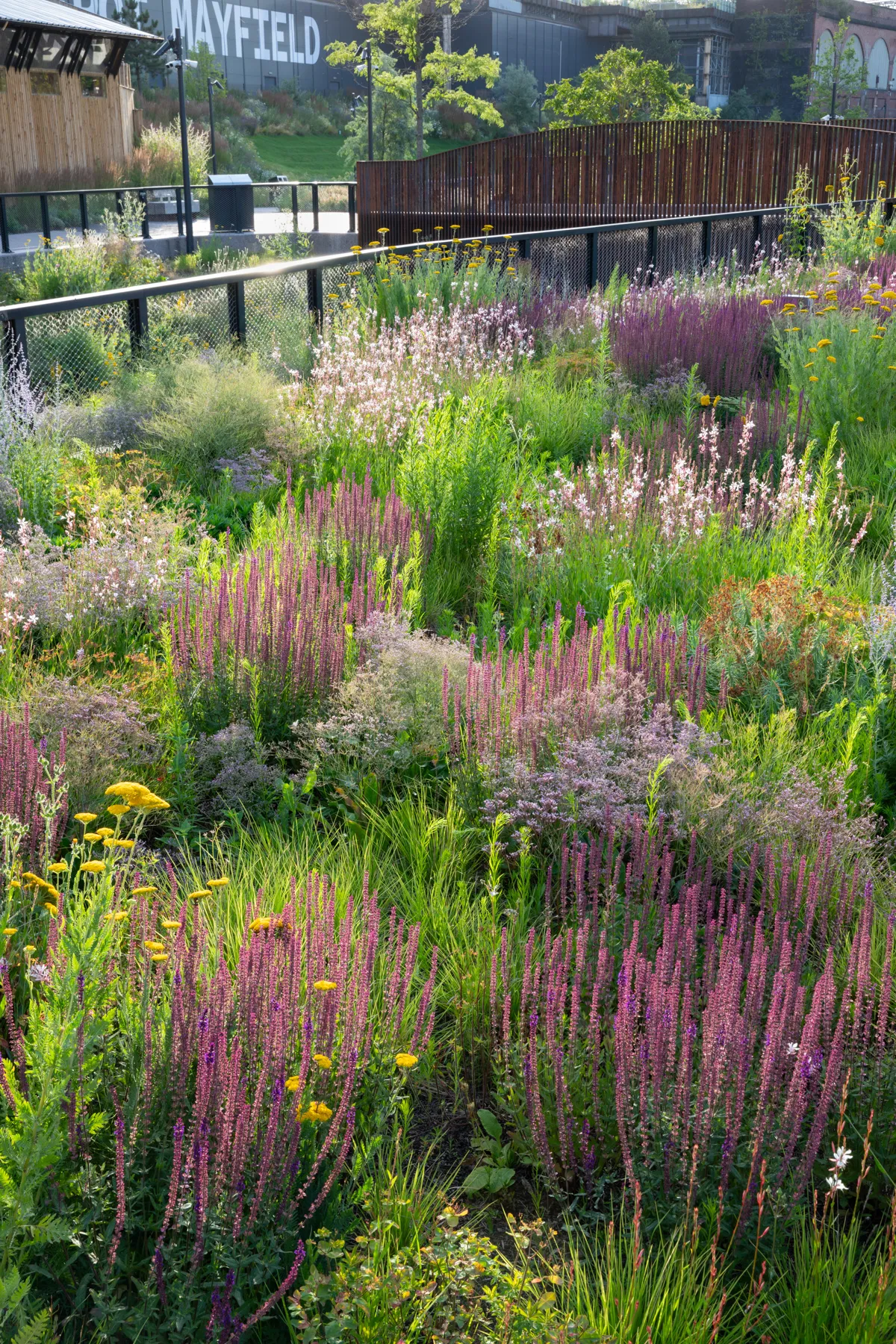
Following planning consent, Studio Egret West, as the lead designer, began identifying key consultants to refine the park’s development further and realise the project’s ambitions. We recognised early on that the park’s success, both in its immediate construction and long-term establishment, would depend heavily on expert engagement with a soil specialist. The park offered a unique opportunity to create diverse habitats and planting characters across varying microclimates. These would all play a vital role in shaping an inspiring and distinctive urban park. However, to achieve this, understanding the specific soil requirements, appropriate build-ups, and specifications became a central focus of our design strategy, ensuring the park would thrive for years to come.
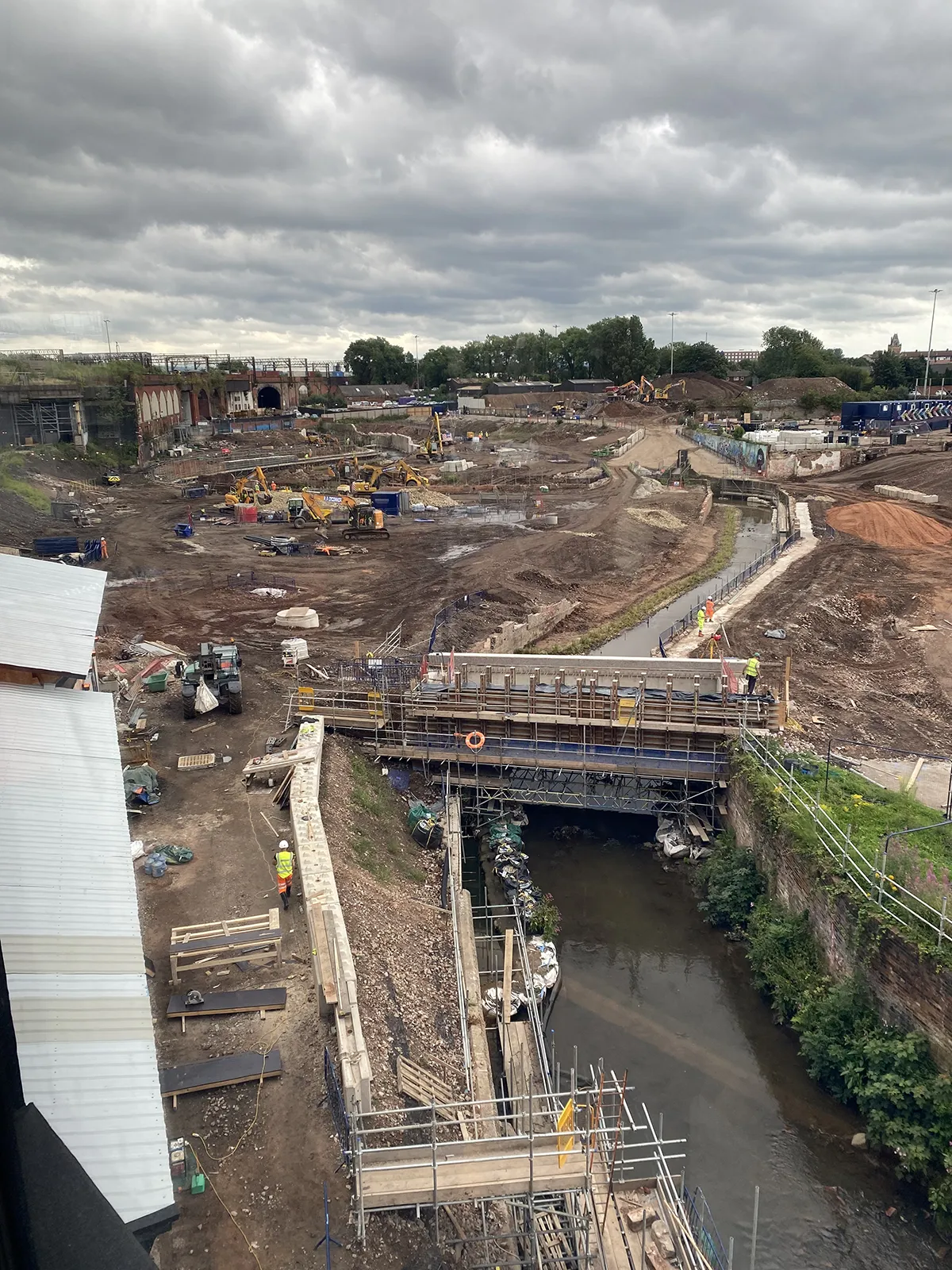
Studio Egret West engaged with and sub-consulted Tim O’Hare Associates (Soil Scientist) at the start of RIBA Stage 3. As well as developing an overall soil specification, TOHA were initially tasked with investigating whether any of the site-won material could be reused across planting areas. Although extensive geotechnical testing had been conducted, the results provided limited insight into the horticultural characteristics needed for the planting design. As a result, we pursued additional testing in collaboration with TOHA.
A detailed analysis of the site’s soil included testing in areas such as trial pits and boreholes. A wide range of soil conditions was discovered, from sandy alkaline materials to glacial till with heavy textures and poor drainage qualities. Although some of these materials could have been used from a horticultural perspective, further analysis by environmental consultants confirmed that no site-won material could be used for soft areas due to contamination and public health risk, and there was a requirement for a 450mm “clean capping” layer.
Following this, there was a need to develop several manufactured soil specifications to be used throughout the park. TOHA prepared seven different soil profiles based on Studio Egret’s planting design, drainage, and site constraints, to ensure that the park’s various planting characters were suited to specific plant types and environmental conditions. These soil profiles can be seen in the table below.
| Topsoil Type | Planting Area |
| Landscape Topsoil | Rootballed Tree Planting Gateway Gardens Play Yard Southern Woodland Walk Railway Embankment |
| Lawn Topsoil | Mayfield Lawn |
| Wetland Topsoil | River Fringe Wildscape |
| Rain Garden Topsoil | Rain Garden |
| Subsoil Type | Planting Area |
| Landscape Subsoil | Rootballed Tree Planting (<30cm girth) Gateway Gardens Play Yard Southern Woodland Walk Railway Embankment Rain Garden |
| Wetland Subsoil | River Fringe Wildscape |
| Washed Sand | Rootballed Tree Planting (>30cm girth) |
Alongside the varying planting aspects, topography, and specific requirements, the drainage across the park proved challenging, primarily due to the presence of glacial till. Careful attention was paid to identifying areas where drainage layers were needed, and the depth of these layers was determined to ensure proper support for the growth and establishment of plant stock, with particular focus on trees and lawn area.
During the park’s construction, all manufactured soils were tested, and TOHA thoroughly reviewed the results to confirm that each soil type met the specified design requirements before implementation.
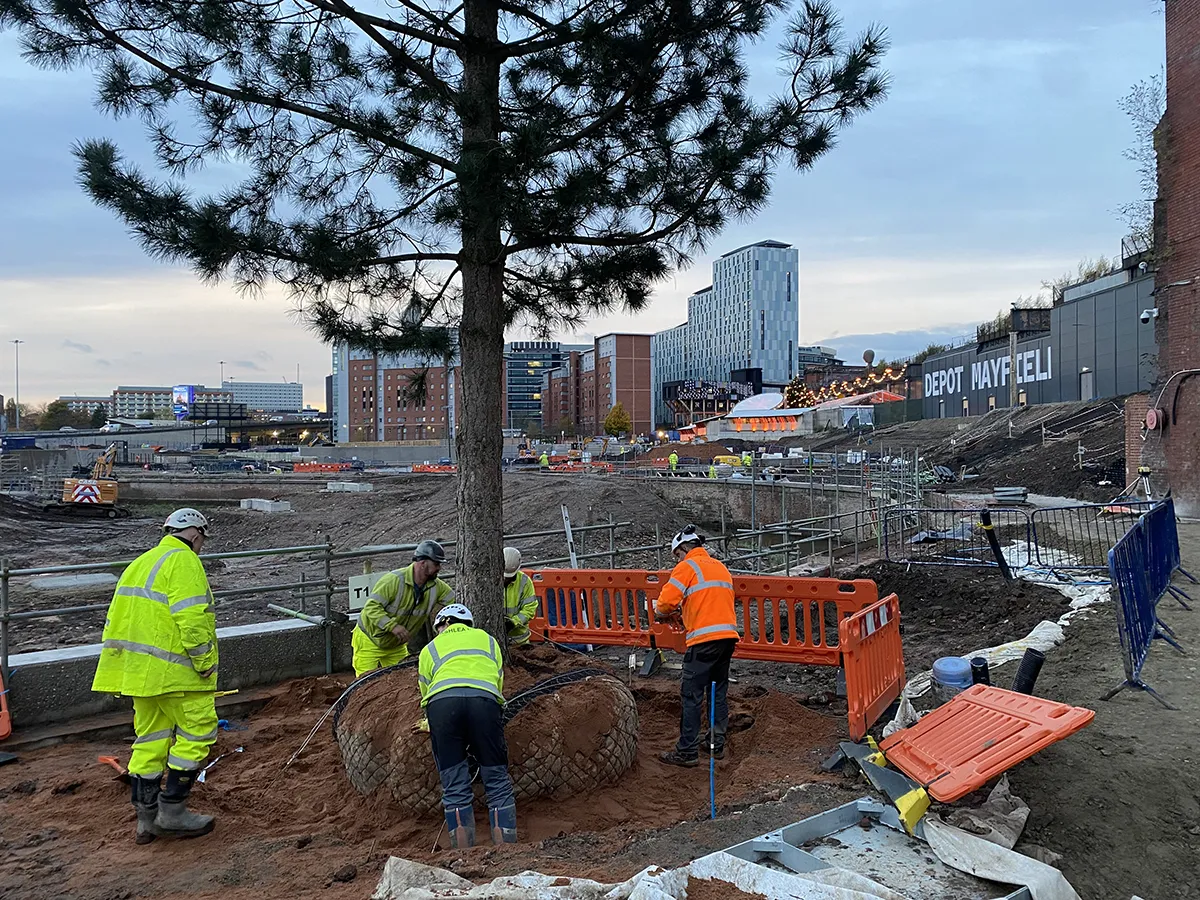
The relationship between our team and TOHA became a crucial link during the later design stages, implementation, and the park’s long-term success. It became evident that both the designer and the specialist consultant (in this case, TOHA) play critical roles in developing the correct tender information, ensuring clear communication with the contractor, and providing the opportunity to refine the approach when discoveries are made during construction.
Sustainable Groundworks and a Vision for the Future
In the end, over 70% of the site material was processed on-site and used in areas such as beneath footpaths, behind walls, and to raise levels in areas where the 450mm cap had been removed. This approach not only helped reduce waste but also contributed to the project’s overall sustainability and carbon reduction.
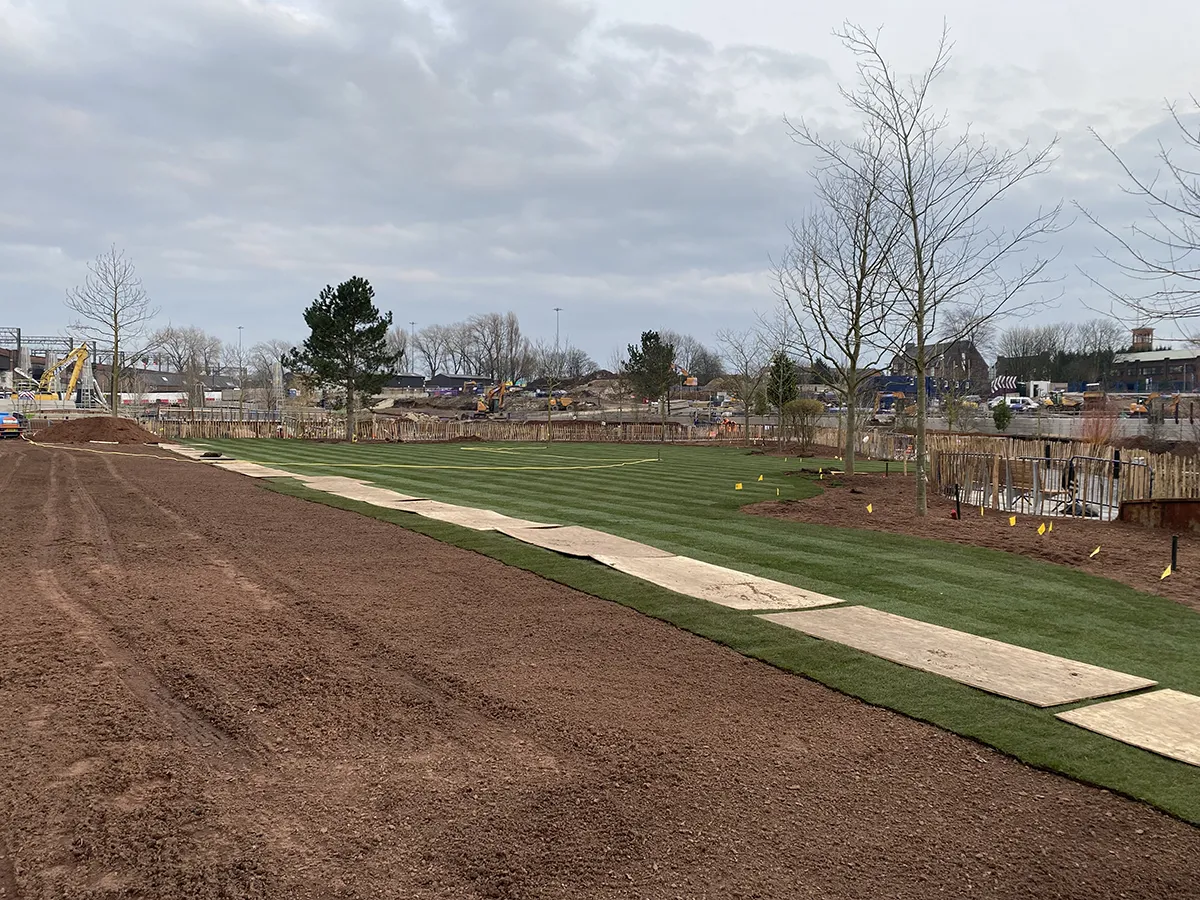
The careful management of soil and remediation efforts ensured that Mayfield Park could be developed safely and sustainably. Today, the park stands as a testament to the transformative power of responsible land and material management, where industrial contamination has been mitigated and the soil has been restored for future generations to enjoy.
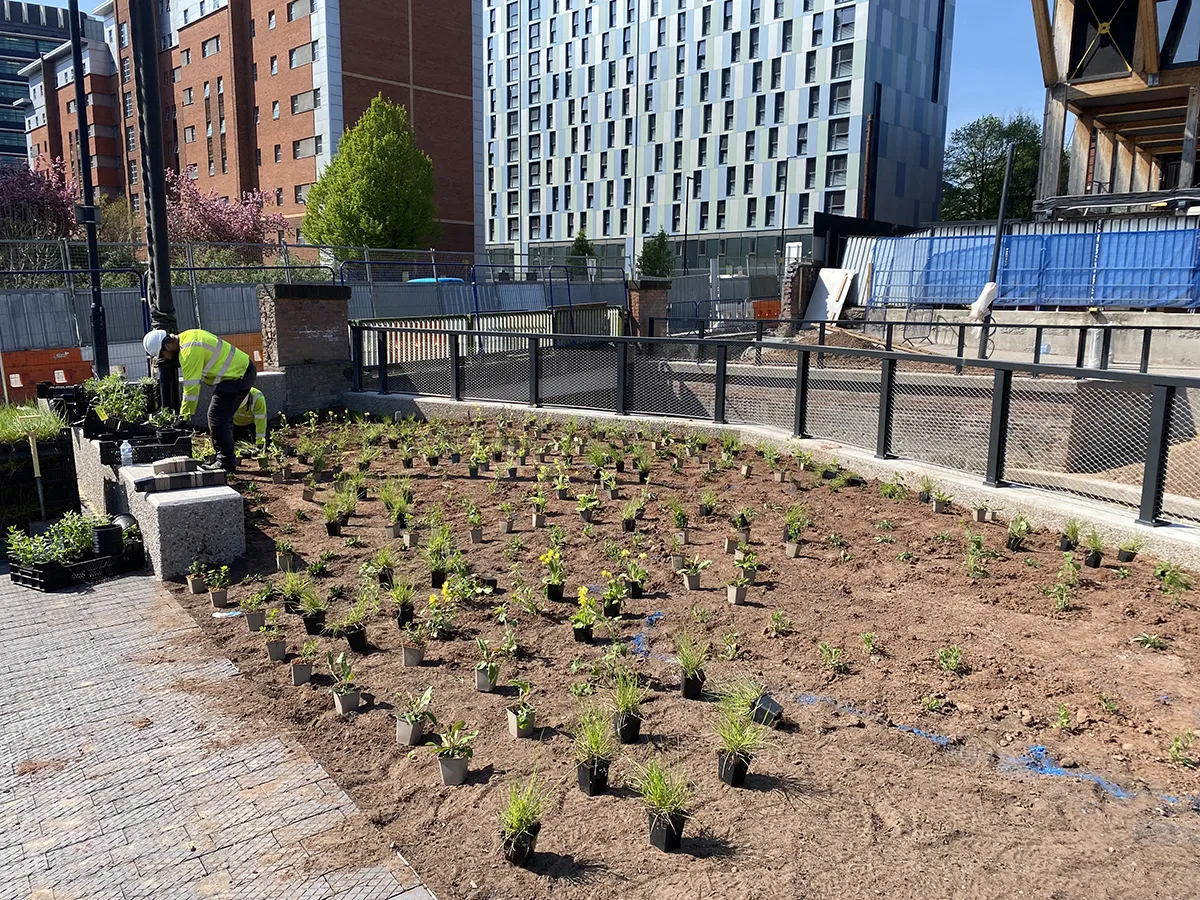
Long-term stewardship is key to the success of any landscape project, and that includes looking after what’s beneath our feet: the soil. As part of this ongoing care, TOHA recently conducted a Soil Health Assessment, which revealed that the park’s soil is in good condition, supporting healthy plant growth, managing water effectively, and continuing to mature and store carbon. Regular monitoring like this can help us catch early signs of stress, such as compaction from heavy use or dry spells and take action, whether that’s targeted aeration or planning for future works. This, together with our Studio’s continued role in the Park and the wider Mayfield development, will help support its long-term health, resilience, and value as a vibrant public space.
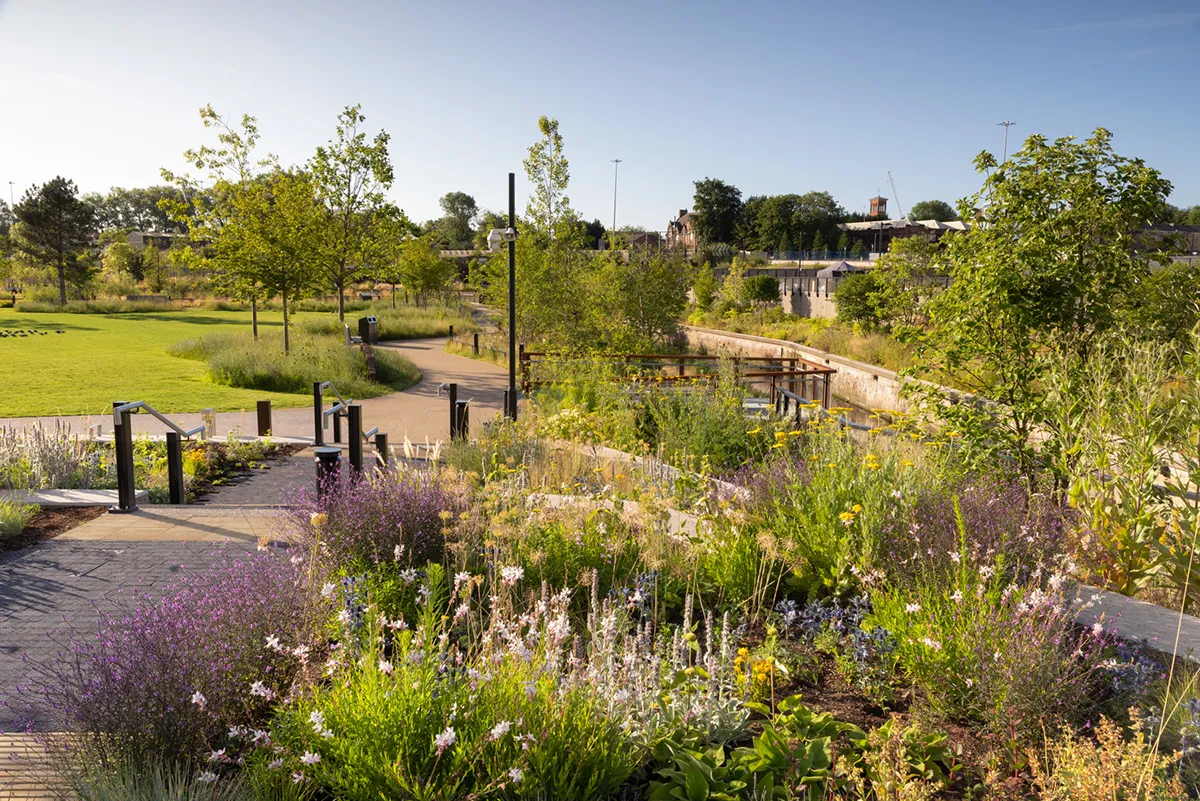
Soil: The Unsung Hero of Mayfield Park
Article written by Max Aughton is an Associate and Project Landscape Architect at Studio Egret West.
Images: Studio Egret West (unless otherwise captioned)