
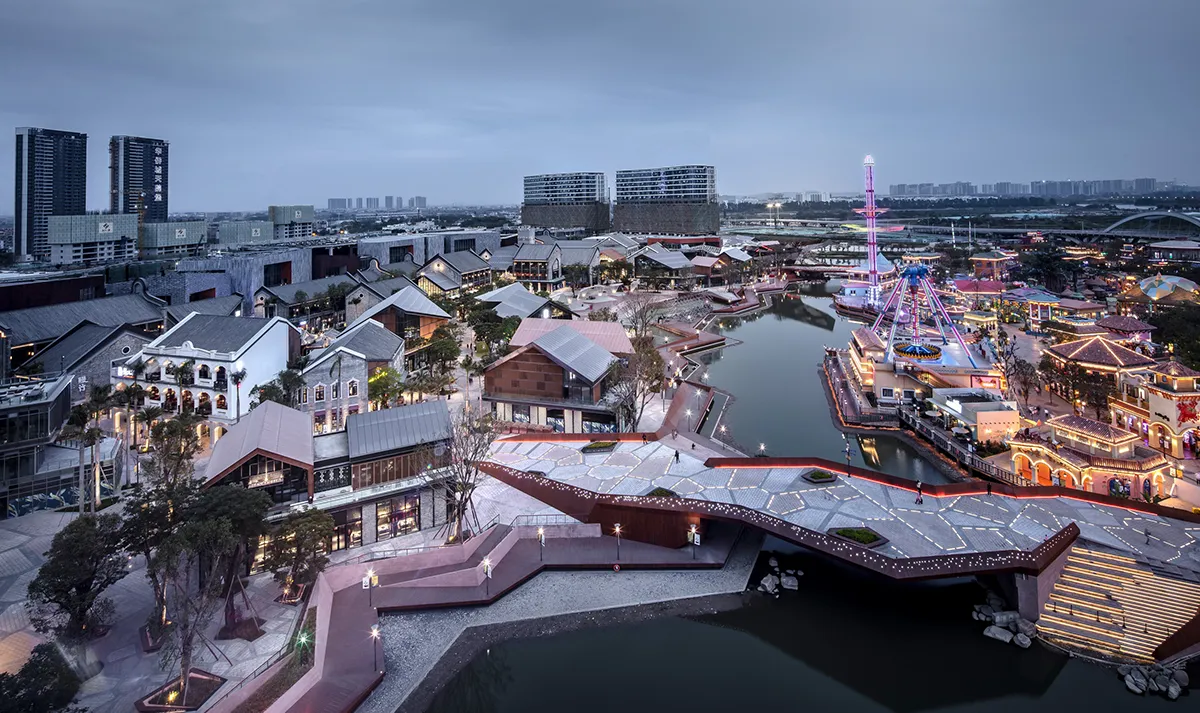
Shunde Joy Marina is a large retail and entertainment complex situated in the city of Foshan, Guangdong Province, China. Since its completion, it has been regarded as one of the most successful waterfront commercial complexes in the Greater Bay Area. It sets a new benchmark for successfully integrating landscape architecture into high-performing retail and mixed-use developments.
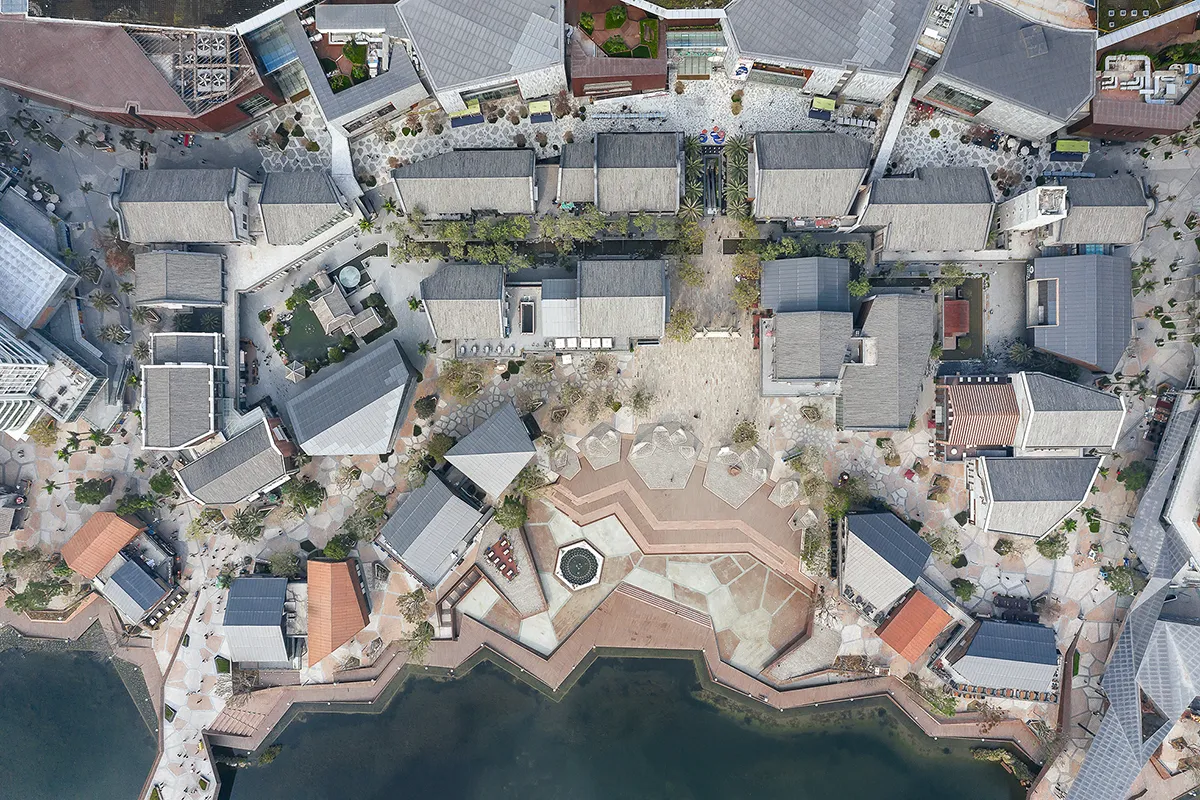
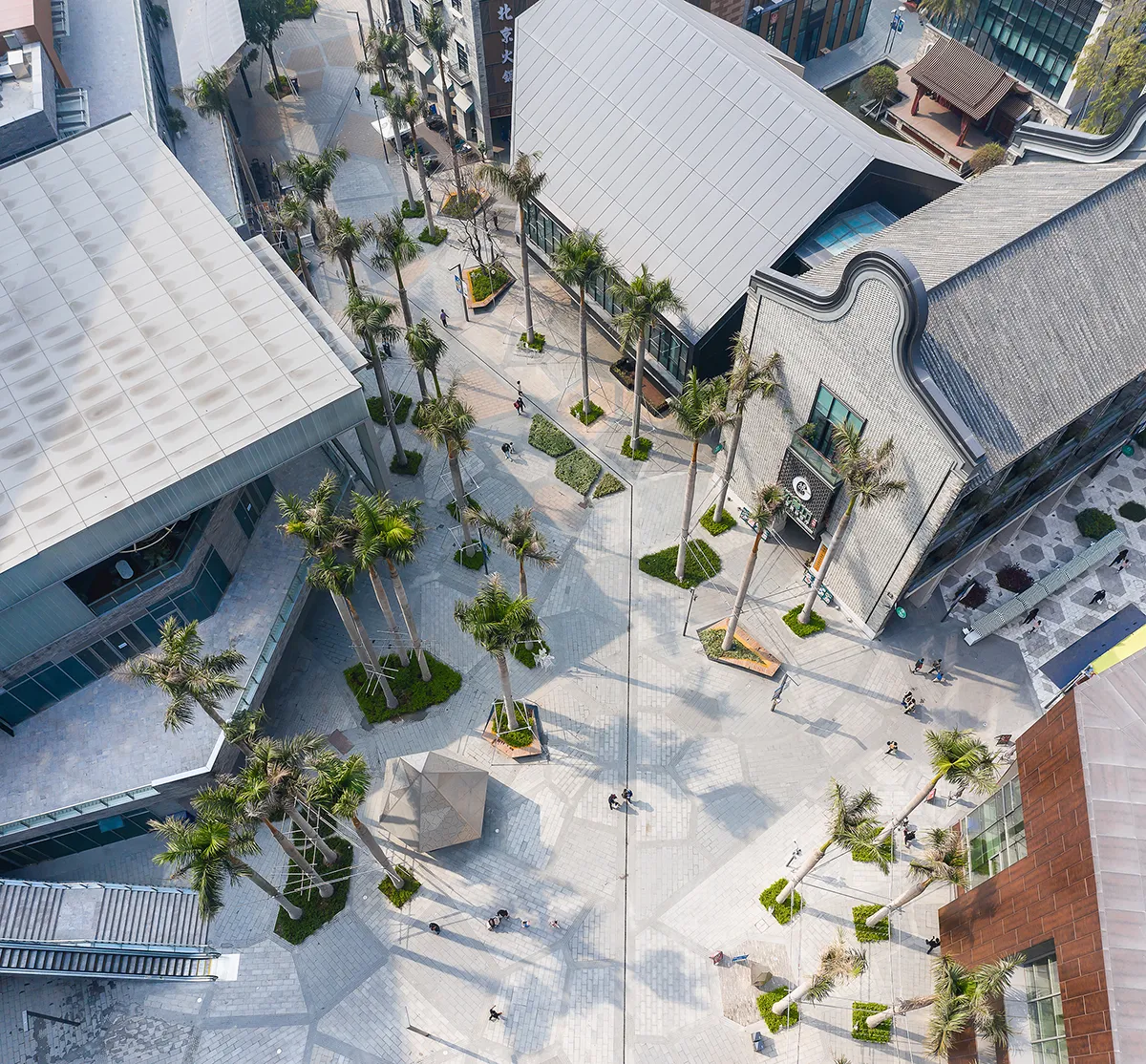
The landscape design follows three core strategies: culturally symbiotic spaces crafted through creative design approaches, climate-resilient waterfront spaces forged by technical solutions addressing environmental challenges, and business vitality ignited through innovative, dynamic landscape interventions. These three core design strategies work in unison to achieve the overarching goal of enhancing the commercial value of the project.
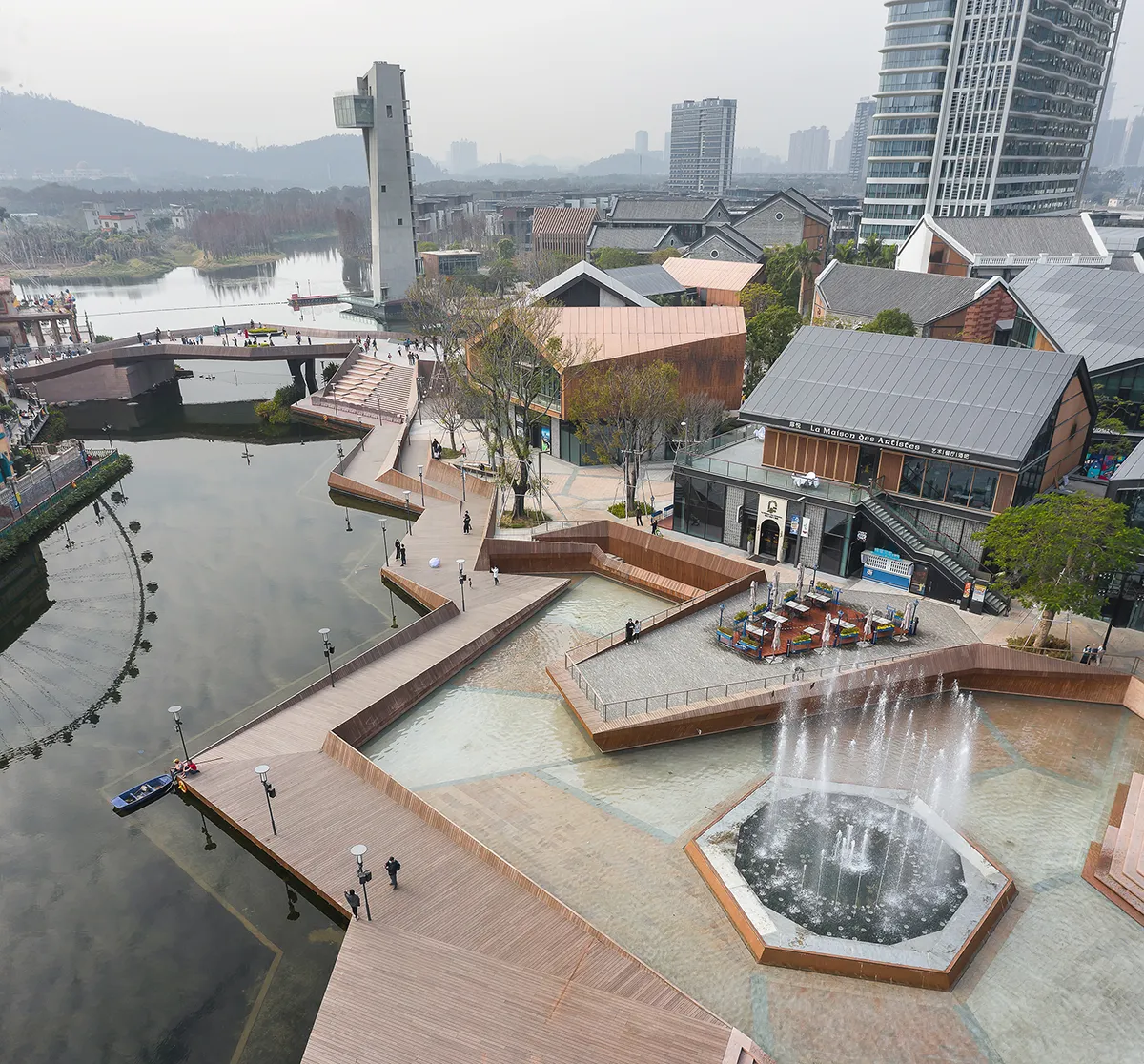
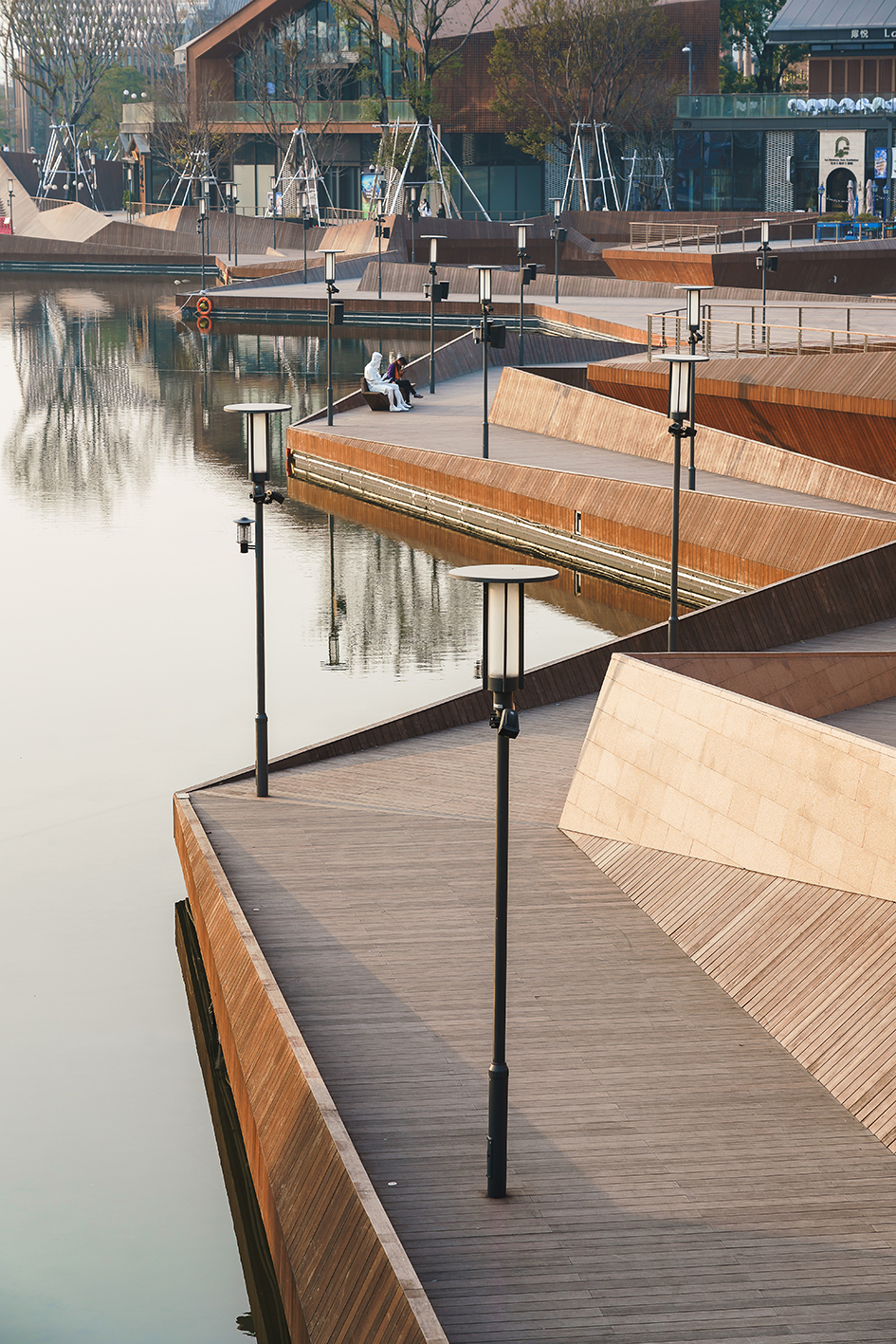
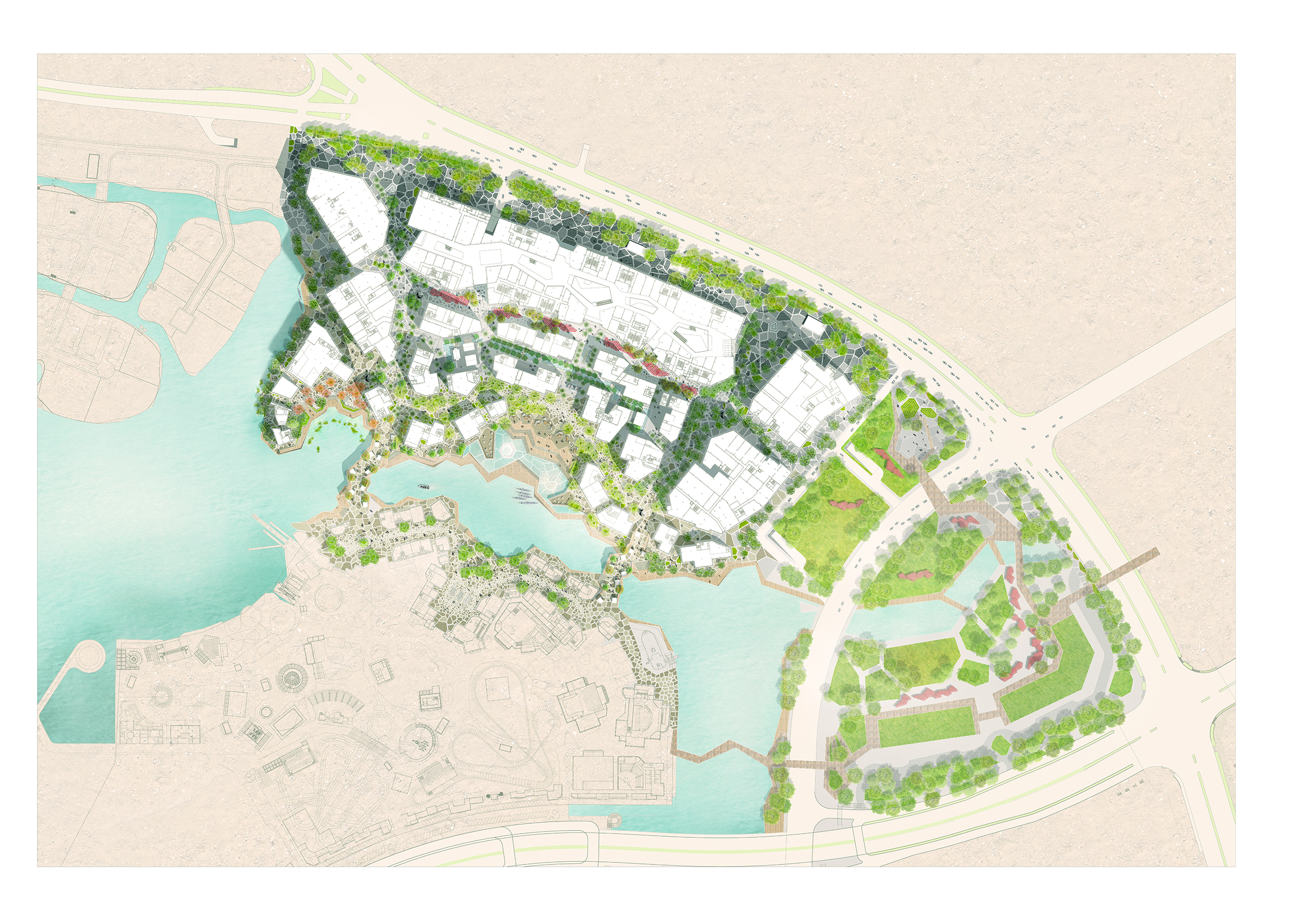
The development foregoes the rigid and linear formats typical of commercial districts, creating a series of engaging spatial interventions. The design introduces a layered and consistent spatial narrative inspired by geological cracking. This concept unites the marina through paving geometries that echo the angular forms of the surrounding architecture. The paving doubles as a visual language and functional infrastructure, integrating stormwater gardens that filter runoff and providing lush vegetation which softens the edge of the city whilst providing an immersive green and acoustic buffer from the road. These paving units are scaled up or down at various points on the site to form both intimate niches and expansive plazas.
At key thresholds, sculptural stainless-steel rocks serve as wayfinding elements and contemporary interpretations of the traditional Chinese gateways (paifang), guiding visitors through palm-lined avenues that culminate at the water’s edge. Along these promenades, latticework metal pavilions provide shade and respite, while the waterfront plaza becomes the heart of public life – animated by faceted seating, open-air dining terraces, and a timber boardwalk that brings users into direct contact with the water. A central stage anchors this plaza space, forming a visual and cultural focal point for performances and events, while an interactive night-time lighting display weaves a futuristic spectacle where tradition and the future collide.
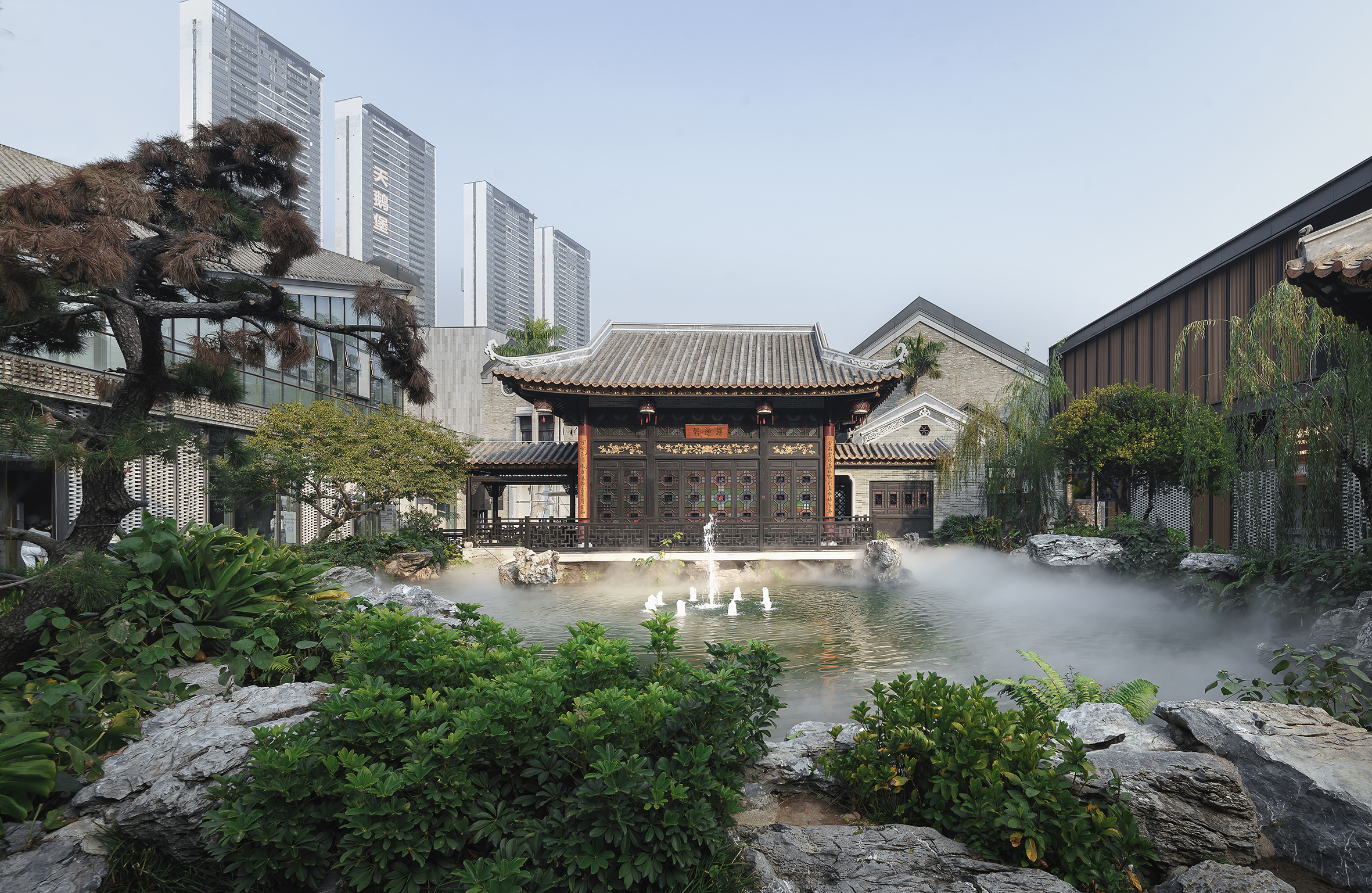
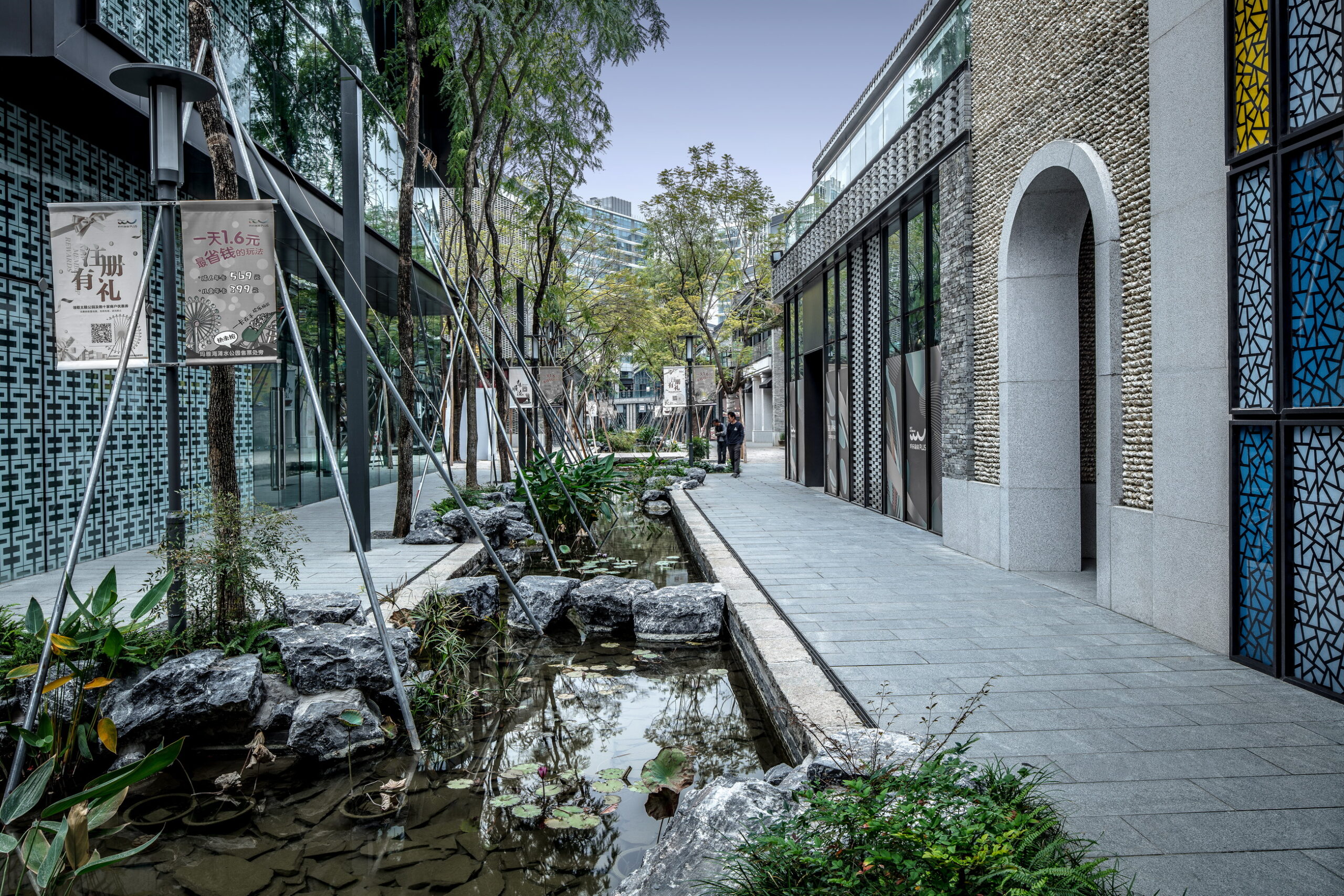
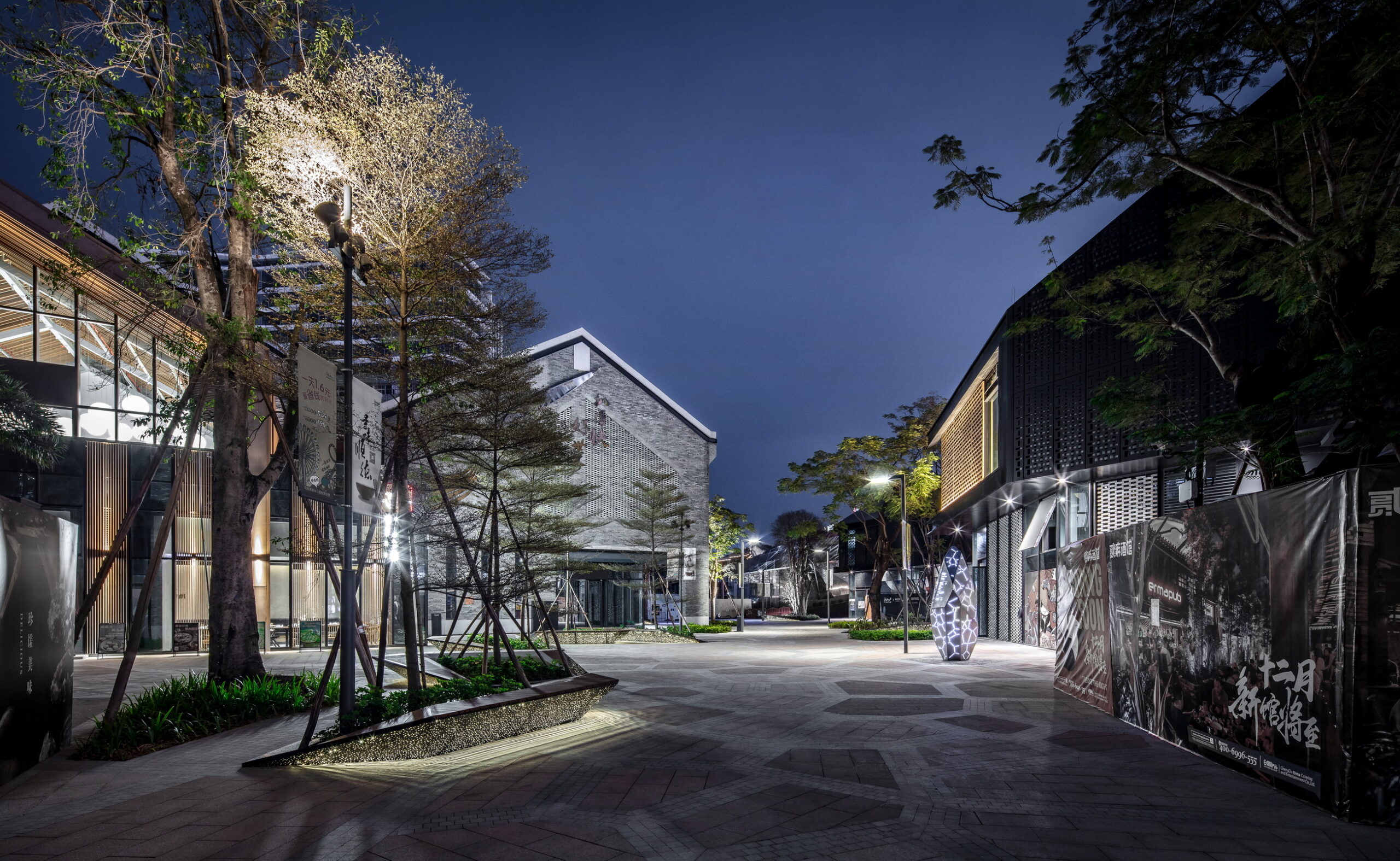
Commercial success and ecological resilience are intertwined through the introduction of a “submergible resilience system.” By creating a 6.5-meter elevation differential through terraced platforms, the design forms a hydrologically elastic buffer zone. This system integrates a permeable paving matrix, bioswales, and modular rain gardens to efficiently manage and control surface runoff, meeting the local sponge park requirements to address seasonal and cyclical flooding challenges. These interventions not only mitigate flood risks but also enhance ecological performance, transforming infrastructure into an adaptive landscape that harmonizes hydrological resilience with human-centric experiences.
Shunde Joy Marina exemplifies how thoughtful landscape design can elevate commercial projects beyond retail, creating places of cultural expression, and social gathering.
Shunde Joy Marina Public Realm
Shortlisted for the 2025 WLA Awards – Built Commercial Landscape Design category
Location: Foshan, Guangdong, China
Designer: Martha Schwartz Partners
Collaborators/Other Consultants: Laguardia Low (Architects)
Client: Guangdong Shunde Oversea Town Industrial Development
Photographer: Terrence Zhang, Martha Schwartz Partners;