
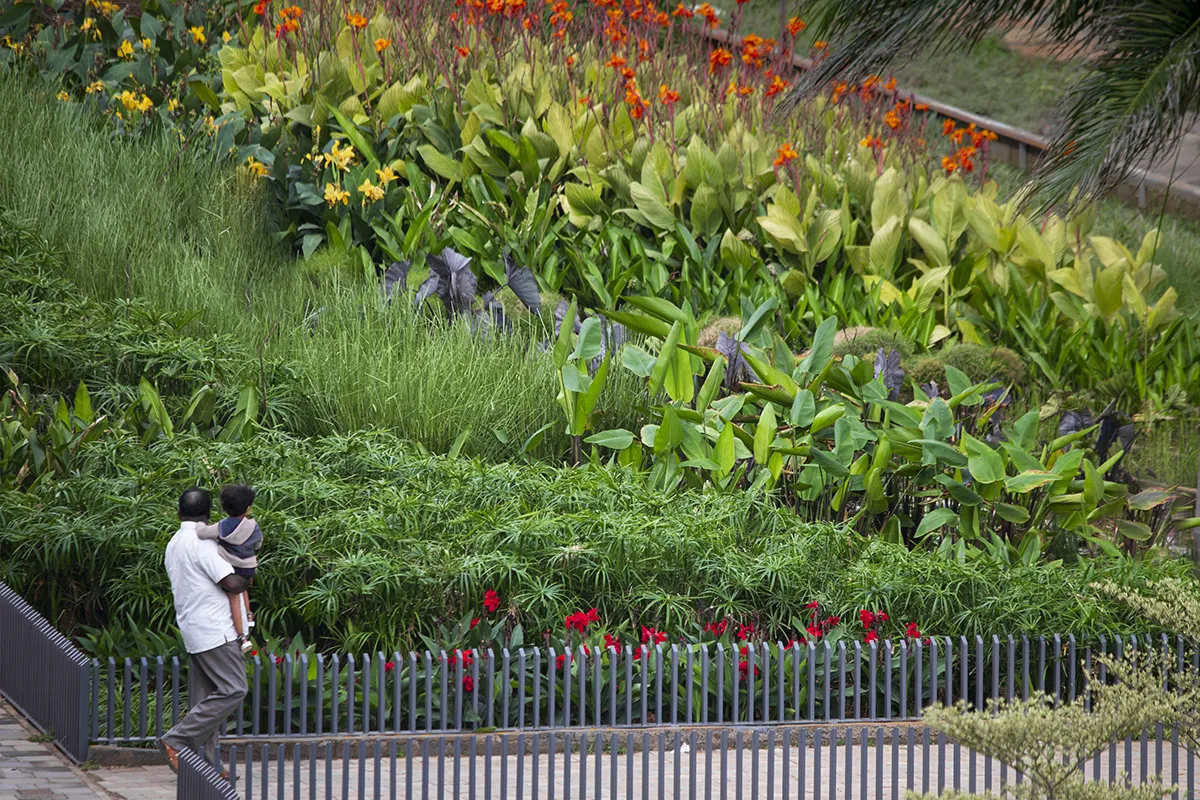
Managing and choreographing a natural resource such as water remains one of the most complex challenges in contemporary urban landscapes. Even carefully planned institutional campuses are increasingly vulnerable as their surrounding contexts densify and hard surfaces multiply, altering natural hydrological cycles. At PES University’s Electronic City Campus in Bengaluru, this condition manifested as seasonal monsoon water influx across a 1.5-acre site.
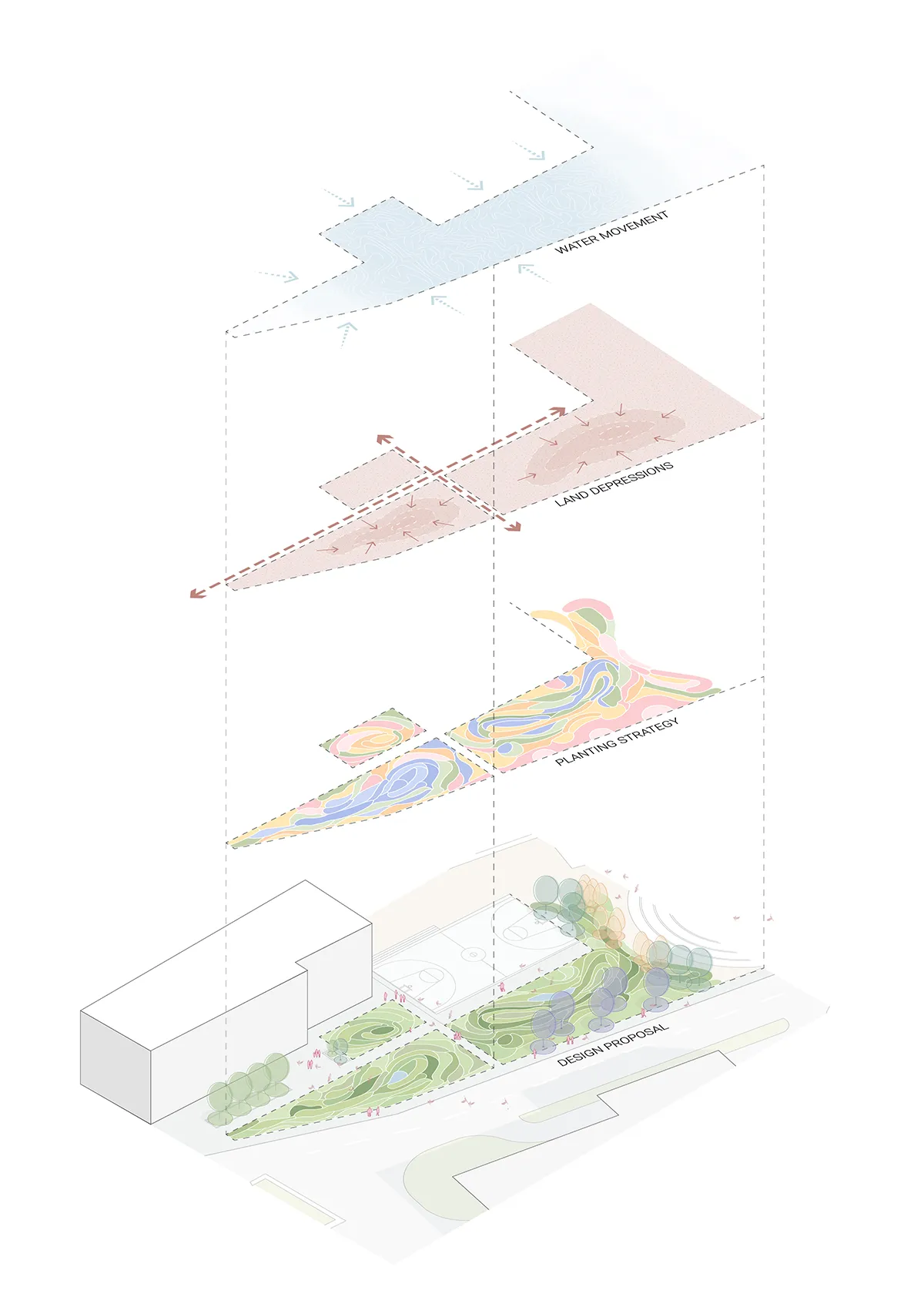
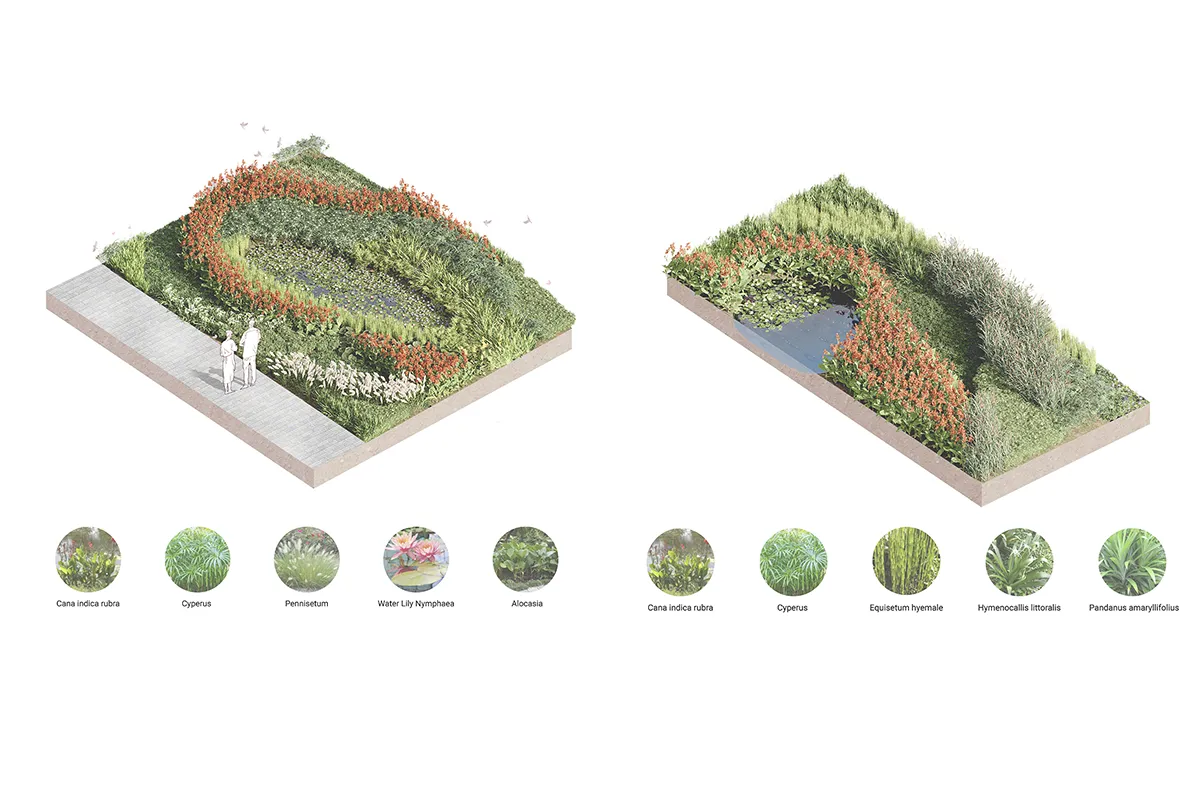
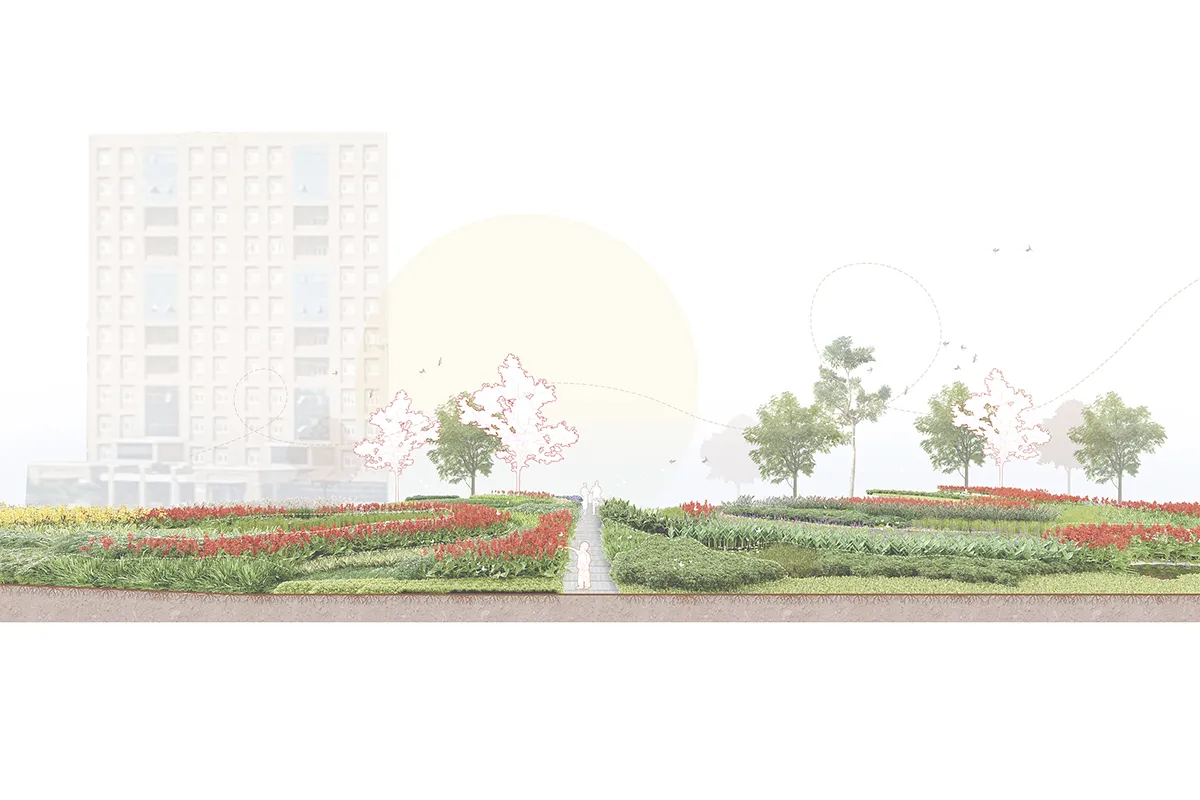
Situated adjacent to a hospital and reserved for future expansion, the site experienced periodic inundation during peak monsoon months. Rather than resisting this condition, the landscape strategy embraced water as a primary design driver. The brief evolved into the creation of a dynamic, adaptive Seep Garden—capable of transitioning between flooded and dry states while remaining ecologically resilient and visually engaging for daily campus users and visitors. The intervention was conceived with minimal investment, allowing plant species to be translocated with minimal loss if and when future campus expansion is realised.
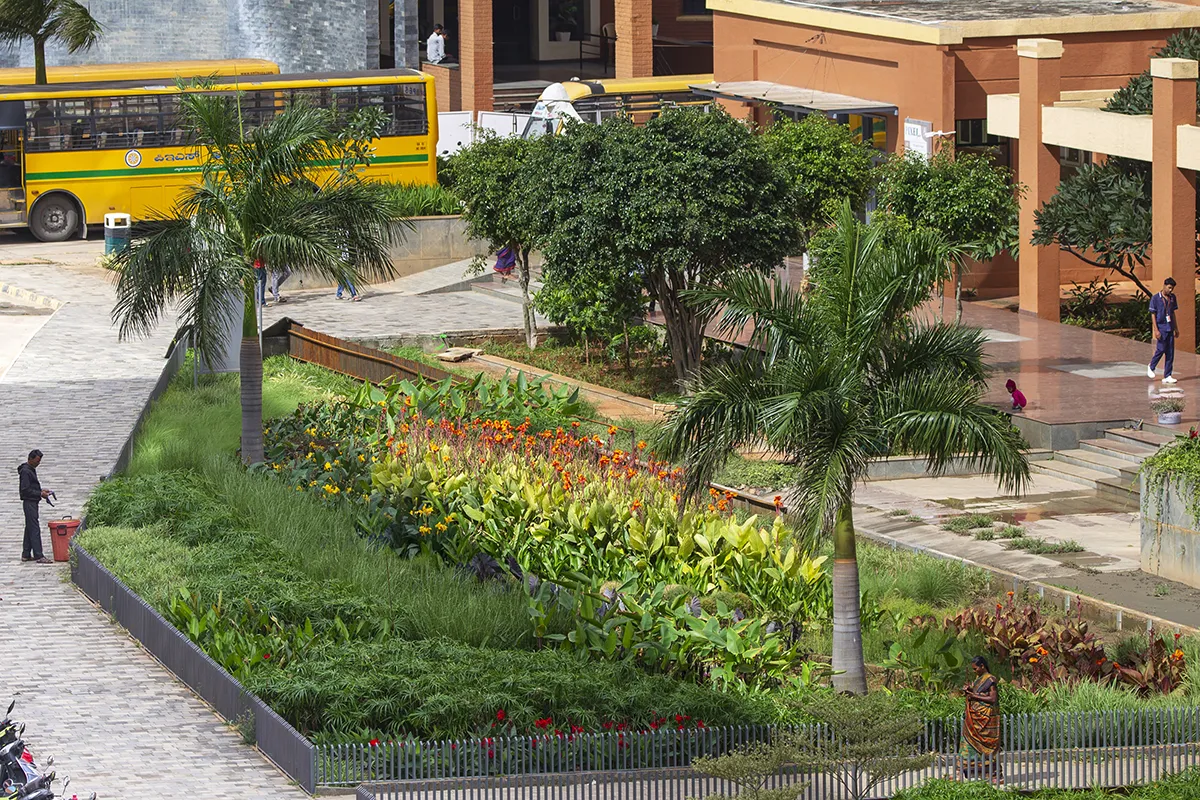
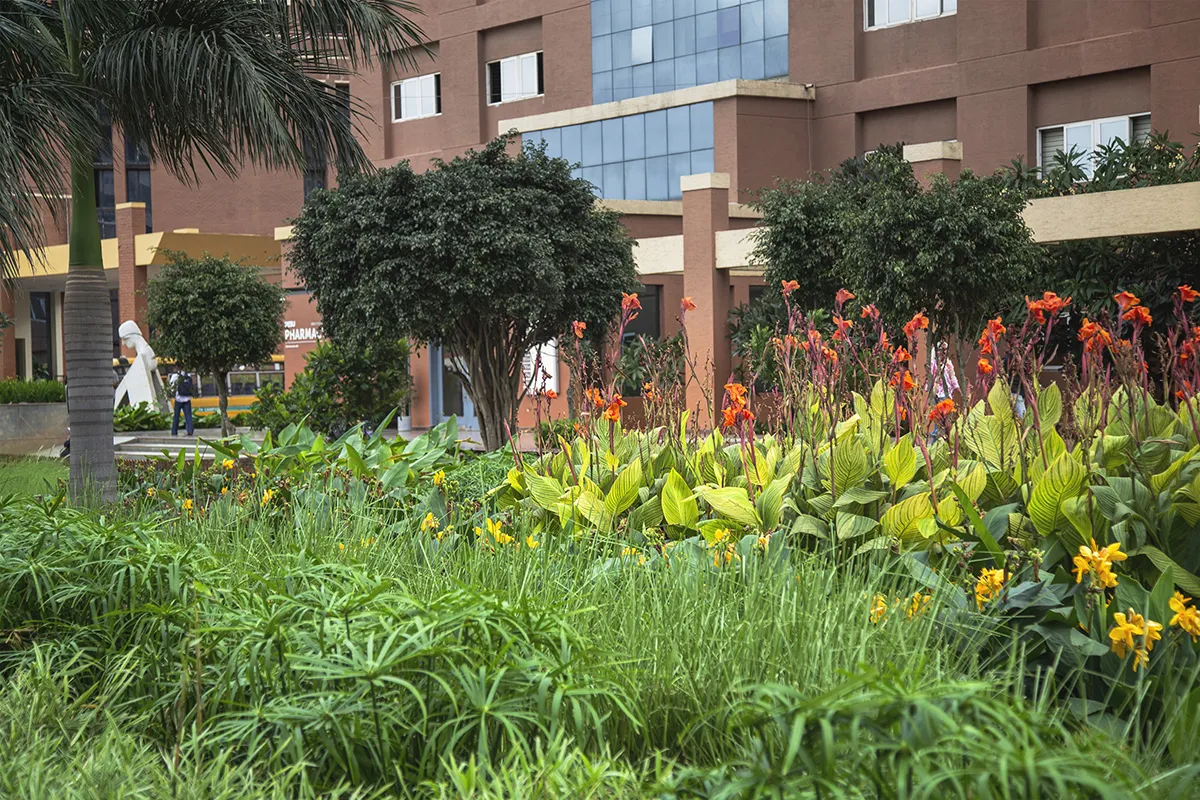
The design envisions the landscape as a performative system rather than a static garden. Landform manipulation and strategically placed water bodies were introduced to receive, slow, and percolate excess runoff, transforming seasonal flooding into an asset. These sunken water landscapes create ecological edges and micro-habitats, supporting plant communities adapted to fluctuating moisture regimes and enabling groundwater recharge.
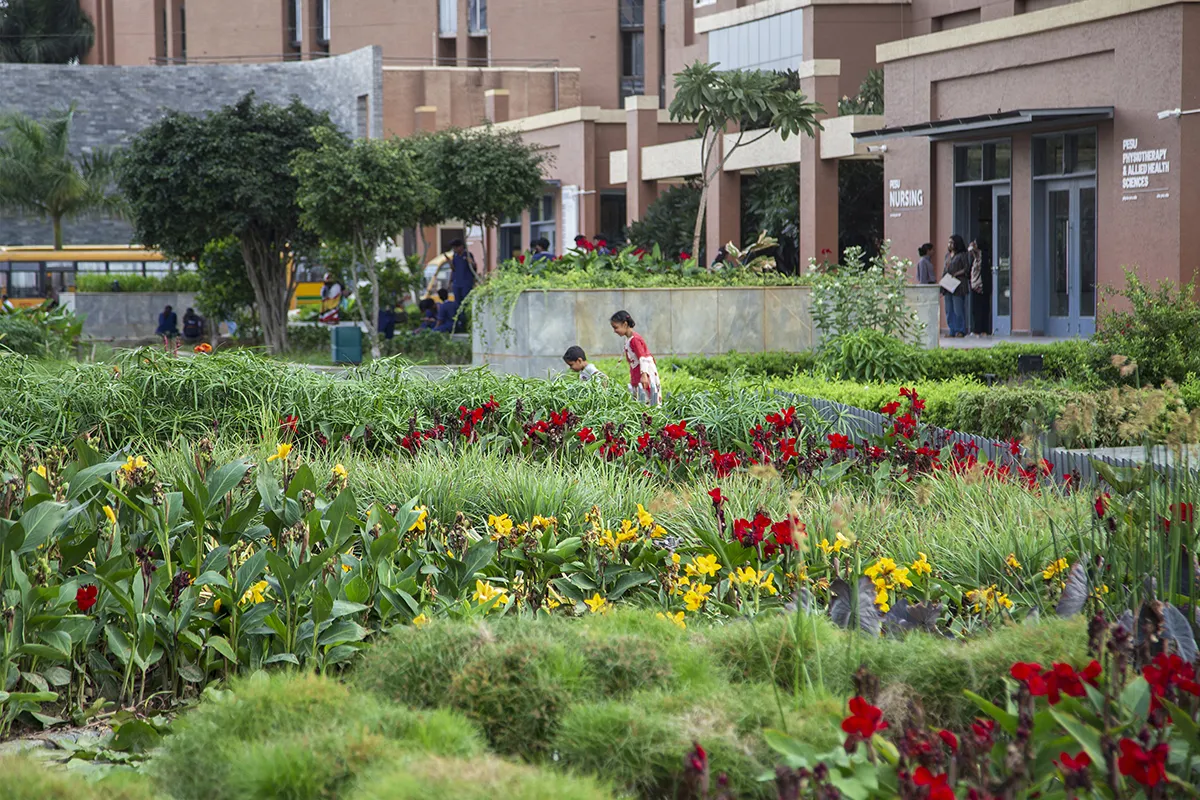
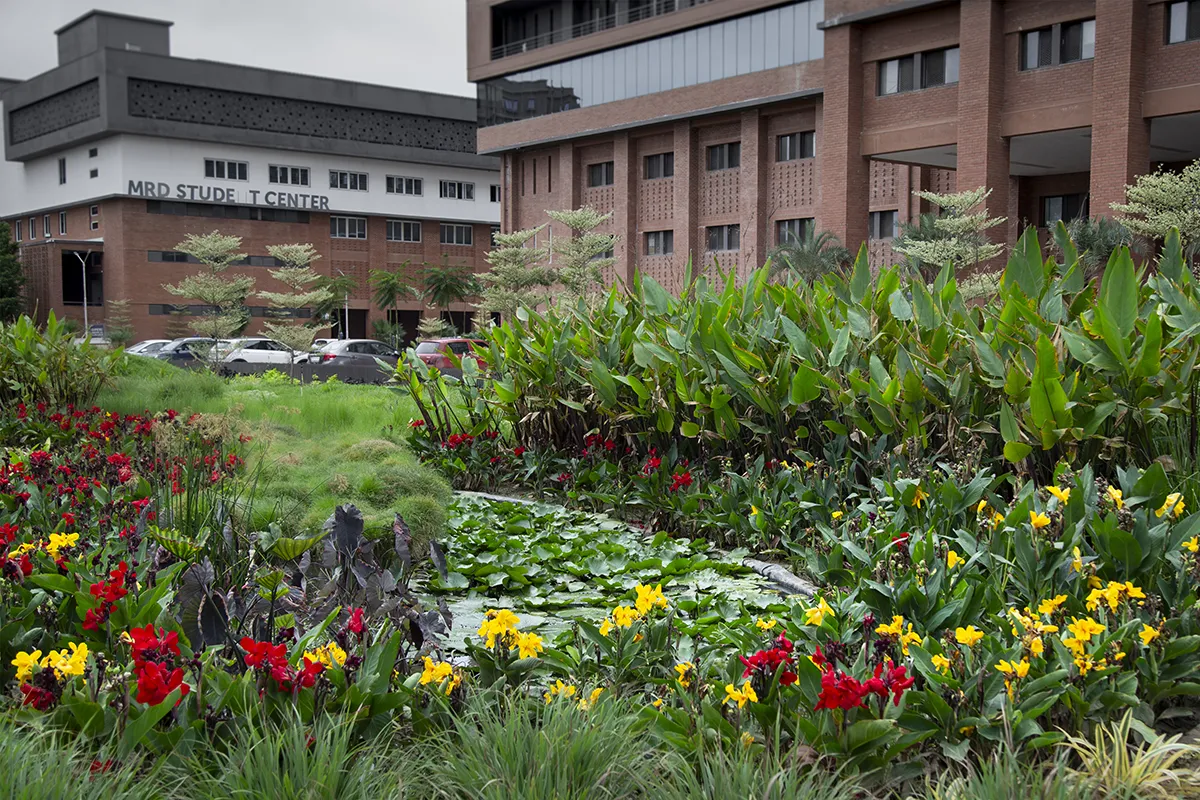
Biodiversity enhancement formed a core objective of Studio MARC’s design philosophy for the Seep Garden. The project establishes a micro-ecological niche within an otherwise concrete urban fabric, intentionally attracting bees, birds, butterflies, and other pollinators. A predominantly native plant palette of over 59 species was curated, emphasising species capable of thriving in both waterlogged and arid conditions. Many of these species were selected for their ability to be propagated within the campus nursery, reinforcing long-term sustainability and stewardship.
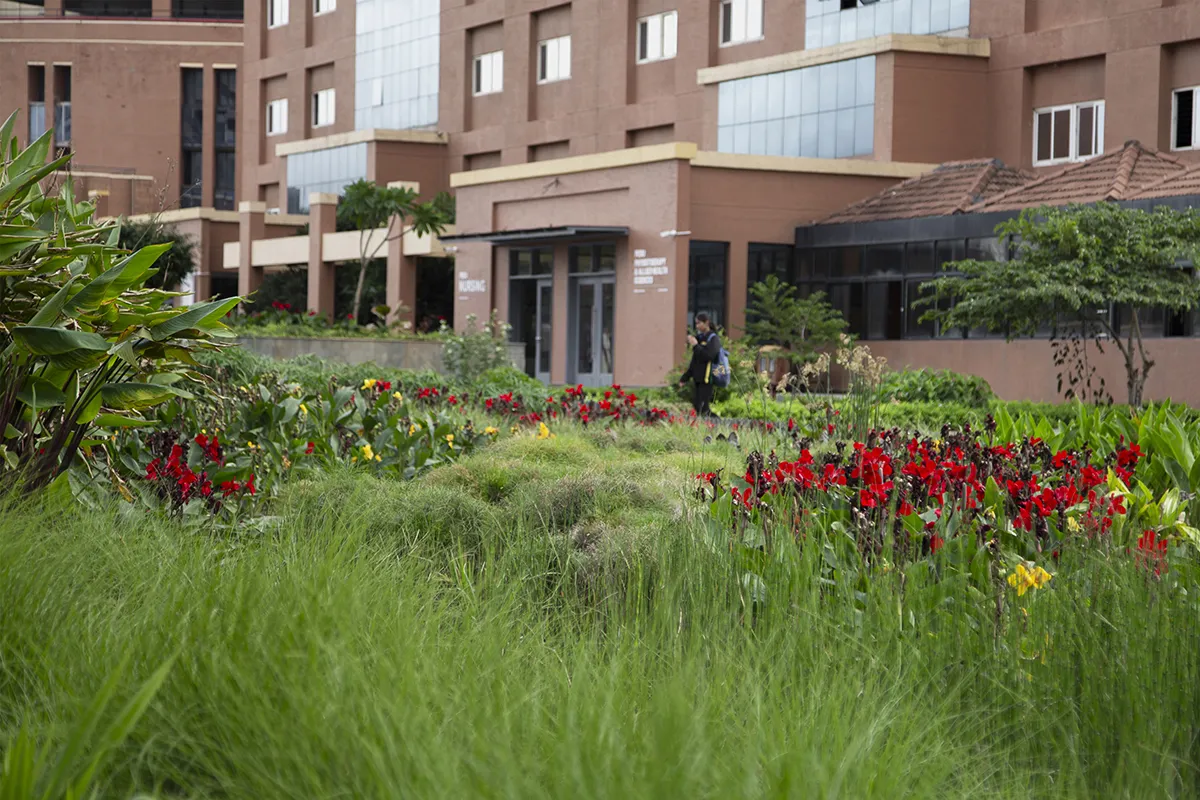
Planting was composed through layered strata to generate depth and an illusion of height across the relatively flat site. Variations in leaf texture, scale, and tonal greens are punctuated by seasonal flowering species, creating shifting visual and ecological experiences throughout the year. The landscape unfolds differently across monsoon and summer cycles, offering users a continuously evolving spatial and sensory experience.
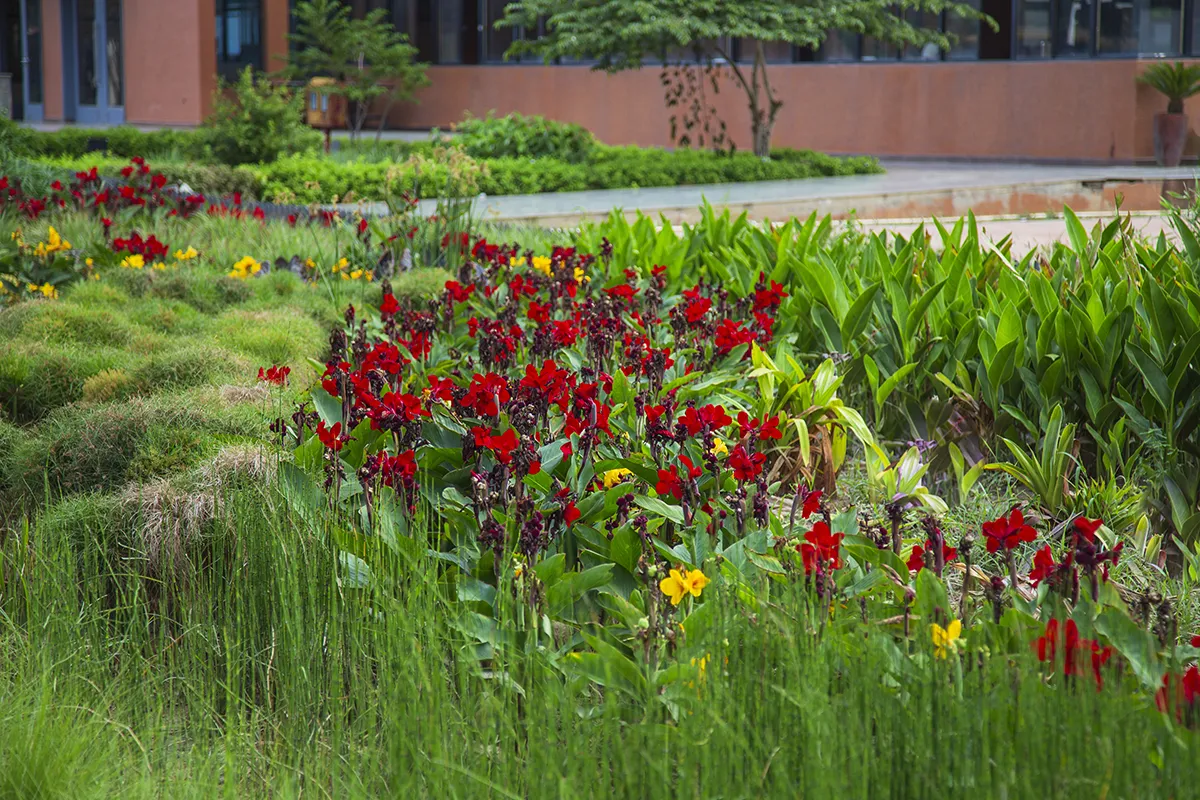
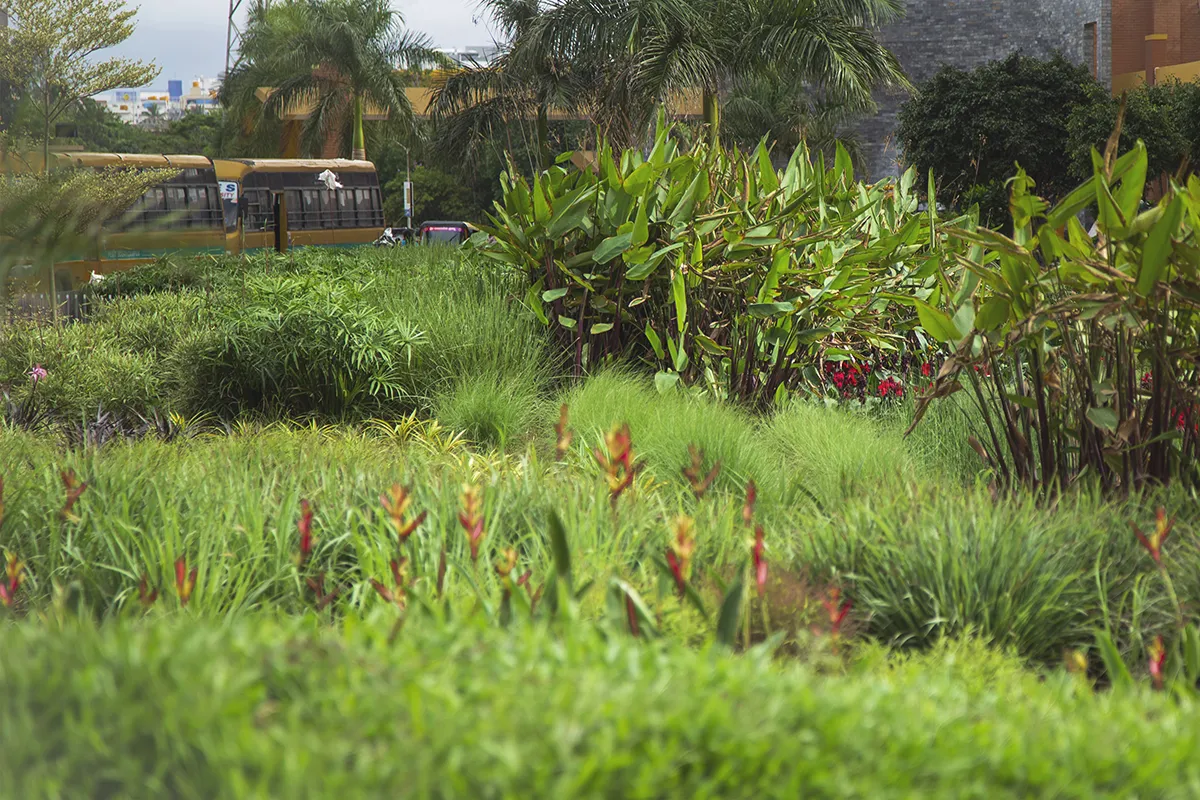
Through an integrated approach to hydrology, planting, and spatial sequencing, the project repositions water as an organising element of campus life—demonstrating how resilient landscape design can transform environmental constraints into opportunities for ecological and experiential richness.
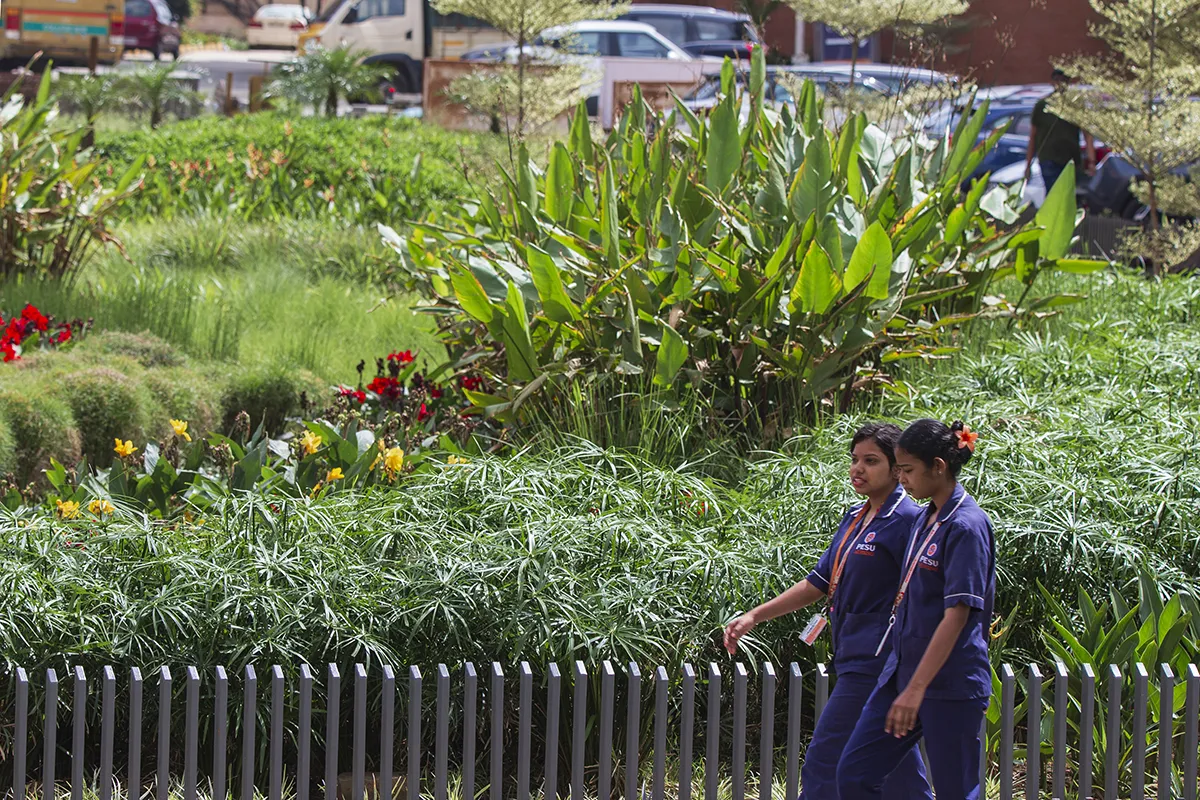
Seep Garden at PES University
Location: Bangalore, India
Landscape Architect: Studio MARC
Lead Architects: Vandana Sreepada, Jagadeesh Gorle
Image Credits: Studio MARC.
Illustrations Credits: That Studio Kid