
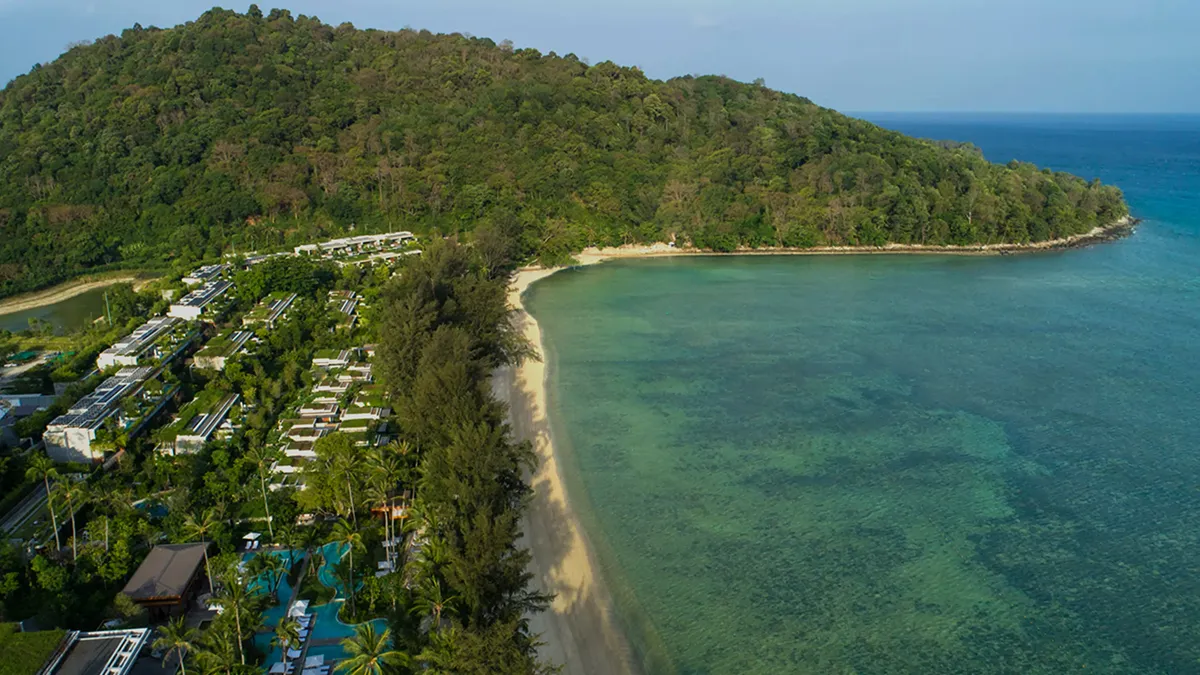
Rosewood Phuket is an idyllic tropical retreat that elegantly combines nature with luxury. Located along a 600-meter beachfront at Emerald Bay on Phuket Island, the landscape design sets itself apart from the high pace of local development, which often results in the destruction of the natural environment. Notably, the site was severely impacted by the 2004 Indian Ocean tsunami, which devastated much of the area’s natural resources. The restoration and design approach therefore carried an added responsibility, not only to create a resort that respects and responds to its environment, but also to rehabilitate the land and coastline with care and sensitivity.
Inspired by the dense green forests and turquoise seas of Phuket, P Landscape aspired to bring back the original charm of Phuket. Therefore, a resilient, sustainable and gentle approach to the land was developed from the very beginning of the design process. Discreet siting of architecture and built elements, an integrated water treatment and management system and preservation and revitalization of native vegetation are the three main strategies of the landscape design. The result is a verdant and healthy destination not only for people but also for local fauna and flora.
Observing & Revitalizing –Site Survey and Respect Native Species
An in-depth site observation and research for native plants had been conducted by the landscape architect and horticultural specialist to record the exact species which aim to be utilized widely on the site.

To support long-term sustainability, we encourage local suppliers to develop their own nurseries specializing in native species, generating local employment opportunities by involving communities familiar with the regional flora. In parallel, artificial coral structures were used along the shoreline to create habitats that successfully brought back native marine life, such as fish and turtles.

The reintroduction of native species was not only for aesthetic purposes but also contributed to resource-efficient maintenance. Requiring less water and no pesticides, native plants restore ecological balance and attract wildlife. By preserving existing trees and revitalizing barren areas, the project creates a resilient landscape that benefits both the resort and environment.
Ephemeral Beauty: Native Ecology and Local Craft in Harmony

Early in the planning stage, existing and mature trees were incorporated into the design, including 150-year-old banyan trees. Villas, facilities and hardscape were carefully positioned as to not disturb the existing soil, topography and trees. Much of the smaller indigenous vegetation was meticulously transplanted to a temporary nursery, where additional native vegetation was propagated. Incorporating the locally native planting has the added benefit of lowering overall water usage and maintenance and also creates a dynamic and ephemeral landscape, ever changing through the cycle of rainy and dry seasons. A palette of rustic and locally available materials such as wood, bamboo and netting were used, lessening maintenance and referencing the local style of the fishing villages.

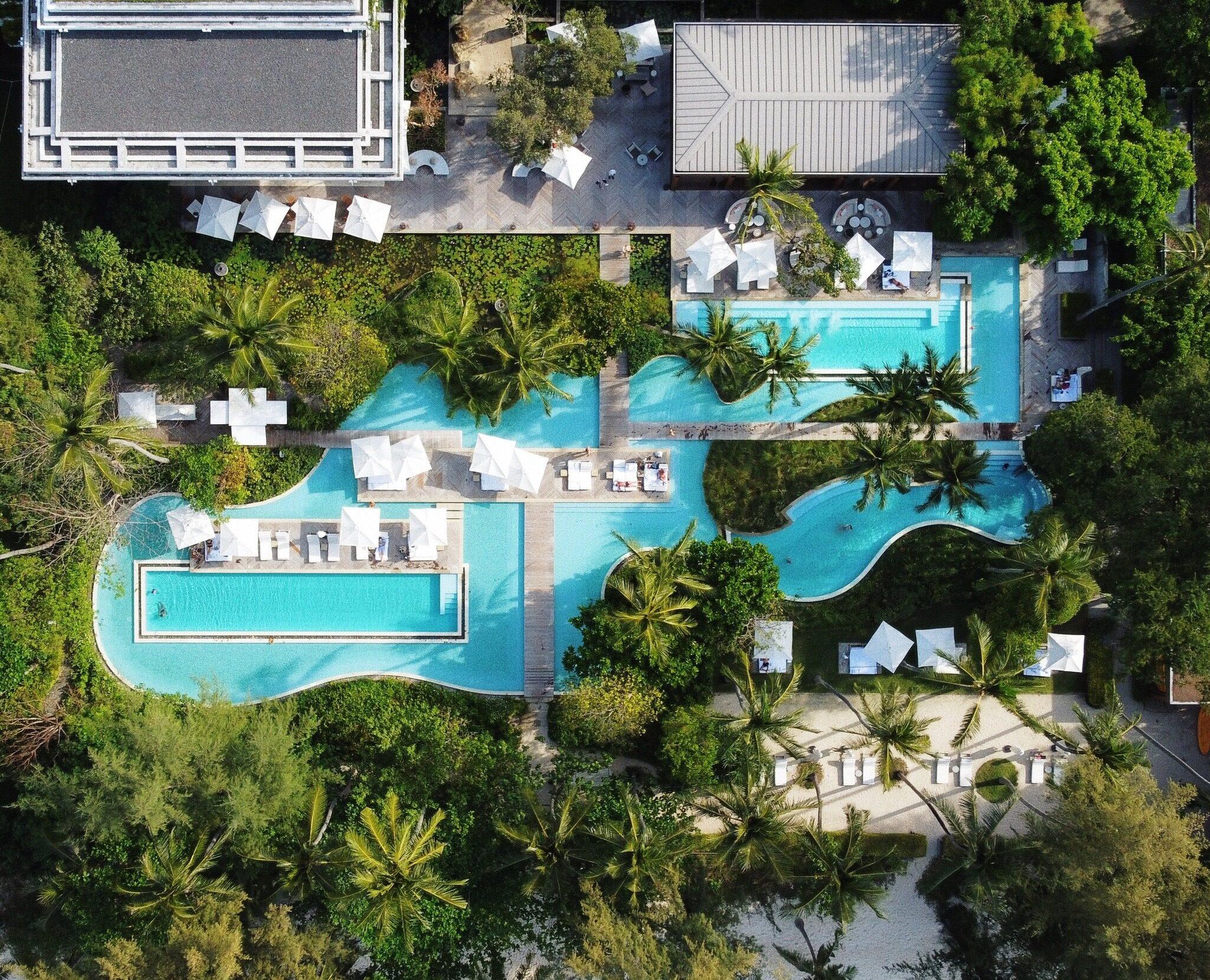
The heart of the resort is the series of swimming pools and lily ponds, forming a seamless visual dialogue with the sea and water treatment ponds. Furthering the sense of time and ephemerality are the large masses of herbs and the culinary garden and orchard, with local and traditional Thai fruits to be used for seasonal cuisine in the kitchen.


Environmental Impact and Concerns
To address limited water resources, we incorporate bio-swales, ponds, and reservoirs to collect and filter rainwater and greywater for reuse. An automatic irrigation system with rain sensors serves guest areas, while other zones receive minimal supplemental watering, reducing overall water use, energy consumption, and maintenance needs.

To further reduce energy demands, the design incorporates passive cooling through preserved forests, green roofs (covering 14.6% of building area), and climbing plants. Light-colored, porous materials reduce heat and aid water infiltration. Instead of reshaping land for views, buildings follow the natural topography, minimizing soil disruption and showcasing a sustainable design and construction approach.


Rosewood Phuket is a demonstration of landscape architect’s responsibility and the humility of human being toward the natural environment. At P Landscape, we believe in enhancing the nature beauty with respect as every individual should keep in mind.
Rosewood Phuket
Location: Phuket, Thailand
Landscape Architect: P Landscape Co., Ltd.
Collaborators
Architects, Interior Architect: BAR Studio
Photography: Weerawut Nontavech, Rosewood Phuket