
Winner of the Honorable Mention in the 2025 WLA Awards – Built Commercial Landscape Design
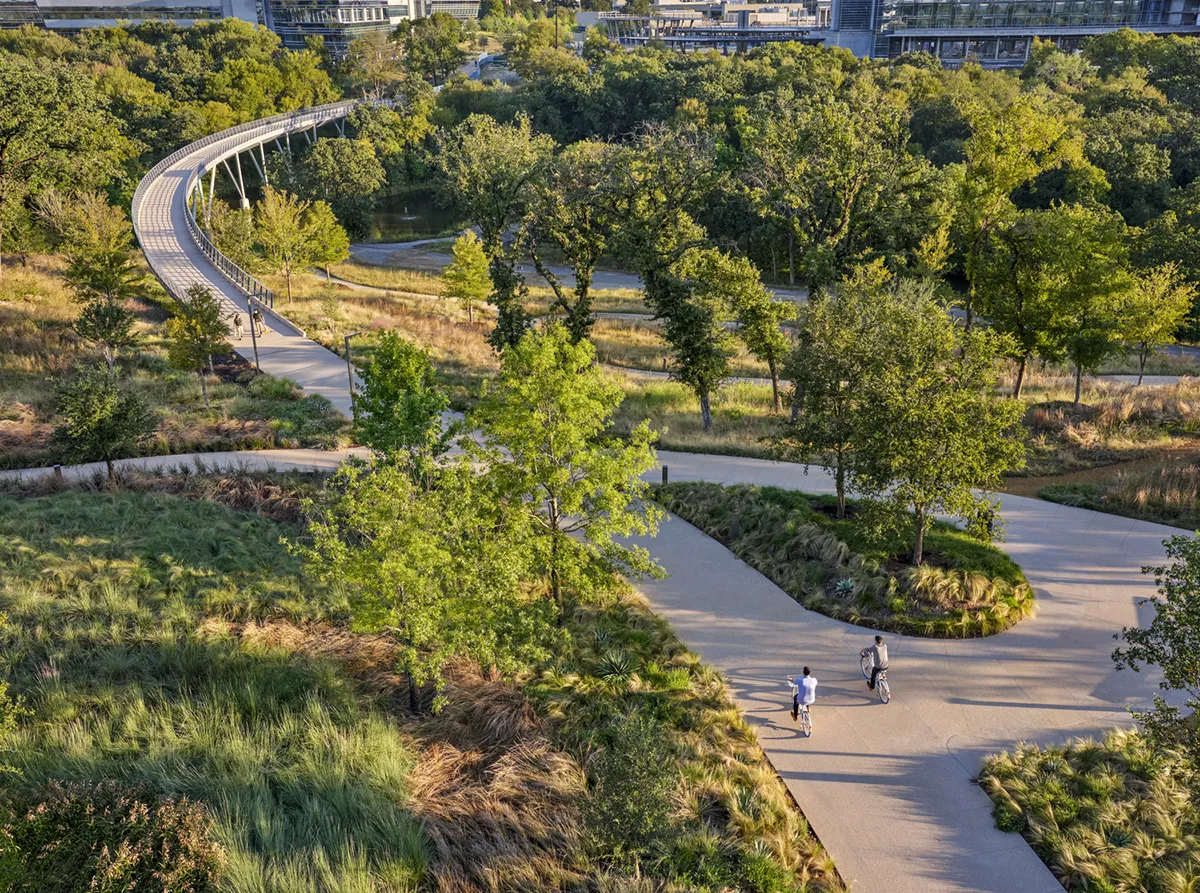
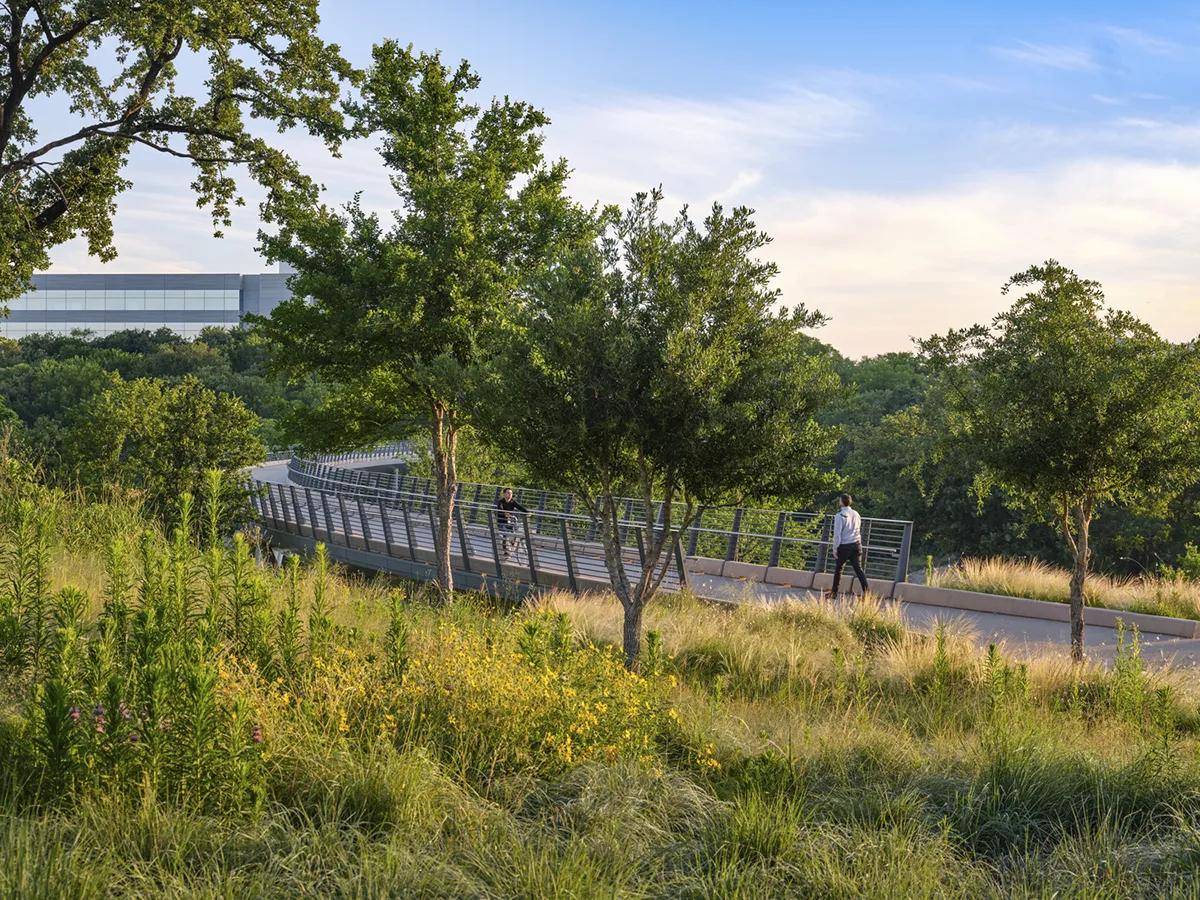
This 258-acre workplace campus near Dallas/Fort Worth seamlessly integrates native ecology with the built environment, focusing on restoring the Texas Blackland Prairie, which has dwindled to less than 1% of its original range. The campus features two districts: a corporate office complex and a hospitality/training/call center facility. The American Mile, a multi-modal spine, connects these districts, promoting health and wellness with walking trails, bike paths, and electric shuttles.
The sustainable conservation strategy includes three key elements:
- Preserving legacy trees and stone: These are replanted in new compositions to maintain the site’s historical and ecological integrity.
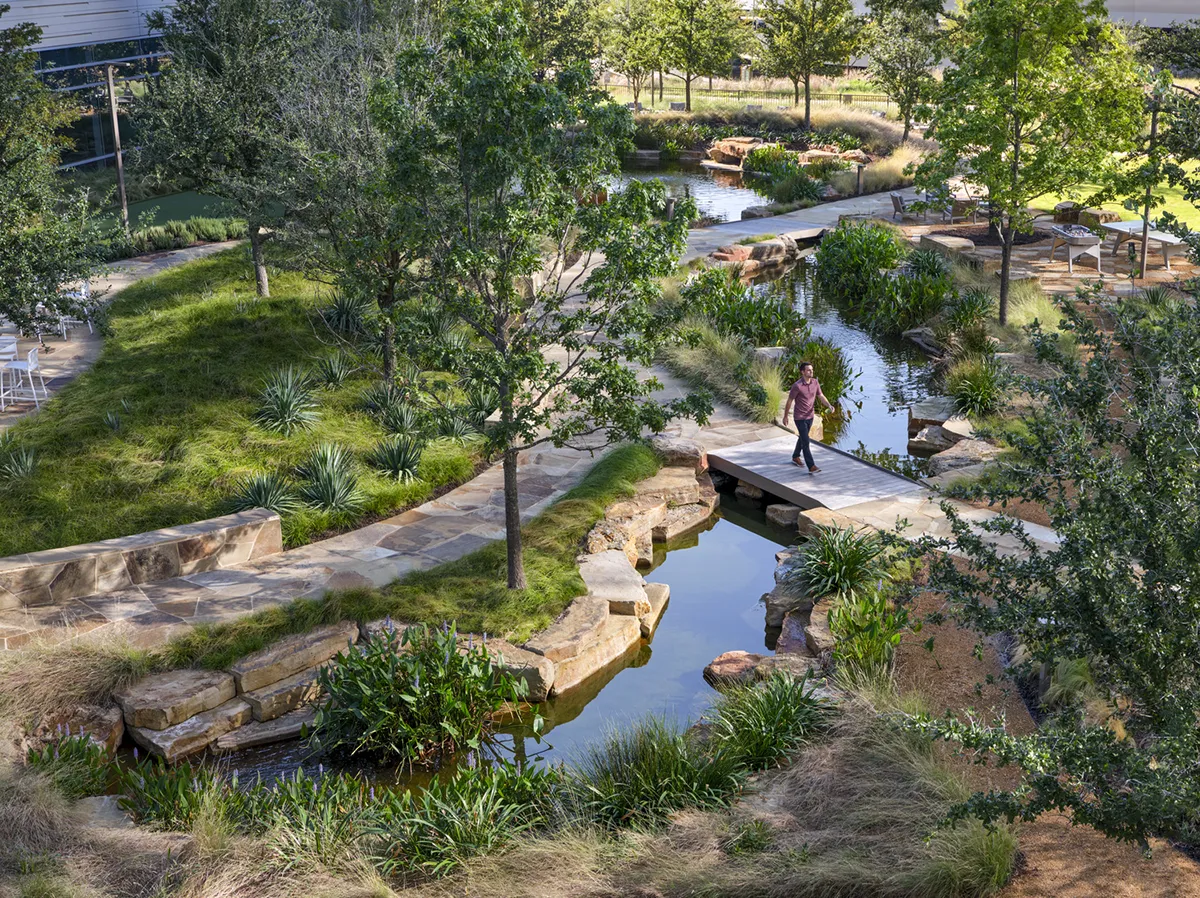
- Water management: A courtyard recirculating detention pond system, planted rain gardens, and dry creeks control water flow and enhance the landscape.
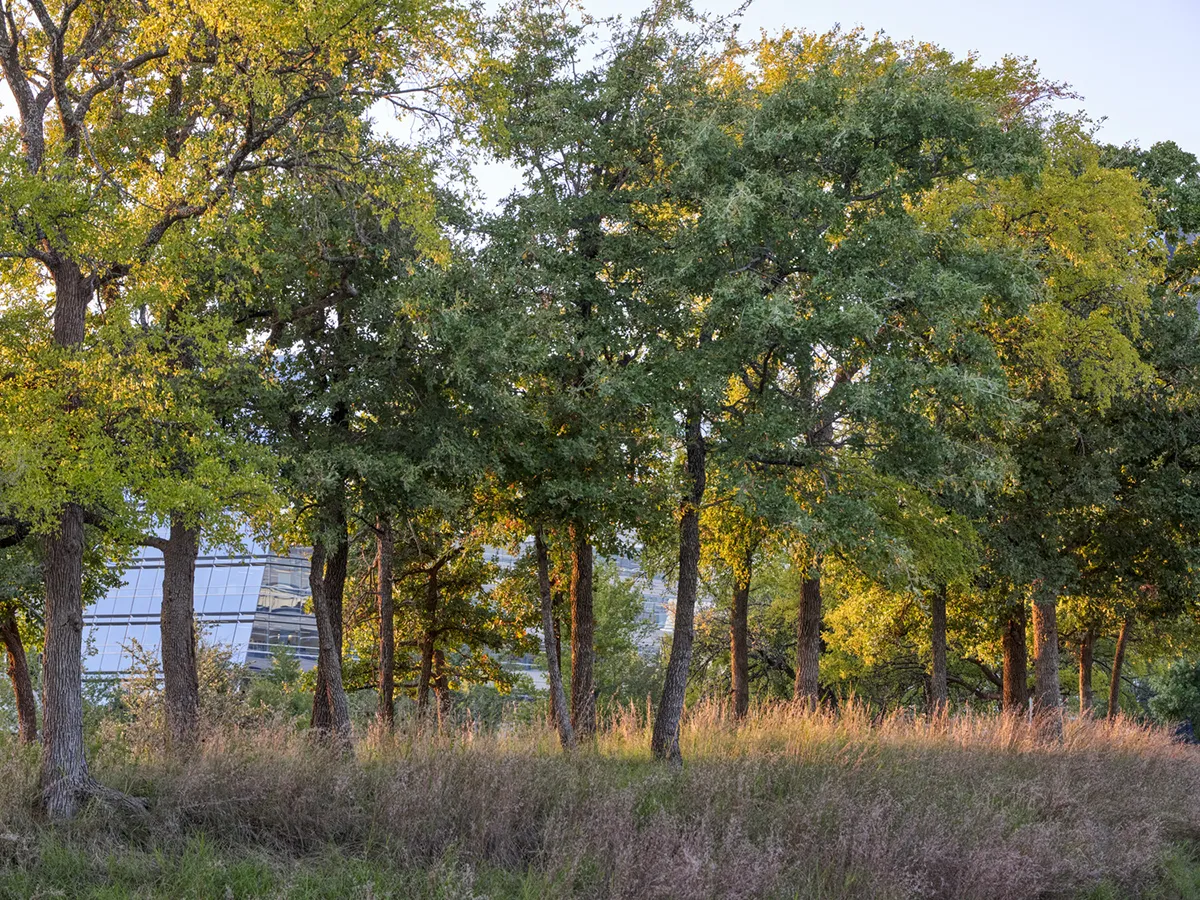
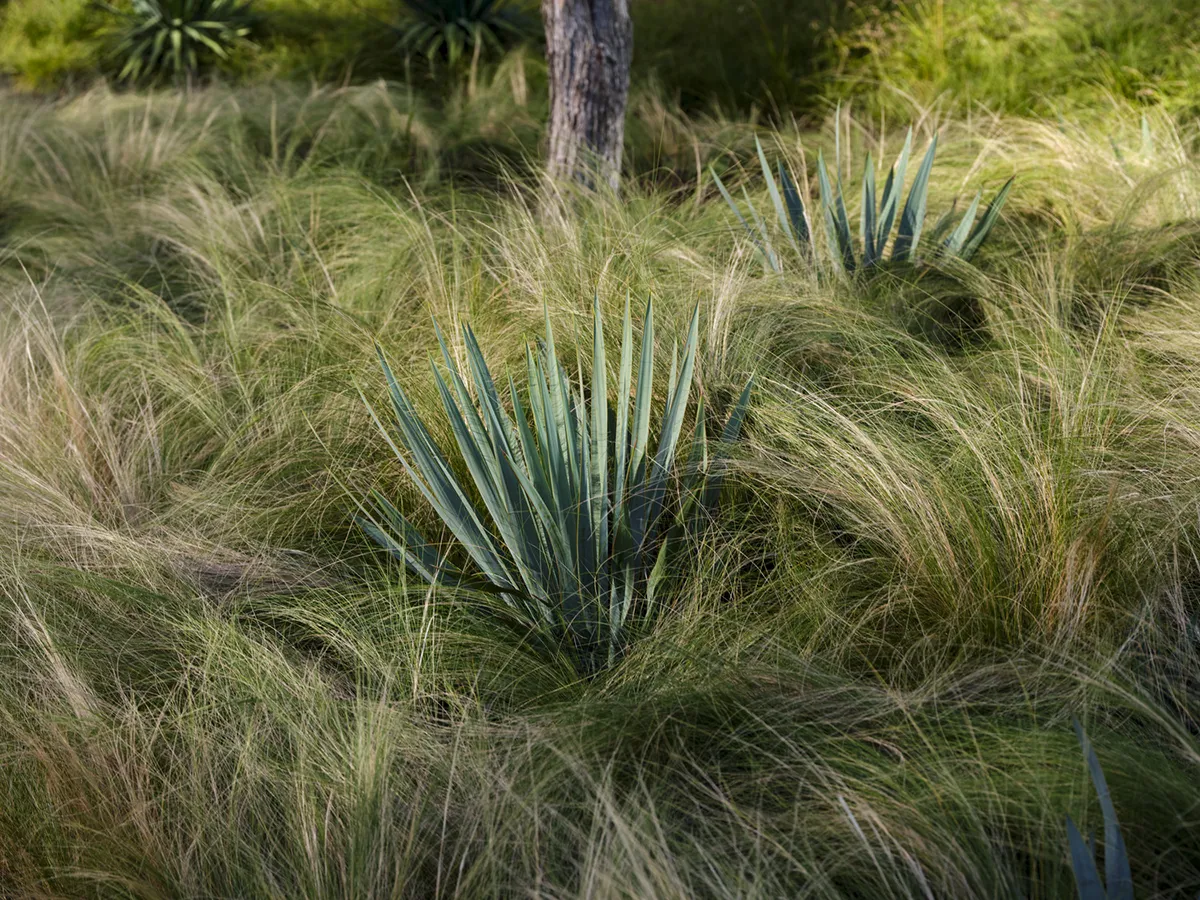
- Native and adaptive planting: This palette reflects the beauty and diversity of the endangered ecotone between the forest and the grassland.
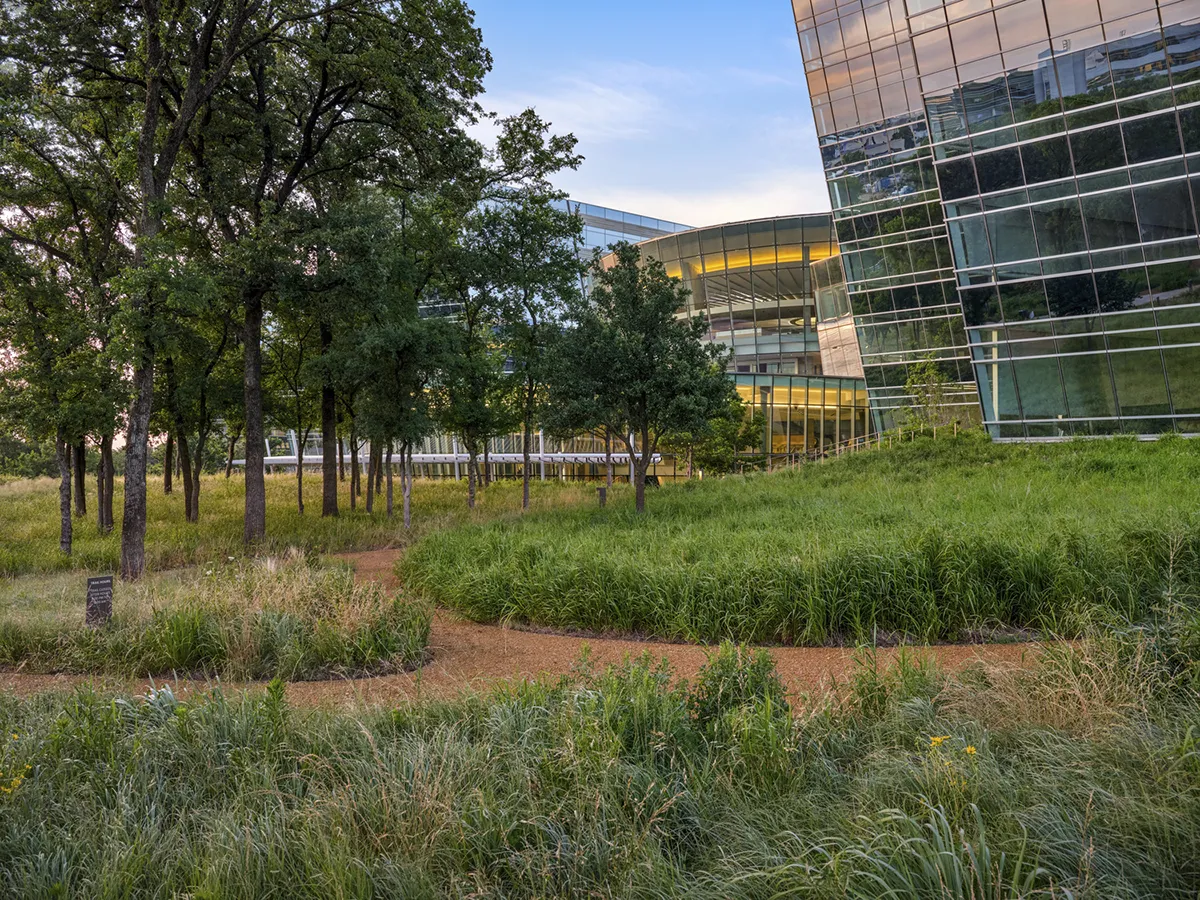
Building condensate is collected and used in courtyard water features, which cool the air and create comfortable environments for outdoor collaboration in tech-enabled work pods, as well as for socialization and recreation. Strategically locating workplace amenities in these temperate micro-climates allows employees to benefit from the positive impacts of nature on productivity and engagement. The water features complement dry creeks that manage stormwater during severe weather and provide serene, planted moments in drier conditions.
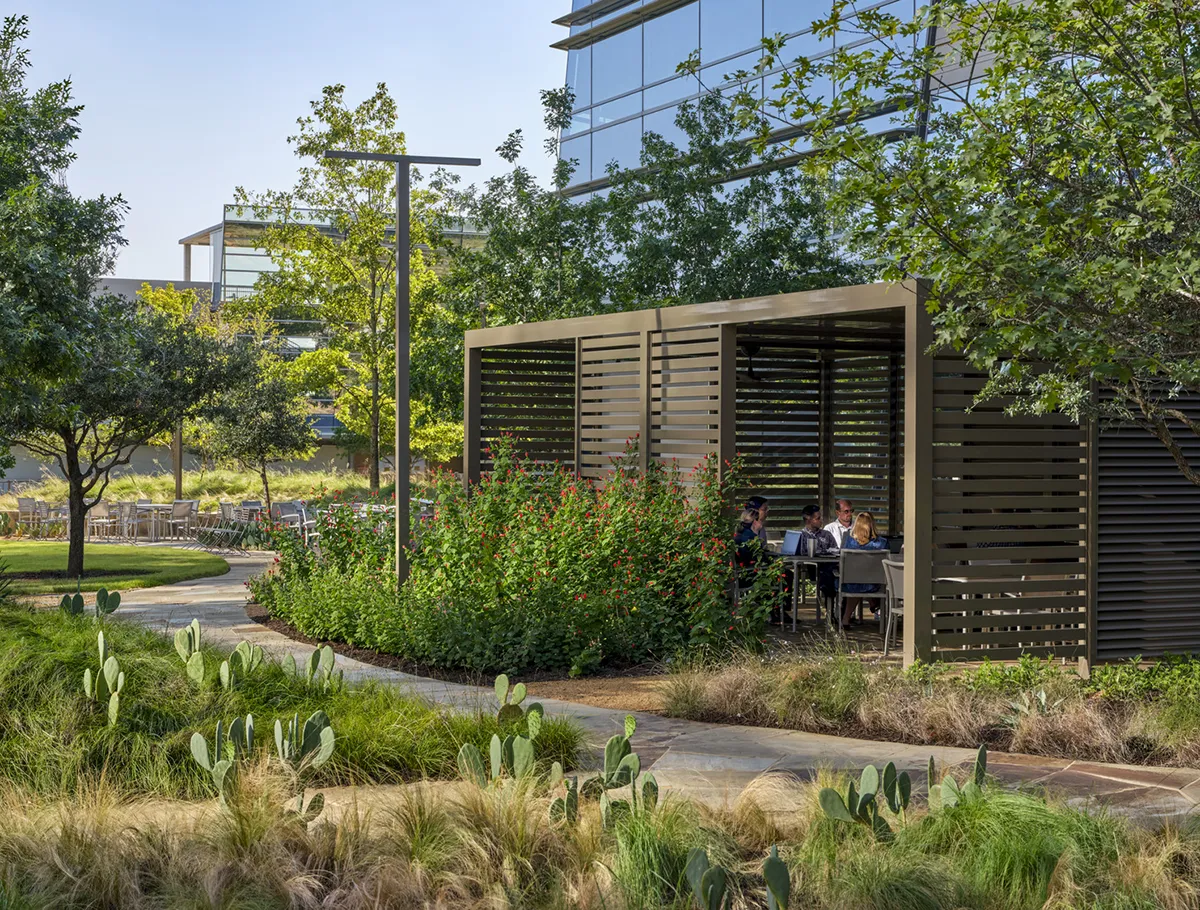
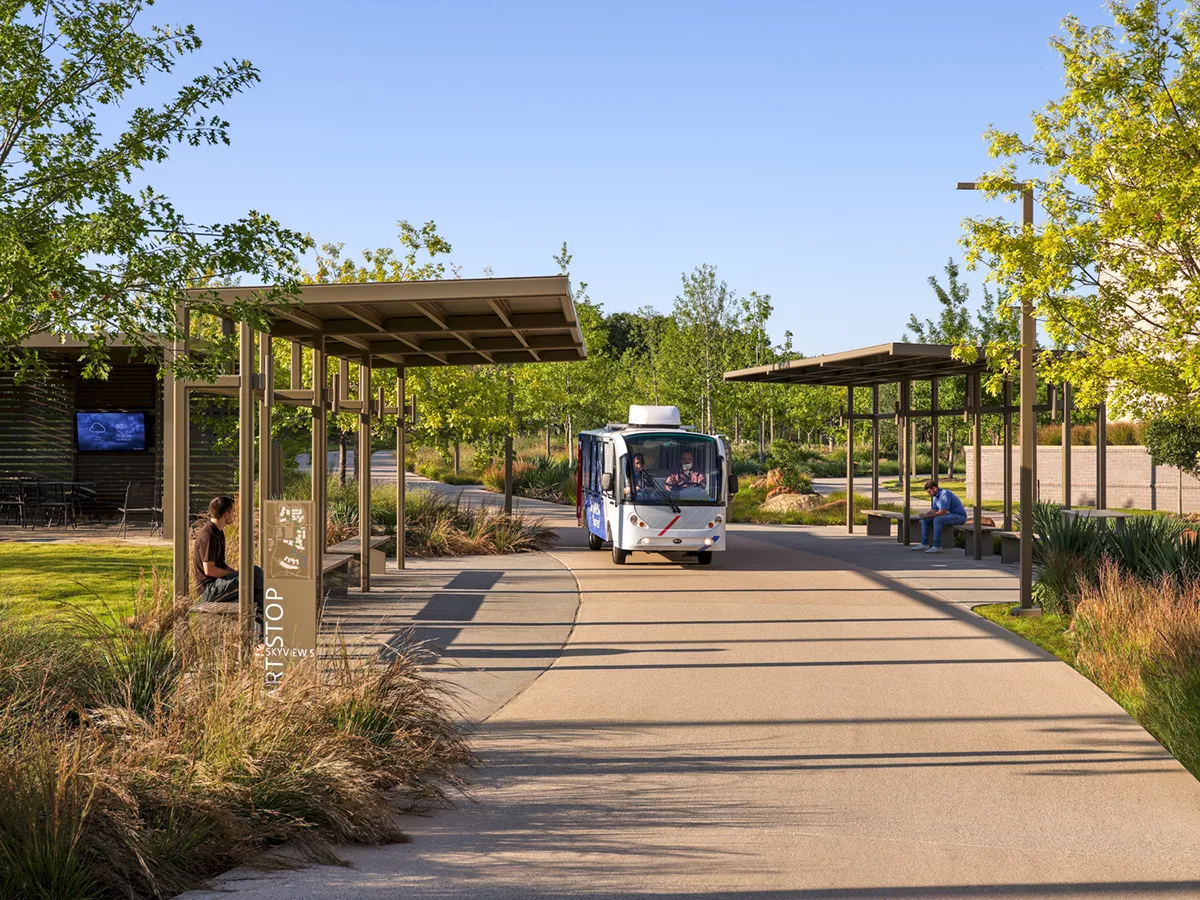
The campus is divided into two distinct districts: a six-building corporate office complex and a dedicated hospitality, training, and call center facility. To minimize habitat destruction, the corporate office was constructed within the footprint of an existing structure. Surface parking lots in the campus core were redistributed to the site’s edges to reduce car dependency and create spaces for people. A multi-modal spine connects the districts and provides safe, efficient cross-campus connections. A new pedestrian bridge over the Trinity River allows employees to move between districts without cars. Extensive walking trails and bike paths encourage outdoor activity, supported by 300 shared bicycles and free electric shuttles on car-free routes. These initiatives reduce pollution and enhance the workplace experience for employees, many of whom stay on campus for weeks during training.
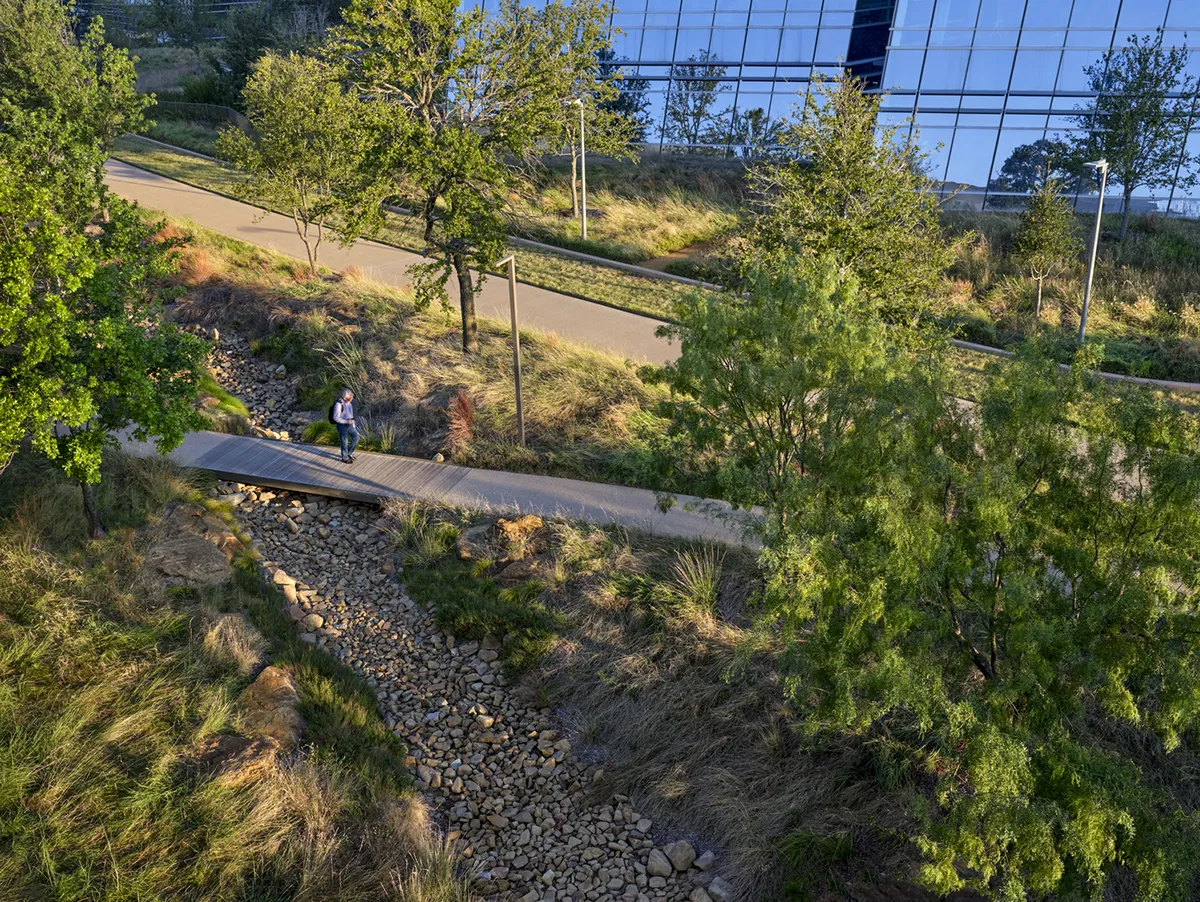
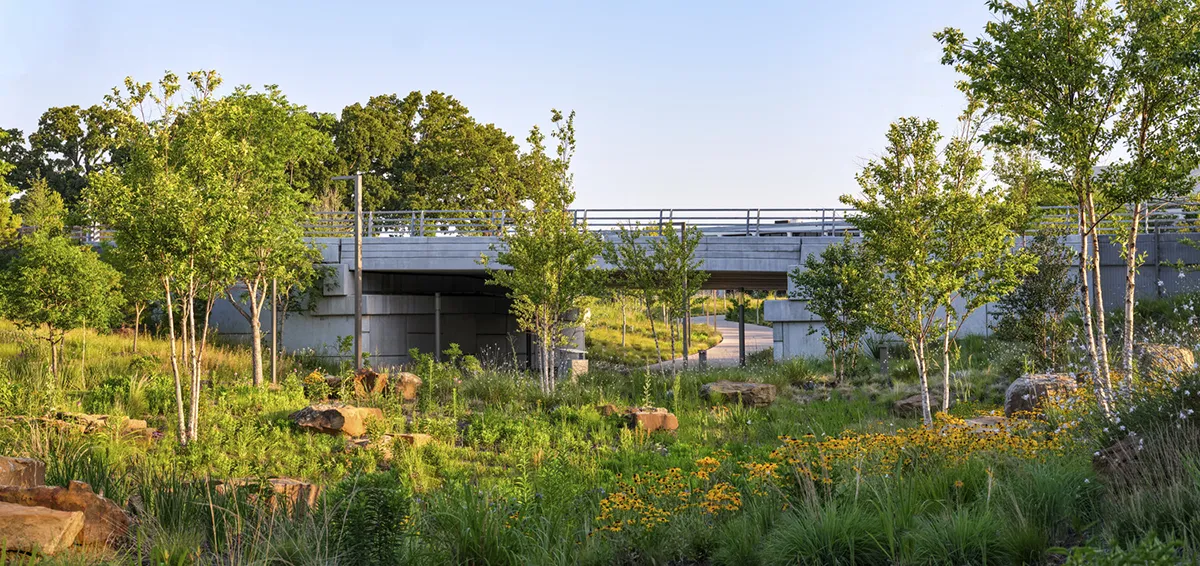
From the outset, the client prioritized habitat restoration and conservation as a design imperative—an uncommon stance for a large corporation, but one that was highly valued throughout the project. Pre-construction, mature specimen trees were identified, moved to an on-site nursery, and carefully reintegrated into the landscape during construction. Collectively, campus trees absorb over 83 tons of CO2 annually—equivalent to a household’s emissions over five years. Wildlife has also thrived in the restored habitats; despite the proximity to a busy freeway and an international airport, birds of prey regularly circle the site, and armadillos are often seen sunning themselves on the trails. A bobcat even established a den and raised her kittens within one of the employee courtyards, which was closed to ensure their safety. By integrating conservation strategies to enhance the workplace experience, the project elevates workplace standards while fostering a mutually beneficial relationship between human and environmental health.
Robert L. Crandall Campus, American Airlines
(One Team One Campus)
Location: Fort Worth, Texas, US
Landscape Architect: OJB Landscape Architecture
Executive Architect: Pelli Clarke & Partners
Architect of Record: Kendall Heaton and Associates
Interior Architect: Gensler
Civil & Irrigation: Dunaway Associates
Lighting: Quentin Thomas Associates
AV/IT: Moye
MEP: I.A. Namen + Associated
Structural: Brockette David Drake
Signage/Wayfinding: DG Studios
Mobility: Alta Planning
Civil: Pacheco Koch
MEP: Reed Wells Benson & Co
Civil: Halff Associates
Traffic: HMA Consulting
Technology: Moye Consulting
Photography: Millicent Harvey, Tzu Chen